Japan’s Cabinet OKs record defense budget that aims to deter China日本内阁批准创纪录的国防预算,旨在威慑中国
Japan's draft defense budget for fiscal 2026 is up 9.4% from 2025.
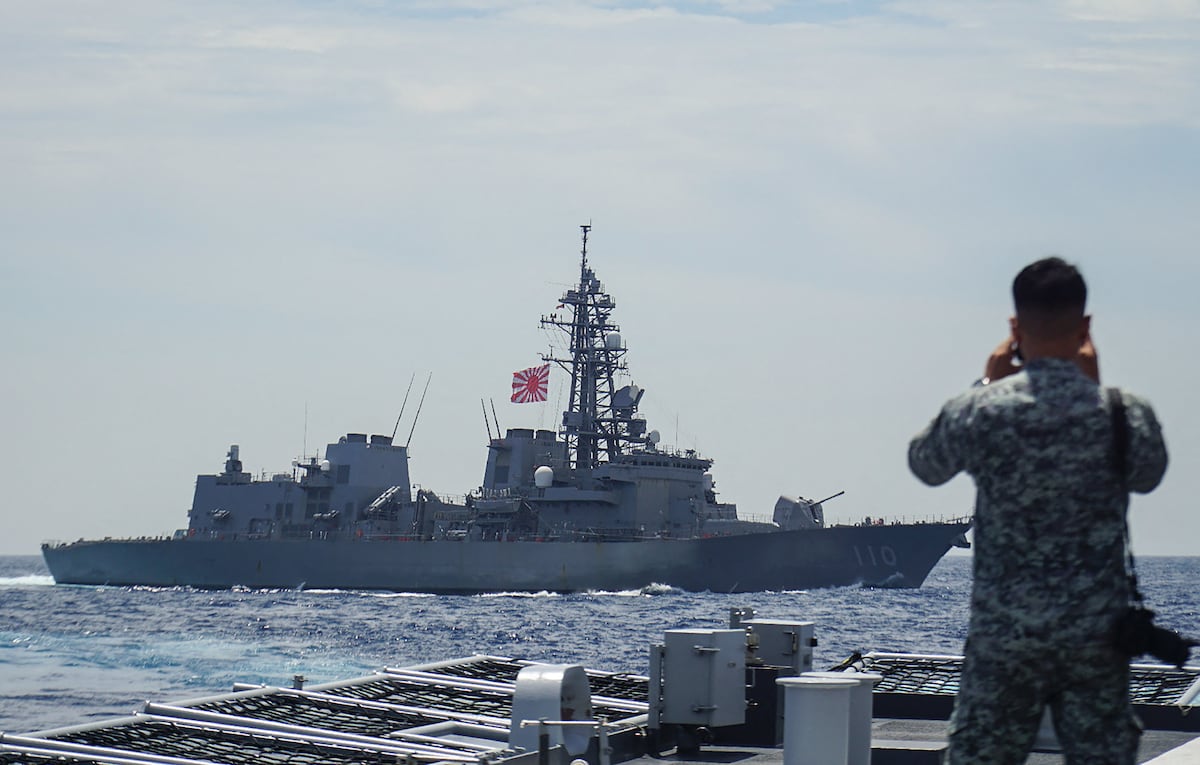
Japan’s Cabinet on Friday approved a record defense budget plan exceeding 9 trillion yen ($58 billion) for the coming year, aiming to fortify its strike-back capability and coastal defense with cruise missiles and unmanned arsenals as tensions rise in the region.
The draft budget for fiscal 2026, beginning April, is up 9.4% from 2025 and marks the fourth year of Japan’s ongoing five-year program to double annual arms spending to 2% of gross domestic product.
“It is the minimum needed as Japan faces the severest and most complex security environment in the postwar era,” Defense Minister Shinjiro Koizumi said, stressing his country’s determination to pursue military buildup and protect its people.
“It does not change our path as a peace-loving nation,” he said.
The increase comes as Japan faces elevated tension from China . Japanese Prime Minister Sanae Takaichi said in November that her country’s military could get involved if China were to take action against Taiwan , the self-governing island that Beijing says must come under its rule.
Takaichi’s government, under U.S. pressure for a military increase, pledged to achieve the 2% target by March, two years earlier than planned. Japan also plans to revise its ongoing security and defense policy by December 2026 to further strengthen its military.
Missiles and drones will add to southwestern island defense
Japan has been bolstering its offensive capability with long-range missiles to attack enemy targets from a distance, a major break from its post-World War II principle limiting the use of force to its own self-defense.
The current security strategy, adopted in 2022, names China as the country’s biggest strategic challenge and calls for a more offensive role for Japan’s Self-Defense Force under its security alliance with the U.S.
The new budget plan allocates more than 970 billion yen ($6.2 billion) to bolster Japan’s “standoff” missile capability. It includes a 177 billion-yen ($1.13 billion) purchase of domestically developed and upgraded Type-12 surface-to-ship missiles with a range of about 1,000 kilometers (620 miles).
The first batch of the Type-12 missiles will be deployed in Japan’s southwestern Kumamoto prefecture by March, a year earlier than planned, as Japan accelerates its missile buildup in the region.
In part due to Japan’s aging and declining population and its struggles with an understaffed military, the government believes unmanned weapons are essential.
To defend the coasts, Japan will spend 100 billion yen ($640 million) to deploy “massive” unmanned air, sea-surface and underwater drones for surveillance and defense under a system called “SHIELD” planned for March 2028, defense ministry officials said.
For speedier deployment, Japan initially plans to rely mainly on imports, possibly from Turkey or Israel.
Tension with China grows
The budget announcement comes as Japan’s row with China escalates following Takaichi’s remark in November about Taiwan.
The disagreement escalated this month when Chinese aircraft carrier drills near southwestern Japan prompted Tokyo to protest when Chinese aircraft locked their radar on Japanese aircraft, which is considered possible preparation for firing missiles.
The Defense Ministry, already alarmed by China’s rapid expansion of operations in the Pacific, will open a new office dedicated to studying operations, equipment and other necessities for Japan to deal with China’s Pacific activity.
Two Chinese aircraft carriers were spotted in June almost simultaneously operating near the southern Japanese island of Iwo Jima for the first time, fueling Tokyo’s concern about Beijing’s rapidly expanding military activity far beyond its borders and areas around the disputed East China Sea islands.
In Beijing, China’s Foreign Ministry spokesperson Lin Jian said the Takaichi government has “noticeably accelerated its pace of military buildup and expansion” since taking office.
“Japan is deviating from the path of peaceful development it has long claimed to uphold and is moving further and further in a dangerous direction,” Lin said.
Japan plans joint development of frigates and jets
Japan is pushing to strengthen its largely domestic defense industry by participating in joint development with friendly nations and promoting foreign sales after drastically easing arms export restrictions in recent years.
For 2026, Japan plans to spend more than 160 billion yen ($1 billion) to jointly develop a next-generation fighter jet with Britain and Italy for deployment in 2035. There are also plans for research and development of Artificial Intelligence-operated drones designed to fly with the jet.
In a major boost to the country’s defense industry, Australia selected Mitsubishi Heavy Industries in August to upgrade the Mogami-class frigate to replace its fleet of 11 ANZAC-class ships.
Japan’s budget allocates nearly 10 billion yen ($64 million) to support industry base and arms sales.
Meeting targets but future funding uncertain
The budget plan requires parliamentary approval by March to be implemented as part of a 122.3 trillion yen ($784 billion) national budget bill.
The five-year defense buildup program would bring Japan’s annual spending to around 10 trillion yen ($64 billion), making it the world’s third-largest spender after the U.S. and China. Japan will clear the 2% target by March as promised, the Finance Ministry said.
Takaichi’s government plans to fund its growing military spending by raising corporate and tobacco taxes and recently adopted a plan for an income tax increase beginning 2027. Prospects for future growth at a higher percentage of GDP remain unclear.
日本内阁周五批准了一项创纪录的国防预算计划,金额超过9万亿日元(580亿美元),旨在加强其反击能力和海岸防御,为此将部署巡航导弹和无人武器库,以应对地区紧张局势的加剧。
2026 财年(从 4 月开始)的预算草案比 2025 年增长了 9.4%,标志着日本正在进行的五年计划进入第四年,该计划旨在将年度军费开支翻一番,达到国内生产总值的 2%。
“这是日本战后时代面临的最严峻、最复杂的安全环境所需的最低限度,”防卫大臣小泉进次郎表示,并强调日本决心加强军事建设,保护人民。
“这不会改变我们作为一个爱好和平的国家的道路,”他说。
此次增兵正值日本面临与中国日益紧张的关系之际。日本首相高市早苗在11月表示,如果中国对台湾采取行动,日本军方可能会介入。北京方面称台湾是一个自治岛屿,必须置于其统治之下。
在美国要求增加军费的压力下,高市政府承诺在3月份实现2%的军费目标,比原计划提前两年。日本还计划在2026年12月前修订其现行的安全和防卫政策,以进一步加强军力。
导弹和无人机将增强西南岛屿的防御能力。
日本一直在利用远程导弹加强其进攻能力,以便从远处攻击敌方目标,这与其二战后将武力使用限制在自卫范围内的原则大相径庭。
现行的安全战略于2022年通过,将中国列为日本最大的战略挑战,并要求日本自卫队在其与美国的安全同盟下发挥更具进攻性的作用。
新的预算计划拨款超过9700亿日元(62亿美元)用于加强日本的“防区外”导弹能力。其中包括斥资1770亿日元(11.3亿美元)购买日本自主研发和升级的12型地对舰导弹,其射程约为1000公里(620英里)。
首批 12 型导弹将于 3 月部署在日本西南部的熊本县,比原计划提前一年,日本正在加快该地区的导弹建设。
部分原因是日本人口老龄化和减少,以及军队人手不足,因此日本政府认为无人武器至关重要。
日本防卫省官员表示,为了保卫海岸线,日本将斥资 1000 亿日元(约合 6.4 亿美元)部署名为“SHIELD”的大规模无人空中、海面和水下无人机,用于监视和防御,该系统计划于 2028 年 3 月投入使用。
为了加快部署速度,日本最初计划主要依靠进口,可能来自土耳其或以色列。
与中国的紧张关系加剧
此次预算案公布之际,正值日本与中国的争端因高市亮太郎11月发表的有关台湾的言论而升级。
本月,中日分歧升级,中国航母在日本西南部附近海域进行演习,引发东京方面的抗议。中国飞机将雷达锁定在日本飞机上,这被认为是可能准备发射导弹的行为。
日本国防部已经对中国在太平洋地区迅速扩大军事行动感到担忧,将开设一个新的办公室,专门研究日本应对中国在太平洋地区活动的作战、装备和其他必要事项。
今年6月,两艘中国航空母舰几乎同时在日本南部硫磺岛附近海域活动,这是首次出现这种情况,这加剧了东京对北京迅速扩张军事活动,其范围远远超出其国界,并延伸至东海争议岛屿周边地区的担忧。
中国外交部发言人林健在北京表示,高市政府自上任以来“明显加快了军事建设和扩张的步伐”。
林说:“日本正在偏离其长期声称坚持的和平发展道路,并且正朝着危险的方向越走越远。”
日本计划联合开发护卫舰和喷气式飞机
近年来,日本大幅放宽了武器出口限制,并通过与友好国家联合研发和促进对外销售,大力推动其以国内为主的国防工业发展。
到2026年,日本计划投入超过1600亿日元(10亿美元),与英国和意大利联合研发下一代战斗机,计划于2035年投入使用。此外,日本还计划研发可与该战斗机一同飞行的人工智能无人机。
澳大利亚国防工业迎来重大发展契机,于 8 月选择三菱重工升级最上级护卫舰,以取代其 11 艘澳新军团级护卫舰。
日本预算拨款近100亿日元(6400万美元)用于支持工业基础和武器销售。
目标已达成,但未来资金状况不明朗
该预算方案需要国会在 3 月份批准才能实施,作为 122.3 万亿日元(7840 亿美元)国家预算案的一部分。
这项为期五年的国防建设计划将使日本的年度国防开支达到约10万亿日元(约合640亿美元),使其成为继美国和中国之后的世界第三大国防开支国。日本财务省表示,日本将按承诺在3月份之前完成2%的国防开支目标。
高市政府计划通过提高企业税和烟草税来为其不断增长的军费开支提供资金,并且最近通过了一项从2027年开始提高所得税的计划。未来经济增长能否达到更高的GDP占比仍不明朗。