Ukraine peace plan ‘scares the bejesus out of us,’ officials say官员称,乌克兰和平计划“吓得我们魂飞魄散”。
The U.S.-led plan caps Ukraine's military end-strength at a smaller number than it currently stands, while doing little to check Russian hostilities.
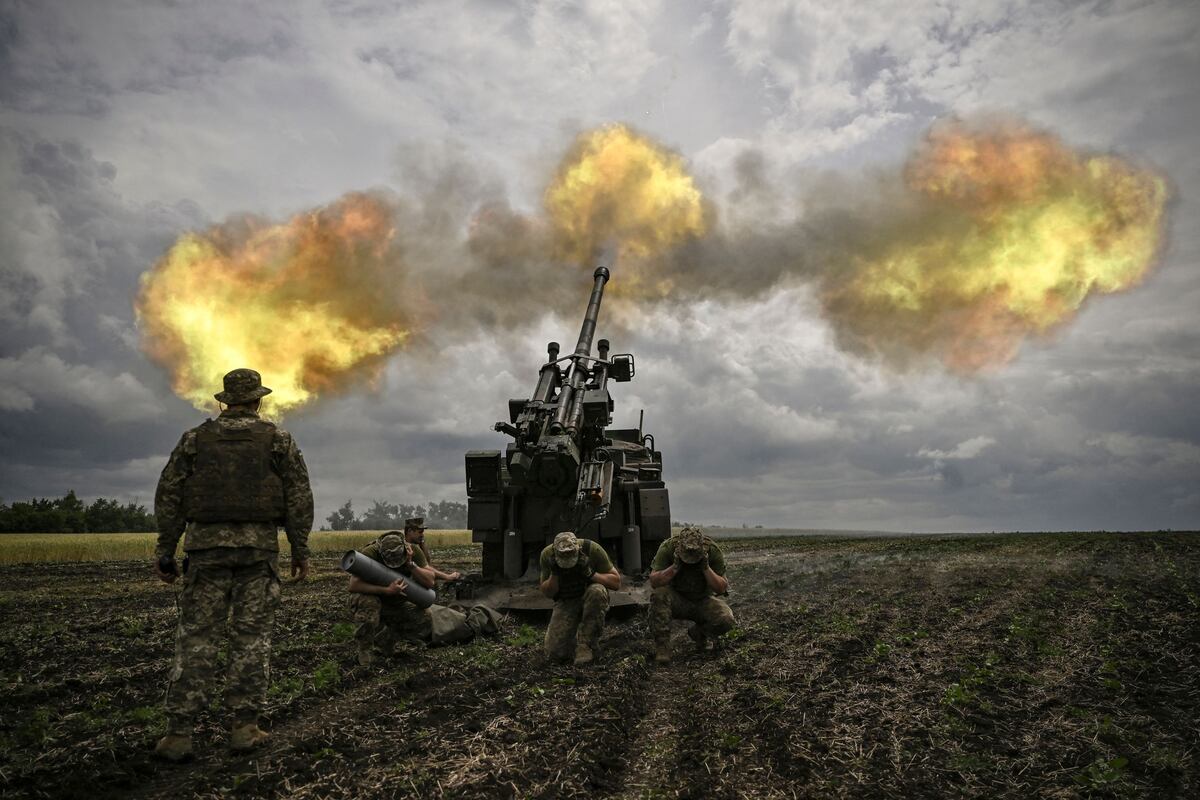
KYIV, Ukraine — A maximum of 800,000. That’s how many soldiers Ukraine’s military would be authorized to have under the current 20-point peace framework — a 20% cut from the roughly one million currently under arms, but a significant increase over the 600,000 originally proposed.
That higher number was a concession Ukrainian President Volodymyr Zelenskyy won after weeks of pushing back. But it’s still a ceiling on a force built over almost four years of war with Western weapons, Western training and Western intelligence.
Russia faces no equivalent limit.
Almost four years ago, Moscow expected Kyiv to fall in three days. Instead, Ukraine buried its dead in mass graves from Bucha to Izium, watched Mariupol’s defenders disappear into Russian filtration camps , counted the tens of thousands of children, according to Yale’s Humanitarian Research Lab , who were taken across the border — and kept fighting.
Zelenskyy said more than 45,000 Ukrainian soldiers had been killed and 390,000 wounded in a February interview with Piers Morgan — roughly 1 in 20 fighting-age men in the country, according to The Economist .
The army that paid for every kilometer in bodies is now being asked to shrink, to cede ground it’s still holding and to accept guarantees that even its allies can’t explain.
It’s one of many sticking points that have hounded negotiators since November — dismissed as a nonstarter by Ukrainians and treated as a baseline demand by Moscow. The 800,000 figure is supposed to be the compromise.
Police work on IDing civilians following killings in Bucha, before sending the bodies to the morgue, April 6, 2022. (Rodrigo Abd/AP)
But the current frameworks offer little when it comes to stifling Russian hostilities, retired Lt. Gen. Ben Hodges, former commander of U.S. Army Europe and one of NATO’s most experienced voices on the alliance’s Eastern flank , told Military Times.
“Who benefits from that?” he told Military Times. “Russia.”
The framework, delivered to Moscow on Dec. 24, proposes a demilitarized zone along a line Russia hasn’t captured on the battlefield, according to The Washington Post . It offers “Article 5-like” security guarantees, Hodges noted, that even U.S. officials have struggled to explain.
It also requires Ukraine to hold the line against an adversary whose answer to current peace talks, according to Zelenskyy, came in the form of nearly 500 drones and 40 missiles over Kyiv last weekend, an attack that killed two and left a third of the capital without heat, according to Reuters . The wartime leader arrived in Mar-a-Lago the next day.
“Russian representatives engage in lengthy talks,” Zelenskyy posted Saturday, “but in reality, Kinzhals and Shaheds [drones] speak for them.”
The pattern continued on Monday, when Russian Foreign Minister Sergei Lavrov claimed Ukraine attacked Putin’s residence in Novgorod with 91 drones overnight — an accusation Zelenskyy called a lie and “an attempt to undermine peace talks,” according to Reuters .
In response, Lavrov said Moscow would “review” its negotiating position and that targets for retaliatory strikes had already been selected.
The security architecture remains in flux, too. U.S. President Donald Trump offered Ukraine a 15-year security guarantee as part of a revised plan earlier the same day — a commitment Zelenskyy quickly called “strong” but pushed to extend to 30 or 50 years, citing the war’s near-15-year span since Russia’s 2014 annexation of Crimea.
But the offer requires U.S. congressional ratification and European parliamentary approval, according to NPR — a procedural hurdle that could still leave the guarantees undefined in practice.
Ukrainian President Volodymyr Zelensky listens as U.S. President Donald Trump speaks during a press conference following their meeting at Trump’s Mar-a-Lago club on Dec. 28, 2025. (Joe Raedle/Getty Images)
The military Russia failed to break
The army Moscow expected to collapse in 72 hours is now one of the most combat-tested forces in the world.
Nearly one million Ukrainians are currently under arms, trained on NATO weapons systems, integrated into Western intelligence-sharing networks and hardened by almost four years of high-intensity conventional warfare.
They’ve absorbed more battlefield lessons in drone tactics , electronic countermeasures and decentralized command than any NATO military has learned in decades — and they’ve done it under fire. This is the force the 20-point framework would cap at 20% smaller than its current size.
Hodges, who spent years planning for a potential Russian conflict from his headquarters in Wiesbaden, Germany, sees the limit as an operational straitjacket.
“What Ukraine is being asked to do is politically and morally unacceptable,” he told Military Times.
The force limits aren’t just about headcount, he explained. They constrain rotation cycles, training throughput and the mobilization surge capacity Ukraine would need if the ceasefire breaks.
An army locked at 800,000 can’t regenerate the way a wartime force needs to — not while holding a 600-mile front and defending cities from nightly drone barrages while Russia builds toward a 2026 recruitment target of 409,000 soldiers, military intelligence chief Kyrylo Budanov said in a year-end interview with Suspilne .
Ukraine’s booming drone industry is part of the equation, already outpacing the alliance it’s defending. Kyiv now claims a production capacity of four million first-person-view drones annually — more than all NATO countries combined, according to Bloomberg — with 96% built domestically, according to Defense Minister Rustem Umerov.
The asymmetry was on display in September, when at least 19 Russian drones crossed into NATO airspace over Poland. Dutch F‑35s and Polish F‑16s were scrambled — backed by an Italian airborne early‑warning aircraft, a Belgian tanker and German Patriot batteries — to successfully shoot down just four of the 19, per Air & Space Forces Magazine .
Ian Kelly, a former U.S. ambassador to Georgia and the Organization for Security and Cooperation in Europe, sees the pattern clearly.
“You can’t accidentally send 20 missiles into Poland,” he told Military Times. “And that was not the first time.”
The incident prompted Polish Prime Minister Donald Tusk to declare that Europe is already enmeshed in “a new type of war,” according to The Guardian .
While the revised 20-point version raised the troop cap, it didn’t change the architecture. The army that has more experience fighting modern-day Russia than any military in NATO would still be locked into a force structure designed by Moscow — while the North Atlantic alliance watches its most capable forward buffer get gutted by the enemy it was built to stop.
A pause that favors Moscow
A DMZ without enforcement looks just like a new front, according to Hodges. And the security guarantees now being floated don’t explain who fires back when Russia tests it — which is why many Ukrainian and NATO planners like him see current proposals as a freeze, not an end.
Retired Lt. Gen. Ben Hodges, pictured here in 2017 as the U.S. Army commander in Europe, discussed the proposed peace plan in Ukraine with Military Times. (Alik Keplicz/AP)
The retired lieutenant general pointed to Dayton. That deal froze the lines in Bosnia, with American and NATO troops on the ground authorized to enforce the peace with lethal action. Twenty-five years later, that framework still holds.
But the current proposals for peace in Ukraine offer no equivalent.
“We had Minsk-1 and Minsk-2,” Hodges said. “You had ceasefires, you had observers and the Russians just blew past all that. Never lived up to it.
“If there’s going to be any sort of demilitarized area or a zone of separation like we had after the Dayton Peace Accords, there will have to be Europeans and Canadians in there with real capability — that have the authority to shoot back immediately when Russia violates it.”
Who, Hodges posed, will then fly reconnaissance over the buffer zone? Who responds when Russia probes the line — under what authority and on what timeline? And with the contact line shifting daily even now, which day’s positions get frozen?
“Unless you have somebody there that’s a credible deterrent, the Russians are not going to respect that,” he added. “And I don’t think any serious people believe they will.”
Even if the skies go quiet, the mission doesn’t — temporarily stopping the war doesn’t mean Ukraine can stand down. The front still has to be manned; air defense still has to cover cities and forward positions; ammunition has to keep flowing; medevac chains kept operational; rotation cycles maintained.
One senior European diplomat, granted anonymity by Military Times to discuss the sensitive negotiations, said even with a ceasefire and DMZ, the security needs of Ukraine and Europe wouldn’t let up. Russia will keep probing.
“The only reason this is still called hybrid war is because we have decided to call it hybrid,” he said.
The pattern is already clear: Drones have already breached NATO airspace. Sabotage plots and cyberattacks have been uncovered across the continent and the U.S. Russian probes stop just short of triggering Article 5.
“When does it cross the line?” he added. “When do we have a Sarajevo moment?”
The security guarantees are supposed to close these resource and security gaps while preventing a return to war — but they don’t, the diplomat said. And everyone at the negotiating table knows it.
“Does anybody seriously believe that this administration would respond to a Russian drone attack on Ukraine as if it was a Russian drone attack on New York or Washington?” Hodges asked, referring to the “platinum” guarantees U.S. officials floated earlier this month.
Who pays to hold the line
Even if the guarantees hold, the math doesn’t add up: Russia can afford to drag out its invasion — Ukraine can’t.
World Bank figures put Russia’s 2024 GDP at $2.17 trillion; Ukraine’s at $190.7 billion — an 11-to-1 ratio.
Newly recruited Ukrainian soldiers practice in a trench during military training on March 13, 2025, in Dnipropetrovsk, Ukraine. (Paula Bronstein/Getty Images)
Ukraine carries the highest military burden in the world, over a third of its GDP annually, according to a SIPRI analysis. But Russia can budget to keep its war machine running long-term: Moscow used about 7.2% of its GDP on defense spending in 2025 — or 15.5 trillion rubles, roughly Ukraine’s entire annual economic output.
That imbalance shapes everything that follows, including how long Russia can sustain the war, and how much outside money Ukraine needs just to stay in the fight.
If sanctions ease under any deal, Russia’s defense industrial base recovers on a timeline Ukraine can’t match. The money is already a fight — the EU has spent months trying to unlock frozen Russian assets, with Belgium demanding extra safeguards that have stalled the process, complicating EU efforts to turn wealth into Ukraine support at scale, according to Politico .
The only thing that changes Putin’s math is making the war too expensive to continue.
“That’s how this war ends, when Russia cannot pay for what they’re doing,” Hodges said. “And we won’t get there by killing another half a million Russians. Putin doesn’t care about that.”
In his view, that means doing what European leaders have spent three years postponing: unfreezing the money in Belgium and getting it to Kyiv, putting real sanctions on Lukoil and Rosneft, going after the secondary buyers — Turkey, India and China — who keep Russia’s oil revenue flowing.
Kelly explained that the only “consistent message” from Washington has been “that there is no more ‘free lunch,’ no more big multi-billion dollar packages.”
That leaves European allies holding both the deterrence mission and the sustainment bill without the experienced partner they built their latest defense posture around.
“The Europeans have failed,” Hodges said, “which is why Putin refers to the European leaders as ‘piglets’ — because he is pretty sure that Europeans are not going to do what’s necessary.”
If the West wants a peace plan that holds, he added, it has to do what the current frameworks don’t: enforce violations in real time, keep Ukraine armed and funded and make the war financially unbearable for Moscow.
“What we’ve done so far hasn’t delivered,” the diplomat admitted. “So, how do we step up our support in a way that might impact the calculus in Moscow?”
No one has answered that question yet. What they have is a framework that caps Ukraine’s army, leaves enforcement undefined and asks allies to carry a burden it hasn’t built the capacity to hold. It’s less a peace plan than a stress test, officials say, and from where Europe sits, it’s failing.
“We all see where this is heading,” the diplomat said. “And it scares the bejesus out of us.”
乌克兰基辅——最多80万人。这是根据目前的20点和平框架,乌克兰军队获准拥有的士兵人数——比目前约100万的现役军人减少了20%,但比最初提议的60万人有了显著增加。
经过数周的抵抗,乌克兰总统泽连斯基最终争取到了更高的兵力数字。但这仍然是乌克兰军队实力的上限,这支军队是在近四年的战争中,依靠西方武器、西方训练和西方情报建立起来的。
俄罗斯没有面临类似的限制。
近四年前,莫斯科预计基辅将在三天内陷落。然而,乌克兰却将死者埋葬在从布恰到伊久姆的万人坑中,眼睁睁地看着马里乌波尔的守军消失在俄罗斯的集中营里,据耶鲁大学人道主义研究实验室统计,数以万计的儿童被带过边境——但他们仍然继续战斗。
泽连斯基在2月份接受皮尔斯·摩根采访时表示,已有超过45000名乌克兰士兵阵亡,390000名士兵受伤——据《经济学人》报道,这大约相当于该国五分之一的适龄男性。
这支曾经为每一公里付出生命代价的军队,现在却被要求缩减规模,放弃它仍在坚守的阵地,并接受连它的盟友都无法解释的保证。
这是自去年11月以来一直困扰谈判者的众多症结之一——乌克兰方面认为这根本不可能,而莫斯科则将其视为基本要求。80万这个数字被认为是双方达成的妥协。
2022年4月6日,在布查发生的杀戮事件后,警方正在对遇难平民进行身份识别,之后将尸体送往太平间。(罗德里戈·阿卜杜/美联社)
但退役中将本·霍奇斯(Ben Hodges)告诉《军事时报》,目前的框架在遏制俄罗斯的敌对行动方面作用甚微。霍奇斯曾任美国陆军欧洲司令,是北约东翼最有经验的人物之一。
“谁从中获益?”他告诉《军事时报》,“俄罗斯。”
据《华盛顿邮报》报道,12月24日送达莫斯科的这份框架协议提议,在俄罗斯尚未在战场上占领的一条线上设立非军事区。霍奇斯指出,该协议提供了类似《宪法第五条》的安全保障,但就连美国官员也难以解释清楚。
这也要求乌克兰坚守阵地,抵御一个对手。泽连斯基表示,这个对手对当前和平谈判的回应是上周末向基辅发射了近500架无人机和40枚导弹。据路透社报道,这次袭击造成两人死亡,并导致首都三分之一的地区断电。这位战时领导人于次日抵达海湖庄园。
泽连斯基周六发帖称:“俄罗斯代表进行了长时间的会谈,但实际上,是金牙和沙赫德无人机替他们说话。”
周一,这种模式仍在继续。据路透社报道,俄罗斯外长谢尔盖·拉夫罗夫声称,乌克兰连夜用 91 架无人机袭击了普京位于诺夫哥罗德的住所——泽连斯基称这一指控是谎言,是“企图破坏和平谈判”。
对此,拉夫罗夫表示,莫斯科将“重新审视”其谈判立场,并且已经选定了报复性打击的目标。
安全架构也仍处于变化之中。美国总统唐纳德·特朗普当天早些时候向乌克兰提出一项修订后的计划,其中包括15年的安全保障——泽连斯基迅速称这一承诺“有力”,但他力主将保障期限延长至30年或50年,理由是自俄罗斯2014年吞并克里米亚以来,这场战争已经持续了近15年。
但据美国国家公共电台 (NPR) 报道,该提议需要美国国会批准和欧洲议会批准——这一程序性障碍可能导致实际保障措施仍未明确。
2025年12月28日,乌克兰总统泽连斯基在特朗普位于海湖庄园的会晤后举行的新闻发布会上聆听美国总统特朗普的讲话。(乔·雷德尔/盖蒂图片社)
俄罗斯军方未能打破
莫斯科曾预计会在72小时内崩溃的这支军队,如今已成为世界上身经百战的部队之一。
目前,近一百万乌克兰人持有武器,接受过北约武器系统的训练,融入了西方情报共享网络,并在近四年的高强度常规战争中磨练出了强健的体魄。
他们在无人机战术、电子对抗和分散指挥方面汲取的战场经验,比任何北约军队几十年来积累的都多——而且他们是在战火中摸索出来的。根据20点框架,这支部队的规模将被限制在比目前规模小20%。
霍奇斯多年来一直在德国威斯巴登的总部为可能发生的与俄罗斯的冲突做准备,他认为这一限制就像一件行动上的紧身衣。
“乌克兰被要求做的事情,在政治上和道德上都是不可接受的,”他告诉《军事时报》。
他解释说,兵力限制不仅仅关乎人数,还限制了轮换周期、训练效率以及乌克兰在停火协议破裂时所需的动员能力。
军事情报局长基里洛·布达诺夫在年末接受《Suspilne》杂志采访时表示,一支兵力停留在 80 万的军队无法像战时部队那样迅速补充兵力——尤其是在守卫 600 英里战线、抵御夜间无人机轰炸的同时,俄罗斯还要努力实现 2026 年招募 40.9 万士兵的目标。
乌克兰蓬勃发展的无人机产业是其中的一个因素,其发展速度已经超过了它所捍卫的联盟。据彭博社报道,基辅方面声称,乌克兰目前每年可生产400万架第一人称视角无人机——超过所有北约国家总和——其中96%为国产,据乌克兰国防部长鲁斯捷姆·乌梅罗夫称。
这种不对称性在9月份暴露无遗,当时至少有19架俄罗斯无人机越境进入波兰上空的北约领空。据《空军与太空部队杂志》报道,荷兰的F-35和波兰的F-16战机紧急升空,并得到了意大利空中预警机、比利时加油机和德国爱国者导弹系统的支援,但最终只成功击落了其中的4架。
曾任美国驻格鲁吉亚和欧洲安全与合作组织大使的伊恩·凯利清楚地看到了这种模式。
“你不可能无意中向波兰发射20枚导弹,”他告诉《军事时报》,“而且这也不是第一次了。”
据《卫报》报道,这一事件促使波兰总理唐纳德·图斯克宣称,欧洲已经陷入“一种新型战争”。
虽然修订后的20点方案提高了兵力上限,但并未改变部队架构。这支比北约任何成员国军队都更有对抗现代俄罗斯经验的军队,仍将受制于莫斯科设计的兵力结构——而北大西洋联盟却眼睁睁地看着其最强大的前沿缓冲区被它原本旨在阻止的敌人蚕食殆尽。
有利于莫斯科的停顿
霍奇斯认为,没有强制执行措施的非军事区看起来就像是开辟了一条新的战线。而且,目前提出的安全保障措施并没有解释当俄罗斯试探性地进行反击时,由谁来承担责任——这就是为什么像他这样的许多乌克兰和北约规划人员认为,目前的提议只是暂时的冻结,而不是最终的结束。
图中为退役中将本·霍奇斯,他于2017年担任美国陆军驻欧洲司令时的照片。他与《军事时报》讨论了拟议的乌克兰和平计划。(Alik Keplicz/AP)
这位退役中将指的是代顿协议。该协议冻结了波斯尼亚的边界线,授权美国和北约地面部队以致命行动维护和平。25年后,这一框架依然有效。
但目前乌克兰和平方案中并没有类似的方案。
霍奇斯说:“我们有明斯克一号和明斯克二号协议。有停火协议,有观察员,但俄罗斯人完全无视了这一切。他们从未履行协议。”
“如果要设立任何形式的非军事区或隔离区,就像我们在《代顿和平协议》之后设立的那样,那么就必须有真正有能力的欧洲人和加拿大人在那里——他们有权在俄罗斯违反协议时立即予以反击。”
霍奇斯问道,那么谁来对缓冲区进行侦察飞行?当俄罗斯试探这条线时,谁来回应——依据什么授权,又该遵循什么时间表?而且,鉴于接触线至今仍在每日变化,哪一天的立场会被冻结?
“除非你派人去对付俄罗斯,否则俄罗斯人不会尊重你的决定,”他补充道。“而且我认为任何严肃的人都不会相信他们会这么做。”
即使天空恢复平静,任务也不会停止——暂时停止战争并不意味着乌克兰可以袖手旁观。前线仍然需要有人驻守;防空系统仍然需要覆盖城市和前沿阵地;弹药供应必须保持畅通;医疗后送系统必须保持运转;轮换周期必须维持。
一位不愿透露姓名的欧洲高级外交官在接受《军事时报》采访时表示,即使达成停火协议并设立非军事区,乌克兰和欧洲的安全需求也不会减少。俄罗斯将继续试探。
他说:“之所以仍然称之为混合战争,唯一的原因是我们决定这样称呼它。”
模式已然清晰:无人机已侵入北约领空。破坏阴谋和网络攻击已在整个欧洲大陆被发现,而美俄调查也仅差一步之遥便会触发第五条。
他补充道:“什么时候才会越过底线?什么时候我们会重蹈萨拉热窝覆辙?”
这位外交官说,安全保障本应弥补资源和安全方面的缺口,防止战争重燃,但事实并非如此。谈判桌上的每个人都心知肚明。
霍奇斯问道:“有人真的相信本届政府会像对待俄罗斯无人机袭击纽约或华盛顿那样,对待俄罗斯无人机袭击乌克兰的行为吗?”他指的是美国官员本月早些时候提出的“铂金级”保证。
谁来出钱守住防线
即使这些保证成立,从数学角度来看也对不上:俄罗斯可以承受延长入侵的代价——乌克兰则不能。
世界银行数据显示,俄罗斯 2024 年的 GDP 为 2.17 万亿美元;乌克兰的 GDP 为 1907 亿美元——比例为 11 比 1。
2025年3月13日,在乌克兰第聂伯罗彼得罗夫斯克,新入伍的乌克兰士兵在战壕中进行军事训练。(Paula Bronstein/Getty Images)
根据斯德哥尔摩国际和平研究所(SIPRI)的分析,乌克兰的军事负担居世界首位,每年超过其GDP的三分之一。但俄罗斯有能力长期维持其战争机器的运转:莫斯科在2025年将约7.2%的GDP用于国防开支,即15.5万亿卢布,这大致相当于乌克兰全年的经济产出。
这种不平衡决定了之后的一切,包括俄罗斯能够维持战争多久,以及乌克兰需要多少外部资金才能继续战斗。
如果任何协议允许放松制裁,俄罗斯的国防工业基础将以乌克兰无法企及的速度复苏。资金问题已经引发了一场争夺——据Politico报道,欧盟已花费数月时间试图解冻俄罗斯被冻结的资产,而比利时要求采取额外的保障措施,导致解冻进程停滞不前,也使得欧盟大规模将资金转化为对乌克兰的支持变得更加复杂。
唯一能改变普京算计的事情就是让战争的代价高昂到无法继续下去。
“这场战争的结局就是,当俄罗斯无力为他们的所作所为付出代价时,”霍奇斯说。“而我们不可能通过再杀害五十万俄罗斯人来实现这一点。普京根本不在乎。”
在他看来,这意味着要去做欧洲领导人三年来一直拖延的事情:解冻比利时的资金并将其运往基辅,对卢克石油公司和俄罗斯石油公司实施真正的制裁,追究那些维持俄罗斯石油收入的二级买家——土耳其、印度和中国——的责任。
凯利解释说,来自华盛顿的唯一“一贯信息”是“不会再有‘免费午餐’,不会再有数十亿美元的大宗援助计划”。
这使得欧洲盟国既要承担威慑任务,又要承担后勤保障费用,而他们最新的防御态势却没有了曾经赖以建立的经验丰富的伙伴。
霍奇斯说:“欧洲人失败了,这就是为什么普京称欧洲领导人为‘小猪’——因为他非常肯定欧洲人不会采取必要的行动。”
他补充说,如果西方想要一个能够持续的和平计划,就必须做到当前框架做不到的事情:实时制止违反和平协议的行为,保持乌克兰的武装和资金支持,并让莫斯科在经济上无法承受这场战争。
这位外交官承认:“我们目前所做的一切还没有奏效。那么,我们该如何加大支持力度,才能对莫斯科的考量产生影响呢?”
目前还没有人回答这个问题。他们现在所拥有的框架限制了乌克兰军队的实力,却没有明确规定如何执行,并要求盟友承担他们自身无力承担的重担。官员们表示,与其说这是一项和平计划,不如说是一次压力测试,而从欧洲的角度来看,这项测试失败了。
“我们都明白事情会如何发展,”这位外交官说。“这让我们感到无比恐惧。”