China turns Taiwan’s own voices against it in information war中国在信息战中利用台湾自身的舆论来攻击自己。
As Chinese warships and fighter jets staged massive drills around Taiwan in December, a parallel action was unfolding on smartphone screens.
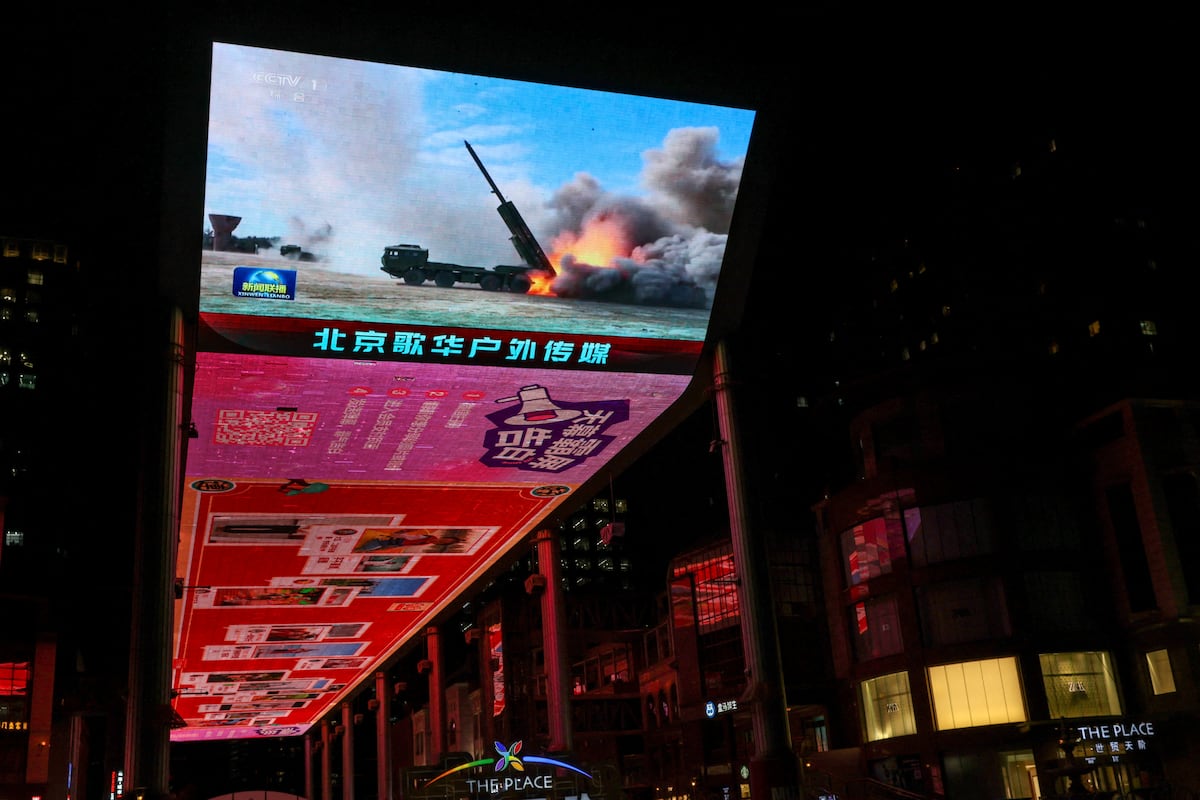
As Chinese warships and fighter jets staged massive drills around Taiwan in December, a parallel action was unfolding on smartphone screens.
On Douyin, China’s version of TikTok, a news outlet run by the Chinese Communist Party posted a 51-second video of Taiwan opposition leader Cheng Li-wun accusing President Lai Ching-te of inviting Chinese aggression .
Lai, Cheng said, was “dragging all 23 million of us” in Taiwan into a “dead end, a road to death” by pursuing independence. The clip quickly surfaced on Facebook, YouTube and other platforms popular in Taiwan.
Chinese state media outlets are increasingly amplifying Taiwanese critics of the island’s ruling Democratic Progressive Party (DPP), including influencers and politicians linked to the opposition Kuomintang (KMT), according to five Taiwanese security officials and data from Taipei-based research group IORG that was shared with Reuters.
China imports the public statements of leading KMT and other opposition figures that are critical of the Taiwan government and pumps them out in a torrent of anti-DPP messaging in Chinese state media and on social media platforms in China, according to the data and sources.
Those clips are then reshared and often repackaged for consumption on platforms popular in Taiwan, including Facebook, TikTok and YouTube, as well as on Douyin, sometimes embellished or presented in ways that obscure China’s hand.
While China has in the past employed Taiwanese figures in its propaganda, it has turbocharged this information-warfare tactic, the Taiwan security officials said: Familiar voices and accents can sound more credible.
The goal is to discredit a government Beijing accuses of seeking independence, the officials said. And, with the DPP seeking $40 billion in extra defense outlays, the campaign also appears aimed at convincing Taiwanese that China’s military power is so overwhelming that it is futile for Taiwan to spend heavily on more American weapons, according to IORG and three of the security officials.
China’s Taiwan Affairs Office and defense ministry didn’t respond to requests for comment about Beijing’s information warfare.
Taiwan’s defense ministry told Reuters it is countering a massive increase in Chinese “cognitive warfare” by strengthening the armed forces’ media-literacy skills and psychological resilience.
President Lai’s office added that cross-strait peace must be “built on strength, not on concessions to authoritarian pressure.”
Taiwan President Lai Ching-te delivers a speech at Loung Te Industrial Parks Service Center in Yilan, Taiwan, Dec 2, 2025. (Ann Wang/Reuters)
Facebook, TikTok and YouTube, which are blocked in China, didn’t respond to questions about Chinese information warfare. Douyin also didn’t respond to a request for comment.
China considers Taiwan part of its territory and hasn’t ruled out using military force to seize it. Taiwan’s government rejects China’s sovereignty claim, saying it is already an independent country called the Republic of China, its formal name. Beijing refuses to speak with the DPP administration, and calls Lai a “separatist.”
While Chinese preparations for military action against Taiwan continue, the information warfare is part of Beijing’s strategy of wearing down Taiwan without resorting to force.
In this regard, Taiwan’s opposition KMT provides a valuable opening for China: The party has moved to seek closer ties with Beijing in a bid to head off what it says is a crisis made worse by the DPP government’s provocation of China.
Cheng, the KMT leader, met Chinese President Xi Jinping this month in Beijing, where Xi told her the KMT and the Communist Party must “consolidate political mutual trust” and “join hands to create a bright future of the motherland’s reunification.”
In a statement to Reuters, the KMT said Cheng’s visit to Beijing fulfilled a campaign pledge and continued a long-established tradition of top-level meetings between the KMT and the Communist Party. The two parties have many differences, but both believe disagreements should be resolved through dialogue, it added.
Data provided to Reuters by IORG, also known as the Taiwan Information Environment Research Center, shows the mechanics of the Chinese campaign. The non-partisan group of social scientists and data analysts is funded in part by the U.S. and European governments, and academic institutions in Taiwan.
Some 560,000 videos were posted on Douyin by 1,076 accounts run by official Communist Party media outlets in the fourth quarter of 2025. About 18,000 videos discussed Taiwan. IORG used facial-recognition technology to identify 57 Taiwanese figures in 2,730 clips, with results verified by IORG researchers and reviewed by Reuters.
The number of videos featuring Taiwanese voices more than doubled from a year earlier during October and November, and monthly airtime jumped 164% to 369 minutes.
Strikingly, of the top 25 Taiwanese figures in the Chinese videos, 13 are affiliated with the KMT, from current lawmakers and party representatives to former officials under past KMT-led governments.
Two others are senior officials in a small party that supports unification with China, while 10 are influencers known for criticizing the governing DPP.
Cheng, the KMT leader, was the top-ranked Taiwanese figure in the Chinese clips, featuring in 460 videos across 68 Douyin accounts and generating more than five million interactions, including likes, comments and shares.
The videos amplified her calls for “peace” with China, her criticism of President Lai as a “pawn” of external forces, and her characterization of the DPP’s stance on Taiwan independence as destructive.
Once aired on Chinese state media and social media platforms, some of the clips were repackaged and posted on platforms popular in Taiwan.
In its statement, the KMT said Cheng’s comments reflected the mainstream aspirations of the Taiwanese people for peace.
“Even if mainland state media tend to incorporate more Taiwanese voices, this is based on the diversity of public opinion that already exists in Taiwan,” it added.
Cheng Li-wun, chairperson of Taiwan's largest opposition party, with Chinese President Xi Jinping in Beijing, China, April 10, 2026, (CTI via Reuters)
Various influencers were also heavily cited by the Chinese outlets. Among them were Holger Chen Chih-han, a bodybuilder popular with younger audiences, and five retired senior military officials known for criticizing the DPP and Taiwan’s defenses.
“Happy birthday, motherland,” Chen said on a YouTube livestream in late September, ahead of China’s National Day. Short clips of the broadcast, in which he also said the people of Taiwan and China were “one family,” were later shared by Chinese state media outlets, including China News Service.
Chen didn’t respond to a request for comment.
In one video posted by China News Service, former Taiwan Army Colonel Lai Yueh-chien claimed Chinese drones had “entered” Taiwan undetected during military exercises in December.
Lai also suggested that China might conduct a decapitation strike against “pro-independence leaders” in their sleep. The video soon appeared on Facebook and YouTube.
The assertion that Chinese drones had approached Taiwan first appeared in a video posted on a social media account run by China’s military, according to IORG. Taiwan’s defense ministry denied the drone claim.
China News Service didn’t respond to Reuters questions. Lai Yueh-chien declined to comment about his presence in Chinese state media.
Taiwan’s Mainland Affairs Council told Reuters the government hoped the retired military officers “will be mindful of public perception” and shouldn’t echo Beijing’s rhetoric. Moreover, it added, they “must not forget the oath they once swore to be loyal” to Taiwan.
Support in Taiwan for maintaining the status quo indefinitely has risen eight points to 33.5% since 2020, while support for maintaining the status quo but moving toward independence has declined almost four points to 21.9%, according to a long-running annual survey series released in January by the Election Study Center at Taiwan’s National Chengchi University.
The combined proportion who want unification with China as soon as possible or wish to maintain the status quo but move toward unification has been relatively stable at around 7%.
It’s unclear whether the intensification of China’s information warfare is having an impact. There has been no discernible shift in Taiwanese attitudes toward independence or unification since 2024, according to the annual survey data.
This timeframe roughly coincides with the period of intensified information warfare examined by IORG. The DPP, China’s principal political antagonist in Taiwan, lost its parliamentary majority in 2024 but has won the last three presidential elections.
Still, the barrage of messaging “creates an environment in which China can more easily win support, because its strategy really is to lower morale, instill a sense of psychological despair, convince people they have no future in being autonomous and their best option is to join up with China,” said Bonnie Glaser, head of the Indo-Pacific program at the German Marshall Fund of the United States, a think tank that receives funding from U.S. and European governments and companies including tech and defense firms.
Taiwan’s intelligence officials recorded over 45,000 sets of inauthentic social-media accounts and 2.3 million pieces of disinformation on China-Taiwan issues last year, a January report by Taiwan’s National Security Bureau said.
It described the goals of Beijing’s information warfare: to exacerbate divisions within Taiwan; weaken Taiwanese people’s will to resist; and win support for China’s stance.
“They want you to doubt the military and doubt Taiwan, to make you feel that no one will come to help you if war breaks out,” one Taiwanese security official said of China’s state media.
A civil-defense handbook that Taiwan’s government issued to households last year went so far as to state preemptively that amid heightened tensions with China, any claims of Taiwan’s surrender must be considered false – a recognition that the information battle is intensifying, even if no shots have been fired.
12月,当中国军舰和战斗机在台湾附近海域进行大规模演习时,智能手机屏幕上也上演着一场平行的行动。
在中国版TikTok抖音上,中国共产党运营的一家新闻媒体发布了一段51秒的视频,视频中台湾反对派领导人郑力文指责总统赖清德招致中国的侵略。
郑先生说,赖清德追求台独,是把台湾2300万民众拖入“死胡同,一条通往死亡的道路”。这段视频迅速在Facebook、YouTube等台湾热门平台上传播开来。
据五名台湾安全官员和台北研究机构IORG向路透社提供的数据显示,中国官方媒体正越来越多地放大台湾执政党民进党批评者的言论,其中包括与反对党国民党有关联的有影响力人士和政治人物。
据数据和消息来源称,中国引进国民党和其他反对派人士批评台湾政府的公开声明,并通过中国官方媒体和社交媒体平台,以反民进党的宣传攻势,大肆传播。
这些视频片段随后会被重新分享,并经常被重新包装后在台湾流行的平台(包括 Facebook、TikTok 和 YouTube 以及抖音)上播放,有时会经过润色或以掩盖中国痕迹的方式呈现。
台湾安全官员表示,虽然中国过去也曾利用台湾人士进行宣传,但它已经加大了这种信息战策略的力度:熟悉的声音和口音听起来更可信。
官员们表示,此举旨在抹黑北京指责其寻求独立的台湾政府。此外,据国际观察组织(IORG)和三位安全官员称,鉴于民进党寻求额外400亿美元的国防预算,这场运动似乎也意在让台湾民众相信,中国的军事实力如此强大,台湾再花费巨资购买更多美国武器也毫无意义。
中国国务院台湾事务办公室和国防部均未回应有关北京信息战的置评请求。
台湾国防部告诉路透社,他们正在通过加强军队的媒体素养技能和心理韧性来应对中国“认知战”的大规模增长。
赖总统办公室补充说,两岸和平必须“建立在实力之上,而不是向威权压力做出让步”。
2025年12月2日,台湾总统赖清德在台湾宜兰市龙德工业园区服务中心发表讲话。(Ann Wang/路透社)
Facebook、TikTok 和 YouTube 在中国被屏蔽,它们没有回应有关中国信息战的问题。抖音也未回应置评请求。
中国视台湾为其领土的一部分,并未排除动用武力收复台湾的可能性。台湾政府拒绝承认中国的主权声索,称其已是名为“中华民国”(正式名称)的独立国家。北京拒绝与民进党政府对话,并称赖清德为“分裂分子”。
尽管中国仍在为对台采取军事行动做准备,但信息战是北京在不诉诸武力的情况下削弱台湾的战略的一部分。
在这方面,台湾反对党国民党为中国提供了一个宝贵的机会:该党已开始寻求与北京建立更紧密的关系,以阻止其所说的因民进党政府挑衅中国而加剧的危机。
国民党领导人郑若骅本月在北京会见了中国国家主席习近平。习近平告诉她,国民党和共产党必须“巩固政治互信”,“携手共创祖国统一的美好未来”。
国民党在发给路透社的一份声明中表示,程正昌此次访华兑现了竞选承诺,并延续了国民党与共产党高层会晤的长期传统。声明还补充说,两党存在诸多分歧,但都认为分歧应通过对话解决。
台湾信息环境研究中心(IORG)提供给路透社的数据揭示了中国这场运动的运作机制。这个由社会科学家和数据分析师组成的非党派团体,部分资金来自美国和欧洲政府以及台湾的学术机构。
2025年第四季度,1076个由中共官方媒体运营的抖音账号发布了约56万条视频。其中约1.8万条视频涉及台湾。国际观察组织(IORG)利用人脸识别技术在2730条视频中识别出57位台湾人物,结果经IORG研究人员验证,并由路透社审核。
10 月和 11 月,台湾配音视频的数量比上年同期增加了一倍多,每月播出时长增长了 164%,达到 369 分钟。
值得注意的是,在中文视频中排名前 25 位的台湾人物中,有 13 位与国民党有关联,包括现任立法委员和党代表,以及过去国民党执政时期的官员。
另外两人是支持与中国统一的小党派的高级官员,还有 10 人是因批评执政的民进党而闻名的意见领袖。
国民党领导人郑国强是中国视频中排名最高的台湾人物,在68个抖音账号的460个视频中出现,产生了超过500万次的互动,包括点赞、评论和分享。
这些视频强化了她呼吁与中国“和平”的立场,批评赖总统是外部势力的“棋子”,以及将民进党在台湾独立问题上的立场描述为具有破坏性的立场。
这些视频片段曾在中国官方媒体和社交媒体平台上播出,之后被重新包装并发布在台湾流行的平台上。
国民党在声明中表示,郑的言论反映了台湾人民对和平的主流愿望。
“即使大陆官方媒体倾向于纳入更多台湾人的声音,这也是基于台湾已经存在的民意多样性,”声明补充道。
2026年4月10日,台湾最大反对党主席郑力文在中国北京会见中国国家主席习近平。(CTI via Reuters)
中国媒体还大量引用了多位有影响力人士的话,其中包括深受年轻人喜爱的健美运动员陈志涵,以及五位因批评民进党和台湾国防而闻名的退役高级军官。
“祖国生日快乐,”陈先生在9月下旬中国国庆节前夕的一次YouTube直播中说道。随后,包括中国新闻社在内的中国官方媒体分享了这段直播的片段,其中他还表示台湾和中国大陆人民是“一家人”。
陈某未回应置评请求。
中国新闻社发布的一段视频中,台湾前陆军上校赖岳坚声称,去年12月的军事演习期间,中国无人机“进入”台湾而未被察觉。
赖清德还暗示,中国可能会趁“支持独立的领导人”熟睡时对他们进行斩首。这段视频很快出现在Facebook和YouTube上。
据国际观察组织(IORG)称,有关中国无人机接近台湾的说法最初出现在中国军方运营的社交媒体账号上发布的一段视频中。台湾国防部否认了这一说法。
中国新闻社未回复路透社的提问。赖岳建拒绝就其出现在中国官方媒体一事置评。
台湾陆委会告诉路透社,政府希望这些退役军官“顾及公众舆论”,不要附和北京的言论。此外,陆委会还补充说,他们“绝不能忘记曾经对台湾宣誓效忠”。
根据台湾国立政治大学选举研究中心1月份发布的一项长期年度调查系列显示,自2020年以来,台湾民众支持无限期维持现状的比例上升了8个百分点,达到33.5%,而支持维持现状但走向独立的比例下降了近4个百分点,至21.9%。
希望尽快与中国统一或希望维持现状但朝着统一方向发展的人数总和一直相对稳定在 7% 左右。
目前尚不清楚中国信息战的升级是否产生了影响。年度调查数据显示,自2024年以来,台湾民众对独立或统一的态度并未出现明显变化。
这一时间段大致与国际组织研究小组(IORG)研究的信息战加剧时期相吻合。民进党是中国在台湾的主要政治对手,该党在2024年失去了立法院多数席位,但赢得了最近三届总统选举。
尽管如此,铺天盖地的宣传“营造了一种环境,让中国更容易赢得支持,因为它的战略实际上是降低士气,灌输一种心理上的绝望感,让人们相信他们没有自主的未来,他们最好的选择是加入中国,”美国德国马歇尔基金会印太项目负责人邦妮·格拉泽说道。该基金会是一家智库,接受来自美国和欧洲政府以及包括科技和国防公司在内的企业的资助。
台湾国家安全局1月份发布的一份报告称,台湾情报官员去年记录了超过45000个虚假社交媒体账户和230万条关于中台问题的虚假信息。
它描述了北京信息战的目标:加剧台湾内部的分裂;削弱台湾人民的抵抗意志;并赢得对中国立场的支持。
一位台湾安全官员在谈到中国官方媒体时说:“他们想让你怀疑军队,怀疑台湾,让你觉得如果战争爆发,没有人会来帮助你。”
台湾政府去年向居民发放的民防手册甚至预先声明,在与中国的紧张局势加剧的情况下,任何关于台湾投降的说法都必须被视为虚假信息——这表明,即使没有发生枪战,信息战也在加剧。