The Tragic Tale Of The A-10 Thunderhog Storm Chasing Jet That Almost WasA-10“雷猪”追风战机的悲惨故事,它差点……
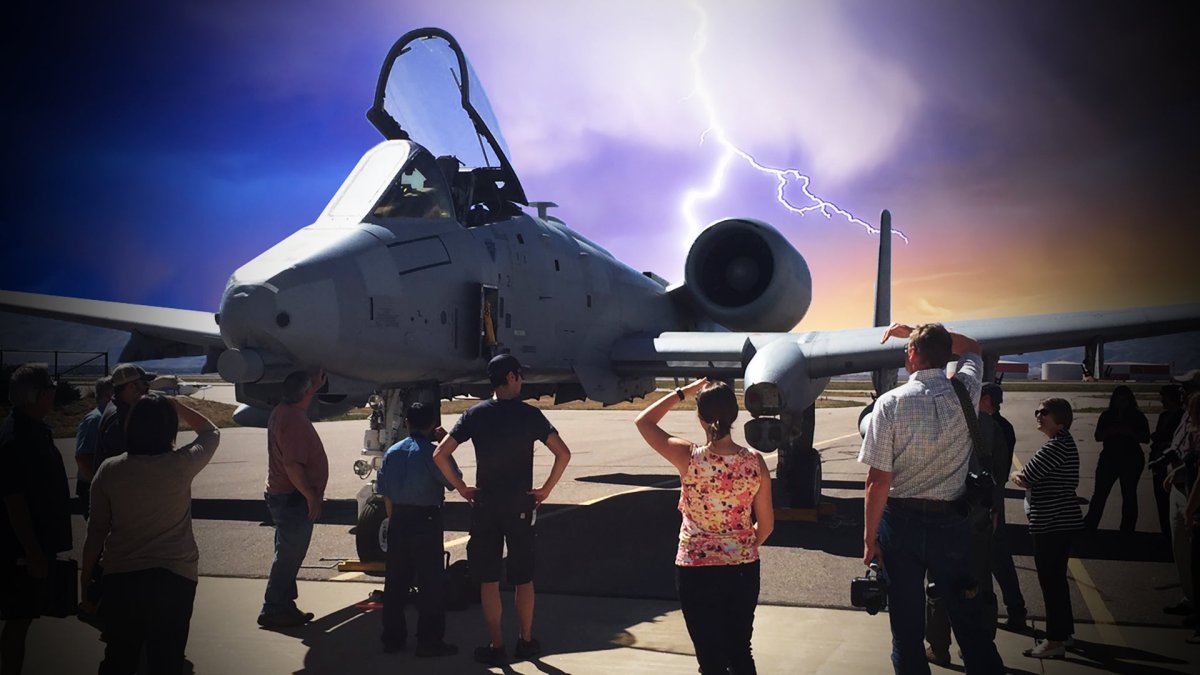
After millions were spent, the most promising storm penetrating aircraft ever devised sits partially completed in a hangar in Colorado.
新闻视频
Updated May 24, 2019 5:21 AM EDT
By 2014, a somewhat obscure program to turn an A-10 Warthog into a storm chasing laboratory the likes of which the world had never seen before had begun to make headlines, and for good reason. I was just as excited as anyone to see the legendary tank-busting attack jet finally migrate to the civilian world in the name of science. The concept was so far-fetched sounding that even one of the nation’s most famous storm chasers couldn’t believe that the headlines—including ones I had written—were true. But they were indeed legit. Spurred by a $13M grant from the National Science Foundation, a menagerie of stakeholders was hard at work making their dreams of the ultimate storm penetrating flying machine a reality. It was all one heck of a story—that is until it wasn’t.
By the end of 2016, the whole project had evaporated from the public sphere without as much as a whimper. How could such an exciting, promising, important, and highly publicized project that was well along the path to being realized simply disappear? Last winter I set out to answer this exact question, here’s what I found out.
A Tough Act To Follow
What would become known internally as the SPA-10 Thunderhog was actually intended to be the successor of a humble yet remarkable aircraft whose decades-long job was to penetrate into some of the nastiest storms Mother Nature had to offer. Compared to the flying hurricane hunters that are so well covered by the mainstream media, this aircraft was far less glamorous, but also an incredibly important scientific tool, and far more robust.
The idea of building an airplane to study storms by penetrating through them, and especially those that feature heavy hail, dates back to shortly after World War II. For decades, it was thought of as an impossible proposition at worst and an extremely dangerous one at best. But by the mid-1960s, one man, in particular, was advancing the case for and plausibility of such an aircraft. That man was Paul MacCready.
With some money from the National Science Foundation, he and his associates executed a study on which aircraft from either military or civilian stocks would be the best fit for such a punishing mission. He first came to the conclusion that the WWII era famed Douglas SBD-2 Dauntless dive-bomber was the best fit, but when he factored in the cost of operation and sustainability, the North American T-28 Trojan trainer stood out above all other alternatives.
The SBD-2 was originally selected by MacCready’s team, but the World War II era aircraft was long out of service and supportability would be a major issue., Public DOmain/Wikicommons
Regardless of the aircraft type, one factor was undeniable—no aircraft could survive high-speed impacts of three-inch size hail. The plane chosen would have to be heavily modified with armor and thus be able to lug its hardened self through gale-force winds and walls of flying ice. The slower the aircraft could safely fly, the less armor it would need, so high-speed was definitely not a high priority or even a benefit when choosing an airframe.
With the results of his study in hand, MacCready was granted funds by the Institute of Atmospheric Sciences’ NSF-funded Hailstorm Models Project to acquire the T-28 and modify it for storm research. Williams Aircraft Company spent over a year customizing the ex-Navy Trojan trainer. In the end, the work done to the aircraft was incredibly extensive. It was dressed with copious amounts of plating, its windscreen and canopy heavily modified, and its engine partially redesigned. You can read all about the work done to the one-of-a-kind flying machine here .
T-28B while in service with VT-2 in the 1970s. , National Museum Of Naval Aviation
By 1969, the aircraft began busting through hailstorms at altitudes up to 23,000 feet and withstanding impacts of hailstones three inches in diameter hitting the plane at a combined speed of 225 mph. After being passed to the Institute of Atmospheric Sciences at the South Dakota School of Mines and Technology in latter 1969, the aircraft began taking on tougher and tougher storms. Some additional modifications were applied, including an enhanced wing spar and an upgraded radial engine to provide additional power.
Throughout the 1970s, the hail-proof plane made hundreds of runs through storm clouds reliably proving that the concept was viable and the science products it produced were highly valuable to better understand storms and the hail and other atmospheric effects they produced. The T-28 went on to fly missions into countless storms collecting all types of data.
The armored T-28 could carry all types of pods and instruments. It could also take damage and get repaired quickly to fly again., NCAR
In 1987, the National Science Foundation and South Dakota School Of Mine Technology agreed to operate the aircraft cooperatively as the National Airborne Research Facility. Through the latter 1980s, 1990s, and up until being finally retired from service without replacement in 2005, the armored Trojan supported 18 major projects that focused on rain, hail, atmospheric electricity, detection of convective turbulence, cloud seeding in storms, and advanced radar data work.
Over the storm chasing T-28’s 35-year career, it had truly morphed into a multi-role flying meteorological laboratory. I don’t think anyone who brought the plane to life in 1968 would have believed it would still be doing important scientific research—literally providing potentially life-saving data—nearly 35 years after it was conceived. To think that it flew into the absolute worst conditions for an aircraft for all those years, being pummeled by hail and struck repeatedly by lightning ( read about that here ), yet it survived to be retired in good shape is really a testament to MacCready’s original vision.
There is a special section for the storm chasing T-28, registered N10WX, on the T-28 Trojan Foundation’s website. Part of a passage from pilot and meteorologist Tom Warner who flew the aircraft towards the end of its career reads:
It is important to point out that both Charlie and I felt that every time we penetrated storms, we reinforced the idea that a thunderstorm is no place for an airplane. No other plane in the world could survive in the environment we flew in, and it was only because of the armor plating (to withstand hail up to 3 inches in diameter), structural reinforcement and bulletproof canopy that enabled us to return safely each mission. Charlie used to say, “The aircraft knows how to get through a thunderstorm, you just have to stay with the aircraft.” For us, it was about keeping the right side up and the engine running. Some storms made this quite challenging.”
The T-28 was an amazingly useful aircraft but it was old—55 years of age at the time of its retirement with a whopping 2,000 in-storm hours in its logs—and it was limited as to the profiles it could fly and the loads it could carry, and thus it hit something of a plateau as to the new science it could provide. Even though saying goodbye to the Trojan was tough, those engaged in the project had their eyes set on a much more capable and modern storm penetrating machine that could build upon the N10WX’s stellar legacy.
N10WX had a rocky retirement. Apparently, it was sold and the new owner parted it out, but thankfully what was left of it found a home at the National Weather Museum in Norman, Oklahoma where people can learn all about this incredible little plane and the work it did during its three and a half decades long scientific career. , National Weather Museum
The Right Plane For The Job
The need for a more capable storm penetrating aircraft really dates back to the late 1980s and early 1990s. It was becoming clear that the Trojan had its limitations and new technologies could be put to work over a much wider flight envelope by a hardy aircraft with higher performance. By the late-1990s, the A-10 Thunderbolt was already being eyed for this exact role and the reasoning behind its final selection is abundantly clear. The same attributes that make the aircraft so effective on the battlefield would also make for an incredible storm penetrating scientific flying machine.
The A-10 was born tough, survivable, and able to operate with a relatively small logistical footprint., USAF
The Warthog was built to soak up hits from anti-aircraft artillery that would shatter other tactical jets. The aircraft’s honeycomb construction is designed to withstand strikes from small arms fire, shrapnel, and up to 23mm cannon fire. Critical parts of the jet, including the ‘titanium bathtub’ surrounding the cockpit, can withstand direct hits from 57mm anti-aircraft artillery shells. It also has redundant systems arranged on either side of the jet and its high-bypass turbofan engines are reliable, fuel efficient, and have a higher capacity to handle foreign object ingestions—like tennis ball sized hail. As a result, the armor modifications needed for an A-10 storm penetrating aircraft would be less extensive than the ones required on the T-28.
LEFT: Kim “Killer Chick” Campbell inspects damage to her A-10 after limping the jet home in one piece during a particularly violent Operation Iraq Freedom mission. RIGHT: A-10’s were built to brush off hits from ground fire and to be quickly repairable. Here an airman repairs damage to a Warthog after an Iraqi Freedom mission., USAF
The A-10’s flight controls are relatively simple and its electronic components are shielded for operations in a nuclear environment—a good thing when it comes to withstanding lightning strikes. The rugged jet is also supportable by smaller ground crews operating in less than pristine conditions and can carry a wide variety of stores on its 11 hardpoints. The huge compartment for its massive gun, once removed, would provide ample interior space for mission-specific gear and the hydraulic drive system that spun the GAU-8 Avenger cannon could be adapted to generate large amounts of auxiliary electric power.
The A-10 was built with rapid repairability of battle damage in the field in mind. This could include replacing damaged panels and structures with new ones or literally filling holes punched in its skin. These attributes are ideal for a storm penetrating aircraft that would take some damage from hail and especially from lightning strikes.
Its straight wings also meant that it could penetrate storms at slower speeds than its swept wing counterparts. At the same time, its ability to fly at much higher speeds when not flying into storms could be leveraged to do what the T-28 couldn’t—forward-deploy to distant locales or chase storms far from its base. But maybe most important of all is that the Warthog could fly at 35,000 feet—something its predecessor couldn’t come close to. This opens up new possibilities for important scientific research that has never been realized before.
Even expanding such an aircraft’s role to studying other extreme atmospheric conditions, like those that exist over forest fires, was a real possibility. But still, being able to study how rain, wind, hail, and lighting develop from inside a storm would be its primary and largely exclusive mission set.
Basically, the A-10 was better designed from the get-go to take on nasty storms than any other jet on the planet—but there would still be technical hurdles.
You can find this complete, earlier brief on the SPA-10 concept here . , UNOLS
Birth Of The Thunderhog
After the Trojan was retired, the gap left when it came to a flying storm penetrating research facility was apparent and work to acquire an A-10 to take over the role began. You can read this entire case made for the project that dates back to 2006. By 2009, the Center for Interdisciplinary Remotely Piloted Aircraft Studies (CIRPAS) at the Naval Postgraduate School was granted an A-10 on loan from the USAF for the Storm Penetrating Aircraft (SPA) mission. In 2010, North Dakota School of Mines and Technology (NDSM&T) was selected by the National Science Foundation to work with CIRPAS cooperatively on the program. CIRPAS would help with operating the aircraft and managing the operational side of the program while NDSM&T of would work the science side of the program as it had with the T-28.
Everything was looking bright for the newly minted SPA-10 Thunderhog. A-10C serial number 80-0212, the 562nd A-10 ever built, was selected for the program and partially demilitarized by the USAF before being transferred to Zivko Aeronautics in Oklahoma City in late 2013. The plan was to have additional military systems removed and replaced with their commercial counterparts—including some of its avionics. The Warthog’s 20 foot long GAU-8 Avenger cannon was removed and the aircraft was rebalanced with added ballast. Then major mission-specific modification work and testing began.
The A-10C 80-0212 arriving in Oklahoma for modifications in 2013., Andrew Detwiler
This would include the installation of anti-icing systems, additional lightning protection, and conversion of the gun bay to a partial mission equipment space with ample power generation by adapting the gun’s hydraulic drive unit. Wiring the aircraft for science payloads, onboard computers, line-of-sight and satellite data-link systems, and the addition of various instrumentation accommodations, including spaces for expendable sensors to be dropped into storms, were also to be part of the complex conversion process. Even the A-10’s muzzle protrusion was eyed as a place to mount a hardened sensor system.
A number of carbon fiber scientific payload pods were also to be developed and would need to be tested. Even though the A-10 was notoriously rugged, hail was still a concern. The USAF provided spare wing leading edges for ice cannon testing to see if any additional armoring would be required. A number of smaller areas would need limited fortification as well. You can read a risk assessment for the modification program here .
As for who would fly the aircraft, the team wanted an A-10 Air National Guard pilot who would remain current on the aircraft through the Guard, saving the program a lot of money and complication in the process. You can read a complete powerpoint brief on the modifications intended for the aircraft as well as all the science it was slated to take part in here .
The SPA-10 during the first stage of the modifications process Oklahoma. , Andrew Detwiler
By 2014, the A-10 storm penetrator conversion process was moving along. The Naval Postgraduate School even began stockpiling spare A-10 parts in anticipation of operating the aircraft. Still, a lot of challenging modification work still lay ahead, but technical difficulties would soon become the least of the program’s worries.
Originally, when the program was just beginning around the turn of the decade, it was thought that the conversion would be completed quickly, with the aircraft entering into flight testing around 2014-2015, but that wasn’t the case. In 2015, the timetable was pushed back at least two years and the program dragged on and cost soared as technical challenges persisted.
These included the need to fit the A-10’s inner wing sections with fixed ‘droop’ leading edges in place of its maneuvering slats. The issue was that ice could make it so the slats would not be able to activate. Also, without a deicing system on those leading edges, ice could accumulate and break off in huge chunks, flying right into the engines and causing major damage, or worse. The idea was that the inner leading edges could be replaced with a fixed, drooped leading edges and equipped with a deicing system. In effect, this would solve both issues.
Apparently, the drooped leading edge modification had been studied before by the USAF, but getting it designed, installed, and flight tested was a complicated and expensive endeavor, especially considering it would be done for just one aircraft. Other problems persisted as well. Just getting clean, continuous power from a generator driven by the A-10’s hydraulic gun drive unit was a challenging undertaking. Eventually, this issue was solved though.
All of the storm penetrating A-10’s technical issues could be overcome, but doing so would take time and money—two things the program was increasingly running short of. And with a large portion of the required modifications still needing to be done, where additional money would come from was beginning to be a question of growing importance.
The 80-0212 after arriving in Oklahoma but before receiving major modifications. , SDSM&T
The biggest problem the program would face wasn’t technological, though. Instead, it had to do with how exactly the aircraft would be operated and how much it would actually cost to do so. With the original grant now looking woefully insufficient, the idea that the aircraft may have to be operated and maintained to the USAF’s standards was crushing. The issue was that nobody aside from the USAF had ever owned and operated an A-10, and especially a highly modified one that flies through storms. Getting everyone to agree on just how the aircraft would be maintained and flown became increasingly contentious and convoluted. But the aftermath of a number of cataclysmic shifts at the Naval Postgraduate School, including weathering an internal scandal among its leadership and major changes to how it managed cooperative research programs, would lead to the school dropping out of the program altogether. This served a crushing blow to the already troubled program.
With this major change to the program’s architecture, the issues with operating the A-10 would go from complex to nearly insurmountable. The Navy’s involvement was key in the USAF loaning the jet out for the mission in the first place. Under that regime, at least the DoD was still managing the program and the plane’s operation, to a certain degree. The question of who would, or even could, fill the Naval Postgraduate School’s shoes became an increasingly pressing and downright critical question.
By late 2016, the publicity around the program had evaporated. The once promising initiative that had fascinated many across the country had largely imploded. The aircraft, which was well along in its modification process, but still had a number of developmental hoops to leap through, was ferried from Oklahoma to Rocky Mountain Region Airport in Broomfield, Colorado and placed in the National Center for Atmospheric Research’s (NCAR) hangar there.
The half-modified SPA-10 after arriving in Broomfield, Colorado in 2016. Shortly after this shot was taken the aircraft was put into storage at the NARF hangar at the airport. This is the last shot we have found of the SPA-10. Work that still needs to be completed includes finishing the de-icing system and other aeronautical modifications, provide for installation of data acquisition systems and mounting of instrumentation on the aircraft, and modernize the cockpit avionics and communications., Andrew Detwiler
When the aircraft went into storage in late 2016, it was thought that the National Science Foundation would make a decision as to what to do with it within six to nine months. Nearly two years later, it has done nothing of the sort.
During my research, I reached out to the National Science Foundation for comment on the program. At first, they were less than forthcoming with information. Their initial response read:
The National Science Foundation supported the operation of a storm penetration aircraft (SPA) for about 30 years using a T-28 aircraft, owned by the South Dakota School of Mines and Technology, which was retired in 2004. The community need for this capability continues and was re-affirmed at a recent workshop focused on observations in convective and turbulent environments. Any aircraft used for such purpose must be modified for safe operation, including hardening of vulnerable surfaces, lightning protection and de-icing, and to carry scientific instrumentation, which entails development of a payload power system, air-to-ground communications, hardware to carry instrumentation, etc. It is anticipated that a future SPA would carry instrumentation to measure cloud and precipitation properties, storm electrification, and chemical composition. Once modifications such as these are complete, a future SPA would be made available to the scientific community for use in studying cloud and storm environments, including severe thunderstorms and hurricanes, to address unanswered questions about the development, evolution and impacts of severe weather. The National Science Foundation (NSF) is considering options to meet the scientific and safety requirements for an operational SPA. The considerations include cost to achieve readiness as well as a good understanding of operational costs needed to meet the scientific goals. Among the options under consideration is use of an A-10 aircraft on loan from the US Air Force. NSF expects the process of aircraft modification, airworthiness testing and operator identification to be such that it will be several years before the SPA reaches operational readiness.
The National Science Foundation supported the operation of a storm penetration aircraft (SPA) for about 30 years using a T-28 aircraft, owned by the South Dakota School of Mines and Technology, which was retired in 2004. The community need for this capability continues and was re-affirmed at a recent workshop focused on observations in convective and turbulent environments. Any aircraft used for such purpose must be modified for safe operation, including hardening of vulnerable surfaces, lightning protection and de-icing, and to carry scientific instrumentation, which entails development of a payload power system, air-to-ground communications, hardware to carry instrumentation, etc. It is anticipated that a future SPA would carry instrumentation to measure cloud and precipitation properties, storm electrification, and chemical composition. Once modifications such as these are complete, a future SPA would be made available to the scientific community for use in studying cloud and storm environments, including severe thunderstorms and hurricanes, to address unanswered questions about the development, evolution and impacts of severe weather.
The National Science Foundation (NSF) is considering options to meet the scientific and safety requirements for an operational SPA. The considerations include cost to achieve readiness as well as a good understanding of operational costs needed to meet the scientific goals. Among the options under consideration is use of an A-10 aircraft on loan from the US Air Force. NSF expects the process of aircraft modification, airworthiness testing and operator identification to be such that it will be several years before the SPA reaches operational readiness.
After pushing back on this bizarre answer, which made it sound like the SPA-10 was still just an idea and not an airplane sitting idle in a hangar in Colorado, here was their reply:
The National Science Foundation (NSF) started this project with The Naval Postgraduate School (NPS) operated by the United States Navy. A commitment of $13 million dollars was provided to NPS for the modification of an aircraft, specifically an A-10 model, to render it an effective storm penetrating aircraft. This type of modification had never been done before. During the course of the project, after making progress, NPS made a determination that it could no longer participate in the project due to internal grant policies. At that point, NSF had a better understanding of the full scope, including associated costs needed to complete the project. Informed with this new information, NSF believes the prudent course of action is to initiate an analysis of the situation, and reassess the scientific goals and associated costs of meeting those goals. Any future funding would be subject to clearance by the Office of Management and Budget and Congress.
The National Science Foundation (NSF) started this project with The Naval Postgraduate School (NPS) operated by the United States Navy. A commitment of $13 million dollars was provided to NPS for the modification of an aircraft, specifically an A-10 model, to render it an effective storm penetrating aircraft. This type of modification had never been done before.
During the course of the project, after making progress, NPS made a determination that it could no longer participate in the project due to internal grant policies. At that point, NSF had a better understanding of the full scope, including associated costs needed to complete the project.
Informed with this new information, NSF believes the prudent course of action is to initiate an analysis of the situation, and reassess the scientific goals and associated costs of meeting those goals. Any future funding would be subject to clearance by the Office of Management and Budget and Congress.
I checked with a number of sources, including airport operations in Broomfield, and the half-finished SPA-10 Thunderhog is still sitting in the NCAR’s hangar to this very day. Supposedly, it gets occasional engine runs to keep the aircraft from degrading to the point where flying it again would be highly problematic and very costly.
The entire endeavor is clearly a boondoggle, but really, it shouldn’t be. We are talking about critical science here that saves lives and prevents major damage, especially to aircraft, including those owned by the USAF. Storms, and especially hail , do millions of dollars in damage to USAF and other service’s aircraft and property every year.
Storms do major damage to USAF aircraft every year. Take these F-16s at AMARG for example!, USAF
The problem of who operates this aircraft and how could be solved by the USAF taking on the mission instead of just being on hand to provide operational and engineering advice. Considering the federal government already blew many millions of dollars on the airplane and there is a highly experienced and proven team at NDSM&T that can accelerate the science, finishing the aircraft and putting it work is money very wisely spent.
The very idea that such an important laboratory needs to be created by cobbling together a team on shoestring funding is sad in itself. But this is science that really does impact the USAF’s mission. Surely there is room in a $716B defense budget to at least chip in substantially to see that the SPA-10 gets to execute its mission for the greater good? By having the USAF fly and maintain the aircraft it would solve so many problems, and maybe then the NSF could focus on funding the science side of the program exclusively.
Why you don't fly through a hail storm…if you can avoid it, that is… I wish I had the mishap photos I saw of a VS-28 Viking that passed through a hail storm….even greater damage all along the leading edges of the wings and engine cowling… (Harley Montelongo) pic.twitter.com/MX9UaQZPbu — AncientSubHunter 🇺🇦 🇮🇱🌻 (@AncientSubHunt) June 9, 2018
Why you don't fly through a hail storm…if you can avoid it, that is… I wish I had the mishap photos I saw of a VS-28 Viking that passed through a hail storm….even greater damage all along the leading edges of the wings and engine cowling… (Harley Montelongo) pic.twitter.com/MX9UaQZPbu
The bottom line here is that SPA-10 wasn’t a bad idea. It just ran into major execution hurdles and was underfunded from the get-go. This can be fixed. But until then, the fate of Thunderhog remains uncertain at best and downright dismal at worst. According to our sources, some of the remnants of the SPA-10 team recently traveled to Hill AFB to discuss the jet’s future with the new head of USAF’s A-10 systems program office. The exact results of that engagement remain unclear, but it seems more to do with keeping the USAF from repossessing the aircraft than from getting the program funded and back on track.
And there definitely is still a need. A scientific workshop that occurred in Boulder, Colorado in May of 2017 and sponsored by the National Science Foundation, Atmospheric and Geospace Sciences, and the National Center for Atmospheric Research resulted in a final report titled “Requirements for In Situ and Remote Sensing Capabilities in Convective and Turbulent Environments.” It concluded the following:
“The instrumentation of a storm-penetrating manned aircraft that can withstand severe turbulence, hail, and lightning strikes is greatly desired by investigators studying continental convection, including severe storms. Such an aircraft would allow measurement of turbulence, 3D wind, trace gases, aerosol, the electric field, and thermodynamic and cloud physical variables along its flight path. A manned aircraft is currently the only reliable way of making such measurements. A US Air Force A-10 aircraft is currently being evaluated by NSF for this role. The need for extensive aircraft modifications without Supplemental Type Certificates, and the lack of other A-10s for civilian use, make this an expensive and high-risk project, but the stakes are high for those studying severe convection.”
Andrew Detwiler, who recently retired from his position as a professor of physics at the South Dakota School of Mines and who was a lead player on the SPA-10 program and someone The War Zone spoke with extensively while developing this story, summed up why the Thunderhog is so important while speaking to Oklahoma City’s News9 back in 2015 :
“The idea is to get something into a storm to see things that you can’t see from outside the storm using radar… We’re doing it so we can understand more about how hail develops in a storm, how lightning develops, how tornadoes develop, all the different things that these storms contain… You need something inside the storm to actually close the gap and understand it completely.”
As it sits now, that gap hangs wide open for the meteorological science community and if nobody steps in to save the Thunderhog there is little chance that it will ever be closed in the foreseeable future.
Author’s Note: A very special thanks to Andrew Detwiler, previously of the South Dakota School of Mines and Technology, and Haflidi Johnson , of the Naval Postgraduate School, for taking the time to discuss the SPA-10 program with us as part of the research that was done to develop this story.
Contact the author: Tyler@thedrive.com
Comments couldn’t be loaded. Please refresh the page.
更新于美国东部时间2019年5月24日凌晨5:21
到了2014年,一项原本鲜为人知的计划——将A-10“疣猪”攻击机改造成前所未有的风暴追逐实验室——开始频频登上新闻头条,这并非没有道理。看到这款传奇的坦克杀手战机最终以科学的名义进入民用领域,我和其他人一样兴奋不已。这个概念听起来如此天方夜谭,以至于连美国最著名的风暴追逐者之一都难以置信——包括我写的那些——新闻报道竟然是真的。但它们的确属实。在国家科学基金会1300万美元的资助下,众多利益相关者正努力将他们打造终极风暴穿透飞行器的梦想变为现实。这原本是一个精彩绝伦的故事——直到它最终破灭。
到2016年底,整个项目悄无声息地从公众视野中消失了。这样一个令人兴奋、前途光明、意义重大且备受瞩目、几乎已经步入正轨的项目,怎么会就此销声匿迹呢?去年冬天,我着手寻找答案,以下是我的发现。
难以超越
这款后来被内部称为SPA-10“雷霆猪”的飞机,实际上是为一款看似不起眼却性能卓越的飞机而设计的继任者。这款飞机数十年来一直致力于深入大自然最猛烈的风暴腹地。与主流媒体大肆报道的飓风侦察机相比,这款飞机远没有那么引人注目,但它同样是一款极其重要的科学工具,而且更加坚固耐用。
建造一架飞机穿透风暴(尤其是伴有强冰雹的风暴)进行研究的想法可以追溯到二战结束后不久。几十年来,人们普遍认为这要么是天方夜谭,要么极其危险。但到了20世纪60年代中期,一位名叫保罗·麦克雷迪的人开始积极论证建造这样一架飞机的必要性和可行性。
他和同事们利用国家科学基金会的资助,开展了一项研究,旨在找出最适合执行如此艰巨任务的军用或民用飞机。起初,他认为二战时期著名的道格拉斯SBD-2“无畏”俯冲轰炸机最为合适,但考虑到运营成本和可持续性等因素后,北美T-28“特洛伊”教练机在所有备选方案中脱颖而出。
SBD-2最初是麦克雷迪团队的选择,但这款二战时期的飞机早已退役,维护保养将是一个重大问题。
无论何种机型,有一点毋庸置疑——没有任何飞机能够承受高速下直径三英寸的冰雹冲击。选定的飞机必须经过大量装甲改装,才能在狂风和飞溅的冰雹中艰难前行。飞机安全飞行速度越慢,所需的装甲就越少,因此高速飞行绝非选择机身时的首要考虑因素,甚至算不上优势。
凭借研究成果,麦克雷迪获得了美国国家科学基金会资助的大气科学研究所冰雹风暴模型项目的经费,用于购置T-28教练机并进行改装,以开展风暴研究。威廉姆斯飞机公司花费了一年多的时间对这架前海军“特洛伊”教练机进行定制改装。最终,改装工作量巨大。飞机加装了大量的金属板,挡风玻璃和座舱盖都经过大幅改造,发动机也进行了部分重新设计。您可以在这里阅读关于这架独一无二的飞行器改装的全部内容。
20世纪70年代,T-28B教练机在VT-2中队服役期间的照片。(美国海军航空博物馆藏)
到1969年,这架飞机已能突破高达23000英尺(约7000米)的冰雹风暴,并能承受直径达3英寸(约7.6厘米)的冰雹以225英里/小时(约360公里/小时)的速度撞击机身。1969年下半年,这架飞机被移交给南达科他矿业理工学院大气科学研究所,并开始挑战越来越猛烈的风暴。随后,飞机进行了一些改装,包括加固机翼翼梁和升级星型发动机以提供更强劲的动力。
整个20世纪70年代,这架防冰雹飞机数百次穿越风暴云层,可靠地证明了该概念的可行性,其产生的科学成果对于更好地了解风暴、冰雹以及它们产生的其他大气效应具有极高的价值。T-28随后执行了无数次风暴探测任务,收集了各种类型的数据。
装甲型T-28可以携带各种类型的吊舱和仪器。它还能承受损伤并快速修复,从而再次飞行。(NCAR)
1987年,美国国家科学基金会和南达科他矿业理工学院达成协议,合作运营这架飞机,作为国家机载研究设施。从20世纪80年代后期到90年代,直至2005年最终退役且未被替代,这架装甲特洛伊飞机支持了18个主要项目,这些项目主要集中在降雨、冰雹、大气电、对流湍流探测、风暴中的人工增雨以及先进雷达数据工作等方面。
在追风飞机T-28长达35年的服役生涯中,它真正蜕变为一架多用途的飞行气象实验室。我想,1968年设计这架飞机的人恐怕都不会想到,在它诞生近35年后,它依然在进行着重要的科学研究——甚至提供着可能拯救生命的宝贵数据。想想看,这么多年来,它一直在飞机飞行条件极其恶劣的环境中飞行,饱受冰雹的袭击,反复被闪电击中(点击此处阅读相关内容),却依然完好无损地退役,这真可谓是对麦克雷迪最初远见卓识的最好证明。
在T-28特洛伊基金会的网站上,有一个专门介绍注册号为N10WX的追风飞机T-28的版块。飞行员兼气象学家汤姆·华纳(Tom Warner)在其飞机服役生涯末期驾驶该飞机时,摘录了以下文字:
值得一提的是,查理和我都觉得,每次我们飞越风暴,都更加印证了雷暴天气绝对不是飞机该待的地方。世界上没有任何其他飞机能在那种环境下生存,我们之所以每次都能安全返航,全赖于机身加装的装甲板(能抵御直径达3英寸的冰雹)、结构加固和防弹座舱盖。查理常说:“飞机知道如何穿越雷暴,你只需要紧盯飞机就行了。” 对我们来说,关键在于保持飞机姿态正确,引擎运转正常。有些风暴让这一切变得异常艰难。
T-28 是一款用途极其广泛的飞机,但它毕竟老旧——退役时已服役 55 年,累计风暴飞行时间高达 2000 小时——而且其飞行航线和载重能力都受到限制,因此在科学研究方面也遇到了瓶颈。尽管告别“特洛伊”令人不舍,但参与该项目的人员已将目光投向了性能更强大、更现代化的风暴穿透机,希望能够继承 N10WX 的卓越传统。
N10WX的退役之路可谓坎坷。据说它被卖掉后,新主人又将其拆解出售,但幸运的是,剩余的部件最终落户俄克拉荷马州诺曼市的国家气象博物馆。在那里,人们可以了解这架神奇的小飞机及其在长达三十五年的科学服役生涯中所做出的贡献。
合适的飞机
对性能更强的风暴穿透飞机的需求实际上可以追溯到20世纪80年代末和90年代初。当时人们逐渐意识到“特洛伊”飞机的局限性,而更坚固耐用、性能更高的飞机能够在更宽广的飞行范围内应用新技术。到了90年代末,A-10“雷电”攻击机已被选中执行这项任务,其最终选择的理由也显而易见。正是这些使其在战场上如此高效的特性,也使其成为一款卓越的风暴穿透科学飞行器。
A-10攻击机天生坚固耐用、生存能力强,且后勤保障需求相对较小。(美国空军)
“疣猪”攻击机的设计初衷是为了承受足以摧毁其他战术喷气式飞机的防空炮火的打击。该机的蜂窝状结构能够抵御小型武器射击、弹片以及23毫米炮弹的攻击。包括环绕驾驶舱的“钛合金浴缸”在内的关键部件,甚至可以承受57毫米防空炮弹的直接命中。此外,该机两侧还配备了冗余系统,其高涵道比涡扇发动机可靠、燃油效率高,并且能够更好地应对诸如网球大小的冰雹等异物。因此,A-10“疣猪”攻击机所需的装甲改装程度远低于T-28教练机。
左图:在一次极其惨烈的“伊拉克自由行动”任务中,金·“杀手小妞”·坎贝尔驾驶着她的A-10战机艰难返航,并检查战机受损情况。右图:A-10战机的设计旨在抵御地面火力攻击并快速修复。图中一名空军士兵正在修复一架“疣猪”战机在“伊拉克自由行动”任务后的损伤。(美国空军)
A-10的飞行控制系统相对简单,其电子元件经过屏蔽处理,可在核环境下运行——这对于抵御雷击至关重要。这款坚固耐用的喷气式飞机即使在条件较为恶劣的情况下,也能由较少的地面人员进行维护,并且其11个外挂点可携带多种武器。拆除其巨型机炮的巨大舱室后,可为任务专用设备提供充足的内部空间;而驱动GAU-8“复仇者”机炮的液压驱动系统可以改装用于产生大量辅助电力。
A-10的设计初衷就是为了能够在战场上快速修复战斗损伤。这包括用新的部件替换受损的面板和结构,或者直接填补蒙皮上的破洞。这些特性对于一款能够穿透风暴、承受冰雹,尤其是雷击损伤的飞机来说至关重要。
它的直翼设计意味着它能以比后掠翼飞机更慢的速度穿透风暴。同时,它在非风暴飞行状态下拥有更高的飞行速度,这使得它能够完成T-28无法完成的任务——前沿部署到偏远地区或追逐远离基地的风暴。但或许最重要的是,“疣猪”飞机能够飞行到35000英尺的高度——这是它的前身T-28无法企及的。这为以前从未实现的重要科学研究开辟了新的可能性。
甚至将这种飞机的用途扩展到研究其他极端大气条件,例如森林火灾上空的大气条件,也是完全有可能的。但即便如此,研究风暴内部的雨、风、冰雹和闪电的形成过程,仍然是它的主要且几乎唯一的任务。
从一开始,A-10 的设计就比地球上任何其他喷气式飞机都更适合应对恶劣风暴——但仍然会遇到一些技术障碍。
您可以在这里找到关于SPA-10概念的完整早期简报。,UNOLS
雷霆猪的诞生
“特洛伊”号退役后,在飞行风暴穿透研究设施方面出现了明显的空白,于是开始着手采购A-10攻击机来接替这一任务。您可以阅读这份始于2006年的项目完整论证。到2009年,海军研究生院跨学科遥控驾驶飞机研究中心(CIRPAS)从美国空军借调了一架A-10攻击机,用于风暴穿透飞机(SPA)任务。2010年,北达科他矿业理工学院(NDSM&T)被美国国家科学基金会选中,与CIRPAS合作开展该项目。CIRPAS将负责飞机的操作和管理项目的运行方面,而NDSM&T则像之前参与T-28项目一样,负责项目的科学研究方面。
新近服役的SPA-10“雷霆野猪”攻击机一切似乎都进展顺利。这架编号为80-0212的A-10C,是史上第562架A-10攻击机,被选中参与该项目。2013年末,美国空军对其进行了部分非军事化改造,之后将其移交给位于俄克拉荷马城的Zivko Aeronautics公司。改造计划是拆除部分军用系统,并用相应的民用系统取而代之,其中包括一些航空电子设备。“疣猪”攻击机上那门20英尺长的GAU-8“复仇者”机炮被拆除,并通过增加压舱物来重新平衡机身。随后,针对特定任务的重大改装和测试工作正式展开。
2013年,A-10C 80-0212抵达俄克拉荷马州进行改装。(安德鲁·德特维勒摄)
这包括安装防冰系统、加强防雷保护,以及将机炮舱改造成部分任务设备舱,并通过改造机炮的液压驱动装置来提供充足的电力。此外,复杂的改装过程还包括为飞机安装科学载荷、机载计算机、视距和卫星数据链系统,以及增加各种仪器舱位,包括用于投放一次性传感器的空间,以便在风暴中执行任务。甚至A-10的炮口突出部分也被考虑用于安装加固的传感器系统。
此外,还需要开发并测试一些碳纤维科学载荷吊舱。尽管A-10以其坚固耐用而闻名,但冰雹仍然是一个令人担忧的问题。美国空军提供了备用机翼前缘用于冰炮测试,以确定是否需要额外的装甲。一些较小的区域也需要进行有限的加固。您可以在这里阅读改装方案的风险评估报告。
至于谁来驾驶这架飞机,团队希望由一名国民警卫队A-10飞行员驾驶,并通过国民警卫队保持飞行技能的熟练度,这样可以为项目节省大量资金并简化流程。您可以在这里阅读一份完整的PPT简报,了解飞机的改装计划以及它计划参与的所有科学实验。
SPA-10 在俄克拉荷马州改装过程的第一阶段。,安德鲁·德特维勒
到2014年,A-10风暴穿透攻击机的改装工作进展顺利。海军研究生院甚至开始储备A-10的备用零部件,以备投入使用。尽管如此,仍有许多极具挑战性的改装工作等待着我们,但技术难题很快就会成为该项目最不令人担忧的问题。
最初,该项目于十年前左右启动时,人们认为改装工作会很快完成,飞机将在2014-2015年左右进入飞行测试阶段,但事实并非如此。2015年,时间表至少推迟了两年,由于技术难题持续存在,项目进展缓慢,成本也大幅飙升。
其中包括需要用固定的“下垂式”前缘取代A-10的机动缝翼。问题在于,冰层会导致缝翼无法正常工作。此外,如果没有除冰系统,这些前缘上的冰会积聚并脱落成大块,直接飞入发动机,造成严重损坏,甚至更糟。因此,设想是用固定的下垂式前缘替换原有的前缘,并配备除冰系统。这样就能同时解决这两个问题。
显然,美国空军之前就研究过这种下垂式前缘改进方案,但要完成设计、安装和飞行测试却是一项复杂而昂贵的工程,尤其考虑到这项改进仅用于一架飞机。其他问题也依然存在。仅仅是从A-10液压机炮驱动装置驱动的发电机中获得稳定、持续的电力就极具挑战性。不过,最终这个问题还是得到了解决。
所有阻碍A-10突破的技术难题都可以克服,但这需要时间和资金——而这两样东西,该项目正日益捉襟见肘。此外,由于大部分必要的改进工作仍待完成,额外的资金来源问题也变得愈发重要。
80-0212 型机车抵达俄克拉荷马州后,但在进行重大改装之前。,SDSM&T
然而,该项目面临的最大问题并非技术层面,而是飞机的具体操作方式以及实际成本。最初的拨款如今看来远远不够,而飞机可能必须按照美国空军的标准进行操作和维护,这无疑令项目雪上加霜。问题在于,除了美国空军之外,此前没有任何机构拥有和操作过A-10攻击机,尤其是经过高度改装、能够在风暴中飞行的A-10。如何就飞机的维护和飞行方式达成一致变得越来越棘手和复杂。此外,海军研究生院经历了一系列剧变,包括领导层内部丑闻以及合作研究项目管理方式的重大变革,最终导致该校彻底退出该项目。这对本已举步维艰的项目来说无疑是雪上加霜。
随着项目架构的重大改变,A-10的运行问题将从复杂变得几乎无法克服。海军的参与是美国空军最初将战机借出执行任务的关键。在当时的体制下,至少国防部仍然在一定程度上管理着该项目和战机的运行。谁能,或者说谁能够,来填补海军研究生院留下的空缺,这个问题变得越来越紧迫,也越来越关键。
到2016年底,围绕该项目的宣传热度已荡然无存。这项曾经吸引全国目光、前景光明的计划如今已基本宣告失败。这架飞机当时改装工作已接近尾声,但仍需完成一系列研发环节。它从俄克拉荷马州被运送到科罗拉多州布鲁姆菲尔德的落基山地区机场,并停放在美国国家大气研究中心(NCAR)的机库中。
这架经过半改装的SPA-10于2016年抵达科罗拉多州布鲁姆菲尔德。照片拍摄后不久,飞机便被存放于机场的NARF机库中。这是我们找到的SPA-10的最后一张照片。待完成的工作包括:完成除冰系统和其他航空改装;安装数据采集系统和飞机上的仪器;以及对驾驶舱航电和通信系统进行现代化改造。——安德鲁·德特维勒
这架飞机于2016年底封存时,人们认为美国国家科学基金会会在六到九个月内决定如何处置它。然而,近两年过去了,基金会仍未做出任何决定。
在研究过程中,我曾联系美国国家科学基金会,希望就该项目发表评论。起初,他们并未提供太多信息。他们的初步回复如下:
美国国家科学基金会曾资助南达科他矿业理工学院使用T-28飞机运行风暴穿透飞机(SPA)约30年,该飞机于2004年退役。科学界对这种能力的需求依然存在,并在最近一次以对流和湍流环境观测为主题的研讨会上再次得到确认。任何用于此类用途的飞机都必须进行改装以确保安全运行,包括加固易损表面、安装防雷装置和除冰设备,以及搭载科学仪器。这需要开发有效载荷电源系统、空地通信系统、仪器搭载硬件等。预计未来的SPA将搭载用于测量云和降水特性、风暴起电以及化学成分的仪器。一旦完成这些改装,未来的SPA将向科学界开放,用于研究云和风暴环境,包括强雷暴和飓风,以解答有关极端天气的形成、演变和影响的未解之谜。美国国家科学基金会 (NSF) 正在考虑各种方案,以满足运行型 SPA 的科学和安全要求。考虑因素包括达到作战准备状态所需的成本,以及对实现科学目标所需运行成本的充分了解。正在考虑的方案之一是从美国空军借用 A-10 飞机。NSF 预计,飞机改装、适航测试和运营商遴选等流程将耗时数年,SPA 才能达到作战准备状态。
美国国家科学基金会曾资助南达科他矿业理工学院使用T-28飞机运行风暴穿透飞机(SPA)约30年,该飞机于2004年退役。科学界对这种能力的需求依然存在,并在最近一次以对流和湍流环境观测为主题的研讨会上再次得到确认。任何用于此类用途的飞机都必须进行改装以确保安全运行,包括加固易损表面、安装防雷装置和除冰设备,以及搭载科学仪器。这需要开发有效载荷电源系统、空地通信系统、仪器搭载硬件等。预计未来的SPA将搭载用于测量云和降水特性、风暴起电以及化学成分的仪器。一旦完成这些改装,未来的SPA将向科学界开放,用于研究云和风暴环境,包括强雷暴和飓风,以解答有关极端天气的形成、演变和影响的未解之谜。
美国国家科学基金会 (NSF) 正在考虑各种方案,以满足运行型 SPA 的科学和安全要求。考虑因素包括达到作战准备状态所需的成本,以及对实现科学目标所需运行成本的充分了解。正在考虑的方案之一是从美国空军借用 A-10 飞机。NSF 预计,飞机改装、适航测试和运营商遴选等流程将耗时数年,SPA 才能达到作战准备状态。
在对这个奇怪的回答提出质疑后(这个回答让人觉得SPA-10还只是一个概念,而不是一架闲置在科罗拉多州机库里的飞机),他们的回复如下:
美国国家科学基金会 (NSF) 与美国海军下属的海军研究生院 (NPS) 共同启动了该项目。NSF 向 NPS 提供了 1300 万美元的资金,用于改装一架飞机,具体型号为 A-10,使其成为有效的风暴穿透飞机。这种改装此前从未进行过。项目进行过程中,在取得一定进展后,NPS 因内部拨款政策的限制,决定不再参与该项目。此时,NSF 对项目的全部范围,包括完成项目所需的全部成本,有了更清晰的了解。基于这些新信息,NSF 认为审慎的做法是启动一项情况分析,重新评估科学目标以及实现这些目标所需的成本。任何未来的拨款都将需要获得管理和预算办公室以及国会的批准。
美国国家科学基金会(NSF)与美国海军下属的海军研究生院(NPS)合作启动了该项目。NSF向NPS拨款1300万美元,用于改装一架飞机,具体来说是A-10型攻击机,使其成为有效的风暴穿透飞机。这种改装方式此前从未有过。
项目进行过程中,在取得一定进展后,由于内部拨款政策的限制,美国国家公园管理局(NPS)决定不再参与该项目。此时,美国国家科学基金会(NSF)对项目的全部范围,包括完成项目所需的全部成本,有了更清晰的了解。
鉴于这些新信息,美国国家科学基金会认为审慎的做法是启动情况分析,并重新评估科学目标以及实现这些目标的相关成本。任何未来的拨款都将需经管理和预算办公室以及国会批准。
我向包括布鲁姆菲尔德机场运营部门在内的多个消息来源核实过,那架尚未完工的SPA-10“雷霆猪”战斗机至今仍停放在NCAR的机库里。据说,为了防止飞机性能进一步恶化到无法再次飞行且维修成本高昂的地步,NCAR会定期进行发动机运转测试。
整个项目显然是浪费钱,但实际上不应该如此。我们谈论的是至关重要的科学,它能拯救生命,防止重大损失,尤其是对飞机,包括美国空军的飞机。风暴,特别是冰雹,每年都会给美国空军和其他军种的飞机和财产造成数百万美元的损失。
风暴每年都会对美国空军飞机造成重大损失。以AMARG的这些F-16战斗机为例!
谁来操作这架飞机以及如何操作的问题,可以通过美国空军亲自执行任务来解决,而不仅仅是提供操作和工程方面的建议。考虑到联邦政府已经在这架飞机上投入了数百万美元,而且国防科技研究院(NDSM&T)拥有一支经验丰富、实力雄厚的团队,能够加快相关科学研究,那么完成飞机的建造并投入使用,无疑是一笔非常明智的投资。
如此重要的实验室竟然需要靠捉襟见肘的资金拼凑团队来建立,这本身就令人唏嘘。但这项科学研究确实对美国空军的任务有着深远的影响。在7160亿美元的国防预算中,难道就没有余力至少提供相当可观的资金,确保SPA-10能够顺利完成其造福大众的任务吗?如果由美国空军负责飞行和维护这架飞机,就能解决诸多问题,或许届时美国国家科学基金会(NSF)就可以专注于资助该项目的科研部分了。
为什么不要飞越冰雹风暴……如果可以避免的话……我真希望我能找到我看到的那架VS-28“维京”潜艇遭遇冰雹风暴的照片……机翼前缘和发动机罩都受到了更严重的损坏……(哈雷·蒙特隆戈)pic.twitter.com/MX9UaQZPbu — AncientSubHunter 🇺🇦 🇮🇱🌻 (@AncientSubHunt) June 9, 2018
为什么不要飞越冰雹风暴……如果可以避免的话……我真希望我能找到我看到的那架VS-28“维京”战斗机遭遇冰雹风暴的照片……机翼前缘和发动机罩都受到了更严重的损坏……(哈雷·蒙特隆戈)pic.twitter.com/MX9UaQZPbu
归根结底,SPA-10 本身并不是一个糟糕的想法。它只是遇到了严重的执行障碍,而且从一开始就资金不足。这些问题是可以解决的。但在此之前,“雷霆猪”(Thunderhog)的命运充其量也只能说是前途未卜,最坏的情况则是彻底绝望。据我们的消息来源称,SPA-10 团队的部分成员最近前往希尔空军基地,与美国空军 A-10 系统项目办公室的新任负责人讨论了该战机的未来。此次会谈的具体结果尚不清楚,但似乎更多是为了避免美国空军收回该战机,而不是为了获得资金并让项目重回正轨。
而且,这方面的需求依然存在。2017年5月,由美国国家科学基金会大气与地空科学部和国家大气研究中心赞助,在科罗拉多州博尔德市举办了一次科学研讨会,最终形成了一份题为《对流和湍流环境下原位和遥感能力的需求》的报告。该报告得出以下结论:
研究大陆对流(包括强对流风暴)的科研人员迫切需要一种能够穿透风暴、承受强烈湍流、冰雹和雷击的载人飞机。这种飞机可以测量其飞行路径上的湍流、三维风场、痕量气体、气溶胶、电场以及热力学和云物理变量。目前,载人飞机是进行此类测量的唯一可靠方法。美国国家科学基金会(NSF)正在评估一架美国空军的A-10飞机是否适合执行此项任务。由于需要对飞机进行大量改装且无法获得补充型号合格证,加上民用A-10飞机数量有限,使得该项目成本高昂且风险巨大,但对于研究强对流的科研人员来说,其意义重大。
安德鲁·德特维勒(Andrew Detwiler)最近从南达科他矿业学院物理学教授的职位上退休,他是SPA-10项目的主要参与者,也是《战区》在撰写这篇报道时曾深入采访过的人。早在2015年,他在接受俄克拉荷马城News9电视台采访时就总结了“雷霆猪”(Thunderhog)导弹为何如此重要:
“我们的想法是把某种东西送入风暴内部,以便看到用雷达从风暴外部无法看到的东西……我们这样做是为了更好地了解冰雹、闪电、龙卷风在风暴中是如何形成的,以及这些风暴中包含的所有其他现象……你需要某种东西进入风暴内部,才能真正弥合差距,并彻底了解它。”
就目前的情况来看,气象科学界仍然存在着一个巨大的空白,如果没有人出手拯救雷霆猪,那么在可预见的未来,这个空白几乎没有可能被填补。
作者注:特别感谢南达科他矿业理工学院的 Andrew Detwiler 和海军研究生院的 Haflidi Johnson,感谢他们抽出时间与我们讨论 SPA-10 项目,这是我们为撰写本文而进行的研究的一部分。
联系作者:Tyler@thedrive.com
评论加载失败,请刷新页面。