Historic Topgun Hangar At Marine Corps Air Station Miramar Is Notoriously Haunted位于米拉马尔海军陆战队航空站的历史悠久的“壮志凌云”机库以闹鬼而闻名
The famous hangar was the site of a horrific tragedy and there have been persistent reports of ghostly phenomena ever since.
Updated Dec 1, 2019 7:10 AM EST
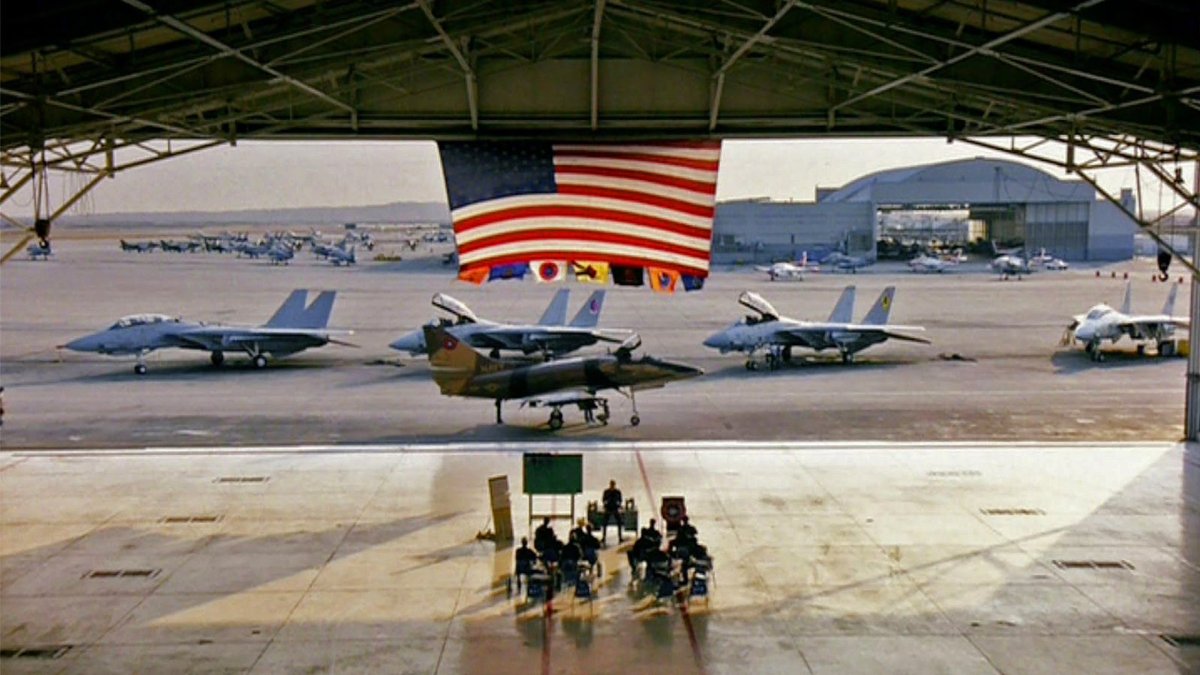
When it comes to haunted military installations, ships, and even airplanes, one place pops into my mind above all others. That place is Miramar’s historic Hangar One that hosted the Navy Fighter Weapons School, better known as Topgun, for decades and was also featured in the cult classic flick by the same name.
There are plenty of recollections of Hangar One being haunted floating around. I stumbled upon this lore by happenstance way back in mid-1990s when I spent time at the base, then known proudly as ‘Fightertown USA,’ as a teenager thanks to a friend of the family. This included some extended time in the F-14A simulator, which was a real highlight to this very day. When we were in VF-101’s hangars, which were situated across from the group of hangars that supported the adversary program and Topgun, some sailors were swapping a Tomcat’s engine and mentioned that they would be there till late that night. The other sailor replied something like, “rather here than in Hangar One, late nights there were creepy as hell!” I asked the high-time Tomcat instructor that was hosting me what the deal was and he said the place is notorious for being haunted.
As the years have passed, that stuck with me and I have asked other Topgun personnel about the haunting. Some had personal experiences usually surrounding the labyrinth of offices that are arranged above the hangar bay. One even heard a massive crash and screams while working late in one of the bays, only to find the place peaceful and empty.
The hangar definitely has seen a lot of history. Here’s how Paul Nickell, who was a student at Topgun and an instructor back in the 1980s, described the place in our exclusive series on taming the Tomcat and flying for the elite Navy Fighter Weapons School:
“I think it was the second oldest hangar at Miramar, but it was designated Hangar One. It sat at the east end of Runway 24 Right, just to the north of the hold short line. Most likely built in the 1950s, it wasn’t there in the early 1940s when my dad was stationed at then Camp Kearny as a B-24 radioman. It had survived a flamed out pilotless F-8 Crusader crashing into it in December of 1969, a tragedy that took 14 lives. Across the north side of the hangar, facing the road, in huge deep-blue block letters was the word “TOPGUN.” At the time, Topgun was not a household word. The average American had no idea what it was, but that would change soon. After parking in the lot across the street, we walked past a couple of large dumpsters on the side of the parking lot entrance, crossed the street, climbed a few steps and returned a salute from the gate guard. About 50 feet away, in the northeast corner of the hanger, was a single width blue metal door. Above the door was a white metal sign screwed to the corrugated grey metal siding which read “WELCOME TO NAVY FIGHTER WEAPONS SCHOOL” in black stenciled letters. In the center of the sign was a large sticker of the Topgun emblem. Entering the door, we were in a stairwell that went halfway up and then switched back to complete the journey to the second level. The walls of the stairwell were painted gloss white and were covered with neatly spaced red silhouettes of MiG aircraft kills from Vietnam. Below each were the aircrew names and the date of the kill. Additionally, there were two recent silhouettes from Libya. At the top of the stairs, we turned left and started down a hallway. The right side was solid and was the exterior wall of the hangar. There was one opening on the right, about the size of a double door, with an accordion metal contraption across it so that no one would accidentally walk out the opening and fall 20 feet to the ramp below. The remainder of the wall was covered with a small group of pictures of the current Topgun staff and plaques. There were several rows of plaques that ran the length of the hallway, probably 100 yards or more. Each plaque was a gift from a crew that had attended training at Topgun, and each had a unique story behind it. There were literally hundreds of them. Down the left side of the hallway were the squadron spaces. The CO and XO offices were first with a secretary in front. There was a small ready room where the Squadron Duty Officer sat during flight ops. There were several small groups of briefing and debriefing rooms, along with two relatively large classrooms. Beyond that was the operations office and the training office. We were directed into Classroom One which was walled with 4X8 sheets of imitation wood paneling. There were tables and chairs to seat about 35 students plus a row of chairs with no tables across the back for additional guests. The left side of the classroom had a single air conditioning window unit that dumped the heat and humidity from the classroom into the hangar. There were a few large TV’s in the corners. At the front of the classroom was a whiteboard, a podium, and an opaque plastic screen that slides could be projected onto from behind. At numerous places around the room there were models of different types of US and threat fighter aircraft attached to wooden dowels that could be used for briefing and debriefing purposes. Most of the furnishings of this room and the rest of the spaces had probably been lifted from somewhere else on the base or traded for through the Navy supply system. Obviously, none of it appeared nice enough to have had origins on an Air Force base.”
“I think it was the second oldest hangar at Miramar, but it was designated Hangar One. It sat at the east end of Runway 24 Right, just to the north of the hold short line. Most likely built in the 1950s, it wasn’t there in the early 1940s when my dad was stationed at then Camp Kearny as a B-24 radioman. It had survived a flamed out pilotless F-8 Crusader crashing into it in December of 1969, a tragedy that took 14 lives.
Across the north side of the hangar, facing the road, in huge deep-blue block letters was the word “TOPGUN.” At the time, Topgun was not a household word. The average American had no idea what it was, but that would change soon. After parking in the lot across the street, we walked past a couple of large dumpsters on the side of the parking lot entrance, crossed the street, climbed a few steps and returned a salute from the gate guard. About 50 feet away, in the northeast corner of the hanger, was a single width blue metal door. Above the door was a white metal sign screwed to the corrugated grey metal siding which read “WELCOME TO NAVY FIGHTER WEAPONS SCHOOL” in black stenciled letters. In the center of the sign was a large sticker of the Topgun emblem.
Entering the door, we were in a stairwell that went halfway up and then switched back to complete the journey to the second level. The walls of the stairwell were painted gloss white and were covered with neatly spaced red silhouettes of MiG aircraft kills from Vietnam. Below each were the aircrew names and the date of the kill. Additionally, there were two recent silhouettes from Libya.
At the top of the stairs, we turned left and started down a hallway. The right side was solid and was the exterior wall of the hangar. There was one opening on the right, about the size of a double door, with an accordion metal contraption across it so that no one would accidentally walk out the opening and fall 20 feet to the ramp below. The remainder of the wall was covered with a small group of pictures of the current Topgun staff and plaques. There were several rows of plaques that ran the length of the hallway, probably 100 yards or more. Each plaque was a gift from a crew that had attended training at Topgun, and each had a unique story behind it. There were literally hundreds of them.
Down the left side of the hallway were the squadron spaces. The CO and XO offices were first with a secretary in front. There was a small ready room where the Squadron Duty Officer sat during flight ops. There were several small groups of briefing and debriefing rooms, along with two relatively large classrooms. Beyond that was the operations office and the training office. We were directed into Classroom One which was walled with 4X8 sheets of imitation wood paneling. There were tables and chairs to seat about 35 students plus a row of chairs with no tables across the back for additional guests.
The left side of the classroom had a single air conditioning window unit that dumped the heat and humidity from the classroom into the hangar. There were a few large TV’s in the corners. At the front of the classroom was a whiteboard, a podium, and an opaque plastic screen that slides could be projected onto from behind. At numerous places around the room there were models of different types of US and threat fighter aircraft attached to wooden dowels that could be used for briefing and debriefing purposes. Most of the furnishings of this room and the rest of the spaces had probably been lifted from somewhere else on the base or traded for through the Navy supply system.
Obviously, none of it appeared nice enough to have had origins on an Air Force base.”
So yeah, Hangar One provided a fairly rustic working environment considering the leading-edge of Navy fighter tactics development emanated from there for a quarter of a century.
The famous stairwell at Topgun’s original headquarters at NAS Miramar. The school is now located at NAS Fallon in far more modern accommodations. , USN
The horrific crash that Paul Nickell mentions is largely regarded as the source of supposed hauntings. The accident was horrendous, literally a worst case scenario, that took multiple lives and left the hangar with noticeable scars. The convergence of this historic tragedy and the strange happenings that persisted inside the hangar even after the Navy turned the facility over to the U.S. Marine Corps in 1997 resulted in an official story from the USMC about it. Although the story is no longer accessible on the Marine Corps’ site, it has been posted around the net. It reads in full:
Haunted History spooks Hangar One Submitted by: MCAS Miramar Story Identification Number: 200419113431 Story by Cpl. Tara Dawn Smith MARINE CORPS AIR STATION MIRAMAR, Calif. (Jan. 8, 2004) History is something that lives anew whenever events and lives of the past are revisited for reflection or examination. However, it seems that in the case of Hangar One, occasionally history visits the present … in the form of ghosts. According to Joe Glasser, Martin-Baker representative at Miramar, there are those who have encountered the non-corporeal inhabitants of the hangar. Glasser explained one such ghostly event occurred one late afternoon when then Naval Air Station Miramar was transitioning into Marine Corps Air Station Miramar. An officer, from Marine Aircraft Group 11 then located at MCAS El Toro, knocked on the hatch of Glasser’s office and explained he would be surveying the offices in the hangar’s upstairs. Twenty minutes passed and again the officer was at Glasser’s hatch. This time however, the officer was out of breath and visibly lighter in color, said Glasser. When the Marine officer was able to articulate his concern, he asked if there were reports of unusual occurrences in the catwalks of the building. Glasser commented that he had heard rumors of “visitations from a netherly realm,” but hadn’t experienced first hand accounts. The officer then related his account of the events from his inspection of the upper offices in the hangar. Long hallways upstairs make it difficult for some to slip away from view quickly. So, when the MAG-11 officer heard footsteps and saw an opaque shadow through the frosted glass of the office, he expected to be greeted by someone walking the corridors. What he found appeared to be quite unsettling, said Glasser. When the officer opened the door to look for the person generating the footsteps and shadow, he saw nothing more than an empty hallway. These brushes with the supernatural begs the question, what past events of the hangar could cause it to be possessed by former and now deceased residents of the building? Jim Bradbury, the Martin-Baker representative in 1969, might know something about the haunted history of Hangar One. Bradbury explained he was visiting the base on business on Dec. 22, 1969 when he witnessed a tragic event that left 14 dead. The pilot of an F-8 crusader of Fighter Squadron 191 safely ejected over Kearny Villa Rd. after the engine of the plane seized, but the plane continued its course that passed through the hangar doors crashing into the north wall. The crash sent fuel spilling that ignited and engulfed several mechanics in the hangar. One ejection seat mechanic was working on a seat in a plane at the time of the event and was ejected into the roof of the hangar. Six F-4 phantoms stationed in the hangar were destroyed in the collision. Fissures that are still visible in the wall of the hangar serve as a scar of the crash. The hauntings and lasting damage to the hangar aren’t the only way this tragedy, and sacrifice of service members who paid the ultimate price, live on. A more concrete monument that stands as a testament to the event is a memorial located on the golf course that commemorates those killed in Hangar One on Dec. 22, 1969. A plaque with the names of all the deceased rests south of the driving range keeping the memory and history of those servicemembers alive.
Haunted History spooks Hangar One
Submitted by: MCAS Miramar
Story Identification Number: 200419113431
Story by Cpl. Tara Dawn Smith
MARINE CORPS AIR STATION MIRAMAR, Calif. (Jan. 8, 2004)
History is something that lives anew whenever events and lives of the past are revisited for reflection or examination. However, it seems that in the case of Hangar One, occasionally history visits the present … in the form of ghosts.
According to Joe Glasser, Martin-Baker representative at Miramar, there are those who have encountered the non-corporeal inhabitants of the hangar. Glasser explained one such ghostly event occurred one late afternoon when then Naval Air Station Miramar was transitioning into Marine Corps Air Station Miramar.
An officer, from Marine Aircraft Group 11 then located at MCAS El Toro, knocked on the hatch of Glasser’s office and explained he would be surveying the offices in the hangar’s upstairs. Twenty minutes passed and again the officer was at Glasser’s hatch.
This time however, the officer was out of breath and visibly lighter in color, said Glasser.
When the Marine officer was able to articulate his concern, he asked if there were reports of unusual occurrences in the catwalks of the building. Glasser commented that he had heard rumors of “visitations from a netherly realm,” but hadn’t experienced first hand accounts. The officer then related his account of the events from his inspection of the
upper offices in the hangar.
Long hallways upstairs make it difficult for some to slip away from view quickly. So, when the MAG-11 officer heard footsteps and saw an opaque shadow through the frosted glass of the office, he expected to be greeted by someone walking the corridors. What he found appeared to be quite unsettling, said Glasser.
When the officer opened the door to look for the person generating the footsteps and shadow, he saw nothing more than an empty hallway.
These brushes with the supernatural begs the question, what past events of the hangar could cause it to be possessed by former and now deceased residents of the building? Jim Bradbury, the Martin-Baker representative in 1969, might know something about the haunted history of Hangar One.
Bradbury explained he was visiting the base on business on Dec. 22, 1969 when he witnessed a tragic event that left 14 dead.
The pilot of an F-8 crusader of Fighter Squadron 191 safely ejected over Kearny Villa Rd. after the engine of the plane seized, but the plane continued its course that passed through the hangar doors crashing into the north wall. The crash sent fuel spilling that ignited and engulfed several mechanics in the hangar. One ejection seat mechanic was working on a seat in a plane at the time of the event and was ejected into the roof of the hangar. Six F-4 phantoms stationed in the hangar were destroyed in the collision. Fissures that are still visible in the wall of the hangar serve as a scar of the crash.
The hauntings and lasting damage to the hangar aren’t the only way this tragedy, and sacrifice of service members who paid the ultimate price, live on.
A more concrete monument that stands as a testament to the event is a memorial located on the golf course that commemorates those killed in Hangar One on Dec. 22, 1969. A plaque with the names of all the deceased rests south of the driving range keeping the memory and history of those servicemembers alive.
The aftermath of the 1969 F-8 crash., Public Domain
A few years ago, I was talking with a technician who spent time in the facility back in the 1990s. He relayed some of the creepy stories he had heard of and one he experienced himself having to do with a shadow-like human figure approaching him head-on in a hallway before suddenly disappearing. I asked if he had heard any new reports of the Hangar still being haunted. He replied:
“When the ghosts finally realized the base had been turned over to the fucking Marine Corps they probably got the hell out of there too!”
You gotta love old sailors, even tragedy and manifesting spirits can’t keep their sense of irony and humor down.
Contact the author: Tyler@thedrive.com
Comments couldn’t be loaded. Please refresh the page.
更新于美国东部时间2019年12月1日上午7:10
说到闹鬼的军事设施、舰船甚至飞机,我脑海中第一个浮现的地方就是米拉马尔海军航空站历史悠久的1号机库。几十年来,这里一直是海军战斗机武器学校(更广为人知的名称是“壮志凌云”)的所在地,也是同名经典影片的取景地。
关于一号机库闹鬼的传闻不绝于耳。我是在上世纪九十年代中期偶然听说的这些传闻。当时我还是个十几岁的少年,在一位朋友的介绍下,我曾在这个基地待过一段时间,那时它还被人们自豪地称为“美国战斗机之城”。期间,我在F-14A模拟器上待了很长时间,直到今天,那仍然是我人生中的一大亮点。当时我们在VF-101中队的机库里,这些机库位于支持假想敌项目和“壮志凌云”训练的机库群对面。几个水兵正在更换一架“雄猫”战斗机的发动机,他们说要待到很晚。另一个水兵回答说:“我宁愿待在这里,也不想去一号机库,那里的夜晚真是阴森恐怖!”我问接待我的那位经验丰富的“雄猫”教官是怎么回事,他说那里闹鬼是出了名的。
多年过去,这件事一直萦绕在我心头,我也曾向其他“壮志凌云”空军基地的工作人员询问过闹鬼事件。有些人有过亲身经历,通常都发生在机库上方迷宫般的办公区域附近。有人甚至在其中一个机库加班时听到一声巨响和尖叫,结果却发现那里一片寂静,空无一人。
这个机库无疑见证了许多历史。保罗·尼克尔曾在上世纪80年代就读于“壮志凌云”战斗机训练学校,并担任过该校教官。以下是他在我们的独家系列报道中对这个地方的描述,该系列报道讲述了他如何驯服“雄猫”战斗机并为这所精英海军战斗机武器学校效力:
“我想它应该是米拉马尔空军基地第二古老的机库,但它被命名为一号机库。它位于24号右跑道的东端,就在等待线北侧。它很可能建于20世纪50年代,在我父亲20世纪40年代初作为B-24轰炸机无线电员驻扎在当时的卡尼营地时,它还不存在。1969年12月,一架无人驾驶的F-8十字军战士战斗机撞上了它,那场悲剧夺去了14条生命,而它幸存了下来。机库北侧,面向马路的地方,用巨大的深蓝色粗体字母写着“TOPGUN”(壮志凌云)。”当时,“壮志凌云”(Topgun)这个词还鲜为人知。普通美国人对此一无所知,但这种情况很快就会改变。我们把车停在街对面的停车场,经过停车场入口旁几个大垃圾箱,穿过马路,爬上几级台阶,向门口的警卫敬了个礼。大约50英尺外,在机库的东北角,有一扇单扇蓝色金属门。门上方,一块白色金属牌用螺丝固定在灰色波纹金属板上,上面用黑色镂空字体写着“欢迎来到海军战斗机武器学校”。牌子中央贴着一张醒目的“壮志凌云”标志贴纸。推开门,我们来到一个楼梯间,楼梯先向上延伸到一半,然后折返,最终到达二楼。楼梯间的墙壁被漆成亮白色,上面整齐地排列着越南战争中击落的米格战机的红色剪影。每个剪影下方都标有机组人员的姓名和击落日期。此外,还有两幅近期利比亚的剪影。上到楼梯顶端,我们左转,沿着走廊走去。走廊右侧是实心墙,是机库的外墙。右侧有一个开口,大约双扇门大小,上面装有一个折叠式金属装置,防止有人意外走出开口,从20英尺高的地方摔到下面的坡道上。墙的其余部分挂着一小排现任“壮志凌云”训练队成员的照片和纪念牌匾。走廊里有好几排牌匾,绵延约100码甚至更长。每块牌匾都是曾在“壮志凌云”训练队接受过训练的队员赠送的,背后都有一个独特的故事。牌匾的数量多达数百块。走廊左侧是中队办公区。指挥官和副指挥官的办公室在最前面,前面有一位秘书。还有一个小型准备室,飞行任务期间中队值班军官就坐在那里。走廊两侧还有几间小型简报室和汇报室。这里有两间相对较大的教室。教室后面是作战办公室和训练办公室。我们被带到一号教室,教室墙壁上贴着4英尺乘8英尺的仿木镶板。教室里有桌椅,大约能坐下35名学生,后面还有一排没有桌子的椅子,供其他客人使用。教室左侧有一台窗式空调,把教室里的热气和湿气排到机库里。角落里放着几台大电视。教室前面有一块白板、一个讲台和一个不透明的塑料幕布,可以从后面投影幻灯片。教室周围很多地方都挂着各种美国和敌方战斗机的模型,这些模型用木棍固定着,可以用来做简报和汇报。这间教室以及其他房间的大部分家具很可能是从基地其他地方搬过来的,或者是通过海军后勤系统交换来的。显然,这些东西看起来都不像是从空军基地里搬出来的。
“我想它应该是米拉马尔空军基地第二古老的机库,但它被命名为一号机库。它位于24号右跑道的东端,就在等待线北侧。它很可能建于20世纪50年代,在我父亲20世纪40年代初作为B-24轰炸机无线电员驻扎在当时的卡尼营地时,它还不存在。1969年12月,一架无人驾驶的F-8十字军战士战斗机撞上了它,那场悲剧夺去了14条生命,而它幸存了下来。”
在机库北侧,面向马路的地方,用巨大的深蓝色粗体字母写着“TOPGUN”。当时,“TOPGUN”这个词并不为人熟知。普通美国人根本不知道它是什么,但这种情况很快就会改变。我们在街对面的停车场停好车后,走过停车场入口旁的几个大垃圾箱,穿过马路,爬上几级台阶,向门口的警卫敬了个礼。大约50英尺外,在机库的东北角,有一扇单扇的蓝色金属门。门上方,一块白色金属牌用螺丝固定在灰色的波纹金属板上,上面用黑色镂空字体写着“欢迎来到海军战斗机武器学校”。牌子中央贴着一张很大的“TOPGUN”徽章贴纸。
进入大门后,我们来到一个楼梯间,楼梯向上延伸到一半,然后折返,最终到达二楼。楼梯间的墙壁被漆成亮白色,上面整齐地排列着越南战争中击落的米格战机的红色剪影。每个剪影下方都标有机组人员的姓名和击落日期。此外,还有两个近期在利比亚被击落的剪影。
走到楼梯顶端,我们左转,沿着走廊走去。右侧是实心墙,是机库的外墙。右边有一个开口,大约双扇门那么大,上面装有一个折叠式金属装置,防止有人不小心从开口处走出去,从20英尺高的地方摔到下面的坡道上。墙的其余部分挂满了Topgun现役工作人员的照片和纪念牌匾。好几排牌匾沿着走廊绵延,大概有100码甚至更长。每块牌匾都是曾在Topgun接受过训练的队员赠送的,每块牌匾背后都有一个独特的故事。牌匾的数量足足有数百块。
走廊左侧是中队办公区域。指挥官和副指挥官的办公室在最前面,前面有一位秘书。还有一个小型准备室,飞行任务期间中队值班军官就坐在那里。还有几间小型简报室和汇报室,以及两间相对较大的教室。再往前走是作战办公室和训练办公室。我们被带到一号教室,教室墙壁上贴着4英尺乘8英尺的仿木纹板。教室里摆放着桌椅,大约可以容纳35名学员,后面还有一排没有桌子的椅子,供其他客人使用。
教室左侧装有一台窗式空调,将教室里的热气和湿气排到机库里。角落里摆放着几台大电视。教室前方有一块白板、一个讲台和一块不透明的塑料幕布,可以从后面投影幻灯片。教室周围很多地方都挂着各种美军和敌方战斗机的模型,这些模型用木棍固定,可用于简报和汇报。这间教室以及其他空间的大部分家具很可能是从基地其他地方搬过来的,或者通过海军后勤系统交换来的。
显然,这些东西看起来都不像是从空军基地里搬出来的。
所以,是的,考虑到海军战斗机战术发展的前沿技术在25年间都源自于一号机库,它的工作环境确实相当简陋。
位于米拉马尔海军航空站的“壮志凌云”训练学校原总部内著名的楼梯间。该校现已迁至法伦海军航空站,拥有更为现代化的设施。
保罗·尼克尔提到的那场可怕的坠机事故被普遍认为是闹鬼事件的源头。这场事故惨烈至极,堪称最糟糕的情况,夺去了多人的生命,并在机库上留下了明显的伤痕。这场历史性的悲剧,以及1997年海军将机库移交给美国海军陆战队后,机库内持续发生的怪事,最终促成了美国海军陆战队就此发表的官方声明。虽然该声明已无法在海军陆战队网站上查阅,但已在网络上广泛流传。声明全文如下:
闹鬼的历史笼罩着一号机库 投稿人:米拉马尔海军陆战队航空站 故事编号:200419113431 作者:下士塔拉·道恩·史密斯 加利福尼亚州米拉马尔海军陆战队航空站(2004年1月8日) 历史就像一个鲜活的生命,每当人们重新审视或反思过去的事件和人生时,它便会焕发新生。然而,在一号机库,历史似乎偶尔会以鬼魂的形式造访当下。据马丁-贝克公司驻米拉马尔的代表乔·格拉瑟称,有人曾与机库里的非物质居民有过接触。格拉瑟解释说,其中一次闹鬼事件发生在一天傍晚,当时米拉马尔海军航空站正处于向米拉马尔海军陆战队航空站过渡的阶段。一名来自当时驻扎在埃尔托罗海军陆战队航空站的第11海军陆战队航空大队的军官敲响了格拉瑟办公室的舱门,并解释说他将巡视机库楼上的办公室。二十分钟过去了,那名军官再次来到格拉瑟的舱口。格拉瑟说,这一次,他气喘吁吁,脸色明显苍白。当这名海军陆战队军官终于能清楚地表达自己的担忧时,他询问是否有关于大楼走道发生异常事件的报告。格拉瑟说,他听说过“来自冥界的造访”之类的传闻,但没有亲身经历过。随后,这名军官讲述了他在检查机库上层办公室时遇到的情况。楼上的长走廊使得一些人很难迅速躲开视线。因此,当这名来自第11海军陆战队航空大队的军官听到脚步声,并透过办公室的磨砂玻璃看到一个模糊的影子时,他以为会有人在走廊里走动。但格拉瑟说,他看到的景象却令人不安。当这名军官打开门寻找发出脚步声和影子的人时,他看到的只是一条空荡荡的走廊。这些与超自然现象的接触不禁让人发问:这座机库过去究竟发生了什么,才导致它被曾经居住于此,如今已故的居民所占据?1969年马丁-贝克公司的代表吉姆·布拉德伯里或许了解一号机库的闹鬼历史。布拉德伯里解释说,1969年12月22日,他因公事访问基地时,目睹了一场造成14人死亡的悲剧。当时,第191战斗机中队的一架F-8十字军战士战斗机的飞行员在飞机引擎熄火后,于基尔尼别墅路上空安全弹射逃生,但飞机仍继续飞行,冲破机库大门,撞向北墙。撞击导致燃油泄漏并引燃,吞噬了机库内的几名机械师。事发时,一名弹射座椅机械师正在飞机上维修座椅,被弹射到机库屋顶。停放在机库的六架F-4“鬼怪”战斗机在碰撞中损毁。机库墙壁上至今仍清晰可见的裂缝,如同坠机留下的伤疤。这场悲剧以及为国捐躯的军人的精神,不仅体现在机库的残垣断壁上,也体现在其他地方。高尔夫球场上的一座纪念碑,是1969年12月22日在1号机库遇难者的纪念。一块刻有所有遇难者姓名的牌匾,静静地矗立在练习场南侧,让这些军人的记忆和历史永存。
闹鬼的历史让一号机库惊魂一号
提交者:米拉马尔海军陆战队航空站
故事识别编号:200419113431
故事由下士塔拉·道恩·史密斯撰写
加利福尼亚州米拉马尔海军陆战队航空站(2004年1月8日)
历史每当人们重新审视或反思过去的事件和人生时,它便会焕发新生。然而,在“一号机库”事件中,历史似乎偶尔会以幽灵的形式造访当下。
据马丁-贝克公司驻米拉马尔代表乔·格拉瑟称,有人曾遭遇过机库里的非物质居民。格拉瑟解释说,其中一次灵异事件发生在一天傍晚,当时米拉马尔海军航空站正处于向米拉马尔海军陆战队航空站过渡的阶段。
一名来自当时驻扎在埃尔托罗海军陆战队航空站的第11海军陆战队航空大队的军官敲了敲格拉瑟办公室的舱门,解释说他将巡视机库楼上的办公室。二十分钟后,这名军官再次出现在格拉瑟的舱门前。
格拉瑟说,这一次,这名警官气喘吁吁,脸色明显苍白。
当海军陆战队军官能够清楚地表达他的担忧时,他询问是否有关于大楼走道发生异常事件的报告。格拉瑟表示,他听说过“来自冥界的造访”的传闻,但没有亲身经历过。随后,军官讲述了他巡视时所看到的事件。
机库高层办公室。
楼上长长的走廊让一些人难以迅速躲避视线。因此,当第11航空大队(MAG-11)的一名军官听到脚步声,并透过办公室的磨砂玻璃看到一个模糊的影子时,他以为会有人在走廊里走动。格拉瑟说,他看到的景象却令人不安。
当警官打开门寻找发出脚步声和影子的人时,他看到的只是一条空荡荡的走廊。
这些与超自然现象的接触不禁让人发问:这座机库过去究竟发生过什么事件,导致它被曾经居住于此、如今已故的居民的灵魂所占据?1969年马丁-贝克公司的代表吉姆·布拉德伯里或许了解一号机库的闹鬼历史。
布拉德伯里解释说,1969 年 12 月 22 日,他因公事访问该基地时,目睹了一起造成 14 人死亡的悲剧事件。
一架隶属于第191战斗机中队的F-8“十字军战士”战斗机在引擎熄火后于基尔尼别墅路上空安全弹射,但飞机仍继续滑行,冲破机库大门,撞向北墙。撞击导致燃油泄漏并引燃,机库内数名机械师被火焰吞噬。事发时,一名弹射座椅机械师正在飞机上维修座椅,被弹射到机库顶棚。停放在机库内的六架F-4“鬼怪”战斗机在碰撞中损毁。机库墙壁上至今仍清晰可见的裂缝,是这场事故留下的痕迹。
闹鬼事件和机库遭受的永久性破坏并不是这场悲剧以及为国捐躯的军人牺牲精神得以延续的唯一方式。
更具体的纪念碑是位于高尔夫球场上的一座纪念碑,它纪念了 1969 年 12 月 22 日在一号机库遇难的人们。一块刻有所有遇难者姓名的牌匾位于练习场南侧,使这些军人的记忆和历史永存。
1969年F-8坠毁事件的后续。(公共领域)
几年前,我和一位曾在上世纪90年代在那家工厂工作过的技术人员聊天。他讲述了一些他听说的恐怖故事,以及他亲身经历的一个故事:一个像影子一样的人形在走廊里迎面走来,然后突然消失了。我问他是否听说过关于机库仍然闹鬼的新传闻。他回答说:
“当那些幽灵最终意识到基地已经移交给该死的海军陆战队时,它们可能也赶紧逃走了!”
你不得不佩服老水手们,即使遭遇悲剧和亡灵显灵,也无法磨灭他们的讽刺和幽默感。
联系作者:Tyler@thedrive.com
评论加载失败,请刷新页面。