Even after Russia captured Chernobyl, the wildlife cameras kept recording即使俄罗斯接管了切尔诺贝利,野生动物摄像机仍然继续拍摄。
The war in Ukraine sees changes in the behaviour of wild animals, altering their activity patterns.
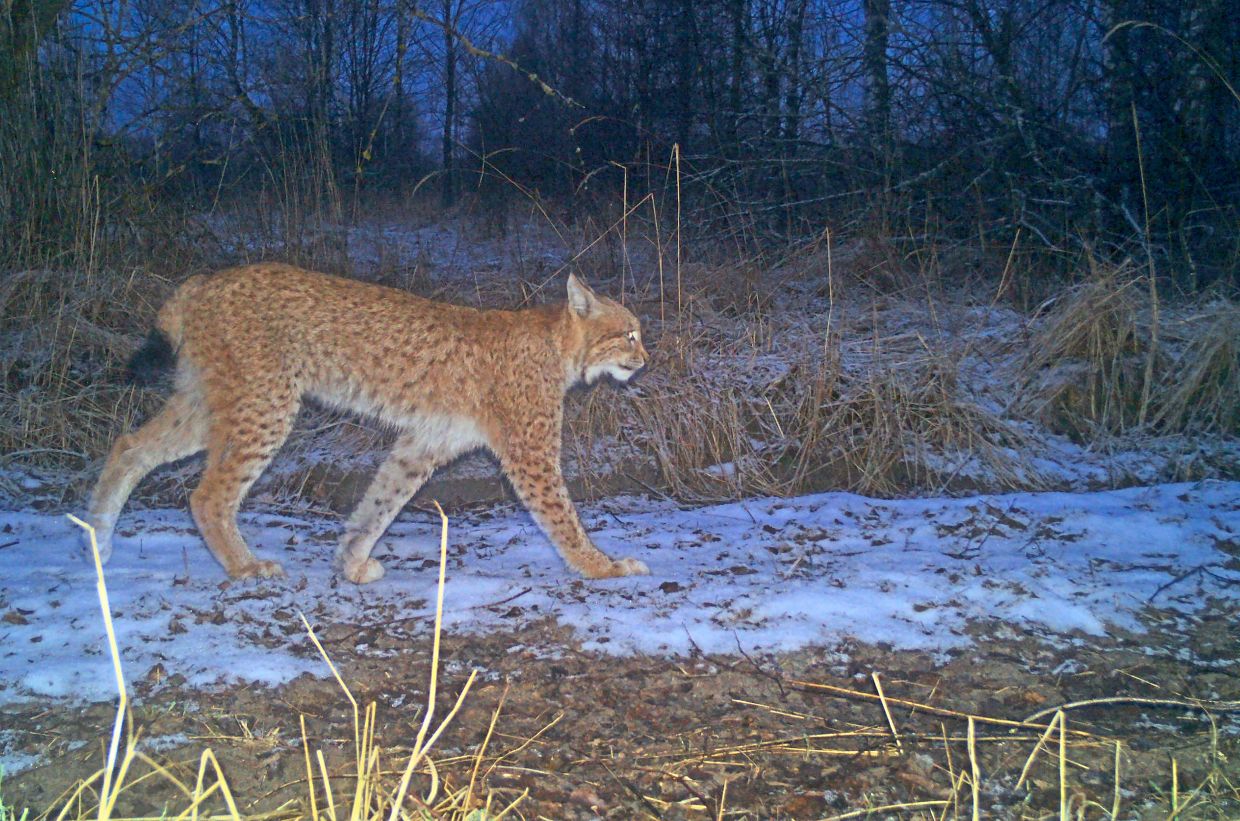
A lynx in Chernobyl, Ukraine, during the Russian occupation. A rare camera-trap study logged the effects of armed conflict on wild animals in real time. — Photos: Frankfurt Zoological Society, Chernobyl Radiation and Ecological Biosphere Reserve/Wild Polissia Programme via The New York Times
THE radioactive region around Chernobyl, Ukraine, the site of the worst nuclear disaster in human history, has become an unlikely wildlife refuge.After the 1986 meltdown, nearly all local residents were evacuated and access to the area was tightly restricted. Forests regrew and populations of wild animals, including gray wolves and Eurasian lynxes, flourished.
In 2020, Svitlana Kudrenko, then a doctoral student in nature conservation, set out to study the abundance and diversity of these animals, installing wildlife cameras throughout the 1,000sq miles (2,589sq km) Chernobyl Exclusion Zone.
Thank you for your report!
Opening hearts to animals in distress
Woman is first person in Singapore given jail for keeping animals in captivity for sale
Current system of stray animal management not working
俄罗斯占领乌克兰切尔诺贝利期间的一只猞猁。一项罕见的红外相机陷阱研究实时记录了武装冲突对野生动物的影响。——图片:法兰克福动物学会、切尔诺贝利辐射与生态生物圈保护区/野生波利西亚项目,经《纽约时报》授权使用
切尔诺贝利(乌克兰)周围的放射性区域,曾是人类历史上最严重的核灾难发生地,如今却出人意料地成为了野生动物的天堂。1986年核泄漏事故发生后,几乎所有当地居民都被疏散,进入该区域的通道也受到严格限制。森林得以恢复,包括灰狼和欧亚猞猁在内的野生动物种群也繁衍生息。
2020 年,当时还是自然保护专业博士生的斯维特拉娜·库德连科着手研究这些动物的数量和多样性,在 1000 平方英里(2589 平方公里)的切尔诺贝利禁区内安装了野生动物相机。
感谢您的报告!
向受苦的动物敞开心扉
新加坡首例女子因非法圈养动物贩卖而被判入狱
现行的流浪动物管理系统行不通。