German parliament approves conscription scheme to boost the Bundeswehr德国议会批准征兵方案以加强联邦国防军
“If that is not enough, we will have no choice but to introduce partial conscription,” said German defense minister Boris Pistorius.
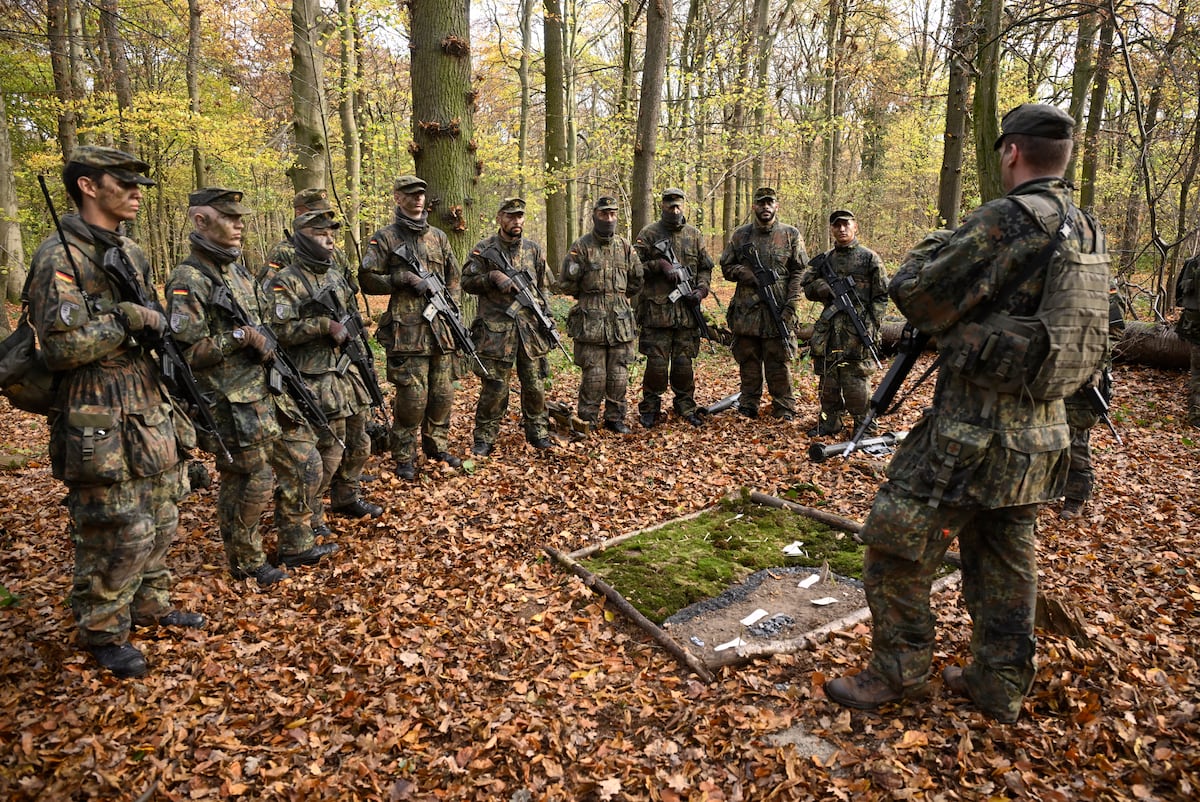
BERLIN — Germany will move to a voluntary conscription model and begin mandatory physical checks for all male citizens coming of age. The country’s parliament approved a draft law to that effect on Friday.
The measure, which is expected to face no serious challenge in the parliament’s Senate-like upper house, is expected to come into force on Jan. 1, 2026.
Under the new legislation, the Bundeswehr − the country’s armed forces − will be legally bound to its goal of stocking up the number of both active personnel and reservists to a total of up to 470,000 soldiers, of which 270,000 would be active-duty soldiers, by 2035.
On Friday, the Bundeswehr said it had around 184,330 active personnel, up 1.5% or 2,750 soldiers from a year ago.
German men born in 2008 or thereafter will be required to fill out an online questionnaire once they come of age and subsequently visit one of 24 physical inspection centers that will be set up for medical examinations. The system is meant to be fully operational by mid-2027. Women can opt into the process, but will not be obligated to take part. The military service itself will, for now, remain voluntary and will stand alongside the existing optional civil service model.
After completing their time, those trained by the Bundeswehr will become reservists.
Recruits who choose to join the military for six to eleven months will receive a monthly pay of €2,600 ($3,030) before tax, with additional money promised if they decide to stay longer.
There are no plans for mandatory conscription “currently,” the German Bundeswehr said in a statement after the draft law passed.
At the same time, if the voluntary model proves insufficient to recruit the required number of people, the law leaves the door open for mandatory measures.
“If that is not enough, we will have no choice but to introduce partial conscription,” said German defense minister Boris Pistorius on the sidelines of the vote in the parliament.
A provision for a compulsory military service on a needs basis is included in the law passed today, but would require an additional vote by parliament to activate.
While lawmakers were voting, protests against the new measure took place in several German cities, including Berlin. At the same time, a partial student strike in opposition to the conscription was ongoing.
Growing the Bundeswehr has become a necessity as a consequence of “the threat situation and NATO plans,” the military said.
“In the event of a defense situation, which we want to prevent at all costs, the state must know who is ready for action,” said Pistorius. “This country, this democracy, deserves it.”
Linus Höller is Defense News' Europe correspondent and OSINT investigator. He reports on the arms deals, sanctions, and geopolitics shaping Europe and the world. He holds master’s degrees in WMD nonproliferation, terrorism studies, and international relations, and works in four languages: English, German, Russian, and Spanish.
柏林——德国将实行自愿征兵制,并对所有成年男性公民进行强制性体检。德国议会周五批准了一项相关法律草案。
该措施预计不会在议会上院(类似于参议院)面临任何重大挑战,预计将于 2026 年 1 月 1 日生效。
根据新立法,德国联邦国防军(该国武装部队)将依法承担其目标,即到 2035 年将现役人员和预备役人员总数增加到 47 万名士兵,其中 27 万名将是现役士兵。
德国联邦国防军周五表示,其现役人员约有 184,330 人,比一年前增加了 1.5%,即 2,750 名士兵。
2008年及以后出生的德国男性成年后需填写一份在线问卷,随后前往24个指定的体检中心之一接受体检。该系统预计将于2027年中期全面投入运行。女性可以选择参与,但并非必须。目前,兵役仍将保持自愿性质,并与现有的自愿性公务员制度并行运作。
完成训练后,这些由德国联邦国防军训练的人员将成为预备役人员。
选择服役六至十一个月的应征者,每月税前工资为 2600 欧元(3030 美元),如果他们决定服役更长时间,还将获得额外报酬。
德国联邦国防军在征兵法案通过后发表声明称,目前“没有”强制征兵的计划。
同时,如果自愿模式不足以招募到所需数量的人员,法律也为采取强制措施留下了空间。
德国国防部长鲍里斯·皮斯托里乌斯在议会投票间隙表示:“如果这还不够,我们将别无选择,只能实行部分征兵制。”
今天通过的法律中包含一项按需实行强制兵役的条款,但该条款需要议会再次投票才能生效。
在议员们投票表决的同时,包括柏林在内的多个德国城市爆发了反对这项新措施的抗议活动。与此同时,部分学生也举行了反对征兵的罢课。
军方表示,由于“威胁形势和北约计划”,扩大德国联邦国防军规模已成为必然之举。
皮斯托瑞斯说:“一旦发生需要动用武力的情况(我们无论如何都要避免这种情况),国家必须知道谁准备好采取行动。这个国家,这个民主国家,理应如此。”
林努斯·霍勒是《防务新闻》的欧洲记者和开源情报调查员。他报道影响欧洲乃至全球的军火交易、制裁和地缘政治。他拥有大规模杀伤性武器不扩散、恐怖主义研究和国际关系三个硕士学位,并精通英语、德语、俄语和西班牙语四种语言。