New projects bring German 2025 military-equipment spending near $40bn新项目使德国2025年军备支出接近400亿美元
The Dec. 3 approval includes an expansion of the Bundeswehr’s G95 assault rifle order, additional Joint Strike Missile purchases and new AI systems.
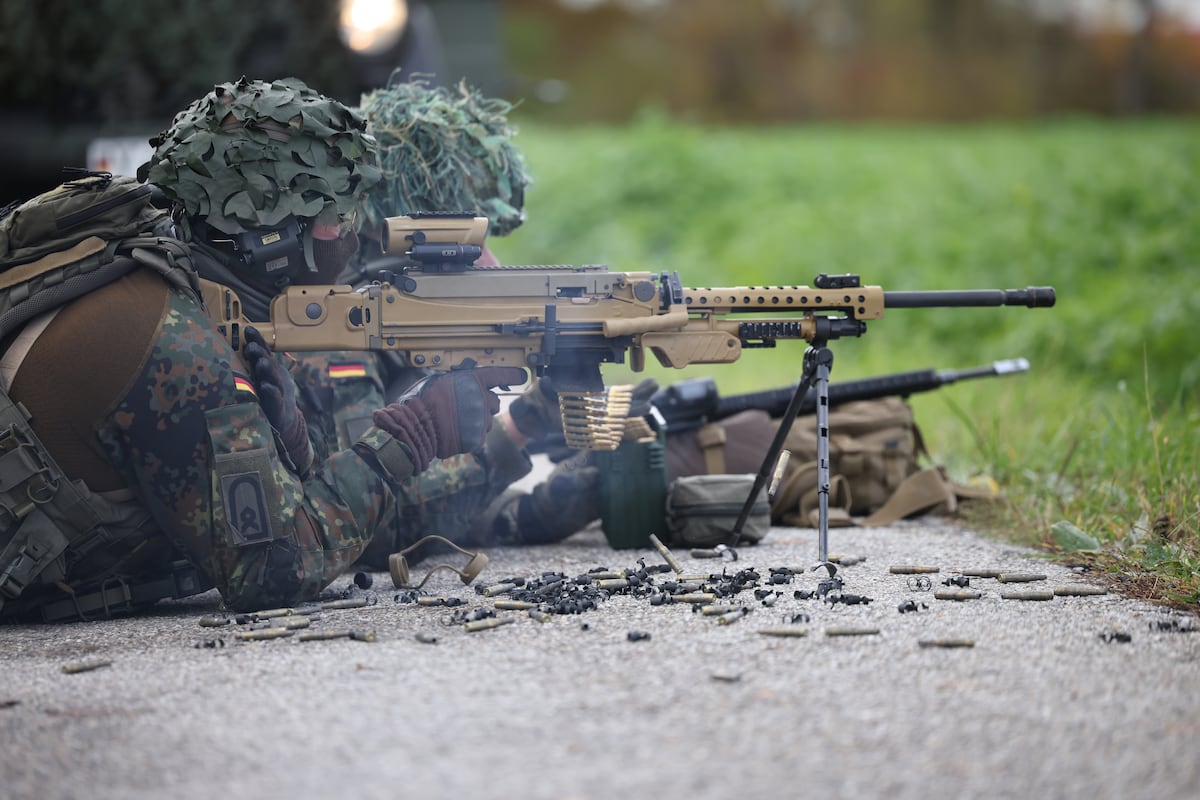
BERLIN — Germany’s parliamentary budget committee has approved 11 major defense procurement projects worth more than €2.5 billion ($3 billion), bringing the country’s tally on equipment spending for 2025 to over €33 billion across 73 major projects.
The Dec. 3 approval includes a significant expansion of the Bundeswehr’s G95 assault rifle order, additional Joint Strike Missile purchases for future F-35A fighters and new artificial intelligence-powered surveillance systems.
Among the more novel systems approved is URANOS AI, an artificial intelligence-powered surveillance platform designed to process large volumes of reconnaissance data from drones, satellites and radar stations along NATO’s eastern flank. The system will initially be integrated into Germany’s brigade in Lithuania − Panzerbrigade 45 − with plans to eventually equip all German army brigades.
The AI system reflects growing German interest in autonomous battlefield intelligence following the employment of such capabilities in the Ukraine war.
The committee also approved continued procurement of Kongsberg’s Joint Strike Missile for Germany’s incoming F-35A fighters, building on an initial order placed jointly with Norway in June. The long-range cruise missile is designed to be carried internally in the F-35’s weapons bay so as not to disturb the fighter’s stealth capabilities.
Additional approvals include a framework contract for “a high three-digit number” of Aladin reconnaissance drones for close-range surveillance, more than 1,700 military all-terrain vehicles, and heavy transport trailers capable of moving Leopard 2 main battle tanks.
Under German law, approval by the parliamentary budget committee is required for procurement projects that will cost more than €25 million ($29 million).
The top ticket item in the latest shopping spree is the Bundeswehr’s expanded procurement of the G95 rifle system − Heckler & Koch’s HK416A8 model − beyond the approximately 120,000 units initially approved in late 2022. Bloomberg reported last week that the new order could bring the total to as many as 250,000 rifles, though the Defense Ministry has not disclosed the exact number.
The ministry also approved procurement of laser light modules that enable the G95 to be used with night vision goggles in low-visibility conditions.
This year’s spending surge comes as part of Germany’s declared goal of making the Bundeswehr Europe’s most powerful conventional army. This includes the expansion of the Bundeswehr to approximately 460,000 personnel − including up to 260,000 active troops − up from roughly 180,000 active soldiers currently. Defense Minister Boris Pistorius has committed to raising defense spending to 3.5% of GDP by 2029, which would solidify Germany’s position as the continent’s top military spender.
Linus Höller is Defense News' Europe correspondent and OSINT investigator. He reports on the arms deals, sanctions, and geopolitics shaping Europe and the world. He holds master’s degrees in WMD nonproliferation, terrorism studies, and international relations, and works in four languages: English, German, Russian, and Spanish.
柏林——德国议会预算委员会批准了 11 项重大国防采购项目,总价值超过 25 亿欧元(30 亿美元),使该国 2025 年的装备支出总额超过 330 亿欧元,涵盖 73 个重大项目。
12 月 3 日的批准包括大幅增加德国联邦国防军 G95 突击步枪的订单、为未来的 F-35A 战斗机额外采购联合打击导弹以及新的人工智能驱动的监视系统。
在获批的众多创新系统中,URANOS AI 尤为引人注目。这是一个人工智能驱动的监视平台,旨在处理来自北约东翼无人机、卫星和雷达站的大量侦察数据。该系统最初将整合到驻立陶宛的德国第45装甲旅,并计划最终装备所有德国陆军旅。
该人工智能系统反映了德国在乌克兰战争中使用自主战场情报能力后,对自主战场情报日益增长的兴趣。
委员会还批准继续为德国即将服役的F-35A战斗机采购康斯伯格公司的联合打击导弹,这是继德国与挪威6月份联合下达的首批订单之后的又一举措。这种远程巡航导弹设计用于内置于F-35的武器舱内,以免影响战斗机的隐身性能。
其他获批项目包括一份框架合同,用于采购“数量高达三位数”的阿拉丁侦察无人机进行近距离监视;超过 1700 辆军用全地形车;以及能够运输豹 2 主战坦克的重型运输拖车。
根据德国法律,采购项目如果耗资超过 2500 万欧元(2900 万美元),则需要获得议会预算委员会的批准。
在最近的采购热潮中,最引人注目的是德国联邦国防军扩大了G95步枪系统(即黑克勒-科赫公司HK416A8型)的采购规模,超出了最初于2022年底批准的约12万支的采购量。彭博社上周报道称,新订单可能使总采购量达到25万支,但国防部尚未透露确切数字。
该部还批准采购激光照明模块,使 G95 能够在低能见度条件下与夜视镜配合使用。
今年德国军费开支的激增,是其旨在将联邦国防军打造成为欧洲最强大的常规军队这一既定目标的一部分。这包括将联邦国防军的兵力扩充至约46万人(其中包括多达26万现役部队),而目前的现役部队规模约为18万人。国防部长鲍里斯·皮斯托瑞斯承诺,到2029年,德国的国防开支将提高到GDP的3.5%,这将巩固德国作为欧洲军费开支最高国家的地位。
林努斯·霍勒是《防务新闻》的欧洲记者和开源情报调查员。他报道影响欧洲乃至全球的军火交易、制裁和地缘政治。他拥有大规模杀伤性武器不扩散、恐怖主义研究和国际关系三个硕士学位,并精通英语、德语、俄语和西班牙语四种语言。