Senators push Biden to release submarine costs for AUKUS参议员敦促拜登公布“奥库斯”号潜艇的成本。
The cost estimates are critical to a debate that has delayed key congressional authorizations needed to advance AUKUS.
WASHINGTON ― A bipartisan group of senators is appealing to the White House to release Pentagon cost estimates related to the submarine-industrial base as the Biden administration and Congress move to implement AUKUS, the trilateral submarine-sharing pact with Britain and Australia.
The cost estimates are critical to a debate that has delayed key congressional authorizations needed to advance AUKUS. The study is expected to detail the level of investments needed for the industrial base to sustain submarine production requirements for both the U.S. and Australia.
A Senate letter obtained by Defense News asks Biden to release the cost estimates by the end of the month to inform AUKUS legislation. The Defense Department completed the study months ago, but the letter says the Pentagon does not intend to release its findings and cost estimates until it unveils the fiscal 2025 budget request early next year.
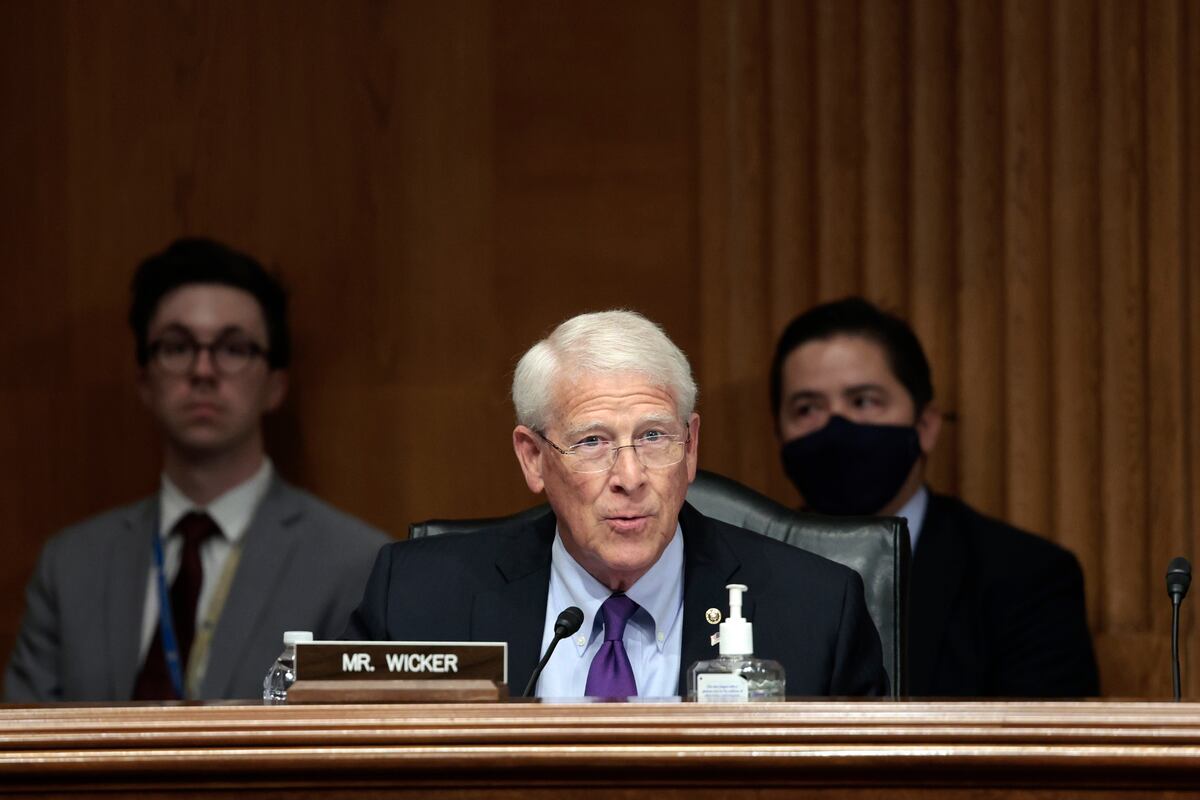
Sen. Roger Wicker of Mississippi — the top Republican on the Armed Services Committee — spearheaded the bipartisan letter. Wicker has held up Senate passage of two AUKUS authorizations , making them contingent on the Biden administration and Congress allocating additional funding for the submarine-industrial base as part of a defense supplemental request to bypass the $886 billion military spending cap in the debt ceiling agreement .
“The volume of submarine tonnage the industrial base must produce to meet the Navy’s own requirements and fully implement the AUKUS agreement will require historic and sustained investments in the submarine workforce and supplier network,” the senators wrote. “To achieve such capacity, Congress must have a comprehensive understanding of the current status of the submarine-industrial base as well as the future resource investments necessary to meet our nation’s requirements.”
Three Democrats — Sens. Jeanne Shaheen of New Hampshire, Richard Blumenthal of Connecticut and Tim Kaine of Virginia — signed onto the letter alongside Republican Sens. Dan Sullivan of Alaska and Kevin Cramer of North Dakota. The White House and Defense Department did not respond to requests for comment by publication.
Under AUKUS, Australia will buy at least three and as many as five Virginia-class submarines from the U.S. as an interim capability in the early 2030s.
The Navy has blamed industrial base constraints for causing it to fall behind its pre-AUKUS goal of producing two Virginia-class and one Columbia-class submarine per year. The service expects the industrial base to start delivering the Virginia-class attack submarines on time by 2028 .
But Adm. Lisa Franchetti, the vice chief of naval operations, told the Senate in September AUKUS would require a slight increase in production requirements to 2.2 Virginia-class submarines per year.
Wicker argues this increase requires additional funding for the submarine-industrial base beyond the $647 million the White House requested for FY24.
He mustered half the Senate Republican caucus in July to block an AUKUS authorization that would permit the transfer of two Virginia-class submarines to Australia and another that would allow the Defense Department to accept Canberra’s $3 billion contribution to the submarine-industrial base.
However, he did allow a third authorization to begin training Australian private sector personnel in nuclear submarines to proceed as part of the annual defense policy bill, which the Senate passed 86-11 in July .
“Understanding the scope of the generational investment required for the [submarine-industrial base’s] viability is critical for development of AUKUS-authorizing legislation this year,” the Wicker-led letter states.
Rep. Joe Courtney, the top Democrat on the House Armed Services Committee’s seapower panel, is more bullish on the submarine-industrial base’s ability to meet the Navy’s own requirements and keep the AUKUS commitments to Australia — in part because of money set aside in prior years for that purpose.
“I welcome more investment into the submarine-industrial base,” Courtney told Defense News. “My perspective is though that should not be a reason that we do not move forward on the AUKUS implementation bills that the administration sent back in April.”
Bryant Harris is the Congress reporter for Defense News. He has covered U.S. foreign policy, national security, international affairs and politics in Washington since 2014. He has also written for Foreign Policy, Al-Monitor, Al Jazeera English and IPS News.
华盛顿——随着拜登政府和国会着手实施与英国和澳大利亚三边潜艇共享协议(AUKUS),一个由两党参议员组成的团体呼吁白宫公布五角大楼与潜艇工业基地相关的成本估算。
成本估算对于这场争论至关重要,这场争论已经导致推进AUKUS项目所需的关键国会授权被推迟。该研究预计将详细说明为满足美国和澳大利亚的潜艇生产需求,工业基础所需的投资水平。
《防务新闻》获得的一封参议院信函要求拜登在本月底前公布奥库斯计划的成本估算,以便为相关立法提供参考。国防部几个月前就已完成这项研究,但信中指出,五角大楼不打算在明年初公布2025财年预算申请之前公布研究结果和成本估算。
密西西比州参议员罗杰·威克(Roger Wicker)——参议院军事委员会首席共和党议员——牵头撰写了这封两党联名信。威克阻挠了参议院通过两项奥库斯(AUKUS)潜艇基地授权法案,他要求拜登政府和国会必须为该潜艇工业基地追加拨款,作为一项旨在绕过债务上限协议中8860亿美元军费开支上限的国防补充拨款请求的一部分,才能使这两项法案获得通过。
参议员们写道:“为了满足海军自身需求并全面落实奥库斯协议,工业基础必须生产出一定数量的潜艇吨位,这将需要对潜艇劳动力和供应商网络进行历史性的、持续性的投资。为了实现这一产能,国会必须全面了解潜艇工业基础的现状,以及为满足国家需求而需要的未来资源投资。”
三位民主党参议员——新罕布什尔州的珍妮·沙欣、康涅狄格州的理查德·布卢门撒尔和弗吉尼亚州的蒂姆·凯恩——与两位共和党参议员——阿拉斯加州的丹·沙利文和北达科他州的凯文·克莱默——共同签署了这封信。截至发稿时,白宫和国防部均未回应置评请求。
根据 AUKUS 协议,澳大利亚将在 2030 年代初期从美国购买至少三艘、至多五艘弗吉尼亚级潜艇作为过渡能力。
海军将未能按时完成“奥克斯”计划前设定的每年生产两艘弗吉尼亚级和一艘哥伦比亚级潜艇的目标归咎于工业基础的限制。海军预计,到2028年,工业基础将能够按时交付弗吉尼亚级攻击型潜艇。
但海军作战副部长丽莎·弗兰切蒂海军上将在 9 月份告诉参议院,AUKUS 将需要略微增加弗吉尼亚级潜艇的年产量要求,达到 2.2 艘。
威克认为,这一增长需要为潜艇工业基地提供额外的资金,而白宫在 2024 财年要求的资金仅为 6.47 亿美元。
7 月,他召集了参议院共和党党团的一半成员,阻止了 AUKUS 授权法案的通过。该法案允许向澳大利亚转移两艘弗吉尼亚级潜艇,他还阻止了另一项授权法案的通过,该法案允许国防部接受堪培拉向潜艇工业基地提供的 30 亿美元捐款。
然而,他确实允许第三项授权继续推进,即开始培训澳大利亚私营部门人员使用核潜艇,作为年度国防政策法案的一部分,该法案于 7 月在参议院以 86 比 11 的票数获得通过。
“了解(潜艇工业基地)生存所需的世代投资规模,对于今年制定 AUKUS 授权立法至关重要,”威克牵头的信中写道。
众议院军事委员会海权小组的首席民主党议员乔·考特尼对潜艇工业基地满足海军自身需求并履行对澳大利亚的AUKUS承诺的能力更为乐观——部分原因是前几年为此目的预留了资金。
“我欢迎对潜艇工业基地进行更多投资,”考特尼告诉《防务新闻》。“但我认为这不应该成为我们不推进政府四月份提交的AUKUS实施法案的理由。”
布莱恩特·哈里斯是《防务新闻》的国会记者。自2014年以来,他一直在华盛顿报道美国外交政策、国家安全、国际事务和政治。他还曾为《外交政策》、《Al-Monitor》、《半岛电视台英语频道》和IPS新闻撰稿。