Hamas drones helped catch Israel off guard, experts say专家称,哈马斯无人机帮助以色列措手不及。
Commercially available models have leveled the playing field for seemingly inferior opponents.
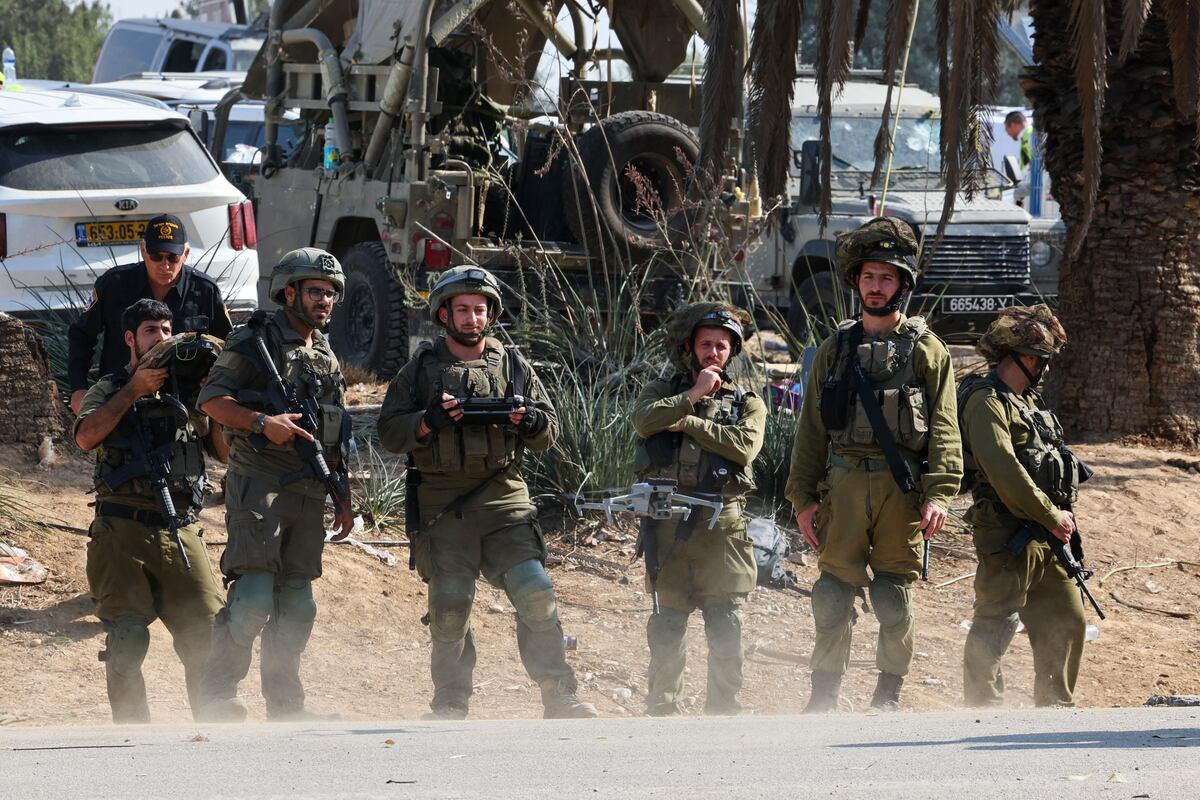
MILAN — The use of commercial drones in the Hamas terror group’s Oct. 7 attack on Israel is the latest example of how relatively low-tech warfare can catch sophisticated armies flat-footed, according to analysts.
Footage published by Al Qassam Brigades, Hamas’ military wing, showed that during the initial attacks that killed hundreds of Israeli civilians and prompted aerial bombardments of Gaza in return, fighters used armed drones to attack different Israeli military targets.
One video shows a quadcopter hovering above a communications tower near the Gaza border fence before releasing an explosive device on generators seconds later. Another one appears to show the same type of munition blowing up a machine gun turret on an Israeli Defense Forces’ observation post.
While drone tactics have become a staple of modern warfare, commercially available models have leveled the playing field for groups like Hamas, Raphael Cohen, director of the strategy and doctrine program at Rand, told Defense News.
“We’ve seen other terrorist groups use different sorts,” he said. Lebanese militant group “Hezbollah notably infiltrated Israeli territory a few years back and ISIS used a primitive drone to attack U.S. troops and so on,” he added, using the acronym for the Islamic State of Iraq and Syria group. “Given the plethora of hobby and commercial drones out there, you have to expect Hamas has and will use this capability going forward.”
While experts say it’s too early to talk about a large increase in the number of drones Hamas uses, they noted the initial attacks may have been their most advanced operation to date in disrupting infrastructure.
“I don’t know if Hamas is using drones more but they used them in a very sophisticated way in this case that has probably not been seen before,” said Mark Cancian, senior adviser at the Center for Strategic and International Studies in Washington.” It used drones as part of a combined arms attack, where the platforms struck watchtowers and video cameras to allow ground forces to move ahead.”
That kind of synchronization requires a lot of planning and training, he added.
Yaakov Lapin, research associate at the U.S.-based Israeli think tank MirYam Institute, added that some of the available footage of the attacks suggests the drones deployed by Hamas could have been used as part of a swarming strategy.
“Hamas used drones effectively to target sensors and armored vehicles, as part of a ‘swarming’ approach that also involved heavy rocket fire and a ground assault,” Lapin told Defense News. “It was one component, but an important one for this attack.”
All three experts warn that Hamas has likely observed battlefield drone usage in recent conflicts such as the Ukraine-Russia war, where commercial drones have played a large role.
“Hamas pays special attention to the way other non-state terror armies [or organizations] have used them, particularly ISIS, which has used them extensively,” Lapin said.
A central question in the opening hours of the Oct. 7 massacre remains how Israel, one of the pioneers of drone technology with a large arsenal of effective countermeasures, failed to detect the Hamas drones.
Part of the answer lies in the fact that small unmanned aircraft can be difficult to spot for even advanced sensors. And Israel is not alone in having witnessed this kind of breach.
“It is notable that the Russians and Ukrainians — who are also focused on this same problem — have struggled in this area and the same is true for other militaries,” Cohen said.
According to Cohen, two other factors are likely to have played a role: resources spread thin and a lack of prior intelligence about the strikes launched by Hamas.
“All air defenses are finite commodities and Hamas sent a lot at Israel all at once — not just UAS, but rockets as well,” Cohen said. “It is also clear that Israel was caught flat-footed by the attack. All the best technology in the world will not help if the soldiers operating it are not alert.”
Elisabeth Gosselin-Malo was a Europe correspondent for Defense News. She covers a wide range of topics related to military procurement and international security, and specializes in reporting on the aviation sector. She is based in Milan, Italy.
米兰——分析人士称,哈马斯恐怖组织在 10 月 7 日对以色列发动的袭击中使用了商用无人机,这是相对低技术水平的战争如何让技术精湛的军队措手不及的最新例证。
哈马斯军事分支卡桑旅发布的视频显示,在最初的袭击中,数百名以色列平民丧生,并引发了对加沙地带的空中轰炸,武装分子使用武装无人机袭击了不同的以色列军事目标。
一段视频显示,一架四旋翼无人机盘旋在加沙边境围栏附近的一座通信塔上空,几秒钟后向发电机投掷了一枚爆炸装置。另一段视频似乎显示,同类型的弹药炸毁了以色列国防军观察哨的一挺机枪炮塔。
兰德公司战略与理论项目主任拉斐尔·科恩告诉《防务新闻》,虽然无人机战术已成为现代战争的常态,但市面上可买到的无人机型号让哈马斯等组织拥有了公平的竞争环境。
“我们已经看到其他恐怖组织使用过不同类型的无人机,”他说。他补充道,黎巴嫩真主党几年前就曾渗透到以色列领土,而“伊斯兰国”(ISIS)也曾使用过简易无人机袭击美军等等。“鉴于市面上有大量的业余和商用无人机,我们有理由相信哈马斯已经并将继续使用这种能力。”
专家表示,现在谈论哈马斯使用的无人机数量大幅增加还为时过早,但他们指出,最初的袭击可能是哈马斯迄今为止破坏基础设施方面最先进的行动。
“我不知道哈马斯是否更多地使用无人机,但这次他们使用无人机的方式非常复杂,可能是前所未有的,”华盛顿战略与国际研究中心高级顾问马克·坎西安说。“他们将无人机作为联合兵种攻击的一部分,无人机袭击了瞭望塔和摄像机,为地面部队的推进掩护。”
他补充说,这种同步需要大量的计划和训练。
美国以色列智库米尔亚姆研究所的研究员雅科夫·拉平补充说,一些现有的袭击录像表明,哈马斯部署的无人机可能被用作集群攻击策略的一部分。
拉平告诉《防务新闻》:“哈马斯有效地利用无人机攻击传感器和装甲车辆,这是其‘蜂群式’攻击策略的一部分,该策略还包括猛烈的火箭弹袭击和地面突击。这是此次袭击的一个组成部分,但却是至关重要的一个组成部分。”
三位专家均警告说,哈马斯可能已经观察到在最近的冲突(例如乌克兰-俄罗斯战争)中使用战场无人机的情况,在这些冲突中,商用无人机发挥了重要作用。
拉平说:“哈马斯特别关注其他非国家恐怖组织(或团体)使用这些武器的方式,尤其是广泛使用这些武器的伊斯兰国。”
10 月 7 日大屠杀发生后的最初几个小时里,一个核心问题仍然是:以色列作为无人机技术的先驱之一,拥有大量有效的反制措施,为何未能发现哈马斯的无人机。
部分原因在于,即使是先进的传感器也很难发现小型无人机。而且,以色列并非唯一遭遇过此类入侵的国家。
科恩说:“值得注意的是,俄罗斯人和乌克兰人——他们也关注着同样的问题——在这个领域遇到了困难,其他国家的军队也是如此。”
科恩认为,还有两个因素可能发挥了作用:资源分散以及缺乏关于哈马斯发动袭击的事先情报。
科恩说:“所有防空资源都是有限的,哈马斯一次性向以色列投入了大量资源——不仅是无人机,还有火箭弹。很明显,以色列对这次袭击毫无防备。如果操作人员不够警觉,再先进的技术也无济于事。”
伊丽莎白·戈斯林-马洛曾任《防务新闻》欧洲通讯员。她的报道涵盖军事采购和国际安全等广泛领域,尤其擅长航空领域的报道。她常驻意大利米兰。