The Only Man Who Flew Both The F-22 And The YF-23 On Why The YF-23 Lost唯一一位同时驾驶过F-22和YF-23的飞行员讲述YF-23战败的原因
Test Pilot Paul Metz gives an in-depth brief on the YF-23 and the Advanced Tactical Fighter program, including his thoughts on why the F-22 won.
新闻视频
Updated Dec 1, 2019 6:47 AM EST
In what may be my favorite installment in our ongoing series on Northrop’s YF-23 Black Widow, we hear directly from famed test pilot Paul Metz. Metz started his career as an F-105G Wild Weasel pilot in Vietnam and went on to become one of America’s preeminent test pilots. He flew Northrop’s YF-23 on its first flight during the Advanced Tactical Fighter (ATF) competition that pitted the jet against Lockheed’s YF-22 and also went on to do the same for the F-22A. In the video below, he describes what the ATF program was like from the inside and just how good the YF-23 actually was. In addition, we get extra color on the accelerated flight test program Northrop executed for the competition from test pilot Jim Sandburg. Their testimony combined gives us an unprecedented look into the YF-23 program and paints a clear picture that YF-23 was indeed equal if not superior to its competition.
The lecture was put on at the Western Museum Of Flight—where one of the YF-23 is on display—to a seniors group. This gem of historical reference has been largely overlooked even as the YF-23 has risen to near legendary status, becoming one of the most enigmatic and fascinating modern aircraft in history. What’s so important to underline is that Metz worked for both Northrop and Lockheed and is not known for hyperbole. Yet even after flying the pre-production F-22, a far more mature machine than the YF-23 ever was, he makes it quite clear that Northrop’s offering was on par with Lockheed’s, if not superior.
YF-23 and YF-22 side-by-side during the Advanced Tactical Fighter competition flight demonstration phase. , USAF
The hardest hitting quote comes at the end of the lecture by the two test pilots, where Metz states:
“Never hang your head in shame about what we did. We built a tremendous product that would stand side-by-side with anything else, and in many cases exceed the capabilities of anything else. And we can always be proud of that.”
Sandberg and Metz also note that both aircraft met the ATF requirements and that Lockheed was chosen because the Air Force had greater confidence they could better manage the program.
Metz makes another incredibly valuable point about how Lockheed knew how to present and market their airframe far better than Northrop did. He notes that not everyone who would be in a position to select a fighter aircraft would be an engineer and that they may not even be technically astute. So leaving ‘lasting impressions’ on a conceptual level, even if they don’t tell the whole story technically, can give one side an advantage over the other.
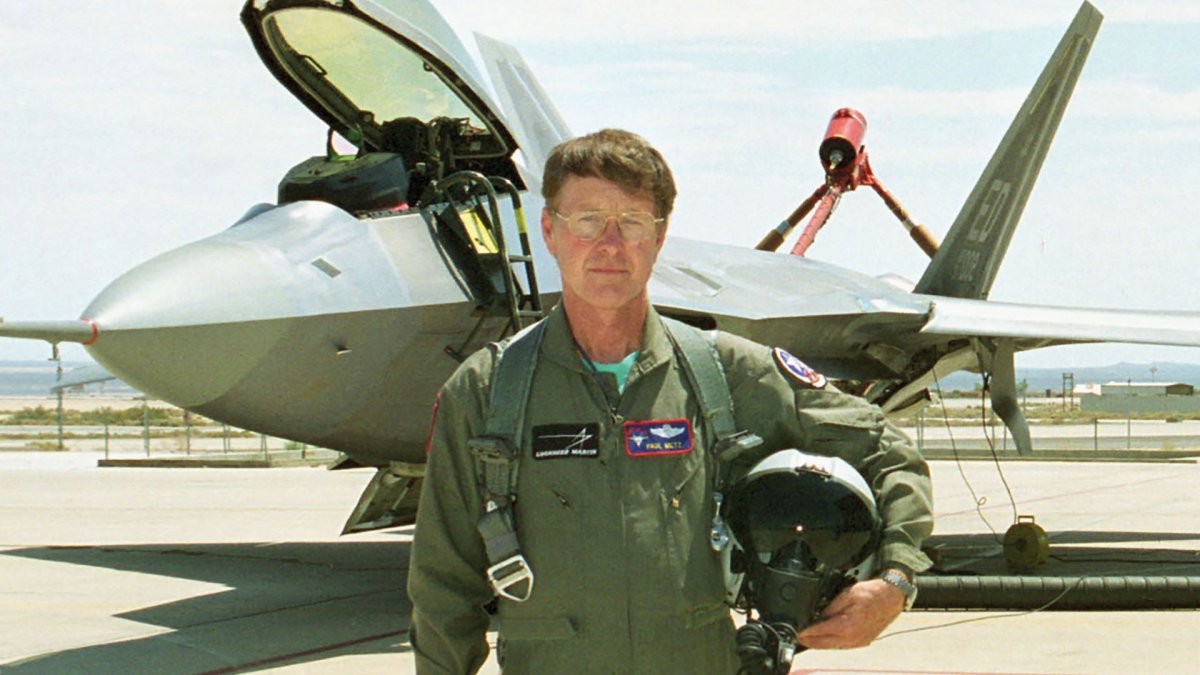
Paul Metz was the first pilot to fly the YF-23 and the F-22A. He worked as top test pilot for Northrop and Lockheed. , USAF
Northrop’s team was made up of brilliant engineers—Metz says they were beyond compare—but they thought and spoke almost exclusively in engineering terms. Meanwhile, Lockheed infused far more marketing, salesmanship, and pizazz—’lasting impressions’ as Metz eloquently puts it—into their YF-22 flight demonstration program. They fundamentally understood how to sell their aircraft and how ‘showmanship’ heavily impacts the acquisition decision-making process. Northrop didn’t and that fact may have proven fatal for the YF-23.
There is so much else in this video of importance to the Advanced Tactical Fighter competition story. Sandburg talks about how the YF-23’s massive tailerons were so powerful that they largely mitigated the perceived advantages of the YF-22’s thrust vectoring. There are many other details about the genesis of the ATF program overall, in-flight emergencies during the flight demonstration phase, how the YF-23’s radar cross-section helped influence its unofficial Black Widow moniker, and even how that famous picture of the B-2 landing with the YF-23 in the foreground came to be.
Let us know what you found interesting in the comments below.
Contact the author: Tyler@thedrive.com
Comments couldn’t be loaded. Please refresh the page.
更新于美国东部时间2019年12月1日上午6:47。
在我们持续更新的关于诺斯罗普YF-23“黑寡妇”战斗机的系列报道中,这或许是我最喜欢的一期。我们直接采访了著名试飞员保罗·梅茨。梅茨的职业生涯始于越南战争时期驾驶F-105G“野鼬鼠”战斗机,之后成为美国最杰出的试飞员之一。他驾驶诺斯罗普YF-23参加了先进战术战斗机(ATF)竞标,与洛克希德YF-22展开角逐,并参与了YF-23的首飞。之后,他还驾驶F-22A参与了ATF的首飞。在下面的视频中,他从内部视角描述了ATF项目的运作情况,并详细介绍了YF-23的卓越性能。此外,试飞员吉姆·桑德伯格也为我们提供了更多关于诺斯罗普为竞标而实施的加速飞行测试计划的细节信息。他们的证词让我们得以以前所未有的视角了解YF-23项目,并清晰地展现出YF-23即便不是超越竞争对手,也至少与之不相上下。
这场讲座在西部飞行博物馆举行,该博物馆展出了一架YF-23战斗机,听众是一群老年人。尽管YF-23已近乎传奇,成为历史上最神秘、最引人入胜的现代飞机之一,但这段珍贵的历史资料却常常被人们忽视。值得强调的是,梅茨曾在诺斯罗普和洛克希德两家公司工作过,而且他为人谦逊,从不夸大其词。即便是在驾驶过比YF-23成熟得多的F-22预生产型之后,他仍然明确表示,诺斯罗普的YF-23即便不是更胜一筹,也至少与洛克希德的YF-23不相上下。
在先进战术战斗机竞赛飞行演示阶段,YF-23 和 YF-22 并排飞行。(美国空军)
两位试飞员在演讲结尾处说的一句话最掷地有声:梅茨说道:
“永远不要为我们所做的一切感到羞愧。我们打造了一款卓越的产品,它足以与任何其他产品相媲美,在很多方面甚至超越了其他产品。我们永远都应该为此感到自豪。”
桑德伯格和梅茨还指出,这两款飞机都符合 ATF 的要求,之所以选择洛克希德公司,是因为空军更有信心他们能够更好地管理该项目。
梅茨还提出了一个极其重要的观点,即洛克希德公司在展示和营销其飞机方面远胜于诺斯罗普公司。他指出,并非所有能够选择战斗机的人都是工程师,他们甚至可能并不精通技术。因此,即便无法全面展现技术细节,在概念层面留下“深刻印象”也能使一方获得优势。
保罗·梅茨是驾驶YF-23和F-22A的首位飞行员。他曾担任诺斯罗普公司和洛克希德公司的高级试飞员,并在美国空军服役。
诺斯罗普的团队由一群才华横溢的工程师组成——梅茨称他们无人能及——但他们的思维和言谈几乎完全局限于工程领域。与此同时,洛克希德公司在其YF-22飞行演示项目中注入了更多的市场营销、销售技巧和吸引力——正如梅茨精辟地称之为“持久印象”。他们从根本上理解了如何推销自己的飞机,以及“表演”如何对采购决策产生重大影响。诺斯罗普公司却不具备这种能力,而这或许最终导致了YF-23的失败。
这段视频中还有许多其他对先进战术战斗机(ATF)竞标故事至关重要的内容。桑德伯格谈到,YF-23巨大的尾翼动力强劲,在很大程度上抵消了YF-22推力矢量控制的优势。视频中还详细介绍了ATF项目的起源、飞行演示阶段的飞行紧急情况、YF-23的雷达反射截面如何影响了其“黑寡妇”这一非官方绰号的由来,甚至还讲述了那张著名的B-2轰炸机着陆、YF-23在前景中的照片的由来。
请在下方评论区告诉我们您觉得哪些内容有趣。
联系作者:Tyler@thedrive.com
评论加载失败,请刷新页面。