Navy Needed Targets To Mimic Supersonic Anti-Ship Missiles So They Bought Real Ones From Russia海军需要一些靶子来模拟超音速反舰导弹,所以他们从俄罗斯购买了真正的靶子。
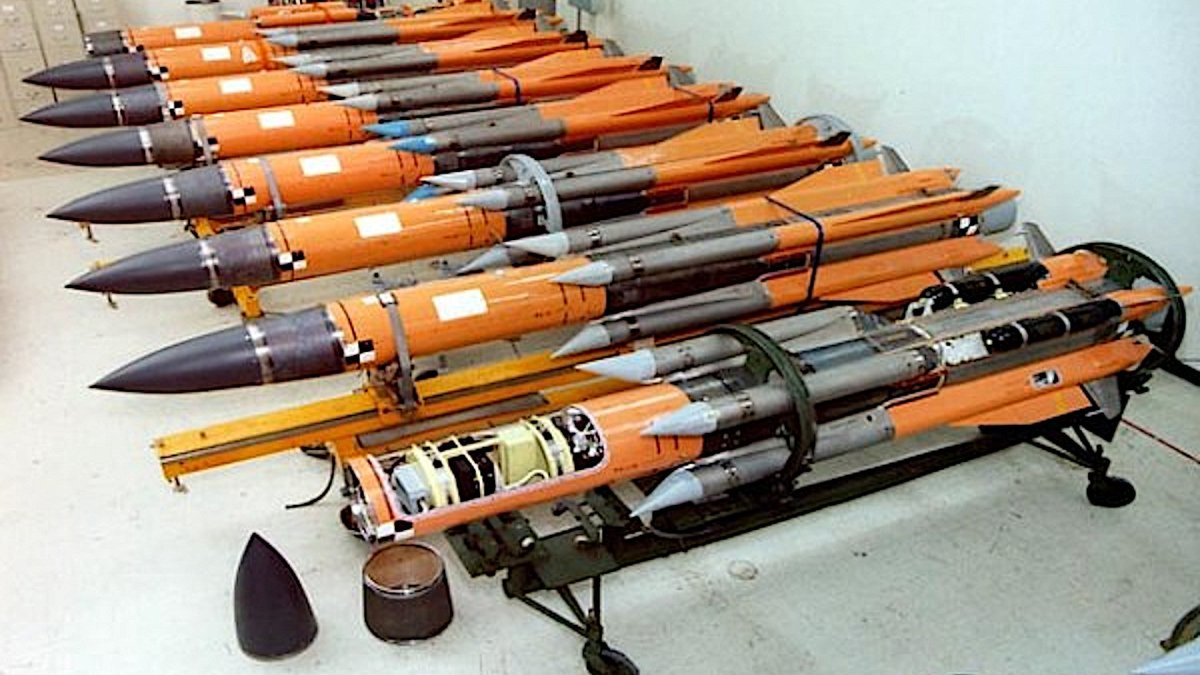
After the fall of the Soviet Union, the Navy acquired the same Kh-31 missiles that threatened its ships and made them into anti-ship missile targets.
新闻视频
By Joseph Trevithick
Updated May 7, 2020 1:11 PM EDT
It’s extremely important for any military to make its training regimens as realistic as possible to give its forces the best sense of the threats they might face in combat and how to respond to them. Unfortunately, developing high-quality surrogates for the weapons and other systems that potential adversaries might employ is not always easy and in some cases, it ends up being possible to just go to the source of the threat itself.
The U.S. Navy faced just this predicament in the 1990s when it went looking for a high-speed target to simulate supersonic anti-ship and anti-radiation missiles and ultimately decided to just buy the MA-31, a derivative of Russia’s air-launched rocket-ramjet-powered Kh-31 missile.
In 1995, McDonnell Douglas first received a contract to deliver modified Kh-31A missiles as part of a Foreign Comparative Test (FCT) to see if they could meet the Navy’s requirement for a Supersonic Sea-Skimming Target (SSST). The American company subsequently worked with the Russian manufacturer, Zveda-Strela, to develop the MA-31 .
Zveda-Strela had first begun the development of the Kh-31-series in the late 1970s in what was then the Soviet Union. The original requirement was for a high-speed anti-radiation missile that would be able to home in on and destroy the radars associated with then-new and emerging western air defense systems, such as the U.S. Army’s Patriot surface-to-air missile system and the U.S. Navy’s Aegis combat system .
The first Kh-31, also known to NATO as the AS-17 Krypton, was test-fired in 1982 and the weapons began entering Soviet service in 1988. The initial anti-radiation variant, the Kh-31P, was quickly followed by an anti-ship version, the Kh-31A, and both appeared publicly for the first time in 1991, the same year the Soviet Union collapsed. Russia has since developed additional Kh-31 improved variants, which remain in service with its military, as well as numerous foreign militaries, to this day.
An infographic showing the features of the Kh-31 and various loadout configurations for different Russian aircraft. The complete missile depicted is a Kh-31P anti-radiation variant, with the alternate guidance and warhead configuration for the anti-ship Kh-31A variant is also shown below., Boeing
All Kh-31s use a rocket-ramjet propulsion system to achieve sustained supersonic speeds. A rocket in the rear of the weapon boosts it to an optimal speed for the air-breathing ramjet to takeover. The Kh-31P, with its high-altitude flight profile, can hit speeds of up Mach 3.5. The sea-skimming Kh-31A can still get up to Mach 2.5.
At around the same time that the Kh-31 was in development, the Navy was developing the Supersonic Low-Altitude Target (SLAT). This high-speed, low-flying target was to be a critical tool for testing the Aegis combat system. The service had been trying, with great difficulty, to develop a target to mimic supersonic anti-ship missiles since the 1970s, canceling two prior programs, the ZBGM-90A and the ZBQM-111A before that decade was over. As an interim option, it had converted a number of retired RIM-8 Talos surface-to-air missiles into MQM-8G Vandal target missiles, starting in 1975, but these offered a limited ability to act as loose surrogate anti-ship threats.
The launch of an MQM-8G Vandal from San Nicolas Island, California, in 1999., USN
In 1984, Martin Marietta got the SLAT contract and began developing its target, which eventually became known as the YAQM-127A . Testing of this target, which also featured a rocket-ramjet propulsion system, was beset by problems. Only one of six launches between November 1987 and January 1989 was successful. Two more launches, one in November 1990 and another in May 1991, were also declared failures. Congress subsequently forced the cancellation of the program.
An artist’s conception of the YAQM-127A SLAT., Martin Marietta
With the Soviet Union gone, the Navy was presented with a novel situation. The Russians were severely cash-strapped and the country’s state-owned enterprises, including its defense industries, were decidedly open when it came to prospects for new international business. American aviation firms, such as Boeing , which subsequently established a significant presence in the country, were equally eager to see what new opportunities for partnership there might be.
As such, the service could now just go buy a representative target based on an actual potential threat weapon. After getting the contract, McDonnell Douglas acquired Kh-31 missile bodies and motors, stripped of their warheads and guidance systems, for conversion into targets. The resulting MA-31s had a Universal Remote Autopilot (URAP) guidance system, tracking beacon, telemetry equipment, and a flight termination system installed in the empty noses of the Kh-31s.
The guts of the new nose for the MA-31., Boeing
These targets had essentially identical performance to the original Russian weapons and could fly both anti-ship and anti-radiation profiles just like the missiles they were based on. This included being able to perform multi-axis maneuvers at up to 15 Gs while skimming over the waves.
A Boeing briefing slide showing the MA-31’s performance envelop compared to other targets, including the MQM-8G., Boeing
Boeing, which absorbed McDonnell Douglas in a merger in 1997, continued the program. In 1999, the MA-31 beat out Honeywell’s Sea Snake, an improved derivative of the MQM-8G, and Boeing secured a contract to build a total of 34 of the high-speed targets.
The flight testing of the modified Kh-31s continued after that and, in total, between 1996 and 2003, there were 13 launches, all from F-4 Phantom II fighter jets. Three of these failed, two due to faulty Russian power supplies and fuel controls and one due to a failure of target missile’s URAP.
Still, the Navy had eyes on a more advanced supersonic target that would offer better range and accuracy over the Russian-based design. In 2000, the service had hired Orbital Sciences to develop what would become the GQM-163A Coyote .
In 2004, the year the GQM-163A first flew, Boeing proposed an improved version of the MA-31, the MA-31PG, which replaced the URAP guidance system with one based on the GPS guidance package from the company’s Joint Direct Attack Munition (JDAM) kit. The JDAM kit had allowed both the Navy, as well as the U.S. Air Force and Marines, to rapidly convert dumb bombs into precision-guided munitions that can strike fixed targets in any weather conditions.
A briefing slide discussing the proposed MA-31PG variant., Boeing
At that time it was also working on developing a kit that would allow F-16 Vipers, in addition to aging F-4s, to launch the MA-31s. This would have increased the air-launched target’s flexibility and expanded the potential customer base to include the Air Force or any other Viper operator.
A low-quality image showing an F-16 carrying an MA-31 during a test., via @Ninja998998
The MA-31’s days had already been numbered due to factors beyond Boeing’s control. In 2001, Russia, under its then-new President Vladimir Putin, had imposed new export restrictions that led to delays . President George W. Bush’s decision to pull out of the Anti-Ballistic Missile Treaty in December of that year also chilled relations between Washington and Moscow. By 2005, Boeing had only been able to make 18 of the contracted 34 MA-31s due to political and bureaucratic hurdles, according to a report from the Defense Science Board’s Task Force on Aerial Targets.
The success of the GQM-163A was the final nail in the coffin for the MA-31. The Navy eventually expanded all of these Kh-31-based targets it had acquired and canceled the program for good in 2007.
The Coyote, which remains in use today, is yet another rocket-ramjet-powered design. Orbital Sciences, which evolved first into Orbital ATK and is now Northrop Grumman Innovation Systems, was able to keep the cost of the target low by using established components from proven Standard Missile 1 and 2 variants and the smaller AQM-37D supersonic target.
A breakdown of the GQM-137A’s features., Orbital Sciences
In 2008, the Navy had also hired Alliant Techsystems to begin work on a further advanced supersonic target, the ZGQM-173A Multi-Stage Supersonic Target (MSST), primarily to emulate the anti-ship versions of Russia’s Kalibr family, also known as SS-N-27 Sizzler missiles to NATO. While these weapons are subsonic for most of their flight profile, they execute a supersonic sprint in their terminal phase.
A GQM-173A during a test., USN
The Navy canceled the MSST program in 2015 , but is still interested in developing a target to meet that requirement. The service is also likely to need some way to represent new supersonic and hypersonic anti-ship threats that Russia , as well as China , are now developing.
Whatever new air-launched targets the service develops, U.S.-Russian relations have only worsened more since the early 2000s and it won’t be buying any more Russian-made designs any time soon. Still, the MA-31 program harkens back to a very unique time in military and geopolitical history, on when a Navy could suddenly just buy the threatening weapons that were developed to sink its ships.
Thanks to Twitter user @clemente3000 for bringing the MA-31 to our attention.
Contact the author: joe@thedrive.com
Comments couldn’t be loaded. Please refresh the page.
作者:约瑟夫·特雷维西克
更新于美国东部时间2020年5月7日下午1:11
对于任何军队而言,尽可能使训练方案贴近实战至关重要,这能让部队更好地了解在战斗中可能面临的威胁以及应对方法。然而,开发出高质量的武器和其他系统替代品并非易事,在某些情况下,或许直接找到威胁源头才是最佳方案。
上世纪 90 年代,美国海军就面临着这样的困境,当时它正在寻找一种高速目标来模拟超音速反舰和反辐射导弹,最终决定购买 MA-31,它是俄罗斯空射火箭冲压发动机动力 Kh-31 导弹的衍生型号。
1995年,麦克唐纳·道格拉斯公司首次获得一份合同,交付改进型的Kh-31A导弹,作为外国对比测试(FCT)的一部分,以检验其是否能够满足海军对超音速掠海目标(SSST)的要求。随后,这家美国公司与俄罗斯制造商“星辰-箭”(Zveda-Strela)合作开发了MA-31导弹。
兹韦达-斯特雷拉公司于 20 世纪 70 年代末在当时的苏联开始研发 Kh-31 系列导弹。最初的需求是研制一种高速反辐射导弹,能够追踪并摧毁当时新兴的西方防空系统(例如美国陆军的“爱国者”地对空导弹系统和美国海军的“宙斯盾”作战系统)的雷达。
第一枚Kh-31导弹(北约代号AS-17“氪星”)于1982年试射,并于1988年开始在苏联军队服役。最初的反辐射型Kh-31P很快被反舰型Kh-31A所取代,这两款导弹均于1991年首次公开亮相,同年苏联解体。此后,俄罗斯又研发了其他Kh-31改进型,这些改进型至今仍在俄罗斯军队以及众多外国军队中服役。
一张信息图展示了Kh-31导弹的特性以及不同俄罗斯飞机的各种挂载配置。图中所示为Kh-31P反辐射型导弹,下方还展示了反舰型Kh-31A的另一种制导和弹头配置。(波音公司)
所有Kh-31导弹均采用火箭冲压发动机推进系统以实现持续超音速飞行。导弹尾部的火箭将其加速至最佳速度,随后由吸气式冲压发动机接管推进。Kh-31P导弹采用高空飞行设计,速度可达3.5马赫。而掠海飞行的Kh-31A导弹也能达到2.5马赫的速度。
在Kh-31研发的同时,美国海军也在研发超音速低空目标(SLAT)。这种高速低空飞行的目标将成为测试宙斯盾作战系统的关键工具。自20世纪70年代以来,海军一直在努力研发一种能够模拟超音速反舰导弹的目标,但进展并不顺利。在70年代结束前,海军取消了ZBGM-90A和ZBQM-111A两个项目。作为过渡方案,海军从1975年开始将一些退役的RIM-8“塔洛斯”地对空导弹改装成MQM-8G“破坏者”目标导弹,但这些导弹作为反舰威胁的模拟能力有限。
1999年,美国海军从加利福尼亚州圣尼古拉斯岛发射了一枚MQM-8G“破坏者”导弹。
1984年,马丁·玛丽埃塔公司获得了SLAT合同,并开始研发其靶弹,该靶弹最终被命名为YAQM-127A。这款靶弹也采用了火箭冲压发动机推进系统,但其测试却困难重重。从1987年11月到1989年1月,六次发射中仅有一次成功。1990年11月和1991年5月的两次发射也宣告失败。随后,国会强制取消了该项目。
艺术家对 YAQM-127A SLAT 的概念图,马丁·玛丽埃塔公司
苏联解体后,海军面临着全新的局面。苏联当时资金极度短缺,包括国防工业在内的国有企业在寻求新的国际业务机会方面持开放态度。随后在苏联建立起重要业务的美国航空企业,例如波音公司,也同样渴望探索新的合作机会。
因此,军方现在可以直接购买基于实际潜在威胁武器的代表性靶标。获得合同后,麦克唐纳·道格拉斯公司采购了Kh-31导弹的弹体和发动机,拆除了弹头和制导系统,用于改装成靶标。改装后的MA-31靶标在Kh-31导弹空置的弹头内安装了通用遥控自动驾驶仪(URAP)制导系统、跟踪信标、遥测设备和飞行终止系统。
MA-31新型机头的内部结构,波音公司
这些目标的性能与原版俄罗斯武器基本相同,能够像其原型导弹一样执行反舰和反辐射作战任务。这包括能够在掠过海面的同时,以高达15G的过载进行多轴机动。
波音公司一份简报幻灯片,展示了MA-31与其他目标(包括MQM-8G)的性能对比。
波音公司于1997年通过合并收购了麦克唐纳·道格拉斯公司,并继续推进该项目。1999年,MA-31击败了霍尼韦尔公司的“海蛇”(MQM-8G的改进型),波音公司获得了建造共计34架高速靶机的合同。
此后,改进型Kh-31导弹的飞行测试继续进行。从1996年到2003年,总共进行了13次发射,全部由F-4“鬼怪II”战斗机发射。其中3次发射失败,2次是由于俄罗斯电源和燃油控制系统故障,1次是由于靶弹的URAP(反辐射导弹)故障。
尽管如此,海军仍然着眼于更先进的超音速靶机,希望它能比俄罗斯的设计拥有更远的射程和更高的精度。2000年,海军聘请轨道科学公司(Orbital Sciences)开发后来的GQM-163A“郊狼”(Coyote)靶机。
2004年,也就是GQM-163A首飞的那一年,波音公司提出了MA-31的改进型——MA-31PG。该改进型用基于波音公司联合直接攻击弹药(JDAM)套件中的GPS制导系统的制导系统取代了原有的URAP制导系统。JDAM套件使得美国海军、空军和海军陆战队能够快速将普通炸弹改装成精确制导武器,从而在任何天气条件下都能打击固定目标。
一份讨论拟议的MA-31PG改进型的简报幻灯片,波音公司
当时,该公司还在研发一种套件,使F-16“蝰蛇”战斗机以及老旧的F-4战斗机也能发射MA-31导弹。这将提高空射靶机的灵活性,并将潜在客户群扩大到包括美国空军或其他任何“蝰蛇”战斗机用户。
一张低质量图片显示一架F-16战斗机在测试中携带MA-31导弹。(图片来自@Ninja998998)
由于波音公司无法控制的因素,MA-31的命运早已注定。2001年,俄罗斯在其新任总统弗拉基米尔·普京的领导下实施了新的出口限制,导致交付延误。同年12月,美国总统乔治·W·布什决定退出《反弹道导弹条约》,也使华盛顿和莫斯科之间的关系降温。根据美国国防科学委员会空中目标工作组的一份报告,到2005年,由于政治和官僚障碍,波音公司仅完成了合同规定的34架MA-31中的18架。
GQM-163A 的成功彻底终结了 MA-31 的命运。海军最终扩大了所有已获得的基于 Kh-31 的靶机规模,并在 2007 年彻底取消了该项目。
“郊狼”导弹至今仍在服役,它采用的是另一种火箭冲压发动机动力设计。轨道科学公司(Orbital Sciences,后发展为轨道ATK公司,现为诺斯罗普·格鲁曼创新系统公司)通过使用成熟的标准导弹1型和2型以及小型AQM-37D超音速靶机的部件,成功降低了目标的成本。
GQM-137A 各项特性详解,《轨道科学》
2008年,美国海军还聘请了Alliant Techsystems公司开始研发一种更先进的超音速靶弹——ZGQM-173A多级超音速靶弹(MSST),其主要目的是模仿俄罗斯“口径”(Kalibr)系列反舰导弹,北约称之为SS-N-27“炙热”(Sizzler)导弹。虽然这些导弹在飞行的大部分时间内保持亚音速,但在末段会进行超音速冲刺。
一架GQM-173A正在进行测试。(美国海军)
美国海军于2015年取消了MSST项目,但仍有意研发满足该需求的靶标。此外,海军可能还需要某种方式来模拟俄罗斯和中国目前正在研发的新型超音速和高超音速反舰威胁。
无论美国海军研发出何种新型空射导弹,自2000年代初以来,美俄关系持续恶化,短期内美国海军都不会再购买任何俄罗斯制造的导弹。然而,MA-31项目却让人回想起军事和地缘政治史上一个非常特殊的时期:当时美国海军可以突然购买那些旨在击沉本国舰艇的威胁性武器。
感谢推特用户@clemente3000 让我们注意到MA-31。
联系作者:joe@thedrive.com
评论加载失败,请刷新页面。