The EA-18G Growler Has Its Own Topgun School For Electronic Attack Instead Of DogfightingEA-18G“咆哮者”电子战飞机拥有自己的电子攻击训练学校,而非空战训练学校。
An inside look at how 'Havoc' turns U.S. Navy EA-18G crews into wizards of the invisible art of electronic warfare.
Updated Nov 27, 2020 6:13 PM EST
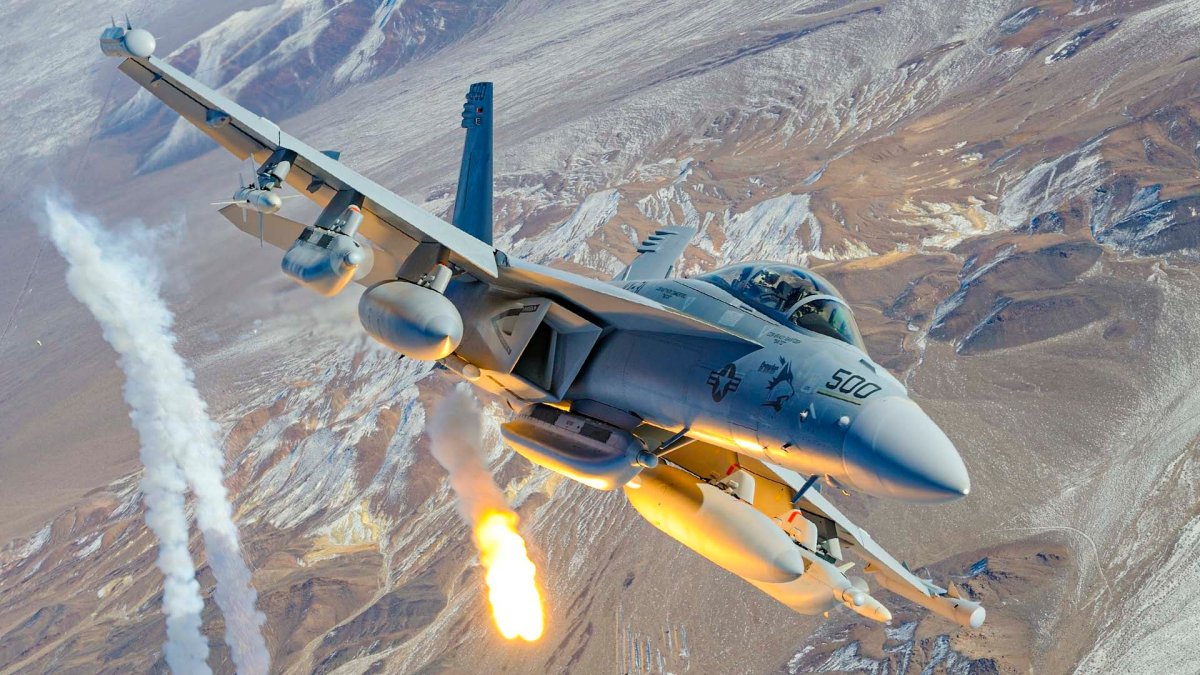
While the U.S. Navy Fighter Weapons School, better known as Topgun , is world-famous for its work in teaching high-end air-to-air combat skills, its fellow Airborne Electronic Attack Weapons School, known as Havoc, tends to sit in the shadows. This elite school prepares EA-18G Growler aircrews for the rigors of modern-day air combat, following much the same mantra as Topgun. While the traditional techniques of air-to-air and air-to-ground employment of fighter aircraft are well documented, the EA-18G’s electronic attack mission remains something of a dark art.
Like Topgun, the Growler equivalent at Havoc is part of the Naval Aviation Warfighting Development Center (NAWDC), and it is tucked away in the same nondescript building at one end of the long flight line at Naval Air Station Fallon, in Nevada. Despite the lack of fanfare, just like its sister organization, Havoc’s activities are at the forefront of modern Naval Aviation.
Airborne Electronic Attack (AEA) essentially involves the offensive and defensive suppression of an enemy’s electromagnetic spectrum, including radars and communications. AEA includes the ability to monitor hostile electromagnetic activity, as well as to evaluate, disrupt, manipulate, and even disable the related systems. These could be the nodes that typically form part of an Integrated Air Defense System (IADS), which can collect tracking data and can disseminate it to various “shooters,” such as surface-to-air missile sites, that are then able to tackle an incoming threat. The ability to confuse, and even suppress or disable that IADS means that its engagement ability can be seriously degraded or some parts of it may be even wiped out entirely.
An EA-18G attached to Havoc taxying at NAS Fallon., Jamie Hunter
AEA, and modern electronic warfare in general , is one of the mystical corners of aerial warfare that is often misunderstood and is cloaked in secrecy . While you can get some insight into the mission here , overall, Havoc is shrouded under a more opaque umbrella of security than its famed counterpart down the hallway.
Havoc isn’t an acronym — it’s a clear reference to what its operators can cause when effectively deploying the full suite of EA-18G Growler capabilities in a complex aerial battlespace. By their very nature, these AEA platforms have the ability to operate in a high-threat environment, tackling air defenses head-on that are out to stop them and their partnering forces, in their tracks.
NAWDC at Fallon is the center of excellence for U.S. Navy training and tactics development, with Havoc being a department within this large organization, and known officially as N10. Havoc has tracked the EA-18G’s path and growth in U.S. Navy service and will mark its tenth anniversary in 2021, with a decade that has been geared toward maintaining the Growler’s leading edge in the complexities of the AEA mission.
Havoc’s primary role lies in training Growler Tactics Instructors, or GTIs, that official NAWDC literature says “form the tactical engine” of the EA-18G community, to maximize the use of the aircraft’s sensors and weapons. In addition, it trains Intelligence Officers, which similarly receive the highest level of EA-18G tactical qualification that is recognized across Naval Aviation.
“Intel shops” are responsible for providing the latest data on threat systems, so the airborne operators and their “kit” know exactly how to deal with them. According to NAWDC: “The Growler brings the most advanced tactical electronic warfare capabilities to operational commanders, creating a tactical advantage for friendly air, land, and maritime forces by delaying, degrading, denying, or deceiving enemy kill chains.”
Captain Brett Stevenson, the commander of Havoc, leads an organization that is both catering for the present fight while also keeping a close eye on some big advances coming along in the future of the EA-18G. “The Growler Tactics Instructor course is run over a 14-week period, twice a year, typically for eight students at a time, and is mostly conducted at Fallon,” he explains. “We don’t “hard crew” here, the students go through individually, rather than as a dedicated pilot and Electronic Warfare Officer [EWO] team.”
“The course has three main phases, we have air-to-air with an electronic attack [EA] focus, air-to-ground EA, and our capstone exercise that comes at Nellis Air Force Base, Nevada, when we do a month alongside the U.S. Air Force Weapons School in its WSINT [Weapons School Integration Phase , “wizz-int”]. For this, we work closely with the Suppression of Enemy Air Defense [SEAD] F-16 “Vipers,” as well as on integration with fifth-generation F-22s and F-35s, as well as a range of joint non-kinetic capabilities to suppress enemy air defenses in a holistic, coordinated manner.”
This EA-18G carries three ALQ-99 pods, including the low-band variant on its centerline station., Jamie Hunter
In addition to the GTI course at Fallon, the Navy has a Growler Electronic Attack Weapons School (EAWS) at NAS Whidbey Island , Washington, which is co-located with the type’s operational and training squadrons. This school was first established as the Weapons “Cage” of Attack Squadron VA-128, the “Golden Intruders,” in 1974 to provide refresher and advanced courses for Grumman A-6 Intruder ordnance personnel. This evolved into a course for weapons and advanced strike planning, including the addition of the EA-6B Prowler, the predecessor of the Growler.
Capt Stevenson says: “The Growler Weapons and Tactics Programs [GWTP] is the training continuum that all Growler aircrews progress through as they attain tactical qualifications of increasing skill and responsibility in effectively employing the Growler’s capabilities.”
“The GTI course consists of academic, simulator and live flight events both on the Fallon Range Training Complex [FRTC] and the Nevada Test and Training Range [NTTR],” Stevenson continues. “We put GTI candidates through a Ph.D.-level course of instruction focused on the precise execution of the latest Growler tactics, and how to integrate the platform’s capabilities with naval and joint forces. We focus on developing their instructor skills through a rigorous, structured debriefing process after each course event. This provides the basis for continual self-improvement, and gives our students the skills they will need to become expert instructors.”
“Graduates of the GTI course will become instructors at Havoc or EAWS. After those two-year instructor tours, they will then return to fleet squadrons as Training Officers, where they become the connective tissue between the tactics developed at Havoc, and fleet aircrew employing the full range of Growler capabilities,” Capt Stevenson explains.
The Growler’s wingtip pods house the ALQ-218 Electronic Surveillance and Electronic Attack sensors., Jamie Hunter
The U.S. Navy retired its last EA-6B Prowlers in 2015 and has now consolidated its AEA effort within Carrier Air Wings, as well as in the joint expeditionary electronic attack squadrons, via the Growler. Comparing the two-seat EA-18G with its four-seat EA-6B predecessor, Capt Stevenson says workload distribution and crew coordination are far more important in the Growler. Regarding the overall AEA mission, he adds: “It’s as much about the ability to confuse and disrupt the adversary — the non-kinetic effects — as it is about the ability to conduct strikes.”
Modern data links and advanced avionics mean the EA-18G is more battlespace savvy than the EA-6B, able to receive huge swathes of data and then distribute it between appropriate platforms. Where the four-person Prowler cockpit relied on reactive crew coordination to get the most from the avionics — the three Electronic Countermeasures Officers (ECMOs) relied on a lot of comms and analog systems integration — the Growler crew works in a digital world where task division is more clearly assigned, and blended avionics afford a generally more efficient working environment.
“GTI candidates typically employ in a section (two-ship) or division (four-ship), but some of the more complex events at WSINT will include up to six Growlers, all synchronized in space and time to provide the kind of capacity we might expect to employ against a modern adversary. During a typical Large Force Exercise event, Growler aircrews use onboard sensors to quickly detect and locate threats, which are then neutralized with kinetic and non-kinetic effects to provide sanctuary for the strike package,” explains Capt Stevenson.
The two-person cockpit of an EA-18G Growler. , USN
Stevenson says HAVOC has some crossover with Topgun, especially with the introduction of the F-35C Lightning II into the Carrier Air Wing (CVW). The two organizations have different, but complementary Subject Matter Expert (SME) qualifications. One area of crossover is suppression of enemy air defenses, better known as SEAD, a mission that includes a combination of non-kinetic and kinetic effects, which may include employing advanced anti-radiation missiles at enemy radars.
Growler crews also focus on battlespace dominance with an electronic attack bias, communications networking, and employment of the AGM-88 High-speed Anti-Radiation Missile (HARM), and AGM-88E Advanced Anti-Radiation Guided Missile (AARGM), which are the primary kinetic SEAD weapons for the Growler.
“Employment of live ordnance during integration exercises is rare, but GTI students do participate in a dedicated AGM-88 HARM missile shoot as part of the GTI course. This gives them the experience needed to effectively plan and safely execute similar missile shoot events during their fleet squadron Training Officer tours.”
As air defense networks have evolved and matured, the AEA mission has had to similarly adapt, employing both new technology and new tactics. The Navy is pushing hard on a raft of next-generation EA-18G capabilities that build upon the initial standard of aircraft.
Next Generation Jammer Mid-Band (NGJ-MB) flies for the first time on an EA-18G Growler on Aug. 7, 2020., U.S. Navy/Erik Hildebrandt
Capt Stevenson says that some fundamental improvements that are coming down the pipe for the EA-18G are very much in line with the current thinking at Havoc. “The Next-Generation Jammer [NGJ] will be revolutionary,” he asserts. NGJ is a series of podded jamming systems that will herald a major step forward for the EA-18G. You can read more about the NGJ family of pods in this previous War Zone feature .
For the most part, the biggest advantages the Growler brings to the fight over the Prowler is air-to-air employment capabilities, along with improved maintainability. As a means of reducing risk on its entry into service, the Growler initially retained the Prowler’s external AN/ALQ-99 jamming pods, albeit with specific modifications to facilitate the transfer to the EA-18G, which you read about here .
The ALQ-99 jamming pods and the ALQ-218 Electronic Surveillance and Electronic Attack suite are actually carryovers from the Prowler, being the ALQ-218 was designed for the Growler, but integrated into the final capability upgrade to the EA-6B, known as ICAP III, to enhance the venerable jet’s capabilities and validate the system’s performance.
Growler being tested with the NGJ-LB pod in September 2020., USN
While the legacy ALQ-99 is a proven and capable jammer that has been able to adapt to new threats, it is now being replaced by the NGJ series of pods, beginning with the AN/ALQ-249(v)1 Next Generation Jammer Mid-band (NGJ-MB), which is under development by Raytheon. The first flight of NGJ-MB on an EA-18G occurred in August 2020, however, the project has faced a number of engineering challenges, details of which you can read here .
Testing of the second new low-band (LB) jamming pod is now underway. The Northrop Grumman Demonstration of Existing Technologies (DET) prototype of the NGJ-LB pod was revealed in September 2020 and is detailed in this War Zone article . A high band pod could also be developed to complete the transition from the legacy ALQ-99.
The Growler is also gearing up for the Northrop Grumman AGM-88G Advanced Anti-Radiation Guided Missile-Extended Range (AARGM-ER), which is a significant upgrade on the AGM-88E AARGM. The Navy began development of the missile in 2018 and it too will soon be fielded by the EA-18G as it further enhances the type’s kinetic capabilities. You can read more about the AARGM-ER here .
An AN/ALQ-99 pod and AGM-88 HARM on an EA-18G., Jamie Hunter
Growler looks to the future
In addition to the external pods and weapons, the U.S. Navy is moving forward with a Block II variant of the Growler. This upgrade will provide the aircraft with a significantly enhanced electronic attack system, which includes the improved AN/ALQ-218(v)4 radio frequency receiver system, plus the AN/ALQ-227(v)2 Communication Countermeasures Set (CCS). It is also planned to build upon currently-funded features being added to the Block III F/A-18E/F , such as conformal fuel tanks (CFTs) that add 3,500 pounds of fuel — an especially important upgrade for the electronic warfare pod-lugging Growler — and new 10 x 19-inch wide-area displays in the cockpit. It’s an excellent example of how the Navy leverages commonality between the Growler and the Super Hornet.
A new open architecture processor and advanced networking will also enable the EA-18G to further prepare for the future battlespace. In September 2019, the Naval Air Warfare Center Aircraft Division and Boeing demonstrated the ability for the Growler to act as a controller for autonomous Unmanned Air Systems (UASs). Air Test and Evaluation Squadron VX-23 “Salty Dogs” at NAS Patuxent River, Maryland, flew a pair of EA-18Gs that simulated UASs, which were controlled from a third Growler in a series of four flights. This could pave the way for the Growler directing unmanned combat air vehicles and other advanced drones in the future. You can read all about these missions here .
The tests were part of the Navy Warfare Development Command’s annual fleet experiment (FLEX) exercises, and part of demonstrating how the EA-18G is moving ahead in line with cutting edge technologies for fielding in future conflicts. EA-18Gs also could find themselves launching and controlling swarms of smaller stand-in jammers and decoy drones in the future , as well.
The already complex AEA mission undertaken by the Growler is dramatically expanding as these new capabilities are added to its repertoire. How the Growler will operate alongside the U.S. Navy’s F-35C Lightning II stealth fighters, which have their own unique electronic warfare capabilities, is an important part of Havoc’s work. It means the school will work closely with the neighboring Topgun as it expands the inclusion of the F-35C in its syllabus. Read all about how the F-35C is changing Topgun in this recent feature of ours .
A Havoc EA-18G on the packed flight line at NAS Fallon., Jamie Hunter
Stealthy combat aircraft often rely on AEA support in the most complex IADS environments to ensure they remain fully protected. “Growler aircrews provide the optimum combination of kinetic and non-kinetic effects for each supported platform or “Protected Entity” based on that platform’s unique capabilities,” explains Capt Stevenson. “During mission planning, Growler aircrews will determine the most effective method of support, and how that may evolve during a given mission. It’s a very dynamic process that requires split-second decision making to ensure that the survivability of the strike package is maximized.”
Part of Havoc’s work is to develop tactics, techniques, and procedures for the Growler to operate as part of an integrated joint force and to maximize lethality for the CVW and joint forces in the most demanding and hostile environments. This involves bringing together a full spectrum of assets and capabilities to disable an IADS in an effective manner. These considerations underline why HAVOC has been closely involved with the development and fielding of the NGJ from the outset.
Looking ahead, Havoc will continue to play a critical role in training squadron-level Growler operators and elevating them to become the fleet’s electronic attack specialists. It’s part of the constant evolution of an important frontline asset in ensuring its operators have the know-how to efficiently employ a platform’s latest technologies, and how to combat the latest threats that could be faced in what is arguably one of combat aviation’s most challenging roles.
Contact the editor: Tyler@thedrive.com
Comments couldn’t be loaded. Please refresh the page.
更新于美国东部时间2020年11月27日下午6:13。
美国海军战斗机武器学校,更广为人知的名称是“Topgun”(顶级飞行员),因其在教授高端空战技能方面的卓越成就而享誉全球,而其姊妹学校——机载电子攻击武器学校,又称“Havoc”(浩劫),则往往鲜为人知。这所精英学校遵循着与“Topgun”大致相同的理念,为EA-18G“咆哮者”电子战飞机的机组人员进行现代空战的训练。尽管战斗机空对空和空对地作战的传统技术已得到充分研究,但EA-18G的电子攻击任务仍然是一门鲜为人知的神秘技艺。
与“壮志凌云”(Topgun)项目类似,“咆哮者”(Growler)无人机在“浩劫”(Havoc)基地的同级项目也隶属于海军航空作战发展中心(NAWDC),它位于内华达州法伦海军航空站长长的飞行跑道一端一栋毫不起眼的建筑内。尽管缺乏宣传,但与它的姊妹机构一样,“浩劫”基地的活动也处于现代海军航空的前沿。
机载电子攻击(AEA)本质上是对敌方电磁频谱(包括雷达和通信设备)进行进攻性和防御性压制。AEA 包括监测敌方电磁活动的能力,以及评估、干扰、操纵甚至瘫痪相关系统的能力。这些系统通常是综合防空系统(IADS)的组成部分,能够收集跟踪数据并将其分发给各种“攻击单元”(例如地对空导弹阵地),以便应对来袭威胁。干扰、压制甚至瘫痪 IADS 的能力意味着其作战能力会受到严重削弱,甚至部分功能可能被完全摧毁。
一架挂载在“浩劫”号上的EA-18G电子战飞机正在法伦海军航空站滑行。(杰米·亨特摄)
AEA(空中电子战)以及现代电子战总体而言,是空中战争中一个神秘莫测的领域,常常被误解,并笼罩在重重迷雾之中。虽然你可以在这里了解到一些任务信息,但总体而言,Havoc 的安全防护比走廊尽头的著名同类项目更加严密。
“浩劫”(Havoc)并非缩写,而是明确指代EA-18G“咆哮者”电子战飞机操作员在复杂空战环境中有效部署其全部作战能力时所能造成的破坏力。这些EA平台本身就具备在高威胁环境下作战的能力,能够正面应对旨在阻止其及其友军行动的防空系统。
位于法伦的海军航空武器发展中心(NAWDC)是美国海军训练和战术发展的卓越中心,而“浩劫”(Havoc)是该大型机构下属的一个部门,正式名称为N10。“浩劫”一直跟踪着EA-18G在美国海军服役的发展历程,并将于2021年迎来其成立十周年。这十年来,“浩劫”致力于保持“咆哮者”(Growler)在复杂多变的电子战任务中的领先地位。
“浩劫”训练中心的主要职责是训练“咆哮者”战术教官(GTI),海军航空武器发展中心(NAWDC)的官方资料称,这些教官是EA-18G战机“战术引擎”的核心,负责最大限度地利用飞机的传感器和武器。此外,该中心还负责训练情报官,这些情报官同样会获得海军航空兵认可的最高级别的EA-18G战术资格。
“情报部门”负责提供有关威胁系统的最新数据,以便空中作战人员及其装备能够准确应对这些系统。根据美国海军航空武器发展中心(NAWDC)的说法:“咆哮者电子战系统为作战指挥官带来了最先进的战术电子战能力,通过延迟、削弱、阻断或欺骗敌方杀伤链,为友军空中、陆地和海上部队创造战术优势。”
“浩劫”中队指挥官布雷特·史蒂文森上尉领导的这支队伍,既要应对当前的战斗,又要密切关注EA-18G未来即将取得的一些重大进展。“咆哮者战术教官课程为期14周,每年举办两次,每次通常招收8名学员,主要在法伦空军基地进行,”他解释说。“我们这里不实行‘固定机组’制,学员们是单独学习,而不是以飞行员和电子战官(EWO)的组合形式学习。”
“该课程分为三个主要阶段:空对空电子攻击训练、空对地电子攻击训练,以及在内华达州内利斯空军基地举行的结业演习。届时,我们将与美国空军武器学校合作,在其武器学校整合阶段(WSINT,简称“wizz-int”)进行为期一个月的联合演习。在此过程中,我们将与压制敌方防空系统(SEAD)的F-16“蝰蛇”战斗机密切合作,并与第五代F-22和F-35战斗机进行整合,同时还将运用一系列联合非动能作战能力,以整体协调的方式压制敌方防空系统。”
这架EA-18G携带了三个ALQ-99吊舱,包括安装在机身中线吊舱上的低频段版本。——杰米·亨特
除了位于法伦的GTI课程外,海军还在华盛顿州惠德贝岛海军航空站设有“咆哮者”电子攻击武器学校(EAWS),该校与该机型的作战和训练中队位于同一地点。这所学校最初是VA-128攻击中队(“金色入侵者”)于1974年设立的武器“笼”,旨在为格鲁曼A-6“入侵者”攻击机的武器人员提供复训和高级课程。后来,该课程发展成为涵盖武器和高级打击计划的培训课程,并加入了EA-6B“徘徊者”(咆哮者的前身)的相关内容。
史蒂文森上尉说:“咆哮者武器和战术计划(GWTP)是一个持续的训练体系,所有咆哮者机组人员都要通过该体系逐步获得战术资格,从而有效运用咆哮者的能力,并承担越来越高的技能和责任。”
“GTI课程包括理论学习、模拟器训练和实弹飞行演练,分别在法伦靶场训练中心(FRTC)和内华达州试验训练靶场(NTTR)进行,”史蒂文森继续说道。“我们为GTI学员提供博士级别的课程,重点在于精准执行最新的‘咆哮者’无人机战术,以及如何将该平台的能力与海军和联合部队的作战能力相结合。我们注重培养学员的教官技能,在每次课程结束后,都会进行严格、结构化的总结汇报。这为他们持续自我提升奠定了基础,并使他们掌握成为优秀教官所需的技能。”
“GTI课程的毕业生将成为Havoc或EAWS的教官。在完成两年的教官任期后,他们将回到舰队中队担任训练官,成为Havoc开发的战术与舰队机组人员运用“咆哮者”全部能力之间的桥梁,”史蒂文森上尉解释道。
“咆哮者”战机的翼尖吊舱内装有ALQ-218电子监视和电子攻击传感器。——杰米·亨特
美国海军于2015年退役了最后一架EA-6B“徘徊者”电子战飞机,如今已将远征电子战(AEA)能力整合到舰载航空联队以及联合远征电子攻击中队中,主要依靠EA-18G“咆哮者”电子战飞机。史蒂文森上校在比较双座EA-18G与其四座前身EA-6B时表示,“咆哮者”的工作负荷分配和机组人员协调更为重要。关于远征电子战的整体任务,他补充道:“它不仅关乎打击能力,更关乎迷惑和干扰敌方——即非动能效应。”
现代数据链和先进的航空电子设备意味着EA-18G比EA-6B更适应战场环境,能够接收海量数据并将其分发到相应的平台。EA-6B的四人座舱依靠机组人员的快速反应来充分发挥航空电子设备的性能——三名电子对抗官(ECMO)依赖于大量的通信和模拟系统集成——而EA-18G的机组人员则在一个数字化环境中工作,任务分工更加明确,融合的航空电子设备也提供了更高效的工作环境。
“GTI候选机型通常以分队(两架)或分队(四架)的形式部署,但在WSINT演习中一些更复杂的演练环节,将动用多达六架咆哮者战机,所有战机在空间和时间上同步运行,以提供我们可能用于对抗现代对手的作战能力。在典型的大规模部队演习中,咆哮者战机的机组人员会利用机载传感器快速探测和定位威胁,然后通过动能和非动能手段将其摧毁,从而为打击编队提供掩护,”史蒂文森上尉解释道。
美国海军EA-18G“咆哮者”电子战飞机的双人座舱。
史蒂文森表示,HAVOC与Topgun有一些重叠之处,尤其是在F-35C“闪电II”战斗机加入舰载航空联队(CVW)之后。这两个机构拥有不同但互补的专家资质。其中一个重叠领域是压制敌方防空系统,即SEAD,这项任务结合了非动能和动能效应,其中可能包括使用先进的反辐射导弹攻击敌方雷达。
“咆哮者”战机机组人员还注重战场优势,采用电子攻击手段,建立通信网络,并使用 AGM-88 高速反辐射导弹 (HARM) 和 AGM-88E 先进反辐射制导导弹 (AARGM),这两种导弹是“咆哮者”战机的主要动能防空压制武器。
“在联合演习中使用实弹的情况很少见,但GTI学员会参加专门的AGM-88 HARM导弹射击演习,这是GTI课程的一部分。这使他们获得必要的经验,以便在舰队中队训练官任期内有效地计划和安全执行类似的导弹射击演习。”
随着防空网络的演进和成熟,EA-18G战机的任务也必须随之调整,采用新技术和新战术。海军正在大力推进一系列下一代EA-18G战机的研发,这些能力是在现有飞机标准的基础上进一步提升的。
2020年8月7日,下一代中频段干扰机(NGJ-MB)首次在EA-18G“咆哮者”电子战飞机上进行试飞。(美国海军/埃里克·希尔德布兰特摄)
史蒂文森上尉表示,EA-18G即将进行的一些根本性改进与Havoc公司目前的理念非常契合。“下一代干扰器(NGJ)将带来革命性的变革,”他断言。NGJ是一系列吊舱式干扰系统,将标志着EA-18G向前迈出了重要一步。您可以在之前的《战区》专题报道中了解更多关于NGJ系列吊舱的信息。
总的来说,咆哮者(Growler)相对于徘徊者(Prowler)的最大优势在于其空对空作战能力以及更佳的维护性。为了降低服役初期的风险,咆哮者最初保留了徘徊者的外挂式AN/ALQ-99干扰吊舱,但进行了专门的改装以方便移植到EA-18G上,详情请见此处。
ALQ-99 干扰吊舱和 ALQ-218 电子监视和电子攻击套件实际上是从“徘徊者”电子战飞机沿用下来的,ALQ-218 是为“咆哮者”电子战飞机设计的,但被集成到 EA-6B 的最终能力升级(称为 ICAP III)中,以增强这款老式喷气式飞机的能力并验证系统的性能。
2020年9月,美国海军正在对“咆哮者”导弹进行NGJ-LB吊舱测试。
虽然传统的ALQ-99干扰机性能可靠且久经考验,能够适应新的威胁,但它正逐渐被NGJ系列吊舱所取代,首款产品是雷神公司正在研发的AN/ALQ-249(v)1下一代中频段干扰机(NGJ-MB)。NGJ-MB于2020年8月在EA-18G电子战飞机上进行了首次试飞,但该项目面临诸多工程挑战,详情请点击此处阅读。
第二款新型低频段(LB)干扰吊舱的测试工作正在进行中。诺斯罗普·格鲁曼公司现有技术演示(DET)的NGJ-LB吊舱原型于2020年9月亮相,详情请参阅这篇《战区》文章。此外,还可以开发一款高频段吊舱,以完成从传统ALQ-99吊舱的过渡。
“咆哮者”电子战飞机也正在为诺斯罗普·格鲁曼公司生产的AGM-88G先进反辐射导弹增程型(AARGM-ER)做准备,该导弹是对AGM-88E AARGM导弹的重大升级。海军于2018年开始研发该导弹,它也将很快装备EA-18G电子战飞机,进一步提升该机型的动能打击能力。您可以在这里阅读更多关于AARGM-ER的信息。
一架EA-18G电子战飞机上挂载了AN/ALQ-99吊舱和AGM-88 HARM导弹。——杰米·亨特
Growler展望未来
除了外部吊舱和武器外,美国海军正在推进“咆哮者”电子战飞机Block II改进型的研发。此次升级将显著增强该机的电子攻击系统,包括改进型AN/ALQ-218(v)4射频接收机系统和AN/ALQ-227(v)2通信对抗系统(CCS)。此外,该改进型还计划在目前已投入资金的Block III F/A-18E/F改进型的基础上进行升级,例如增加3500磅燃油容量的保形油箱(CFT)——对于携带电子战吊舱的“咆哮者”而言,这是一项尤为重要的升级——以及驾驶舱内全新的10 x 19英寸宽屏显示器。这充分体现了海军如何利用“咆哮者”和“超级大黄蜂”之间的通用性。
新型开放式架构处理器和先进的网络技术也将使EA-18G能够更好地适应未来的战场环境。2019年9月,美国海军航空作战中心飞机部和波音公司演示了“咆哮者”无人机作为自主无人机系统(UAS)控制器的能力。位于马里兰州帕图克森特河海军航空站的VX-23“咸狗”空中测试与评估中队,在四次飞行中,使用两架EA-18G模拟无人机系统,并由第三架“咆哮者”无人机进行控制。这可能为“咆哮者”未来指挥无人作战飞行器和其他先进无人机铺平道路。您可以在这里阅读有关这些任务的全部内容。
这些测试是海军作战发展司令部年度舰队实验(FLEX)演习的一部分,旨在展示EA-18G如何与尖端技术接轨,以适应未来冲突的部署需求。未来,EA-18G还有可能用于发射和控制大量小型替代干扰机和诱饵无人机。
随着这些新能力的加入,咆哮者无人机原本就十分复杂的电子战任务正在迅速扩展。咆哮者如何与拥有独特电子战能力的美国海军F-35C“闪电II”隐形战斗机协同作战,是哈沃克飞行学校工作的重要组成部分。这意味着,随着F-35C的加入,哈沃克飞行学校将与邻近的“壮志凌云”飞行学校密切合作,共同推进其课程设置。阅读我们最近的专题报道,了解F-35C如何改变“壮志凌云”飞行学校的教学。
一架EA-18G“浩劫”电子战飞机停在法伦海军航空站拥挤的飞行线上。(杰米·亨特摄)
在最复杂的综合防空系统(IADS)环境中,隐形战斗机通常依赖主动电子战(AEA)支援,以确保自身受到全面保护。“咆哮者”无人机机组人员会根据每个受支援平台或‘受保护实体’的独特能力,提供动能和非动能效应的最佳组合,”史蒂文森上尉解释道。“在任务规划阶段,咆哮者无人机机组人员会确定最有效的支援方式,以及在特定任务中该方式可能如何演变。这是一个非常动态的过程,需要瞬间做出决策,以确保打击编队的生存能力最大化。”
Havoc 的部分工作是为“咆哮者”导弹系统开发战术、技术和程序,使其能够作为联合作战部队的一部分发挥作用,并在最严苛和敌对的环境中最大限度地提高舰载航空联队和联合部队的杀伤力。这需要整合全方位的资源和能力,以有效瘫痪综合防空系统(IADS)。正是基于这些考虑,Havoc 从一开始就密切参与了下一代联合防空系统(NGJ)的研发和部署。
展望未来,“浩劫”训练中心将继续在训练中队级“咆哮者”电子战飞机操作员方面发挥关键作用,并将他们提升为舰队的电子攻击专家。这是重要前线资产持续发展的一部分,旨在确保其操作员掌握有效运用平台最新技术的知识,并应对在战斗航空领域最具挑战性的任务之一中可能面临的最新威胁。
联系编辑:Tyler@thedrive.com
评论加载失败,请刷新页面。