Kyiv plans exit from anti-landmine treaty as mines litter Ukraine基辅计划退出《反地雷条约》,乌克兰境内地雷遍布。
“Ukraine is compelled to give unconditional priority to the security of its citizens and the defense of the state,” Ukraine’s foreign ministry said.
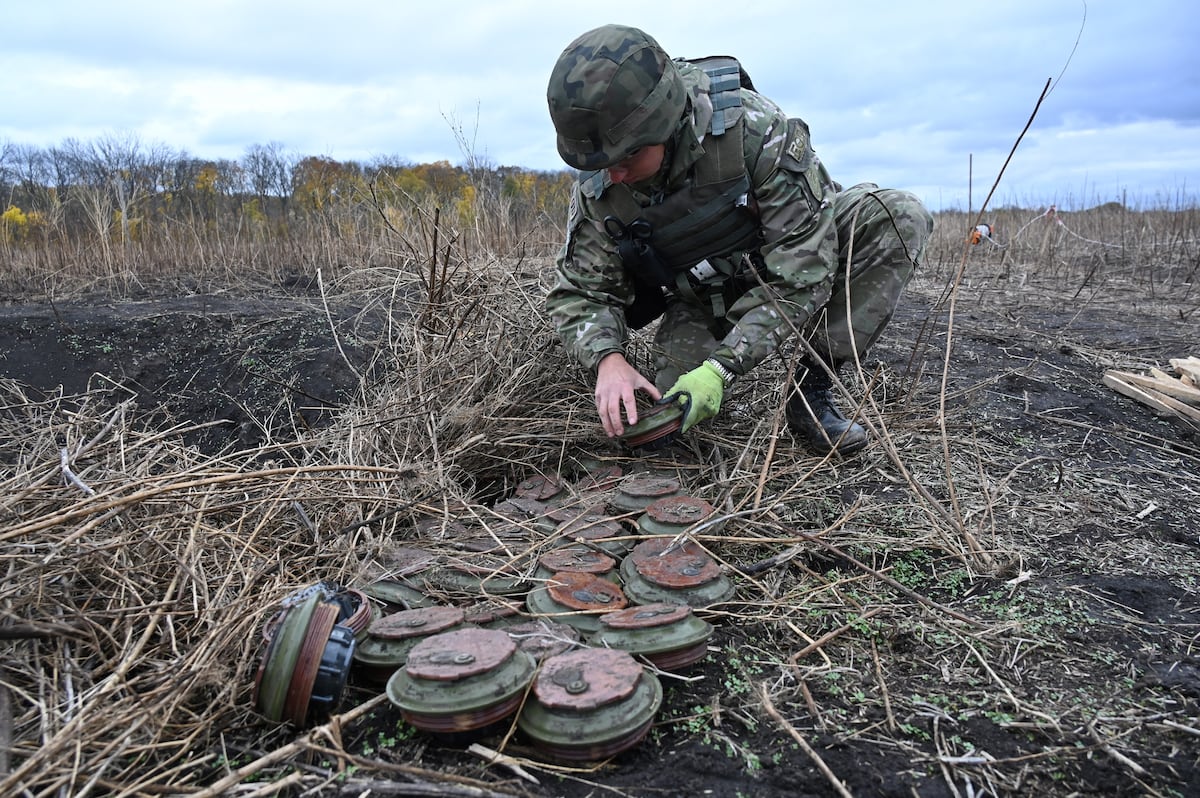
THE HAGUE, Netherlands — Ukrainian President Volodymyr Zelensky signed a decree on June 29 initiating his country’s withdrawal from the Ottawa Convention, the international treaty banning anti-personnel landmines.
The 1997 Ottawa Convention prohibits the use, production, stockpiling and transfer of anti-personnel mines, weapons designed to be buried or hidden underground that often maim or kill victims long after conflicts end. More than 160 countries have signed the treaty, although notably neither the United States nor Russia is a party to the agreement.
“Ukraine is compelled to give unconditional priority to the security of its citizens and the defence of the state,” Ukraine’s foreign ministry said in a statement , calling the decision “difficult but necessary” to protect against “horrific Russian atrocities.”
The withdrawal still requires parliamentary ratification and formal notification to the United Nations before taking effect. Under the treaty’s provisions, withdrawal normally occurs six months after notification, but cannot take effect while a signatory is engaged in armed conflict.
Ukrainian lawmaker Roman Kostenko, secretary of the parliamentary committee on national security, justified the move by pointing to Russia’s extensive use of landmines. “Russia is not a party to this convention and is using mines on a massive scale against both our military and civilians,” Kostenko wrote on Facebook . “We cannot remain bound by restrictions when the enemy faces none.”
Ukraine is not alone in abandoning the treaty. Several NATO allies bordering Russia have taken similar steps in recent months, with Latvia and Lithuania withdrawing in April and May, respectively, followed by Finland and Poland in June. Estonia has also approved withdrawal measures.
The decision comes as Ukraine has become the world’s most heavily mined country, with humanitarian organizations estimating it could take up to 30 years to clear contaminated areas. Ukrainian officials argue that Russia’s asymmetric advantage in mine deployment has left them at a severe disadvantage.
“Russia has never been a party to this convention and uses anti-personnel mines in an extremely cynical manner,” Zelensky said in his daily address, describing mines as the “trademark of Russian killers.”
Ukraine originally ratified the Ottawa Convention in 2005, and at the time held one of the world’s largest stockpiles of anti-personnel mines, surpassed only by China, Russia, the US and Pakistan—none of which are treaty parties.
The foreign ministry emphasized that when Ukraine signed the treaty, “such circumstances did not exist and could not have been foreseen,” referring to Russia’s full-scale invasion that began in February 2022.
Human rights groups have previously condemned the withdrawal decisions by Ukraine’s allies, highlighting the long-term civilian risks posed by landmines that can remain dangerous for decades after conflicts end and often disproportionately affect children.
According to Human Rights Watch , both Russia and Ukraine have employed at least 13 types of anti-vehicle mines.
Linus Höller is Defense News' Europe correspondent and OSINT investigator. He reports on the arms deals, sanctions, and geopolitics shaping Europe and the world. He holds master’s degrees in WMD nonproliferation, terrorism studies, and international relations, and works in four languages: English, German, Russian, and Spanish.
荷兰海牙——6月29日,乌克兰总统弗拉基米尔·泽连斯基签署法令,启动乌克兰退出《渥太华公约》的程序。《渥太华公约》是一项禁止杀伤人员地雷的国际条约。
1997年《渥太华公约》禁止使用、生产、储存和转让杀伤人员地雷,这类武器设计用于埋藏或隐藏于地下,往往在冲突结束后很久仍会造成人员伤亡。已有超过160个国家签署了该条约,但值得注意的是,美国和俄罗斯均非缔约国。
乌克兰外交部在一份声明中表示,“乌克兰被迫将公民安全和国家防御置于无条件优先地位”,并称这一决定“艰难但必要”,以防范“俄罗斯的骇人暴行”。
退出仍需经议会批准并正式通知联合国后方可生效。根据条约规定,退出通常在通知发出六个月后生效,但缔约国卷入武装冲突期间不得生效。
乌克兰议会国家安全委员会秘书、议员罗曼·科斯坚科为这一举措辩护,他指出俄罗斯广泛使用地雷。“俄罗斯并非该公约的缔约国,并且正在大规模地对我们的军人和平民使用地雷,”科斯坚科在脸书上写道。“当敌人不受任何限制时,我们不能继续受制于这些限制。”
乌克兰并非唯一退出该条约的国家。近几个月来,几个与俄罗斯接壤的北约盟国也采取了类似措施,拉脱维亚和立陶宛分别于4月和5月退出,芬兰和波兰则于6月相继退出。爱沙尼亚也已批准退出该条约。
乌克兰已成为世界上地雷密度最高的国家,人道主义组织估计,清除受污染地区可能需要长达30年的时间。在此背景下,俄罗斯做出了上述决定。乌克兰官员认为,俄罗斯在布雷方面的不对称优势使他们处于严重劣势。
泽连斯基在每日讲话中表示:“俄罗斯从未加入过这项公约,并且以极其卑鄙的方式使用杀伤人员地雷”,他还将地雷描述为“俄罗斯杀手的标志”。
乌克兰最初于 2005 年批准了《渥太华公约》,当时拥有世界上最大的杀伤人员地雷库存之一,仅次于中国、俄罗斯、美国和巴基斯坦——而这四个国家都不是该公约的缔约国。
外交部强调,乌克兰签署该条约时,“这种情况并不存在,也无法预见”,指的是俄罗斯于 2022 年 2 月开始的全面入侵。
人权组织此前曾谴责乌克兰盟友的撤军决定,强调地雷对平民造成的长期风险,这些风险在冲突结束后可能持续数十年,并且往往对儿童造成不成比例的影响。
据人权观察组织称,俄罗斯和乌克兰至少使用了 13 种类型的反车辆地雷。
林努斯·霍勒是《防务新闻》的欧洲记者和开源情报调查员。他报道影响欧洲乃至全球的军火交易、制裁和地缘政治。他拥有大规模杀伤性武器不扩散、恐怖主义研究和国际关系三个硕士学位,并精通英语、德语、俄语和西班牙语四种语言。