Guam missile defense office awaits funds to build layered architecture关岛导弹防御办公室正在等待资金以建造多层架构
The joint program office for the missile defense of Guam is creating a layered air and missile defense architecture on the Pacific island.
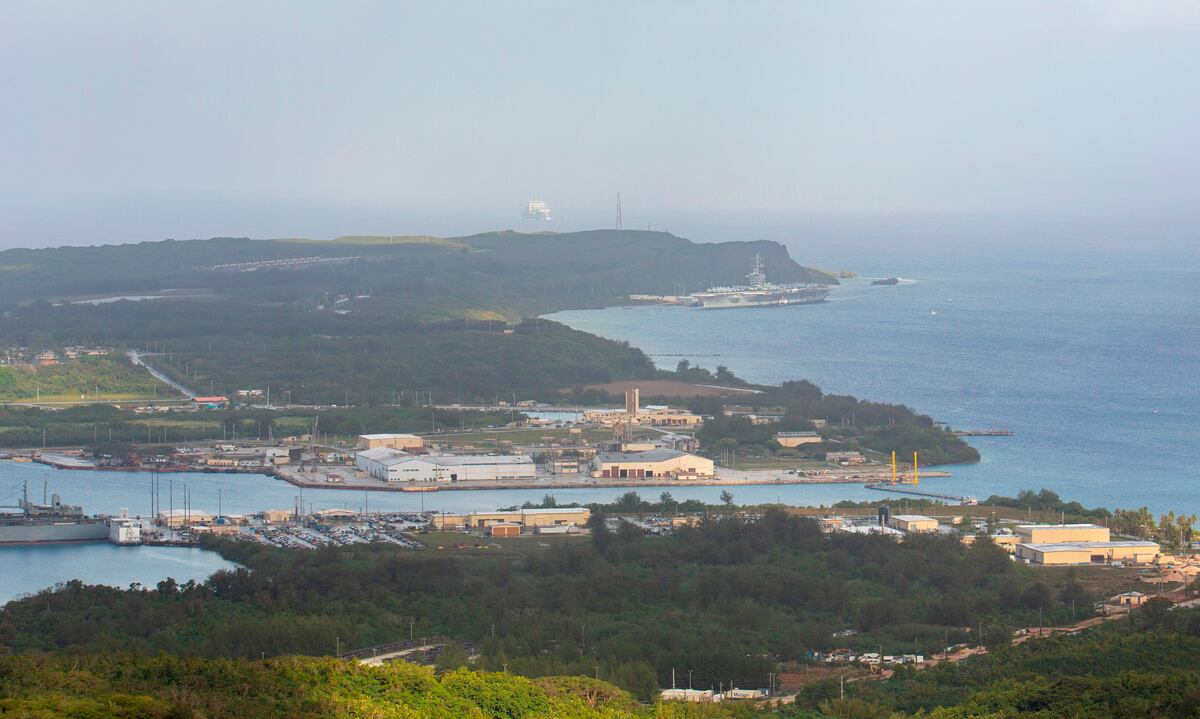
The Pentagon’s joint program office for the missile defense of Guam is waiting on fiscal 2024 funding to be reprogrammed from elsewhere in the budget to help pay for its efforts to build an architecture to defend the key U.S. territory in the Pacific.
But that doesn’t mean a lot of work isn’t already underway to design and plan architecture critical to defending the strategic island from potential air and missile attacks from adversaries like China.
The project office, which is run by the Army’s Rapid Capabilities and Critical Technologies Office boss Lt. Gen. Robert Rasch, is operating with eight people “working really, really hard establishing the network of communications” between defense players, including the Missile Defense Agency, which has spent the last several years developing the initial architecture , Rasch said at a July 30 Center for Strategic and International Studies event in Washington.
The office is waiting on a reprogramming action so it can start manning beyond the eight staff currently devoted to the effort, Rasch added. The JPO for Guam was stood up in February 2024 after the FY24 budget had been established.
Key decisions remain on which agency or services will own and control what equipment as part of the architecture. Additionally, it remains to be seen how the capabilities designated for the architecture will come together, but a requirements document is in staffing now, Rasch said.
Those requirements and plans will evolve as the office continues to work with U.S. Indo-Pacific Command on how it wants to use the system to fight, as well as what that means for integration between various elements of the architecture.
The Missile Defense Agency and the Army sought a combined $1.5 billion in the FY24 budget to begin preparing the island by moving assets into place and integrating capabilities. The Pentagon also designated the Army as the lead service overseeing the acquisition and plan of defending Guam.
Guam is an island of nearly 170,000 people that sits in a vulnerable position — it is closer to Beijing than it is to Hawaii. The island plays host to a significant amount of U.S. combat power and would therefore be an attractive target for China in the event of a war in the Taiwan Strait.
While the MDA indicated it planned to begin delivering additional capability beyond what is already on Guam — and would incrementally supplement that in subsequent years — what is currently on the island “hasn’t fundamentally changed,” Rasch said.
“The phasing of capabilities as they come in, those are going to deliver on the schedule that the services and the agency are delivering on. I don’t have any magic resource dust to put [the Lower Tier Air and Missile Defense Systems] to the left two years or [the Integrated Battle Command System],” he told Defense News at the event.
“We’re managing the really massive, integrated master schedule of all these individual programs and making sure the right pieces are coming at the right time. And, by the way, there is a whole layer of [military construction] activities that truly isn’t even starting until we finish the design reviews.”
Rasch emphasized that, over time, the toughest part will be ensuring all of the architecture’s capabilities work together and that all services are able to operate using a single air picture.
The Army is planning to incorporate its legacy Patriot air and missile defense system as well as its in-development Lower Tier Air and Missile Defense Sensor that will replace Patriot’s radar. It will also bring its newly fielded Mid-Range Capability missile launcher and its Indirect Fire Protection Capability launchers, still in the prototype phase, when ready.
Additionally, the service plans to tie into the architecture its new IBCS command and control system, which was approved for full-rate production in FY23.
The Navy, meanwhile, is set to provide technology and capability from its Aegis weapon system, and MDA will provide high-end, solid-state, mobile AN/TPY-6 radars — new sensors that use technology from the Long Range Discrimination Radar in Clear Space Force Station, Alaska.
Establishing the architecture in a layered way means the services all need to develop software for individual control systems, like IBCS, with Guam in mind, Brig. Gen. Frank Lozano, program executive officer for missiles and space, said during the same event.
In a scenario in which threats vary widely and are overwhelming in number, “you have to have a battle management, fire control system capable of adjusting on the fly based on how threats are presented,” he said. “And then, in real-time, making decisions, teeing up decisions for operators to make so that they’re survivable and they win in that defensive scenario.”
Jen Judson is an award-winning journalist covering land warfare for Defense News. She has also worked for Politico and Inside Defense. She holds a Master of Science degree in journalism from Boston University and a Bachelor of Arts degree from Kenyon College.
五角大楼关岛导弹防御联合项目办公室正在等待 2024 财年预算中的资金从其他预算中重新调拨,以帮助支付其构建防御美国在太平洋关键领土的架构的工作费用。
但这并不意味着目前还没有开展大量工作来设计和规划对保护这座战略岛屿免受中国等对手潜在的空中和导弹攻击至关重要的建筑。
项目办公室由陆军快速能力和关键技术办公室主任罗伯特·拉施中将领导,目前有八名工作人员“正在非常努力地建立国防参与者之间的通信网络”,其中包括导弹防御局。拉施在 7 月 30 日于华盛顿举行的战略与国际研究中心活动上表示,导弹防御局在过去几年里一直在开发初始架构。
拉施补充说,该办公室正在等待重新规划,以便能够增加人员配备,目前负责这项工作的员工仅有八人。关岛联合项目办公室是在2024财年预算确定后,于2024年2月成立的。
关于架构中哪些设备将由哪个机构或部门拥有和控制,仍存在一些关键决策。此外,架构中指定的各项功能将如何整合还有待观察,但需求文档目前正在编制中,Rasch 表示。
随着该办公室继续与美国印太司令部合作,探讨如何利用该系统进行作战,以及这对于架构中各个元素之间的集成意味着什么,这些需求和计划将会不断发展。
导弹防御局和陆军在2024财年预算中申请了15亿美元的联合拨款,用于启动关岛防御准备工作,包括将资产部署到位和整合各项能力。五角大楼还指定陆军为牵头军种,负责监督关岛防御的物资采购和计划制定。
关岛是一个拥有近17万人口的岛屿,地理位置十分脆弱——它距离北京比距离夏威夷更近。该岛驻扎着大量美国作战力量,因此一旦台海战争爆发,关岛将成为中国极具吸引力的目标。
拉施表示,尽管MDA表示计划开始向关岛提供超出现有能力的额外能力,并将在随后的几年里逐步补充,但目前岛上的情况“并没有发生根本性的变化”。
“各项能力将按计划逐步交付,各军种和机构都将按计划完成。我没有任何魔法资源能让(低层防空和导弹防御系统)或(综合作战指挥系统)提前两年交付,”他在活动上告诉《防务新闻》。
“我们正在管理所有这些独立项目的庞大而综合的总进度计划,并确保各个环节在正确的时间到位。顺便说一句,还有一大批[军事建设]活动,实际上要等到设计评审完成后才会开始。”
Rasch 强调,随着时间的推移,最困难的部分将是确保架构的所有功能协同工作,并且所有服务都能使用单一的空中态势图运行。
陆军计划整合其现有的“爱国者”防空反导系统,以及正在研发中的低层防空反导传感器(用于取代“爱国者”系统的雷达)。此外,陆军还将整合其新近部署的中程导弹发射器和目前仍处于原型阶段的间接火力防护发射器。
此外,该部门计划将其新的 IBCS 指挥控制系统接入该架构,该系统已获准在 2023 财年全面投入生产。
与此同时,海军将提供其宙斯盾武器系统的技术和能力,而导弹防御局将提供高端固态移动式 AN/TPY-6 雷达——这些新型传感器采用了来自阿拉斯加克利尔空间部队基地远程识别雷达的技术。
导弹与太空项目执行官弗兰克·洛萨诺准将在同一场合表示,以分层方式建立架构意味着所有部门都需要开发用于各个控制系统(如 IBCS)的软件,同时要考虑到关岛的情况。
他说:“在威胁种类繁多、数量庞大的情况下,你必须拥有一套能够根据威胁呈现方式实时调整的作战管理和火力控制系统。然后,实时做出决策,为作战人员提供决策依据,从而确保他们在防御作战中能够生存下来并取得胜利。”
珍·贾德森是一位屡获殊荣的记者,为《防务新闻》报道陆地战争。她也曾为《政治报》和《内幕防务》工作。她拥有波士顿大学新闻学硕士学位和凯尼恩学院文学学士学位。