N. Korea fires short-range missiles in 4th launch this year朝鲜今年第四次发射短程导弹
U.S. Indo-Pacific Command said the missiles did not pose an immediate threat to U.S. personnel or territory, or to its allies.
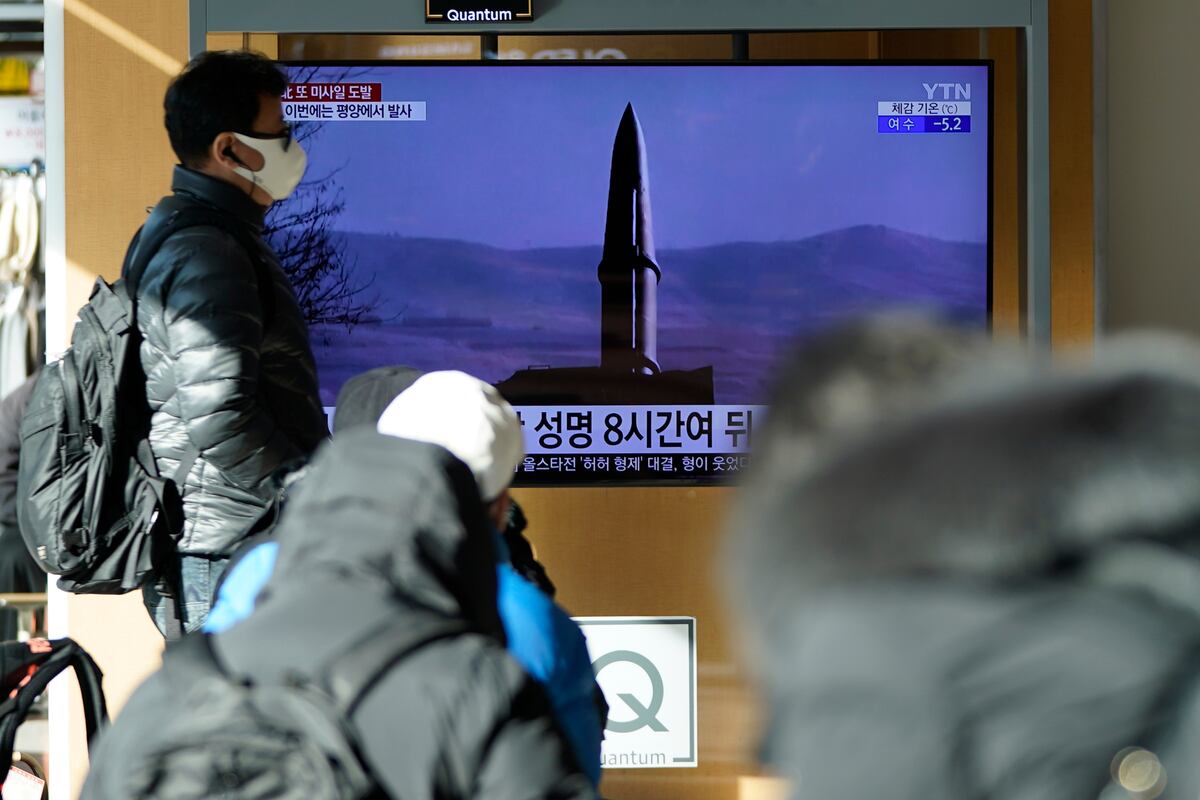
SEOUL, South Korea (AP) — North Korea fired two suspected ballistic missiles into the sea Monday in its fourth weapons launch this month , South Korea’s military said, with the apparent goal of demonstrating its military might amid paused diplomacy with the United States and pandemic border closures.
South Korea’s Joint Chiefs of Staff said the North likely fired two short-range ballistic missiles from an area in Sunan, the location of Pyongyang’s international airport. The missiles were launched four minutes apart Monday morning and flew around 236 miles on a maximum altitude of 26 miles before landing in waters off the country’s northeastern coast, it said.
The U.S. Indo-Pacific Command said the missiles did not pose an immediate threat to U.S. personnel or territory, or to its allies, but highlighted the destabilizing impact of the North’s “illicit” weapons program. Japan’s Defense Minister Nobuo Kishi said the missiles landed outside the Japan’s exclusive economic zone, and the chief cabinet secretary, Hirokazu Matsuno, condemned North Korea’s actions as threats to peace.
South Korean President Moon Jae-in, who is visiting the United Arab Emirates, instructed officials to make “utmost efforts to ensure stability” on the Korean Peninsula, his office said. It also said members of the presidential National Security Council stressed the need to revive nuclear diplomacy with Pyongyang.
North Korea had conducted a pair of flight tests of a purported hypersonic missile on Jan. 5 and Jan. 11 and also test-fired ballistic missiles from a train Friday in an apparent reprisal over fresh sanctions imposed by the Biden administration last week for its continuing test launches.
North Korea has been ramping up tests in recent months of new, potentially nuclear-capable missiles designed to be maneuverable and fly at low altitudes, which potentially improve their chances of evading and defeating missile defenses in the region.
Some experts say North Korean leader Kim Jong Un is going back to a tried-and-true tactic of pressuring his neighbors and the U.S. with missile launches and outrageous threats before offering negotiations meant to extract concessions.
A U.S.-led diplomatic push aimed at convincing North Korea to abandon its nuclear weapons program collapsed in 2019 after the Trump administration rejected the North’s demands for major sanctions relief in exchange for a partial surrender of its nuclear capabilities.
Kim has since pledged to further expand a nuclear arsenal he clearly sees as his strongest guarantee of survival.
His government has so far rejected the Biden administration’s call to resume dialogue without preconditions, saying that Washington must first abandon its “hostile policy,” a term Pyongyang mainly uses to describe sanctions and combined U.S.-South Korea military exercises.
Kim Dong-yub, a professor at Seoul’s University of North Korean Studies, said the North may have conducted another launch to pressure Washington and could continue to dial up its testing activity after vowing stronger action over what it perceives as U.S. hostility.
Last week, the U.S. Treasury Department imposed sanctions on five North Koreans over their roles in obtaining equipment and technology for the North’s missile programs in its response to the North’s earlier tests this month.
The State Department ordered sanctions against another North Korean, a Russian man and a Russian company for their broader support of North Korea’s weapons of mass destruction activities, and the Biden administration also said it would pursue additional U.N. sanctions over the North’s continued tests.
The announcement of the sanctions just came hours after North Korean state media said Kim Jong Un oversaw a successful test of a hypersonic missile on Tuesday, which was the country’s second test of the system in a week, and claimed that the weapon would greatly increase the country’s “war deterrent.”
The North also on Friday fired two short-range ballistic missiles from a train in an apparent retaliation against the fresh U.S. sanctions tied to the hypersonic tests. Friday’s test came hours after the North’s Foreign Ministry issued a statement berating the Biden administration over the new sanctions and warned of “stronger and certain reaction” if Washington maintains its confrontational stance.
AP writer Mari Yamaguchi in Tokyo contributed to this report.
韩国首尔(美联社)——韩国军方称,朝鲜周一向海中发射了两枚疑似弹道导弹,这是本月第四次武器发射,其明显目的是在与美国的外交关系暂停以及疫情期间边境关闭的情况下,展示其军事实力。
韩国联合参谋本部表示,朝鲜可能于周一上午从顺安地区(平壤国际机场所在地)发射了两枚短程弹道导弹。声明称,这两枚导弹相隔四分钟发射,飞行距离约236英里,最大飞行高度为26英里,最终落入朝鲜东北沿海海域。
美国印太司令部表示,这些导弹并未对美国人员、领土或其盟友构成直接威胁,但强调了朝鲜“非法”武器计划的破坏性影响。日本防卫大臣岸信夫表示,导弹落在日本专属经济区之外。内阁官房长官松野宏和谴责朝鲜的行为是对和平的威胁。
韩国总统文在寅正在访问阿联酋,其办公室表示,文在寅指示官员们“尽一切努力确保朝鲜半岛稳定”。声明还称,总统国家安全保障会议成员强调,有必要重启与平壤的核外交。
朝鲜于 1 月 5 日和 1 月 11 日进行了两次据称是高超音速导弹的飞行试验,并于上周五从火车上试射了弹道导弹,这显然是对拜登政府上周因其持续试射而实施的新制裁的报复。
近几个月来,朝鲜一直在加紧测试新型导弹,这些导弹可能具备核能力,设计上具有机动性,能够在低空飞行,这可能会提高朝鲜规避和击败该地区导弹防御系统的机会。
一些专家表示,朝鲜领导人金正恩正在重拾屡试不爽的策略,即先通过导弹发射和发出骇人听闻的威胁向邻国和美国施压,然后再提出旨在获取让步的谈判。
2019 年,美国主导的旨在说服朝鲜放弃核武器计划的外交努力宣告失败,此前特朗普政府拒绝了朝鲜提出的以部分放弃核能力换取大幅解除制裁的要求。
金正恩此后承诺将进一步扩充核武库,他显然认为这是他生存的最强保障。
他的政府迄今为止拒绝了拜登政府提出的在不设前提条件的情况下恢复对话的呼吁,称华盛顿必须首先放弃其“敌对政策”,平壤主要用这个词来描述制裁以及美韩联合军事演习。
首尔朝鲜大学教授金东烨表示,朝鲜可能进行了另一次发射以向华盛顿施压,并且在誓言对它认为的美国的敌意采取更强硬的行动后,可能会继续加大试验力度。
上周,美国财政部对五名朝鲜人实施制裁,原因是他们在为朝鲜导弹计划获取设备和技术方面发挥了作用,这是对朝鲜本月早些时候进行的导弹试验的回应。
美国国务院下令对另一名朝鲜人、一名俄罗斯男子和一家俄罗斯公司实施制裁,理由是他们更广泛地支持朝鲜的大规模杀伤性武器活动。拜登政府还表示,将就朝鲜持续进行的核试验寻求联合国实施更多制裁。
制裁宣布前几个小时,朝鲜官方媒体报道称,金正恩周二监督了一次成功的高超音速导弹试验,这是该国一周内第二次进行该系统试验,并声称该武器将大大增强该国的“战争威慑力”。
朝鲜周五还从一列火车上发射了两枚短程弹道导弹,显然是对美国因朝鲜高超音速导弹试验而实施的新制裁的报复。就在几个小时前,朝鲜外交部发表声明,谴责拜登政府实施的新制裁,并警告称,如果华盛顿继续采取对抗立场,朝鲜将做出“更强硬、更确定的回应”。
美联社驻东京记者山口真理对本报道亦有贡献。