Can Pakistan counter India’s new S-400 air defense system?巴基斯坦能否应对印度的新型S-400防空系统?
Overconfidence in its newly acquired S-400 air defense system may give India a false sense of invulnerability and increase the likelihood of a military miscalculation involving archrival Pakistan, analysts warn.
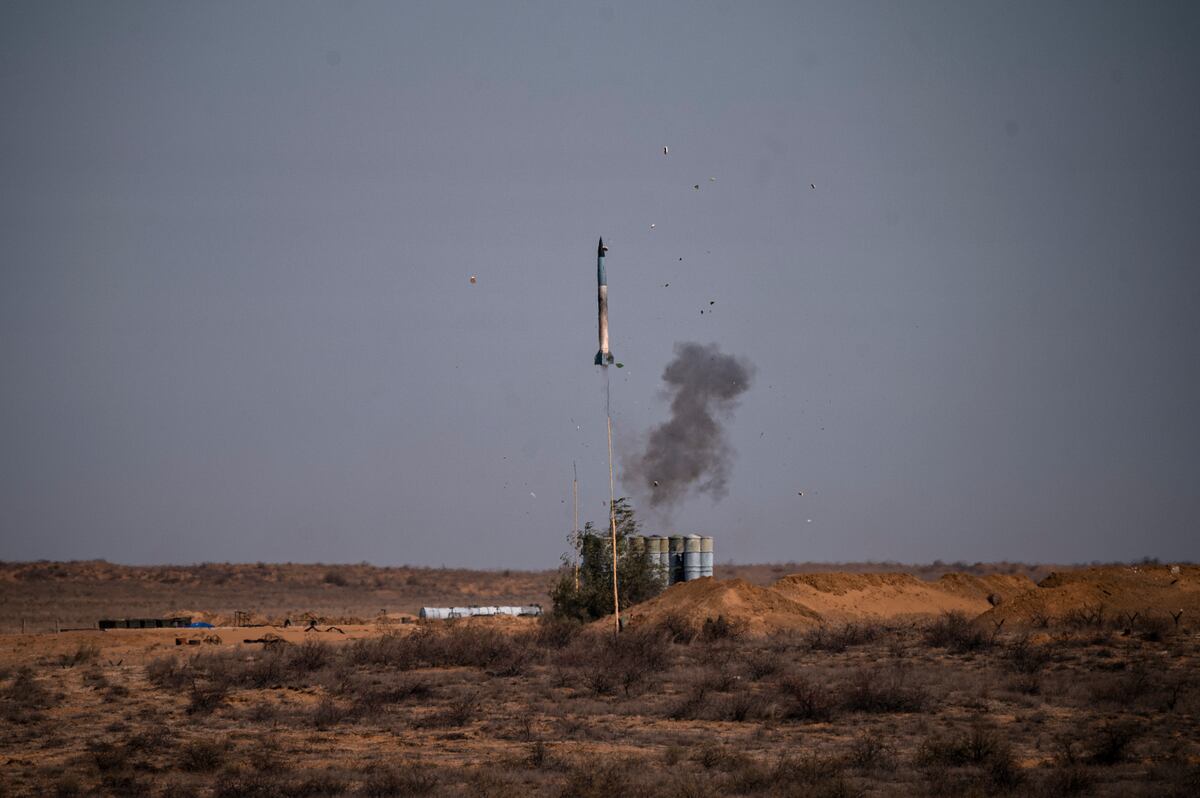
ISLAMABAD — Overconfidence in its newly acquired S-400 air defense system may give India a false sense of invulnerability and increase the likelihood of a military miscalculation involving archrival Pakistan, analysts warn.
“Indian rhetoric appears to suggest a belief that the S-400 effectively makes its airspace impenetrable and its forces invulnerable,” Mansoor Ahmed, a senior fellow at the Pakistan-based think tank Center for International Strategic Studies who studies the country’s nuclear program and delivery systems, told Defense News.
Consequently, there are concerns “India may be emboldened to resort to military adventurism, believing its ‘Cold Start’ doctrine for punishing strikes and destabilizing incursions into Pakistan” is an assured success, he said.
Deliveries of India’s five S-400 regiments began in December 2021, with initial deployments along the Indo-Pakistan border.
On paper, the defensive — and potentially offensive — anti-access, area denial capabilities of the S-400 appear formidable. The system is reportedly effective against aircraft, UAVs, and ballistic and cruise missiles, with the latter capability potentially neutralizing Pakistan’s nuclear deterrent.
Its layered coverage is provided by a combination of the 40-kilometer-range 9M96E, 120-kilometer-range 9M96E2, 250-kilometer-range 48N6, and 400-kilometer-range 40N6E missiles, enabling it to protect large areas, high-value targets and itself from attack.
It is also highly mobile, can be made operational 5 minutes after arriving at a new location and therefore can be regularly relocated to avoid detection.
However, aerospace expert Douglas Barrie at the International Institute for Strategic Studies think tank, told Defense News the S-400 “should not be underestimated, neither should it be over-estimated.”
A notable claimed feature of the S-400 is its potential offensive capability that would restrict an adversary’s use of its own airspace . For Pakistan, due to its geography and the long border it shares with India, the weapon system would cover most of the country.
Pakistan says the Indian drone was spying when it was shot down along the Line of Control in Kashmir. (Racide/Getty Images)
However, Barrie is unconvinced. “Its much-touted maximum engagement range is dependent on the variant of surface-to-air missile deployed, the acquisition ranges of the associated radars in the operational area, the capacity of the personnel to effectively exploit the system, and also the steps and countermeasures any opponent might take.”
India plans to integrate the S-400 into its existing air defense network, which consists of indigenous and Indo-Israeli systems.
Consequently, Barrie said, India might “use the system more often to defend high-value targets or critical national infrastructure from air attack, rather than forward-deploy to hamper the Pakistani Air Force’s use of its own airspace [thereby] putting the systems at greater risk of attack.”
“In and of itself, I see the S-400 acquisition having little to no impact on the overall credibility of the Pakistani [nuclear] deterrent,” he added.
Similarly, Ahmed believes “its effectiveness against ballistic or cruise missiles is open to question and will depend on a variety of factors,” such as the effective engagement range. This specific factor takes into account the curvature of the Earth, the nature of nearby terrain and the location from which the system was deployed.
If deployed too far forward, an S-400 — or at least elements of the system, such as the launch vehicle — could be in danger of direct targeting. Ahmed specifically pointed to the Fatah-1, Pakistan’s 150-kilometer-range guided round for the Chinese A-100 multiple launch rocket system, as a weapon that could jeopardize the S-400. The Fatah-1 round was successfully tested in August 2021.
Additionally, suppression or even destruction of the S-400 could be aided by effective electronic warfare measures — a capability Pakistan demonstrated when its Air Force successfully launched retaliatory strikes into Indian-held territory during a flare-up in February 2019.
Pakistan’s Strategic Plans Division, or SPD, develops and protects all aspects of the country’s nuclear deterrent, and it’s likely the organization will be charged with determining the threat posed by the S-400 and how to respond.
Defense News tried to contact the SPD via the Army’s Inter Services Public Relations media branch, but received no response.
However, Ahmed pointed to improvements Pakistan is making to its existing arsenal to maintain a credible nuclear deterrent.
“Pakistan’s missile tests over the past several years appear to demonstrate enhanced accuracy and penetration capability in view of India’s growing investment in missile defenses. It has also introduced the [multiple independent reentry vehicle]-capable Ababeel ballistic missile system, designed to defeat any dedicated Indian anti-missile system,” he said. “While the S-400 remains a highly capable air defense system at best, its utility against missiles has yet to be proven in real-time conditions.”
Nevertheless, the S-400 does pose a considerable threat to Pakistan’s conventional deterrent.
“Suppression or destruction of enemy air defense (SEAD/DEAD) will likely have taken greater priority for the Pakistani Air Force in response to the S-400 acquisition,” Barrie said. “Options include acquiring more capable anti-radiation missiles, improved electronic countermeasures and aircraft self-protection.”
Outsmarting the system
Pakistan potentially has something in development that could be used against the S-400.
A stealthy combat drone design, the ZF1 was specifically created to attack heavily defended targets. It was promoted at Pakistan’s biennial arms exhibition IDEAS in 2018 by the UAS Global, whose CEO Rafay Shaik told Defense News at the time the aircraft would make its first flight soon.
The concept is not new to South Asia. India has its own stealthy UCAV program, the Ghatak, run by the Defence Research and Development Organisation.
Despite requests for information on the state of the program sent to UAS Global, there has been no news regarding its development since early 2019, and it’s unclear if ZF1 work is even ongoing.
Pakistan might also benefit from military exercises “with friendly countries that operate the S-400, such as China and Turkey, who may at least indirectly help identify its strengths and weaknesses for exploring opportunities to suppress and defeat Indian S-400 systems,” Ahmed said.
A Russian Antonov military cargo plane, carrying the S-400, is unloaded after landing at a Turkish military base on July 12, 2019. (Stringer/AFP via Getty Images)
For its part, China has “multiple options” available for Pakistan, according to Richard Fisher, a senior fellow at the International Assessment and Strategy Center in Alexandria, Virginia.
“It is very likely that, to the degree that China has aided North Korea’s new hypersonic glide vehicle (HGV) missile warhead, it has or will similarly assist a Pakistani HGV, or simply sell the DF-17,” he said, referring to a medium-range missile system equipped with an HGV. “Or Beijing now has the option of allowing North Korea to sell its HGV to Pakistan.”
China could also help Pakistan redress the balance with a similar air defense system, Fisher added, and its ability to do so “can be expected soon.”
“In contrast to China’s flagrant abuse of the intellectual property of [Russia’s] Sukhoi Corporation, S-300 and S-400 maker Almaz-Antey in the 1990s agreed to sell China the means to make their own fourth-generation SAMs [surface-to-air missiles] along with sales of their SAMs,” he explained.
Fisher noted that Pakistan’s recently acquired Chinese-made HQ-9B missile — which reportedly has a 240-kilometer range and is locally referred to as the HQ-9/P — is based on Almaz-Antey technology. He said this transfer of advanced Russian technology enabled China to develop the initial land-based HQ-9 and ship-based HHQ-9 systems, which have a range of 125 kilometers and entered service in the mid-2000s.
HQ-9 surface-to-air missile launchers of the Chinese People's Liberation Army are seen during a military parade at Tiananmen Square in Beijing in 2015. Pakistan acquired a variant of the weapon in 2021. (Greg Baker/AFP via Getty Images)
These Chinese systems are quite advanced, Fisher added. “Like later variants of the S-300 family acquired by China, the HQ-9 featured a hard-to-jam phased array guidance and tracking radar, and its missile uses an active radar for terminal guidance.”
The longer-range HQ-9B is reported to have a dual semi-active radar homing/passive infrared seeker, while the HQ-9C, which is under development, will reportedly feature active guidance.
Citing the recent conflict between Azerbaijan and Armenia as well as the civil wars in Libya and Syria, Ahmed noted that “increasingly more potent and sophisticated” air defense systems are being “matched by systems and technologies designed to beat them, such as standoff weapons, anti-radiation missiles, electronic countermeasures, UCAVs and drone swarms, and low-flying cruise missiles.”
“The race for offense-defense dominance is therefore increasingly favoring the offense,” he said.
Usman Ansari is the Pakistan correspondent for Defense News.
伊斯兰堡——分析人士警告说,印度对其新近获得的S-400防空系统过于自信,可能会使其产生一种虚假的无敌感,并增加与宿敌巴基斯坦发生军事误判的可能性。
“印度的言论似乎表明,他们认为 S-400 系统有效地使其领空固若金汤,使其军队刀枪不入,”巴基斯坦智库国际战略研究中心高级研究员曼苏尔·艾哈迈德(Mansoor Ahmed)告诉《防务新闻》。曼苏尔·艾哈迈德专门研究印度的核计划和运载系统。
因此,有人担心“印度可能会因此更加大胆地诉诸军事冒险主义,认为其‘冷启动’战略——即对巴基斯坦进行惩罚性打击和破坏性入侵——一定会取得成功”,他说道。
印度五个 S-400 防空导弹团于 2021 年 12 月开始交付,最初部署在印巴边境沿线。
从纸面上看,S-400的防御性(以及潜在的进攻性)反介入/区域拒止能力似乎十分强大。据报道,该系统对飞机、无人机、弹道导弹和巡航导弹均有效,其中巡航导弹的拦截能力有可能削弱巴基斯坦的核威慑力量。
其多层覆盖由射程 40 公里的 9M96E、射程 120 公里的 9M96E2、射程 250 公里的 48N6 和射程 400 公里的 40N6E 导弹组合而成,使其能够保护大片区域、高价值目标以及自身免受攻击。
它还具有很高的机动性,到达新地点后 5 分钟即可投入使用,因此可以定期重新部署以避免被发现。
然而,国际战略研究所智库的航空航天专家道格拉斯·巴里告诉《防务新闻》,S-400“既不应低估,也不应高估”。
S-400的一项显著特点是其潜在的进攻能力,能够限制敌方对其领空的使用。对于巴基斯坦而言,由于其地理位置以及与印度漫长的接壤边界,这套武器系统将覆盖该国大部分地区。
巴基斯坦方面称,这架印度无人机在克什米尔实际控制线附近被击落时正在进行间谍活动。(图片来源:Racide/Getty Images)
然而,巴里对此并不信服。“它备受吹捧的最大交战距离取决于所部署的地对空导弹型号、作战区域内相关雷达的探测范围、人员有效运用该系统的能力,以及任何对手可能采取的措施和反制措施。”
印度计划将 S-400 整合到其现有的防空网络中,该网络由国产系统和印以联合研制的系统组成。
因此,巴里表示,印度可能会“更频繁地使用该系统来保护高价值目标或关键国家基础设施免受空中袭击,而不是前沿部署以阻碍巴基斯坦空军使用其自己的空域,从而使该系统面临更大的攻击风险。”
“就其本身而言,我认为S-400的采购对巴基斯坦(核)威慑的整体可信度几乎没有影响,”他补充道。
同样,艾哈迈德认为“其对弹道导弹或巡航导弹的有效性尚待商榷,并将取决于多种因素”,例如有效交战距离。这一具体因素考虑到了地球曲率、附近地形以及系统部署位置等因素。
如果部署位置过于靠前,S-400防空系统——或者至少是该系统的某些部件,例如发射载具——可能会遭到直接攻击。艾哈迈德特别指出,巴基斯坦研制的射程150公里的“法塔赫-1”制导炮弹,是为中国A-100多管火箭炮系统设计的,这种武器可能会对S-400构成威胁。“法塔赫-1”炮弹于2021年8月成功进行了测试。
此外,有效的电子战措施可以帮助压制甚至摧毁 S-400——巴基斯坦空军在 2019 年 2 月的冲突中成功对印度控制的领土发动报复性打击,就证明了这种能力。
巴基斯坦战略计划司(SPD)负责制定和保护该国核威慑力量的各个方面,该机构很可能负责确定S-400构成的威胁以及如何应对。
《防务新闻》试图通过陆军跨军种公共关系媒体部门联系SPD,但没有收到回复。
然而,艾哈迈德指出,巴基斯坦正在对其现有武器库进行改进,以维持可信的核威慑力量。
“鉴于印度在导弹防御方面的投入不断增加,巴基斯坦过去几年的导弹试验似乎表明其导弹精度和穿透能力均有所提升。巴基斯坦还推出了具备多弹头独立重返大气层载具(MIPVE)能力的阿巴比尔弹道导弹系统,旨在击败任何印度专用的反导系统,”他说道。“尽管S-400防空系统充其量仍是一款性能卓越的防空系统,但其在实战中对抗导弹的效用仍有待验证。”
然而,S-400确实对巴基斯坦的常规威慑力量构成了相当大的威胁。
巴里表示:“巴基斯坦空军在采购S-400防空系统后,很可能将压制或摧毁敌方防空系统(SEAD/DEAD)列为优先事项。应对措施包括采购性能更强的反辐射导弹、改进电子对抗措施以及提升飞机自卫能力。”
智胜系统
巴基斯坦可能正在研发某种可用于对抗S-400导弹系统的武器。
ZF1是一款隐形作战无人机,专为攻击重兵把守的目标而设计。2018年,UAS Global公司在巴基斯坦两年一度的IDEAS武器展上推广了这款无人机。该公司首席执行官拉菲·沙伊克当时告诉《防务新闻》,该无人机即将进行首飞。
这个概念对南亚来说并不新鲜。印度拥有自己的隐形无人作战飞行器项目——“加塔克”(Ghatak),该项目由国防研究与发展组织负责。
尽管已向 UAS Global 发送了有关该项目进展情况的信息请求,但自 2019 年初以来,一直没有关于该项目进展的消息,目前还不清楚 ZF1 的工作是否仍在进行。
艾哈迈德说,巴基斯坦还可以从与拥有S-400系统的友好国家(如中国和土耳其)的军事演习中受益,“这些国家至少可以间接地帮助巴基斯坦了解自身系统的优势和劣势,从而探索压制和击败印度S-400系统的机会。”
2019年7月12日,一架载有S-400防空导弹系统的俄罗斯安东诺夫军用运输机降落在土耳其军事基地后正在卸货。(图片来源:法新社/盖蒂图片社)
据弗吉尼亚州亚历山大市国际评估与战略中心高级研究员理查德·费舍尔称,中国方面对巴基斯坦有“多种选择”。
他表示:“中国既然已经或将会以类似方式协助朝鲜研发新型高超音速滑翔飞行器(HGV)导弹弹头,那么它很可能已经或将会协助巴基斯坦研发HGV,或者直接向巴基斯坦出售DF-17导弹系统。”他指的是配备HGV弹头的中程导弹系统。“或者,北京现在可以选择允许朝鲜向巴基斯坦出售其HGV弹头。”
费舍尔补充说,中国还可以通过类似的防空系统帮助巴基斯坦扭转局势,而且中国“很快就能做到这一点”。
他解释说:“与中国公然滥用俄罗斯苏霍伊公司的知识产权形成鲜明对比的是,S-300 和 S-400 的制造商金刚石-安泰公司在 20 世纪 90 年代同意向中国出售其第四代地对空导弹,同时还向中国出售制造其自身第四代地对空导弹的技术。”
费舍尔指出,巴基斯坦最近采购的中国制造的HQ-9B导弹(据报道射程240公里,巴基斯坦当地称之为HQ-9/P)是基于金刚石-安泰公司的技术。他表示,正是由于俄罗斯先进技术的转让,中国才得以研发出最初的陆基HQ-9和舰载HHQ-9系统,这些系统射程125公里,并于2000年代中期投入使用。
2015年,中国人民解放军的HQ-9地对空导弹发射车在北京天安门广场举行的阅兵式上亮相。巴基斯坦于2021年采购了该武器的改进型。(图片来源:Greg Baker/AFP via Getty Images)
费舍尔补充说,这些中国系统相当先进。“与中国后来采购的S-300系列防空系统一样,HQ-9配备了难以干扰的相控阵制导跟踪雷达,其导弹则采用主动雷达进行末端制导。”
据报道,射程更远的 HQ-9B 导弹采用双半主动雷达制导/被动红外导引头,而正在研发中的 HQ-9C 导弹则据称将采用主动制导。
艾哈迈德援引阿塞拜疆和亚美尼亚之间的近期冲突以及利比亚和叙利亚的内战指出,“越来越强大和复杂的”防空系统正“受到旨在击败它们的系统和技术的制约,例如防区外武器、反辐射导弹、电子对抗措施、无人作战飞行器和无人机群以及低空巡航导弹”。
“因此,攻防两端的竞争越来越有利于进攻方,”他说。
乌斯曼·安萨里是《防务新闻》驻巴基斯坦记者。