Austrian jets intercept US military planes two days in a row奥地利战机连续两天拦截美国军机
The May 10 intercept reportedly took place over the Totes Gebirge mountain range in Upper Austria, over 60 kilometers from the German border.
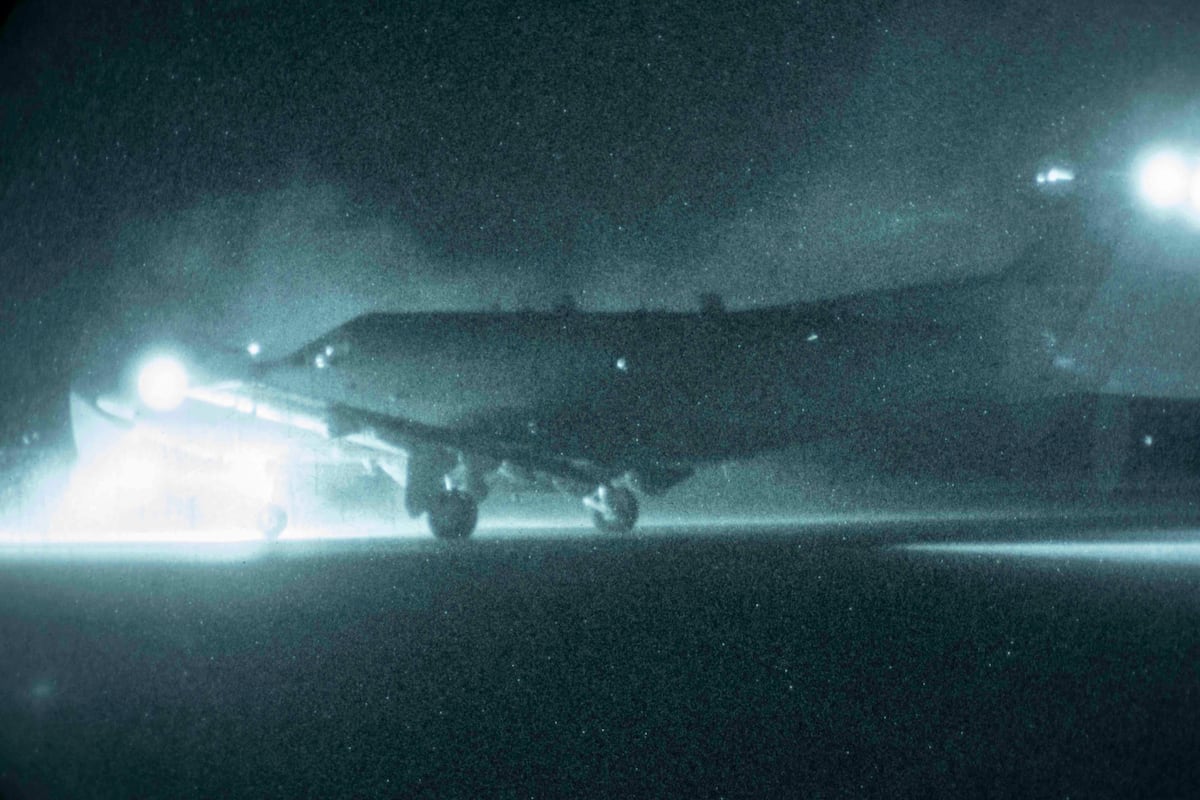
VIENNA — Austrian Eurofighter Typhoon fighter jets scrambled two days in a row to intercept U.S. military aircraft, the government said.
The interceptions took place on May 10 and 11 and were related to modified PC-12 turboprop aircraft that the U.S. military uses primarily for signals intelligence and scouting operations. The U.S. designation for the aircraft is U-28.
Contrary to initial reporting in German-language media, no aircraft seems to have illegally violated Austrian airspace. The U.S. Air Force had filed for an overflight permit for two aircraft on May 10, but didn’t use it. When later that day two different USAF aircraft approached Austrian airspace unannounced, jets were scrambled to meet them - but they turned back before crossing the border, Austrian military spokesperson Michael Bauer said in a statement on X on Wednesday.
The U.S. refiled the overflight permit for the following day and used it then. The Austrian air force sent fighter jets to confirm that the aircraft overflying the airspace matched what had been approved. “Some things you have to see for yourself,” Bauer said in a reply on X
Austrian jets were scrambled in a “priority A intercept” on May 11, Bauer said on Tuesday, marking the highest urgency in the Austrian air force’s nomenclature.
Later reporting by the major Austrian daily Der Standard cited the Austrian government as saying that, as of Wednesday, the verdict was still out on whether the planes that overflew Austrian airspace were the ones for which a permit had been issued. No further details were provided on what was taking so long for the verification.
Austria is not a member of the NATO alliance and has perpetual neutrality enshrined in its constitution. Transits by foreign militaries - whether by land or by air - require prior approval and are generally granted only if they are unrelated to a war. Austria was the fifth European country to close its airspace to U.S. activity related to the war in Iran, with the country’s vice chancellor, Andreas Babler, saying that Austrians want “nothing to do with Trump’s politics of chaos and his war.”
The May 11 intercept reportedly took place over the Totes Gebirge mountain range in Upper Austria, over 60 kilometers from the German border. The American planes were met by Eurofighter Typhoons.
Swiss news portal “20 Minuten” first reported on the incursion and it was later confirmed by other German-language media, although initial reporting stated that unpermitted airspace violations had taken place - a claim that was refuted by the Austrian military on Wednesday
“This flight took place after an administrative error in the overflight clearance paperwork was corrected,” an official from U.S. European Command told Defense News in an email. “The United States continues to work closely with Austrian authorities on any questions regarding overflights and fully complies with Austrian laws and procedures.”
Publicly available reporting of unauthorized U.S. overflights is rare, and permissions are generally granted in peacetime. Austria’s location and geography - a thin sliver of land between major NATO allies Germany and Italy, and dividing northern from southern Europe - makes it a prime transit route. Neighboring Switzerland has similar neutrality policies.
The most remarkable precedent is a case in October 2002, when the U.S. attempted to smuggle two F-117A Nighthawk stealth attack aircraft through Austrian airspace by filing a flight plan only for the accompanying KC-10A tanker aircraft. Austrian Draken fighter jets identified the undeclared aircraft and Vienna later lodged a formal diplomatic complaint.
The recent incidents, too, will be addressed through diplomatic channels, Bauer said.
Editor’s note: This story was updated with new information from the U.S. military and the Austrian government refuting initial reporting that the airspace incursions were unauthorized.
Linus Höller is Defense News' Europe correspondent and OSINT investigator. He reports on the arms deals, sanctions, and geopolitics shaping Europe and the world. He holds master’s degrees in WMD nonproliferation, terrorism studies, and international relations, and works in four languages: English, German, Russian, and Spanish.
维也纳——奥地利政府称,奥地利“台风”战斗机连续两天紧急升空拦截美国军用飞机。
拦截行动发生在5月10日和11日,目标飞机是美军主要用于信号情报和侦察行动的改装型PC-12涡轮螺旋桨飞机。该飞机的美军编号为U-28。
与德语媒体最初的报道相反,似乎没有飞机非法侵犯奥地利领空。美国空军于5月10日申请了两架飞机的飞越许可,但并未动用。奥地利军方发言人迈克尔·鲍尔周三在X网站上发表声明称,当天晚些时候,两架不同的美国空军飞机未经通报接近奥地利领空,奥地利紧急出动战机进行拦截,但这两架飞机在越过边境前返航。
美国重新提交了次日的飞越许可申请,并于当日使用。奥地利空军派出战斗机确认飞越该空域的飞机与获批的飞机相符。“有些事你必须亲眼所见,”鲍尔在X论坛的回复中说道。
鲍尔周二表示,5月11日,奥地利战机紧急升空执行“A级优先拦截”任务,这在奥地利空军的命名体系中属于最高级别的紧急任务。
奥地利主要日报《标准报》随后援引奥地利政府的消息报道称,截至周三,尚未确定飞越奥地利领空的飞机是否持有飞行许可。对于核实工作为何耗时如此之久,政府并未提供更多细节。
奥地利并非北约成员国,其宪法规定了永久中立原则。外国军队过境——无论是陆路还是空路——都需要事先获得批准,而且通常只有在与战争无关的情况下才会获得批准。奥地利是第五个因美国在伊朗战争中的活动而关闭领空的欧洲国家。奥地利副总理安德烈亚斯·巴布勒表示,奥地利人“不想与特朗普的混乱政治和战争有任何瓜葛”。
据报道,5月11日的拦截行动发生在奥地利上奥地利州的托特斯山脉上空,距离德国边境超过60公里。美国飞机遭到了欧洲台风战斗机的拦截。
瑞士新闻门户网站“20 Minuten”率先报道了此次入侵事件,随后其他德语媒体也证实了此事。尽管最初的报道称发生了未经许可的领空侵犯——奥地利军方周三驳斥了这一说法。
美国欧洲司令部一位官员在给《防务新闻》的电子邮件中表示:“此次飞行是在纠正了飞越许可文件中的行政错误之后进行的。美国将继续与奥地利当局就任何有关飞越的问题密切合作,并完全遵守奥地利的法律和程序。”
公开报道未经授权的美国飞越事件十分罕见,而且和平时期通常会授予飞行许可。奥地利的地理位置——位于北约主要盟国德国和意大利之间,是一条狭长的地带,分隔了北欧和南欧——使其成为重要的过境通道。邻国瑞士也奉行类似的中立政策。
最引人注目的先例发生在2002年10月,当时美国试图将两架F-117A“夜鹰”隐形攻击机偷运通过奥地利领空,但仅提交了随行KC-10A加油机的飞行计划。奥地利“龙”式战斗机发现了这些未申报的飞机,维也纳随后提出了正式的外交抗议。
鲍尔表示,最近发生的这些事件也将通过外交渠道解决。
编者按:本文已更新,加入了来自美国军方和奥地利政府的新信息,驳斥了最初关于空域入侵未经授权的报道。
林努斯·霍勒是《防务新闻》的欧洲记者和开源情报调查员。他报道影响欧洲乃至全球的军火交易、制裁和地缘政治。他拥有大规模杀伤性武器不扩散、恐怖主义研究和国际关系三个硕士学位,并精通英语、德语、俄语和西班牙语四种语言。