No Indo-Pacific peace without industry surge and burden sharing, US general says美国将军称,没有产业振兴和责任分担,就没有印太地区的和平。
Pushing industry to far-reaching frontlines — and having allies share the load — is vital to Indo-Pacific security, U.S. Army Gen. Xavier Brunson stressed.
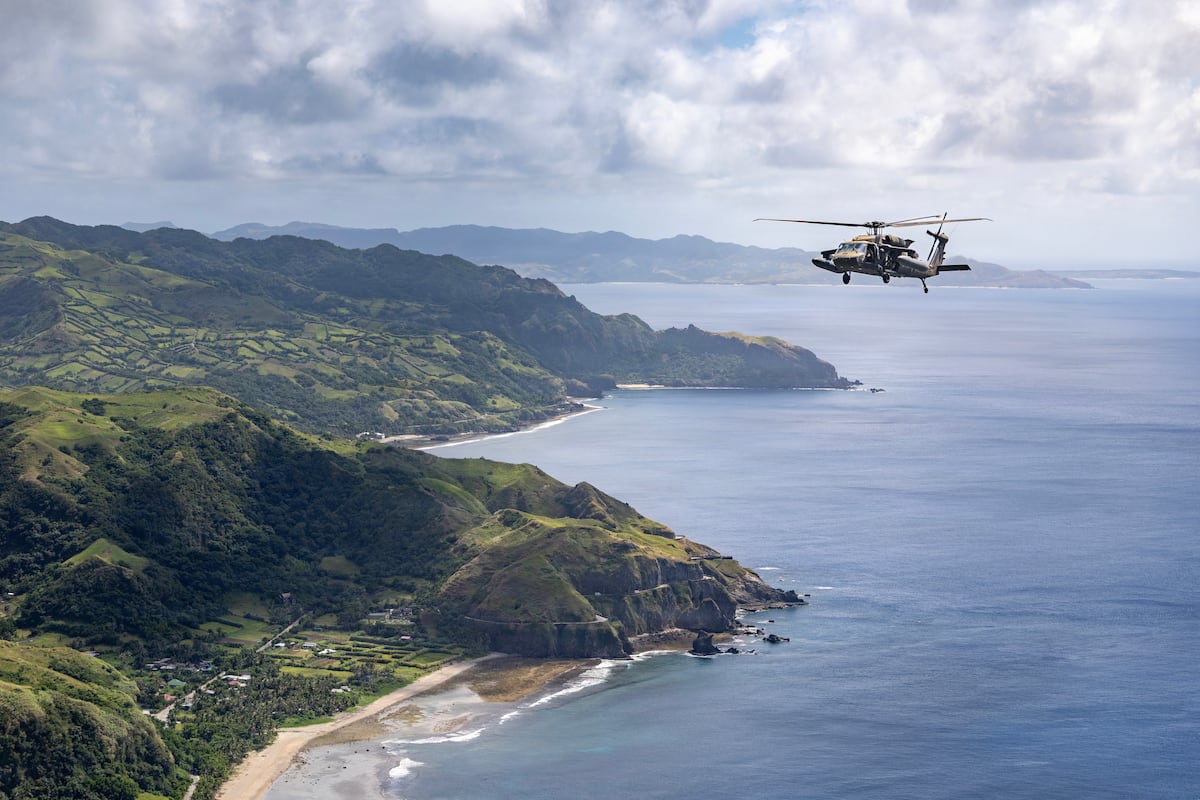
HONOLULU — U.S. Army leaders assembled in Hawaii this week emphasized the importance of a multi-pronged effort, from the foxhole to the factory, necessary to deter near-peer adversaries across the vast Indo-Pacific .
Speaking at the 2026 Land Forces Pacific Symposium and Exposition, U.S. Army Gen. Xavier Brunson, commander of United Nations Command, ROK/U.S. Combined Forces Command and U.S. Forces Korea, called the joint military-industrial approach “the ultimate guardian of peace.”
Delivering the symposium’s opening keynote, Brunson cited military strength , industrial sustainability and allied collaboration as primary components needed to create “a true fortress for all our nations and interests here in the Indo-Pacific.”
“Sustainment is not the tail,” Brunson said, referencing industrial networks capable of supporting far-reaching, forward combat operations across the region.
“It’s the teeth of our deterrence,” he said. “Strategic concepts only survive as long as they are backed by industrial endurance.”
U.S. Army Gen. Xavier T. Brunson speaks at LANPAC in Honolulu, Hawaii, May 12, 2026. (Sgt. Daniela Lechuga Liggio/U.S. Army)
Brunson’s “fortress” reference is a nod to a “fortress chain” of defense burden sharing among regional allies, such as South Korea, who have been ramping up industrial capabilities — weapons replenishment and equipment repair principally among them — to be positioned closer to the fight.
“Korean dry docks have already overhauled [the] USNS Wally Schirra and Cesar Chavez, with two more in the queue,” he said, citing maintenance the ROK has completed on U.S. ships. “That is the operational blueprint. ... We cannot shuttle broken equipment across an ocean for repair while an adversary evolves on our doorstep.”
That type of burden sharing, Brunson said, “complicates every adversary calculation.”
For its part, the Trump administration has increasingly pushed for allies to take on more responsibility for regional defense spending.
Across Europe, defense spending in 2025 surged 14% to $864 billion, according to a report published last month by the Stockholm International Peace Research Institute.
Military expenditures across Asia also soared in 2025, with Japan’s defense spending climbing 9.7% and Taiwan’s 14%, among others.
“U.S. allies in Asia and Oceania, such as Australia, Japan and the Philippines, are spending more on their militaries, not only due to long-standing regional tensions but also due to growing uncertainty over U.S. support,” Diego Lopes da Silva, senior researcher with the SIPRI Military Expenditure and Arms Production Programme, wrote in the assessment. “As in Europe, U.S. allies in Asia and Oceania are also under pressure from the Trump administration to spend more on their militaries.”
That emphasis has yielded results in South Korea, which Brunson credited with being a “producer of security” rather than a “consumer” while promising to up its defense spending to 3.5% of its GDP .
Shared deterrence responsibilities across the Indo-Pacific were also on display just days before the launch of LANPAC 2026, as the U.S. military wrapped up the 41st iteration of Exercise Balikatan, the largest annual bilateral exercise between the U.S. and the Philippines.
This year’s 19-day exercise was also joined by Australia, Japan, New Zealand, France and Canada, the latter four of which put troops on the ground for the first time as part of the exercise.
“Balikatan 2026 marked a strategic evolution from a bilateral exercise to a full-scale, multinational mission rehearsal for the defense of the Philippines,” U.S. Navy Adm. Samuel J. Paparo, commander of U.S. Indo-Pacific Command, said of the event. “That growth reflects the security environment. It reflects the sovereign choices of free nations.”
J.D. Simkins is Editor-in-Chief of Military Times and Defense News, and a Marine Corps veteran of the Iraq War.
檀香山——本周在夏威夷集会的美国陆军领导人强调,从战壕到工厂,多管齐下的努力对于威慑广阔的印太地区势均力敌的对手至关重要。
在 2026 年太平洋陆军研讨会暨展览会上,联合国军司令部、韩国/美国联合部队司令部和驻韩美军司令泽维尔·布伦森将军称,联合军事工业模式是“和平的最终守护者”。
布伦森在研讨会开幕式上发表主旨演讲时指出,军事实力、工业可持续性和盟友合作是打造“我们在印太地区所有国家和利益的真正堡垒”所需的主要组成部分。
“保障不是尾部,”布伦森说道,他指的是能够支持该地区远距离前沿作战行动的工业网络。
“这是我们威慑力量的利器,”他说。“战略构想只有在工业韧性的支持下才能长久存在。”
美国陆军上将泽维尔·T·布伦森于2026年5月12日在夏威夷檀香山举行的LANPAC会议上发表讲话。(丹妮拉·莱楚加·利吉奥中士/美国陆军)
布伦森提到的“堡垒”指的是地区盟友之间分担防务负担的“堡垒链”,例如韩国,这些盟友一直在加强工业能力——主要是武器补充和设备维修——以便更靠近战场。
他表示,“韩国干船坞已经完成了对美国海军‘沃利·施拉’号和‘塞萨尔·查韦斯’号两艘补给舰的检修,还有两艘正在排队等待检修”,并列举了韩国此前对美国舰艇的维护工作。“这就是作战蓝图……我们不能眼睁睁地看着对手在我们家门口不断升级,却还要把损坏的装备运过大洋去修理。”
布伦森表示,这种责任分担方式“使每个对手的计算都变得复杂”。
而特朗普政府则日益敦促盟友承担更多地区国防开支的责任。
根据斯德哥尔摩国际和平研究所上个月发布的一份报告,到 2025 年,欧洲各国的国防开支将激增 14%,达到 8640 亿美元。
2025年亚洲各地的军费开支也大幅增长,其中日本的国防开支增长了9.7%,台湾增长了14%,等等。
“美国在亚洲和大洋洲的盟友,例如澳大利亚、日本和菲律宾,正在增加军费开支,这不仅是因为长期存在的地区紧张局势,也是因为美国支持力度的不确定性日益加剧,”斯德哥尔摩国际和平研究所(SIPRI)军事支出和武器生产项目高级研究员迭戈·洛佩斯·达席尔瓦在评估报告中写道。“与欧洲一样,美国在亚洲和大洋洲的盟友也面临着来自特朗普政府的压力,要求他们增加军费开支。”
这种重视在韩国取得了成效,布伦森称赞韩国是“安全生产者”而不是“安全消费者”,并承诺将国防开支提高到国内生产总值的 3.5%。
在 LANPAC 2026 演习开始前几天,印太地区的共同威慑责任也得到了展现,因为美菲两国刚刚结束了第 41 次“肩并肩”联合军演,这是美菲之间规模最大的年度双边演习。
今年为期 19 天的演习还有澳大利亚、日本、新西兰、法国和加拿大参加,其中后四个国家首次派兵参加此次演习。
“‘肩并肩2026’标志着战略演习从双边演习演变为保卫菲律宾的大规模多国联合任务演练,”美国印太司令部司令、海军上将塞缪尔·J·帕帕罗在谈到此次演习时表示。“这种发展反映了安全环境的变化,也体现了自由国家的自主选择。”
JD Simkins 是《军事时报》和《防务新闻》的总编辑,也是参加过伊拉克战争的海军陆战队老兵。