The U.S. Military Doesn’t Even Track How Many Weapons It Loses, And It Has Lost Thousands美国军方甚至不统计损失了多少武器,而实际上已经损失了数千件。
A scathing report details how over 2,000 weapons have gone missing from military arsenals in the last decade alone and the data is far from complete.
Published Jun 15, 2021 8:05 PM EDT
A damning investigative report published by The Associated Press today details how over 2,000 weapons have gone missing from military arsenals between 2010 and 2019. While the data set was far from complete, what the outlet did obtain shows a worrying pattern of lost and stolen weapons, some of which ended up in the hands of criminals who used them in the commission of violent crimes, while others were even simply discarded in public parks.
The Associated Press ‘s investigation states that, between 2010 and 2019, these weapons went missing or were deliberately taken from a wide variety of locations, including armories, warehouses, firing ranges, Navy vessels, or even while in transit. Reasons cited in the report included unlocked doors, burglary, security personnel falling asleep, or lapses in surveillance and other security systems. 1,504 weapons were reported missing or stolen from the Army, 211 from the Navy, 204 from the Marines, and 39 were categorized as “Other,” which presumably includes the U.S. Coast Guard and Department of Defense security forces like the Pentagon Force Protection Agency.
While the Marines and Navy offered their own figures about weapons lost or stolen throughout the last decade, the Army and Air Force did not willingly provide The Associated Press with exact numbers about how many of their weapons were unaccounted for, so the report instead relied on Freedom of Information Act (FOIA) requests for military criminal case files, as well as internal military small arms registries. One of those FOIA requests filed with the Army’s Office of the Provost Marshal General revealed 1,303 lost firearms from the Army alone. The AP reported the Air Force was less cooperative:
The Air Force was the only service branch not to release data. It first responded to several Freedom of Information Act requests by saying no records existed. Air Force representatives then said they would not provide details until yet another FOIA request, filed 1.5 years ago, was fully processed.
An airman returns an M4 carbine to storage at Holloman Air Force Base., USAF/Airman 1st Class Aaron Montoya
Of these guns and other weapon systems cited in the AP report, many of which remain unaccounted for, 1,179 were rifles, while another 694 were handguns. A total of 74 machine guns went missing, as did 11 shotguns. Close to 100 more were reported to be grenade launchers, rocket launchers, or mortars.
The AP did not specify which specific weapons were stolen or lost in most cases. M4 rifles are cited in a few incidents, as are Beretta M9 handguns . In the cases of the other classes of weapons cited in the report, the classes used represent a wide range of weapons with different levels of lethality. Rocket launchers, for example, come in both reloadable and non-reloadable forms. “Machine guns” as a whole also represents a wide variety of weapons, some of which can fire of thousands of rounds per minute and would be absolutely devastating if used in a criminal or terrorist act.
Another seven missing weapons were reported as “other.” It is unknown what those may represent, or if they are merely uncategorizable based on a scarcity of data in the reports obtained by The Associated Press . From the lack of clarity in the dataset, these could be almost anything ranging from a knife to a nuclear weapon.
The U.S. military has also infamously lost six of its nuclear weapons due to aircraft crashes or other mishaps. One of those incidents remains classified to this day, but is thought to be related to the loss of the USS Scorpion , which sank mysteriously with all hands aboard in the North Atlantic Ocean in May 1968.
Even military vehicles get stolen from time to time, such as in 2018 when a Virginia Army National Guardsmen stole an M577 armored command vehicle and led police on a 60-mile chase. In 1995, an M60A3 Patton tank was stolen from a National Guard armory in San Diego, after which it was taken on a rampage that left dozens of cars flattened before police were able to take out its driver.
“The military’s weapons are especially vulnerable to corrupt insiders responsible for securing them,” the AP’s report reads. “They know how to exploit weak points within armories or the military’s enormous supply chains. Often from lower ranks, they may see a chance to make a buck from a military that can afford it.” The AP cites an NCIS investigation in 2014 which discovered four M4 trigger assemblies went missing from the Navy’s Special Boat Team Twelve, presumably for sale on the black market or even on sites like eBay. These assemblies can be used to convert civilian AR-15 models to fully automatic weapons.
Earlier this year, an Army trainee fled Fort Jackson with an M4 Carbine which he used to hijack a schoolbus full of children. Luckily, the assailant left the bus without harming anyone aboard.
Other reasons cited were improper or insufficient adherence to security protocols, as was the case at Marine Corps Base Camp Lejeune where “authorities often have an open missing weapons investigation” according to the AP. The AP’s report cites an incident in which a Beretta M9 was stolen from Camp Lejeune, only to later turn up in a drug bust in Baltimore. Another missing M9, taken from an unlocked National Guard armory along with six automatic weapons, a grenade launcher, and four other M9s, was recovered by law enforcement in South Carolina in 2017 during a domestic dispute.
In 2017, a box containing 32 40mm MK-19 grenade launcher rounds was stolen from an ammunition train while in transit. The box showed up eight months later in an Atlanta suburb tucked behind bushes at a private residence. Only 30 grenades remained in the box. The other two were never found .
The AP also cites a theft at Fort Irwin in California in which 26 AK-74s were stolen a decade ago and keep turning up in the hands of gang members throughout the state. The Department of Defense (DOD) primarily procures these weapons from friendly third-party nations for use in Special Operations Command (SOCOM) familiarization training.
The AP published a separate piece the same day as their larger missing weapons report which details how some of the military’s missing weapons stolen from the Lincoln Stoddard Army Reserve Center ended up being found “in a trash bag in a Bronx park near Yankee Stadium.”
Some of the weapons were lost overseas, such as when a Navy SEAL lost his sidearm in Lebanon during a fight in a restaurant. 65 Beretta M9s were stolen and never recovered in Afghanistan when a padlock was cut off of a fence.
Prior to 2017, the Pentagon was required to share annual data about stolen or lost weapons with Congress. That requirement lapsed, but some members of Congress want to restore it, especially in light of the AP’s report. Senator Richard Blumenthal of Connecticut called the report “absolutely blood curdling” in a hearing with Secretary of the Army Christine Wormuth held on June 15, the same day the report was published. Wormuth assured Blumenthal that the Army is taking the matter seriously and will look into it. Blumenthal repeatedly pressed Wormuth for an answer on whether or not the Army would commit to regularly reporting lost weapon data to Congress, to which Wormuth replied the Army “would be open to a reporting requirement.”
According to a 2018 estimate published by the Small Arms Survey, the U.S. military possesses some 4.5 million firearms. Thus, while 2,060 can seem like a small number, the potential damge even one of these weapons could do in the wrong hands makes each one a serious case. Pentagon spokesman John Kirby told the AP in an interview that “Though the numbers are small, one is too many,” adding that the military safely accounts for the overwhelming majority of its weapons each year. “We have a very large inventory of several million of these weapons,” Kirby told the AP. “We take this very seriously and we think we do a very good job. That doesn’t mean that there aren’t losses. It doesn’t mean that there aren’t mistakes made.”
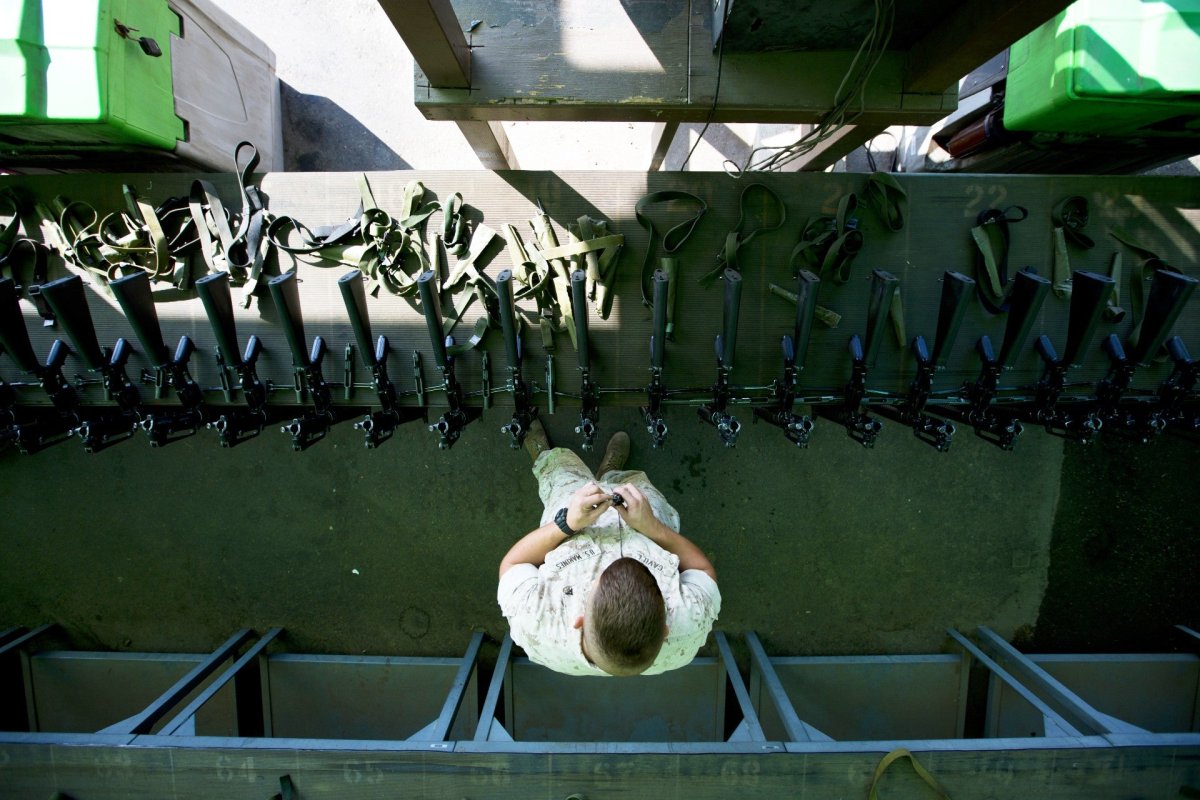
A U.S. Marine inspects a M16A4 rifle at Marine Corps Recruit Depot San Diego., USMC/Sgt Robert Gavaldon
The new report about the military’s missing weapons highlights the inherent dangers in storing weapons and other dangerous equipment close to civilian populations. Criminals can break into military bases as well as any other building if proper security measures aren’t in place. Furthermore, service members are human like anyone else, and aren’t infallible when it comes to having lapses in judgment leading to the theft or misuse of weapons. There is a reason for strict security protocols in place at military installations, and the AP’s investigation reveals there could be more security gaps at domestic military facilities than the Pentagon realizes.
Above all, the AP’s latest report should be a call to action for Congress to reenact accountability measures that would require the Pentagon to regularly share data about missing weapons. It should not take a national tragedy for the government and the military to fix these problems, however statistically small they may seem. It’s important to also note that this recent data is only what we know so far, given that the Air Force did not report any data. Small arms have also been lost en masse on the battlefield or in combat areas, which could make the number of missing or lost weapons far larger if it is not included already in the data provided to the Associated Press . So it very well could be that the data in the AP’s report is just the tip of the iceberg when it comes to lost or stolen weapons.
At the very least, a complete data set over time would certainly help show just how serious the problem actually is.
Contact the author: Brett@TheDrive.com
Comments couldn’t be loaded. Please refresh the page.
发布于美国东部时间2021年6月15日晚上8:05
美联社今天发布的一份措辞严厉的调查报告详细披露了2010年至2019年间,超过2000件武器从军火库中失踪的情况。虽然数据远不完整,但该媒体获得的信息显示,武器丢失和被盗的模式令人担忧,其中一些最终落入犯罪分子手中,被用于实施暴力犯罪,而另一些甚至被随意丢弃在公园等公共场所。
美联社的调查显示,2010年至2019年间,这些武器在包括军械库、仓库、靶场、海军舰艇甚至运输途中等各种地点丢失或被蓄意盗走。报告中列举的原因包括门锁未锁、入室盗窃、安保人员打瞌睡以及监控和其他安保系统出现漏洞。据报告,陆军丢失或被盗武器1504件,海军211件,海军陆战队204件,另有39件被归类为“其他”,这很可能包括美国海岸警卫队和国防部安全部队(例如五角大楼部队保护局)的武器。
虽然海军陆战队和海军提供了过去十年间武器丢失或被盗的统计数据,但陆军和空军却不愿向美联社提供确切的下落不明武器数量,因此该报道转而依据《信息自由法》(FOIA)申请查阅军事刑事案件档案以及军方内部轻武器登记册。其中一份提交给陆军宪兵司令部的FOIA申请显示,仅陆军就丢失了1303支枪械。美联社报道称,空军的配合程度较低:
空军是唯一拒绝公开数据的军种。它最初对几项《信息自由法》申请的回应是,没有相关记录。随后,空军代表又表示,在另一项一年半前提交的《信息自由法》申请得到全面处理之前,他们不会提供任何细节。
一名空军士兵将一支M4卡宾枪归还至霍洛曼空军基地的仓库。(美国空军一等兵亚伦·蒙托亚摄)
美联社报道中提到的这些枪支和其他武器系统(其中许多下落不明)包括1179支步枪和694支手枪。共有74挺机枪和11支霰弹枪失踪。据报道,另有近100件武器是榴弹发射器、火箭发射器或迫击炮。
美联社并未具体说明大多数案件中被盗或丢失的是哪些武器。少数案件中提到了M4步枪和贝雷塔M9手枪。报告中提到的其他类型武器种类繁多,杀伤力也各不相同。例如,火箭筒既有可装填的,也有不可装填的。“机枪”一词本身也涵盖了多种武器,其中一些机枪每分钟可发射数千发子弹,如果用于犯罪或恐怖袭击,将造成毁灭性打击。
另有七件失踪武器被归类为“其他”。目前尚不清楚这些武器的具体用途,或者仅仅是因为美联社获得的报告中数据匮乏而无法归类。由于数据集不够清晰,这些武器的种类可能非常广泛,从刀具到核武器都有可能。
美国军方也曾因飞机坠毁或其他事故而损失了六枚核武器,这已是众所周知的事实。其中一起事故至今仍属机密,但据信与“蝎子”号潜艇的沉没有关。该潜艇于1968年5月在北大西洋神秘沉没,艇上所有人员全部遇难。
即使是军用车辆也时有被盗,例如2018年,一名弗吉尼亚州国民警卫队队员偷走了一辆M577装甲指挥车,并与警方展开了长达60英里的追逐。1995年,一辆M60A3巴顿坦克从圣地亚哥国民警卫队的军械库被盗,随后被盗车辆横冲直撞,撞毁了数十辆汽车,最终警方才将驾驶员制服。
美联社的报道指出:“军方武器尤其容易受到负责保管武器的腐败内部人员的侵害。他们深谙如何利用军械库或军方庞大供应链中的薄弱环节。这些人往往来自较低级别,他们看到了从一支财力雄厚的军队中牟利的机会。” 美联社援引了美国海军犯罪调查局(NCIS)2014年的一项调查,该调查发现海军第十二特种舟艇队丢失了四个M4步枪扳机组件,据推测这些组件被卖到了黑市,甚至出现在eBay等网站上。这些组件可以用来将民用AR-15步枪改装成全自动武器。
今年早些时候,一名陆军新兵携带一支M4卡宾枪逃离杰克逊堡,并用它劫持了一辆满载学生的校车。幸运的是,袭击者在车上没有伤及任何人的情况下离开了车辆。
其他被提及的原因包括对安全规程执行不当或不足,例如海军陆战队勒琼营基地的情况,据美联社报道,“当局经常对武器失窃事件展开公开调查”。美联社的报道援引了一起事件:一支贝雷塔M9手枪从勒琼营被盗,后来在巴尔的摩的一次缉毒行动中被发现。另一起失窃的M9手枪,连同六支自动武器、一支榴弹发射器和另外四支M9手枪,于2017年在南卡罗来纳州一起家庭纠纷中被执法部门寻回。这支M9手枪是从一个未上锁的国民警卫队军械库中被盗的。
2017年,一列运输弹药的火车在途中,一个装有32发40毫米MK-19榴弹发射器弹药的箱子被盗。八个月后,这个箱子出现在亚特兰大郊区一处私人住宅的灌木丛后。箱子里只剩下30发榴弹,另外两发下落不明。
美联社还援引了十年前发生在加利福尼亚州欧文堡的一起盗窃案,当时26支AK-74步枪被盗,这些步枪不断出现在该州各地的帮派成员手中。美国国防部主要从友好第三方国家采购这些武器,用于特种作战司令部(SOCOM)的熟悉性训练。
美联社在发布更详细的失踪武器报告的同一天,还单独发表了一篇文章,详细介绍了从林肯·斯托达德陆军预备役中心被盗的一些军方失踪武器最终是如何在“洋基体育场附近的布朗克斯公园的一个垃圾袋里”被发现的。
部分武器在海外遗失,例如一名海豹突击队员在黎巴嫩一家餐厅斗殴中丢失了配枪。另有65支贝雷塔M9手枪在阿富汗被盗,至今下落不明,原因是有人剪断了围栏上的挂锁。
2017年之前,五角大楼必须每年向国会提交被盗或丢失武器的数据。这项规定已经失效,但一些国会议员希望恢复这项规定,尤其是在美联社报道发布之后。康涅狄格州参议员理查德·布卢门撒尔在6月15日(该报道发布当天)与陆军部长克里斯汀·沃姆斯举行的听证会上,称这份报道“令人毛骨悚然”。沃姆斯向布卢门撒尔保证,陆军正在认真对待此事,并将进行调查。布卢门撒尔反复追问沃姆斯,陆军是否会承诺定期向国会报告武器丢失数据,沃姆斯回应说,陆军“愿意接受这样的报告要求”。
根据小型武器调查机构2018年发布的估计数据,美军拥有约450万支枪械。因此,虽然2060支枪械看似数量不多,但即使只有一支落入不法分子手中,其潜在危害也不容小觑。五角大楼发言人约翰·柯比在接受美联社采访时表示:“虽然数量不多,但哪怕只有一支也嫌太多。”他还补充说,军方每年都会妥善保管绝大多数武器。“我们拥有数百万支枪械的庞大库存,”柯比告诉美联社,“我们对此高度重视,并且认为我们做得非常好。但这并不意味着不会发生损失,也不意味着不会犯错。”
一名美国海军陆战队员在圣地亚哥海军陆战队新兵训练营检查一支M16A4步枪。(美国海军陆战队/中士罗伯特·加瓦尔登摄)
这份关于军方武器失踪的新报告凸显了在平民区附近储存武器和其他危险装备的固有风险。如果安保措施不到位,犯罪分子可以闯入军事基地以及任何其他建筑物。此外,军人和其他人一样都是普通人,在判断失误导致武器被盗或滥用方面并非完美无缺。军事设施实施严格的安保措施是有原因的,而美联社的调查显示,国内军事设施的安全漏洞可能比五角大楼意识到的要多。
最重要的是,美联社的最新报道应该促使国会重新制定问责措施,要求五角大楼定期公布武器失踪数据。无论这些问题在统计上看起来多么微不足道,政府和军方都不应该等到发生国家悲剧才去解决。同样重要的是,鉴于空军没有提交任何数据,这些最新数据仅仅是我们目前所掌握的信息。战场上或战区也有大量小型武器丢失,如果美联社获得的数据中没有包含这些武器,那么丢失或遗失的武器数量可能要大得多。因此,美联社报道中的数据很可能只是丢失或被盗武器数量的冰山一角。
至少,一份完整的长期数据集肯定有助于展现问题的严重性。
联系作者:Brett@TheDrive.com
评论加载失败,请刷新页面。