Congress passed the FY24 defense policy bill: Here’s what’s inside国会通过了2024财年国防政策法案:以下是法案内容。
Congress just passed the FY24 National Defense Authorization Act. Here's a look at some key provisions.
WASHINGTON ― Congress today passed its $874.2 billion defense policy bill, sending it to the White House for President Biden’s signature.
Thursday’s 310-118 vote in the Republican-held House on the compromise National Defense Authorization Act (NDAA) for fiscal year 2024 came after the Democratic-held Senate did the same in an 87-13 vote on Wednesday.
“Enacting the NDAA has never been more vital than today,” House Armed Services Committee Chairman Mike Rogers, R-Ala., said ahead of the vote. “America and our allies face unprecedented and rapidly evolving threats from China, Russia, Iran, North Korea and terrorist organizations throughout the world.”
The bill hews closely to Biden’s proposed budget request after Republican hawks agreed to cap defense spending as part of the May debt ceiling agreement . However, Congress must still pass full spending bills for FY24 to fund the Defense Department and other agencies. Funding for military construction ends on Jan. 19, and funds for the rest of the Defense Department expire on Feb. 2.
The Defense Department is currently operating under a stopgap funding bill , which means it can’t start most new initiatives or move forward with many acquisitions authorized in the NDAA absent a full spending bill. But the FY24 NDAA authorizes $100 million for the Air Force to begin a limited number of new programs until lawmakers pass a full defense spending bill.
The legislation also allows the Air Force to retire some F-15 Eagle fighters and A-10 Warthogs, but it blocks the retirement of 32 older F-22 Raptors .
Meanwhile, the bill expands the list of munitions eligible for emergency and multiyear procurement authorities. It adds Israel and Taiwan to the list in a program started last year to expedite the delivery and replenishment of munitions to Ukraine . This provision exempts munitions for the three countries from cost and pricing data as well as other contracting requirements.
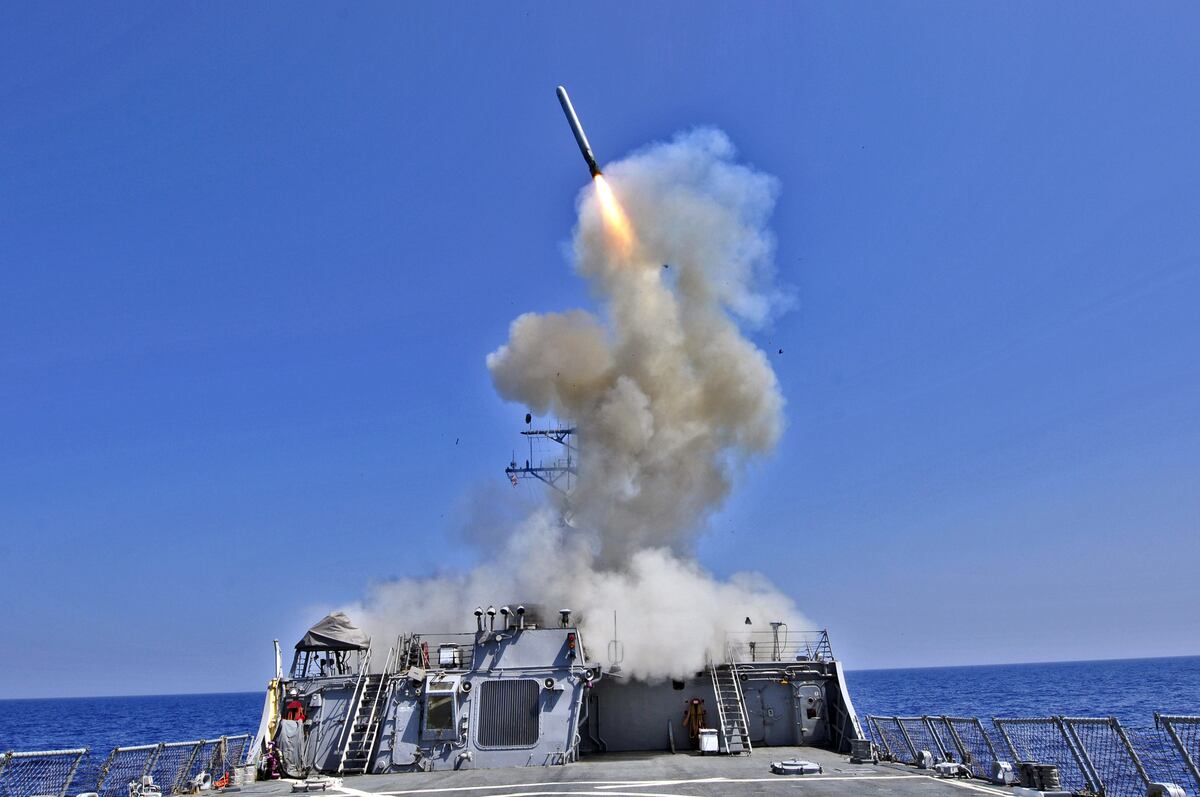
The six new munitions eligible for multiyear buys – a procurement method more often reserved for big-ticket items like aircraft and ships – are Tomahawk Cruise Missiles, Precision Strike Missiles, Mark 48 Torpedoes, Evolved Sea Sparrow Missiles, Rolling Air Frame Missiles and Small Diameter Bombs. Still, these multiyear purchases are contingent on funding from congressional appropriators. Congress still hasn’t passed full appropriations legislation to fund multiyear purchase of munitions already authorized in last year’s NDAA.
The NDAA also authorizes $1 billion to finish buying a San Antonio-class amphibious ship per the Marines’ unfunded priorities list . The Navy’s plans to do a “strategic pause” with the program and reevaluate the ship’s design ran into fierce resistance from Congress.
Additionally, the bill institutionalizes the sea-launched nuclear cruise missile program over the objections of the Biden administration for Virginia-class attack submarines, allocating $196 million for the Pentagon to continue research on the endeavor and another $70 million for the National Nuclear Security Administration to modernize its warhead stockpile.
Pacific, Europe — and Space Command
The bill also contains four key authorizations needed to implement the trilateral AUKUS agreement with Australia and Britain, including a provision allowing the transfer of three Virginia-class submarines to Canberra.
As with AUKUS, the bill looks to counter China’s influence in the Indo-Pacific with a provision that would require the Defense Department to “establish a comprehensive training, advising and institutional capacity building program for the military forces of Taiwan.”
Taiwanese officials have said they plan to send up to two battalions of troops to the U.S. to train on new weapon systems and military tactics.
Another provision in the bill requires the Defense Department to help Taiwan enhance its cybersecurity .
For Europe, the final NDAA maintains a provision that would require the Senate to agree to any U.S. withdrawal from NATO . Former President Donald Trump, the frontrunner in the Republican presidential primary, has repeatedly threatened to withdraw from the transatlantic alliance.
It also authorizes $300 million for the Ukraine Security Assistance Initiative in both FY24 and FY25. But that’s a small fraction of the aid the Biden administration assessed Ukraine will need to continue fighting Russia next year, with its $61 billion Ukraine assistance request stalled amid Republican demands for immigration policy changes in the supplemental spending legislation.
The bill also makes Pentagon Inspector General Robert Storch, currently the lead watchdog for Ukraine aid, a special inspector general to oversee assistance to the country.
Finally, the NDAA delays construction of the Space Command headquarters in Colorado Springs, Colorado, until July so that two watchdog agencies can complete reports evaluating the decision. Rogers is from Alabama and strongly opposed Biden’s decision to reverse course and place the headquarters in Colorado instead of Huntsville, Alabama, after years of delay.
Bryant Harris is the Congress reporter for Defense News. He has covered U.S. foreign policy, national security, international affairs and politics in Washington since 2014. He has also written for Foreign Policy, Al-Monitor, Al Jazeera English and IPS News.
华盛顿——国会今天通过了8742亿美元的国防政策法案,并将其送交白宫,等待拜登总统签署。
周四,共和党控制的众议院以 310 比 118 的投票结果通过了 2024 财年国防授权法案(NDAA)的妥协方案。此前,民主党控制的参议院已于周三以 87 比 13 的投票结果通过了该法案。
“通过《国防授权法案》从未像今天这样至关重要,”众议院军事委员会主席、阿拉巴马州共和党众议员迈克·罗杰斯在投票前表示。“美国及其盟友正面临来自中国、俄罗斯、伊朗、朝鲜以及世界各地恐怖组织的史无前例且迅速演变的威胁。”
该法案与拜登提出的预算请求基本一致,此前共和党鹰派同意在5月份的债务上限协议中限制国防开支。然而,国会仍需通过2024财年的全部支出法案,才能为国防部和其他机构提供资金。军事建设资金将于1月19日到期,国防部其他部门的资金将于2月2日到期。
国防部目前依靠的是临时拨款法案,这意味着在没有完整的国防授权法案之前,它无法启动大多数新项目,也无法推进《国防授权法案》中授权的许多采购项目。但2024财年的《国防授权法案》授权空军1亿美元,用于启动数量有限的新项目,直到国会通过完整的国防开支法案。
该法案还允许空军退役一些 F-15 鹰式战斗机和 A-10 疣猪攻击机,但阻止了 32 架较老的 F-22 猛禽战斗机退役。
与此同时,该法案扩大了符合紧急和多年采购授权条件的弹药清单。它将以色列和台湾纳入清单,这是去年启动的一项旨在加快向乌克兰交付和补充弹药的计划的一部分。该条款豁免了向这三个国家采购弹药的成本和定价数据以及其他合同要求。
六种符合多年采购条件的新型弹药——这种采购方式通常用于飞机和舰艇等大宗商品——分别是战斧巡航导弹、精确打击导弹、Mk 48鱼雷、改进型海麻雀导弹、滚体导弹和小直径炸弹。然而,这些多年采购取决于国会拨款委员会的拨款。国会尚未通过完整的拨款法案,为去年《国防授权法案》中已授权的弹药多年采购提供资金。
《国防授权法案》还授权拨款10亿美元,用于完成海军陆战队未获拨款优先事项清单上的圣安东尼奥级两栖舰的采购。海军计划对该项目进行“战略暂停”,并重新评估舰艇设计,但这一计划遭到了国会的强烈反对。
此外,该法案不顾拜登政府对弗吉尼亚级攻击型潜艇的反对,将海基核巡航导弹计划制度化,拨款 1.96 亿美元给五角大楼继续进行相关研究,另拨款 7000 万美元给国家核安全管理局,用于更新其核弹头库存。
太平洋、欧洲——以及太空司令部
该法案还包含实施与澳大利亚和英国的三边 AUKUS 协议所需的四项关键授权,其中包括允许向堪培拉移交三艘弗吉尼亚级潜艇的条款。
与 AUKUS 法案一样,该法案旨在通过一项条款来对抗中国在印太地区的影响力,该条款要求国防部“为台湾军队建立全面的训练、咨询和机构能力建设计划”。
台湾官员表示,他们计划派遣至多两个营的士兵前往美国,接受新武器系统和军事战术的训练。
该法案的另一项条款要求国防部帮助台湾加强网络安全。
对于欧洲而言,最终版的《国防授权法案》保留了一项条款,规定美国退出北约的任何决定都必须获得参议院的同意。共和党总统初选领跑者、前总统唐纳德·特朗普曾多次威胁要退出跨大西洋联盟。
该法案还授权在2024财年和2025财年分别向乌克兰安全援助计划拨款3亿美元。但这笔资金仅占拜登政府评估的乌克兰明年继续对抗俄罗斯所需援助的一小部分,而乌克兰提出的610亿美元援助请求因共和党要求在补充支出法案中修改移民政策而陷入停滞。
该法案还任命五角大楼监察长罗伯特·斯托奇(Robert Storch)为特别监察长,他目前是乌克兰援助的主要监督者,负责监督对乌克兰的援助。
最后,《国防授权法案》将科罗拉多州科罗拉多斯普林斯市太空司令部总部的建设推迟到7月,以便两个监督机构完成评估该决定的报告。罗杰斯来自阿拉巴马州,他强烈反对拜登在多年拖延后改变主意,将总部设在科罗拉多州而不是阿拉巴马州亨茨维尔的决定。
布莱恩特·哈里斯是《防务新闻》的国会记者。自2014年以来,他一直在华盛顿报道美国外交政策、国家安全、国际事务和政治。他还曾为《外交政策》、《Al-Monitor》、《半岛电视台英语频道》和IPS新闻撰稿。