After hitting pilot training goal, resolving shortage will take years, Air Force official says空军官员表示,在达到飞行员培训目标后,解决飞行员短缺问题还需要数年时间。
“It’s going to take 15 or 20 years to get those types of people,” said Air Force Lt. Gen. Clark Quinn.
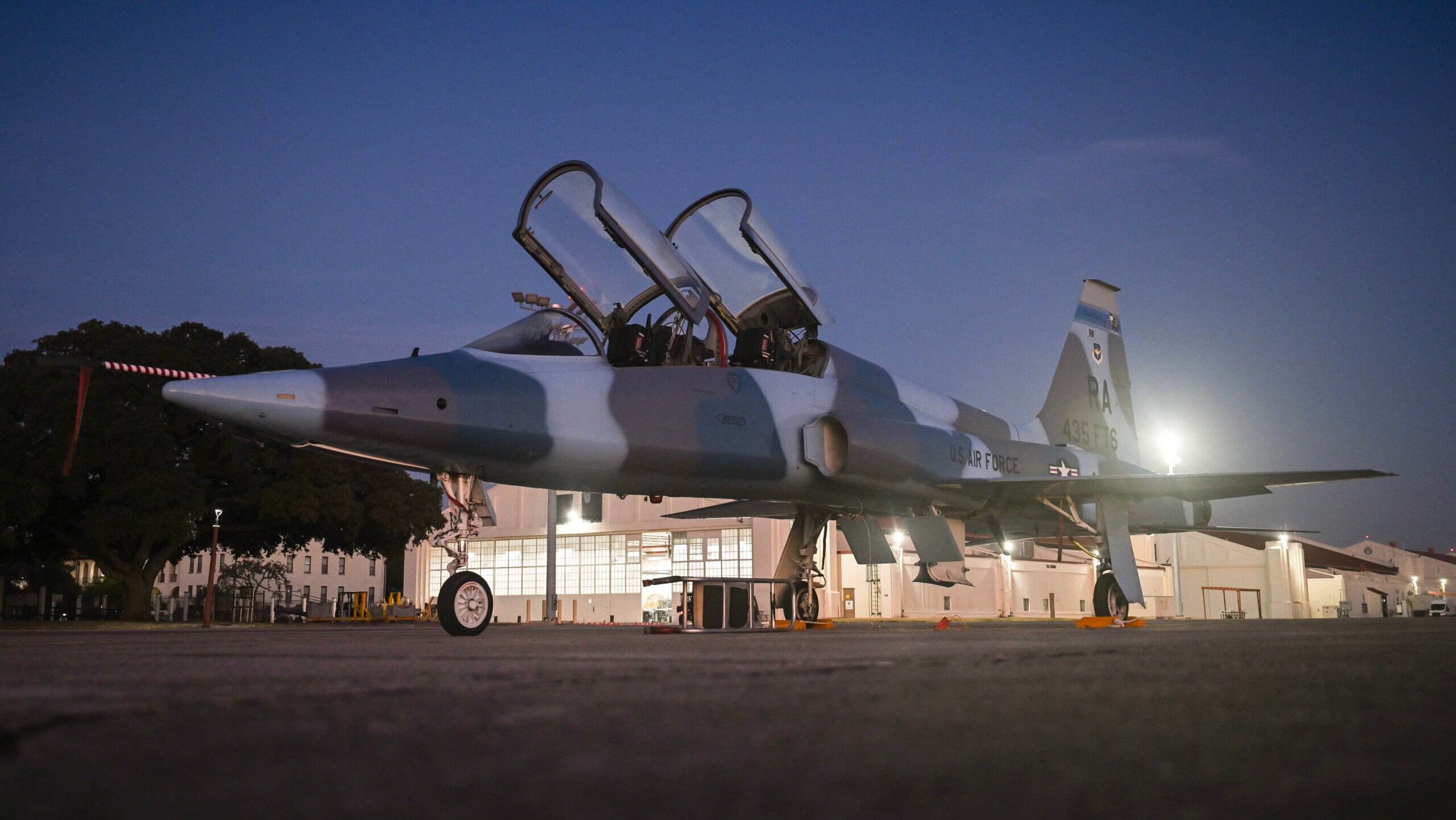
A T-38 Talon is parked on the east flightline prior to a 435th Fighter Training Squadron group October 21, 2024, at Joint Base San Antonio-Randolph, Texas. (U.S. Air Force photo by Sean Worrell)
WASHINGTON — The Air Force has revealed that the service will achieve a years-long goal of producing 1,500 pilots annually, a target that officials say is critical to reduce a shortfall of over 2,000 aviators.
But even if the Air Force can keep up that tempo for the foreseeable future, it will be “quite some time” until the service’s pilot shortage is resolved, the Air Force’s top training officer said Sept. 15.
“I can’t erase that pilot deficit in a short period of time,” Lt. Gen. Clark Quinn, the head of Air Education and Training Command, said in a roundtable with reporters on the sidelines of the Air & Space Forces Association conference.
Predicting how long it would take to make up the existing shortage is complicated by unpredictable retention rates driven in large part by fluctuating economic conditions, Quinn reasoned. Additionally, most of the current pilot shortfall is in staff positions, held by people well into their careers. That means replenishing those positions will take a considerable amount of time.
“It’s going to take 15 or 20 years to get those types of people. I can make them today, but those jobs won’t be filled for quite some time,” the general said. “I do know that if we don’t make 1,500, we’re never going to get that number down.”
The Air Force says that a new pilot training model implemented in 2024 has been key to achieving the 1,500 annual production goal. Under a new framework called the Future of Undergraduate Pilot Training, the service has partnered with civilian-led training programs for early stages, where students earn a private pilot license and learn the basics of flying. Students then move on to a military-led phase of instruction flying the T-6A Texan II, and candidates picked for fighter and bomber slots will also get time with the T-38 Talon.
“That new way of doing pilot training has allowed us to make the number of pilots that we need per year, which is the way that we intend to man those new platforms that are coming,” Air Force Chief of Staff Gen. Ken Wilsbach said in a separate media roundtable Sept. 14, referring to training pilots for forthcoming aircraft like the F-47 fighter jet and B-21 Raider stealth bomber.
In the age of drones, a bigger fence around your facility doesn’t protect you anymore
Traditional thinking about how to protect facilities must adapt to new threats such as drones or downstream attacks.
The introduction of autonomous platforms like Collaborative Combat Aircraft drone wingmen could also reduce the manpower needed for flying missions, Wilsbach reasoned.
“We’re a few years off from having to reduce the number of pilots that we have, but in the meantime, we’re making 1,500 a year,” he said.
In the long run, Air Force officials have floated the idea of consolidating flight training onto one platform: the T-7 Red Hawk. Quinn said he believes the aircraft — previously the focus of an investigation by Breaking Defense that found a series of unreported issues with the in-development trainer — will be “an outstanding airplane” that officials are “eager” to receive.
Asked about consolidating all training on the Red Hawk, Quinn emphasized that no decisions have been made, adding that doing so would carry “pros and cons.” An upside, Quinn reasoned, would be reducing the footprint necessary to operate more than one aircraft, pointing to elements like logistics and manpower. But a downside, he said, is that “if something ever happens to that aircraft that would prevent it from flying for an extended period of time, I really don’t have a backup plan to that.”
Quinn stated that the Air Force needs to give instructors more flying time in the aircraft to determine whether it might be suitable for all stages of pilot training. Up to now, T-7 flights have mostly been led by developmental test pilots, though instructor pilots are starting to get their time in the jet too.
“Until I get the confidence that my instructors think that we can do this, that opens the door to then make that decision,” he said.
2024年10月21日,在德克萨斯州圣安东尼奥-兰道夫联合基地,一架T-38“鹰爪”教练机停放在东侧跑道上,等待第435战斗机训练中队大队进场。(美国空军照片,摄影:肖恩·沃雷尔)
华盛顿——美国空军透露,该军种将实现多年来每年培养 1500 名飞行员的目标。官员们表示,这一目标对于减少 2000 多名飞行员的缺口至关重要。
但空军最高训练官员9月15日表示,即使空军能够在可预见的未来保持这种速度,但要解决空军飞行员短缺问题,还需要“相当长一段时间”。
“我无法在短时间内消除飞行员短缺的问题,”空军教育训练司令部司令克拉克·奎因中将在空军与太空部队协会会议期间与记者举行的圆桌会议上表示。
奎因认为,由于经济形势波动导致人员留任率难以预测,因此很难预测需要多长时间才能弥补目前的人员短缺。此外,目前飞行员缺口主要集中在员工岗位上,这些岗位上的人员大多已从业多年。这意味着填补这些空缺需要相当长的时间。
“要培养出这类人才需要15到20年的时间。我现在就能培养出他们,但这些职位在相当长的一段时间内都无法填补,”将军说。“我知道,如果我们培养不出1500人,我们就永远无法降低这个数字。”
美国空军表示,2024年实施的新型飞行员训练模式是实现每年1500架飞行员生产目标的关键。在名为“本科飞行员训练未来”的新框架下,空军与民营机构合作开展早期阶段的训练,学员在此阶段可获得私人飞行员执照并学习飞行基础知识。之后,学员将进入由军方主导的训练阶段,驾驶T-6A“德克萨斯人II”教练机;被选拔为战斗机和轰炸机飞行员的学员还将有机会驾驶T-38“鹰爪”教练机。
“这种新的飞行员训练方式使我们能够每年培养出所需的飞行员数量,这也是我们为即将推出的新平台配备人员的方式,”空军参谋长肯·威尔斯巴赫将军在9月14日举行的另一次媒体圆桌会议上说,他指的是为即将推出的F-47战斗机和B-21“突袭者”隐形轰炸机等飞机训练飞行员。
在无人机时代,在你的设施周围加装更高的围栏已经无法保护你了。
传统的设施保护思维必须适应无人机或下游攻击等新威胁。
威尔斯巴赫认为,引入像协同作战飞机无人机僚机这样的自主平台,也可以减少飞行任务所需的人力。
“我们离不得不减少飞行员数量还有几年时间,但与此同时,我们每年能招到 1500 名飞行员,”他说。
从长远来看,空军官员曾提出将飞行训练整合到一个平台上的想法:T-7“红鹰”教练机。奎因表示,他相信这款飞机——此前《防务新闻》曾对其进行调查,发现这款在研教练机存在一系列未公开的问题——将会是一款“卓越的飞机”,官员们“渴望”接收它。
当被问及是否会将所有训练集中在红鹰直升机上时,奎因强调尚未做出任何决定,并补充说这样做“有利有弊”。奎因认为,好处在于可以减少运营多架飞机所需的资源,例如后勤和人力。但他表示,缺点在于“如果这架飞机发生任何故障,导致其长时间无法飞行,我真的没有备用方案。”
奎因表示,空军需要给教官们更多驾驶T-7的时间,以确定它是否适合飞行员训练的各个阶段。迄今为止,T-7的飞行主要由研发试飞员负责,不过教官飞行员也开始陆续获得驾驶该型飞机的机会。
“只有当我确信我的老师们认为我们能做到这件事时,我才能做出这个决定,”他说。