The Making Of A Submarine Hunting S-3 Viking Crewman潜艇猎杀者S-3“维京”号船员的诞生
This is what it took to become a sub hunter tasked with protecting America's carrier battle groups at the twilight of the Cold War.
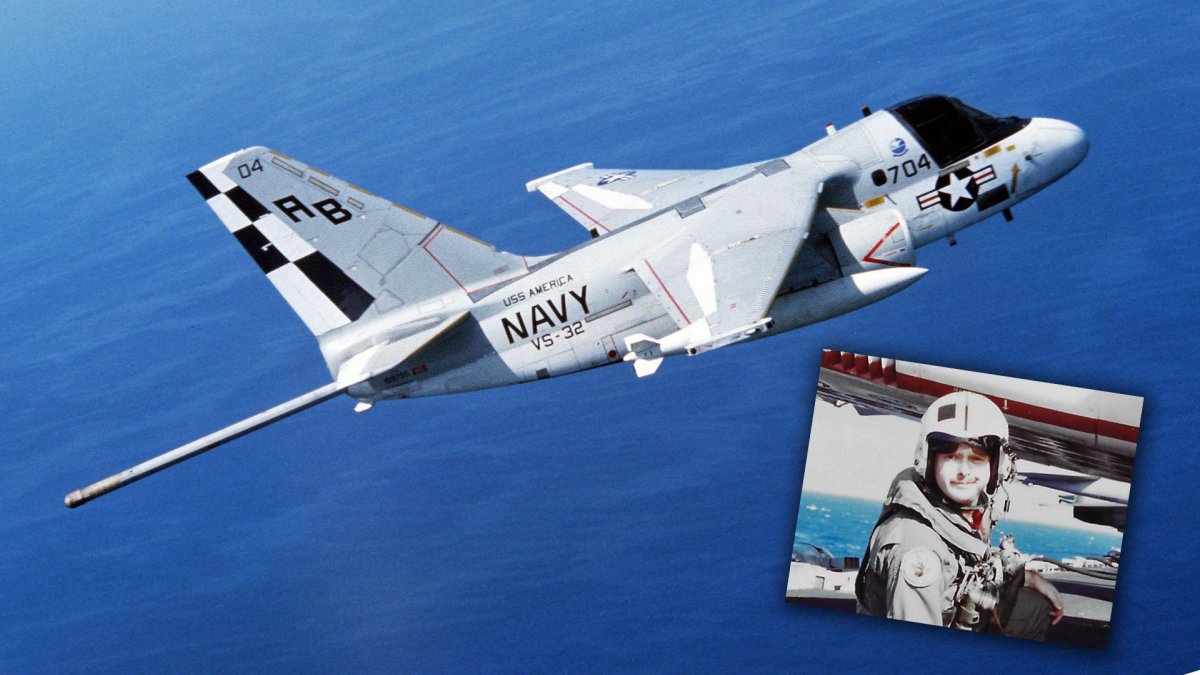
By Kevin Noonan and Tyler Rogoway
Updated Dec 30, 2020 4:01 PM EST
The following is the first in a multi-part series—the most in-depth we have published since our Paul Nickell series —about what it was like to train, fly, and fight in the Lockheed S-3 Viking . It’s a personal story not just about one man’s passion for his profession and his time executing it in the jet, but also about the nuts and bolts of often misunderstood anti-submarine and anti-surface warfare, what it took to keep Soviet submarines at bay during the twilight years of the Cold War, and on more contemporary issues surrounding the critical art of hunting enemy submarines. It also comes to us from one of The War Zone community’s favorite people, Kevin Noonan, better known as Ancient Sub Hunter in our commenting section and on his colorful Twitter feed .
So, without further ado, our deep dive begins, well, at the beginning as our subject set out to accomplish his dream and began to master the cat-and-mouse art of hunting submarines from the sky.
A Viking Love Affair
For an aircraft originally designed to hunt submarines, the Lockheed S-3 Viking repeatedly impressed the navy it served and those it flew against with its versatility, reliability, mission prowess, and its uncanny ability to evolve.
The Viking held her stride no matter what task she was called upon to perform. She served a spectrum of needs within the carrier battle group (CVBG), while eagerly stepping up to the call of the odd jobs assigned by fleet commanders and even serving national political demands.
Most importantly, the S-3 performed her primary mission of Anti-Submarine Warfare (ASW) and Anti-Surface Warfare (ASuW) with a finesse that can only be fostered when deeply professional aircrews and maintenance personnel are fused with a durable, forgiving, and well-designed airframe.
Twin turbofan engines carried the Viking’s 35,000 to 50,000 pounds and four crew to any mission asked of her and kept us airborne for up to six hours without the need for refueling. Her variety of sensors and weapons ensured we could detect and destroy targets both beneath and on the surface of the ocean that threatened the CVBG. The tasking required of the S-3 would send her far and wide from the carrier and her 450 knots maximum speed allowed her to get from one place to another at a decent clip. Granted, in the jet-age of sexy-fast Tomcats, Phantoms, and Intruders, 450 knots was relatively slow.
But so are submarines.
As one of the four souls onboard the Viking, I was the sole enlisted man sitting behind the pilot and co-pilot/COTAC (Co-Tactical Coordinator) sharing the aft cockpit with the TACCO (Tactical Coordinator). My primary job was operating the acoustic, radar, and forward-looking infrared (FLIR) systems. My official title was SENSO—Sensor Operator.
Kevin alongside his beloved S-3 while aboard the carrier. , Kevin Noonan
Dreams Of Submarines And Wings
I was born into an Air Force officer’s family. The obvious question follows and was asked repeatedly over my lifetime: “Why then did you join the Navy?”
Clearly, there is a touch of the sea and sailor in the bloodstream since my father had initially joined the Coast Guard and served in the North Atlantic on a weather observation cutter. But the aviation gene won the day when he headed off to a commission in the USAF once he completed college.
The skies of my memory are filled with the scenes and sounds of B-52s, C-124s, KC-135s, and F-105s. These daily sights, along with all the visiting aircraft—not to mention the view from my front yard of the north end of the General Dynamics plant—ensured the activation of my own predisposition to flying. However, an odd mutation arose one day in the library of my 5th grade schoolhouse. While scanning the shelves for something to read about airplanes, I discovered a book about submarines.
As the formative years progressed, aviation remained the primary influence while a love for the submarine continued to germinate. Being the baby of six kids and two years’ distant from my nearest sibling, I would lock myself in my room and read any book I could get my hands on about submarines.
I found myself particularly fascinated with the Battle of the Atlantic during World War II. This rising infatuation with the submarine and my tendency to be a loner would both serve me well—and not so well—in the quickly approaching years of adulthood and the direction my life would take.
There was no question that I would join the military, but which branch? My oldest brother headed off to jump out of airplanes with the Army. My oldest sister became a linguist in the USAF. My next oldest sister headed off to the USN as a Hospital Corpsman. Another sister became a Personnelman. But it was my other older brother’s chosen career that would introduce me to a field and aircraft that, surprisingly, I’d neither heard of nor seen: Aviation Anti-submarine Warfare Operator (AW) and the S-3A Viking.
Me in a Huey at the Carswell AFB Base Exchange parking lot circa 1974., Kevin Noonan
Training With A Cherry On Top
I had no idea that my competing, dissimilar loves had been fused together a decade before into the singular AW rating (Naval Aircrewman). Yet, in the final months of decision making, I remained torn between becoming a submariner or an aviator.
When I finally did make the decision to become an AW, I felt I needed to take a path different from the one my Naval Aircrewman brother had taken. Instead of active duty, I chose the Naval Reserves (NAVRES). Instead of the S-3 Viking, which did not have an established Reserve squadron as the Patrol Squadron Navy had, I would be an Acoustic Sensor Operator in the Lockheed P-3B Orion.
Even as a Reservist, I would go to all the initial active duty training required of regular Navy sailors. A week after I graduated from high school, I was on my way to boot camp at Great Lakes, Illinois in the early summer of 1984. I then headed to that magnificent (and terrifying) place: the home of Naval Aviation, Pensacola, Florida. There, in Naval Aircrewman Candidate School, I earned the right to fly in naval aircraft…boy, did I earn that right!
It was there I learned how to aggressively exceed my established self-limitations. The endless running through the Naval Air Station’s historic streets and the challenge of the beach-side obstacle course was as exhilarating as it was exhausting. I was overwhelmed with the marching, inspections, and workouts on the famous sea wall where in decades past the seaplanes of a then-fledgling Naval Aviation cadre were taxied down ramps and into the bay for launching.
But it was the required water survival training that would force me to run headlong into a reality my new employer, the U.S. Navy, had not yet discovered.
I was terrified of water.
Yeah, I know what you’re thinking. What the hell was wrong with me? Joining the Navy was bad enough, but then I chose to go into a field that required I get thrown into the very environment that made my soul tremble. And the greatest dragon I would have to face was waiting for me in a building I ran past every day.
As a child, I experienced a near-drowning. Fully aware I would have to come to terms with my fear, I decided to take swimming lessons a few months prior to my departure for bootcamp. While it helped, I remained a relatively weak swimmer. Thankfully, Pensacola anticipated that some of its prospective flyers would not have been born with the requisite fin and gills that so many “natural” swimmers seem to be adorned with. Each time I entered any body of water, I was required to wear the “cherry” red helmet. This bold covering assured that the water survival instructors would keep an extra, wary eye on the tenuous swimmer wearing it.
With a beacon on head, my journey began.
In days past, all officer and enlisted candidates were required to pass a mile-long swim qualification in Pensacola Bay wearing a flight suit, helmet, and flight boots. When I arrived in 1984, they had moved this critical qualification to one of the indoor pools. You had to swim without stopping to rest, without putting your foot on the bottom, and without touching the side of the pool. Along with these difficult demands, the presence of many future aircrewmen swimming around the pool churned up what felt like a sea state of six! I was pretty sure the bay would have been the better locale.
Another very difficult one was treading water in full flight gear without an inflated life preserver. Again, no touching the side of the pool and we were in the deep end so we couldn’t rest our feet on the bottom, though several sank and had to be brought back to the surface by the attending rescue swimmers.
Having survived those basic evolutions, we moved on to other pools with progressively ominous and (I was convinced) torturous devices. One intriguing contraption that had the appearance of a praying mantis folding its laundry was the next challenge.
Known as the Parachute Disentanglement Trainer, it actually wasn’t a very difficult evolution. The parachute was centered and then dropped over you. Initially, it kind of left you with the impression that you were lying in a water bed and someone just covered you with a silk top sheet. But then you ask yourself: “why is this top sheet trying to kill me?”
Getting out of this potential nightmare required taking fistfuls of increasingly water-logged silk and what seemed like thousands of parachute lines and moving them over your head as you attempted to move slowly away from the center of the canopy. You then ensured that not a single parachute line was wrapped around any part of your body.
The Praying Mantis…more appropriately, the Parachute Disentanglement Trainer., USN
The full weight of this training has remained with me to this day. A search and rescue (SAR) swimmer once warned that if the parachute canopy an aircrew survivor had just used to escape a dying aircraft remained attached to him, it could fully blossom underneath the surface of the water and sink, taking the helicopter down with it if the survivor was also attached to the helicopter’s hoist. Thus, the absolute need to quickly peel away the shock of where you are at, having just bailed out of a doomed airplane and the absolute need to become aware of your surroundings and discover what direction the wind is blowing on the surface of the ocean. Then, just before impact with the water, turning your parachute to ensure it collapses downwind from you as you release the risers and settle into the water as your feet hit. These were procedures you had to execute under duress to ensure you don’t end up being drowned by silken sheets.
Thankfully, the Navy eventually developed saltwater activated riser release mechanisms that would aid an unconscious survivor, but we were adamantly told to never rely on them if we were aware of our predicament.
The truth is that I was beginning to really love this stuff, but then that day arrived.
The Navy called her the 9D5 Helicopter Underwater Egress Training Device. She was commonly known as the “Helo-Dunker.” I knew her as my second chance at drowning.
I don’t recall if we had ever been in the building before that day. If so, my fear blotted her out. When I entered the facility, the normally heavy and wet West Florida air suddenly became freezing cold. My pulse and respiration rate increased. I have always been rather pale in skin color, but I’m sure, if at that moment I had walked into a morgue, I would have been mistaken for just another cadaver.
To me, the ‘Dunker looked like an engorged 55-gallon drum with six seats. They were running empty-tests as we filed onto one set of bleachers awaiting the egress briefing. The impact with the water … the rolling upside down …I noticed my instructor walk around the pool and sit down on another set of bleachers at the entrance to the device… the sinking of the 55-gallon drum with six seats . The device instructor began to speak: “You will be blindfolded for all the rides!” The class wasn’t happy about the blindfold. Personally, I didn’t give a damn since I weld my eyes shut anytime I’m in the water. I was far more interested in why the asshole called this a ride as if we were at an amusement park.
The 9D5 Helicopter Underwater Egress Training Device., USN
I then stopped listening after he said we would have to ride the device three times. Or was it four?
The first six members of my class made their way to the drum. I would go with the next six. I watched. They surfaced. I watched. They surfaced. I’m going to drown today . I watched. They surfaced. Divers in full gear were in the pool. The device instructor yelled: “Next six!”
I walked behind one or two of my classmates. All I could see was my instructor sitting there…writing… not paying attention to the fact that one of his candidates was going to drown in a few minutes! My mind was pulsating: d.o.r….d.O.R!…D.O.R!! I turned the corner. I could move to my left, climb the bleachers and declare: “Drop on request!” to my seemingly disinterested instructor, bringing an end to the hope of becoming a Naval Aircrewman.
I can’t tell you much more. The only thing I clearly remember during one of my drownings—when I was strapped into one of the four seats in the back—was the voice of the device instructor: “Keep hold of a reference point then find another as you move, purposefully, toward the picture of the hatch in your mind where you know it is supposed to be. Reference point to reference point.”
I also remember getting kicked in the face by another classmate making their way to the picture in their mind. I held on to the reference point, which I’m sure had a full imprint of my handwoven into the canvas seat.
The initial impact of the Helo Dunker just before it rolls upside down as top-heavy helos do., USN
Back on the bleachers, I was grateful that the air was once again hot and humid and that the pool water, dripping from my Cherry Red Helmet down across my face, made the tears hard to distinguish, should anyone have looked.
I happily admit that several of the water qualification evolutions were great fun: the parachute drag, the poolside winching up into a simulated helicopter, intense rotor downwash included, and the zip-line ride into the water after a simulated ejection followed by the truly hilarious struggle to board a one-man life raft in full flight gear and, if you forgot to properly detach it from the seat-pan in the ejection seat.
Then, it was out to the bay and real water where we fired off our Mk 31 pencil and Mk 13 signal flares. We also practiced boarding larger life rafts carried by patrol aircraft or those dropped by USCG C-130s for survivor rescues.
The most exciting moment came at the end of the day when we rode a whaleboat further out into the bay and the helo squadron assigned to SAR duties at NAS Pensacola came out to pick us up. What a blast it was to be winched up to a real, live, hovering Sea King helicopter!
I had hoped it would turn out to be my first helo ride, and some classes did get to fly back to the airfield in her. However, we apparently had a too large a class and after the rescue swimmer let me hang outside the door for a moment, he slapped my helmet with a smile and back down I went.
And just like that, it was over.
From The Sea To The Swamp
The final phase of training was Land Survival at Eglin, AFB, which was just a short bus ride east of Pensacola. Here we were joined by graduating Officer Candidate School (OCS) pilot and Naval Flight Officer (NFO) candidates. And once again, I was faced with the limitations of my childhood having only had a brief overnight stay in the Adirondack mountains when I was growing up. My outdoor skills were comparable to my ability to swim. Worse still, I was so damn tired during the initial land survival classroom phase that my stuporous state prevented me from absorbing the vital lectures explaining survival equipment and techniques.
So, at one point during the adventure, I was handed the compass and instructed to take over land navigation for my entire class of officers and enlisted. Here was my chance to guide my fellow “downed” aviators to rescue and safety!
I held the compass in my hand following the needle as it pointed in the direction we were to go. That’s right, instead of doing it the right way and picking landmarks along the bearing line and navigating around obstacles in the path, I happily followed the wavering needle. Needless to say, after half an ignorant mile, a very angry instructor snatched the compass out of my hand just as I was leading my class to certain death in one of Eglin’s notorious, shadowy, alligator-occupied swamps.
Amid echoes of bitter laughter and a few choice words rising through the autumn forest around me, I was certain I could see flashes of white teeth briefly glistening against well-camouflaged faces in said dark swamp—we had been told we would be sharing the woods with a class of U.S. Army officers and men slogging their way toward earning the coveted Ranger Tab.
It was more-than-likely a simple hallucination brought on by a mix of leftover catatonia from the classroom and a need for even more humiliation. Oh well, the class and I survived, and most importantly, a dragon had been slayed.
Pensacola was, without a doubt, the most life-enhancing encounter I would experience during my time in the Navy.
I could actually do this shit!
Kevin’s Aircrew class. He’s standing in the second row, on the left side of one of the first female Aircrew Candidates. The guys in red t-shirts are Marine Corps Aircrew. Kevin’s “Helo Dunker DOR” instructor is on my row under USN Flag., Kevin Noonan
One final Pensacola note: toward the end of my time there, I was informed by a disinterested and ill-informed “career counselor” that there was a good chance I would be selected to continue on to Rescue Swimmer School due to the needs of the USN and USNR as there was a critical shortage of helo AWs.
Had I had my cherry red helmet in hand, I would have placed it gently on his desk and using today’s texting parlance would have written, in a bold hand: “ROFL!” on his forehead.
The next step in my adventure led me to Aviation Anti-Submarine Warfare “A” School in Millington, Tennessee. Whereas Pensacola was a trial of the body, AW “A” School would be a trial of the mind.
Millington was a well-worn town with a well-worn naval base. The barracks and school buildings spoke of decades of sailors passing through on their way to the variety of aviation ratings. The only difference between the unassuming building I would be mustering at and most others was the need to have a security clearance to get in. Here we would be introduced to the full intellectual weight of what it meant to be an AW.
We were instructed in very basic courses on Radar, Magnetic Anomaly Detector (MAD), Electronic Support Measures (ESM) and Anti-Submarine Warfare (ASW) weapons by instructors who had served in P-2s, P-3s, S-2s, S-3s, ASW Modules (ASMODs) aboard carriers, and the larger land-based ASW Operations Center (ASWOC). They would attempt to introduce us to the craft of hunting the elusive submarine.
After these initial classes, we then delved into the ‘meat and potatoes’ subjects learning how submarine machinery worked and how the propulsion and equipment transmitted sounds into the ocean. Next came oceanography, or “Ocean O” as we called it. It was a difficult class, but I could finally see just how the ocean worked to increase or decrease our chance of finding a submarine. I was very grateful we weren’t confronted with too much of the math usually associated with oceanography. To me, fractions and equations were almost as terrifying as the Helo Dunker.
A startling aspect of this phase of training, one causing a bit of cognitive dissonance, came when I heard the voice of Casey Kasem on a series of classified videos describing everything from the function of a diesel submarine’s ballast tanks to the path a particular machinery sound source took during a certain time of day to cross the ocean. I was used to hearing him every Saturday morning on American Top 40 telling stories of how Stevie Nicks met Mick Fleetwood, or the critical role Linda Ronstadt had in the success of Don Henley and the Eagles. It actually made this portion of the training that much more enjoyable.
During the next phase, we would become acquainted with something called LOFAR gram analysis and interpretation. I can only describe it as learning an entirely new language that had no relationship or comparison to any articulation made by human beings.
It was purely alien .
My mind was reeling. I came away from each day’s class with a headache and a thousand-mile stare. I could not grasp how lines and shading and white space on a texturally strange piece of paper could be a rainstorm, a merchant ship, a pod of whales, or a submarine.
It is well understood by those who do ASW that hunting submarines tends to be more art than science. This is true, to an even greater extent, when learning how to use the tools of the trade. I was being told that what I was seeing was very logical and scientific and it was. Yet my mind could not create a bridge to cross the chasm between what my instructors were telling me and what my eyes were actually seeing. In order to really see it, to really comprehend and bridge the chasm, my right brain would have to play a greater role than my left.
LOFAR, or “LOw-Frequency Analysis and Recording,” came to undersea warfare as a result of desperation and industrial curiosity. In the late 1940s and early 1950s, a series of ASW conferences exposed just how weak and ill-prepared Allied navies were to handle what the snorkel, the creation of the Type XXI U-boat, and post-war Soviet design brought to the submarine. Far worse, the fast-approaching adaptation of nuclear propulsion to the hull of an undersea craft would render post-war “hunter-killer” ASW methods and sensors obsolete since the submarine could simply vanish. Some of these conferences were held at Massachusetts Institute of Technology (MIT) and were attended by members of industry, such as Bell Labs.
At Bell Labs, it just so happened that engineers and scientists were trying to figure out a way to enhance the human voice to ensure that long-distance and trans-Atlantic phone calls would be clear and comprehensible. These brilliant souls discovered that a low-frequency analyzer would place discrete lines of information on heat-sensitive carbon-based paper, providing “a graphic sketch of the acoustic signals in black, white, and grey, offering an image of aural reality…” wrote Gary Weir, a historian at the U.S. Naval Historical Center, in an exceptional paper on the history of Sound Surveillance System (SOSUS).
The LOFAR gram: Black lines, gray shading, and white space representing sound created on burnt carbon-based paper., Public Domain
On May 2, 1951, the U.S. Navy was handed a gift—a new, complex method to prevent the nuclear submarine from vanishing. If a voice could create visible images on paper, a noisy submarine could do so, as well. As Weir describes: “If any part of the boat moved, pumped, or circulated, the resulting sound radiated into the ocean and formed part of the trail that enabled the system to find the submarine and track it.”
But it would take time, years in fact, for the SOSUS operators, sonar techs, and airborne sensor operators, to really appreciate what Bell Labs had given them. The LOFAR gram offered so much more than simple lines on paper. Weir continues:
“Embedded within the many varied graphic images, operators found themselves able to discern subtle nuances in sound signals via intensity, color, shape, and shade that often made the difference between seeing a school of fish or a submarine… Operators looked beyond the data, the physics, and the engineering, to the ways the LOFAR trace betrayed the personality and attitude of the detected signal that very often revealed its nature… Some signals appeared in such a regular and familiar way that, after initial detection, future identification did not present a problem. These visual patterns became the much-vaunted “signatures” which betrayed particular targets or classes of targets.”
While I hadn’t taken piano or violin lessons as a kid, I did have a deep affection for and intangible connection to art in general and music, in particular. And while my instructors were really good teachers, I had to take what they were telling me and essentially let the right brain silence the left and see the nuances brought on by the shading and colors and then trust that what I was being told about sources was true. Dr. Weir expresses what operators through the years came to understand: “The nature of the task and the acoustic imaging techniques employed by LOFAR made a well-trained and intellectually able operator with an artistic eye a necessity.”
As my time at “A” School was nearing an end, I slowly and unwittingly began to cross that chasm. I gradually began to understand the nature of sound, of harmonics, and comprehend how the black lines, gray shading, and white space sound created on burnt carbon-based paper could be a rainstorm, a merchant ship, a pod of whales, or a submarine.
Once I finished AW “A” School, I was off to a town in Pennsylvania I’d never heard of, and a Naval Air Station I never knew existed. Horsham is a small township just north of Philadelphia and was home to NAS Willow Grove (now a Joint Reserve Base) which trained aviation components of the NAVRES, particularly the future crew members of P-3 Orion aircraft, and was the home field for VP-64 Condors , a P-3B Reserve squadron (“VP” being the USN’s designation for fixed-wing, patrol).
Here, instead of slides, movies, and naval teaching manuals showing pictures of radar scopes and LOFAR grams, I would finally get to put my hands on the actual primary hardware an Orion Sensor Operator used to hunt submarines: the AN/APS-80 radar, the AN/AQA-7 LOFAR “gram machine,” and the AN/AAS-36 Infrared Detection System (IRDS).
Learning about and then operating the radar and acoustic processor in a training simulator that provided “actual” contacts was a highly motivating experience. I began to realize that all the reading, the dreaming and the imagining I had done from childhood was slowly transitioning into a reality. I couldn’t wait to start getting flight time in an actual aircraft hunting actual submarines.
Well, actually, I would have a relatively long wait for my first flight in a submarine hunter and it would be a very long two-year wait for my first hunt of an actual submarine. This, despite a flight line full of P-3Bs just a stone’s throw away. Hell, not only would I not get any flight time, I wouldn’t even get to climb inside one of VP-64’s aircraft. It just wasn’t part of this training syllabus.
After training in Pennsylvania, I joined my regional NAVRES squadron—the “Crawfishers” of VP-94 stationed at NAS New Orleans for the required orientation and training in the aircraft. Once I finished all of my active duty training, I would return to my childhood home in Texas. I could have simply chosen NAS Dallas, the closest NAVRES base to my home, but I didn’t want to allow my AW skills to go to waste and I sure as hell didn’t want to spend my reserve weekends cleaning endless buildings, listening to endless lectures, or standing endless (and irrelevant) watches.
Crawfisher P-3B., San Diego Air and Space Museum
What was really cool about joining VP-94 was that their P-3s would fly across several of lower southern states on the Friday of the requisite one-weekend-a-month and pick up reservists who were members of their squadron. Granted, I would still have to clean squadron spaces, listen to lectures, and stand a watch or two, but they’d all be relevant to my newly minted, part-time AW life. Far more important to me, I would gain flight, mission, and classroom hours toward earning my wings.
Finally…FINALLY! I was about to take to the skies on my first fixed-wing naval aircraft: the Orion, the legendary hunter of submarines. I would be under the tutelage of a great division AWC for this first hop (I wish I could remember his name and had taken a camera with me). After an instructional preflight, I donned my helmet, SV-2, rolled down my flight suit sleeves and put my flight gloves on. I strapped myself into the Sensor 2 station seat and rotated to face the tail of the airplane all in accordance with P-3A & B NATOPS safety procedures. I was ready and eagerly absorbed all the sounds, smells and intercom chatter as we started two and then the remaining two engines and taxied to the active runway.
We lifted off from NAS New Orleans, climbed and turned on a northward heading to Illinois and then to NAS Jacksonville on some sort of logistics flight. Both legs of the mission would keep us over land so we wouldn’t get a chance to drop buoys and operate the AQA-7. However, my chief made sure I would get to sit at the jealously-coveted Sensor 3 station and work the APS-80 radar and the IRDS (Infra-Red Detection System, basically a FLIR system).
Meanwhile, my first task was to complete a critical duty performed on every P-3 Orion that has ever slipped the surly bonds of Earth: inspect each avionics “closet” that lined the forward right section of the crew tunnel enclosing most of the mission black boxes for smoke, sparks, or fire.
With the pilot’s permission, I replaced my helmet with a set of headphones equipped with a boom mic and a long ICS (InterCom System) chord that would allow me to talk to the crew while moving about the tunnel. I wasn’t even aware that I was climbing the few steps forward to the first closet. With my AWC hovering above my left shoulder, I began the inspection placing the back of my flight-gloved hand against the door and felt for heat. I then opened it cautiously and sniffed the air now filled with electrons and sounds emanating from boxes whose names and functions I had started to learn at NAS Willow Grove and would have to know intimately if I was going to earn my wings.
With no evidence of sparks or fire, I closed the first closet and moved slightly aft to inspect the next one. For the first time, I noticed the steep incline of the flight deck as the Orion climbed to cruising altitude. I had to catch myself, ensuring I wouldn’t tumble down toward the aft end of the aircraft. AWC said nothing but his ear-to-ear smile confirmed what every newbie aircrew member had to understand about flying inside a P-3: she loved to “dance the skies on laughter-silvered wings.”
I inspected each additional closet for signs of sparks or fire. Once I had completed checking every rack, I reported “all secure” to the pilot and settled in for the flight northward.
The ride north was uneventful, but I had an absolute blast running the radar and was captivated seeing FLIR imagery for the first time in my life. It was intriguing to see actual radar returns from the land, large structures, and weather. We landed at a civilian airport somewhere in Illinois, completed some logistical task and, having refueled, started the engines up for the flight to NAS Jacksonville.
P-3B Sensor 3 station with APS-80 scope. , AW1 Tim’s Blog
On this launch, I was invited up into the cockpit to sit behind the pilot on the radar cabinet. Oh…my…God! For the first time in my life, I would get to be in the midst of military pilots flipping switches, manipulating levers and bantering their way through start-up and takeoff checklists. All the dreams and imaginings sparked by books, movies, and airshows had finally come together in this moment.
We taxied to the active runway and I eagerly listened as the tower gave us clearance for takeoff, climb-out instructions, and the frequency switch to departure. With a nod from the pilot, the Flight Engineer pushed the throttles forward and the four Allison T56 instantly responded pulling the air across the Orion’s stubby wings. The pilot released the brakes and we began a roll that quickly translated into speed. And then, just like that, we were airborne.
Music. Where was the music ?! There wasn’t any music!
I had been a child of classic military aviation movies that played on one of the three major television networks once a year. When a B-36, or a B-17, or a formation of F-86s lifted into the air, they were always accompanied by an orchestra striking up a dramatic melody. Yet, here I was, in the cockpit of the mighty P-3 Orion climbing away from the earth and there wasn’t a single octave of music, not even an eighth or a sixteenth of a note! Just the sound of the wheels coming up into their wells, the high tonal hum of four responsive turboprop engines, and the co-pilot calling back to the tube asking the Chief to bring up three cups of coffee.
Once back at NAS New Orleans, reality set in. Things moved at an excruciatingly slow pace compared to the active Navy, and that was the way the Reserves liked it. It was clear we weren’t going to be flying any missions out into the Gulf of Mexico while I was there doing my orientation. Any hope I had for time-on-top of a submarine essentially vanished when I learned that the more senior operators and the TARs (Training and Administrative Reserves, the guys and gals who ran VP-94 Tuesday through Sunday), would get the choice billets when the squadron deployed for the long two-week summer of “active duty” to exciting places like Iceland or Spain.
P-3B Orion aircraft of Patrol Squadron 6 (VP-6) “The World Famous Blue Sharks” in-flight near Oahu, Hawaii., USN
I began to wonder if this had been the right decision. I took a walk one night down to the airfield. The sun had just set and the early spring air was unusually cool for the normally sweltering Louisiana delta. There was no wind and only the blue lights marking the taxiways and the flashing signal from the base water tower lit the dusk. No engines turning, no fuel trucks moving, no maintenance personnel yelling for another wrench. I had never been on an airfield at a time like this where the silence permeated everything in a way that was almost sacred. No, it actually was sacred.
Amid this loud silence, I meditated over where I had been and where I wanted to go. My soon return to civilian life promised a 9-to-5 job power-sanding wood furniture in a small strip mall store. I was only 19 and here I was dreading the fact that my only salvation from the normalcy of civilian life was a rather benign one-weekend-a-month in New Orleans hoping and praying I’d get a few hours of flight time.
I simply couldn’t shake the dreamer in me and the possibilities of being in the thick of things that active-duty life promised. While the offerings of fleet VP squadrons had definite advantages, my brother’s tales of flying off a carrier in the S-3 haunted my contemplation.
I spoke with the Chief the next day. He absolutely understood and had me call the AW Detailer at the Pentagon that afternoon. I asked if they needed any S-3 SENSOs in the fleet. They did. My Chief said: “Let’s get the paperwork started!”
He was such a great leader.
It would take time. I made two or three more visits to VP-94 over the next few months between sanding chairs and bookshelves. The anticipation built and then the day came with the arrival of my orders to active-duty:
Report to Fleet Replacement Squadron, AirAntisubron 41 VIA Recruit Training Center, Orlando, Florida VIA FASOTRAGRUPAC, NAS North Island, San Diego
Report to Fleet Replacement Squadron, AirAntisubron 41
VIA Recruit Training Center, Orlando, Florida
VIA FASOTRAGRUPAC, NAS North Island, San Diego
Calm Before The Storm
That first “VIA” on my orders caught me a little off guard. I didn’t realize that I would have to go back to a Recruit Training Command (RTC) having just completed 8 weeks of bootcamp the previous year. But, the Navy, in all its wisdom, demands that all Reservists going back to active-duty be reminded how to properly salute and wear their Dixie cup in a sharp, Navy fashion. It was actually a fun couple of weeks. They made sure I had all my shots and my seabag was filled with all the regulation uniforms and my underwear was stenciled properly.
And then I was off to lovely southern California where I checked in with Fleet Aviation Specialized Operational Training Group Pacific. Since North Island had evolved into a Naval Air Station that primarily housed sea-based ASW aircraft such as the S-3 Viking, the Kaman SH-2 Seasprite, and the brand-new, Sikorsky SH-60B Seahawk, FASOTRAGRUPAC’s had a primary mission that focused on the aircrew and missions those aircraft flew.
This meant ASW, baby!
Here, nestled among enlisted barracks, senior officer housing, and buildings and hangars lining the eastern side of the airfield, FASO trained newly minted officer and enlisted aircrew in the basics of anti-submarine warfare, including tactics, operations, and for the fixed-wing and helo AW, a deeper dive into tactical oceanography and far more detailed acoustic training covering all classes of Allied and Soviet submarines.
Of course, I loved anything submarine. Learning the finer points of the tactical ASW ocean environment and the noises produced by submarines opened the door to a fuller understanding of just how important my job as a SENSO in the Viking would be (well, at least in theory…I would have to face the stark reality of the weight of responsibility in real-time during my first Med cruise the following year). What was even more invaluable were the “war stories” my instructors told about their recent past on the front lines of ASW. Again, we had AWs who had flown in every helo and fixed-wing aircraft type and their tales of actual time-on-top of Soviet submarines brought everything together.
As you move through life, certain days of historical significance mark the time. One such day during my FASO training did just that. It was an unusually cold winter morning and we had just started a class on the particulars of Soviet submarine diesel engines. Around 0845, another instructor, sullen-faced, interrupted the lecture and told us to join him in the instructor’s office. We filed in among those already crowding a small television screen. It was January 28, 1986. On the screen, in a seemingly constant replay, I could just make out a billowing cloud of upward climbing smoke and what appeared to be an explosion. The Space Shuttle Challenger had, moments before, disintegrated during her launch from Cape Canaveral.
Of course, I didn’t know it then, but a few years later, I would be doing range clearance for another Shuttle launch in my Fleet squadron S-3 at the northern limit of the warning area that covered the adjacent Atlantic Ocean.
Captured Behind Friendly Lines
As my time at FASOTRAGRUPAC was coming to its end, and before I could find my way into that coveted Viking SENSO seat I had been longing to climb into, I would have to go to one final school. FASO was also responsible for sending all of its aircrew students to an immensely important training evolution that attempted to prepare them in the event they were shot down over enemy territory. For me, it would be yet another of life’s dragons.
After 24 hours in a desert survival environment, that culminated under a sky of stars so immense that it made the surrounding terrain seem like perpetual twilight, we headed to a wintry mountainous area northeast of San Diego known as Warner Springs. There, FASO conducted Survival, Evasion, Resistance, Escape (SERE) school.
Along with my class of AWs, we were joined by the officers from FASO and other individuals who required the training. Among those individuals were three or four gentlemen who had completed their SEAL training and were getting their SERE check-in-the-box.
They were led by a young officer who had an engaging personality and had us and the instructors laughing. At one point, we learned that larger groups of SEALs had historically been sent through SERE together at one time. However, this practice was ended when a routine began to take shape in the form of the team taking over the prison camp and, in some cases, inviting the instructors to experience the same maltreatment levied against the students.
If memory serves, there was an interesting debate whether this young SEAL officer was senior to one of the aviators, requiring one of them to take the role of Senior Ranking Officer (SRO). I think the SEAL was senior, but declined SRO because he wanted to remain independent of the group to escape, and far more interesting things of that nature.
I also remember another debate about footwear: the SEALs had shown up in boots they preferred to wear in combat and they were concerned that the camp guards would recognize them for who they were based on the boots. As a group, we had agreed upon a common story that we were passengers in C-141 that had been shot down—now that I think about it, there weren’t any USAF folks among us so that story probably didn’t sell well at the Warner Springs Department of Interrogation and Torture. The classroom instructor assured the LT he had nothing to worry about.
For me, the first days of Survival and Evasion started out okay, but that took an abrupt turn when the time of evasion was coming to an end. The speeding trucks, the firing off of AK-47 rounds, the yelling and the loudspeakers all set the stage for a very realistic and troubling experience. Both me and the officer I had teamed up with had grown weary from lack of food and our diminishing water supply after two full days of this part of the camping trip. In our now filthy, dilapidated flight suits, we stumbled across a road that we thought was clear.
An enemy Security Force truck was sitting there in plain sight. Neither one of us saw it. Weary arms and hands went up above our heads. We were bound and forced into the bed of the pickup. It was only a week-long training evolution, but the days of resistance and escape would last for what felt like a month. Surprisingly, I did fairly well with the waterboarding—it was the repeated slamming of my body up against the wall with an enemy guard screaming an amazing level of anger, spittle and epithets in my face that was most difficult for me.
Being held in what I think was something like an enclosed concrete cinder block was also unnerving. I wasn’t claustrophobic, but the inside was too small to sit up straight. It was also definitely too small to lie down in. They played a constant stream of white noise, preached sunny sermons from The Very Best of Marx and Lenin or made generous Public Service Announcements of our soon and pending death. As night fell, the concrete walls radiated the freezing California air quite efficiently.
Then they came for me.
A scene from modern-day SERE school., USAF
By this time, I had passed into what Rod Serling liked to call the Twilight Zone . I wasn’t exactly 100 percent sure at times that I hadn’t been shot down and I was actually in a POW camp somewhere.
I was pushed into a room with a nice gentleman sitting at a desk who offered me a hot drink and some food. He had an “International Red Cross” armband on and told me if I would just sign this confession, I and my fellow POWs would be treated much better. For the first time, I looked into his eyes and then I fell back into my chair, snapping back into reality. I recognized who this was sitting across the desk from me. I had seen his face in one of the films we had watched as part of the classroom training for this evolution.
I had the honor of being soft-cell interrogated by a genuine hero of the Vietnam War: Doug Hegdahl . Tragically, while serving aboard the USS Canberra (CA-70) during a naval fire-support mission in the Gulf of Tonkin, Doug had been blown overboard by a shockwave from one of the cruiser’s 5-inch gun mounts. He was picked up by Cambodian fishermen, but was later captured by the North Vietnamese Army (NVA) and interned at the Hanoi Hilton. His story is truly remarkable. Because he wasn’t considered much of an intelligence source or a threat to the NVA, he was allowed free reign around the camp. During this time, he began to memorize over 200 names and stories of his fellow POWs. When the NVA offered an early release, Doug was ordered by the SRO to take it so he could divulge the names and the horrific conditions faced by the men there in Hanoi.
I don’t remember much of that night after my session with Doug. I do remember, quite vividly, the events of the following morning, however. Inside my concrete cocoon, I was awoken by screams, pounding of feet and gunfire that shattered the otherwise freezing morning air.
Yep…the damn SEALs had escaped.
A few hours later, they were required to surrender. Yeah, I seem to recall clear loudspeaker instructions reminding them that they had to come back to the camp and finish the course. (There was a definite Please, Guys…come on…you have to plea in the announcer’s voice!). Gotta love the damn SEALs!
More time passed and I had no idea what day it was, but another afternoon or another morning came and went and our captors called us to quarters for another round of verbal abuse when more gunfire broke out. We all scattered for cover. Then…our instructors mysteriously disappeared.
Overhead, it sounded like a helicopter of some sort passed with guns blazing. Someone came running into camp with an American flag streaming from his hands. He went to the flag pole that had a Soviet flag flying and pulled it down. He attached the Stars and Stripes to it and raised it high above our heads as we gathered back around. It was then, over the loudspeaker, that the Star Spangled Banner began to play…
…and a dozen or so grown men began to sob.
Obviously, the nature of the training was unsurpassed in importance. The experience and lessons learned would stay with me throughout my time in the Navy. Also, I learned more about myself during that week and in the days of self-reflection that followed. I wasn’t pleased with my performance because I encountered far too many weaknesses. But it was done. Another dragon was sorta-kinda slayed.
The bus ride back to North Island was quite remarkable. We left the Naval Air Station a week prior in a Navy bus (a school bus painted haze gray) and we returned in a chartered luxury bus (of Greyhound quality). Hey, sometimes the ol’ Navy took care of its own!
Finally, it was time to enter into the world of the S-3 Viking. But before I describe the training required to become a “Tailhook SENSO” (as we called ourselves), allow me to compare and contrast the P-3 with the S-3.
Related But Not The Same: The Unique Worlds Of The P-3 Orion And S-3 Viking
Aside from the obvious cosmetic differences of such things as the number of engines and motive power used by the two aircraft, or the fixed presence of the Orion’s “stinger” MAD (Magnetic Anomaly Detector) boom as opposed to the retractable one carried by the Viking, we flew our common missions differently because we each came from decidedly different communities and mission philosophies. These remarkable distinctions can be attributed to another cosmetic disparity: only one of the two aircraft had a tailhook.
Let me explain: The historical experiences of the VP Navy contributed to the evolution of a very well developed, disciplined, and highly motivated community philosophy unique within USN. In many ways looking like the USAF’s Strategic Air Command, they became an air force within NAVAIR. The nature of their consistent mission, fully established in combat during WWII and sustained during the years of the Cold War, allowed them to maintain separation from the burgeoning and then dominate carrier-based naval aviation.
An S-3 Viking and a JMSDF P-3 Orion fly in formation., USN
Moving from their flying boat origins and eventual obsolescence, their dry feet demanded the establishment of unique operations, bases, and logistics exclusive from the Navy they were a part of. They were also savvy enough to read the fiscal and political writing on the wall and made their own inroads throughout Washington D.C. As a result of this distinction and the type of aircraft flown, they developed their own philosophy on how to approach ASW which tended to be a more strategic form than the tactical form flown from the aircraft carrier.
Strategic ASW came into focus with the rising Soviet ballistic missile submarine threat. The VP community had legs. They were based in permanent areas, such as Iceland and Scotland, which allowed easy access to the Barents Sea and the GIUK gap that were the natural choke points Soviet submarines had to pass through to arrive at their patrol areas in the Atlantic. The maritime patrol aircraft (MPAs) expended relatively little fuel getting there and they could carry larger sonobuoy loads and seed the needed large search patterns to regain contact or localize and track what SOSUS had already detected.
In contrast, the VS community was part of a larger whole: the carrier Air Wing. The commander of the Air Wing was usually a fighter or attack guy by birth, initially a senior commander, but was eventually changed to a captain to respectfully stand toe-to-toe with the carrier’s skipper when needed.
S-3 with MAD and refuelng probe extended., USN
The COs of S-2 and S-3 squadrons were mere commanders. The admiral and staff in charge of the CVBG were fighter/attack-oriented, so what the Air Wing/carrier needed or wanted to fulfill its strike missions was everyone’s priority. ASW, despite its critical contribution to the survival of the carrier amid the growing Soviet anti-carrier submarine threat, was only a supporting role in the non-ASW mind’s eye.
Even during the heady days of the anti-submarine carrier groups of the ‘50s and ‘60s, the CVS (anti-submarine carrier) was essentially subordinate to and protective of the attack carrier battlegroups. Besides, the job of the ASW aircraft aboard the carriers and escorts was to find and attack any and all submarines with the hope of killing them while the carrier made good her escape. By the nature of this form of ASW and our place within the Air Wing, the VS philosophy was considerably different from that of VP.
The VP communities’ political strength was legendary, despite not having a Curtiss LeMay at the helm like Strategic Air Command. When the P-2s and P-3s needed something, they usually got it. When questions of getting the necessary updates to airframes to meet the Soviet naval threat or the need arose to arm the Orion with the Harpoon and even the Sidewinder , they played political ball.
US Navy P-3 equipped with AGM-84 Harpoons, AIM-9 Sidewinders, and iron bombs (all training rounds)., USN
An even stronger argument for their ingenious skill can be seen at the end of the Cold War when the Viking first lost her ASW equipment and SENSO in 2000, and then lost her place in the fleet entirely nine years later. The P-3 flew on with all of her ASW gear and became an invaluable asset for the Global War on Terrorism by doing ISR over land ! More importantly, she was ready for the return of Cold War 2.0, which we have since waded into.
I’ve said this before, the P-3 Sensor Operators (and their foreign MPA counterparts) have always been masters of airborne ASW. When the S-3 community received one into their ranks, they immediately became the very best of the SENSOs. But a major contrast between the two communities’ sensor operators can be seen in the attributes of the Viking SENSO: unlike our P-3 brethren—or Sonar Techs aboard submarines or surface ships—we didn’t have an additional AW or senior AW to share the load and call upon once the wheels were in the well. We also didn’t have the space the P-3 Orion did, so no chance to carry reference publications and things to make the job easier (other than what you can stuff in your helmet bag)—in an aircraft carrier environment, any FOD in the cockpit can kill during a launch or landing.
We had to store our information, knowledge, and confidence inside our skin each time we went flying. We were very much alone in making calls, such as classifying targets, and maintaining responsibility for those calls.
It was a great place for a loner like me. It was also a terrifying place for a loner like me.
Enter The Viking Hall
After completing FASO, I walked a few blocks toward the end of Runway 29 at NAS North Island and stood at the security window of a non-descript, otherwise windowless building. Behind the glass, a future S-3 AW who was standing watch asked me for my name while eyeing the security badge hanging from the left breast pocket of my USN working blues. He smiled. I heard a buzz from the unassuming security entrance door. I smiled too.
I had arrived at the VS-41 Trainer Building (TB), which at the time, was the only place in the world where Lockheed S-3A pilots, TACCOs/COTACs and SENSOs were built. Inside this seemingly cavernous building, I would learn the very core of what it meant to be a sensor operator in the Viking.
Down its passageways were a multitude of classrooms, instructor offices, and several full-size and fully operational Weapon Systems Trainers (WST) that were replicas of the TACCO and SENSO stations in the S-3. The pilots and COTACs would train in two fully operational and flight motion capable front cockpit flight simulators made by Link.
In the classroom, we covered every box that resided at the SENSO station, every “black box” occupying the avionics tunnel related to our station and every multi-function button that lined the revolutionary INtegrated COntrol System (INCOS) tray which allowed the SENSO to operate all of the sensors contained within the Viking. I loved learning and then thinking through the process of converting a system function to a tactical problem. I felt completely at home in the learning environment at VS-41. As we were taught the different systems, we then went into one of the WSTs with the instructor sitting in the TACCO seat or outside at the instructor console guiding us through the operation of each function.
SENSO station MPD (lower screen) and Auxiliary Readout Unit (upper screen)., Lockheed
As time progressed and we became proficient with system operation, we spent less time in the classroom and more time in the WST with student NFOs who were at a point in their training where we could begin to work as a team.
This training philosophy was priceless. It was the first time I worked so closely with an officer and it allowed me as an enlisted man to understand the relationship we would have to have in the actual cockpit of the Viking. It also forced me to think outside the narrow focus of the functionality of my job in the aircraft by keeping the TACCO informed of what knowledge I was gathering from my sensors so he could develop and manipulate the tactical “big picture.”
The WSTs were genuinely amazing creations. From rooms filled with computers came realistic ocean environments, sensor signals, and signatures—functions and mission profiles that real-world warships and aircraft were expected to present. We trained to identify, classify, and determine the location and intention of these signals. Our instructors could “break in” to the mostly pre-programmed scenarios and make the training more or less difficult, based on how well or poorly we were doing.
As we progressed through the training, additional threats were added in the form of a second submarine or surface warships. Although the computer technology of the day did an incredible job of trying to create real-world conditions for us, nothing but the real-world would suffice. The most important benefit of this training was the establishment of a great foundation of system knowledge and procedural performance and the absolute necessity of cockpit communication and coordination among the crew. But it wasn’t all about the job.
Free time was very generous at the RAG (or Replacement Air Group, an older name for NAVAIR’s training commands). Arrival at VS-41 was our introduction into the Brown Shoe Navy; after all, our instructors had cut their teeth in the fleet. The atmosphere was very professional, but also laid back. The focus was on preparing us for the fleet, but not losing sight of the fact that we were human.
My free time was occupied by standing watches, studying, or just getting off the base. Watches consisted of weekend security watch at the entrance to the TB or overnight flight line watch ensuring no Soviet commando had a chance to place a bomb in the wheel well of VS-41’s collection of S-3s.
VS-41 flightline at NAS North Island in the 1980s. , USN
Studying was a never-ending process. Most of our courses were classified so I ended up spending most of that free time back in the TB. But I did take time to walk around the base or sit at the end of the runway and watch the fleet squadron S-3s takeoff and land—something I loved to do back on Carswell AFB as a kid. I wasn’t a partier, but I did take the occasional opportunity to get off base and explore the Strand or the Hotel Del Coronado with my classmates. Of course, the movie Top Gun hit the theaters on May 12, 1986 and my fellow AWs and I made our requisite pilgrimage to the theater in downtown San Diego. In fact, we would spend most of the summer of ‘86 going to see it—I stopped counting after the 7th viewing.
I didn’t care much for the storyline—I will always prefer The Final Countdown— or the pathetic use of F-5s for MiGs, but what I had to see over and over was the opening flight deck scene and all the Tomcat air-to-air scenes (yes, I’m one of those people that can listen to the same song a thousand times). Whatever the specific reasons for the multiple viewings, we soon-to-be Viking AWs knew we would be flying off similar flight decks with the movie’s featured fighter and that was motivation enough for our significant contribution to Top Gun ’s more than $358 million box-office windfall.
You’re welcome, Mr. Cruise.
The summer progressed and graduation was just around the corner. We continued to work hard in the classroom and the WS, but it was time for us to finally take everything we had learned into the air.
Other classmates made their first flight already and came back to report their experiences. Most said they were too busy “doing it right” to really enjoy the first-time experience. One or two of them got airsick.
My day finally came and I was very excited. I don’t remember much of the flight because of how much time I also spent trying to do it right, too. However, I wasn’t too busy not to get airsick. Thankfully, the instructors made sure we carried an airsick bag. I needed two. I was mortified because we didn’t do any maneuvering that was extraordinary. I had assumed my handful of air-sick-free hours in the P-3 would ensure this wouldn’t happen to me. But I survived and was very pleased with my choice to go active duty and fly in the Viking.
Finally, my time at VS-41 neared its end. All of the classroom and trainer time didn’t culminate in the air. Instead, it ended in a final practical exam that would take place in the WST that was linked up to the “flying” simulator down the passageway where a student pilot and COTAC would join me and a TACCO. The exam was a full combat mission that included cockpit and systems preflight, launching procedures from the carrier, then flying out to the threat area to hunt for the one or two Soviet submarines looking to sink our carrier while working hard to avoid the reach of the surface-to-air missiles that would come from the Soviet Surface Action Group (SAG) intent on shooting us down. It was a complex, intense, and fantastic experience. We all had our individual problems, but we found and sank the submarine. And with that I had passed my final hurtle and would now wait for my classmates to finish their final WST evolutions before we would all gather for graduation.
VS-41 S-3 off the San Diego coast near the picturesque Del Coronado Hotel., USN
Along with the obvious reward of completing a comprehensive, challenging, and satisfying naval aircraft training course, two other elements made our graduation such an incredible experience. On Aug. 8, 1986, my fellow Viking SENSOs and I had our Naval Aircrewman wings of gold pinned to our chests. Although we only had a few hours in the S-3, NAVAIR decided the Viking AW would get his wings upon the successful completion of the RAG syllabus. If memory serves, there was some controversy within the fleet about this practice. Apparently, many felt that more time-in-aircraft and time-in-fleet should have been the standard.
Oddly enough, not a single one of us complained!
Along with receiving the beautiful chest decoration, each member of the class got to pick a fleet squadron from what AW billets were currently available, based on their final grades. I was honored to get first pick and it was a very difficult choice between some great squadrons, great aircraft carriers, and two distinctly different US Navies: Just across the flight line at NAS North Island was the “Dragonfires” of VS-29 aboard the USS Carl Vinson (CVN-70) or VS-38 “Red Griffins” aboard the USS Ranger (CV-61). On the East Coast at NAS Cecil Field there were three choices available: VS-31 “Topcats” aboard the USS Eisenhower (CVN-69), VS-32 “Maulers” aboard the USS America (CV-66), or VS-24 “Scouts” aboard the USS Nimitz (CVN-68). I decided on the Scouts for several reasons.
First off, they had an outstanding reputation on both coasts. I also didn’t want to serve aboard a “coal-burning” aircraft carrier. The squadron, part of Air Wing 8, was about to deploy to the Mediterranean soon after I arrived and I wanted to get right into the action. VS-24 offered the best opportunity for that. Finally, my brother had just left a very successful tour with VS-29 and, though I ultimately followed his footsteps into the S-3, I still needed to have my own unique experiences in a Navy different than the one he had served in.
Orders in hand, I said “so long” to NAS North Island not knowing that I would land here in one of ten Vikings with my chosen squadron in less than a year. I would miss this group of incredible instructors who guided me through a mountain of information and prepared me to be the very best SENSO I could be. I would miss sharing a classroom with this tremendous group of fellow students. Fortunately, I only had to say goodbye to half of my class, the ones that chose the West Coast squadrons. I would see the other half in our shared squadron spaces at Cecil Field in the years to come.
Though we had learned, trained, and prepared to be an individual in a four-seat combat aircraft that essentially had a very singular mission against a target that tended to act alone, I felt a part of a team for the first time in my life. I left VS-41 with a heavy, but happy and somewhat naive heart.
I arrived at the Scouts ’ doorstep full of piss and vinegar, certain I had achieved lasting greatness due to how well I did at the RAG. I would be a magnificent asset to the squadron ensuring that with my knowledge and wisdom we would sink Soviet submarines left and right during the coming cruise (regardless of a declaration of war). Very, and I mean very , quickly, I realized I had joined an aircrew shop manned by a seasoned AWC, two AW1s, and a generous collection of AW2s and AW3s who were incredibly well-versed procedurally in the extraction and bottling of piss and vinegar and the disassembly thereof.
VS-24 S-3As circa 1986., USN
With equal swiftness, I would also be faced with a strong dose of reality as a result of my first flight with VS-24. When I walked out to aircraft 704 that late September morning, there would be no Aircrew instructor, no fellow AW, no familiar face joining me. As I strapped myself in amid the deafening whine of the APU, the officers finishing their pre-start checks and the wail made by the start of our #1 TF-34 turbofan engine as it sucked in gobs and gobs of the cool Florida air, I realized something:
I was completely alone.
Part II of our Confessions Of An Ancient Submarine Hunter series takes us right into the anti-submarine warfare action as Kevin blasts off of carrier catapults in his beloved S-3 to protect the Carrier Strike Group and ruin Soviet submarine captains’ days. The stories he has to tell are absolutely incredible. Kevin also discusses the fascinating and shadowy artform of hunting submarines and how the S-3 went about executing its critical mission. You can find Part II here.
Contact the editor: Tyler@thedrive.com
Comments couldn’t be loaded. Please refresh the page.
作者:凯文·努南和泰勒·罗戈韦
更新于美国东部时间2020年12月30日下午4:01。
以下是系列文章的第一篇,也是自保罗·尼克尔系列报道以来我们发表的最深入的一篇,讲述了在洛克希德S-3“维京”反潜机上进行训练、飞行和作战的经历。这不仅是一个关于一位飞行员对职业的热情以及他在这架喷气式飞机上执行任务的个人故事,还深入探讨了常被误解的反潜和反水面作战的方方面面,以及在冷战末期如何阻止苏联潜艇的进攻,并涉及了与猎杀敌方潜艇这一关键技能相关的当代问题。这篇文章的作者是“战区”社区最受欢迎的人物之一——凯文·努南,他在我们的评论区和他精彩纷呈的推特账号上更为人熟知的名字是“古代潜艇猎人”。
那么,事不宜迟,我们的深入探究就从头开始,从我们的主人公开始实现他的梦想,并开始掌握从空中猎杀潜艇的猫鼠游戏技巧开始。
维京人的爱情故事
洛克希德S-3维京飞机最初是为猎杀潜艇而设计的,但它凭借其多功能性、可靠性、任务能力和不可思议的进化能力,一次又一次地给它所服务的海军和与之交战的海军留下了深刻的印象。
无论被委派执行何种任务,“维京”号都能保持稳健的步伐。她不仅满足了航母战斗群(CVBG)内的各种需求,还积极响应舰队指挥官指派的各项临时任务,甚至满足了国家政治需求。
最重要的是,S-3 执行反潜战 (ASW) 和反水面战 (ASuW) 的主要任务时表现出的精湛技艺,只有将高度专业的机组人员和维护人员与耐用、容错性高且设计精良的机身相结合才能实现。
维京反潜巡逻机的双涡扇发动机可携带35,000至50,000磅的有效载荷和四名机组人员执行任何任务,并能使其在空中停留长达六小时而无需加油。其配备的各种传感器和武器确保我们能够探测并摧毁威胁航母战斗群的水下和海面目标。S-3的任务需要其远离航母执行远距离任务,而其450节的最大航速使其能够以相当快的速度抵达目的地。当然,在如今拥有速度惊人的“雄猫”、“鬼怪”和“入侵者”等战斗机的喷气时代,450节的航速相对较慢。
但潜艇也是如此。
作为“维京”号上的四名机组人员之一,我是唯一一名坐在飞行员和副驾驶/联合战术协调员(COTAC)后面的士官,与战术协调员(TACCO)共用后座舱。我的主要职责是操作声学、雷达和前视红外(FLIR)系统。我的正式职称是传感器操作员(SENSO)。
凯文与他心爱的S-3在航母上。凯文·努南
潜艇与翅膀的梦想
我出生在一个空军军官家庭。随之而来的一个显而易见的问题,也是我一生中反复被问到的问题,就是:“那你为什么加入了海军呢?”
显然,我父亲的血液里流淌着海洋和水手的基因,因为他最初加入了海岸警卫队,并在北大西洋的气象观测船上服役。但最终,航空基因占据了上风,大学毕业后,他毅然加入了美国空军。
我记忆中的天空充满了B-52、C-124、KC-135和F-105的身影和轰鸣声。这些每日可见的景象,以及所有来访的飞机——更不用说从我家前院就能看到的通用动力工厂北端——激发了我对飞行的向往。然而,有一天,在我五年级学校的图书馆里,发生了一件意想不到的事。当时我正在书架上寻找关于飞机的书籍,却意外地发现了一本关于潜艇的书。
随着成长岁月的流逝,航空始终是我的主要影响来源,而我对潜艇的热爱也与日俱增。作为家中六个孩子中最小的一个,而且比我最近的兄弟姐妹大两岁,我常常把自己关在房间里,阅读所有能找到的关于潜艇的书籍。
我发现自己对二战期间的大西洋战役特别着迷。我对潜艇日益增长的迷恋以及我孤僻的性格,在我即将步入成年以及人生走向的过程中,既对我有利,也不利。
参军是毋庸置疑的,但具体是哪个军种呢?我的大哥去了陆军,成了一名跳伞员。我的大姐加入了美国空军,成为了一名语言学家。我的二姐去了美国海军,成为了一名医务兵。我的另一个姐姐则成为了一名人事员。然而,真正让我接触到我之前从未听说过也从未见过的领域和飞机的,却是我的另一个哥哥的选择:航空反潜作战操作员(AW)和S-3A“维京”反潜巡逻机。
大约1974年,我在卡斯韦尔空军基地基地商店停车场,坐在一架休伊直升机里。——凯文·努南
训练再加点惊喜
我当时并不知道,我那两种截然不同、相互竞争的爱好,早在十年前就已经融合在了同一个军衔——海军航空兵(AW)——之中。然而,在做决定的最后几个月里,我仍然在成为一名潜艇兵还是飞行员之间摇摆不定。
当我最终决定成为一名航空兵时,我感到自己需要走一条与我身为海军航空兵的哥哥不同的道路。我没有选择现役,而是加入了海军预备役部队(NAVRES)。我没有选择S-3“维京”反潜巡逻机(它不像海军巡逻机中队那样拥有完善的预备役中队),而是成为了洛克希德P-3B“猎户座”反潜巡逻机的声学传感器操作员。
即使是预备役军人,我也必须参加所有正规海军水兵必须接受的初始现役训练。高中毕业一周后,1984年初夏,我便启程前往伊利诺伊州大湖区的海军新兵训练营。之后,我又前往那个既壮丽又令人胆寒的地方:佛罗里达州彭萨科拉,海军航空兵的所在地。在那里,在海军航空兵候选学校,我获得了驾驶海军飞机的资格……哎呀,我真是实至名归!
正是在那里,我学会了如何突破自己设定的极限。在海军航空站历史悠久的街道上无休止地奔跑,以及海滩边障碍训练场的挑战,既令人兴奋又令人筋疲力竭。在著名的海堤上进行行军、检查和训练,让我感到压力巨大。几十年前,当时还处于起步阶段的海军航空兵的水上飞机就是从这里滑下坡道,进入海湾准备起飞的。
但正是必要的水上生存训练,迫使我直面我的新雇主——美国海军——尚未发现的现实。
我以前非常怕水。
我知道你在想什么。我到底是怎么了?加入海军已经够糟糕了,但我竟然还选择了一个需要我置身于令我灵魂颤抖的环境中的专业。而我即将面对的最可怕的恶龙,就藏在我每天路过的一栋楼里。
小时候,我曾有过一次溺水经历。我深知自己必须克服恐惧,于是在去新兵训练营前几个月就开始学习游泳。虽然游泳有所帮助,但我的游泳水平仍然很差。幸运的是,彭萨科拉方面预料到,有些学员可能天生没有那些“游泳健将”必备的“鳍和鳃”。所以,每次下水,我都必须戴上那顶鲜红的头盔。这顶醒目的头盔确保了水上生存训练教官会格外警惕地关注我这个游泳技术欠佳的学员。
头顶灯塔,我的旅程开始了。
过去,所有军官和士兵候选人都必须穿着飞行服、头盔和飞行靴,在彭萨科拉湾完成一英里长的游泳考核。1984年我到部队时,这项至关重要的考核已经移到了室内游泳池。你必须不停歇地游,脚不能着地,也不能碰到池壁。除了这些苛刻的要求,许多未来的空勤人员在泳池里游泳,搅得池水翻腾,感觉就像六级海况!我当时就觉得,海湾才是更好的考核地点。
另一个非常困难的挑战是穿着全套飞行装备,没有充气救生衣,在水中踩水。同样,我们不能触碰泳池壁,而且我们是在深水区,所以无法将脚放在池底,尽管有好几个人都沉了下去,不得不由现场的救援游泳员救上来。
熬过了那些基础的挑战之后,我们又来到了其他水池,那里摆放着越来越阴森恐怖(我当时确信)的酷刑装置。下一个挑战是一个造型奇特的装置,看起来像一只螳螂在叠衣服。
它被称为“降落伞解缠训练器”,其实进化过程并不难。降落伞居中放置,然后从天而降。起初,你会感觉自己像是躺在水床上,有人给你盖上了一层丝绸床单。但随后你会问自己:“这床单为什么要害死我?”
为了摆脱这场潜在的噩梦,你需要抓起一把把越来越湿透的丝绸,以及数不清的降落伞绳,把它们举过头顶,同时努力慢慢地远离伞盖中心。然后,你还要确保没有一根降落伞绳缠绕在你身体的任何部位。
螳螂……更准确地说,是降落伞解缠训练器。(美国海军)
这段训练的全部意义至今仍铭刻在我心中。一位搜救游泳员曾警告说,如果机组人员幸存者刚刚用来逃离即将坠毁飞机的降落伞伞盖仍然与他相连,那么伞盖可能会在水面下完全展开并下沉,如果幸存者还连接着直升机的吊索,那么直升机也会随之坠毁。因此,从即将坠落的飞机上跳伞后,你必须迅速摆脱身处险境的震惊,并立即感知周围环境,判断海面上的风向。然后,在即将落入水中的瞬间,调整降落伞的方向,确保它在你下风处收拢,同时松开伞绳,双脚落水。这些都是你必须在压力下执行的操作,以确保你不会被丝绸般的降落伞吞噬。
值得庆幸的是,海军最终开发出了海水激活的立管释放装置,可以帮助失去意识的幸存者,但我们被坚决告知,如果我们意识到自己的困境,就永远不要依赖它们。
说实话,我开始真的喜欢上这些东西了,但那一天还是来了。
海军称她为9D5型直升机水下逃生训练装置,俗称“直升机浸水器”。对我来说,她是我第二次溺水的机会。
我不记得在那之前我们是否来过这栋楼。如果来过,我的恐惧也让我完全忘记了她。当我走进那栋楼时,西佛罗里达平日里潮湿闷热的空气突然变得冰冷刺骨。我的脉搏和呼吸都加快了。我的肤色一直比较苍白,但我确信,如果那一刻我走进停尸房,肯定会被人误认为是一具尸体。
在我看来,“浸水器”就像一个装满水的55加仑油桶,里面装着六个座位。我们排队坐在看台上等待讲解的时候,他们正在进行空桶测试。水面冲击……翻滚……我注意到我的教练绕着泳池走了一圈,然后坐在设备入口处的另一组看台上……那个装着六个座位的55加仑油桶沉入了水底。设备教练开始讲话:“你们每次都要蒙着眼睛玩!” 大家对蒙眼这件事都很不高兴。我个人倒是无所谓,反正我每次下水都会把眼睛闭上。我更感兴趣的是,这混蛋为什么把这玩意儿叫做“游乐设施”,好像我们是在游乐园里一样。
9D5型直升机水下逃生训练装置,美国海军
他说我们要骑那个装置三次之后,我就没再听了。还是四次?
班上前六个同学走向了水鼓。我接下来要跟后面六个。我看着。他们浮出水面。我看着。他们浮出水面。我今天肯定要淹死了。我看着。他们浮出水面。泳池里站着全副武装的潜水员。教练喊道:“下六个!”
我跟在一两个同学身后走着。我的目光只落在教官身上,他正坐在那里……写着什么……完全没注意到他的一个学员几分钟后就要溺水了!我的脑子里一片混乱:溺水……溺水!……溺水!!我转过拐角。我可以向左移动,爬上看台,对着那位看似漠不关心的教官大喊:“随叫随到!” 彻底断送我成为海军航空兵的梦想。
我无法告诉你更多细节。我唯一清楚地记得的是,在我一次溺水时——当时我被安全带绑在后排四个座位中的一个——设备指导员的声音:“抓住一个参照点,然后有目的地朝着你脑海中舱门应该在的位置移动,同时找到另一个参照点。从一个参照点到另一个参照点。”
我还记得被另一个同学一脚踢中了脸,他当时正朝着脑海中的画面走去。我紧紧抓住参照物,我确信帆布座椅上完整地印着我手印的痕迹。
“直升机轰炸机”在像重心过高的直升机那样翻滚之前,最初的冲击力。(美国海军)
回到看台上,我庆幸空气再次变得又热又湿,而且从我的樱桃红头盔上滴落到我脸上的泳池水,让眼泪难以辨认,即使有人看到也好。
我很高兴地承认,其中几项水上资格考核非常有趣:降落伞拖拽、在泳池边用绞车拉上模拟直升机(包括强烈的旋翼下洗)、模拟弹射后滑索入水,然后穿着全套飞行装备艰难地登上单人救生筏(如果你忘记把它从弹射座椅的座椅板上正确脱下来的话),真是太搞笑了。
然后,我们前往海湾和真正的水域,发射了Mk 31铅笔形信号弹和Mk 13信号弹。我们还练习了登上巡逻机携带的或美国海岸警卫队C-130运输机投放的用于救援幸存者的大型救生筏。
最激动人心的时刻发生在一天结束的时候,我们乘坐捕鲸船驶入海湾更深处,驻扎在彭萨科拉海军航空站的搜救直升机中队前来接我们。被吊到一架真正的、正在盘旋的“海王”直升机上,真是太刺激了!
我原本希望这会是我的第一次直升机之旅,有些班级的学员也确实乘坐直升机返回了机场。然而,我们班人数似乎太多了,救援游泳员让我在舱门外待了一会儿后,笑着拍了拍我的头盔,然后我就又被送回了地面。
就这样,一切都结束了。
从海边到沼泽
训练的最后阶段是在埃格林空军基地进行陆地生存训练,那里距离彭萨科拉东部只有很短的车程。在那里,我们遇到了即将毕业的军官候选学校(OCS)飞行员和海军飞行军官(NFO)候选人。再一次,我意识到童年的局限性——我小时候只在阿迪朗达克山脉短暂地过夜过。我的户外技能和游泳水平差不多。更糟糕的是,在最初的陆地生存课堂训练阶段,我累得昏昏沉沉,根本无法吸收那些关于生存装备和技巧的重要讲解。
所以,在这次冒险的某个阶段,我被递上了指南针,并被指示负责为我们班的所有军官和士兵进行陆地导航。这是我引导那些“坠机”的飞行员同伴们获得救援和安全的机会!
我手里拿着指南针,跟着指针的方向走。没错,我没有按部就班地沿着方位线寻找地标,也没有绕过路上的障碍物,而是兴高采烈地跟着那摇摇晃晃的指针走。可想而知,走了半英里后,一位非常愤怒的教官一把夺过我的指南针,当时我正带着全班同学走向埃格林空军基地臭名昭著、阴暗潮湿、鳄鱼出没的沼泽地,眼看就要丧命。
周围秋日的森林里回荡着苦涩的笑声和几句粗话,我确信我能看到在那片黑暗的沼泽中,有人伪装得很好的脸上闪过一丝洁白的牙齿——我们被告知,我们将与一群美国陆军军官和士兵一起在这片森林里跋涉,努力争取获得令人垂涎的游骑兵徽章。
这很可能只是课堂上残留的紧张性精神症加上渴望更多羞辱的心理作用下产生的幻觉。唉,还好,我和同学们都挺过来了,最重要的是,一条恶龙被斩杀了。
毫无疑问,彭萨科拉是我在海军服役期间最能提升人生体验的经历。
我真的能做到!
凯文的空勤人员班。他站在第二排,在一位首批女空勤人员候选人的左侧。穿红色T恤的都是海军陆战队空勤人员。凯文的“直升机空投训练”教官凯文·努南就站在我这排,美国海军旗帜的下方。
关于彭萨科拉的最后一点说明:在我即将离开那里的时候,一位漠不关心且消息闭塞的“职业顾问”告诉我,由于美国海军和美国海军预备役部队急需直升机空中救援人员,我很有可能被选中继续前往救援游泳员学校深造。
如果我当时手里拿着我的樱桃红头盔,我会轻轻地把它放在他的桌子上,然后用现在流行的短信语言,用粗体字在他的额头上写上:“笑死我了!”
我的冒险之旅下一站将我带到了位于田纳西州米灵顿的航空反潜作战“A”学校。如果说彭萨科拉的训练是对体能的考验,那么航空反潜作战“A”学校则是对意志的考验。
米灵顿是个饱经沧桑的小镇,海军基地也同样陈旧。营房和校舍诉说着几十年来无数水兵从这里经过,最终获得各种航空兵资格的故事。我即将集合的这栋毫不起眼的建筑,与其他建筑唯一的区别在于,进入这里需要安全许可。在这里,我们将真正体会到成为一名航空兵意味着什么。
我们接受了雷达、磁异常探测器(MAD)、电子支援措施(ESM)和反潜作战(ASW)武器方面的基础课程培训,授课教官曾在P-2、P-3、S-2、S-3飞机、航母上的反潜模块(ASMOD)以及大型陆基反潜作战中心(ASWOC)服役。他们试图向我们介绍如何猎杀难以捉摸的潜艇。
在这些基础课程之后,我们开始深入学习“核心内容”,包括潜艇机械的运作原理,以及推进系统和设备如何将声音传递到海洋中。接下来是海洋学,我们称之为“海洋O”。这门课很难,但我终于明白了海洋是如何运作的,它会影响我们发现潜艇的几率。我很庆幸我们不需要接触太多通常与海洋学相关的数学知识。对我来说,分数和方程式几乎和直升机吊舱一样可怕。
这一阶段的训练中,最让我感到震惊、甚至有些认知失调的是,我在一系列机密视频中听到了凯西·卡西姆的声音。他讲解的内容包罗万象,从柴油潜艇压载舱的功能到特定机械声源在一天中特定时间穿越海洋的路径,无所不包。我以前每周六早上都会在“美国流行音乐排行榜”节目中听到他讲述史蒂薇·尼克斯与米克·弗利特伍德的相遇故事,或是琳达·朗斯塔特在唐·亨利和老鹰乐队的成功中所扮演的关键角色。事实上,这反而让这部分训练变得更加有趣。
在下一阶段,我们将接触到一种叫做LOFAR语法分析和解读的东西。我只能把它描述为学习一种全新的语言,它与人类的任何表达方式都没有任何关联或可比性。
它完全是外星的。
我当时脑子一片混乱。每天下课后,我都头痛欲裂,目光呆滞。我无法理解,一张质地奇特的纸上的线条、阴影和留白,怎么能画成暴雨、商船、鲸群或潜艇。
从事反潜作战的人都明白,猎杀潜艇与其说是科学,不如说是艺术。学习如何使用专业工具时,这一点尤为明显。我被告知我所看到的一切都非常合乎逻辑且科学,事实也的确如此。然而,我的大脑却无法弥合教官的讲解与我亲眼所见之间的鸿沟。为了真正看清、真正理解并弥合这道鸿沟,我的右脑必须比左脑发挥更大的作用。
低频分析与记录(LOFAR)技术在水下作战领域的出现,源于绝望和工业界的好奇心。20世纪40年代末和50年代初,一系列反潜战(ASW)会议暴露了盟军海军在应对通气管、XXI型U型潜艇的研制以及战后苏联潜艇设计所带来的变革时,是多么的薄弱和准备不足。更糟糕的是,核动力潜艇的快速普及将使战后“猎杀型”反潜作战方法和传感器过时,因为潜艇可以轻易地消失。其中一些会议在麻省理工学院(MIT)举行,贝尔实验室等工业界人士也参与其中。
贝尔实验室的工程师和科学家们恰好正在研究如何增强人声,以确保长途和跨大西洋电话通话清晰易懂。这些才华横溢的科学家们发现,低频分析仪可以将离散的信息线记录在热敏碳基纸上,从而“以黑、白、灰三色绘制出声学信号的图形,呈现出听觉的真实面貌……”美国海军历史中心的历史学家加里·威尔在一篇关于声音监视系统(SOSUS)历史的杰出论文中写道。
LOFAR 图表:黑色线条、灰色阴影和白色空间代表在烧焦的碳基纸上形成的声音。(公共领域)
1951年5月2日,美国海军收到了一份大礼——一种防止核潜艇消失的全新复杂方法。既然声音能在纸上形成可见图像,那么发出噪音的潜艇也能做到这一点。正如威尔所描述的:“如果潜艇的任何部分移动、泵送或循环,由此产生的声音就会辐射到海洋中,形成追踪潜艇轨迹的一部分,从而使系统能够找到并追踪潜艇。”
但实际上,SOSUS操作员、声呐技术人员和机载传感器操作员需要数年时间才能真正理解贝尔实验室为他们带来的价值。LOFAR图提供的价值远不止纸上的几条线。韦尔继续说道:
“在众多各式各样的图像中,操作员能够通过强度、颜色、形状和明暗度来辨别声音信号的细微差别,这些差别往往能够区分是鱼群还是潜艇……操作员超越了数据、物理原理和工程技术层面,关注LOFAR轨迹如何揭示被探测信号的特性和姿态,而这些特性和姿态往往能够揭示信号的本质……有些信号呈现出如此规律和熟悉的模式,以至于在首次探测之后,后续的识别就变得轻而易举。这些视觉模式成为了备受推崇的“特征”,能够识别特定的目标或目标类别。”
虽然我小时候没学过钢琴或小提琴,但我对艺术,尤其是音乐,有着深深的热爱和一种难以言喻的联系。我的老师们虽然都很优秀,但我必须认真聆听他们的讲解,让右脑抑制左脑的思考,去观察光影和色彩带来的细微差别,然后相信他们所说的关于声源的信息是真实的。韦尔博士道出了多年来操作员们逐渐领悟到的道理:“LOFAR所采用的任务性质和声学成像技术,使得训练有素、思维敏捷且具有艺术眼光的操作员成为必需品。”
我在“A”学校的时光即将结束,我慢慢地、不知不觉地开始跨越那道鸿沟。我逐渐开始理解声音的本质、泛音的原理,并领悟到,在烧焦的碳基纸上形成的黑色线条、灰色阴影和空白区域所发出的声音,可以是暴雨、商船、鲸群或潜艇的声音。
从AW“A”学校毕业后,我前往宾夕法尼亚州一个我从未听说过的小镇,以及一个我从未听说过的海军航空站。霍舍姆是费城北部的一个小镇,曾是柳树林海军航空站(现为联合后备基地)的所在地,该基地负责训练海军后备队的航空兵部队,特别是P-3猎户座飞机的未来机组人员,同时也是VP-64秃鹰中队(一支P-3B后备中队)的主场(“VP”是美国海军对固定翼巡逻机的称呼)。
在这里,我终于可以亲手接触猎户座传感器操作员用来猎杀潜艇的实际主要硬件,而不是通过幻灯片、电影和海军教学手册来观看雷达显示器和 LOFAR 图表的图片:AN/APS-80 雷达、AN/AQA-7 LOFAR“图表机”和 AN/AAS-36 红外探测系统 (IRDS)。
在模拟真实目标的训练模拟器中学习并操作雷达和声学处理器,是一次极具激励意义的经历。我开始意识到,我从小到大的所有阅读、梦想和想象,正在慢慢变成现实。我迫不及待地想要驾驶真正的飞机,去猎杀真正的潜艇。
实际上,我得等相当长的时间才能第一次驾驶反潜巡逻机,而第一次真正参与反潜巡逻则要等上整整两年。即便离我家不远就有一条停满P-3B的跑道。见鬼,我不仅没机会飞行,甚至连VP-64中队的飞机都没机会进去看看。这根本不在我的训练计划之内。
在宾夕法尼亚州完成训练后,我加入了驻扎在新奥尔良海军航空站的VP-94海军预备役中队——绰号“小龙虾”的VP-94,接受必要的入职培训和飞机驾驶训练。完成所有现役训练后,我将返回位于德克萨斯州的童年故乡。我本可以选择离家最近的海军预备役基地——达拉斯海军航空站,但我不想让我的航空作战技能白白浪费,更不想把预备役的周末浪费在没完没了的清洁工作、没完没了的讲座或没完没了的(毫无意义的)值班上。
克劳菲舍P-3B,圣地亚哥航空航天博物馆
加入VP-94中队最棒的地方在于,他们的P-3反潜巡逻机每月都会在规定的一个周末的周五飞越南部几个州,接上他们中队的预备役人员。当然,我仍然需要打扫中队宿舍、听讲座、值班一两次,但这些都与我新入行的兼职空战生涯息息相关。对我来说,更重要的是,我可以积累飞行、任务和课堂学习时间,为获得飞行员徽章打下基础。
终于……终于!我即将驾驶我的第一架固定翼海军飞机——传奇的反潜猎手“猎户座”——翱翔蓝天。这次飞行,我将在一位优秀的飞行教官的指导下完成(可惜我记不起他的名字,而且当时没带相机)。飞行前,我接受了指导性讲解,戴上SV-2头盔,卷起飞行服袖子,戴上飞行手套。我系好2号传感器站的座椅安全带,并按照P-3A和B型北约飞行操作程序(NATOPS)转身面向机尾。一切准备就绪,我迫不及待地聆听着飞机启动时发出的各种声音、气味和机内通话。我们先启动了两台发动机,然后又启动了剩余的两台,飞机滑行到跑道上。
我们从新奥尔良海军航空站起飞,爬升后转向北飞,先飞往伊利诺伊州,然后飞往杰克逊维尔海军航空站,执行某种后勤补给飞行任务。任务的两段航程都将在陆地上空进行,因此我们没有机会投放浮标和操作AQA-7。不过,我的长官确保我能坐在令人垂涎的3号传感器站,操作APS-80雷达和IRDS(红外探测系统,本质上是一个前视红外系统)。
与此同时,我的首要任务是完成一项关键职责,这项职责是每架曾脱离地球束缚的 P-3 猎户座飞机都要执行的:检查位于乘员通道前部右侧的每个航空电子设备“柜子”,这些柜子容纳了大部分任务黑匣子,检查是否有烟雾、火花或火情。
征得飞行员的同意后,我摘下头盔,换上一副带有吊杆麦克风和长ICS(机内通话系统)线缆的耳机,这样我就可以在隧道内走动时与机组人员通话。我甚至没有意识到自己正拾级而上,来到第一个储物间。我的AWC(空中武器控制器)悬停在我的左肩上方,我开始检查,将戴着飞行手套的手背贴在柜门上,感受温度。然后我小心翼翼地打开柜门,嗅了嗅空气中弥漫的电子声和各种声音,这些声音来自那些我在威洛格罗夫海军航空站开始学习名称和功能的盒子——如果我想获得飞行员徽章,就必须对它们了如指掌。
没有发现火花或火苗,我关上第一个壁橱,稍稍向后移动去检查下一个。这时,我才注意到“猎户座”爬升到巡航高度时,驾驶舱的倾斜角度非常大。我得稳住身子,以免跌向飞机尾部。AWC什么也没说,但他那灿烂的笑容证实了每个新飞行员都必须明白的关于驾驶P-3的感受:它喜欢“在笑声闪耀的银翼上翱翔”。
我检查了每个衣柜,看是否有火花或火苗。检查完所有架子后,我向飞行员报告“一切安全”,然后准备搭乘飞机北上。
北上的旅程风平浪静,但我操作雷达的过程却无比精彩,生平第一次亲眼目睹了前视红外(FLIR)图像,真是令人着迷。能够看到来自陆地、大型建筑物和天气的真实雷达回波,真是令人兴奋。我们在伊利诺伊州某处的民用机场降落,完成了一些后勤工作,加满油后,启动引擎,准备飞往杰克逊维尔海军航空站。
P-3B传感器3站,配备APS-80望远镜。,AW1 Tim的博客
这次发射,我受邀进入驾驶舱,坐在飞行员身后的雷达控制柜旁。我的天哪!我这辈子第一次有机会亲眼目睹军用飞行员们拨动开关、操纵操纵杆,一边闲聊一边完成启动和起飞检查清单。所有从书籍、电影和航展中汲取的梦想和想象,终于在这一刻汇聚成真。
我们滑行到正在使用的跑道上,我屏息凝神地听着塔台发出起飞许可、爬升指令以及切换到离场频率的指示。飞行员点头示意,飞行工程师便将油门推到底,四台艾利逊T56发动机立刻响应,将气流拉过猎户座短小的机翼。飞行员松开刹车,飞机开始滑行,速度迅速提升。然后,就这么一瞬间,我们腾空而起。
音乐呢?!音乐呢?!根本没有音乐!
我从小就爱看经典的军事航空电影,这些电影每年都会在三大电视网之一播出一次。每当B-36、B-17或者F-86编队升空时,总会伴随着交响乐团奏响激昂的旋律。然而,此刻我却身处强大的P-3“猎户座”反潜巡逻机的驾驶舱,飞机正缓缓爬升,周围却连一个八度音阶的音乐都没有,甚至连一个八分音符或十六分音符都没有!只有起落架入舱的声音,四台响应灵敏的涡轮螺旋桨发动机发出高亢的嗡鸣,以及副驾驶对着电视屏幕喊着让长官送三杯咖啡上来。
回到新奥尔良海军航空站后,现实扑面而来。与现役海军相比,这里的节奏慢得令人难以忍受,而这正是预备役人员所乐见的。很明显,在我接受新兵训练期间,我们不会执行任何前往墨西哥湾的任务。当我得知,那些资深操作员和训练行政预备役人员(负责VP-94中队周二至周日日常运作的人员)将在中队部署到冰岛或西班牙等令人兴奋的地方进行为期两周的“现役”时,占据最佳岗位时,我原本对登上潜艇的希望也彻底破灭了。
美国海军第6巡逻中队(VP-6)“世界闻名的蓝鲨”的P-3B“猎户座”飞机在夏威夷瓦胡岛附近飞行。
我开始怀疑当初的决定是否正确。一天晚上,我漫步走到机场。太阳刚刚落山,早春的空气异常凉爽,这与往常路易斯安那三角洲的酷热天气截然不同。没有一丝风,只有滑行道的蓝色灯光和基地水塔闪烁的信号灯照亮了暮色。没有引擎的轰鸣,没有油罐车的行驶,也没有维修人员的呼喊声。我从未在这样的时刻来到过机场,寂静笼罩着一切,近乎神圣。不,它真的就是神圣的。
在这寂静的喧嚣中,我沉思着自己走过的路和未来的方向。即将回归平民生活意味着朝九晚五,在一家小型购物中心的商店里用电动砂光机打磨木制家具。我才19岁,却无比恐惧地意识到,我唯一能逃离平凡生活的途径,竟然是每月一次在新奥尔良度过的周末,而我只能祈祷着能飞几个小时。
我始终无法摆脱内心的梦想家,也无法抗拒现役军人生活所带来的种种可能性。虽然舰队侦察中队提供的待遇确实有其优势,但我哥哥驾驶S-3侦察机从航母上起飞的经历却一直萦绕在我的脑海中。
第二天我和上司谈了谈。他完全理解,并让我当天下午就给五角大楼的航空战队人事主管打电话。我问他们是否需要为舰队配备S-3 SENSO系统。他们说需要。我的上司说:“那就开始办理手续吧!”
他是一位非常伟大的领导者。
这需要时间。接下来的几个月里,我趁着打磨椅子和书架的空档,又去了VP-94两三次。期待之情与日俱增,终于,我收到了现役调令:
向舰队替换中队、第41反潜空降中队报到,途经佛罗里达州奥兰多新兵训练中心,或经由圣地亚哥北岛海军航空站的FASOTRAGRUPAC。
向舰队替换中队、第41反潜空旅报到
VIA新兵训练中心,佛罗里达州奥兰多
VIA FASOTRAGRUPAC,NAS North Island,圣地亚哥
暴风雨前的平静
命令上第一个“VIA”字样着实让我有点措手不及。我没想到自己去年才刚完成为期八周的新兵训练营,现在又要回到新兵训练司令部(RTC)。不过,海军自有其道理,要求所有重返现役的预备役人员都必须重新学习如何正确敬礼,以及如何以海军式的利落方式佩戴纸杯。那两周其实还挺有意思的。他们确保我接种了所有疫苗,我的水手包里装满了所有制式制服,连我的内衣都印上了正确的海军标志。
随后我前往美丽的南加州,在那里与太平洋舰队航空专业作战训练大队(FASOTRAGRUPAC)报到。由于北岛已发展成为主要驻扎海上反潜飞机的海军航空站,例如S-3“维京”、卡曼SH-2“海妖”以及最新的西科斯基SH-60B“海鹰”,FASOTRAGRUPAC的主要任务是专注于这些飞机的机组人员及其执行的任务。
这意味着ASW,宝贝!
这里,在士兵营房、高级军官宿舍以及机场东侧的建筑物和机库之间,FASO 对新晋军官和士兵机组人员进行反潜作战基础知识的训练,包括战术、作战,以及针对固定翼和直升机反潜作战人员的更深入的战术海洋学研究和更详细的声学训练,涵盖所有类型的盟军和苏联潜艇。
当然,我对潜艇的一切都充满热情。学习反潜作战中各种细节,以及潜艇发出的声响,让我更深刻地理解了我在“维京”号潜艇上担任水下作战支援员(SENSO)的工作有多么重要(至少理论上是这样……第二年我的第一次地中海巡航中,我将不得不亲身面对这份责任的沉重现实)。更宝贵的是,我的教官们讲述的他们在反潜作战前线的“战地故事”。我们班的空战教官们驾驶过各种类型的直升机和固定翼飞机,他们讲述的在苏联潜艇上实际作战的经历,让我对一切都有了更全面的了解。
人生旅途中,总有一些具有历史意义的日子会留下印记。我在FASO训练期间,就曾经历过这样一个日子。那是一个异常寒冷的冬日清晨,我们刚刚开始上一堂关于苏联潜艇柴油发动机细节的课程。大约8点45分,另一位教官面色阴沉地打断了讲课,让我们去他的办公室。我们鱼贯而入,挤在一台小电视屏幕前。那是1986年1月28日。屏幕上,画面似乎在不断重播,我隐约看到一团滚滚升腾的浓烟,以及看似爆炸的景象。就在几分钟前,挑战者号航天飞机在卡纳维拉尔角发射升空时解体了。
当然,当时我并不知道,几年后,我将在舰队中队 S-3 为另一次航天飞机发射进行靶场清理工作,地点位于覆盖邻近大西洋的警告区域的北缘。
友军战线后方俘虏
我在FASOTRAGRUPAC的时光即将结束,在我终于能坐进梦寐以求的Viking SENSO驾驶舱之前,我必须先去参加最后一所学校的培训。FASO还负责安排所有空勤学员参加一项极其重要的训练演习,旨在让他们做好在敌方领空被击落后应对的准备。对我来说,这又是人生中的一大挑战。
在沙漠生存环境中度过24小时后,我们来到了圣地亚哥东北部一个名为华纳泉的冬季山区。当时,我们头顶是浩瀚无垠的星空,周围的景色仿佛永远笼罩在暮色之中。在那里,FASO开展了生存、规避、抵抗和逃脱(SERE)训练。
除了我们这批航空兵学员,还有来自联邦航空安全局(FASO)的军官和其他需要接受训练的人员。这些人中包括三四位已经完成海豹突击队训练、正在接受生存、规避、抵抗和逃脱(SERE)训练的男士。
他们由一位年轻军官带领,这位军官个性鲜明,逗得我们和教官们哈哈大笑。我们了解到,过去海豹突击队曾一次性派出更多队员参加生存、规避、抵抗和逃脱(SERE)训练。然而,这种做法后来被废止了,因为训练队逐渐形成了一种惯例:他们占领战俘营,有时甚至邀请教官们也来体验学员们遭受的虐待。
如果我没记错的话,当时曾有过一场有趣的辩论,争论的焦点在于这位年轻的海豹突击队员的军衔是否高于其中一位飞行员,从而决定是否需要由他们中的一人担任高级军官(SRO)。我认为这位海豹突击队员的军衔确实更高,但他拒绝担任高级军官,因为他想保持独立于团队之外以便逃脱,以及其他许多类似的有趣原因。
我还记得另一次关于鞋子的争论:海豹突击队员们穿着他们平时作战时穿的靴子,他们担心营地守卫会根据靴子认出他们的身份。我们小组一致同意编造一个故事,说我们是C-141运输机的乘客,那架飞机被击落了——现在想想,我们当中没有一个空军人员,所以这个故事在华纳泉审讯酷刑部门可能不太管用。教官向少尉保证他不用担心。
对我来说,“生存与规避”训练的最初几天还算顺利,但随着规避阶段的临近尾声,情况急转直下。疾驰的卡车、AK-47的枪声、此起彼伏的叫喊声和扩音器声,营造出一种极其真实且令人不安的氛围。我和搭档的警官在经历了整整两天的野营训练后,都因为食物短缺和饮用水即将耗尽而感到疲惫不堪。我们穿着如今污秽不堪、破旧不堪的飞行服,跌跌撞撞地找到了一条看似畅通无阻的道路。
一辆敌军安全部队的卡车就停在那里,明目张胆。我们俩都没注意到。疲惫的双臂高举过头顶。我们被捆绑起来,强行塞进皮卡车的后车厢。这只是为期一周的训练演习,但那段抵抗和逃脱的日子却感觉像持续了一个月。出乎意料的是,我居然挺能忍受水刑——最难熬的是被反复摔在墙上,同时一个敌军守卫对着我破口大骂,口水四溅,言语不堪入耳,愤怒至极。
被关在一个类似封闭的混凝土砌块里,感觉很不舒服。我倒不是幽闭恐惧症,只是里面空间太小,根本没法坐直。躺下就更不可能了。他们不停地播放着白噪音,要么是《马克思列宁全集》里那些阳光灿烂的布道,要么就是慷慨激昂地宣传我们即将到来的死亡。夜幕降临,混凝土墙壁有效地将加州冰冷的空气反射出来。
然后他们就来抓我了。
美国空军现代生存、规避、抵抗和逃脱(SERE)学校的一幕。
这时,我已经进入了罗德·瑟林所说的“迷离境界”。有时我甚至无法百分之百确定自己没有被击落,而是身处某个战俘营。
我被推进一个房间,里面坐着一位和蔼的男士,他坐在桌子旁,给我端来热饮和食物。他戴着“国际红十字会”的臂章,告诉我只要我签署这份认罪书,我和其他战俘就能得到更好的待遇。我第一次正眼看向他,然后猛地跌回椅子里,回过神来。我认出了坐在我对面的这个人。我曾在课堂训练中看过一部影片,里面有他的脸。
我有幸接受了一位越战英雄——道格·赫格达尔(Doug Hegdahl)的软性审讯。不幸的是,在堪培拉号巡洋舰(CA-70)上服役期间,道格在北部湾执行海军火力支援任务时,被巡洋舰上一门5英寸炮的冲击波抛入海中。他被柬埔寨渔民救起,但后来被北越军队俘虏,关押在河内希尔顿战俘营。他的经历令人叹为观止。由于他被认为对北越军队来说既不是重要的情报来源,也不是一个威胁,因此被允许在战俘营内自由活动。在此期间,他开始记住200多名战俘的名字和他们的故事。当北越军队提出提前释放时,监狱长命令道格接受释放,以便他能透露战俘们在河内遭受的种种苦难和惨状。
与道格会面后的那个夜晚,我几乎什么都记不起来了。然而,第二天早上发生的事情,我却记忆犹新。在我的混凝土牢房里,尖叫声、急促的脚步声和枪声将我惊醒,刺破了清晨冰冷的空气。
没错……该死的海豹突击队员逃脱了。
几个小时后,他们被要求投降。没错,我好像记得广播里清晰地提醒他们必须返回营地完成训练。(播音员的声音明显带着恳求的语气,好像在说“拜托,伙计们……求求你们……你们得求饶!”)真让人佩服这些该死的海豹突击队员!
时间一分一秒地过去,我完全不知道今天是星期几,又一个下午或一个上午过去了,我们的俘虏把我们叫到营房,准备进行新一轮的辱骂,这时枪声再次响起。我们四散奔逃寻找掩护。然后……我们的教官们神秘地消失了。
头顶传来一阵枪林弹雨,像是某种直升机呼啸而过。有人跑进营地,手里挥舞着一面美国国旗。他走到挂着苏联国旗的旗杆前,把它扯了下来。他把星条旗挂上去,高高举过我们的头顶,我们围拢过来。就在这时,广播里响起了《星条旗永不落》……
……然后十几个成年男子开始啜泣。
显然,这次训练的重要性无与伦比。这段经历和从中汲取的教训将伴随我整个海军生涯。此外,在那一周以及随后的反思中,我对自身有了更深的了解。我对自己的表现并不满意,因为我暴露出了太多弱点。但总算完成了。又一条恶龙算是被“屠戮”了。
返回北岛的巴士之旅真是令人难忘。一周前,我们乘坐海军巴士(一辆涂成雾灰色的校车)离开海军航空站,而返回时则乘坐了一辆包租的豪华巴士(堪比灰狗巴士的档次)。嘿,有时候海军也会照顾自己人!
终于到了进入S-3维京世界的时候了。但在我描述成为一名“尾钩SENSO”(我们自称的)所需的训练之前,请允许我先对P-3和S-3进行比较和对比。
相关但不相同:P-3猎户座和S-3维京号的独特世界
除了显而易见的外部差异,例如两架飞机使用的发动机数量和动力装置不同,以及猎户座飞机固定式“毒刺”磁异常探测器(MAD)吊杆与维京飞机可伸缩吊杆的区别之外,我们执行共同任务的方式也截然不同,因为我们各自来自不同的群体,拥有不同的任务理念。这些显著的差异可以归因于另一个外部差异:两架飞机中只有一架配备了尾钩。
让我解释一下:海军副司令部的历史经验促成了其发展出一套高度成熟、纪律严明、积极进取的集体理念,这在美国海军中独树一帜。在许多方面,它都类似于美国空军的战略空军司令部,并最终成为海军航空系统司令部(NAVAIR)下属的一支空军力量。其任务性质始终如一,在二战期间的实战中得到充分确立,并在冷战时期得以延续,这使得它能够与新兴的、后来占据主导地位的舰载海军航空兵保持距离。
一架S-3“维京”反潜巡逻机和一架日本海上自卫队P-3“猎户座”反潜巡逻机编队飞行。(美国海军)
从水上飞机的起源和最终的淘汰,这些“陆上战机”需要建立独特的作战、基地和后勤保障体系,这些体系独立于它们所属的海军之外。它们也足够敏锐地洞察到财政和政治形势,并在华盛顿特区开辟了自己的道路。由于这种独特性以及所驾驶飞机的类型,它们发展出自己独特的反潜作战理念,这种理念比从航空母舰上起飞的战术作战方式更具战略性。
随着苏联弹道导弹潜艇威胁的日益加剧,战略反潜作战成为关注焦点。反潜巡逻机(VP)部队实力雄厚。它们常驻冰岛和苏格兰等地区,便于进入巴伦支海和格陵兰-英吉利海峡(GIUK),这两个天然咽喉要道是苏联潜艇抵达大西洋巡逻区域必须经过的通道。海上巡逻机(MPA)抵达这些区域耗油量相对较小,而且可以携带更多声呐浮标,并部署所需的大规模搜索区域,以便重新发现目标或定位并跟踪苏联海上监视系统(SOSUS)已探测到的目标。
相比之下,VS部队是更大整体——航母舰载机联队——的一部分。舰载机联队的指挥官通常是战斗机或攻击机飞行员出身,最初是高级指挥官,但最终改为上校,以便在必要时能够与航母舰长平起平坐。
S-3 导弹配备 MAD 装置和伸出的空中加油探管,美国海军
S-2和S-3中队的指挥官仅仅是普通指挥官。负责航母战斗群的海军将领和参谋人员更注重战斗机/攻击机作战,因此,航空联队/航母完成打击任务所需的一切才是所有人的首要任务。尽管反潜作战对于航母在日益增长的苏联反航母潜艇威胁下生存至关重要,但在非反潜作战人员的眼中,它仅仅扮演着辅助角色。
即使在五六十年代反潜航母战斗群鼎盛时期,反潜航母(CVS)也基本上隶属于攻击航母战斗群,负责保护它们。此外,航母和护航舰艇上的反潜机的任务是搜寻并攻击所有潜艇,力求将其击沉,以便航母顺利脱身。鉴于这种反潜作战方式的性质以及我们在航空联队中的地位,VS的理念与VP的理念截然不同。
尽管没有像战略空军司令部那样由柯蒂斯·李梅这样的人物掌舵,但VP(志愿航空队)的政治实力却堪称传奇。P-2和P-3巡逻机需要什么,通常都能得到满足。无论是为了应对苏联海军的威胁而对机身进行必要的升级,还是需要为猎户座侦察机配备鱼叉导弹甚至响尾蛇导弹,他们都能巧妙地运用政治手段解决问题。
美国海军P-3反潜巡逻机配备AGM-84“鱼叉”导弹、AIM-9“响尾蛇”导弹和铁炸弹(均为训练弹)。
冷战末期,维京反潜巡逻机在2000年首次失去反潜设备和SENSO系统,九年后彻底退出舰队,这更能体现其精湛技艺。而P-3反潜巡逻机却保留了所有反潜装备,并通过执行陆上情报、监视和侦察任务,成为全球反恐战争中不可或缺的宝贵资产!更重要的是,它为冷战2.0的回归做好了准备,而我们如今已深陷其中。
我之前就说过,P-3传感器操作员(以及他们的外国海上巡逻队同行)一直是空中反潜作战的专家。当S-3部队接收了P-3后,他们立刻成为了最优秀的传感器操作员。但这两个部队的传感器操作员之间存在一个主要区别,那就是维京传感器操作员的素质:与我们的P-3兄弟——或者潜艇或水面舰艇上的声呐技师——不同,我们没有额外的空战操作员或高级空战操作员来分担工作,也没有在起飞或降落后可以随时调用。我们也没有P-3猎户座那样的空间,所以没有机会携带参考资料和辅助工具(除了头盔包里能塞的东西)——在航空母舰环境下,任何进入驾驶舱的异物都可能在起飞或降落时造成致命的后果。
每次飞行,我们都必须将信息、知识和信心储存在自身之中。在做出诸如目标分类等决策以及对这些决策负责时,我们几乎完全是孤军奋战。
对于像我这样的独行侠来说,那里是个好地方。但对于像我这样的独行侠来说,那里也是个可怕的地方。
进入维京大厅
完成FASO后,我沿着北岛海军航空站29号跑道走了几个街区,来到一栋毫不起眼、没有窗户的建筑的安检窗口前。透过玻璃,一位未来的S-3 AW正在值班,他一边打量着我海军工作服左胸口袋上的安检徽章,一边问我叫什么名字。他笑了。这时,我听到那扇不起眼的安检门传来一阵嗡嗡声。我也笑了。
我抵达了VS-41训练机大楼(TB),当时,这里是世界上唯一一个专门训练洛克希德S-3A飞行员、战术空中管制员/作战空中管制员和传感器操作员的地方。在这座看似巨大的建筑里,我将学习到作为一名“维京”无人机传感器操作员的真正意义。
沿着走廊,分布着许多教室、教官办公室,以及几套全尺寸、功能齐全的武器系统训练器(WST),这些训练器是S-3飞机上的战术空中控制中心(TACCO)和传感器站(SENSO)的复制品。飞行员和作战空中控制员(COTAC)将在两台由Link公司制造的、功能齐全且具备飞行运动能力的驾驶舱前座飞行模拟器中进行训练。
在课堂上,我们学习了SENSO工作站的每一个设备盒、航电通道中与我们工作站相关的每一个“黑匣子”,以及革命性的集成控制系统(INCOS)托盘上的每一个多功能按钮。正是这些按钮使得SENSO能够操控维京战机上的所有传感器。我喜欢学习,也喜欢思考如何将系统功能转化为战术问题。在VS-41的学习环境中,我感觉非常自在。学习完各种系统后,我们会进入WST(武器系统训练器),教官会坐在战术指挥座椅上或外面的教官控制台旁,指导我们操作每一项功能。
传感器站 MPD(下屏幕)和辅助读出单元(上屏幕),洛克希德
随着时间的推移,我们对系统操作越来越熟练,我们在教室里的时间越来越少,在WST上与学员NFO们一起训练的时间越来越多,那时我们已经可以开始作为一个团队一起工作了。
这种训练理念弥足珍贵。这是我第一次与军官如此密切地合作,让我这个士兵得以了解在维京战机的实际驾驶舱内,我们之间必须建立怎样的关系。它也迫使我跳出自身在飞机上执行任务的狭隘视角,将我从传感器收集到的信息及时告知战术指挥官,以便他能够制定和调整战术“全局”。
WST(水下声呐训练系统)的确是令人惊叹的杰作。从摆满电脑的房间里,我们可以模拟出逼真的海洋环境、传感器信号和特征——这些功能和任务剖面与现实世界中的军舰和飞机所应具备的功能和特征完全一致。我们接受的训练内容包括识别、分类这些信号,并判断其位置和意图。我们的教官可以根据我们的表现,随时“介入”这些大多预先设定好的场景,调整训练的难度。
随着训练的深入,我们又增加了新的威胁,例如第二艘潜艇或水面舰艇。尽管当时的计算机技术已经非常出色地模拟了各种真实环境,但只有现实世界才能真正满足我们的需求。这次训练最重要的益处在于,它为我们打下了扎实的系统知识和操作流程基础,并让我们深刻体会到驾驶舱内沟通和机组人员协作的绝对必要性。但这不仅仅关乎实际操作。
在RAG(即后备航空大队,这是NAVAIR训练司令部的旧称)的空闲时间非常充裕。抵达VS-41中队,就如同正式加入海军“棕鞋海军”;毕竟,我们的教官都曾在舰队服役多年。这里的氛围既专业又轻松。重点在于让我们为进入舰队做好准备,但同时也没有忘记我们也是普通人。
我的空闲时间都用来站岗、学习或者离开基地。站岗包括周末在训练基地入口处值班,或者夜间在飞行线值班,以确保没有苏联突击队员有机会在VS-41中队的S-3飞机的起落架舱里放置炸弹。
20世纪80年代,美国海军北岛海军航空站VS-41飞行线。
学习似乎永无止境。我们的大部分课程都是机密的,所以我大部分空闲时间都待在训练基地里。不过,我也会抽出时间在基地里走走,或者坐在跑道尽头观看舰队中队的S-3侦察机起降——这可是我小时候在卡斯韦尔空军基地时最爱做的事。我不是个爱玩爱闹的人,但我偶尔也会找机会离开基地,和同学们一起去斯特兰德街或科罗纳多酒店逛逛。当然,电影《壮志凌云》于1986年5月12日上映,我和我的空军联队战友们也按惯例前往圣地亚哥市中心的电影院观看。事实上,我们几乎整个1986年夏天都在去看这部电影——看了七遍之后我就没再数了。
我不太喜欢这部电影的故事情节——我永远更喜欢《最后的倒计时》——也不喜欢用F-5来对付米格战机的蹩脚做法,但我却一遍又一遍地观看开头的飞行甲板场景和所有F-14“雄猫”战斗机的空战镜头(没错,我就是那种能把同一首歌听上千遍的人)。不管我们反复观看的具体原因是什么,我们这些即将成为“维京”AW(空中作战专家)的人都知道,我们将驾驶电影中的战机从类似的飞行甲板上起飞,而这足以激励我们为《壮志凌云》超过3.58亿美元的票房贡献一份力量。
不客气,克鲁斯先生。
夏天悄然流逝,毕业典礼也近在眼前。我们继续在课堂和工作坊里刻苦学习,但现在是时候把我们学到的所有知识运用到实际飞行中了。
其他同学已经完成了他们的第一次飞行,并回来分享了他们的经历。大多数人表示,他们忙于“做好一切准备”,以至于没有真正享受第一次飞行的体验。其中一两个人还晕机了。
我期待已久的日子终于到了,我兴奋极了。因为忙着练习,我几乎把所有时间都花在了练习上,所以对飞行过程的记忆并不多。不过,我还是没能完全避免晕机。幸好教官们确保我们每个人都带了呕吐袋。我用了两个。我当时真是尴尬极了,因为我们并没有进行任何特别复杂的机动飞行。我原以为之前在P-3上那几个小时的飞行经验足以保证我不会晕机。但我最终还是挺过来了,而且非常庆幸自己当初选择了现役,驾驶维京战斗机。
最终,我在VS-41的时光即将结束。所有的课堂学习和教练训练并没有在空中得到最终的体现。相反,它以一场最终的实战考试告终。考试在WST(武器系统训练器)中进行,该训练器与走廊尽头的“飞行”模拟器相连。一名学员飞行员、一名COTAC(作战空中战术控制员)会和我以及一名TACCO(战术空中控制员)一起进行考试。考试内容是一次完整的战斗任务,包括座舱和系统飞行前检查、从航母起飞的程序,然后飞往威胁区域搜寻一两艘企图击沉我们航母的苏联潜艇,同时还要努力躲避苏联水面作战群(SAG)发射的地对空导弹。这是一次复杂、紧张而又精彩的经历。我们每个人都遇到了各自的问题,但最终我们找到了潜艇并将其击沉。至此,我跨越了最后的障碍,现在只需等待我的同学们完成他们最后的WST训练,然后我们就可以一起参加毕业典礼了。
美国海军 VS-41 S-3 中队在圣地亚哥海岸附近风景如画的德尔科罗纳多酒店附近海域执行任务。
除了完成全面、富有挑战性且令人满意的海军飞机训练课程这一显而易见的奖励之外,还有两个因素使我们的毕业经历如此难忘。1986年8月8日,我和我的“维京”号战友们(SENSO)胸前佩戴上了海军航空兵金质徽章。尽管我们在S-3飞机上的飞行时间只有几个小时,但海军航空系统司令部(NAVAIR)决定,只要“维京”号的航空兵学员成功完成RAG课程,就可以获得徽章。如果我没记错的话,当时舰队内部对此做法存在一些争议。显然,许多人认为,更长的飞行时间和舰队服役时间才是标准。
奇怪的是,我们当中竟然没有一个人抱怨!
除了获得精美的胸章外,班上每位成员还可以根据最终成绩,从当时可用的航空兵中队中选择一个加入舰队。我很荣幸能第一个选择,这确实是一个艰难的抉择,因为有很多优秀的飞行中队、优秀的航母,以及两个截然不同的美国海军:在北岛海军航空站,飞行跑道对面是驻扎在“卡尔·文森”号航空母舰(CVN-70)上的VS-29“龙火”中队,或是驻扎在“游骑兵”号航空母舰(CV-61)上的VS-38“红狮鹫”中队。而在东海岸的塞西尔机场海军航空站,则有三个选择:驻扎在“艾森豪威尔”号航空母舰(CVN-69)上的VS-31“顶级猫”中队、驻扎在“美利坚”号航空母舰(CV-66)上的VS-32“重击者”中队,或是驻扎在“尼米兹”号航空母舰(CVN-68)上的VS-24“侦察兵”中队。我最终选择了“侦察兵”中队,原因有几个。
首先,他们在东西海岸都享有极高的声誉。其次,我也不想在“烧煤”的航空母舰上服役。我所在的VS-24中队隶属于第8航空联队,在我抵达后不久就要部署到地中海,我渴望立刻投入战斗。VS-24中队正能提供这样的机会。最后,我的哥哥刚刚结束了在VS-29中队非常成功的服役,虽然我最终也追随他的脚步进入了S-3部门,但我仍然需要在与他服役过的海军不同的环境中拥有属于自己的独特经历。
拿到命令后,我向北岛海军航空站道别,却没想到不到一年后,我就会驾驶着十架维京战机中的一架,加入我选择的中队,降落在这里。我会想念这群杰出的教官,他们引导我掌握了海量的知识,让我成为一名优秀的SENSO(空中导航支援官)。我会想念和这群优秀的同学一起上课的日子。幸运的是,我只需要和一半的同学告别,他们选择了西海岸的中队。未来几年,我会在塞西尔机场的中队基地和另一半同学重聚。
尽管我们接受的训练和准备都是驾驶四座战斗机执行单一任务,攻击一个通常单独行动的目标,但我生平第一次感受到了团队的归属感。离开VS-41中队时,我心情沉重,却又无比喜悦,甚至有些天真。
我兴冲冲地来到侦察兵部队,满心欢喜,确信自己在RAG(侦察兵训练营)的出色表现已经让我功成名就。我觉得自己会成为中队的得力干将,凭借我的知识和智慧,我们一定能在即将到来的巡航中(无论是否宣战)把苏联潜艇打得落花流水。然而,我很快就意识到,我加入的这个空勤小队里,除了一个经验丰富的空勤队长(AWC)、两个AW1(高级空勤官)和一大群AW2(高级空勤官)和AW3(高级空勤官)之外,其他人都对如何“提神醒脑”以及如何“收拾残局”有着极其熟练的流程。
VS-24 S-3A,约1986年,美国海军
同样迅速地,我的第一次VS-24飞行也让我深刻地体会到了现实的残酷。九月下旬的那个清晨,当我走向704号飞机时,没有机组教官,没有其他空勤人员,也没有一张熟悉的面孔陪伴着我。我系好安全带,耳边是辅助动力装置(APU)震耳欲聋的啸叫声,军官们正在完成起飞前的检查,还有我们1号TF-34涡扇发动机启动时发出的尖啸声——它正贪婪地吸入着佛罗里达凉爽的空气——这时,我意识到了一件事:
我当时完全孤身一人。
《古代潜艇猎手的自白》系列第二部分将带我们直接进入反潜作战的激烈场面。凯文驾驶着他心爱的S-3反潜机,从航母弹射器上腾空而起,保护航母打击群,并让苏联潜艇艇长们焦头烂额。他讲述的故事绝对精彩绝伦。凯文还探讨了神秘莫测的反潜作战技巧,以及S-3是如何执行其关键任务的。您可以在这里找到第二部分。
联系编辑:Tyler@thedrive.com
评论加载失败,请刷新页面。