F-35 Canopy And Weapons Bay Door Loss To China: Separating Fact From FictionF-35战机座舱盖和武器舱门被中国夺走:辨别事实与虚构
What we know and don’t know, and the potential security impacts, regarding the real possibility China has major F-35 components in its possession. What we know and don’t know, and the potential security impacts, regarding the real possibility China has major F-35 components in its possession.
By Thomas Newdick , Tyler Rogoway
Published Sep 24, 2026 3:39 PM EDT
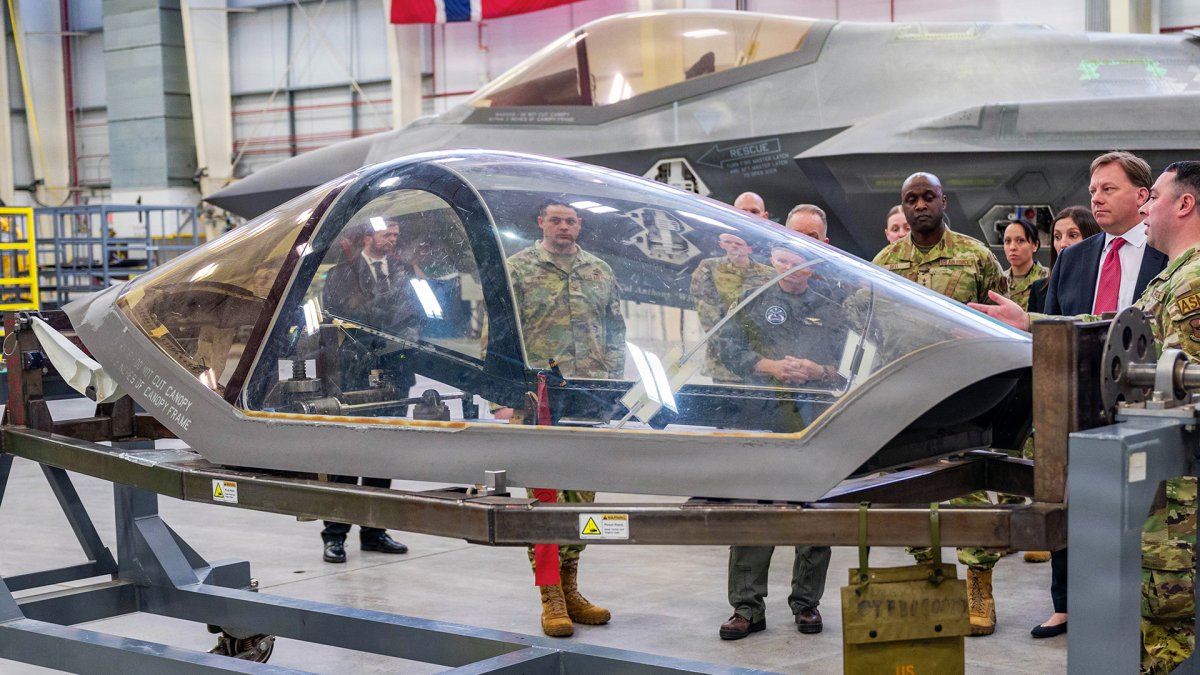
U.S. Air Force photo by Airman 1st Class Tekorey Watkins
Chinese authorities have reportedly taken possession of an F-35 cockpit canopy and weapons-bay door that were inexplicably diverted to Hong Kong while being shipped from Australia to the United States. The incident appears to have left physical components incorporating aspects of the fighter’s low-observable design in the hands of a country that has spent years doing whatever it could to gain information on the aircraft and America’s stealth technology secrets in general.
So, what does all this mean? Let’s put it in perspective.
The parts in question were being shipped by UPS from Australia to the United States in late May, according to people familiar with the matter cited by Bloomberg . The components from a Royal Australian Air Force F-35A were being sent to the United States for inspection and possible repair or disposal.
A Royal Australian Air Force F-35A from 75 Squadron taxiing at RAAF Base Tindal, Northern Territory. Australian Defense Force
F-35 sustainment procedures explicitly cover the movement of F-35 parts, including unserviceable components, through the program’s logistics network. The U.S. Air Force’s transportation guidance directs F-35 shipments outside the Defense Transportation System to follow approved Joint Program Office procedures. In other words, moving an unserviceable Australian F-35 component to the United States for inspection, repair, or disposition is consistent with the normal sustainment process.
What is highly unusual is where this particular shipment ended up. F-35 components moving through an established international logistics system apparently stopped in South Korea, were then routed to Hong Kong. Chinese authorities subsequently took possession of the parts and have not returned them, according to the sources cited by Bloomberg .
F-35 canopy component replacement at Luke Air Force Base, Arizona. U.S. Air Force photo by Senior Airman Ridge Shan
Secretary of War Pete Hegseth autographs the weapons bay door of an F-35 at Lockheed Martin Air Force Plant 4, in Fort Worth, Texas. DoW photo by U.S. Navy Petty Officer 1st Class Alexander Kubitza
“For security reasons, we can’t discuss the status of specific shipments or our shipping procedures,” Lockheed Martin told us in response to a request for clarification about the incident. The company added that it “follows all U.S. regulations established by the Department of War and regulated by the Defense Logistics Agency (DLA) regarding the shipment of aircraft components. Our teams handle every shipment with the utmost diligence and safeguards to ensure the integrity of the F-35 program and the security of our allied partners.”
The Pentagon’s F-35 Joint Program Office has acknowledged a “shipment issue” involving F-35 components and said U.S. authorities and industry partners are working to recover them and investigate what happened.
Lockheed Martin, UPS, and the Pentagon have not publicly provided a detailed account of how the shipment was diverted or what happened to the parts after they reached Hong Kong.
Australian Defense Minister Richard Marles also confirmed that Canberra was aware of the incident and was working with the United States and Lockheed Martin.
Acting Prime Minister and Minister for Defense, Richard Marles, accompanied by Chief of Air Force Air Marshal Stephen Chappell at RAAF Base Edinburgh, South Australia. Australian Defense Force
Marles has sought to play down the potential security implications of the components, saying his understanding was that the shipment did not contain sensitive equipment or sensitive parts. That does not by itself answer the more specific question of what could potentially be learned from these particular pieces of an F-35. After all, not every physical component of an F-35 is necessarily highly classified or capable of revealing meaningful information about the aircraft’s design. At the same time, a cockpit canopy and weapons-bay door involve structures, materials, interfaces, tolerances, and treatments that all have to work within the aircraft’s low-observable design. If radar-absorbing material or other specialized treatments remain on the components, that could potentially make them far more sensitive from a technological exploitation standpoint.
The condition of the parts is also unknown. We do not know how much of their coatings or other treatments remain intact, whether Chinese authorities have examined them, or what information could actually be extracted from them in their current state.
Above all else, there is little specific information in the public domain about what F-35-related technical information Chinese intelligence already has acquired over the years, what physical components or materials it may already possess, or what additional information could be gained through espionage, cyber operations, industrial access, observation of deployed aircraft, or other means.
Without these facts, it is impossible to gauge what damage could have been done by this loss. Still, viewed in a vacuum of those unknowns, simply having an F-35 canopy and weapons-bay door in Chinese possession represents a significant loss of control over sensitive physical hardware — there is no way around that reality — and the severity of that loss could be substantial depending on the physical state of the parts.
The circumstances are particularly sensitive because, as we mentioned in the opening of this article, China has pursued multiple avenues for acquiring information on the F-35 for many years , with publicly documented cases involving cyber operations, technical information, supply chains, and human expertise. Some aspects of China’s subsequent stealth aircraft designs have also prompted comparisons with U.S. aircraft, although claims that China simply ‘cloned’ entire aircraft are not supported by the available evidence.
China And The F- 35 : A History Of Espionage
In 2014, U.S. authorities charged Chinese businessman Su Bin with conspiring with two other Chinese hackers to break into the computer systems of U.S. defense contractors. Prosecutors alleged that the group targeted information on aircraft including the F-35 and F-22 . The alleged hacking campaign ran from 2009 to 2013.
Su Bin later pleaded guilty and was sentenced to nearly four years in prison. The Justice Department’s 2026 case against former Air Force fighter pilot Gerald “Runner” Brown connects the two cases . Prosecutors allege that Brown used a co-conspirator to negotiate his work training Chinese military pilots with Su Bin.
Brown, a retired U.S. Air Force major who spent more than 24 years in the service, subsequently worked as a contract simulator instructor training U.S. military pilots on the A-10 and F-35. In February 2026, the Justice Department charged him with providing and conspiring to provide unauthorized defense services to Chinese military pilots.
CASE UPDATE from @NewYorkFBI : Former U.S. Air Force Pilot Arrested for Providing Defense Services to the Chinese Military https://t.co/JhwhJHS83v @FBILouisville @FBIIndianapolis and @FBILosAngeles provided assistance in this case. pic.twitter.com/3KElqci05y — FBI (@FBI) February 25, 2026
CASE UPDATE from @NewYorkFBI : Former U.S. Air Force Pilot Arrested for Providing Defense Services to the Chinese Military https://t.co/JhwhJHS83v @FBILouisville @FBIIndianapolis and @FBILosAngeles provided assistance in this case. pic.twitter.com/3KElqci05y
According to the criminal complaint, Brown traveled to China in December 2023, where he allegedly began training People’s Liberation Army Air Force (PLAAF) personnel. Prosecutors say he also answered questions about the U.S. Air Force for three hours on his first day in China. Brown has been charged, and the allegations have not been adjudicated. He is one of multiple former Western aviators alleged to have provided training services and/or intelligence to Beijing .
The Honeywell case provides yet another example, this time involving the defense industry’s supply of technical information.
In 2021, the State Department reached a $13-million administrative settlement with Honeywell over alleged violations of the Arms Export Control Act and International Traffic in Arms Regulations (ITAR). Honeywell had voluntarily disclosed alleged unauthorized exports and retransfers of ITAR-controlled technical data.
The case involved 71 engineering drawings containing dimensions, geometries and layouts for manufacturing castings and finished parts used across multiple aircraft, engines and military systems. The State Department said the unauthorized exports and retransfers involved Canada, Ireland, Mexico, China, and Taiwan.
Among the systems covered by the drawings were components associated with the F-35 and F-22. The case did not allege that Honeywell deliberately sought to provide China with sensitive military technology; rather, it concerned alleged violations of export-control requirements.
A U.S. Air Force F-22 (nearest camera) flies alongside an F-35A. U.S. Air Force photo by Lt. Sam Eckholm
There has also been a physical supply-chain precedent.
In 2022, F-35 deliveries were temporarily halted after the Pentagon discovered that a magnet in the aircraft’s Honeywell-built turbomachine pumps —which provide critical power functions to the jet — contained a cobalt and samarium alloy produced in China. The material itself was not considered a security or flight-safety threat, but the discovery demonstrated how difficult it can be to maintain complete visibility over a global supply chain involving thousands of companies and multiple tiers of subcontractors.
Taken together, these cases demonstrate several different pathways through which China has appeared in the F-35 security story: cyber theft, unauthorized technical-data transfers, supply-chain exposure, and alleged exploitation of former Western military expertise.
The Hong Kong incident would add another major category: physical access to actual F-35 components.
These are only some of the publicly documented examples. There is no public way to know the full extent of information or physical material Chinese intelligence may have acquired over the years, but is very likely far larger in scope than what is available in the open source.
Chinese Access Concerns Have Shaped F-35 Export Policy
The security issues surrounding the F-35 are significant enough that concerns about China have affected not only how the United States protects F-35 technology, but where Washington is willing to export the aircraft in the first place .
The proposed sale of F-35s to the United Arab Emirates became deeply entangled in U.S. concerns about Abu Dhabi’s growing military and technology relationship with China.
A 34th Expeditionary Fighter Squadron F-35A conducts inflight refueling above the United Arab Emirates. U.S. Air Force photo by Tech. Sgt. Kat Justen
Washington had approved a potential package involving 50 F-35As, but U.S. officials and lawmakers expressed concerns about Chinese intelligence activity and technology in the UAE. Among the broader concerns were Chinese telecommunications infrastructure and the possibility of Chinese military or intelligence access to facilities associated with advanced U.S. weapons. A Congressional U.S.-China Economic and Security Review Commission report later cited the potential presence of Chinese intelligence collection capabilities and military facilities in the UAE as risks to the proposed F-35 sale.
The issue has now resurfaced with Saudi Arabia .
The State Department recently approved a potential $24.3-billion sale to the Kingdom involving 48 F-35s and associated equipment. But U.S. intelligence agencies have reportedly warned that China’s military and technology relationship with Saudi Arabia could create opportunities for Beijing to obtain sensitive F-35 information.
According to reporting based on U.S. officials familiar with intelligence assessments, a Defense Intelligence Agency report raised concerns about Chinese military access to Saudi bases, Chinese technology in Saudi telecommunications infrastructure, and whether secure facilities could be maintained for F-35 operations. The assessments also questioned whether Saudi Arabia would limit contact between Chinese military and intelligence personnel and F-35-related sites.
What Could The Components Reveal?
As we noted earlier, there is no way to gauge the intelligence impact of the loss at this stage. The central unknown of what China already knows about the F-35, and what it may already have in its possession — especially related to these components — is the key variable here.
Regardless, an F-35 canopy and weapons-bay door can provide information that cannot otherwise be easily obtained and gives a different level of fidelity in terms of material exploitation than what construction data and blueprints alone could.
The F-35’s low observability is the product of an extremely complex combination of airframe shaping, construction materials, external coatings, manufacturing tolerances, speciality apertures, and more.
U.S. Air Force 325th Maintenance Squadron low-observable maintainers work on an F-35A at Tyndall Air Force Base, Florida, in August 2024. U.S. Air Force photo by Airman 1st Class Victoria Moehlman
A canopy is a particularly demanding part of any stealth aircraft. It has to satisfy optical and structural requirements while also controlling radar reflections. The cockpit is historically a major source of radar reflectivity, including the pilot’s helmet. Therefore the canopy’s materials, construction, interfaces, and specialized treatments can be critical to the aircraft’s overall low-observable performance, and especially from the critical frontal aspect.
The F-35’s canopy has been an ongoing work in progress for many years. It has had chronic material issues , especially when it comes to delamination . Multiple iterations spread over two decades have recently resulted in a major improvement of the issue. The tight balancing act of keeping the canopy transparent enough, while controlling the F-35’s stealthy signature and having that mix of materials be robust enough to last for a reasonable amount of time has been a major investment for the program. If the canopy is of a later variation, that loss alone could be substantial and could help China with their own low-observable canopy development programs even if they already had original information on the F-35’s canopy original design dating back years.
Evidence of the F-35’s canopy delamination issue on an early example of the F-35B. Crown Copyright
The F-35’s canopy has been a notorious work in progress, specifically the low observable coating/delamination issue which has improved a lot in recent years with new materials and processes. So no, you do NOT want to lose that in to China! https://t.co/9V0jdRAiwA — Tyler Rogoway (@Aviation_Intel) September 19, 2026
The F-35’s canopy has been a notorious work in progress, specifically the low observable coating/delamination issue which has improved a lot in recent years with new materials and processes. So no, you do NOT want to lose that in to China! https://t.co/9V0jdRAiwA
The F-35’s weapons-bay door has its of sensitivity issues. It is effectively a major section of the aircraft’s outer shell, with its structure, edges, interfaces, tolerances and treatments all having to function without creating unacceptable radar signatures. Its construction and material attributes can be reasonably extrapolated for the rest of much of the F-35’s outer mold-line. Above all else, if the radar absorbent material remained intact on the door, that would signify a major loss when viewed without any understanding of what China already knows about the F-35’s radar absorbing surface treatments. Historically speaking, RAM technology is among America’s closest guarded material sciences secrets.
A Belgian Air Force service member inspects the open weapons bay of an F-35A at Luke AFB, Arizona. U.S. Air Force photo by Airman 1st Class Tekorey Watkins
For the time being, Australian officials have said they do not understand the parts to be sensitive. The investigation will ultimately have to establish what the components actually contain and what could be learned from them.
The incident comes at a moment when China’s own stealth fighter efforts are undergoing an extraordinary expansion.
The PLAAF is now operating the J-20 , China’s first operational fifth-generation stealth fighter, in increasingly large numbers . The smaller J-35 is also moving toward broader service, including a carrier role for the People’s Liberation Army Navy.
Aircraft maintainers clean the fuselage of a J-20 fighter during the Changchun Air Show in the Jilin Province of China, in September 2025. Photo by Zhang Xiangyi/China News Service/VCG via Getty Images
China has also moved into what Western observers generally describe as sixth-generation fighter development.
Two new tailless combat-aircraft designs emerged publicly in December 2024. One is the large Chengdu aircraft commonly referred to as the J-36 , while the other is associated with Shenyang and is variously called the J-XDS or J-50 . Both have continued flight testing and yielded several prototypes with individual refinements .
The exact capabilities and eventual operational roles of these aircraft remain uncertain. They are developmental designs, not established operational equivalents of the F-35 or other sixth-generation systems. However, China is clearly building an increasingly broad ecosystem of fifth- and next-generation low-observable combat aircraft, both crewed and uncrewed . In the latter category is a growing number of stealthy drones, including long-endurance types.
A satellite image taken last month shows the WZ-X very large, low-observable, flying-wing drone undergoing testing. PHOTO © 2026 PLANET LABS INC. ALL RIGHTS RESERVED. REPRINTED BY PERMISSION
China didn’t likely need physical access to an F-35 canopy or weapons-bay door to develop the J-20, J-35, or its next-generation aircraft. But additional information about how a mature Western stealth aircraft handles materials, coatings, interfaces, manufacturing, and the integration of those elements can still have great potential value to an industry developing its own systems. This includes technologies intended to counter the U.S. combat aircraft and their low-observable characteristics.
The F-35 has been produced in large numbers, is operated by a growing coalition of countries, and has been subjected to years of testing and operational experience. Its low-observable design represents decades of accumulated U.S. research and industrial know-how. At the same time, the global scale of the program inevitably makes control over sensitive information more complicated. More aircraft, more maintainers, more industrial partners, and more international logistics mean more points at which information and physical hardware have to be controlled. Over time, a program of this size will see an erosion in its secrets, but a major loss can drastically accelerate what should be a more gradual and control decline in security.
The Lockheed Martin F-35 production line at Fort Worth, Texas. Lockheed Martin photo by Alexander H Groves
The potential intelligence value of the components also has to be considered in the context of foreign material exploitation , or FME. Major military powers maintain dedicated capabilities to recover, examine and characterize foreign weapons, aircraft, sensors, materials and other equipment. The objective is not necessarily to reproduce an entire system . More important is determining how something is built, what materials and manufacturing techniques are used, how individual components perform, and where industrial strengths or limitations may lie.
That is why countries have historically gone to extraordinary lengths to recover even crashed or damaged pieces of sensitive military hardware. The bigger the prize, the more risk an intelligence service would be willing to take in order to realize a recovery.
The sensitivity surrounding the physical remnants of an F-35 is not new. When a Japan Air Self-Defense Force F-35A disappeared over the Pacific in 2019, the search quickly became more than a rescue operation. U.S. and Japanese forces mounted an extensive effort to locate the wreckage, with U.S. Navy P-8A aircraft and a destroyer joining the search. TWZ noted at the time that even scattered F-35 wreckage could expose valuable technological secrets, while the aircraft’s location on the seabed raised the prospect of an underwater espionage and recovery operation.
USFJ is supporting @MoDJapan_en search & rescue efforts for missing F-35A w/ @US7thFleet P-8A aircraft & @air_fifth coord. @USForcesJapan continues to hope for the safe recovery of the pilot @JASDF_PAO pic.twitter.com/9E7x6QZxpY — U.S. Forces Japan (@USForcesJapan) April 10, 2019
USFJ is supporting @MoDJapan_en search & rescue efforts for missing F-35A w/ @US7thFleet P-8A aircraft & @air_fifth coord. @USForcesJapan continues to hope for the safe recovery of the pilot @JASDF_PAO pic.twitter.com/9E7x6QZxpY
That concern has also been evident in subsequent F-35 recovery operations. That concern has been reflected in subsequent F-35 recoveries. In 2022, the U.S. Navy recovered an F-35C from roughly 12,400 feet in the South China Sea after a carrier landing accident, removing the possibility that the aircraft could be accessed by another country.
pic.twitter.com/JvQZErAAK0 — OedoSoldier (@OedoSoldier) January 27, 2022
pic.twitter.com/JvQZErAAK0
Unanswered Security Questions
At this point, there is no public evidence that the Hong Kong diversion was a deliberate Chinese intelligence operation, although it is certainly possible. It is also unclear whether Chinese authorities have examined the F-35 parts or what level of new and useful information has been recovered from them.
If, as reported, Chinese authorities have taken possession of the parts and have not returned them, that would be an extraordinary development. If the diversion was genuinely the result of a shipping or logistics error, the outcome would itself be extraordinary. It would raise serious questions about the security controls surrounding the movement of F-35 hardware even without evidence of deliberate interference.
The timing is also notable. Chinese President Xi Jinping arrived in Washington this week for a state visit with President Donald Trump, with the two leaders meeting amid broader disputes involving technology, security, and the future of U.S.-China relations. Whether the F-35 shipment comes up directly in those discussions is not known, but it would be an obvious subject for U.S. and Chinese officials to address through diplomatic channels.
"Ladies and gentlemen, the President of the United States Donald J. Trump and First Lady Melania Trump, accompanied by the President of the People's Republic of China Xi Jinping and Madame Peng Liyuan." pic.twitter.com/hyPHOBC99Q — Rapid Response 47 (@RapidResponse47) September 24, 2026
"Ladies and gentlemen, the President of the United States Donald J. Trump and First Lady Melania Trump, accompanied by the President of the People's Republic of China Xi Jinping and Madame Peng Liyuan." pic.twitter.com/hyPHOBC99Q
For now, however, the central question remains how the parts got there. Until that is answered, we won’t know if this was a simple logistics failure or a deliberate intelligence operation. And beyond that, what China already knew about the components it now may have in its possession — a question we may never truly get an answer to.
Contact the author: thomas@thewarzone.com
Comments couldn’t be loaded. Please refresh the page.
作者:托马斯·纽迪克、泰勒·罗戈威
发布于美国东部时间2026年9月24日下午3:39
美国空军一等兵特科里·沃特金斯拍摄的照片
据报道,中国当局已查获一架F-35战斗机的座舱盖和武器舱门,这些部件在从澳大利亚运往美国的途中莫名其妙地被转运至香港。这一事件似乎使得包含该战斗机低可探测性设计要素的实体部件落入了中国手中,而中国多年来一直不遗余力地试图获取有关该型战机以及美国隐形技术机密的信息。
那么,这一切意味着什么呢?让我们来分析一下。
据彭博社援引知情人士消息称,涉事零部件于5月下旬由UPS从澳大利亚运往美国。这些零部件来自澳大利亚皇家空军的一架F-35A战斗机,被送往美国进行检查,并可能进行维修或报废处理。
一架隶属于澳大利亚皇家空军第75中队的F-35A战斗机正在北领地廷德尔皇家空军基地滑行。澳大利亚国防军
F-35的保障程序明确涵盖了F-35零部件(包括失效部件)在项目后勤网络中的运输。美国空军的运输指南指示,在国防运输系统之外进行的F-35运输应遵循联合项目办公室批准的程序。换言之,将澳大利亚失效的F-35部件运往美国进行检查、维修或处置,符合正常的保障流程。
这批F-35零部件的最终去向非常不寻常。据彭博社援引消息人士报道,这批原本通过国际物流系统运输的F-35零部件,显然在韩国中止,随后被转运至香港。中国当局随后扣押了这些零部件,并且至今仍未归还。
在亚利桑那州卢克空军基地,F-35战机正在进行座舱盖部件更换。美国空军高级飞行员里奇·山拍摄。
美国陆军部长皮特·赫格塞斯在位于德克萨斯州沃斯堡的洛克希德·马丁空军4号工厂,在一架F-35战斗机的武器舱门上签名。照片由美国海军一级士官亚历山大·库比扎拍摄,归美国陆军部所有。
洛克希德·马丁公司在回应我们关于此次事件的澄清请求时表示:“出于安全考虑,我们无法讨论具体货物的运输状态或我们的运输流程。”该公司补充道:“我们严格遵守美国战争部制定的所有法规,以及国防后勤局(DLA)对飞机部件运输的监管规定。我们的团队以极其谨慎的态度和周密的保障措施处理每一批货物,以确保F-35项目的完整性以及我们盟国伙伴的安全。”
五角大楼的 F-35 联合项目办公室承认 F-35 部件的“运输问题”,并表示美国当局和行业合作伙伴正在努力追回这些部件,并调查发生了什么。
洛克希德·马丁公司、UPS公司和五角大楼尚未公开详细说明这批货物是如何被改道的,以及这些零件到达香港后发生了什么。
澳大利亚国防部长理查德·马尔斯也证实,堪培拉方面已经知晓此事,并正在与美国和洛克希德·马丁公司合作。
代理总理兼国防部长理查德·马尔斯在空军司令斯蒂芬·查佩尔空军上将的陪同下,访问了位于南澳大利亚州爱丁堡的澳大利亚皇家空军基地。澳大利亚国防军
马勒斯试图淡化这些部件可能带来的安全隐患,称据他了解,这批货物不包含敏感设备或敏感部件。但这本身并不能回答一个更具体的问题:从这些F-35的特定部件中究竟能获取哪些信息?毕竟,并非F-35的每个物理部件都属于高度机密,或者能够泄露有关飞机设计的重要信息。同时,座舱盖和武器舱门涉及的结构、材料、接口、公差和处理工艺,所有这些都必须符合飞机的低可探测性设计。如果这些部件上残留有雷达吸波材料或其他特殊处理工艺,那么从技术利用的角度来看,它们可能会变得更加敏感。
这些部件的状况也不得而知。我们不知道它们的涂层或其他处理层还剩下多少,也不知道中国有关部门是否检查过它们,或者在它们目前的状态下究竟能从中提取出哪些信息。
最重要的是,公开领域几乎没有关于中国情报部门多年来已经掌握了哪些与 F-35 相关的技术信息、可能已经拥有哪些物理组件或材料,或者可以通过间谍活动、网络行动、工业渠道获取信息、观察部署的飞机或其他手段获得哪些额外信息的具体信息。
如果没有这些事实,就无法评估此次损失可能造成的损害。然而,即使抛开这些未知因素,仅仅是F-35的座舱盖和武器舱门落入中国手中,就意味着对敏感硬件的控制权严重丧失——这是无法回避的事实——而损失的严重程度可能取决于这些部件的物理状态。
由于正如我们在本文开头所述,多年来中国一直通过多种途径获取F-35的信息,包括网络行动、技术信息、供应链和人员专业知识等,这些都已公开记录在案,因此情况尤为敏感。中国后续隐形战机设计的某些方面也引发了与美国战机的比较,尽管现有证据并不支持中国直接“克隆”整架战机的说法。
中国与F-35:间谍史
2014年,美国当局指控中国商人苏斌与另外两名中国黑客合谋入侵美国国防承包商的计算机系统。检方称,该团伙的目标是包括F-35和F-22在内的飞机信息。据称,此次黑客攻击活动从2009年持续到2013年。
苏斌后来认罪,被判处近四年监禁。司法部2026年对前空军战斗机飞行员杰拉尔德·“跑者”·布朗提起的诉讼将这两起案件联系起来。检方指控布朗利用同谋与苏斌谈判,安排他为中国军方飞行员提供培训。
布朗是一名退役的美国空军少校,服役超过24年,之后担任合同模拟器教官,为美国军方飞行员提供A-10和F-35的训练。2026年2月,美国司法部指控他向中国军方飞行员提供和串谋提供未经授权的国防服务。
来自@NewYorkFBI 的案件最新进展:一名美国空军前飞行员因向中国军方提供国防服务而被捕。https://t.co/JhwhJHS83v @FBILouisville、@FBIIndianapolis 和 @FBILosAngeles 为本案提供了协助。pic.twitter.com/3KElqci05y — FBI (@FBI) February 25, 2026
来自@NewYorkFBI 的案件最新进展:一名美国空军前飞行员因向中国军方提供国防服务而被捕。https://t.co/JhwhJHS83v @FBILouisville、@FBIIndianapolis 和 @FBILosAngeles 为本案提供了协助。pic.twitter.com/3KElqci05y
根据刑事诉状,布朗于2023年12月前往中国,据称他在那里开始训练中国人民解放军空军人员。检方称,在他抵达中国的第一天,他还花了三个小时回答有关美国空军的问题。布朗已被起诉,但这些指控尚未得到裁决。他是多名被指控向北京提供训练服务和/或情报的西方前飞行员之一。
霍尼韦尔的案例提供了另一个例子,这次涉及国防工业的技术信息供应。
2021年,美国国务院与霍尼韦尔公司达成一项1300万美元的行政和解协议,原因是该公司涉嫌违反《武器出口管制法》和《国际武器贸易条例》(ITAR)。霍尼韦尔公司主动披露了其涉嫌未经授权出口和再转让受ITAR管制的技术数据的行为。
此案涉及71份工程图纸,其中包含用于多种飞机、发动机和军事系统的铸件和成品零件的尺寸、几何形状和布局。美国国务院表示,未经授权的出口和再转让涉及加拿大、爱尔兰、墨西哥、中国和台湾。
图纸所涵盖的系统包括与F-35和F-22相关的部件。该案件并未指控霍尼韦尔蓄意向中国提供敏感军事技术;而是涉及涉嫌违反出口管制规定。
一架美国空军F-22战斗机(距离最近的镜头)与一架F-35A战斗机并排飞行。美国空军中尉萨姆·埃克霍尔姆摄
实体供应链方面也有先例。
2022年,五角大楼发现F-35战机霍尼韦尔公司制造的涡轮机械泵(为战机提供关键动力)中的一块磁铁含有产自中国的钴钐合金,之后F-35的交付工作一度暂停。虽然这种材料本身并不构成安全或飞行安全威胁,但这一发现表明,要全面掌控涉及数千家公司和多层分包商的全球供应链是多么困难。
综合来看,这些案例表明中国在 F-35 安全问题上出现了几种不同的途径:网络窃取、未经授权的技术数据传输、供应链暴露以及涉嫌利用西方前军事技术。
香港事件将增加另一个主要类别:实际接触 F-35 部件。
以上仅列举了部分已公开记录的例子。我们无法通过公开途径得知中国情报部门多年来可能获取的全部信息或实物资料,但其规模很可能远超公开渠道所能获取的范围。
中国对F-35出口政策的担忧影响了其出口政策。
围绕 F-35 的安全问题非常重大,以至于对中国的担忧不仅影响了美国如何保护 F-35 技术,还影响了华盛顿最初愿意向哪些国家出口这种飞机。
美国向阿联酋出售F-35战斗机的提议,与美国对阿布扎比与中国日益密切的军事和技术关系的担忧紧密交织在一起。
美国空军第34远征战斗机中队的一架F-35A战斗机在阿拉伯联合酋长国上空进行空中加油。美国空军技术军士卡特·贾斯汀摄
华盛顿方面曾批准一项涉及50架F-35A战斗机的潜在军售方案,但美国官员和议员对中国在阿联酋的情报活动和技术表示担忧。其中更广泛的担忧包括中国的电信基础设施,以及中国军方或情报部门可能接触到与美国先进武器相关的设施。美国国会美中经济与安全审查委员会的一份报告随后指出,中国在阿联酋可能拥有情报收集能力和军事设施,这对拟议的F-35军售构成风险。
现在,沙特阿拉伯方面再次提出了这个问题。
美国国务院近期批准了一项价值243亿美元的军售计划,拟向沙特阿拉伯出售48架F-35战斗机及相关设备。但据报道,美国情报机构警告称,中国与沙特阿拉伯的军事和技术关系可能为北京获取F-35敏感信息创造机会。
据熟悉情报评估的美国官员透露,一份国防情报局的报告对中国军方进入沙特军事基地、沙特电信基础设施中存在的中国技术,以及能否为F-35战机的作战行动维持安全设施等问题表示担忧。该评估还质疑沙特阿拉伯是否会限制中国军方和情报人员与F-35相关设施的接触。
这些组成部分能揭示什么?
正如我们之前提到的,现阶段无法评估此次损失对情报方面的影响。关键在于,中国究竟掌握了多少关于F-35的信息,以及它可能已经拥有哪些相关装备——尤其是与这些部件相关的装备——这才是问题的关键所在。
无论如何,F-35 的座舱盖和武器舱门可以提供一些不易获取的信息,并且在材料利用方面提供了比仅凭施工数据和蓝图所能达到的不同程度的保真度。
F-35 的低可观测性是机身形状、结构材料、外部涂层、制造公差、特殊孔径等诸多因素极其复杂组合的结果。
2024年8月,美国空军第325维护中队的低可探测性维护人员在佛罗里达州廷德尔空军基地对一架F-35A战斗机进行维护。美国空军一等兵维多利亚·莫尔曼摄
对于任何隐形飞机而言,座舱盖都是一个要求极高的部件。它必须满足光学和结构方面的要求,同时还要控制雷达反射。座舱历来都是雷达反射的主要来源,包括飞行员的头盔。因此,座舱盖的材料、结构、接口以及特殊处理对于飞机的整体低可探测性性能至关重要,尤其是在关键的正面方向上。
F-35战机的座舱盖多年来一直在不断改进。它一直存在材料方面的难题,尤其是在分层方面。经过二十多年的多次迭代,这个问题最近得到了显著改善。如何在保持座舱盖足够透明、控制F-35的隐身特征以及确保材料组合足够坚固耐用之间取得平衡,一直是该项目的一项重大投入。如果座舱盖是后期改进型,那么仅此一项损失就可能相当巨大,甚至可能对中国自身的低可探测性座舱盖研发项目有所帮助,即便中国早在多年前就掌握了F-35座舱盖的原始设计信息。
早期F-35B型战斗机座舱盖分层问题的证据。版权所有
F-35的座舱盖一直是一个备受争议的研发项目,尤其是低可观测性涂层/分层问题,近年来随着新材料和新工艺的出现,这个问题已经得到了极大的改善。所以,你绝对不想把这项技术拱手让给中国!https://t.co/9V0jdRAiwA — Tyler Rogoway (@Aviation_Intel) September 19, 2026
F-35的座舱盖一直以来都是个棘手的难题,尤其是低可观测性涂层/分层问题,不过近年来随着新材料和新工艺的出现,这个问题已经得到了极大的改善。所以,你绝对不想把这玩意儿拱手让给中国!https://t.co/9V0jdRAiwA
F-35的武器舱门存在着敏感问题。它实际上是飞机外壳的重要组成部分,其结构、边缘、接口、公差和处理工艺都必须在不产生不可接受的雷达反射特征的前提下发挥作用。其结构和材料特性可以合理地推断到F-35其他大部分外壳的相应特性。最重要的是,如果舱门上的雷达吸波材料完好无损,那么在不了解中国对F-35雷达吸波表面处理技术的掌握的情况下,这将意味着重大损失。从历史上看,雷达吸波材料(RAM)技术是美国严守的材料科学机密之一。
一名比利时空军士兵在亚利桑那州卢克空军基地检查一架F-35A战斗机的敞开式武器舱。美国空军一等兵特科里·沃特金斯摄
目前,澳大利亚官员表示,他们认为这些部件并不敏感。最终,调查必须确定这些部件的实际成分以及可以从中获取哪些信息。
此次事件发生之际,正值中国隐形战斗机项目经历非同寻常的扩张时期。
中国空军目前正在大量装备歼-20——中国首款投入使用的第五代隐形战斗机。尺寸较小的歼-35也在逐步扩大服役范围,包括在解放军海军中担任舰载机角色。
2025年9月,在中国吉林省长春举行的航展上,飞机维护人员正在清洁一架歼-20战斗机的机身。图片来源:张祥义/中国新闻社/VCG via Getty Images
中国也已进入西方观察家普遍所说的第六代战斗机发展阶段。
2024年12月,两款新型无尾战斗机设计方案公开亮相。一款是成都飞机制造厂的大型战机,通常被称为歼-36;另一款则与沈阳飞机制造厂有关,名称有多种,包括歼-XDS和歼-50。两款战机均已完成飞行测试,并制造了多架经过改进的原型机。
这些飞机的具体性能和最终作战角色仍不确定。它们是研发设计阶段的产品,并非F-35或其他第六代战机的成熟作战机型。然而,中国显然正在构建一个日益庞大的第五代和下一代低可探测性作战飞机生态系统,涵盖有人驾驶和无人驾驶飞机。在后者中,隐形无人机的数量正在不断增长,其中包括长航时无人机。
上个月拍摄的一张卫星图像显示,WZ-X 是一款体型巨大、难以探测的飞翼无人机正在进行测试。图片版权所有 © 2026 PLANET LABS INC. 保留所有权利。经许可转载。
中国或许并不需要实际接触F-35的座舱盖或武器舱门来研发歼-20、歼-35或其下一代战机。但是,了解成熟的西方隐形战机在材料、涂层、接口、制造工艺以及这些要素的集成方面的经验,对于正在研发自身系统的企业而言,仍然具有巨大的潜在价值。这其中也包括旨在对抗美国作战飞机及其低可探测性特性的技术。
F-35战斗机产量巨大,由越来越多的国家组成的联盟运营,并经历了多年的测试和作战经验。其低可探测性设计凝聚了美国数十年的研究成果和工业技术。与此同时,该项目的全球规模不可避免地使敏感信息的管控变得更加复杂。更多的飞机、更多的维护人员、更多的工业合作伙伴以及更广泛的国际后勤保障意味着需要管控的信息和硬件环节也更多。随着时间的推移,如此庞大的项目必然会面临信息泄露的风险,但一次重大损失可能会极大地加速原本应该更为缓慢和可控的安全漏洞泄露过程。
位于德克萨斯州沃斯堡的洛克希德·马丁公司F-35战斗机生产线。照片由亚历山大·H·格罗夫斯拍摄,洛克希德·马丁公司提供。
在外国材料利用(FME)的背景下,还必须考虑这些部件的潜在情报价值。主要军事强国都拥有专门的能力来回收、检验和鉴定外国的武器、飞机、传感器、材料和其他装备。其目标未必是复制整个系统,更重要的是确定其构造方式、使用的材料和制造技术、各个部件的性能,以及工业优势或局限性所在。
正因如此,各国历来不遗余力地回收哪怕是坠毁或损坏的敏感军事装备。目标越大,情报机构为了实现回收目标就愿意承担的风险就越大。
围绕F-35残骸的敏感性由来已久。2019年,一架日本航空自卫队的F-35A在太平洋上空失踪,搜寻行动很快超越了单纯的救援行动。美日两国军队展开了大规模的搜寻行动,美国海军的P-8A反潜巡逻机和一艘驱逐舰也加入了搜寻。TWZ当时指出,即使是零散的F-35残骸也可能泄露重要的技术机密,而飞机位于海底的位置则引发了水下间谍活动和打捞行动的可能性。
驻日美军正与美国第七舰队的P-8A反潜巡逻机和第五航空队协调,支持日本防卫省对失踪F-35A战斗机的搜救行动。驻日美军继续祈祷飞行员平安归来。(@JASDF_PAO pic.twitter.com/9E7x6QZxpY — US Forces Japan (@USForcesJapan) April 10, 2019)
驻日美军正与美国第七舰队的P-8A反潜巡逻机和第五航空队协调,支持日本防卫省对失踪F-35A战斗机的搜救行动。驻日美军仍希望飞行员能够平安获救。(@JASDF_PAO pic.twitter.com/9E7x6QZxpY)
这种担忧在随后的F-35回收行动中也显而易见。2022年,美国海军在南海约12400英尺(约3800米)深处回收了一架F-35C战斗机,该机此前因航母着舰事故坠毁,从而杜绝了其他国家获取该飞机的可能性。
pic.twitter.com/JvQZErAAK0 — OedoSoldier (@OedoSoldier) 2022年1月27日
pic.twitter.com/JvQZErAAK0
未回答的安全问题
目前尚无公开证据表明香港劫持事件是中国蓄意策划的情报行动,尽管这种可能性确实存在。此外,也不清楚中国当局是否已对F-35战机部件进行过检查,以及从中获取了多少新的有用信息。
如果报道属实,中国当局已扣押这些零部件且未归还,那将是一件非同寻常的事。即便这起转移确实是运输或物流失误造成的,其结果本身也非同寻常。即使没有证据表明存在蓄意干预,此事也会引发人们对F-35装备运输安全管控的严重质疑。
时机也颇为耐人寻味。中国国家主席习近平本周抵达华盛顿,对美国总统唐纳德·特朗普进行国事访问。两位领导人会晤之际,正值双方在技术、安全以及美中关系未来等诸多领域存在分歧。目前尚不清楚F-35战机交付问题是否会在会谈中直接提及,但这显然是美中官员通过外交渠道需要解决的问题。
女士们、先生们,美国总统唐纳德·J·特朗普和第一夫人梅拉尼娅·特朗普,以及中华人民共和国主席习近平和彭丽媛女士。 pic.twitter.com/hyPHOBC99Q — Rapid Response 47 (@RapidResponse47) September 24, 2026
女士们、先生们,美国总统唐纳德·J·特朗普和第一夫人梅拉尼娅·特朗普,以及中华人民共和国主席习近平和彭丽媛女士。 pic.twitter.com/hyPHOBC99Q
然而,目前最核心的问题仍然是这些零部件是如何到达那里的。在这个问题得到解答之前,我们无法判断这究竟是一起简单的物流事故,还是一次蓄意的情报行动。此外,中国此前对这些零部件的了解程度如何——这个问题我们或许永远无法得到真正的答案。
联系作者:thomas@thewarzone.com
评论加载失败,请刷新页面。