U.S. Warships Have This Seldom Discussed But Very Powerful Optical Targeting System美国军舰配备了这种鲜为人知但功能非常强大的光学瞄准系统。
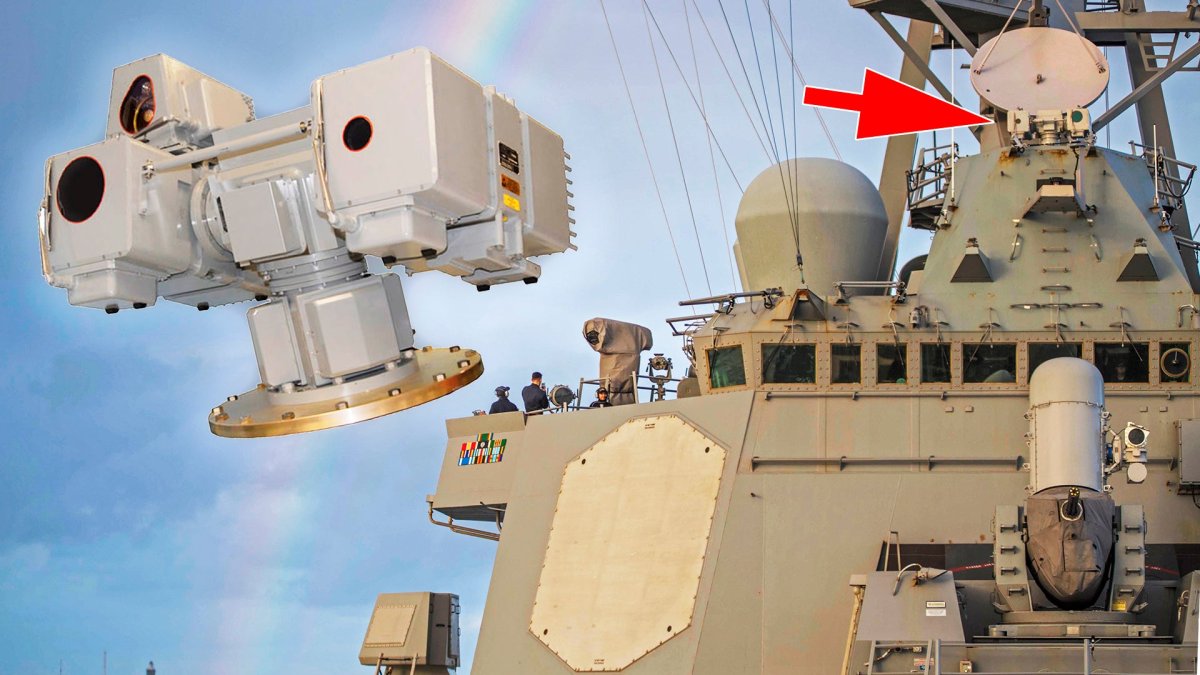
It's easy to overlook the WALL-E-looking turret atop these ships, but it provides key targeting and situational awareness information to the crew.
新闻视频
Updated Dec 1, 2019 6:02 AM EST
America’s most powerful surface combatants, the Arleigh Burke class destroyer and the Ticonderoga class cruiser , are widely understood to be highly advanced floating radar systems, with their powerful SPY-1 radars and Aegis Combat System taking center stage when it comes to providing targeting information and tactical situational awareness to the ship’s crew. The vessels’ AN/SLQ-32, and in some cases their AN/SLQ-59 electronic warfare suites also provide situational information and soft-kill defenses against marauding cruise missiles and more. Beyond that, the list of sensor systems on these ships is long and impressive, but one critical and highly flexible system remains widely unacknowledged even though it sits prominently above the bridges of these ships and those of the Coast Guard’s National Security Cutters—the Mark 20 Electro-Optical Sensor System (EOSS).
The Mark 20, and its similar-looking Mark 46 progenitor—which was introduced to the fleet in 1993—have a very science-fiction-like appearance. Movies like Short Circuit or Wall-E may come to mind when looking at the turreted sensor system, with its rectangular appendages and big apertures. But beyond its intriguing looks, the system gives the ship it is attached to some very important capabilities. So much so that, frankly, it deserves more attention than it gets.
With this in mind, The War Zone reached out directly to the manufacturer of the system, L3Harris, to find out more about it and the exact role it plays on multi-billion dollar fighting ships.
Here is that exchange:
What components make up the Mk 20 EOSS?
The Mk20 Mod 1 and the Electro-Optic Sighting Systems that precede it (Mk20 Mod0 and Mk46) include an “above deck” unit with visual and thermal imaging sensors, a laser range finder, stabilization system and shock isolation unit, and a “below deck unit” that contains the control, tracking, power supplies and interface to display and control stations.
An info sheet on the legacy Mark 46 EOSS., Kollmorgen/public domain
What does it do primarily and what does it do in a secondary capacity?
The primary purpose of the system is to provide highly accurate targeting information to the ship’s gun weapon system. In many instances, the ship’s radar may make an initial detection of a potential threat, and the Mk20 is then cued to visually confirm the target, and provide precise range and position for gun engagement. The goal is first shot hit accuracy. Of course, sailors are quite creative and immediately recognize the Mk20’s excellent performance as a situational awareness and navigation aid. We have heard of crews using the Mk20 to visually investigate suspicious vessels, and help navigate through congested waters. The operators find the thermal imaging capability and resolution particularly useful in nighttime operations.
USCGC Hamilton with its EOSS atop its bridge. , USCG
How does it accomplish those functions? Can you provide some scenarios that showcase how it would be used?
We feel the Mk20 is an essential element of the ship’s weapon system and overall situation awareness capabilities. We can share three general scenarios that rely upon the excellent range, resolution, and accuracy of the Mk20: surface action – gun engagement: in a busy sea-lane, the ship’s radar detects a potential hostile craft approaching. The contact is passed to the Mk20. The Mk20 rapidly slews to the radar cue, detects and initiates track on the hostile craft. Thermal and visual images are used in combination to verify the hostile intent of the approaching craft and the laser range finder is used to provide a highly precise range for gunfire control calculations. Confirmed hostile and having passed precise track data to the weapon system, the main deck gun engages the target. The Mk20 is then used to verify target damage and assess the need for further engagement. The crew visually detects a potential threat using the Mk20 in as a situation awareness, long-range imaging system. The Mk20 passes the contact to the radar through the ship’s combat system to initiate a radar track for prioritization and potential future engagement (this occasionally happens in congested waters where the radar operator may have some difficulty distinguishing among multiple radar contacts) Ships transit at night and without use of radar. The Mk20 is used to detect surface traffic, allowing the crew to plot a course for safe passage. The laser range finder is used to verify ships positions by accurately ranging on known landmarks (lighthouses, etc.).
We feel the Mk20 is an essential element of the ship’s weapon system and overall situation awareness capabilities. We can share three general scenarios that rely upon the excellent range, resolution, and accuracy of the Mk20:
surface action – gun engagement: in a busy sea-lane, the ship’s radar detects a potential hostile craft approaching. The contact is passed to the Mk20. The Mk20 rapidly slews to the radar cue, detects and initiates track on the hostile craft. Thermal and visual images are used in combination to verify the hostile intent of the approaching craft and the laser range finder is used to provide a highly precise range for gunfire control calculations. Confirmed hostile and having passed precise track data to the weapon system, the main deck gun engages the target. The Mk20 is then used to verify target damage and assess the need for further engagement.
The crew visually detects a potential threat using the Mk20 in as a situation awareness, long-range imaging system. The Mk20 passes the contact to the radar through the ship’s combat system to initiate a radar track for prioritization and potential future engagement (this occasionally happens in congested waters where the radar operator may have some difficulty distinguishing among multiple radar contacts)
Ships transit at night and without use of radar. The Mk20 is used to detect surface traffic, allowing the crew to plot a course for safe passage. The laser range finder is used to verify ships positions by accurately ranging on known landmarks (lighthouses, etc.).
What can it see and how far away can it see and in what conditions?
We are excited to see the new Mk20 Mod1 go to sea this year. It will provide a new, wider field of view with better resolution than the legacy systems. This enables detection and tracking of small targets in even higher seas and at night. As you can imagine, we are not able to share specific range of performance figures. But we can say that the intent is to be able to detect and track small targets beyond the range of the deck gun in most conditions.
Author’s note: The Mark 45 five-inch gun system used on U.S. Navy cruisers and destroyers has a range of nearly 15 miles .
EOSS seen mounted on the port bridge wing of the Ticonderoga class cruiser USS Chancellorsville. , USN
Can you provide some sample videos of it in use?
I am sorry to say we do not have any interesting videos to share – the customer typically classifies data coming from the ship.
Where did this type of system come from and how has it evolved into its latest incarnation?
The EOSS evolved from the critical need to accurately, visually verify targets prior to engagement by the Aegis combat system. From this rather simple problem and solution, the EOSS has evolved to include the latest sensor technologies to arrive at its current Mk20 Mod1 configuration. This new system is less than half the weight of prior systems, enabling installation on smaller surface combatants like LCS. All of the EOSS systems L3Harris provides meet the most stringent environmental qualifications including shock – the systems maintain boresight accuracy in the event the ship is attacked and hit.
Mark 20 EOSS seen on its perch atop the bridge of an Arleigh Burke class destroyer. Note the non-lethal LRADs on the bridge wings as well., USN
What is unique about the latest variant and what types of ships beyond U.S. destroyers and cruisers could it end up on?
We’ve already talked about this new system being much lighter than prior versions and with higher resolution than prior systems. But we’ve also made it much more modular. It is now possible to replace the sensor units on the above deck unit while underway. This means that, for the first time, ships are able to deploy with spares allowing replacement of visual, thermal or laser range finder modules, eliminating the need to replace the entire unit with a crane from pier-side. Not only does this new capability improve the readiness of the fleet, but now the sparing and logistics training to maintain these systems around the world just became much less burdensome.
Future plans for the system? What about incorporating it into distributed aperture systems for enhanced situational awareness?
That is an excellent idea and one that, as you may imagine, we are not able to fully address here. But it is fair to say that systems like the Mk20 Mod1 that provide highly accurate real-time targeting data without giving away the ship’s position, is a key component of how we see L3Harris enabling Distributed Maritime Operations.
Navyrecognition.com did a nice video on the Mark 20 Mod 1 that goes over just how miniaturized this new rendition of the system is and how it can tie into distributed aperture systems in the future:
Are there any impressions or other interesting inside bits from the fleet you can share about the system?
Ship’s crews quickly grow to rely on the Mk20 for all the reasons mentioned above. We’ve had former commanding officers of Arleigh Burke-class destroyers visit the company and relate experiences they’ve had with the Mk20. One former ship’s captain said that they used the Mk20 extensively for navigation every time they transited the Straits of Malacca because it was the only way they could be sure they were avoiding the many vessels transiting that busy and congested waterway safely. “It saved us more than once.”
The Arleigh Burke class, now entering into its third evolutionary sub-class, was first to field the EOSS in 1993. The system has seen drastic improvements since then and is now too in its third iteration., USN
Because of its low public profile, it may come as a surprise that America’s surface combatants have such a powerful electro-optical and infrared tool, but the Mark 20 makes too much sense not to exist, or for the concept not to have existed for decades. It also gives some explanation as to how these ship’s five-inch guns are so accurate, but just the capability it provides for situational awareness and intelligence gathering over the smaller IR/EO systems, like those installed on these vessels’ Mark 38 25mm and the Mark 15 Phalanx close-in gun systems, is notable. Visual target identification over long ranges using infrared and electro-optical systems has become a pressing requirement across the services .
With the entire system now being miniaturized and made far lighter and more supportable in the form of the Mark 20 Mod 1, it’s likely that we will start seeing EOSS trickle down to other platforms, with the Littoral Combat Ship being the most logical.
Most people may not even realize the EOSS is there because it is usually stowed with its optics facing rearward and down when not in use, giving it the appearance of just another communications or RF sensor system. In other words, it hides in plain sight:
さっきwikipedia見て知ったんだけど、あたごの艦橋の上に乗っかってる光学照準システムもAWSのアップデートに合わせて従来のMk.46 OSSからMk.20 EOSSに変更されてるのね。 pic.twitter.com/EjpD5PfDKK — ふにに (@hunini181202) April 15, 2019
さっきwikipedia見て知ったんだけど、あたごの艦橋の上に乗っかってる光学照準システムもAWSのアップデートに合わせて従来のMk.46 OSSからMk.20 EOSSに変更されてるのね。 pic.twitter.com/EjpD5PfDKK
The EOSS’s ability to investigate targets visually over very long ranges could also become essential as distributed aperture systems (DAS) become more common on fighting ships . EOSS and a navalized DAS could operate in a similar manner as the DAS and EOTS on the F-35. Aided by AI, they could work together to become an incredible automated situational awareness enhancing tool for crews. It’s no secret that a better understanding of what is going on in the vicinity of the ship is badly needed within the U.S. Navy. Add a laser designator and EOSS could allow the ship’s gun rounds to become guided and/or facilitate the fielding small missile systems that can be easily added to ships in a modular manner.
So, there you have it, the shy but very capable and important Electro-Optical Sensor System that acts as the high acuity eyes and deck gun targeter for America’s destroyers, cruisers, and National Security Cutters.
The author would like to give a special thanks to L3Harris’s Deanna Burke and the Mark 20 EOSS team for working to get this information out to our readers.
Contact the author: Tyler@thedrive.com
Comments couldn’t be loaded. Please refresh the page.
更新于美国东部时间2019年12月1日上午6:02
美国最强大的水面作战舰艇——阿利·伯克级驱逐舰和提康德罗加级巡洋舰——被公认为是高度先进的海上雷达系统,其强大的SPY-1雷达和宙斯盾作战系统在为舰员提供目标信息和战术态势感知方面发挥着核心作用。这些舰艇的AN/SLQ-32(部分舰艇配备AN/SLQ-59)电子战系统也提供态势信息,并对来袭的巡航导弹等目标进行软杀伤防御。除此之外,这些舰艇上的传感器系统种类繁多且令人印象深刻,但有一个至关重要且高度灵活的系统却鲜为人知,尽管它醒目地安装在这些舰艇以及海岸警卫队国家安全舰的舰桥上方——那就是Mark 20光电传感器系统(EOSS)。
Mark 20 及其外形相似的前身 Mark 46(于 1993 年加入舰队)都极具科幻感。看到这种炮塔式传感器系统,以及它矩形的附属装置和巨大的开口,人们可能会联想到《霹雳五号》或《机器人总动员》之类的电影。但除了其引人入胜的外观之外,该系统还赋予了它所连接的舰船一些非常重要的能力。坦白说,它理应得到比现在更多的关注。
考虑到这一点,《战区》直接联系了该系统的制造商 L3Harris,以了解更多关于该系统的信息以及它在价值数十亿美元的战舰上所扮演的确切角色。
以下是对话内容:
Mk 20 EOSS 由哪些组件构成?
Mk20 Mod 1 及其之前的光电瞄准系统(Mk20 Mod0 和 Mk46)包括一个“甲板上”单元,该单元包含视觉和热成像传感器、激光测距仪、稳定系统和减震装置;以及一个“甲板下”单元,该单元包含控制、跟踪、电源以及与显示和控制站的接口。
关于旧款 Mark 46 EOSS 的信息表。Kollmorgen/公共领域
它的主要功能是什么?它的次要功能是什么?
该系统的主要目的是为舰炮系统提供高精度目标信息。在许多情况下,舰载雷达可以初步探测到潜在威胁,随后Mk20系统会收到指令,以目视方式确认目标,并提供精确的射程和位置信息,以便进行火炮射击。其目标是实现首发命中。当然,水兵们极富创造力,他们很快就意识到Mk20系统在态势感知和导航方面的卓越性能。我们听说有船员使用Mk20系统对可疑船只进行目视检查,并辅助在拥挤水域航行。操作人员发现,其热成像功能和分辨率在夜间作战中尤为有用。
美国海岸警卫队“汉密尔顿”号巡逻舰舰桥顶部装有EOSS系统。
它是如何实现这些功能的?能否提供一些使用场景来展示它的用途?
我们认为Mk20是舰艇武器系统和整体态势感知能力的重要组成部分。我们可以分享三个依赖Mk20卓越探测距离、分辨率和精度的典型场景:水面作战——舰炮交战:在繁忙的航道上,舰艇雷达探测到潜在敌舰正在接近。目标信息传递给Mk20。Mk20迅速转向雷达指示的方向,探测并开始跟踪敌舰。热成像和可见光图像相结合,用于确认接近敌舰的敌对意图,激光测距仪则用于提供高精度距离,以进行火控计算。确认敌舰身份并将精确跟踪数据传递给武器系统后,主甲板炮对目标进行攻击。随后,Mk20用于确认目标受损情况并评估是否需要进一步交战。舰员使用Mk20作为态势感知和远程成像系统,目视探测潜在威胁。 Mk20 通过舰艇作战系统将目标信息传递给雷达,启动雷达跟踪,以便进行优先级排序和潜在的后续交战(这种情况偶尔会在目标密集水域发生,此时雷达操作员可能难以区分多个雷达目标)。舰艇在夜间航行且不使用雷达时,Mk20 用于探测水面交通,使船员能够规划安全航线。激光测距仪通过精确测量已知地标(灯塔等)来验证舰艇位置。
我们认为Mk20是舰艇武器系统和整体态势感知能力的重要组成部分。我们可以列举三种依赖Mk20卓越射程、分辨率和精度的通用场景:
水面作战——炮击:在繁忙的航道上,舰载雷达探测到一艘潜在敌舰正在接近。目标信息传递给Mk20雷达。Mk20雷达迅速转向雷达指示的方向,探测并跟踪该敌舰。热成像和可见光图像相结合,用于确认接近敌舰的敌对意图,激光测距仪则用于提供高精度距离,以进行炮火控制计算。确认敌舰身份并将精确跟踪数据传递给武器系统后,主炮对目标进行攻击。随后,Mk20雷达用于确认目标受损情况,并评估是否需要进行进一步交战。
船员使用Mk20作为态势感知和远程成像系统,目视探测潜在威胁。Mk20通过舰艇作战系统将目标信息传递给雷达,启动雷达跟踪,以便进行优先级排序和潜在的后续交战(这种情况偶尔会在目标密集的水域发生,雷达操作员可能难以区分多个雷达目标)。
船舶夜间航行且不使用雷达。Mk20 用于探测水面交通,使船员能够规划安全航线。激光测距仪通过精确测量已知地标(灯塔等)来验证船舶位置。
它能看到什么?能看到多远?在什么条件下能看到?
我们很高兴看到新型 Mk20 Mod1 系统今年投入使用。它将提供比传统系统更广阔的视野和更高的分辨率,从而能够在更大的海况和夜间探测和跟踪小型目标。正如您所想,我们目前无法透露具体的性能数据。但我们可以肯定的是,该系统的目标是在大多数情况下,能够探测和跟踪超出甲板炮射程的小型目标。
作者注:美国海军巡洋舰和驱逐舰上使用的 Mark 45 五英寸炮系统的射程接近 15 英里。
图中可见,EOSS 安装在提康德罗加级巡洋舰“钱斯勒斯维尔”号的左舷舰桥翼上。
能否提供一些使用演示视频?
很遗憾,我们没有任何有趣的视频可以分享——客户通常会对来自船舶的数据进行分类。
这种系统起源于哪里?它又是如何演变成现在的这种形式的?
EOSS的诞生源于宙斯盾作战系统在交战前对目标进行精确目视验证的迫切需求。从这一看似简单的问题和解决方案出发,EOSS不断发展,融合了最新的传感器技术,最终形成了目前的Mk20 Mod1配置。这套新系统的重量不到先前系统的一半,因此可以安装在像濒海战斗舰(LCS)这样的小型水面作战舰艇上。L3Harris提供的所有EOSS系统均符合最严格的环境要求,包括抗冲击性——即使舰艇遭到攻击和击中,系统也能保持瞄准精度。
图中可见Mark 20 EOSS系统架设在阿利·伯克级驱逐舰舰桥顶部。请注意舰桥两侧的非致命性远程声呐装置(LRAD)。(美国海军)
最新型号的独特之处在于,除了美国驱逐舰和巡洋舰之外,它最终还会装备在哪些类型的舰艇上?
我们之前已经提到过,这套新系统比之前的版本轻便得多,分辨率也更高。此外,它的模块化程度也大大提高。现在可以在航行中更换甲板上方单元的传感器。这意味着,舰艇首次能够携带备件部署,从而可以更换视觉、热成像或激光测距模块,无需再像以前那样从码头用起重机更换整个单元。这项新功能不仅提高了舰队的战备水平,而且大大减轻了全球范围内维护这些系统的备件和后勤培训负担。
该系统的未来规划是什么?是否会考虑将其整合到分布式孔径系统中以增强态势感知能力?
这是一个绝妙的想法,但正如您所想,我们无法在此详尽阐述。不过可以肯定的是,像 Mk20 Mod1 这样的系统,能够在不泄露舰船位置的情况下提供高精度的实时目标数据,是我们认为 L3Harris 如何实现分布式海上作战的关键组成部分。
Navyrecognition.com 制作了一段关于 Mark 20 Mod 1 的精彩视频,详细介绍了该系统新版本的微型化程度,以及它未来如何与分布式孔径系统连接:
您能否分享一下您在舰队中对该系统的任何印象或其他有趣的内部信息?
舰员们很快就会因为上述种种原因而依赖Mk20导航系统。我们曾接待过几位阿利·伯克级驱逐舰的前任舰长,他们分享了使用Mk20的经验。一位前舰长说,每次穿越马六甲海峡时,他们都会大量使用Mk20进行导航,因为这是确保安全避开众多往来于这条繁忙拥挤水道的船只的唯一方法。“它不止一次救了我们。”
阿利·伯克级航母目前已进入第三个演进子级,于1993年率先装备了EOSS系统。该系统此后经历了显著改进,目前也已发展到第三代。(美国海军)
由于其低调的公众形象,美国水面作战舰艇配备如此强大的光电和红外探测工具或许会令人感到意外,但Mark 20的存在意义重大,即便其概念未曾出现数十年也并非不合时宜。它也在一定程度上解释了这些舰艇的五英寸舰炮为何如此精准,但其在态势感知和情报收集方面提供的能力,远超舰艇上安装的Mark 38 25毫米舰炮和Mark 15“密集阵”近程防御炮系统等小型光电/红外系统,这一点尤为显著。利用红外和光电系统进行远距离目标目视识别已成为各军种的迫切需求。
随着整个系统小型化、重量减轻,并以 Mark 20 Mod 1 的形式变得更加易于维护,我们很可能会看到 EOSS 逐渐应用到其他平台上,其中濒海战斗舰是最合乎逻辑的选择。
大多数人可能根本意识不到EOSS的存在,因为它在不使用时通常会收起来,光学器件朝后向下,使其看起来就像另一个通信或射频传感器系统。换句话说,它就隐藏在众目睽睽之下。
さっき维基百科见て知ったんだけど、あたごの舰桥の上に乘っかっ光学てる照准shisutemuもAWSのアップデートに合わせて従来のMk.46 OSSからMk.20 EOSSに変更されてるのね。 pic.twitter.com/EjpD5PfDKK — ふにに (@hunini181202) 2019 年 4 月 15 日
さっき维基百科见て知ったんだけど、あたごの舰桥の上に乘っかっ光学てる照准shisutemuもAWSのアップデートに合わせて従来のMk.46 OSSからMk.20 EOSSに変更されてるのね。 pic.twitter.com/EjpD5PfDKK
随着分布式孔径系统(DAS)在作战舰艇上的普及,EOSS在超远距离对目标进行目视探测的能力可能变得至关重要。EOSS和舰载DAS的运行方式可以类似于F-35战斗机上的DAS和EOTS。在人工智能的辅助下,它们可以协同工作,成为舰员强大的自动化态势感知增强工具。众所周知,美国海军迫切需要更好地了解舰艇周围的情况。如果EOSS能够加装激光指示器,就可以实现舰炮炮弹的制导,并/或便于部署模块化小型导弹系统。
所以,这就是低调但功能强大且重要的光电传感器系统,它充当美国驱逐舰、巡洋舰和国家安全舰的高精度眼睛和甲板炮瞄准器。
作者要特别感谢 L3Harris 的 Deanna Burke 和 Mark 20 EOSS 团队,感谢他们为将这些信息传递给我们的读者所做的努力。
联系作者:Tyler@thedrive.com
评论加载失败,请刷新页面。