We Talk Giant V-Shaped Airships, Space, And Phoenix Lights With JP Aerospace’s Founder我们与JP Aerospace创始人畅谈巨型V型飞艇、太空和凤凰灯光秀
After years of flying exotic airships, the company plans to create massive orbital platforms and V-shaped airships that float slowly up to space.
新闻视频
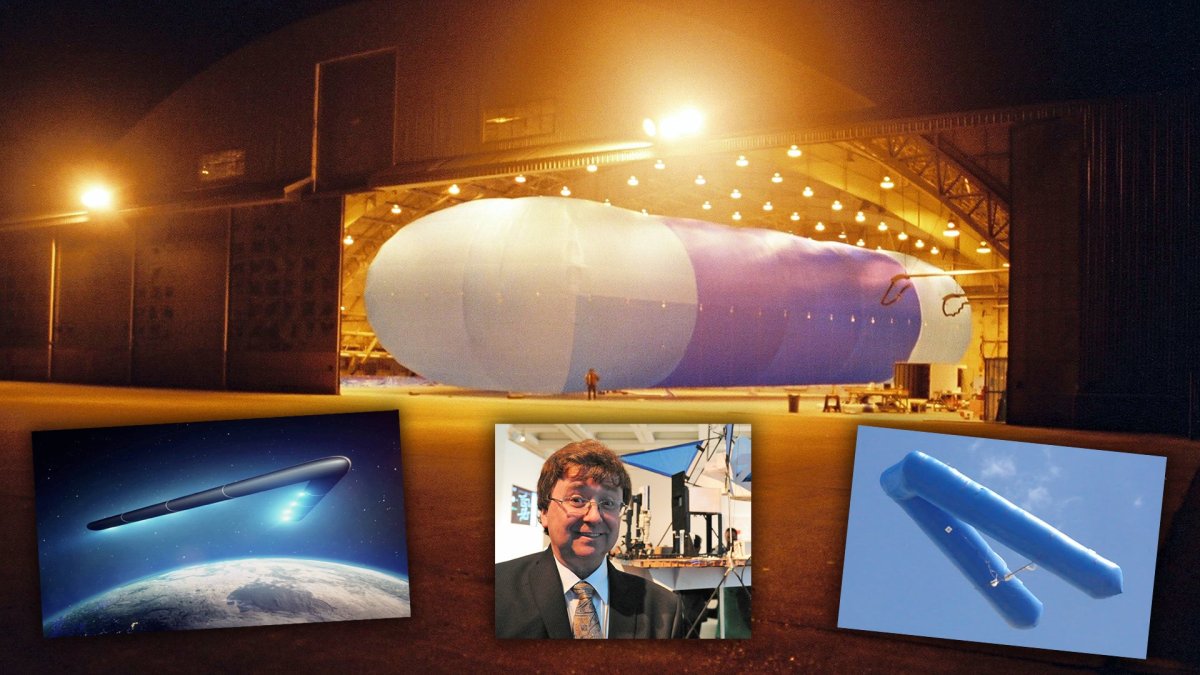
Updated Feb 5, 2020 11:30 PM EST
Space is clearly the final frontier for the American armed forces, as made clear by the recent creation of the U.S. Space Force . The establishment of the newest branch of the United States’ military has been controversial, as have several seemingly bizarre statements about the shadowy space fighting capabilities of America and its adversaries. Despite the controversy, it is undeniable that the space domain will play an increasingly important role in the militaries and economies of the 21st century.
For that reason, revolutionary spaceflight startups, such as SpaceX, and more established companies, such as Boeing and Lockheed Martin, are working to expand access to rocket-based spaceflight and even reusable launch vehicles. While these high-profile companies tend to get most of the press with spectacular launches, and in SpaceX’s case, spectacular landings , there is another revolutionary aerospace company, JP Aerospace (JPA), that has for years been exploring a potentially simpler, cheaper, and safer way to reach outer space via orbital airships.
The War Zone recently spoke with JP Aerospace’s founder John Powell to discuss the company’s huge sci-fi looking craft, as well as the promise of using lighter-than-air craft to put spacecraft in orbit, the possibility of even building floating “cities on the edge of space,” and more.
John Powell founded JP Aerospace in the late 1970s in order to develop new, more affordable methods of reaching space using lighter-than-air vehicles. Over the years, the company has developed a wide range of balloons and inflatable vehicles that can reach extreme altitudes to accomplish various objectives. The firm also partners extensively with educational institutions to allow students to create tiny ping pong ball-sized satellites called PongSats, which are flown aboard JPA craft. Eventually, the company aims to develop a whole new infrastructure to allow routine, safe, and efficient V-shaped lighter-than-air craft to float slowly up to space.
In his 2008 book Floating to Space : The Airship to Orbit Program, Powell writes that much of the world’s current spaceflight technology is still based on the missile technology of the Cold War-era Space Race when money was no issue and the dangers of launching rockets were accepted as inevitable. As such, Powell says that current spaceflight technology worldwide is “too expensive, too dangerous, takes an army to ready, carries too little, and will never open up the space frontier,” adding:
Current NASA estimates call for ten years and ten billion dollars to create a craft that is smaller and less capable than the existing space shuttle. The Russian space program is hampered by huge economic problems. The Chinese are now joining the space community; however they are decades behind. All these efforts are only improvements on the existing technology, large rockets fired into space. The focus is on lighter materials, more efficient engines, and better electronics. This is fine-tuning. Fine-tuning does not create dramatic change.
To truly create a new spaceflight paradigm, Powell writes in the book, we need a way to reach space that is far less expensive and doesn’t require the massive infrastructure needed to launch what are still essentially ballistic missiles. That’s precisely where airships come in to play.
A 175-foot JP Aerospace Ascender performing an in-hangar float test., JP Aerospace
Powell told The War Zone that the main advantage lighter-than-air craft can offer is the massive reduction in the size and weight needed for a vehicle to reach space, saying:
The higher you start from, the smaller your rocket needs to be. Think of Virgin Galactic’s Spaceship Two , or the Pegasus orbital launch vehicle. They both get a huge advantage by launching from an aircraft. Think of an orbital airship as an air-launch, but instead of firing the rocket at a mere 50,000 feet it does it at over 200,000 feet.
Aside from the reductions in rocket size and fuel volume, Powell adds that airship-launched spacecraft are also made much safer and efficient by carrying less fuel, explaining:
The largest danger of space flight is the high rate of energy release. You put six astronauts on the largest tank of liquid explosives on the planet then light it on fire. Six minutes later they’re in space. Would you want to fly to New York that way? A 747 doesn’t burn all its fuel in a few moments and hurl the passengers across the sky, it burns it slowly over the course of the entire trip. It can do this because the aircraft is supported by the air with its wings. The thin atmosphere at the edge of space supports the airship while it accelerates over days to reach orbital speed. It is both a buoyant craft and a flying wing. Instead of the current ‘oh no, an engine failed, everyone dies’ scenario, you have an ‘oh no, an engine failed, somebody go back and work on it, have a meeting, if we can’t fix it in a few hours we’ll need to go home’ scenario. Airships to orbit can change the very nature of space travel.
The largest danger of space flight is the high rate of energy release. You put six astronauts on the largest tank of liquid explosives on the planet then light it on fire. Six minutes later they’re in space. Would you want to fly to New York that way? A 747 doesn’t burn all its fuel in a few moments and hurl the passengers across the sky, it burns it slowly over the course of the entire trip. It can do this because the aircraft is supported by the air with its wings.
The thin atmosphere at the edge of space supports the airship while it accelerates over days to reach orbital speed. It is both a buoyant craft and a flying wing.
Instead of the current ‘oh no, an engine failed, everyone dies’ scenario, you have an ‘oh no, an engine failed, somebody go back and work on it, have a meeting, if we can’t fix it in a few hours we’ll need to go home’ scenario. Airships to orbit can change the very nature of space travel.
To change the nature of space travel, Powell and JPA have put together what they call the Airship to Orbit program.
The Airship To Orbit Program
JP Aerospace’s plan for the Airship to Orbit program consists of three stages. During the first stage, a gigantic V-shaped airship like the JP Aerospace Ascender rises from the Earth’s surface to an altitude of around 140,000 feet.
The three stages of the ATO program., JP Aerospace
There, the Ascender airship would dock with a space station resembling a starfish known as a Dark Sky Station. JP Aerospace envisions Dark Sky Stations with arms 2 miles in length which would serve “not only as a port for the orbital airship but also as a research center, construction site, and tourist destination.” JPA calls these conceptual stations “cities at the edge of space” and the Dark Sky Station Block Four JPA envisions would house 35 crew members and have room for 70 passengers.
Dark Sky Station concept art., JP Aerospace
Powell told The War Zone that JP Aerospace has already conducted flights of small scale Dark Sky Station platforms. Already, some of JPA’s flights have broken world altitude records he said, adding:
In fact, there is only one airship ever to reach those altitudes, that is our Tandem airship which flew to 95,085 feet in 2011. The only other airship that has gotten close was the Southwest Research institutes ‘HiSentinel’ airship [which] flew to 74,000 feet in 2005, but failed moments after reaching that altitude and was never found. There have been subsequent HiSentinels that have flown to lower altitudes. We also flew a ½ scale Tandem airship to 80,000 feet in 2010.
A flight of a small-scale Dark Sky Station testbed., JP Aerospace
The third phase of the planned ATO program would launch directly from the Dark Sky Station. A V-shaped orbital airship up to 2,000 feet in length would exit from the upper atmospheric station and fly to orbit using both buoyant lift and hybrid chemical/electric propulsion. These orbital vehicles JP Aerospace envisions would be too large and light to fly in the lower atmosphere and would have to be assembled at the Dark Sky Station where atmospheric pressures are much lower.
Thanks to orbital acceleration, this final airship would become hypersonic, reaching speeds of up to 17,500 miles per hour (close to Mach 23) as it rides its own shockwaves through the upper atmosphere. As early as the 1960s, NASA was flying V-shaped lighter-than-air reentry vehicles at speeds as high as Mach 7 at 96 miles above the Earth’s surface, so there is at least a technical precedent for hypersonic inflatable aircraft at extreme altitudes.
The Inflatable Micrometeoroid Paraglider (IMP) developed at NASA’s Langley Research Center. The inflatable aircraft was designed to fly into the highest reaches of the atmosphere where it would be bombarded with micrometeorites. The data gathered allowed NASA researchers to determine what level of protection against these micrometeorites is needed for spacecraft., NASA.gov
The ultimate goal of JP Aerospace’s ATO program is to create the infrastructure for manned Earth-to-orbit travel, which consists of the three stages in the ATO program. Introducing flight crews obviously also introduces a whole new level of complexity and risk to the ATO program, and so far JP Aerospace has not conducted any manned high-altitude flights. In fact, Powell says that there are no manned airships currently flying in the near space-environment.
However, JP Aerospace is currently working on a manned submarine in order to test the pressurization and life support systems that would be necessary aboard a manned airship or Dark Sky Station operating at near-space altitudes.
The Bellavia submarine developed by JP Aerospace., JPaerospace.com
Obviously, as Powell notes in his book Floating to Space , to construct the world’s largest aircraft ever conceived will not be an easy task. Powell writes that the construction of these orbital airships “not only requires many new technologies, but also requires them to work together.” Components and entire systems will have to be designed largely from scratch.
Still, Powell claims in Floating to Space that “impossible” simply means no one has done it before. “Look closely at something that was done that was proven to be impossible,” Powell writes, “very often the key reason it was considered impossible still exists. The problem was overcome in an unexpected way.”
Concept image of the proposed JP Aerospace orbital airship., JP Aerospace
Barriers Left To Cross
JP Aerospace has flown hundreds of missions, but serious technical challenges still stand in the way of the company or any other aerospace firm developing fully operational orbital airships or lighter-than-air space stations. According to Powell, while the development of the ATO program is still many years away from its first flight of a 2,000-foot orbital airship, many of the concepts required for such a ship have already been tested either by JPA or by other laboratories, explaining:
The number one question is: Can a little group like JP Aerospace tackle such a huge and complex project? Answer: I have no idea, but so far so good. Serious challenges include active drag reduction: Even at the edge of space the aerodynamic drag on the vehicle is considerable. Active drag reduction, using electrical power to reduce drag, has been around for decades. However, only in national labs. We need to take this technology and put it in the real world. Balloons and other inflatables have been flown to Mach 10 in the upper atmosphere. The question is: can they be flown to Mach 24? Another major undertaking is the sheer size of the vehicles. The orbital airship needs to be 6,000 feet long to be buoyant enough and have enough wing area to support it at the altitude where it will conduct its orbital insertion burn at 300,000 feet. The vehicle will need to be built (at least inflated) at the Dark Sky Station. No one has ever built anything in the sky before. There are major technical problems with a high altitude platform like the Dark Sky Station. The arms of the Dark Sky Station will be two miles across. All current long-duration balloons utilize advanced multi-layer materials to survive in the upper atmosphere to long durations. The Dark Sky Station will employ lower-tech films and replace them in flight when they deteriorate. This way we change the long duration issue from an exotic technology problem to a maintenance problem. We have accomplished high altitude gas moving and balloon swapping on our research flights.
The number one question is: Can a little group like JP Aerospace tackle such a huge and complex project? Answer: I have no idea, but so far so good.
Serious challenges include active drag reduction: Even at the edge of space the aerodynamic drag on the vehicle is considerable. Active drag reduction, using electrical power to reduce drag, has been around for decades. However, only in national labs. We need to take this technology and put it in the real world.
Balloons and other inflatables have been flown to Mach 10 in the upper atmosphere. The question is: can they be flown to Mach 24?
Another major undertaking is the sheer size of the vehicles. The orbital airship needs to be 6,000 feet long to be buoyant enough and have enough wing area to support it at the altitude where it will conduct its orbital insertion burn at 300,000 feet. The vehicle will need to be built (at least inflated) at the Dark Sky Station. No one has ever built anything in the sky before.
There are major technical problems with a high altitude platform like the Dark Sky Station. The arms of the Dark Sky Station will be two miles across. All current long-duration balloons utilize advanced multi-layer materials to survive in the upper atmosphere to long durations. The Dark Sky Station will employ lower-tech films and replace them in flight when they deteriorate. This way we change the long duration issue from an exotic technology problem to a maintenance problem. We have accomplished high altitude gas moving and balloon swapping on our research flights.
“Big Black Triangles”
Many of the images of JP Aerospace vehicles both prototype and in development may look familiar to those aware of incidents of alleged unidentified aircraft over the last few decades. As an aside to our interview with JP Aerospace’s John Powell, we asked Powell how possible he feels it could be, based on his experience, that the USAF or another military/governmental body may be operating “black” or off-the-books lighter-than-air craft which might explain some of these reported sightings.
There have been numerous claims made in recent years surrounding alleged secret military airships , encouraged by popular lore and high-profile incidents. After all, there is some precedent for such craft, such as the Silent Joe stealth blimps from the 1960s or the Northrop Grumman LEMV from the past decade. Despite there being no conclusive evidence that such airships exist, there have been plenty of unconfirmed and anecdotal reports that point to this being the case.
In the early 1980s, scores of eyewitnesses claimed to have seen massive , slow-moving V-shaped aircraft floating silently through the night skies above the Hudson Valley in New York state. In the 1997 “Phoenix Lights” incident, thousands of witnesses throughout Arizona, Nevada, and northern Mexico reported seeing a similarly massive and silent aircraft. Accounts vary, and some claim that there were two separate sets of lights conflated as one incident, but most eyewitnesses reported seeing a giant, silent craft that was either v-shaped or triangular passing low over the region.
A test flight of the JPA Ascender 9., JP Aerospace
Arizona’s governor at the time, Fyfe Symington, even witnessed the incident and later told reporters that despite the fact that the USAF later identified one of the groups of lights seen during the incident as flares dropped by A-10 Warthogs during training exercises at the Barry Goldwater Range, he believes he saw something else entirely:
I witnessed a massive delta-shaped craft silently navigate over Squaw Peak, a mountain range in Phoenix, Arizona. It was truly breathtaking. I was absolutely stunned because I was turning to the west looking for the distant Phoenix Lights. To my astonishment this apparition appeared; this dramatically large, very distinctive leading edge with some enormous lights was traveling through the Arizona sky. As a pilot and a former Air Force Officer, I can definitively say that this craft did not resemble any man-made object I’d ever seen. And it was certainly not high-altitude flares because flares don’t fly in formation.
I witnessed a massive delta-shaped craft silently navigate over Squaw Peak, a mountain range in Phoenix, Arizona. It was truly breathtaking. I was absolutely stunned because I was turning to the west looking for the distant Phoenix Lights.
To my astonishment this apparition appeared; this dramatically large, very distinctive leading edge with some enormous lights was traveling through the Arizona sky.
As a pilot and a former Air Force Officer, I can definitively say that this craft did not resemble any man-made object I’d ever seen. And it was certainly not high-altitude flares because flares don’t fly in formation.
One of the firm’s large boomerang-shaped craft taking to the skies on a test flight. , JPaerospace.com
JP Aerospace’s John Powell says that while his company has designed vehicles for the Department of Defense, some of which went on to the ‘black’ world, his company was ultimately not responsible for the Phoenix Lights incident:
Here I must tread a little delicately. We have built several airships and other vehicles for various DOD agencies. None of our programs were classified. However, after completion and delivery, our vehicles entered into programs of which I have no knowledge. We were testing vehicles at the time of the Phoenix lights incident, however, I can absolutely say that JPA was not, nor [was] our equipment, involved. There have been times where our vehicles have been sighted and confused for UFOs or other mysterious things. I have also seen images of great vee-shaped objects in the sky that I can say for sure were not mine, but I could note perhaps the tech of a competitor. This is all speculation.
Here I must tread a little delicately. We have built several airships and other vehicles for various DOD agencies. None of our programs were classified. However, after completion and delivery, our vehicles entered into programs of which I have no knowledge.
We were testing vehicles at the time of the Phoenix lights incident, however, I can absolutely say that JPA was not, nor [was] our equipment, involved.
There have been times where our vehicles have been sighted and confused for UFOs or other mysterious things. I have also seen images of great vee-shaped objects in the sky that I can say for sure were not mine, but I could note perhaps the tech of a competitor. This is all speculation.
The only public record of a JP Aerospace airship built for the DoD was a 175-foot Near-Space Maneuvering Vehicle (NSMV) that JPA developed for the Air Force’s now-defunct Space Battlelab and Space Warfare Center at Schriever Air Force Base, Colorado.
A 175-foot JP Aerospace Ascender, JP Aerospace
A 2005 RAND Corporation technical report prepared for the US Army titled “ High-Altitude Airships for the Future Force Army” states that the NSMV built for the Air Force was to be tested at Fort Stockton, Texas in June 2004. During the test, the NSMV was scheduled to climb to 100,000 feet and loiter for five days, navigate by remote control, maintain a static position for a short time, and then return to Earth. At that altitude, the NSMV would have had a 230-mile surveillance radius, according to official documents. Line-of-sight at that altitude is roughly 380 miles in any direction.
Unfortunately, a DoD document from 2012 states that the test flights of the NSMV that JP Aerospace built for the Air Force Space Battlelab were canceled due to issues with the craft’s propulsion system and failed launches. In Floating to Space , John Powell writes that the 175-foot Ascender built for the NSMV project was destroyed “during a high wind accident while being prepared for its first flight.” The Air Force terminated the program in 2005.
A Possible Future For Space Travel
While lighter-than-air craft don’t get the attention that traditional high-performance aircraft do, they nonetheless remain a vital subject of aerospace research within the Department of Defense, according to a 2012 report prepared by the Rapid Reaction Technology Office, part of the Office of the Assistant Secretary of Defense for Research and Engineering. The report discussed airship technologies that the Department of Defense’s laboratories and contractors were developing or had developed at the time that “enable viable lighter-than-air vehicles to contribute to our short, mid, and long term strategy for national security and defense” and offered “advanced intelligence, surveillance, reconnaissance, and communications capabilities through integrated sensor payloads and on-board processing for real-time intelligence and post-mission forensics.”
The report also noted that “advances and investment in aerostat and airship technology are also being made in the private sector” and that “the DoD is monitoring this progress and will continue to look for opportunities to advance our objectives through commercially available technology.” In addition to JP Aerospace, the report discussed recent airship platforms designed and constructed by the U.S. Air Force, U.S. Navy, U.S. Army, the Defense Research Projects Agency (DARPA), NASA, Lockheed Martin, Raytheon, and other aerospace contractors.
Tethered aerostats have become a staple at U.S. military bases in war zones. They carry a variety of surveillance systems to provide persistent intelligence gathering and situational awareness security over a localized area., US Army
A 2013 report that the Rapid Reaction Technology Office prepared added that “as the U.S. engaged in conflicts where airspace was less contested, such as Iraq and Afghanistan, interest increased in the development and use of LTA [lighter than air] vehicles for multiple purposes.” Forward operating bases and small tactical units used tethered aerostats for persistent intelligence, surveillance, and reconnaissance (ISR) during Operation Iraqi Freedom and Operation Enduring Freedom, demonstrating the fact that airships and aerostats still have a use on the battlefield, especially low altitude ones. America’s potential foes have followed suit in recent years .
While the Department of Defense still employs lighter-than-air vehicles primarily for ISR missions, many DoD laboratories are working towards developing hybrid airships for logistic airlift missions . As the armed forces continue their pivot towards space, companies like JP Aerospace that are willing to explore the possibilities of lighter-than-air spaceflight and find new paradigms will be increasingly important.
One of Google’s Project Loon balloons. , Ilighter/wikicommons
There is also great potential for replacing or augmenting communications satellite networks with LTA craft. This could be a key area of research and development for the DoD as space becomes increasingly contested and new issues arise such as orbital pollution. There is already precedent in the commercial sector for such LTA-based communication networks, such as the Loon project launched by Google’s parent company Alphabet, Inc. Loon uses high-altitude balloons flying up to 11 miles up in the stratosphere to provide wireless broadband internet to those on the surface below.
With all this in mind, lighter-than-air flight is undergoing something of a modern renaissance, but the leap from more terrestrial uses to taking payloads into space certainly signifies the apex of imagination when it comes to what is the oldest form of non-organic flight. We can only hope that JP Aerospace continues to push the boundaries of airship-to-orbit technology so that maybe one day we all may be able to float to orbital space stations aboard massive V-shaped airships.
Contact the editor: Tyler@thedrive.com
Comments couldn’t be loaded. Please refresh the page.
更新于美国东部时间2020年2月5日晚上11:30。
太空显然是美国武装部队的最终疆界,美国太空军的成立便印证了这一点。美国最新军种的建立引发了争议,一些关于美国及其对手神秘太空作战能力的言论也同样如此。尽管存在争议,但不可否认的是,太空领域将在21世纪的军事和经济中扮演日益重要的角色。
正因如此,像SpaceX这样的革命性航天初创公司,以及像波音和洛克希德·马丁这样的老牌企业,都在致力于扩大火箭航天乃至可重复使用运载火箭的应用范围。虽然这些备受瞩目的公司往往凭借壮观的发射(SpaceX的案例中还包括壮观的着陆)吸引着大部分媒体的关注,但还有另一家革命性的航空航天公司——JP Aerospace(JPA),多年来一直在探索一种可能更简单、更便宜、更安全的太空飞行方式,即利用轨道飞艇进入外太空。
《战区》杂志最近采访了 JP Aerospace 的创始人约翰·鲍威尔,讨论了该公司巨大的、科幻感十足的飞行器,以及使用比空气轻的飞行器将航天器送入轨道的前景,甚至建造漂浮的“太空边缘城市”的可能性等等。
约翰·鲍威尔于20世纪70年代末创立了JP Aerospace公司,旨在开发利用轻于空气的飞行器进入太空的新型、更经济的方法。多年来,该公司开发了种类繁多的气球和充气飞行器,能够到达极高的高度以完成各种目标。该公司还与众多教育机构合作,让学生们制造乒乓球大小的微型卫星——PongSats,这些卫星由JPA的飞行器搭载升空。最终,该公司的目标是建立一套全新的基础设施,使常规、安全、高效的V形轻于空气飞行器能够缓慢地升空进入太空。
鲍威尔在其2008年出版的《漂浮到太空:飞艇入轨计划》一书中写道,目前世界上的许多航天技术仍然基于冷战时期太空竞赛的导弹技术,那时资金不成问题,发射火箭的危险也被认为是不可避免的。因此,鲍威尔认为,目前全球的航天技术“过于昂贵、过于危险、需要一支军队才能准备就绪、运载能力太弱,而且永远无法开拓太空疆界”,并补充道:
美国宇航局目前的估计是,需要十年时间和一百亿美元才能制造出比现有航天飞机更小、性能更弱的飞行器。俄罗斯的航天计划受到巨大的经济问题阻碍。中国现在也加入了航天领域,但他们落后了几十年。所有这些努力都只是对现有技术的改进,也就是发射大型火箭进入太空。重点在于更轻的材料、更高效的发动机和更好的电子设备。这只是微调。微调不会带来翻天覆地的变化。
鲍威尔在书中写道,要真正创造一种新的太空飞行模式,我们需要一种成本更低、无需发射本质上仍是弹道导弹的庞大基础设施就能到达太空的方法。而这正是飞艇发挥作用的地方。
一架175英尺长的JP Aerospace Ascender飞机正在进行机库内漂浮测试。(JP Aerospace)
鲍威尔告诉《战区》杂志,轻于空气的飞行器所能提供的主要优势是大幅减少进入太空所需的飞行器尺寸和重量,他说:
发射高度越高,火箭所需的尺寸就越小。想想维珍银河的“太空船二号”或“飞马座”轨道运载火箭。它们都因从飞机上发射而获得了巨大的优势。你可以把轨道飞艇想象成一种空中发射,只不过火箭不是在区区5万英尺的高度发射,而是在超过20万英尺的高空发射。
除了火箭尺寸和燃料体积的减少之外,鲍威尔还补充说,飞艇发射的航天器由于携带的燃料更少,也更加安全高效,他解释说:
太空飞行最大的危险在于能量释放速度极快。想象一下,你把六名宇航员放在地球上最大的液态炸药罐里,然后点燃它。六分钟后,他们就进入了太空。你愿意用这种方式飞往纽约吗?波音747客机不会在瞬间燃烧所有燃料,把乘客抛向太空,而是在整个飞行过程中缓慢燃烧。它之所以能做到这一点,是因为飞机依靠机翼和空气支撑。太空边缘稀薄的大气层支撑着飞艇,使其在数天内加速到轨道速度。它既是一艘浮力飞行器,又是一架飞翼。这样一来,就不会出现“糟糕,引擎故障,所有人都死了”的情况,而是“糟糕,引擎故障,有人回去修理,开个会,如果几个小时内修不好,我们就得回家”的情况。飞艇进入轨道可能会彻底改变太空旅行的本质。
太空飞行最大的危险在于极高的能量释放速率。想象一下,你把六名宇航员放在地球上最大的液态炸药罐上,然后点燃它。六分钟后,他们就进入了太空。你愿意用这种方式飞往纽约吗?波音747客机不会在瞬间燃烧所有燃料,把乘客抛向太空,而是在整个飞行过程中缓慢燃烧。它之所以能做到这一点,是因为飞机依靠机翼和空气支撑飞行。
太空边缘稀薄的大气层支撑着飞艇,使其在数日内加速至轨道速度。它既是漂浮的飞行器,又是飞翼。
不再是目前“糟糕,引擎故障,所有人都要死了”的局面,而是“糟糕,引擎故障了,赶紧派人回去修理,开个会,如果几个小时内修不好,我们就得回家”的局面。飞艇入轨可能会彻底改变太空旅行的本质。
为了改变太空旅行的性质,鲍威尔和JPA共同制定了他们所谓的“飞艇入轨计划”。
飞艇入轨计划
JP Aerospace的飞艇入轨计划分为三个阶段。在第一阶段,一艘类似JP Aerospace Ascender的巨型V形飞艇将从地球表面升至约14万英尺的高度。
ATO计划的三个阶段,JP Aerospace
届时,“上升者”号飞艇将与一座形似海星的空间站——“暗夜空间站”对接。JP Aerospace公司设想的“暗夜空间站”拥有长达2英里的“触手”,其功能“不仅包括作为轨道飞艇的停靠港,还包括研究中心、建筑工地和旅游目的地”。JPA公司将这些概念空间站称为“太空边缘的城市”,而JPA公司设想的“暗夜空间站”四号模块将容纳35名机组人员和70名乘客。
暗夜空间站概念图,JP Aerospace
鲍威尔告诉《战区》杂志,JP Aerospace公司已经进行了小型暗夜观测站平台的飞行测试。他表示,JP Aerospace公司的一些飞行已经打破了世界飞行高度纪录,并补充道:
事实上,只有一艘飞艇达到过如此高的高度,那就是我们的“串联式”飞艇,它在2011年飞到了95,085英尺的高度。唯一接近过这一高度的另一艘飞艇是西南研究院的“HiSentinel”飞艇,它在2005年飞到了74,000英尺的高度,但在到达该高度后不久便发生故障,至今下落不明。之后也有“HiSentinel”飞艇飞到了较低的高度。我们还在2010年驾驶一艘1/2比例的“串联式”飞艇飞到了80,000英尺的高度。
小型暗夜观测站试验平台的飞行测试,日本宇航公司
计划中的ATO项目第三阶段将直接从暗夜空间站发射。一艘长达2000英尺的V形轨道飞艇将从高层大气空间站升空,并利用浮力升力和化学/电混合动力推进系统飞入轨道。JP Aerospace公司设想的这些轨道飞行器体积过大、重量过轻,无法在低层大气中飞行,因此必须在大气压力低得多的暗夜空间站进行组装。
得益于轨道加速,这艘最终的飞艇将达到高超音速,借助自身产生的冲击波穿越高层大气,速度可达每小时17500英里(接近23马赫)。早在20世纪60年代,NASA就已成功操控V形轻于空气的再入飞行器,在距离地球表面96英里(约154公里)的高空以高达7马赫的速度飞行,因此,高超音速充气飞行器在极端高空飞行至少在技术上已有先例。
美国宇航局兰利研究中心开发了一种充气式微流星体滑翔伞(IMP)。这种充气式飞行器旨在飞入大气层最高处,在那里它会受到微流星的轰击。收集到的数据使美国宇航局的研究人员能够确定航天器需要何种级别的防护来抵御这些微流星的撞击。(NASA.gov)
JP Aerospace公司ATO项目的最终目标是为载人地球轨道飞行构建基础设施,该项目分为三个阶段。引入飞行机组显然会给ATO项目带来全新的复杂性和风险,迄今为止,JP Aerospace公司尚未进行任何载人高空飞行。事实上,鲍威尔表示,目前没有任何载人飞艇在近太空环境中飞行。
然而,JP Aerospace 目前正在研发载人潜艇,以便测试载人飞艇或在近太空高度运行的暗夜空间站上所需的加压和生命维持系统。
贝拉维亚潜艇由日本宇航公司(JP Aerospace)开发。(JP Aerospace.com)
显然,正如鲍威尔在其著作《漂浮到太空》中所指出的,建造有史以来世界上最大的飞行器绝非易事。鲍威尔写道,建造这些轨道飞艇“不仅需要许多新技术,而且需要它们协同运作”。部件和整个系统大多需要从零开始设计。
不过,鲍威尔在《漂浮到太空》一书中声称,“不可能”仅仅意味着以前没有人做过。“仔细观察那些已被证明不可能的事情,”鲍威尔写道,“通常情况下,它被认为不可能的关键原因仍然存在。问题以一种意想不到的方式被克服了。”
JP Aerospace公司拟建轨道飞艇的概念图。
剩余障碍物待跨越
JP Aerospace公司已经执行了数百次飞行任务,但该公司以及任何其他航空航天公司要开发完全可运行的轨道飞艇或轻于空气的空间站,仍然面临着严峻的技术挑战。鲍威尔表示,虽然ATO项目的研发距离首次飞行2000英尺轨道飞艇还有很长的路要走,但建造这种飞艇所需的许多概念已经由JPA或其他实验室进行了测试,他解释说:
首要问题是:像JP Aerospace这样的小团队能否完成如此庞大而复杂的项目?答案是:我不知道,但目前一切顺利。严峻的挑战之一是主动减阻:即使在太空边缘,飞行器所受的空气动力阻力也相当大。利用电力来降低阻力的主动减阻技术已经存在了几十年,但仅限于国家实验室。我们需要将这项技术应用于实际。气球和其他充气飞行器已经在高层大气中达到过10马赫的速度。问题是:它们能否达到24马赫?另一个重大挑战是飞行器庞大的尺寸。轨道飞艇需要6000英尺长才能获得足够的浮力,并且拥有足够的翼面积来支撑其在30万英尺高空进行轨道插入点火时的飞行。飞行器需要在暗夜空间站建造(至少要充气)。此前从未有人在空中建造过任何东西。像暗夜空间站这样的高空平台存在着重大的技术难题。暗夜空间站的臂展将达两英里。目前所有长航时气球都采用先进的多层材料,才能在高层大气中长时间运行。而暗夜空间站将采用技术含量较低的薄膜,并在飞行过程中更换老化的薄膜。这样一来,我们就将长航时问题从一个复杂的技术难题转化为一个维护难题。我们已经在科研飞行中实现了高空气体输送和气球更换。
首要问题是:像JP Aerospace这样的小公司能否承担如此庞大而复杂的项目?答案是:我不知道,但目前为止一切顺利。
严峻的挑战之一是主动减阻:即使在太空边缘,飞行器所受到的空气动力阻力也相当大。利用电力来降低阻力的主动减阻技术已经存在了几十年,但仅限于国家实验室。我们需要将这项技术应用于实际应用。
气球和其他充气物体已经在高层大气中达到过10马赫的速度。问题是:它们能否达到24马赫的速度?
另一项重大挑战在于飞行器的庞大尺寸。这艘轨道飞艇需要6000英尺长才能获得足够的浮力,并且拥有足够的翼面积,以支撑其在30万英尺高空进行轨道插入点火时的飞行。该飞行器需要在暗夜空间站建造(至少要完成充气)。此前从未有人在空中建造过任何东西。
像暗夜空间站这样的高空平台存在着重大的技术难题。暗夜空间站的臂展将达两英里。目前所有长航时气球都采用先进的多层材料,才能在高层大气中长时间运行。而暗夜空间站将采用技术含量较低的薄膜,并在飞行过程中更换老化的薄膜。这样一来,我们就将长航时问题从一个复杂的技术难题转化为一个维护难题。我们已经在科研飞行中实现了高空气体输送和气球更换。
“大黑三角”
JP Aerospace公司展示的许多原型机和研发中飞行器的图片,对于那些了解过去几十年不明飞行物事件的人来说,可能似曾相识。在采访JP Aerospace公司的约翰·鲍威尔时,我们顺便问了他一个问题:根据他的经验,美国空军或其他军事/政府机构有可能正在运行一些“秘密”或未公开的轻于空气飞行器,这或许可以解释一些目击事件吗?
近年来,围绕所谓秘密军用飞艇的说法层出不穷,这其中既有民间传说,也有一些引人注目的事件。毕竟,此类飞行器并非没有先例,例如20世纪60年代的“沉默乔”(Silent Joe)隐形飞艇,以及近十年来诺斯罗普·格鲁曼公司研发的LEMV。尽管目前尚无确凿证据证明此类飞艇的存在,但大量未经证实的传闻和轶事却指向了这种可能性。
20世纪80年代初,数十名目击者声称在纽约州哈德逊河谷上空看到巨大的、缓慢移动的V形飞行器静静地漂浮在夜空中。1997年的“凤凰城之光”事件中,亚利桑那州、内华达州和墨西哥北部数千名目击者报告称看到了类似的巨大且无声的飞行器。各方说法不一,有人认为这是两组不同的灯光被混淆为同一事件,但大多数目击者报告说,他们看到一个巨大的、无声的飞行器,形状可能是V形或三角形,低空掠过该地区。
日本宇航公司JPA Ascender 9的试飞。
当时的亚利桑那州州长费夫·西明顿甚至亲眼目睹了这起事件,后来他告诉记者,尽管美国空军后来认定事件中看到的一组光点是A-10“疣猪”攻击机在巴里·戈德华特靶场进行训练演习时投下的照明弹,但他相信自己看到的完全是另一回事:
我亲眼目睹了一架巨大的三角翼飞行器悄无声息地飞越亚利桑那州凤凰城的斯夸峰山脉。那景象真是令人叹为观止。当时我正转向西边寻找远处的凤凰城灯光,所以完全被眼前的景象惊呆了。令我震惊的是,这架飞行器突然出现;它体型巨大,前缘非常独特,还带着巨大的灯光,正划破亚利桑那州的夜空。作为一名飞行员和前空军军官,我可以肯定地说,这架飞行器与我见过的任何人造物体都截然不同。而且它肯定不是高空照明弹,因为照明弹不会编队飞行。
我亲眼目睹了一个巨大的三角洲形飞行器悄无声息地飞越亚利桑那州凤凰城的斯夸峰山脉。那景象真是令人叹为观止。当时我正转向西边,寻找远处的凤凰城灯光,所以完全被眼前的景象惊呆了。
令我惊讶的是,这个幻影出现了;这个体积庞大、非常独特的飞行器,带着巨大的灯光,正在亚利桑那州的天空中飞行。
作为一名飞行员和前空军军官,我可以肯定地说,这飞行器与我见过的任何人造物体都截然不同。而且它肯定不是高空照明弹,因为照明弹不会编队飞行。
该公司的一架大型回旋镖形飞行器正在进行试飞。(JPaerospace.com)
JP Aerospace公司的约翰·鲍威尔表示,虽然他的公司曾为国防部设计过车辆,其中一些车辆后来流入了“黑市”,但他的公司最终与凤凰城灯光事件无关:
在此我必须谨慎发言。我们曾为国防部各机构建造过数艘飞艇和其他飞行器。我们的所有项目均未涉及机密。然而,在完成交付后,我们的飞行器被用于一些我并不知情的项目。凤凰城灯光事件发生时,我们正在进行飞行器测试,但我可以肯定地说,联合动力航空管理局(JPA)及其设备均未参与其中。我们的飞行器曾多次被目击,并被误认为是UFO或其他神秘物体。我也曾见过一些巨大的V形飞行器出现在天空中,我可以肯定地说,它们并非我们制造,但我怀疑其中可能使用了竞争对手的技术。以上纯属推测。
在此我必须谨慎措辞。我们曾为国防部各机构建造过数艘飞艇和其他飞行器。我们的所有项目均未涉及机密信息。然而,在建造和交付之后,我们的飞行器被用于一些我并不知情的项目。
凤凰城灯光事件发生时,我们正在测试车辆,但我可以肯定地说,JPA公司和我们的设备都没有卷入其中。
有时我们的飞行器会被误认为是UFO或其他神秘物体。我也见过一些天空中巨大的V形物体,我可以肯定地说那不是我们的,但我怀疑它可能采用了竞争对手的技术。以上纯属猜测。
JP Aerospace 为美国国防部建造的唯一公开记录是一架 175 英尺长的近太空机动飞行器 (NSMV),该飞行器由 JPA 为空军现已解散的位于科罗拉多州施里弗空军基地的太空作战实验室和太空作战中心开发。
一架175英尺长的JP Aerospace Ascender,JP Aerospace
兰德公司2005年为美国陆军编写的一份题为《未来陆军高空飞艇》的技术报告指出,为美国空军建造的NSMV原计划于2004年6月在德克萨斯州斯托克顿堡进行测试。测试期间,NSMV计划爬升至10万英尺(约30000米)的高度,并在空中盘旋五天,通过遥控导航,短暂保持静止状态,然后返回地面。官方文件显示,在该高度,NSMV的监视半径为230英里(约370公里)。在该高度,视线范围约为380英里(约610公里)。
不幸的是,一份2012年的美国国防部文件指出,由JP Aerospace公司为空军太空作战实验室建造的NSMV的试飞因推进系统问题和发射失败而被取消。约翰·鲍威尔在《漂浮到太空》一书中写道,为NSMV项目建造的175英尺长的“上升器”在“准备首次飞行时,因强风事故而损毁”。空军于2005年终止了该项目。
太空旅行的可能未来
尽管轻于空气的飞行器不像传统高性能飞机那样受到关注,但根据国防部助理部长办公室下属的快速反应技术办公室2012年发布的一份报告,它们仍然是国防部航空航天研究的重要课题。该报告探讨了国防部实验室和承包商当时正在开发或已经开发的飞艇技术,这些技术“使可行的轻于空气飞行器能够为我们国家安全和国防的短期、中期和长期战略做出贡献”,并“通过集成传感器有效载荷和机载处理,提供先进的情报、监视、侦察和通信能力,以实现实时情报和任务后取证”。
报告还指出,“私营部门也在推进系留气球和飞艇技术的发展并加大投资”,并且“国防部正在密切关注这一进展,并将继续寻找机会,利用商用技术推进我们的目标”。除了JP Aerospace公司之外,报告还讨论了美国空军、美国海军、美国陆军、国防高级研究计划局(DARPA)、美国国家航空航天局(NASA)、洛克希德·马丁公司、雷神公司和其他航空航天承包商近期设计和建造的飞艇平台。
系留气球已成为美国战区军事基地的标配。它们搭载各种监视系统,可为局部区域提供持续的情报收集和态势感知安全保障。——美国陆军
快速反应技术办公室2013年的一份报告补充道:“随着美国卷入空域争夺较少的冲突,例如伊拉克和阿富汗,人们对开发和使用轻于空气(LTA)飞行器用于多种用途的兴趣日益浓厚。”在“伊拉克自由行动”和“持久自由行动”期间,前沿作战基地和小型战术部队使用系留气球进行持续的情报、监视和侦察(ISR),这表明飞艇和系留气球在战场上仍然有用武之地,尤其是在低空飞行时。近年来,美国的潜在对手也纷纷效仿。
尽管美国国防部目前仍主要将轻于空气的飞行器用于情报、监视与侦察(ISR)任务,但许多国防部实验室正在致力于研发用于后勤空运任务的混合动力飞艇。随着美军不断向太空领域转型,像JP Aerospace这样愿意探索轻于空气太空飞行可能性并寻求新模式的公司将变得越来越重要。
谷歌的 Project Loon 气球之一。 , Ilighter/wikicommons
利用轻型空中航行器(LTA)替代或增强通信卫星网络也具有巨大潜力。随着太空竞争日益激烈,轨道污染等新问题不断涌现,这可能成为美国国防部的一个关键研发领域。商业领域已有基于轻型空中航行器的通信网络先例,例如谷歌母公司Alphabet推出的Loon项目。Loon利用高空气球在平流层飞行至11英里(约18公里)高空,为地面用户提供无线宽带互联网服务。
考虑到所有这些因素,轻于空气的飞行技术正在经历一场现代复兴,但从陆地用途到将有效载荷送入太空的飞跃,无疑标志着这种最古老的非有机飞行形式达到了想象力的巅峰。我们只能希望JP Aerospace能够继续突破飞艇入轨技术的界限,或许有一天,我们所有人都能乘坐巨大的V形飞艇漂浮到轨道空间站。
联系编辑:Tyler@thedrive.com
评论加载失败,请刷新页面。