NATO military head Bauer talks Baltics, Ukraine and club bouncers北约军事负责人鲍尔谈波罗的海国家、乌克兰和夜总会保安
"We have basically destroyed that industry," Bauer said of the defense sector — arguing in a wide-ranging interview how to build it back up.
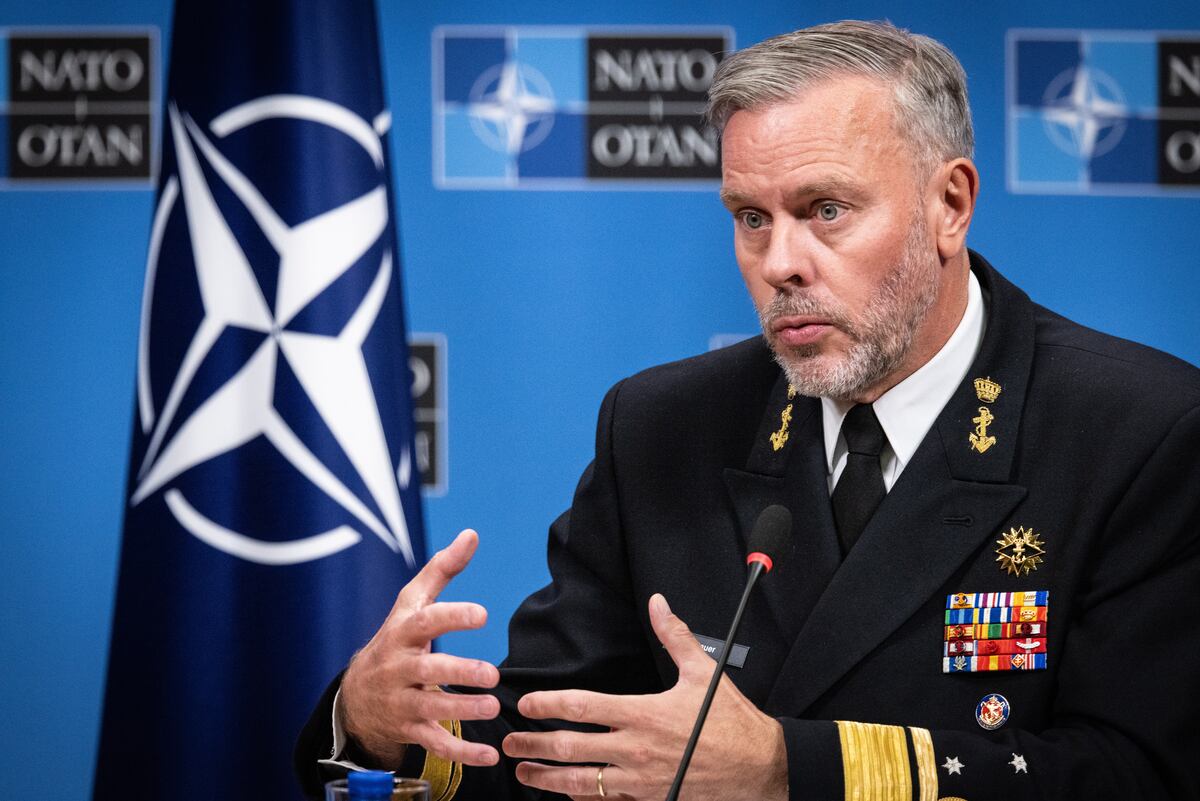
NORFOLK, Virginia — Rob Bauer was in a joking mood.
The admiral chairs NATO’s Military Committee, which makes him the alliance’s top military official. This week he was in Norfolk for a change of command.
Wearing his white dress uniform with an ornate saber, he spoke to the incoming and outgoing generals, addressing them by their first names: “Dear Pierre” and “Dear Phillippe.”
Several times, the crowd laughed at his small bits of sarcasm.
It was a rare moment of levity for an alliance under strain. NATO has by some measures excelled in the last two years, after Russia’s full-scale invasion of Ukraine. More members spend the required 2% of GDP on defense than ever, and it’s added two impressive new states: Sweden and Finland.
Still, Ukraine is steadily losing ground to Russia, which now threatens to take the vital city of Pokrovsk in the east. And the debate over how far Kyiv can fire Western weapons into Russia has become a divisive, monthslong saga.
Hence the tone, which Bauer kept up while speaking with Defense News later. He sketched on a sheet of copy paper to illustrate different arguments. At one point, while lampooning the West’s sluggish production of weapons, he swore.
The admiral discussed the security of front-line states in NATO, bringing new members into the alliance and how hard it’s been to ditch old ideas about how the West defends itself.
This conversation has been edited for length and clarity.
I wanted to ask about the security of the Baltics. Where do you see changes occurring after the Washington summit in that region? And do you see Putin making plans for any sort of operation in the eastern flank?
Well, if he’s wise, he shouldn’t. But that’s basically what our deterrence is about: to make sure he understands that it’s not a good decision. We are vigilant all across those domains to make sure they know that we are ready.
There’s a lot of rhetoric over the last two and a half years on what the Russians could do. In general, we see no real increase in the attempts of the Russians to escalate with us. If you look at Baltic security, the fact that Sweden and Finland have joined NATO is very important for our ability to be in a much better position in the Baltic than before. We now see the first signs of NATO forces that, maybe not permanently, are working and training and exercising in Finland.
The Nordic nations are working more closely together now that basically, Norway, Denmark, Sweden, Finland are all part of that region. They have made agreements on the use of each other’s airspace, and that’s great news. It means that our ability to operate faster and much more effectively in each other’s space, whether it’s airspace or land mass or water, is helping.
It is not only the Washington summit, but it is the joining of Finland and Sweden. It’s the regional plans. It is the fact that we have been working on this for a much longer time that we now see practical examples coming forward where nations start to work together and benefit from that membership.
You mentioned the two newest members of NATO. Do you have any sense right now of what the rotational force presence will look like there?
It’s very early to say that. The nations have come forward with their intent, and they are working on the details now. It’s not something that NATO has organized. It is something that the nations have agreed upon.
Actually the same happened in the past when we build those battle groups in the southeast. You had battle groups in Slovakia, Hungary, Romania and Bulgaria. In Romania, the Americans talked to the French and to Romania. Then at some point, the French came in, and the Dutch joined and the Belgians and forces from Luxembourg. Now it’s an established thing where they are able to beef up to a brigade. That was a bilateral or trilateral discussion, and then those forces were handed over to NATO under command of the Supreme Allied Commander Europe.
And that’s how you expect it to go?
What we will see first is a number of discussions amongst the participating nations. I don’t know whether it will only be Sweden and Finland. It might be other nations as well that are being asked to join. Once that is clear, then they will set up command and control with NATO, where it comes under the Supreme Allied Commander Europe. That’s my expectation. But of course, as always in NATO, nations are sovereign states. So therefore, if Finland would like to do it differently that’s possible.
The talk in Washington right now in regard to Ukraine is the use of long-range fires. I know that you’ve said there’s a legal basis for this. It would be helpful if you could respond to the two things that U.S. leaders are saying now as arguments against it. One of them is that Russia has moved many of its airfields beyond the 300-kilometer (180 mile) threshold. The other one is that Ukraine has its own sophisticated drone capabilities.
I’m not going to comment on the arguments that the nations use. That’s for them. I mean, you have to ask [Chairman of the Joint Chiefs Gen.] CQ brown in the U.S.…
… and ask them why they use those arguments.
It is militarily wise and smart to actually attack your attacker in his back garden, so that that you become safer. That’s what you do, as [the Ukrainians] have had in the last couple of weeks — some serious successes in terms of missile depots and fuel depots and things like that. It will hamper [Russia’s] ability to continue their fight, and that’s great.
Secondly, it is legally possible. It is supported by law because it’s part of self defense, and self-defense doesn’t stop at your border. There’s no military reason to deviate from what I said. There’s a political reason.
I was fascinated by what you said in your speech outside about the old frameworks, about industrial based cooperation. Could expand on what the new framework would look like and whether that would involve more state control?
Not necessarily. I think we’ve over-focused on efficiency for all sorts of understandable reasons, because the governments wanted to spend as little money as possible, and the industry wanted to spend to earn as much as possible, and stocks are stupid.
That’s what we did for 30 years, because everything was planable. Are we going to Afghanistan? In the North Atlantic Council, we talked about this for a month. Then we talked about how many troops and what they are going to do. If you knew then that you needed in a certain place a battalion, then you would say, ‘Okay, this is the Netherlands, and then comes France.’ We bought extra helmets and we bought extra boots. And we started the training just in time. It was all controllable.
It’s not that we will say to the Russians, ‘Whoah we’re not ready. This is not fair. We told you last week, we’re not ready. We can fight you on the first of July.’ They’ll say, ‘I’m gonna attack you now.’
The change is that we want more, readier soldiers so if the enemy attacks, we are ready. It’s not only the soldiers that we need but also the tanks and the armored vehicles and the ammunition and everything.
Therefore we now see a surge in the the things we want to buy in the defense industry. We have basically destroyed that industry together. First in the early 90s, that was the peace dividend. We say, ‘You have to produce,’ and then they say, ‘Yeah, right, but do you remember when we had all these factories, and now they’re gone because you didn’t buy anything?’
I want the industry to become part of the values discussion, not just the value discussion. They need to understand that they have a strategic interest in strong defense, because for 80 years, all these private companies have been able to earn a lot of money on a very stable, safe and secure environment, which was our continent. The CEOs in Ukraine are laying awake because their factory might be gone tomorrow morning because of a missile attack. That’s not in the thinking of the CEOs in the Netherlands or in the U.S. They should understand that they need to be part of the solution.
Second, because we have a economy which is not an autocracy, we need to convince investors that it’s a good idea to invest in the defense industry.
I am telling all these people deterrence is the best investment. What is deterrence? The seven-foot bouncer that is in front of the nightclub will probably stop you if you wanted to go in without paying, right?
I’m 6′1″, 160 pounds, so probably.
Especially if he has a black belt in karate, and he maybe even has a weapon on him. If the bouncer is 4′2″, you will push him aside and you will go in. Now that is deterrence. It is about making sure that our opponents, whether it’s the Russians or terrorist organizations, know that if they attack us, it’s actually a big mistake.
All these things we are talking about are not to start a war. I’m not a warmongering idiot, what I sometimes read in social media. It is actually to prevent war, and I think that is a good investment for our society, if we can continue to prevent war, as we have been able to do for the last 75 years.
And the world is becoming a more dangerous place because what we see is the rebalancing of power between the U.S. and China.
Noah Robertson is the Pentagon reporter at Defense News. He previously covered national security for the Christian Science Monitor. He holds a bachelor’s degree in English and government from the College of William & Mary in his hometown of Williamsburg, Virginia.
弗吉尼亚州诺福克——罗布·鲍尔当时心情不错,想开个玩笑。
这位海军上将担任北约军事委员会主席,是北约最高军事官员。本周他前往诺福克参加指挥权交接仪式。
他身着白色礼服,佩戴着一把华丽的佩剑,向即将上任和即将卸任的将军们讲话,直呼他们的名字:“亲爱的皮埃尔”和“亲爱的菲利普”。
他的几句讽刺挖苦引得人群一阵哄笑。
对于一个处境紧张的联盟而言,这难得是一丝轻松。在过去两年里,北约在某些方面表现出色,尤其是在俄罗斯全面入侵乌克兰之后。越来越多的成员国达到了国防开支占GDP 2%的最低要求,而且北约还新增了两个令人瞩目的成员国:瑞典和芬兰。
然而,乌克兰正不断被俄罗斯蚕食,俄罗斯现在威胁要占领东部的重镇波克罗夫斯克。而关于基辅可以从多远的地方向俄罗斯境内发射西方武器的争论,已经演变成一场持续数月、极具争议的争论。
因此,鲍尔后来在接受《防务新闻》采访时也保持了这种语气。他在一张复印纸上画草图来阐述不同的论点。有一次,在讽刺西方武器生产效率低下时,他甚至爆了粗口。
这位海军上将讨论了北约前线国家的安全问题、接纳新成员加入联盟的问题,以及摒弃西方自卫方式的旧观念有多么困难。
为了篇幅和清晰度,这段对话经过了编辑。
我想问一下波罗的海地区的安全状况。您认为华盛顿峰会后该地区会发生哪些变化?您认为普京是否会在东部地区策划任何军事行动?
如果他明智的话,就不应该这么做。但我们采取威慑措施的目的就在于此:确保他明白这不是个好决定。我们在各个领域都保持警惕,确保他们知道我们已经做好准备。
过去两年半以来,关于俄罗斯可能采取的行动的各种言论层出不穷。但总体而言,我们并未看到俄罗斯试图升级与我们关系的举动有任何实质性增加。就波罗的海地区的安全而言,瑞典和芬兰加入北约对于我们而言至关重要,这大大提升了我们在波罗的海地区的地位。我们现在看到,北约部队(或许并非长期驻扎)已开始在芬兰开展工作、训练和演习。
北欧各国之间的合作日益紧密,因为挪威、丹麦、瑞典和芬兰现在都属于北欧地区。它们已就彼此空域的使用达成协议,这无疑是个好消息。这意味着我们能够在彼此的领空、陆地或水域中更快、更高效地开展行动,这将对我们大有裨益。
这不仅仅是华盛顿峰会,更是芬兰和瑞典的加入。是区域规划。正是因为我们长期以来为此努力,现在才看到各国开始携手合作并从中受益的实际案例。
您提到了北约的两个最新成员国。您现在对轮换部队在那里的部署情况有什么看法?
现在下结论还为时尚早。各国已经表明了意愿,目前正在敲定细节。这并非北约的组织安排,而是各国共同商定的。
事实上,过去我们在东南地区组建战斗群时也发生过类似的事情。当时我们在斯洛伐克、匈牙利、罗马尼亚和保加利亚都部署了战斗群。在罗马尼亚,美国人与法国和罗马尼亚方面进行了磋商。后来,法国也加入了进来,荷兰、比利时和卢森堡的部队也相继加入。现在,他们能够扩充到旅级规模已经成为一种惯例。这原本是双边或三边磋商的结果,之后这些部队被移交给北约,由欧洲盟军最高司令指挥。
你觉得事情会按这个方向发展吗?
首先,我们将看到参与国之间进行一系列讨论。我不知道是否只有瑞典和芬兰,也可能邀请其他国家加入。一旦确定了参与国,他们将与北约建立指挥控制机制,隶属于欧洲盟军最高司令部。这是我的预期。当然,正如北约一贯的做法,成员国都是主权国家。因此,如果芬兰希望采取不同的方式,也是可以的。
目前华盛顿关于乌克兰问题的讨论焦点是使用远程火力打击。我知道您曾说过这样做有法律依据。如果您能回应一下美国领导人目前提出的反对意见中的两点,那就太好了。其中一点是,俄罗斯已将其许多机场迁至300公里(180英里)以外的地区。另一点是,乌克兰拥有先进的无人机能力。
我不会对各国提出的论点发表评论。那是他们自己的事。我的意思是,你得去问问美国的参谋长联席会议主席布朗将军……
……并询问他们为什么会使用这些论点。
从军事角度来看,在攻击者的后院发起攻击是明智之举,这样才能确保自身安全。乌克兰人在过去几周就采取了这种策略,在导弹库、燃料库等方面取得了重大进展。这将削弱俄罗斯继续作战的能力,这非常好。
其次,这在法律上是可行的。法律支持这种做法,因为它属于自卫范畴,而自卫并不会止步于国界。没有任何军事理由可以推翻我之前的说法,但有政治原因。
我对您在户外演讲中谈到的旧框架和产业合作非常感兴趣。能否详细阐述一下新框架会是什么样子,以及这是否会涉及更多的国家控制?
不一定。我认为我们出于各种可以理解的原因过度关注效率,因为政府想尽可能少花钱,而企业想尽可能多赚钱,而且股票市场是愚蠢的。
我们过去30年都是这么做的,因为一切都在计划之中。我们要去阿富汗吗?在北大西洋理事会,我们为此讨论了一个月。然后我们讨论了需要多少兵力以及他们的任务。如果你当时就知道某个地方需要一个营,你就会说:“好的,这是荷兰,然后是法国。”我们购买了额外的头盔和靴子。我们及时开始了训练。一切都在掌控之中。
我们不会对俄罗斯人说:“哎呀,我们还没准备好。这不公平。我们上周就告诉过你们,我们还没准备好。我们可以7月1日再和你们开战。”他们会说:“我现在就要攻击你们。”
改变在于我们需要更多、更精锐的士兵,这样一旦敌人进攻,我们就能做好准备。我们需要的不仅是士兵,还有坦克、装甲车、弹药以及所有其他物资。
因此,我们现在看到国防工业的需求激增。我们基本上是共同摧毁了这个行业。首先是在90年代初,当时被称为和平红利。我们说,“你们必须生产”,然后他们说,“是啊,没错,但你们还记得我们以前有那么多工厂吗?现在它们都没了,因为你们什么都没买!”
我希望国防工业能够参与到价值观的讨论中来,而不仅仅是参与到价值观的讨论中来。他们需要明白,强大的国防体系对他们自身具有战略意义,因为80年来,所有这些私营企业都能够在我们这片大陆上——一个非常稳定、安全可靠的环境中——赚取巨额利润。乌克兰的首席执行官们正彻夜难眠,因为他们的工厂可能明天早上就会因为导弹袭击而化为乌有。荷兰或美国的首席执行官们却不会想到这一点。他们应该明白,他们也需要成为解决方案的一部分。
其次,因为我们的经济不是专制经济,我们需要说服投资者,投资国防工业是一个好主意。
我跟这些人说,威慑才是最好的投资。什么是威慑?如果你想不付钱就进去,夜总会门口那个七英尺高的保安很可能会拦住你,对吧?
我身高6英尺1英寸,体重160磅,所以大概可以。
尤其是如果他有空手道黑带,甚至可能还带着武器。如果保镖只有1米25,你就把他推开,然后冲进去。这才是真正的威慑。关键在于让我们的对手,无论是俄罗斯人还是恐怖组织,都明白如果他们攻击我们,那将是一个天大的错误。
我们讨论的所有这些事情都不是为了发动战争。我不是那种好战的傻瓜,不像我有时在社交媒体上看到的那样。实际上,我们讨论这些是为了防止战争,而且我认为这对我们的社会来说是一项很好的投资,如果我们能够像过去75年那样继续防止战争的话。
世界正变得越来越危险,因为我们看到的是美中两国之间的力量重新平衡。
诺亚·罗伯逊是《防务新闻》的五角大楼记者。他此前曾为《基督教科学箴言报》报道国家安全新闻。他拥有弗吉尼亚州威廉斯堡威廉与玛丽学院的英语和政治学学士学位。