Air Force going ‘line by line’ to bring down nuclear missile costs空军正“逐项”降低核导弹成本
The Air Force "neglected" the complexity of the LGM-35A Sentinel's ground infrastructure, officials said, and is now looking to bring down costs.
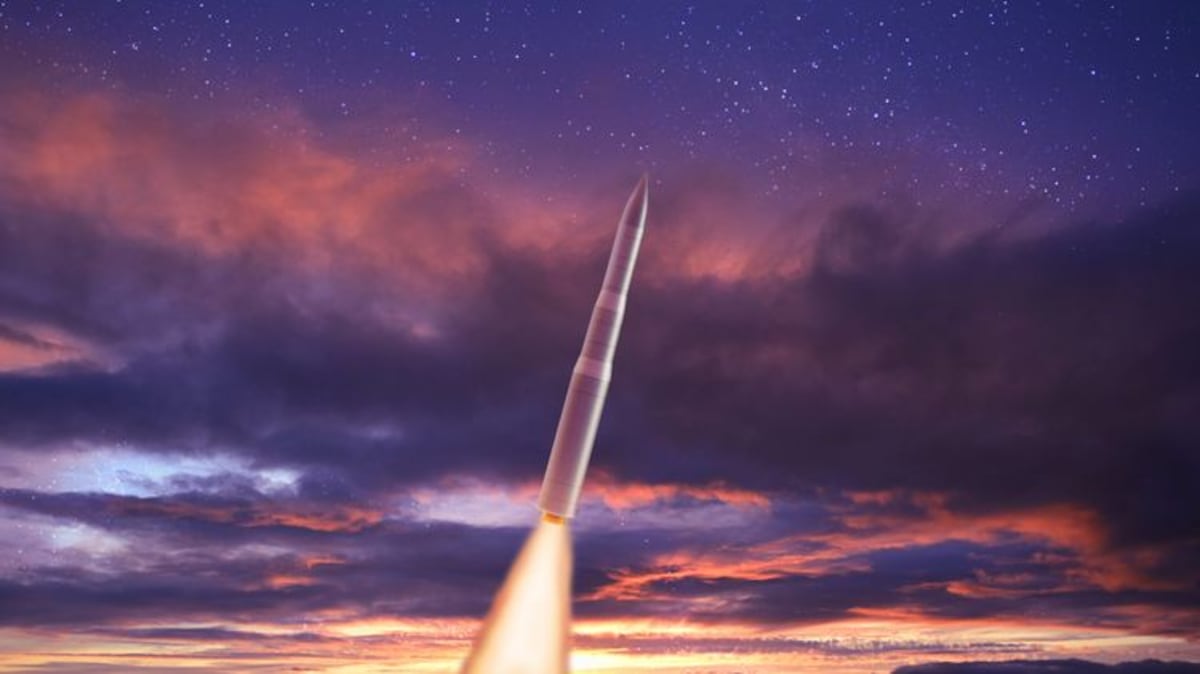
The U.S. Air Force “underestimated” the complexity of building a sprawling network of launch centers and other ground infrastructure for its next nuclear missile, which led to severe projected cost overruns , the service’s acquisition chief said Wednesday.
Most of the Air Force’s and industry’s attention was initially focused on the missile portion of the LGM-35A Sentinel intercontinental ballistic missile , and the program “really neglected the complexity of the ground infrastructure,” Andrew Hunter, the Air Force’s assistant secretary for acquisition, technology and logistics, said at the Defense News Conference in Arlington, Virginia, on Wednesday.
The Air Force wants to replace its arsenal of roughly 450 aging Minuteman III nuclear missiles, which are nearing the end of its life, with the Northrop Grumman-made Sentinel. But the projected future costs of Sentinel’s infrastructure — which include building new launch control centers across the Plains region, refurbishing existing silos for the new missiles and replacing about 7,500 miles of copper cable connecting the facilities with modern fiber optics — have skyrocketed.
The Pentagon originally expected to spend $77.7 billion on Sentinel, but the program is now likely to cost about $160 billion if it stays on its current course. The projected cost overruns alarmed lawmakers and Pentagon officials and incurred a process known as a critical Nunn-McCurdy breach.
After a review announced in July, the military decided Sentinel was too important to cancel but must be restructured to bring those costs back down. But the Pentagon said even a “reasonably modified” version would still probably cost $140.9 billion, or 81% more than the original estimate.
The Air Force is now going “line by line” through Sentinel’s requirements to look for places to bring its costs down, Vice Chief of Staff Gen. Jim Slife said, and the “exhaustive” process will take months.
“The undersecretary (Melissa Dalton), Mr. Hunter’s team and I are deeply, deeply involved in looking at our requirements (and) making sure that we revalidate all the requirements,” Slife said. The Air Force needs to “trace every single one of them back to either presidential guidance, or departmental guidance for things like safety, security, surety, survivability — all the things that you would want in a system that you’re going to rely on to keep the nation safe,” Slife said.
Finding places to cut costs is challenging, Slife said. Sentinel’s top-level requirements — the big-picture blueprint of what it needs to do — were fairly straightforward, he said.
But the “derived requirements” that spell out how Sentinel will do its job “actually can become problematic,” he said. Those can include spelling out how many facilities will be needed to carry out Sentinel’s mission and how much concrete those facilities will need to build and how large a workforce they will require, Slife said.
The Air Force has not built a new ICBM and accompanying infrastructure since the Minuteman III, which was deployed in the early 1970s.
And because it has been so long since the Air Force undertook a major acquisition of this scale, Hunter said, the Air Force underestimated Sentinel’s complexity.
“We’re having to relearn some of those skills and up our game,” Hunter said.
That “striking” complexity of Sentinel’s ground infrastructure is crucial to making the ICBM system an effective nuclear deterrent, Hunter said.
“We have to have a missile where we can respond instantly, at all times, without fail, and in the context of the highest of high-intensity conflicts, a potential nuclear exchange,” Hunter said. “And we ask our ground infrastructure to provide most of those capabilities. The missile is only a small piece of that puzzle.”
The Air Force also has to “bring a lot more engineering focus on the ground infrastructure” to simplify Sentinel and bring its costs under control, Hunter said.
Stephen Losey is the air warfare reporter for Defense News. He previously covered leadership and personnel issues at Air Force Times, and the Pentagon, special operations and air warfare at Military.com. He has traveled to the Middle East to cover U.S. Air Force operations.
美国空军采购主管周三表示,美国空军“低估了”为其下一代核导弹建造庞大的发射中心网络和其他地面基础设施的复杂性,导致预计成本严重超支。
空军和工业界最初将大部分注意力集中在 LGM-35A 哨兵洲际弹道导弹的导弹部分,而该计划“实际上忽略了地面基础设施的复杂性”,空军负责采购、技术和后勤的助理部长安德鲁·亨特周三在弗吉尼亚州阿灵顿举行的国防新闻发布会上表示。
美国空军计划用诺斯罗普·格鲁曼公司制造的“哨兵”导弹系统替换其约450枚老旧的“民兵III”型核导弹,这些导弹已接近使用寿命终点。然而,“哨兵”导弹系统的基础设施建设成本预计在未来将大幅上涨,其中包括在平原地区新建发射控制中心、翻新现有导弹发射井以及将连接各设施的约7500英里铜缆更换为现代光纤。
五角大楼最初预计“哨兵”系统耗资777亿美元,但如果按照目前的进度,该项目最终成本可能高达1600亿美元左右。预计的成本超支令国会议员和五角大楼官员感到震惊,并引发了所谓的“努恩-麦克柯迪法案”重大违约事件。
在7月份宣布的一项审查之后,军方认为“哨兵”系统至关重要,不能取消,但必须进行重组以降低成本。然而,五角大楼表示,即使是“合理修改”后的版本,成本可能仍高达1409亿美元,比最初的预算高出81%。
空军副参谋长吉姆·斯莱夫将军表示,空军现在正在“逐条审查”哨兵导弹系统的要求,以寻找降低成本的地方,而这一“详尽”的过程将持续数月。
斯莱夫表示:“副部长(梅丽莎·道尔顿)、亨特先生的团队和我都在深入研究我们的需求,并确保我们重新验证所有需求。” 他还说,空军需要“追溯每一项需求,找到总统指示或部门指示,确保其符合安全、保障、可靠性、生存能力等要求——这些都是你希望在一个用于维护国家安全的系统中看到的要素。”
斯莱夫表示,寻找削减成本的途径是一项挑战。他说,Sentinel公司的高层需求——也就是它需要完成的总体规划——相当明确。
但他表示,那些详细说明“哨兵”系统如何执行任务的“衍生需求”实际上“可能会出现问题”。斯莱夫说,这些需求可能包括:需要多少设施来完成“哨兵”的任务,建造这些设施需要多少混凝土,以及需要多少劳动力。
自 20 世纪 70 年代初部署民兵 III 型洲际弹道导弹以来,美国空军就没有建造过新的洲际弹道导弹及其配套基础设施。
亨特表示,由于空军已经很久没有进行如此大规模的采购,因此空军低估了“哨兵”系统的复杂性。
“我们不得不重新学习一些技能,提高我们的水平,”亨特说。
亨特表示,哨兵导弹地面基础设施的“惊人”复杂性对于使洲际弹道导弹系统成为有效的核威慑力量至关重要。
亨特说:“我们必须拥有一种导弹,能够让我们在任何时候都能立即做出反应,绝不失灵,尤其是在最激烈的冲突,甚至是潜在的核战争中。而我们要求地面基础设施提供大部分这样的能力。导弹只是其中的一小部分。”
亨特表示,空军还必须“将更多的工程重点放在地面基础设施上”,以简化哨兵系统并控制其成本。
斯蒂芬·洛西是《防务新闻》的空战记者。他此前曾在《空军时报》报道领导层和人事问题,并在Military.com网站报道五角大楼、特种作战和空战。他曾前往中东报道美国空军的行动。