WATER AS AN ECONOMIC DRIVER水作为经济发展的驱动力
BEHIND every growing economy is an essential resource often taken for granted: water.
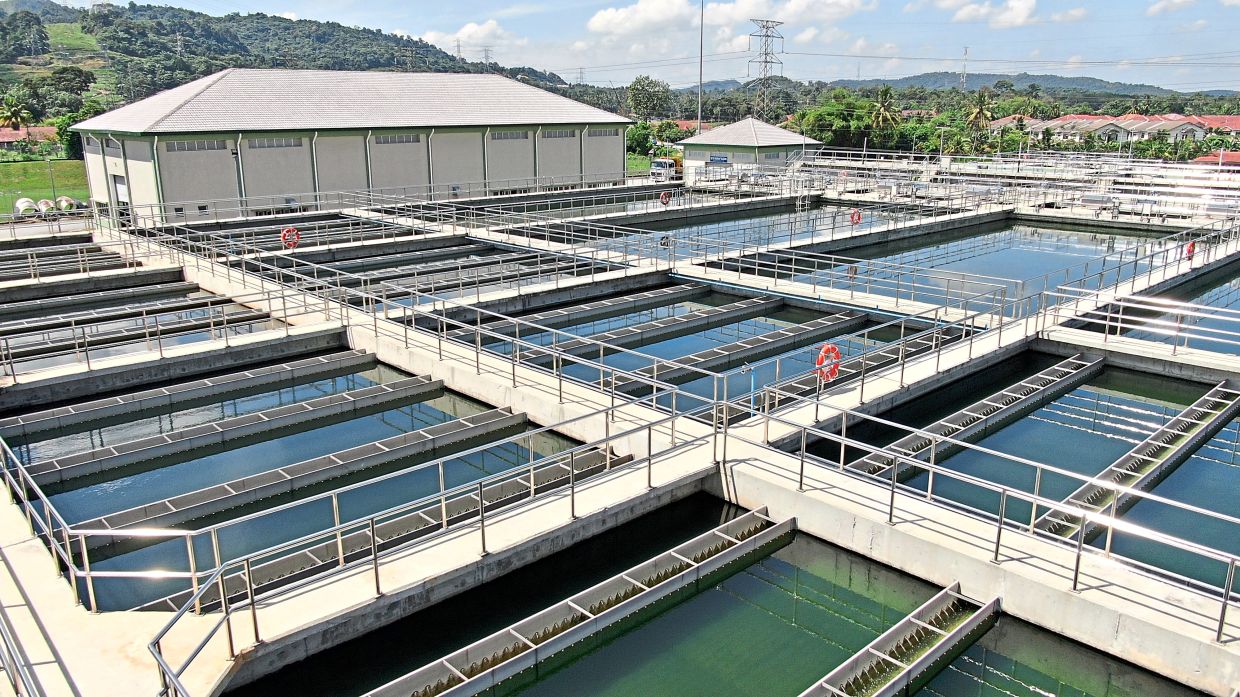
Air Selangor is continuously expanding its water sources and infrastructure to support Selangor’s future growth.
BEHIND every growing economy is an essential resource often taken for granted: water.
From manufacturing to data centres, the next phase of economic expansion will depend not only on capital and labour, but on the ability to secure a reliable water supply for a growing economy.
For Selangor, water security is a fundamental enabler of economic growth and its attractiveness as an investment destination, particularly for technology and manufacturing industries where a reliable and resilient water supply is critical to operational continuity, said Air Selangor chief executive officer Adam Saffian Ghazali.
The state recorded strong economic growth in 2025, with its gross domestic product (GDP) reaching RM460.1bil. This positive momentum has continued into 2026, with the state attracting RM70bil in investments as of June 2026. The services and manufacturing sectors contributed the largest share of these investments, bringing the state closer to its full-year investment target of RM80bil.
Many of these milestones are supported by the reliability of Pengurusan Air Selangor Sdn Bhd (Air Selangor), Malaysia’s largest water services provider, responsible for distributing clean and safe treated water to consumers across Selangor, Kuala Lumpur and Putrajaya.
Its operational performance is reflected in several key achievements. In 2025, the company reduced its non-revenue water (NRW) level to 26.8%, an improvement from 27% in 2024 and surpassing the National Water Services Commission’s (SPAN) NRW Matching Grant target of 27.5%. At the same time, its pipeline burst rate, measured by the Pipe Burst Index (PBI), improved to 2.94 bursts per 100km of pipeline per year, compared with 3.25 in 2024, and well below the global benchmark of 13.
For investors, these milestones provide greater confidence that Selangor’s water infrastructure is being planned not only for current demand, but also for the needs of future industries, he said.
“As technology and manufacturing investments become increasingly sophisticated and resource-intensive, the reliability, resilience and sustainability of essential utilities are important considerations in determining the long-term viability of an investment location.”
“As we celebrate our seventh anniversary this year, Air Selangor is committed to building a more resilient water ecosystem that can support Selangor’s ambition to attract and sustain high-value technology and manufacturing investments over the long term,” he added.
Its track record is further reinforced by its induction to the Leading Utilities of the World (LUOW) global network, making it the first water services provider in Malaysia to receive this recognition.
The accolade underscores the company’s commitment to innovation, operational excellence and high standards of performance, reinforcing its role in ensuring a reliable and resilient water supply to support the state’s continued growth.
Adam said water security is vital to economic growth and investment, particularly for the technology and manufacturing industries.
The next milestone for the state is to build on its momentum and achieve the RM600bil in revenue target by 2030 as outlined by the Second Selangor Plan (RS-2).
As the economy continues to grow, the persistent question is whether the state’s water assets can sustain the needs of both the people and industry.
This is particularly pertinent given the rapid growth of the data centre industry, as these facilities require significant amounts of water for cooling purposes. With around 40 approved data centre projects in the state, concerns over the potential impact on water demand and supply have naturally come into focus.
In response, Adam noted that Air Selangor regularly reviews the supply–demand outlook for Selangor, Kuala Lumpur and Putrajaya to assess its ability to meet water needs over the next 30 years. This allows the company to anticipate changes in population, consumption patterns and economic development, and plan its water infrastructure and resources accordingly.
In a separate news report, Selangor investment, trade and mobility committee chairman Ng Sze Han noted that the current demand from data centres has not placed pressure on Selangor’s domestic water supply.
This reflects the water operator’s capacity and expertise in managing the state’s water resources and infrastructure. At present, the state maintains an average treated water reserve margin of 17.86%, exceeding the 15% healthy or safe reserve margin set by SPAN.
Additionally, Air Selangor's current infrastructure comprises 34 water treatment plants with a combined design capacity of 6,500mil litres per day (MLD), of which about 5,415 MLD is currently utilised. This leaves a buffer of 1,085 MLD, which is able to meet the projected demands of data centres, according to Adam.
These figures demonstrate the state’s ability to accommodate industrial demand while maintaining a healthy buffer for domestic water needs.
“Air Selangor’s approach is to ensure that water security keeps pace with both population growth and economic development, while ensuring that domestic water security is never compromised,” he said.
Investment in innovative and sustainable solutions also plays an increasingly important role in supporting the growth of emerging industries.
A notable example is Air Selangor’s collaboration with Amazon Web Services (AWS), Indah Water Konsortium (IWK) and Central Water Reclamation Sdn Bhd (CWR), which established the Klang Valley’s first integrated reclaimed-water supply chain for data centre operations. The initiative involves Air Selangor supplying reclaimed water to AWS facilities.
From Jan 1 to Dec 31, 2025, CWR supplied approximately 1,203 megalitres of reclaimed water. This represents an important first step in establishing reclaimed water as a viable alternative source for industrial use.
As the system scales up, reclaimed water is expected to play an increasingly important role in meeting future industrial demand, particularly from the data centre sector, where water demand is projected to exceed 240 MLD.
By providing an alternative source for industrial applications, the initiative helps strengthen water security by allowing potable water resources to remain prioritised for domestic consumption by its 9.62mil consumers across Selangor, Kuala Lumpur and Putrajaya.
At the same time, it reflects a more sustainable and responsible approach to managing shared water resources, enabling industrial growth without compromising the reliability of water supply for households and other essential users.
Air Selangor’s track record and operational performance continue to support reliable water supply for both domestic and industrial use.
Air Selangor is also investing in new water sources and infrastructure to strengthen supply capacity and ensure the state is ready for future growth. One such project is the Rasau Water Supply Scheme.
Looking ahead to 2027, stage one of the project is expected to provide an initial 350 MLD by March 2027 and up to 700 MLD upon full completion in June 2027 to support demand in Klang, Petaling and Sepang.
Under the scheme, nine former tin-mining ponds have been identified as off-river storage (ORS) facilities, providing an additional source of raw water to bolster supply resilience.
Once fully implemented, the scheme is expected to provide an additional 1,400 MLD of treated water. It is also expected to increase the reserve margin from 16.7% to 24.8%, providing a stronger buffer to manage future demand growth and potential supply disruptions.
Other projects that will further strengthen the overall water supply system include Langat 2 Phase 2, which will utilise 760 MLD of raw water through an inter-state water transfer, and Labohan Dagang Phase 2, which will utilise an additional ORS with a capacity of 200 MLD.
These will contribute to the additional supply capacity required to meet future domestic, commercial and strategic industrial demand.
“Together, these projects are designed not only to address increasing water demand, but also to strengthen the resilience and flexibility of Selangor’s water supply system. This is particularly important as the state continues to attract new investments and develop high-value industries that require reliable and sustainable water infrastructure,” Adam said.
To learn more about Air Selangor and its initiatives, visit its official website at www.airselangor.com .
Thank you for your report!
Setting the pace in wearable technology with the HUAWEI WATCH GT 7 Series
MDEC’s MDX Forum 2026 charts Malaysia’s next phase of AI growth beyond infrastructure
Championing STEM talent through Malaysia Techlympics 2026
雪兰莪水务公司不断扩大其水源和基础设施,以支持雪兰莪州的未来发展。
每一个经济增长的背后,都离不开一种常常被人们视为理所当然的重要资源:水。
从制造业到数据中心,下一阶段的经济扩张不仅取决于资本和劳动力,还取决于能否为不断增长的经济体提供可靠的水源供应。
雪兰莪水务公司首席执行官亚当·萨菲安·加扎利表示,对于雪兰莪州而言,水安全是经济增长和其作为投资目的地吸引力的基本推动因素,特别是对于科技和制造业而言,可靠且有弹性的供水对于运营的连续性至关重要。
该州在2025年实现了强劲的经济增长,国内生产总值(GDP)达到4601亿令吉。这一积极势头延续至2026年,截至2026年6月,该州已吸引700亿令吉的投资。服务业和制造业贡献了其中最大的投资份额,使该州距离全年800亿令吉的投资目标更近了一步。
其中许多里程碑都得到了马来西亚最大的水服务提供商 Pengurusan Air Selangor Sdn Bhd(Air Selangor)的可靠性的支持,该公司负责向雪兰莪、吉隆坡和布城的消费者提供清洁安全的处理水。
其运营绩效体现在多项关键成就中。2025年,该公司将无收益水(NRW)率降至26.8%,较2024年的27%有所改善,并超过了国家水务委员会(SPAN)设定的27.5%的无收益水配套补助目标。与此同时,其管道爆裂率(以管道爆裂指数(PBI)衡量)也从2024年的3.25降至每年每100公里管道2.94次爆裂,远低于13次的全球基准水平。
他表示,对于投资者而言,这些里程碑事件让他们更加确信,雪兰莪州的水利基础设施规划不仅是为了满足当前的需求,也是为了满足未来产业的需求。
“随着技术和制造业投资变得越来越复杂和资源密集,基本公用设施的可靠性、韧性和可持续性是决定投资地点长期可行性的重要考虑因素。”
“今年正值雪兰莪水务公司成立七周年之际,公司致力于构建一个更具韧性的水生态系统,以支持雪兰莪州长期吸引和维持高价值技术和制造业投资的雄心壮志,”他补充道。
该公司的业绩记录因其加入世界领先公用事业公司 (LUOW) 全球网络而得到进一步巩固,使其成为马来西亚第一家获得此项认可的水务服务提供商。
该奖项彰显了公司对创新、卓越运营和高绩效标准的承诺,强化了其在确保可靠和有韧性的供水以支持该州持续发展方面所发挥的作用。
亚当表示,水资源安全对经济增长和投资至关重要,尤其是对科技和制造业而言。
雪兰莪州的下一个里程碑是巩固其发展势头,并实现第二个雪兰莪计划(RS-2)中概述的到 2030 年 6000 亿令吉的收入目标。
随着经济的持续增长,一个持续存在的问题是,该州的水资源能否满足人民和工业的需求。
鉴于数据中心行业的快速发展,这一点尤为重要,因为这些设施需要大量用水进行冷却。目前该州已批准约40个数据中心项目,因此,人们对这些项目可能对水资源供需造成的影响自然十分关注。
对此,亚当指出,雪兰莪水务公司定期审查雪兰莪州、吉隆坡和布城的供需前景,以评估其未来30年满足用水需求的能力。这使得该公司能够预测人口、消费模式和经济发展的变化,并据此规划其水利基础设施和资源。
在另一篇新闻报道中,雪兰莪投资、贸易和交通委员会主席吴思翰指出,目前数据中心的需求并未对雪兰莪的国内供水造成压力。
这体现了水务运营商在管理该州水资源和基础设施方面的能力和专业水平。目前,该州平均处理水储备裕度为17.86%,超过了SPAN设定的15%的健康或安全储备裕度。
此外,雪兰莪水务公司目前的基础设施包括34座水处理厂,总设计处理能力为每日65亿升(MLD),其中目前已使用约54.15亿升。据亚当称,这还剩下10.85亿升的缓冲能力,足以满足数据中心的预计需求。
这些数据表明,该州有能力满足工业用水需求,同时保持足够的家庭用水缓冲空间。
“雪兰莪水务公司的做法是确保供水安全与人口增长和经济发展保持同步,同时确保国内供水安全永远不会受到损害,”他说。
投资于创新和可持续的解决方案在支持新兴产业发展方面也发挥着越来越重要的作用。
一个值得注意的例子是雪兰莪水务公司与亚马逊网络服务(AWS)、英达水务集团(IWK)和中央水务有限公司(CWR)的合作,他们建立了巴生谷首个用于数据中心运营的综合再生水供应链。该项目涉及雪兰莪水务公司向AWS设施供应再生水。
从2025年1月1日至12月31日,CWR供应了约1203兆升再生水。这标志着在将再生水确立为工业用水的可行替代水源方面迈出了重要的第一步。
随着系统规模的扩大,再生水预计将在满足未来工业需求方面发挥越来越重要的作用,尤其是在数据中心领域,预计该领域的用水需求将超过 240 MLD。
通过为工业应用提供替代水源,该举措有助于加强水安全,使雪兰莪、吉隆坡和布城 962 万用户的饮用水资源能够优先用于家庭消费。
同时,这体现了一种更可持续、更负责任的共享水资源管理方式,在不损害家庭和其他重要用户供水可靠性的前提下,促进了工业发展。
雪兰莪水务公司良好的业绩记录和运营表现持续为家庭和工业用水提供可靠的供水。
雪兰莪水务公司也在投资新的水源和基础设施,以增强供水能力,确保该州为未来的发展做好准备。拉绍供水计划就是其中一个项目。
展望 2027 年,该项目的第一阶段预计将于 2027 年 3 月提供 350 MLD 的初始供水量,并在 2027 年 6 月全面完工后提供高达 700 MLD 的供水量,以满足巴生、八打灵和雪邦的需求。
根据该计划,九个以前的锡矿池塘被确定为河外蓄水(ORS)设施,为增强供水韧性提供额外的原水来源。
该计划全面实施后,预计每天将额外提供1400百万升处理水。同时,预计还将储备裕度从16.7%提高到24.8%,从而为应对未来需求增长和潜在的供应中断提供更强的缓冲能力。
其他将进一步加强整体供水系统的项目包括 Langat 2 二期工程,该工程将通过州际调水利用 760 MLD 的原水;以及 Labohan Dagang 二期工程,该工程将利用容量为 200 MLD 的额外 ORS。
这将有助于增加满足未来国内、商业和战略工业需求所需的额外供应能力。
“这些项目旨在共同应对日益增长的用水需求,同时增强雪兰莪州供水系统的韧性和灵活性。这一点尤为重要,因为雪兰莪州正在不断吸引新的投资,并发展需要可靠且可持续的水利基础设施的高价值产业,”亚当说道。
要了解更多关于雪兰莪水务公司及其举措的信息,请访问其官方网站 www.airselangor.com。
感谢您的报告!
华为WATCH GT 7系列引领可穿戴技术潮流
MDEC 的 MDX 论坛 2026 规划了马来西亚人工智能发展超越基础设施的下一阶段。
通过2026年马来西亚科技奥林匹克竞赛培养STEM人才