NATO to study what-if scenarios that could cause Arctic conflict with Russia北约将研究可能导致与俄罗斯在北极发生冲突的各种假设情景。
The alliance's biennial Cold Response drill will take place from March 9-19 across Norway.
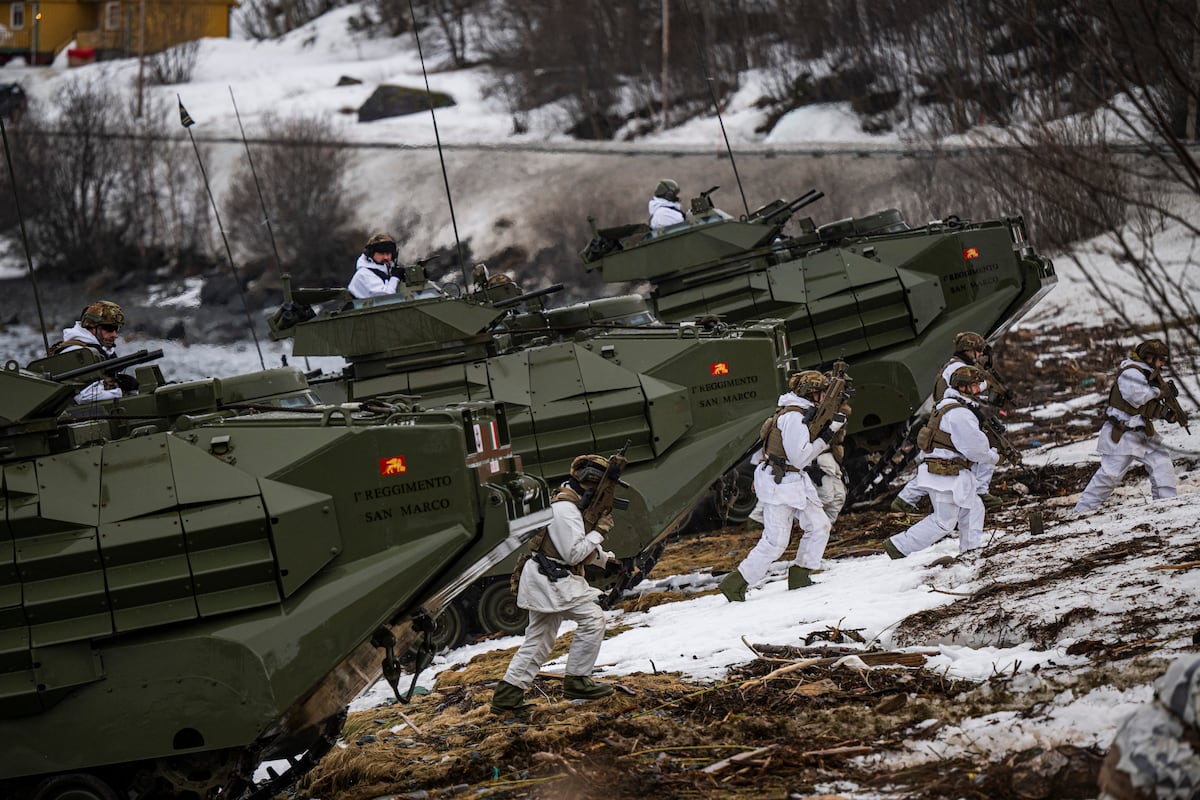
BRUSSELS — NATO nations are sending troops to Norway for a cold-weather exercise this week, as alliance officials kick off a yearslong analysis into causes for conflict in the Arctic.
As part of the planning effort, a U.S. and Norwegian-led research task force will compile a report by 2029 under the name “High North Scenarios for Wargaming and Analysis — Winter Storm 2030.”
Beyond the lead nations, NATO countries to have thus far committed to participating in the Arctic security simulation include Canada, the Czech Republic, France, Italy, Sweden and Turkey.
“The region faces rapid militarization of allied and threatening interests – NATO and nations are making procurement decisions that will field the force of 2030 and set the conditions for success and adaptation out to 2040,” a NATO technical activity proposal viewed by Defense News said.
Defense officials on both sides of the Atlantic have warned that the prospect of a war in the region is rising, with the expectation of Russia turning its attention to the region if and when the Ukraine conflict ends.
The High North has increasingly become a geopolitical hotspot, mainly due to the effects of climate change on melting sea ice, which has made the area more attractive and accessible for shipping and resource extraction.
NATO’s biennial Cold Response drill will take place from March 9-19 across Norway. It will include some 25,000 troops from 14 countries, including the U.S. and Denmark, and will feature naval, land, and air operations focused on Arctic defense.
The Pentagon is expected to have around 4,000 Marines participating in the drill, and thousands of Finnish and Swedish troops will also be partaking, operating out of Finland.
The exercise is part of Arctic Sentry, NATO’s ongoing mission to bolster its presence in the region, launched in February to ease tensions over Greenland.
In a report published last month, the D.C.-based Atlantic Council identified five Russian attack scenarios Europe must prepare for. Two of the five targets listed are located in the Arctic: the Svalbard archipelago and the Åland Islands.
In the first instance, the report states that Moscow may view greater value in exploiting the “territorial ambiguity” of the undefended archipelago, located 750 kilometers north of the Norwegian mainland.
It predicts that a variety of hybrid activities would precede any Russian attempt at capturing Svalbard, including the destruction of undersea critical infrastructure or placing intelligence officers in civilian clothes.
“Naval infantry from the Northern Fleet or airborne troops flown in from mainland Russia could rapidly seize and occupy the archipelago with little warning, presenting NATO with a fait accompli – it must prepare detailed plans to retake Svalbard in the event of aggression,” the document said.
One of the recommendations provided would entail the deployment of Norwegian special forces alongside U.S., UK, and Dutch marines who routinely train together in northern Norway and know the area well.
Elisabeth Gosselin-Malo was a Europe correspondent for Defense News. She covers a wide range of topics related to military procurement and international security, and specializes in reporting on the aviation sector. She is based in Milan, Italy.
布鲁塞尔——本周,北约国家将向挪威派遣军队进行寒冷天气演习,与此同时,北约官员也启动了一项为期数年的北极冲突原因分析。
作为规划工作的一部分,由美国和挪威领导的研究工作组将在 2029 年前编写一份名为“高北战争游戏和分析场景——2030 年冬季风暴”的报告。
除了主要国家之外,迄今为止承诺参加北极安全模拟演习的北约国家还包括加拿大、捷克共和国、法国、意大利、瑞典和土耳其。
《防务新闻》看到的一份北约技术活动提案称:“该地区正面临盟国和威胁国利益的快速军事化——北约和各国正在做出采购决定,这些决定将组建 2030 年的部队,并为到 2040 年的成功和适应创造条件。”
大西洋两岸的国防官员都警告说,该地区爆发战争的可能性正在上升,预计如果乌克兰冲突结束,俄罗斯将把注意力转向该地区。
由于气候变化导致海冰融化,使得北半球高纬度地区日益成为地缘政治热点地区,这使得该地区对航运和资源开采更具吸引力和便利性。
北约两年一度的“寒冷反应”演习将于3月9日至19日在挪威举行。此次演习将有来自14个国家的约25000名士兵参加,其中包括美国和丹麦,演习内容涵盖海陆空作战,重点是北极防御。
预计五角大楼将派出约 4000 名海军陆战队员参加此次演习,数千名芬兰和瑞典军队也将参与其中,并在芬兰开展行动。
此次演习是北约“北极哨兵”行动的一部分,该行动是北约为加强其在该地区的存在而正在进行的一项任务,于今年2月启动,旨在缓解格陵兰岛的紧张局势。
上个月,总部位于华盛顿特区的美国大西洋理事会发布报告,列出了欧洲必须防范的五种俄罗斯袭击情景。这五个目标中有两个位于北极地区:斯瓦尔巴群岛和奥兰群岛。
报告首先指出,莫斯科可能认为利用位于挪威大陆以北 750 公里处、未设防的群岛的“领土模糊性”更有价值。
报告预测,俄罗斯在试图占领斯瓦尔巴群岛之前,会采取各种混合行动,包括破坏海底关键基础设施或让情报人员穿上便服。
文件称:“北方舰队的海军陆战队或从俄罗斯大陆空降的部队可以迅速占领该群岛,几乎无需任何警告,这将使北约面临既成事实——北约必须制定详细的计划,以便在遭到侵略时夺回斯瓦尔巴群岛。”
其中一项建议是,将挪威特种部队部署到美国、英国和荷兰海军陆战队旁边,这些部队经常在挪威北部一起训练,对该地区非常熟悉。
伊丽莎白·戈斯林-马洛曾任《防务新闻》欧洲通讯员。她的报道涵盖军事采购和国际安全等广泛领域,尤其擅长航空领域的报道。她常驻意大利米兰。