Taiwan’s Tron Future unveils AI-guided anti-armor rockets台湾创战纪公司推出人工智能制导反装甲火箭
Designed for unguided munitions, the device uses a variety of sensors and AI to instantly calculate and predict the projectile flight paths.
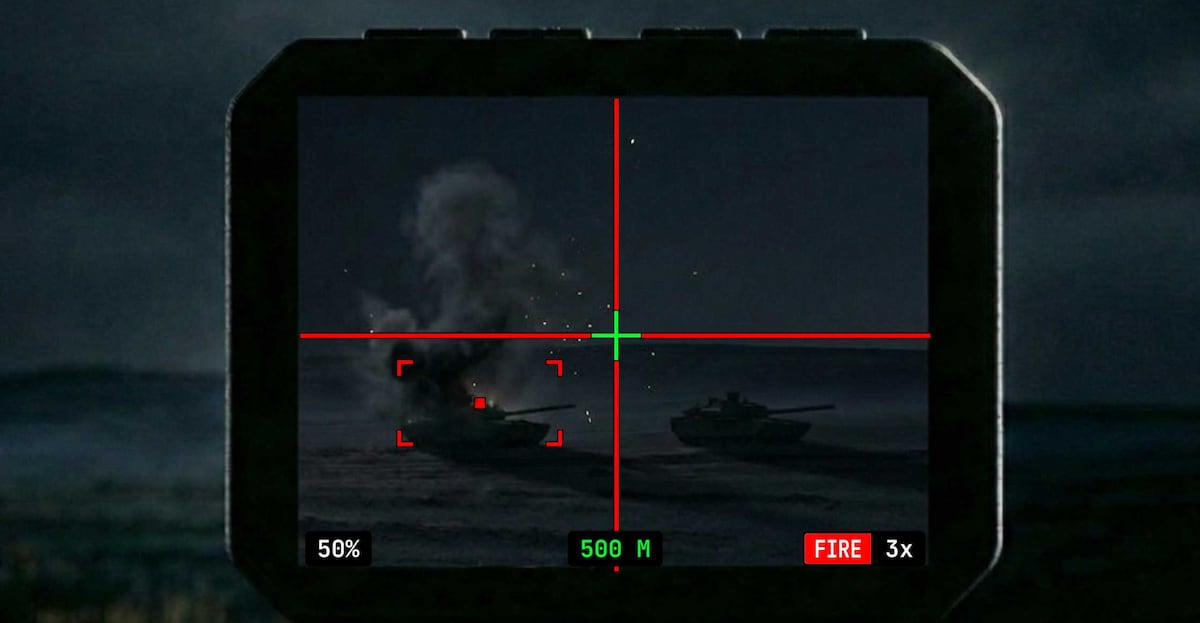
SINGAPORE — The Taiwan-based company Tron Future has unveiled an AI-assisted system that guides anti-armor rockets, which could help to accelerate the training of civilians and soldiers during a war, according to company officials.
The Singapore Airshow, organized here from Feb 3-8, marks the first time the T-Scope has been shown overseas. The device was designed specifically for unguided munitions and uses a variety of sensors and AI to instantly calculate and predict the projectile flight paths, taking into account environmental and physical factors.
“What we’re doing rather than placing sensors on the rocket itself, is we are putting them into an AI-driven guidance kit, which essentially transforms unguided rockets into precision-guided munitions to improve their accuracy for cheaper,” Alan Kuo, Tron Future’s director of sales, told Defense News.
Taiwan has been gradually building up its inventory of anti-tank weapons, including an unknown number of unguided rocket-propelled grenades, to deter potential attacks.
Wang said they were approached by one of the country’s leading defense institutes to develop a device that could help quickly mobilize personnel, if needed.
“By combining automated complex ballistic calculations and displaying a live corrected aiming point, T.Scope allows soldiers to achieve marksman-level proficiency within a very compressed training timeframe,” Kuo added. “It would allow for combat readiness even under limited preparation.”
Although it has already been tested, the company is hopeful that it will receive army certification before the end of the year.
Further testing has already been planned to see how it performs in shallow water, per a request from the undisclosed defense institute.
The National Chung-Shan Institute of Science Technology, or NCSIST, is largely regarded as the leading research and development center in the defense sector in Taiwan. It focuses on designing and producing indigenous weapons, including missiles and unmanned systems.
Tron Future’s counter-drone radars have been used by the Taiwanese Army for several years. The company has also been assisting the government in integrating counter-drone technologies with Taiwan’s low Earth orbit satellites through its T.SpaceRouter user terminals to increase the island’s communication resilience.
Elisabeth Gosselin-Malo was a Europe correspondent for Defense News. She covers a wide range of topics related to military procurement and international security, and specializes in reporting on the aviation sector. She is based in Milan, Italy.
新加坡——据公司官员称,总部位于台湾的创未来公司推出了一款人工智能辅助系统,该系统可以引导反装甲火箭,这有助于加快战争期间平民和士兵的训练。
2月3日至8日在此举行的新加坡航展上,T-Scope首次亮相海外。该设备专为非制导武器设计,利用多种传感器和人工智能技术,结合环境和物理因素,即时计算并预测弹道轨迹。
Tron Future 的销售总监 Alan Kuo 告诉《防务新闻》:“我们并没有将传感器安装在火箭本身上,而是将它们安装到一个人工智能驱动的制导套件中,这本质上是将无制导火箭转变为精确制导弹药,从而以更低的成本提高其精度。”
台湾一直在逐步扩充其反坦克武器库存,其中包括数量不明的非制导火箭推进榴弹,以阻止潜在的袭击。
王先生表示,他们受国内一家顶尖国防研究机构委托,研发一种必要时能够帮助快速调动人员的设备。
郭补充道:“T.Scope结合了自动化的复杂弹道计算和实时修正瞄准点显示,使士兵能够在极短的训练时间内达到神枪手的水平。即使在准备有限的情况下,它也能确保士兵做好战斗准备。”
虽然该产品已经过测试,但该公司希望能在年底前获得军方认证。
根据某未公开的国防机构的要求,已经计划进行进一步测试,以检验其在浅水中的性能。
国立中山科学研究院(简称中山科学研究院)被广泛认为是台湾国防领域领先的研发中心。它专注于设计和生产自主研发的武器,包括导弹和无人系统。
Tron Future的反无人机雷达已被台湾军方使用多年。该公司还通过其T.SpaceRouter用户终端,协助政府将反无人机技术与台湾的低地球轨道卫星整合,以增强台湾的通信韧性。
伊丽莎白·戈斯林-马洛曾任《防务新闻》欧洲通讯员。她的报道涵盖军事采购和国际安全等广泛领域,尤其擅长航空领域的报道。她常驻意大利米兰。