India and US maintain momentum in defense ties印度和美国在防务关系方面保持良好势头
But India’s caution has redoubled amid the global turbulence witnessed in the past year, according to analysts.
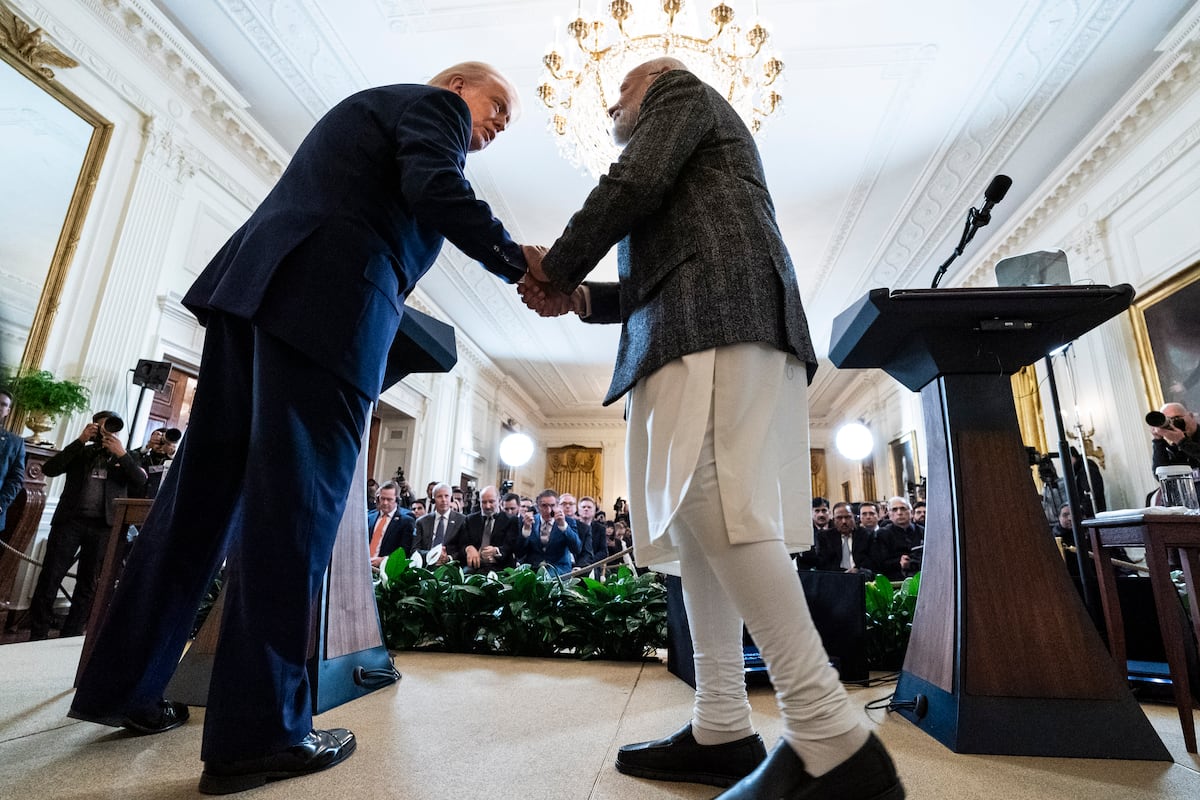
NEW DELHI — Amid deepening security ties between India and the U.S., New Delhi has significantly increased procurement of military equipment from Washington even as supplies from Russia, for long India’s biggest source of weapons, decline significantly.
Analysts however say that in the coming years, one of the world’s biggest arms importers is turning to countries that will give it access to critical weapons technology.
Nearly negligible a decade and a half ago, defense trade with the U.S. has jumped to $20 billion, making it New Delhi’s third-largest arms supplier after Russia and France.
In November, an Indian state-owned firm signed a $1 billion deal to buy 113 F404 engines from General Electric Aerospace to power a domestically manufactured light combat aircraft called the Tejas Mk-1A. The fighters are crucial for India’s efforts to shore up the strength of its air force in the face of neighboring China’s growing military power.
India is also in the final stages of negotiating a deal to co-produce General Electric’s F414 jet engine in the country to power a more advanced fighter jet called the Tejas Mk2 as well as initial batches of a fifth-generation fighter jet it is developing.
Those deals represent a major milestone in the India-U.S. defense relationship according to Dinakar Peri, an analyst in the Security Studies program at Carnegie Foundation.
“That is significant because for a long time, India has not bought much offensive military equipment from the U.S. except, say, Apache helicopters and howitzers. It has mostly bought support platforms,” he pointed out. “But now over the next 15 to 20 years, an estimated 350 to 400 fighter jets that will be made in India will have American engines at the heart of the planes. That is almost 40 to 50 percent of the sanctioned fighter strength of the Indian Air Force.”
While India is building fighter jets for its air force, New Delhi lacks the know-how to make engines to power the aircraft.
In November, Washington also approved arms sales of Javelin anti-tank missiles and Excalibur precision artillery projectiles to New Delhi worth $92.8 million. India will also lease two additional MQ-9B Sea Guardian predator drones for the Indian Navy, to expand maritime surveillance across the Indian Ocean.
The defense deals came amid tensions that persisted for months over 50% tariffs that Washington had imposed on Indian goods – the highest in the world – until a trade deal reached this week slashed the duties. Analysts say security ties have remained insulated from the friction over trade.
“In the turbulent first year of Trump 2.0, if there has been continuity in the relationship, that has been in defense. Both countries are persevering with the security partnership such as military exercises and signing new contracts for weapons,” according to Brigadier Arun Sahgal, who directs the Forum for Strategic Initiatives here.
“In fact defense is the only silver lining in the relationship and will provide the necessary accelerator to maintain balance in the relationship,” he said.
The defense partnership is driven by Washington and New Delhi’s need to balance China’s rising power in Asia. While approving the supply of anti-tank missiles and artillery projectiles, the Pentagon’s Defense Security Cooperation Agency said that the sales would strengthen its strategic relationship with India, which it called “an important force for political stability, peace, and economic progress” in the Indo-Pacific and South Asia.
In recent years, India’s procurement of military equipment from the U.S. has included Apache helicopters, Super Hercules transport planes and maritime patrol aircraft.
But as India pushes to modernize its armed forces, it is accelerating efforts to increase defense production at home and upgrade its military capabilities to counter regional rival China. The so-called “Make in India” and “Self-reliance” drive has gathered urgency amid recent hostilities with Pakistan and China — Indian and Chinese troops were engaged in a four-year-long military standoff following a border skirmish in 2020. A four-day conflict between India and Pakistan last May was their worst in decades.
India’s most ambitious indigenous defense project is developing a fifth-generation fighter aircraft. While initial batches will be powered with the American F414 engines, New Delhi has turned to France to gain access to crucial technology. A deal is in the final stages of approval to co-develop and co-produce engines for the aircraft with full technology transfer.
“We are about to start engine manufacturing work in India with the French company Safran,” Indian Defense Minister Rajnath Singh said in August.
New Delhi is also leaning toward a French fighter jet to equip its air force. The Defence Procurement Board, which evaluates defense equipment acquisitions, recently approved a proposal to buy 114 Rafale jets from France’s Dassault Aviation. While more approvals will be needed, analysts say the deal is in the final stages. India has previously bought 36 Rafales.
“France provides the alternative as India seeks strategic autonomy. New Delhi does not want too much dependency on the U.S., especially amid the current geopolitical uncertainties,” pointed out analyst Peri.
During a meeting last February between Indian Prime Minister Narendra Modi and President Donald Trump, the American president said that the U.S. is paving the way to ultimately provide India with the F-35 stealth fighters.
But analysts in New Delhi rule out the possibility of India opting for the F-35, pointing out that stringent controls attached to U.S. military equipment are a deterrent in buying advanced equipment from Washington.
“With fighter jets the problem is the conditions attached to their sale. Modern military hardware for example requires a constant software upgrade. All this gives the U.S. leverage in control over the equipment, which India would not want,” according to Manoj Joshi, distinguished fellow at New Delhi’s Observer Research Foundation.
He says India’s caution has redoubled amid the global turbulence witnessed in the past year. “We were getting friendlier towards American imports but there will be a rethink. Yesterday the U.S. was New Delhi’s close friend, today it is no longer a friend to the same extent, what tomorrow holds we don’t know,” said Joshi.
Although India has diversified its purchases away from Russia, it is still a top weapons supplier – partly because Indian military systems continue to require Moscow’s support, and partly because it is willing to supply advanced systems and share technology with New Delhi, with which it shares a close partnership.
As New Delhi spends billions of dollars to strengthen its defense in the coming years, India will turn to countries that are willing to share technology and produce military equipment in the country. Part of the production of Rafale fighter jets, for example, is expected to take place in India, once the deal gets the green signal.
Analysts say it remains to be seen if similar deals can be struck with the United States.
“India will continue to maintain the pace of its defense relationship with Washington, but to sustain it beyond a certain point, it has to move beyond being purely transactional and move into the realm of joint production and joint development of weapons,” according to Sahgal.
新德里——随着印度和美国之间安全关系的不断加深,尽管长期以来作为印度最大武器来源的俄罗斯的供应大幅下降,但新德里仍大幅增加了从华盛顿采购军事装备的量。
但分析人士表示,未来几年,世界最大的武器进口国之一将转向那些能够为其提供关键武器技术的国家。
15年前几乎可以忽略不计的与美国的国防贸易额,如今已跃升至200亿美元,使印度成为继俄罗斯和法国之后新德里的第三大武器供应国。
11月,一家印度国有企业签署了一项价值10亿美元的协议,从通用电气航空航天公司购买113台F404发动机,用于为其国产轻型战斗机“光辉”(Tejas)Mk-1A提供动力。面对邻国中国日益增长的军事实力,这些战斗机对于印度增强空军实力至关重要。
印度目前也正处于与通用电气公司就合作生产F414喷气发动机进行谈判的最后阶段,该发动机将在印度生产,用于为更先进的“光辉”Mk2战斗机以及其正在研发的第五代战斗机的首批产品提供动力。
卡内基基金会安全研究项目分析师迪纳卡·佩里表示,这些协议代表了印美防务关系的一个重要里程碑。
“这意义重大,因为长期以来,印度除了阿帕奇直升机和榴弹炮等少数几种武器装备外,很少从美国购买进攻性军事装备,主要购买的是支援平台,”他指出。“但未来15到20年,预计印度将生产350到400架战斗机,这些飞机的核心部件将采用美国发动机。这几乎占印度空军核定战斗机数量的40%到50%。”
虽然印度正在为其空军建造战斗机,但新德里缺乏制造飞机发动机的技术。
11月,华盛顿还批准向新德里出售价值9280万美元的“标枪”反坦克导弹和“神剑”精确制导炮弹。印度还将向印度海军租赁两架MQ-9B“海上卫士”无人机,以扩大其在印度洋的海上监视能力。
在华盛顿对印度商品加征高达50%的关税(全球最高)引发数月紧张局势之际,双方达成了这些国防协议。此前,双方本周达成的贸易协议大幅削减了关税。分析人士指出,安全关系并未受到贸易摩擦的影响。
“在特朗普2.0执政动荡的第一年里,如果说两国关系有什么延续性的话,那就是国防领域。两国都在坚持安全伙伴关系,例如举行军事演习和签署新的武器合同,”战略倡议论坛主任阿伦·萨加尔准将表示。
“事实上,国防是这段关系中唯一的积极因素,并将为维持这段关系的平衡提供必要的加速器,”他说。
华盛顿和新德里之所以建立防务伙伴关系,是出于平衡中国在亚洲日益增长的影响力的需要。五角大楼国防安全合作局在批准向印度供应反坦克导弹和炮弹时表示,此次军售将加强其与印度的战略关系,并称印度是印太地区和南亚“政治稳定、和平与经济发展的重要力量”。
近年来,印度从美国采购的军事装备包括阿帕奇直升机、超级大力神运输机和海上巡逻机。
但随着印度推进军队现代化,它正加快提升国内国防生产能力,并升级军事实力以对抗地区竞争对手中国。在近期与巴基斯坦和中国的冲突中,所谓的“印度制造”和“自力更生”计划显得尤为紧迫——印中两国军队在2020年边境冲突后陷入了长达四年的军事对峙。去年5月印巴之间持续四天的冲突是数十年来最严重的冲突。
印度最雄心勃勃的本土国防项目是研发第五代战斗机。虽然初期批次将采用美国F414发动机,但新德里已转向法国寻求关键技术。一项关于共同研发和生产该型战斗机发动机并进行全面技术转让的协议已进入最终审批阶段。
印度国防部长拉杰纳特·辛格在8月份表示:“我们即将与法国赛峰集团在印度开展发动机制造工作。”
新德里也倾向于采购法国战斗机来装备其空军。负责评估国防装备采购的国防采购委员会最近批准了一项从法国达索航空公司购买114架“阵风”战斗机的提案。虽然还需要更多审批,但分析人士表示,这笔交易已进入最后阶段。印度此前已购买过36架“阵风”战斗机。
“在印度寻求战略自主之际,法国提供了一个替代方案。新德里不希望过度依赖美国,尤其是在当前地缘政治局势不明朗的情况下,”分析师佩里指出。
去年二月,印度总理纳伦德拉·莫迪与美国总统唐纳德·特朗普会晤期间,美国总统表示,美国正在为最终向印度提供 F-35 隐形战斗机铺平道路。
但新德里的分析人士排除了印度选择 F-35 的可能性,他们指出,美国军用装备的严格管制阻碍了印度从华盛顿购买先进装备。
新德里观察家研究基金会杰出研究员马诺杰·乔希表示:“战斗机的问题在于其销售附加的条件。例如,现代军事装备需要不断进行软件升级。所有这些都让美国在控制这些装备方面拥有了筹码,而印度不希望如此。”
他表示,鉴于过去一年全球局势动荡,印度的谨慎态度更加坚定。“我们之前对美国进口商品的态度有所缓和,但现在需要重新考虑。昨天美国还是新德里的亲密朋友,今天这种友好程度已大不如前,明天会怎样,我们不得而知。”乔希说道。
尽管印度已将其采购来源从俄罗斯转向其他地区,但它仍然是主要的武器供应国——部分原因是印度的军事系统仍然需要莫斯科的支持,部分原因是它愿意向与其保持密切伙伴关系的新德里提供先进系统并分享技术。
未来几年,随着新德里斥资数十亿美元加强国防,印度将寻求那些愿意分享技术并在其境内生产军事装备的国家。例如,一旦交易获得批准,部分“阵风”战斗机的生产预计将在印度进行。
分析人士表示,能否与美国达成类似协议还有待观察。
萨加尔表示:“印度将继续保持与华盛顿的防务关系发展步伐,但要使其持续发展到一定程度,就必须超越纯粹的交易关系,进入联合生产和联合研发武器的领域。”