Hunt For MQ-9 Reaper Successor Surprisingly Includes Exotic Aircraft Manufacturer Otto AerospaceMQ-9“死神”无人机后继机型的搜寻工作出人意料地将奥托航空航天公司纳入其中,这家公司是一家颇具特色的飞机制造商。
Otto's extremely efficient airframe design philosophy, tested by the Celera 500L, could make for an attractive Reaper follow-on, but it is facing stiff competition.
新闻视频
By Joseph Trevithick , Howard Altman
Published Oct 2, 2026 2:44 PM EDT
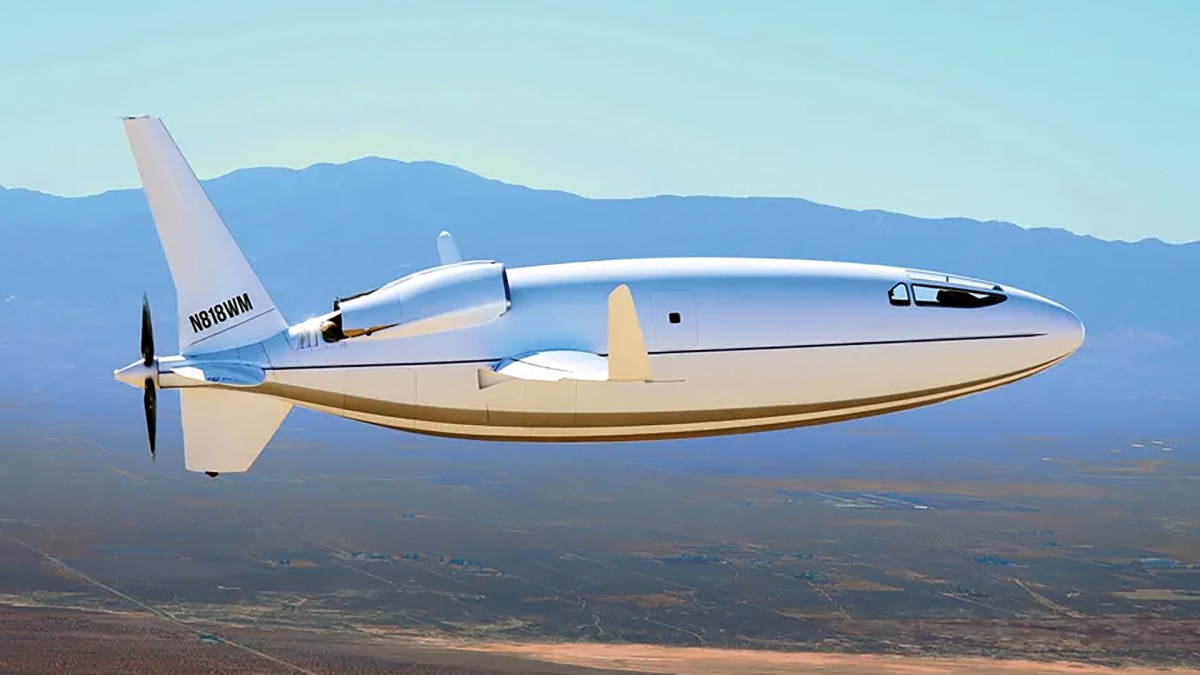
Otto's crewed Celera 500L aircraft seen during a test flight. Otto Aerospace
Seven companies are said to now be in the running to develop a lower-cost and highly modular drone to succeed the MQ-9A Reaper . Though the field has some well-established entrants and some far less known names, the inclusion of Otto Aerospace in this group is particularly unexpected and interesting to examine. Otto has made bold, but still unrealized pronouncements about disrupting the aviation industry with potentially revolutionary high-efficiency designs that could have civilian and military applications. TWZ has been steadily tracking the company’s developments since we first reported on the existence of the Celera 500L aircraft back in 2017.
Air & Space Forces Magazine first reported on Wednesday that Otto Aerospace (previously Otto Aviation), as well as Anduril, Chaos Industries, General Atomics Aeronautical Systems, Grid Aero, Shield AI, and Swarm Aero, had “made the cut” for the Massed Modular Aircraft (MMA) program , citing anonymous sources. The MMA effort formally kicked off in July, and the Air Force is now aiming to have a fleet of at least 500 of these drones by 2032.
The Massed Modular Aircraft (MMA) program is seeking a successor to the MQ-9A Reaper, an example of which is seen here. USAF
An industry source has also told us that these seven companies are moving ahead in the MMA program. The Air Force has not yet offered an official confirmation.
“The Air Force’s partnership with the Defense Innovation Unit is accelerating requirements development and rapid prototyping by leveraging commercial innovation and reducing timelines,” a spokesperson for the service said when we asked for more information. “We continue working with industry to inform requirements and assess potential solutions as we shape the future MMA capability.”
TWZ has also reached out to all of the companies on the list for more details.
As mentioned, it is unexpected and especially interesting to see Otto named here in the context of MMA. The company’s core design philosophy centers around what is called laminar flow . Broadly speaking, this refers to liquid or gaseous “fluids,” including air, flowing in smooth, regular layers across a surface with little to no mixing between them. In aviation, optimization for laminar flow translates to reduced drag and improved aerodynamic efficiency. This, in turn, can offer a host of benefits, including when it comes to fuel economy, extended range, and overall performance, as well as reductions in operating costs.
With this in mind, all of the designs that Otto has shown to date, starting with the Celera 500L, have been based around teardrop-shaped fuselages to maximize laminar flow benefits. Many of them also feature long, slender glider-like wings. The sudden and unannounced appearance of the very exotic and futuristic-looking Celera 500L at the Southern California Logistics Airport in 2017, at which time nothing was known about the aircraft or its manufacturer, caused a stir in the broader aviation community. TWZ was the first to report on the plane and then unmasked its identity .
On top of the laminar flow-optimized shaping, the Celera 500L was a pusher-propeller design powered by a single high-efficiency, turbocharged, multi-fuel V12 piston engine. A relevant patent held by Otto also describes a novel exhaust system with a heat exchanger that provides an additional boost in thrust.
Otto conducted an extensive test campaign with the Celera 500L, taking the aircraft up to an altitude of 15,000 feet and to a speed of 250 miles per hour. The company posited that this would translate to a cruising speed of around 460 miles per hour at the design’s intended operating ceiling of 50,000 feet.
The Celera 500L seen during a test flight. Otto Aerospace
Development focus at the company has since shifted to the jet-powered Phantom 3500 , which has a much revised design compared to the Celera 500L. Otto has said previously that it expects this aircraft to burn just 115 gallons of fuel per hour, further underscoring the benefits of its laminar-flow-centric approach. Comparably sized business jets like the Bombardier Challenger 350 , Cessna Citation Latitude , and Embraer Praetor 500 consume around 300 gallons per hour, according to the company, citing data from Jet Support Services, Inc. (JSSI).
A rendering of Otto Aviation’s Phantom 3500, a business jet the company is currently developing. Otto Aviation
It is also worth noting here that Otto has already developed a drone with a “highly laminar-flow efficient airframe” for the U.S. Defense Advanced Research Projects Agency (DARPA). The company announced the successful completion of a flight test campaign in May. The pusher-propeller design has a teardrop-shaped main body, a glider-type main wing, and a T-tail at the end of a boom that extends to the rear of the aircraft. DARPA plans to use that drone to demonstrate laser-based power beaming technology that could be used to relay electricity to forward operating locations. The technology could also dramatically extend the endurance of an electrically-powered drone, potentially allowing it to stay in the air indefinitely.
The drone for DARPA is far too small to meet the Air Force’s MMA requirements. However, “the program leveraged Otto’s aerodynamic expertise to design and flight-test an unmanned vehicle that could inform design parameters for future energy-relay systems or more extremely fuel-efficient, long-endurance platforms,” per a press release Otto put out in May.
Otto Aerospace developed this drone, seen here rigged up for launch from a pickup truck, for the US Defense Advanced Research Projects Agency (DARPA) . Otto Aerospace
TWZ has highlighted in the past how the general range, fuel economy, and other advantages inherent to Otto’s designs could be even more pronounced in a configuration that does not need to support a human crew. Furthermore, Otto has previously shown militarized concepts, crewed and uncrewed. As we’ve written in our earlier coverage of the Celera 500L:
“Though primarily aimed at civilian and commercial operators, Otto’s new website also highlights the potential for the Celera 500L to use its long-range and high fuel economy to support military missions, including transporting personnel and cargo, as well as conducting intelligence, surveillance, and reconnaissance (ISR) missions. A version of the aircraft, possibly unmanned, equipped with any number of sensor suites could be an impressive persistent surveillance and communications relay platform able to orbit over particular areas for very long periods of time and cover a wide swath of the battlefield from its high perch. It could also be able to reposition itself quickly and transit to its tasking area at jet-like speeds.”
A rendering of a concept for an uncrewed derivative of the Celera 500L. Otto Aerospace
While we have yet to see an explicit MMA proposal from Otto, a laminar flow-optimized drone could be a very attractive offering, given the program’s focus on reducing costs while having an unrefueled combat radius of at least 2,300 nautical miles, among other capabilities. A more efficient design could further translate to a drone that needs less fuel to meet range and other requirements, which, in turn, could allow for a smaller and/or cheaper design overall. Weight and physical space savings afforded by reduced fuel demand could be used to increase ordnance and other payload capacity, too. You can read more about what is known about the MMA requirements here .
There are more companies beyond Otto in the running. With the Air Force aiming to buy hundreds of MMA drones in the coming years, there will be stiff competition.
General Atomics, which developed and produced the MQ-9A, has publicly put forward its own proposal for a successor, called Wildfire . The new drone draws heavily on experience with the Reaper, as well as other drones in the company’s portfolio, and you can read more about what is known about that design here . General Atomics declined to offer additional comment in response to questions regarding the current state of the MMA program. As an aside, General Atomics is also now on contract to build higher-end FQ-42 Vengeance drones for the Air Force, one of two designs intended for higher-end air combat the service is acquiring under its Collaborative Combat Aircraft (CCA) program .
A rendering of General Atomics’ Wildfire drone. General Atomics
The other company building CCA drones for the Air Force is Anduril, with its FQ-44 Fury , and it has now also been named in relation to the MMA effort. Anduril has unveiled two other very different tactical drones since 2025, the twin-engine hybrid-electric tail-sitting Omen , designed primarily for surveillance and reconnaissance, and Thunder , an armed tiltrotor pitched as an uncrewed companion for crewed rotorcraft. Neither of those uncrewed aircraft would seem to directly align with the stated MMA requirements, but might serve as a starting place. Anduril also has a history now of developing new uncrewed platforms and other systems discreetly, and sharing them with the public only when they have become relatively mature.
Anduril’s Omen drone, which was unveiled in November 2025. Anduril TREVOR DALTON
The Thunder tiltrotor, which Anduril unveiled earlier this year. Anduril
What design Shield AI might be offering is unknown. The MMA requirements would seem to sit between the company’s V-BAT drone , which is in service with several armed forces today, including in the United States and Ukraine , and the much higher-end X-BAT that is now in development. Shield AI has been working to expand on the V-BAT design, including plans to integrate air-launched munitions . Both V-BAT and X-BAT are also vertical-takeoff and landing designs. Beyond drones, Shield AI remains a major developer of artificial intelligence-driven autonomy packages for the U.S. military and others.
Earlier this month, newcomer Swarm Aero unveiled a new drone with performance and capabilities that align with the stated MMA requirements earlier this month. Called Gamera, the design has a single propeller at the front of a small central fuselage, together with sponsons holding large fuel cells on either side and a twin-boom tail configuration broadly reminiscent of the OV-10 Bronco light attack aircraft, as TWZ previously reported on in more detail.
Grid Aero is publicly developing a twin-engine cargo drone called the Lifter Lite, in part with funding from AFWERX , the Air Force’s internal technology incubator. Whether the company might work to adapt the Lifter Lite, which has been undergoing testing at least on the ground, to meet the MMA requirements or has proposed something entirely different is not known.
A picture of the first Lifter Lite cargo drone prototype. Grid Aero
The last firm on the list, Chaos Industries , does not appear to show any drone designs on its website at the time of writing. It is primarily known as a developer of radar systems , especially for use in counter-drone systems. The company declined to comment in response to TWZ queries regarding the MMA program.
To reiterate, the Air Force still has not confirmed the full list of MMA program contenders. Otto’s participation would be a standout, but the field as it is understood now features a number of very established drone makers, as well as emerging start-ups, all vying for a very lucrative opportunity. On top of the potential just to supply hundreds of drones up front, those uncrewed aircraft look set to be a key part of the Air Force’s force structure for years to come, and will need to be supported throughout their lifecycles. The MMA requirements put heavy emphasis on modularity and open-architecture systems to allow for the rapid integration of new and improved capabilities and functionality down the line.
The Air Force has also previously raised the possibility of selecting multiple vendors to produce designs under the MMA program, or to pursue follow-on rounds of competition to help meet its operations requirements. This is exactly how the service has been running the CCA program , and has already led to the aforementioned production contracts to General Atomics and Anduril. In addition, the Air Force is targeting a base $10 million unit cost for each MMA drone, a price point that would help make losses more tolerable, and could open the door to acquiring a fleet of far more than 500 examples.
It is also important to remember that the Air Force has tried and failed on several occasions to develop and field an MQ-9A replacement. As TWZ has previously explored in great detail , the service’s view of what that drone should be has also evolved over time, with the current MMA program squarely focused on a more affordable option that does not put a heavy premium on survivability. The Air Force has acknowledged potential budget and other hurdles to its new effort. At the same time, heavy continued operational demand for Reapers, coupled with dozens of losses in the course of the war with Iran, as well as other operations in and around the Middle East in recent years, have put major new emphasis on finally finding a successor.
Overall, beyond what is already known about potential MMA offerings, it will be very interesting to see Otto and the other contenders put forward to finally succeed the iconic Reaper.
Contact the author: joe@twz.com
Comments couldn’t be loaded. Please refresh the page.
作者:约瑟夫·特雷维西克、霍华德·奥特曼
发布于美国东部时间2026年10月2日下午2:44
奥托公司的载人塞莱拉500L飞机在试飞期间的照片。奥托航空航天公司
据称,目前有七家公司正在竞相开发一款低成本、高度模块化的无人机,以取代MQ-9A“死神”无人机。尽管该领域既有声名显赫的参与者,也有一些名不见经传的小公司,但奥托航空航天公司(Otto Aerospace)的加入尤其令人意外,也值得深入探讨。奥托曾大胆宣称,其高效率的革命性设计有望颠覆航空业,并可应用于民用和军用领域,但这些预言至今尚未实现。自2017年首次报道Celera 500L无人机以来,TWZ一直在持续关注该公司的发展动态。
《空军与太空部队杂志》周三率先报道,据匿名消息人士透露,奥托航空航天公司(Otto Aerospace,前身为奥托航空)、安杜里尔公司(Anduril)、混沌工业公司(Chaos Industries)、通用原子航空系统公司(General Atomics Aeronautical Systems)、网格航空公司(Grid Aero)、盾牌人工智能公司(Shield AI)和蜂群航空公司(Swarm Aero)已入选大规模模块化飞机(MMA)项目。MMA项目于今年7月正式启动,美国空军的目标是到2032年拥有至少500架此类无人机。
大规模模块化飞机(MMA)项目正在寻找MQ-9A“死神”无人机的后继机型,图中所示即为其中一款。美国空军
一位业内人士也告诉我们,这七家公司正在推进MMA项目。空军尚未对此作出官方确认。
“空军与国防创新部门的合作,通过利用商业创新和缩短时间,正在加速需求开发和快速原型制作,”一位空军发言人在我们询问更多信息时表示。“我们将继续与业界合作,为未来多用途空地作战能力的构建提供信息,并评估潜在的解决方案。”
TWZ 也已联系名单上的所有公司以获取更多详细信息。
正如前文所述,在MMA的语境下看到Otto的名字,着实令人意外,也格外引人注目。该公司的核心设计理念围绕着所谓的层流展开。广义而言,层流指的是液体或气体(包括空气)在表面上以平滑、规则的层状流动,彼此之间几乎没有混合。在航空领域,优化层流意味着降低阻力,提高空气动力效率。这反过来又能带来诸多益处,例如提高燃油经济性、延长航程、提升整体性能以及降低运营成本。
基于此,奥托迄今为止展示的所有设计,从Celera 500L开始,都采用了水滴形机身,以最大限度地发挥层流优势。其中许多设计还配备了细长的滑翔机式机翼。2017年,造型奇特且极具未来感的Celera 500L突然出现在南加州物流机场,当时人们对这架飞机及其制造商一无所知,这在航空界引起了轩然大波。TWZ率先报道了这架飞机,并随后揭开了它的真实身份。
除了层流优化外形设计外,Celera 500L 还采用了推进式螺旋桨设计,由一台高效涡轮增压多燃料 V12 活塞发动机提供动力。奥托拥有的一项相关专利还描述了一种带有热交换器的新型排气系统,该系统可提供额外的推力提升。
奥托对 Celera 500L 进行了广泛的测试,将飞机飞行高度提升至 15,000 英尺,速度达到每小时 250 英里。该公司推测,在设计预期的 50,000 英尺飞行高度下,这将使巡航速度达到每小时约 460 英里。
试飞期间拍摄的 Celera 500L 飞机。奥托航空航天公司
此后,该公司研发重点转向了喷气式飞机Phantom 3500,其设计相比Celera 500L有了显著改进。奥托此前曾表示,预计这款飞机每小时仅消耗115加仑燃油,进一步凸显了其以层流为中心的设计理念的优势。该公司援引Jet Support Services, Inc. (JSSI)的数据称,尺寸相近的公务机,例如庞巴迪Challenger 350、塞斯纳Citation Latitude和巴西航空工业Praetor 500,每小时耗油量约为300加仑。
这是奥托航空(Otto Aviation)正在研发的公务机“幻影3500”(Phantom 3500)的效果图。
值得一提的是,奥托公司已经为美国国防高级研究计划局(DARPA)开发了一款采用“高效层流机身”的无人机。该公司于5月宣布成功完成飞行测试。这款推进式螺旋桨无人机拥有水滴状的机身、滑翔机式的主翼以及位于延伸至机尾的尾梁末端的T型尾翼。DARPA计划利用这款无人机演示一种基于激光的能量传输技术,该技术可用于向前线作战地点输送电力。这项技术还可以显著延长电动无人机的续航时间,使其有可能无限期地在空中飞行。
为DARPA研发的无人机尺寸太小,无法满足空军的MMA(多用途无人机)要求。然而,根据奥托公司五月份发布的新闻稿,“该项目利用了奥托公司的空气动力学专业知识,设计并试飞了一款无人飞行器,该飞行器可为未来的能量中继系统或更节能、续航时间更长的平台的设计参数提供参考。”
奥托航空航天公司为美国国防高级研究计划局(DARPA)开发了这款无人机,图中所示为它已改装完毕,可从皮卡车上发射。
TWZ 此前曾强调,奥托的设计在航程、燃油经济性和其他方面的优势,在无需搭载乘员的配置下会更加显著。此外,奥托此前也展示过载人和无人驾驶的军用概念机。正如我们在之前对 Celera 500L 的报道中所写:
尽管主要目标客户是民用和商业运营商,但奥托的新网站也重点介绍了塞莱拉500L的潜力,它凭借其远程和高燃油经济性,能够支持军事任务,包括人员和货物运输,以及执行情报、监视和侦察(ISR)任务。该飞机的一个改进型,可能是无人驾驶的,配备多种传感器套件,可以成为一个令人印象深刻的持续监视和通信中继平台,能够在特定区域上空长时间盘旋,并从高空覆盖大片战场。它还可以快速重新部署,并以喷气式飞机的速度飞往任务区域。
这是Celera 500L无人驾驶衍生机型的概念渲染图。奥托航空航天公司
虽然我们尚未看到奥托公司提出的明确的MMA方案,但考虑到该项目在降低成本的同时,还要求无人机具备至少2300海里的无加油作战半径等能力,层流优化无人机可能是一个极具吸引力的选择。更高效的设计意味着无人机在满足航程和其他要求时所需的燃料更少,从而可以实现更小巧、更经济的整体设计。燃料需求降低带来的重量和空间节省,也可用于增加武器和其他有效载荷能力。您可以在这里阅读更多关于MMA要求的已知信息。
除了奥托公司之外,还有其他公司参与竞标。由于空军计划在未来几年采购数百架MMA无人机,竞争将会非常激烈。
开发并生产MQ-9A的通用原子公司已公开提出其后续机型方案,名为“野火”(Wildfire)。这款新型无人机大量借鉴了“死神”(Reaper)无人机以及该公司其他无人机的经验,您可以在这里阅读更多关于该设计的信息。通用原子公司拒绝就MMA项目目前的进展情况发表更多评论。此外,通用原子公司目前还与美国空军签订了合同,为其生产更高端的FQ-42“复仇”(Vengeance)无人机。FQ-42是空军在其“协同作战飞机”(CCA)项目下采购的两款高端空战无人机之一。
通用原子公司“野火”无人机的效果图。通用原子公司
另一家为美国空军制造CCA无人机的公司是Anduril,其FQ-44“狂怒”(Fury)无人机也与MMA项目有关。自2025年以来,Anduril还推出了两款截然不同的战术无人机:一款是双引擎混合动力尾座式无人机“奥门”(Omen),主要用于监视和侦察;另一款是武装倾转旋翼机“雷霆”(Thunder),旨在作为有人驾驶旋翼机的无人搭档。这两款无人机似乎都与MMA的既定要求并不完全吻合,但或许可以作为参考。Anduril一直以来都有低调研发新型无人平台和其他系统的传统,只有在技术相对成熟后才会向公众公开。
Anduril 的 Omen 无人机于 2025 年 11 月发布。Anduril 特雷弗·道尔顿
安杜里尔公司今年早些时候发布了“雷霆”倾转旋翼机。
Shield AI可能提供的具体设计方案尚不得而知。MMA的要求似乎介于该公司目前已在美国和乌克兰等多个国家的军队服役的V-BAT无人机,以及正在研发中的高端X-BAT无人机之间。Shield AI一直在致力于V-BAT设计的扩展,包括计划集成空射弹药。V-BAT和X-BAT均为垂直起降无人机。除了无人机之外,Shield AI还是美国军方和其他军方人工智能驱动自主系统的主要开发商。
本月初,新晋无人机制造商Swarm Aero发布了一款新型无人机,其性能和功能符合本月初公布的MMA(多用途无人机)要求。这款名为Gamera的无人机采用单螺旋桨设计,位于小型中央机身前端,两侧带有用于安装大型燃料电池的侧裙,并采用双尾撑尾翼布局,其外形与OV-10“野马”轻型攻击机颇为相似,TWZ此前曾对此进行过更详细的报道。
Grid Aero公司正在公开研发一款名为Lifter Lite的双引擎货运无人机,部分资金来自空军内部技术孵化器AFWERX。目前尚不清楚该公司是否会着手改进Lifter Lite(该无人机至少已在地面进行测试),以满足MMA的要求,或者是否提出了完全不同的方案。
Lifter Lite首架货运无人机原型机的照片。Grid Aero
名单上的最后一家公司 Chaos Industries,截至发稿时,其网站上似乎并未展示任何无人机设计。该公司主要以开发雷达系统而闻名,尤其擅长开发用于反无人机系统的雷达。该公司拒绝就 TWZ 就 MMA 项目提出的问询置评。
重申一下,空军尚未公布MMA项目竞标者的完整名单。奥托的参与无疑会引人注目,但就目前了解的情况来看,该领域既有众多实力雄厚的无人机制造商,也有新兴的初创公司,都在争夺这个利润丰厚的机会。除了初期可能供应数百架无人机之外,这些无人飞行器有望在未来数年内成为空军力量结构的重要组成部分,并且需要在其整个生命周期内得到支持。MMA项目要求高度重视模块化和开放式架构系统,以便在未来快速集成新的和改进的功能。
空军此前也曾提出过在MMA项目下选择多家供应商进行设计生产,或开展后续几轮竞标以满足其作战需求的可能性。空军正是以这种方式运作CCA项目,并已促成了上述授予通用原子公司和安杜里尔公司的生产合同。此外,空军计划将每架MMA无人机的基本单价设定为1000万美元,这一价格点有助于降低损失,并有可能最终采购超过500架的无人机。
同样重要的是,要记住空军曾多次尝试研发和部署MQ-9A的替代机型,但均以失败告终。正如TWZ此前详细探讨的那样,空军对这款无人机的设想也随着时间推移而不断演变,目前的MMA项目则着重于寻找一种更经济实惠、对生存能力要求不高的方案。空军也承认,这项新计划可能面临预算和其他方面的挑战。与此同时,对“死神”无人机持续高负荷的作战需求,加上在与伊朗的战争以及近年来在中东及其周边地区的其他行动中数十架无人机的损失,使得寻找其替代机型变得尤为重要。
总的来说,除了目前已知的 MMA 赛事安排之外,奥托和其他挑战者最终将如何接替传奇人物“死神”的称号,将会非常有趣。
联系作者:joe@twz.com
评论加载失败,请刷新页面。