Updating America’s Land-Based Ballistic Missile ‘Nuclear Sponge’ Is A $100B+ Waste更新美国陆基弹道导弹“核海绵”是一项耗资超过1000亿美元的浪费。
It's time to cut a leg off America's Cold War vintage nuclear triad and dramatically strengthen the far more relevant two that remain.
Updated Dec 1, 2019 6:48 AM EST
We hear a lot about “tough decisions” from Pentagon officials when it comes to procurement, even in a time of a significant defense spending boom, to the point that many of those statements seem eye-roll worthy and completely out of touch with just how much the U.S. spends on its massive national security apparatus. One of the biggest ticket initiatives currently on the Pentagon’s books is the revitalization of America’s nuclear deterrent, and for good reason. Selective modernization is needed, but instead of finding an efficient strategic balance that better suits the age in which we live, the Pentagon has gone with a ‘ kitchen sink approach,’ which is wasteful, and above all else, a massive handout to defense contractors .
Spurred by a Nuclear Posture Review that cut nothing and recommended adding more, the DoD had predicted spending $325B on nuclear modernization just through 2026. Now that figure looks like it has the potential to climb dramatically with a number of related programs at risk of ballooning in cost and other programs likely to be added in the not so distant future.
The reality is that procuring this arsenal is just the cover charge. Maintaining all its different elements for decades to come will put extreme strain on the Pentagon’s budget. With skyrocketing national deficits and the possibility of an economic downturn around the corner, none of this is sustainable. Something has to give. And that something should be the Air Force’s ground-based intercontinental ballistic missile arsenal.
Replacing America’s 678 Minuteman III ICBMs—400 of which are operationally deployed at any given time— with a new missile is slated to cost roughly $100B, and that is with reusing and upgrading the existing Minuteman III infrastructure, such as their silos that pockmark the central United States. Now that price looks like it will be rising further, but according to General Timothy Ray there is nothing to worry about because competition will bring the price back down and the more reliable and less maintenance intensive missiles will save money down the line—at least that’s the theory, one that sounds concerningly familiar. Defense News quoted Ray as stating:
“Our estimates are in the billions of savings over the lifespan of the weapon, based on the insights… Between the acquisition and the deal that we have from a competitive environment, from our ability to drive sustainment, the value proposition that I’m looking at is a two-thirds reduction in the number of times we have to go and open the site. There’s a two-thirds reduction in the number of times we have to go and put convoys on the road.”
Regardless, we are talking about an absolutely massive sum of money here that will lock America into maintaining its ground-based ICBM force for many decades to come. And maintaining it comes at an even higher cost, regardless of what efficiencies may or may not pan out via an updated missile system.
To put it into perspective, the estimate for the entire B-21 Raider Stealth Bomber program or the Columbia class nuclear ballistic missile submarine program—including deep investments in research and development in both cases—cost roughly similar sums of money.
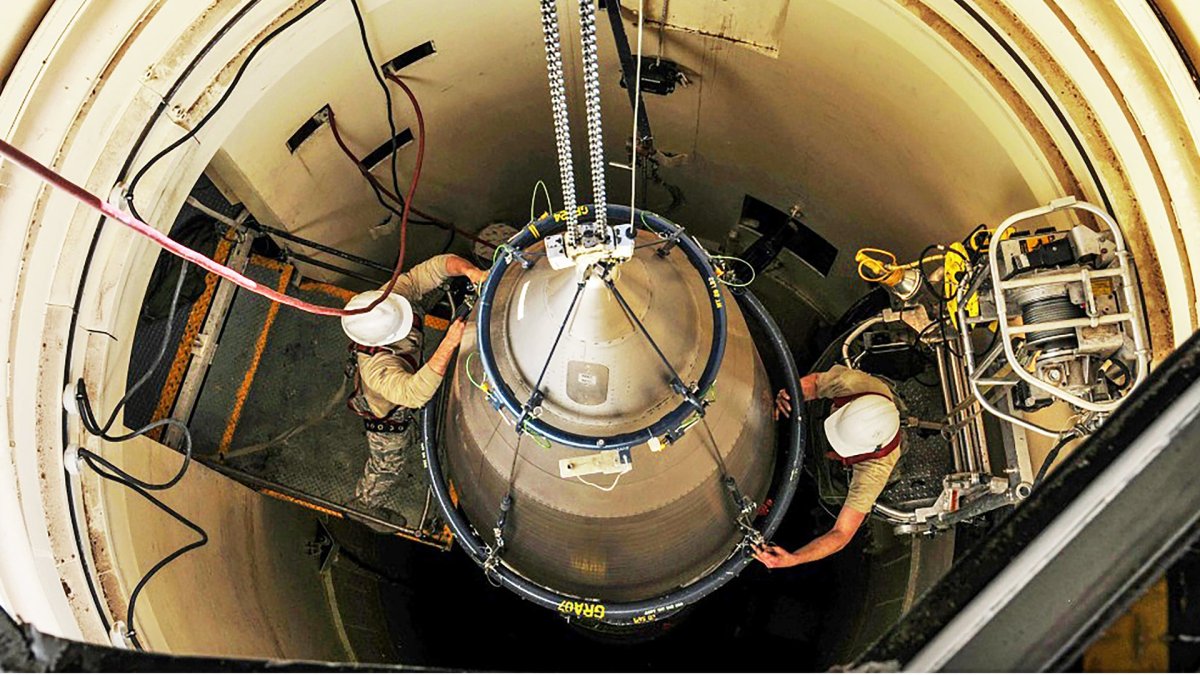
W78 warhead used on the Minuteman III., USAF
A strong nuclear deterrent is absolutely necessary. It is the linchpin that has kept mankind from ending the world for the better part of a century even though two hostile countries have had the ability to do so in a matter of minutes. But there is deterrence and then there is an archaic and downright wasteful strategy that may cause more harm than good.
400 Minuteman III ICBMs are scattered in fixed silos across Montana, Nebraska, Colorado, Wyoming, and North Dakota. Their job isn’t necessarily to be launched during a nuclear attack, it is to suck up enemy warheads that could potentially be used on other targets and require the enemy—Russia—to invest heavily into the ability to neuter America’s ICBM force. In fact, because of the hardened bunkers they are deployed in, multiple enemy warheads would be dedicated to each silo to ensure their destruction. Hence the ICBM force’s nickname—America’s “nuclear sponge.”
In order to serve this purpose, a number of ICBMs must be ready to be launched at all times, or they wouldn’t require the attention from the enemy needed to make a strategic impact. Given their fixed positions, they are not survivable in a peer-state nuclear exchange. Once again, that’s their purpose. To soak up thermonuclear warheads en masse. In fact, even though they could potentially be launched before an incoming attack arrived, doing so is not set in stone. If it were, the enemy wouldn’t target them in their opening barrage.
Does this sound like madness? Because it is.
Minuteman III in its silo., USAF
This strategy seems suicidal in that it means that the enemy is going to unleash hundreds upon hundreds of thermonuclear warheads on the central U.S., causing absolute devastation and extreme radiological fallout that will sweep across the country industrial belt and bread basket. In fact, the ICBM force’s very existence, and the threat they pose, invites a massive attack on the continental United States during a nuclear exchange, one that would devastate the country and would cause unthinkable environmental impacts across the globe.
With this in mind, the idea of detouring warheads away from some population centers is laughable. There are more left for those targets and the country, and even the entire globe, would struggle to survive after such a devastating nuclear onslaught.
The notion that the fixed-base ICBM force imposes large costs on the enemy because they would have to destroy each site is also dubious, as well, as it just spurs the enemy into maintaining a larger nuclear arsenal. And yes, this costs money, but so does having to invest in countering a larger nuclear bomber force equipped with advanced long-range cruise missiles and especially an expanded ballistic missile submarine fleet. Also, attempting to do so doesn’t require the fielding of more strategic nuclear weapons that are intended to pound a massive portion of America into radioactive oblivion.
Simply put, the ICBM force’s deterrent value is highly questionable at best.
In fact, today Minuteman III missiles on alert aren’t even targeted at Russia or any foe for that matter. Instead, they sit at the ready under a concept called ‘ open ocean targeting ‘ in which they are aimed at the middle of the ocean out of fear of an accidental launch that could start a nuclear war. Still, this doesn’t mean even a launch alone couldn’t start a nuclear exchange, especially during a time of heightened tensions.
Inside the launch control bunker of a Minuteman III missile. , USAF
It’s unclear how long the retargeting process takes place, but this policy is another indication that these weapons primarily exist to be destroyed. America’s submarine-launched ballistic missiles also sit programmed to hit the ocean, but since they are deployed on a survivable platform, this policy has little impact on their ability to carry out successful nuclear strikes.
Even with ‘de-targeting’ measures in place, considering the National Command Authority could have very little time to actually issue a mass ICBM launch, the force also invites the risk of making a world-ending mistake. And it’s not like the U.S. hasn’t come close to barraging Russia with nuclear warheads based on things like technical glitches before, and today we live in an era where cyber warfare is a stark reality.
Tom Collina, who also proposed eliminating the ground-based leg of nuclear triad in a piece for Defense One , wrote the following:
The United States can safely phase out the existing ICBMs without replacing them. This would save a boatload of money and take the missile states out of the crosshairs. And, as former Defense Secretary Bill Perry has written , it would also address the concern that ICBMs “could trigger an accidental nuclear war.” Last year, before he became defense secretary, Mattis asked if it was time to remove the land-based missiles, as “This would reduce the false alarm danger.” What are Perry and Mattis talking about? Nothing less than a nuclear nightmare, in which atomic weapons are used by mistake. U.S. land-based missiles are highly vulnerable. They sit out in the open and everyone, including Vladimir Putin, knows exactly where they are. So if Russia attacks them (no other country could), President Trump has only two options: launch the missiles before the attack arrives (and destroy Russia), or wait and let them be destroyed in the ground. Either way, Colorado, Montana, Nebraska, North Dakota, and Wyoming are toast. But here is the rub: President Trump would have about 10 minutes to make this fate-of-the-world decision. And the only sane decision is not to launch. Why? Because there is no way to know for sure (and you want to be sure) that the feared Russian attack is real. There have been at least three false alarms in the United States that could have led to a mistaken nuclear war. Forty years ago, Perry himself was awakened in the middle of the night and told that Pentagon computers were showing 200 ICBMs on their way from the Soviet Union. Luckily, it was not the end of the world, but just a computer glitch. How would President Trump respond if he were told at 3 a.m. that hundreds of Russian nuclear missiles were landing in minutes? Would he have the temperament to realize that it could be a false alarm, or would he impulsively launch a counter attack? No one else has the authority to make this call, and once the missiles fly they cannot be called back. It is shocking that senior officials in the nuclear weapons business do not take the risk of false alarms seriously. They reassure us that the chance of a false alarm is “at an all-time low” and that “the statistical probability that the United States would launch ICBMs as a result of a false alarm is close to zero.” Such language is dangerously irresponsible. One can imagine the same bromides being used before the Titanic sank or the Space Shuttle exploded. The honest truth is that the probability is low but not zero. And the consequences would be astronomical. When it comes to nuclear weapons, it only takes one. Human errors and machine errors do occur. It is only a matter of time before the odds add up to a catastrophic failure. As Perry writes, “we do not have to take that terrible risk anymore. We should not rebuild our ICBM arsenal.”
The United States can safely phase out the existing ICBMs without replacing them. This would save a boatload of money and take the missile states out of the crosshairs. And, as former Defense Secretary Bill Perry has written , it would also address the concern that ICBMs “could trigger an accidental nuclear war.”
Last year, before he became defense secretary, Mattis asked if it was time to remove the land-based missiles, as “This would reduce the false alarm danger.”
What are Perry and Mattis talking about? Nothing less than a nuclear nightmare, in which atomic weapons are used by mistake.
U.S. land-based missiles are highly vulnerable. They sit out in the open and everyone, including Vladimir Putin, knows exactly where they are. So if Russia attacks them (no other country could), President Trump has only two options: launch the missiles before the attack arrives (and destroy Russia), or wait and let them be destroyed in the ground. Either way, Colorado, Montana, Nebraska, North Dakota, and Wyoming are toast.
But here is the rub: President Trump would have about 10 minutes to make this fate-of-the-world decision. And the only sane decision is not to launch. Why? Because there is no way to know for sure (and you want to be sure) that the feared Russian attack is real.
There have been at least three false alarms in the United States that could have led to a mistaken nuclear war. Forty years ago, Perry himself was awakened in the middle of the night and told that Pentagon computers were showing 200 ICBMs on their way from the Soviet Union. Luckily, it was not the end of the world, but just a computer glitch.
How would President Trump respond if he were told at 3 a.m. that hundreds of Russian nuclear missiles were landing in minutes? Would he have the temperament to realize that it could be a false alarm, or would he impulsively launch a counter attack? No one else has the authority to make this call, and once the missiles fly they cannot be called back.
It is shocking that senior officials in the nuclear weapons business do not take the risk of false alarms seriously. They reassure us that the chance of a false alarm is “at an all-time low” and that “the statistical probability that the United States would launch ICBMs as a result of a false alarm is close to zero.” Such language is dangerously irresponsible. One can imagine the same bromides being used before the Titanic sank or the Space Shuttle exploded.
The honest truth is that the probability is low but not zero. And the consequences would be astronomical. When it comes to nuclear weapons, it only takes one. Human errors and machine errors do occur. It is only a matter of time before the odds add up to a catastrophic failure. As Perry writes, “we do not have to take that terrible risk anymore. We should not rebuild our ICBM arsenal.”
The money saved by retiring the USAF’s ICBM inventory could be invested in America’s more survivable and far more flexible nuclear deterrent options, both of which also have conventional warfighting value. For instance, leveraging the huge investment being made in the Columbia class nuclear ballistic missile submarine program by buying more of the boats, it could make it less expensive for the Navy to procure a conventional cruise missile carrying and special operations derivative to replace the first four Ohio class SSBNs that were converted to SSGNs of a similar capability. This is something the Navy already wants to do , but with just 12 Columbia class boomers slated for procurement, a lack of economies of scale will make it harder to realize.
Buying more Columbia class boats would also lower the unit price of for fleet overall, which will, in turn, allow for additional hulls to be procured, or money saved for other priorities—or even just saved outright.
Columbia Class SSBN configuration., GAO
Investing more heavily in America’s survivable second-strike deterrent does make sense as it serves in an opposite role of the ‘nuclear sponge,’ at least to a certain degree. It ensures that any enemy that attacks the U.S. with nuclear weapons will be destroyed in kind, even if the vast majority of U.S. military and government cease to exist following the initial enemy barrage. In other words, the Navy’s boomers serve as the core of America’s nuclear deterrent and fortify the notion of mutually assured destruction.
The B-21 Raider next-generation stealth bomber is also a better investment than the ground-based ICBM force. Bombers offer by far the most flexible nuclear option for U.S. commanders during a crisis and their very presence—often referred to as signaling—can impact the enemy’s decision cycle in positive ways. They can also be recalled and offer a scalable response, a strategy that has been elevated by Russia’s own supposed willingness to employ tactical nuclear weapons during a crisis as part of a strategy called “escalate to de-escalate,” which you can read more about here .
Combined with the USAF’s new stealthy Long-Range Stand-Off cruise missile , the B-21, with its high degree of stealth and survivability technologies, offers the ability to hold any enemy target on the globe at risk of standoff or direct nuclear or conventional attack. The B-21’s ability to offer a highly robust conventional strike capability, as well as various other functions, also makes it a key component of America’s strategy to confront threats like China in the years to come. So, investing in the B-21 program more heavily isn’t just about shoveling tens of billions of dollars into a strategic capability alone that is meant not to be used, or worst case, to be obliterated via hundreds of nuclear warheads during a nuclear exchange. It is a true dual-role weapon system by design.
There are also other nuclear weapons programs that may need funding in the future, such as the return of ground-launched nuclear-tipped cruise missiles and even those launched from ships and submarines now that Intermediate-Range Nuclear Force Treaty has dematerialized. Getting the F-35 nuclear-capable is another increasingly pressing issue. Hypersonic weapons eventually moving into the nuclear domain is also a possibility.
Spinning up these capabilities won’t be a cheap affair. In addition, we could see an expansion of nuclear arsenals as a whole as other nuclear arms treaties may also dissolve in the not so distant future. So the idea that the current monetary estimate to revitalize America’s nuclear arsenal is highly unlikely to stay put even beyond the prospect of cost overruns of existing programs.
Members of Congress are also realizing that the Pentagon’s eyes are bigger than their stomach when it comes to updating and expanding America’s nuclear arsenal. National Defense writes :
“We need to modernize our nuclear force and our nuclear deterrent — that’s not debatable,” House Armed Services Committee Chairman Rep. Adam Smith, D-Wash., said at a recent conference hosted by McAleese & Associates and Credit Suisse. “The question is how much do we spend?” The Congressional Budget Office has estimated the total cost of the strategic arsenal will be $325 billion between 2019 and 2026, with the annual bill further increasing in subsequent years as the Pentagon fields next-generation systems. … “We can save money on the nuclear deterrent,” Smith said. “We can’t do everything we’re contemplating doing.” … James Acton, co-director of the nuclear policy program at the Carnegie Endowment for International Peace, noted that the Defense Department is facing a “bow wave” of expenditures on strategic forces. As concerns about the budget deficit grow in the coming years, “there are going to be real tradeoffs that are going to have to be made,” he said during a panel at the Heritage Foundation. Submarines and stealth bombers are less vulnerable to enemy attack than ground-based missiles, and ICBMs are “virtually useless from a signaling perspective,” he said. “Given the budgetary pressures … the tradeoff is most likely to be with the ICBM force,” Acton said. “Deciding to … make those tradeoffs now is almost certainly a lot more cost effective than being forced to make them 10 or 20 years from now” after large investments have already been made in the GBSD, he added.
“We need to modernize our nuclear force and our nuclear deterrent — that’s not debatable,” House Armed Services Committee Chairman Rep. Adam Smith, D-Wash., said at a recent conference hosted by McAleese & Associates and Credit Suisse. “The question is how much do we spend?”
The Congressional Budget Office has estimated the total cost of the strategic arsenal will be $325 billion between 2019 and 2026, with the annual bill further increasing in subsequent years as the Pentagon fields next-generation systems.
“We can save money on the nuclear deterrent,” Smith said. “We can’t do everything we’re contemplating doing.”
James Acton, co-director of the nuclear policy program at the Carnegie Endowment for International Peace, noted that the Defense Department is facing a “bow wave” of expenditures on strategic forces.
As concerns about the budget deficit grow in the coming years, “there are going to be real tradeoffs that are going to have to be made,” he said during a panel at the Heritage Foundation.
Submarines and stealth bombers are less vulnerable to enemy attack than ground-based missiles, and ICBMs are “virtually useless from a signaling perspective,” he said.
“Given the budgetary pressures … the tradeoff is most likely to be with the ICBM force,” Acton said. “Deciding to … make those tradeoffs now is almost certainly a lot more cost effective than being forced to make them 10 or 20 years from now” after large investments have already been made in the GBSD, he added.
Some will balk at the idea of eliminating an arm of the nuclear triad—the cornerstone of America’s Cold War nuclear strategy. That’s understandable as the concept is deeply ingrained in America’s geopolitical psyche and the defense industrial complex’s very soul. There is so much money tied up in America’s ‘nuclear sponge’ and the sprawling infrastructure that supports it that special interests—from local towns located near missile bases to prime defense contractors—won’t let it go without a fight. The same can be said for the USAF. Losing their ICBMs would result in a massive mission loss and the loss of a ton of funding that goes with it. They may make some of it up in other areas, but not all, at least according to the concept laid about above.
Still, justifying the ground-based ICBM force seems nebulous at best and totally counter-intuitive at worst. Even Russia diversified its land-based ICBM force with road-mobile systems that are hard to target in real time and thus far more survivable than their silo-based counterparts. But once again, survivability isn’t the nuclear sponge’s main goal.
Minuteman III test launch. , USAF
The New START treaty is also an issue. As it sits now, the premier nuclear arms reduction agreement between the U.S. and Russia expires in 2021 , but it can be renewed out to 2026. If it isn’t and the increasingly estranged parties agree to new negotiations, giving up the ICBM force would be a huge negotiating chip to make Russia also give up its most menacing capabilities, some of which are exotic in nature and don’t fall under existing treaty frameworks.
Getting rid of the ICBM force under the current New START treaty would also free up more ‘deployed warheads,’ which the treaty puts hard limits on, for ballistic missile submarines and bombers, which would fit into the realignment strategy I laid out above.
It’s unfortunate that at least a highly focused independent study of this possibility isn’t being done as the Pentagon is about to begin pumping money into upgrades on its missile silos and their support elements in the near term in preparation for accommodating a whole new missile in the years to come. Doing that now just to drastically reduce the ICBM force when fiscal reality hits would be incredibly wasteful.
But above all else, eliminating the ICBM force as a whole would provide a lot of funding for far more flexible and survivable strategic assets, as well as the command and control and support architecture that ensures they will work as intended if the most horrific command order of all command orders gets passed down. By investing more deeply into the other two legs of the triad, America’s conventional capabilities will get a major boost, as well.
So, is buying roughly another eight Columbia class SSBNs—12 are currently planned—as well as another 60 B-21 bombers—80-100 are currently planned—and saving more in sustainment costs in the decades that follow, a better investment than keeping America’s ‘nuclear sponge’ viable?
Contact the author: Tyler@thedrive.com
Comments couldn’t be loaded. Please refresh the page.
更新于美国东部时间2019年12月1日上午6:48。
我们经常听到五角大楼官员在采购方面做出“艰难抉择”,即便是在国防开支大幅增长的时期也是如此。以至于很多这样的言论听起来都让人不禁翻白眼,完全脱离了美国庞大国家安全体系的实际支出规模。目前五角大楼最重要的项目之一就是重振美国的核威慑力量,这并非没有道理。选择性现代化固然必要,但五角大楼并没有寻求一种更符合时代需求的有效战略平衡,而是采取了一种“大杂烩”式的做法,这不仅浪费资源,而且最终无异于向国防承包商输送巨额利益。
受一份不削减任何核武库建设预算反而建议增加预算的《核态势评估报告》的推动,美国国防部曾预测,仅到2026年,其核武现代化建设就将耗资3250亿美元。如今,随着一系列相关项目成本可能大幅飙升,以及未来可能新增其他项目,这一数字似乎还有可能大幅攀升。
事实上,采购这批武器库仅仅是开始。未来几十年维护其所有组成部分将给五角大楼的预算带来巨大压力。随着国家赤字飙升和经济衰退的可能性迫在眉睫,这一切都难以持续。必须有所取舍。而取舍的对象应该是空军的陆基洲际弹道导弹武库。
用新型导弹替换美国现有的678枚“民兵III”洲际弹道导弹(其中任何时候都有400枚处于作战部署状态)预计耗资约1000亿美元,这还是在对现有“民兵III”基础设施(例如遍布美国中部的发射井)进行再利用和升级的情况下。现在看来,价格还会进一步上涨,但据蒂莫西·雷将军称,这没什么好担心的,因为竞争会降低价格,而且更可靠、维护成本更低的导弹从长远来看还能节省资金——至少理论上是这样,但这听起来却令人担忧地似曾相识。《防务新闻》援引雷的话说:
“根据我们的分析,预计在武器的整个使用寿命期间,可节省数十亿美元……从收购和我们在竞争环境中达成的交易,以及我们推动保障的能力来看,我所关注的价值主张是:我们需要前往并启用该设施的次数将减少三分之二。我们需要派遣车队上路的次数也将减少三分之二。”
无论如何,我们讨论的是一笔数额巨大的资金,它将使美国在未来几十年内不得不维持其陆基洲际弹道导弹部队。而且,无论升级后的导弹系统能否提高效率,维持这支部队的成本都将更高。
为了让大家更直观地了解情况,整个 B-21 突袭者隐形轰炸机计划或哥伦比亚级核弹道导弹潜艇计划(包括两者在研发方面的大量投资)的估计成本大致相同。
美国空军民兵III型导弹使用的W78型弹头
强大的核威慑绝对必要。正是它,在过去近一个世纪里,阻止了人类走向世界末日,尽管两个敌对国家都拥有在几分钟内摧毁世界的能力。然而,威慑和过时且极其浪费的战略之间存在着本质区别,后者可能弊大于利。
400枚“民兵III”型洲际弹道导弹分散部署在蒙大拿州、内布拉斯加州、科罗拉多州、怀俄明州和北达科他州的固定发射井中。它们的任务并非一定要在核攻击中发射,而是吸收敌方可能用于攻击其他目标的核弹头,从而迫使敌方——俄罗斯——投入巨资研发削弱美国洲际弹道导弹部队的能力。事实上,由于这些导弹部署在加固的掩体中,每个发射井都会被多枚敌方核弹头拦截,以确保其被摧毁。因此,美国的洲际弹道导弹部队才有了“核海绵”的绰号。
为了达到这一目的,必须始终保持一定数量的洲际弹道导弹处于待命状态,否则它们就无法引起敌方足够的重视,从而发挥战略作用。鉴于其固定部署位置,它们在势均力敌的国家之间的核战争中无法幸存。而这正是它们存在的意义所在:大规模吸收热核弹头。事实上,尽管它们有可能在来袭攻击到达之前发射,但这并非必然。如果真是如此,敌方就不会在最初的炮火轰击中优先攻击它们。
这听起来是不是很疯狂?因为它的确是疯狂的。
美国空军民兵III型导弹在其发射井内。
这种战略看似自杀,因为它意味着敌人将向美国中部地区投放数百枚热核弹头,造成彻底的破坏,并引发席卷全国工业带和粮仓地区的极端放射性尘埃。事实上,洲际弹道导弹部队的存在及其构成的威胁,本身就预示着在核战争中美国本土将遭受大规模攻击,这场攻击不仅会摧毁美国,还会对全球环境造成难以想象的影响。
考虑到这一点,将核弹头偏离某些人口中心的想法简直荒谬可笑。还有更多核弹头会落到这些目标上,而且在遭受如此毁灭性的核打击后,国家乃至整个地球都将难以生存。
认为固定式洲际弹道导弹部队会给敌方造成巨大损失,因为敌方必须摧毁每个发射场,这种说法也值得怀疑,因为它只会刺激敌方维持更大规模的核武库。诚然,这需要资金,但要对抗装备先进远程巡航导弹的更大规模的核轰炸机部队,尤其是不断扩充的弹道导弹潜艇舰队,同样需要投入资金。而且,这样做并不需要部署更多旨在将美国大片领土炸成放射性废墟的战略核武器。
简而言之,洲际弹道导弹部队的威慑价值充其量也令人高度怀疑。
事实上,如今处于警戒状态的民兵III型导弹甚至都没有瞄准俄罗斯或任何敌对国家。相反,它们处于待命状态,遵循一种名为“远洋目标瞄准”的概念,即瞄准大洋中央,以防意外发射引发核战争。然而,这并不意味着即使只是一次发射,也不会引发核战争,尤其是在局势高度紧张的时期。
在民兵III型导弹的发射控制掩体内。(美国空军)
目前尚不清楚重新设定目标需要多长时间,但这项政策再次表明,这些武器存在的主要目的就是被销毁。美国的潜射弹道导弹也设定为攻击海洋目标,但由于它们部署在生存能力强的平台上,这项政策对其成功执行核打击的能力影响甚微。
即使采取了“取消目标锁定”措施,考虑到国家指挥机构实际下达大规模洲际弹道导弹发射指令的时间可能非常有限,这种做法也存在犯下毁灭性错误的风险。而且,美国此前也曾因技术故障等原因险些对俄罗斯发动核弹头轰炸,如今我们生活在一个网络战已成为残酷现实的时代。
汤姆·科利纳曾在《国防一号》杂志上撰文提议取消核三位一体中的陆基核力量,他写道:
美国可以在不更换现有洲际弹道导弹的情况下安全逐步淘汰它们。这将节省大量资金,并使导弹国家脱离危险范围。正如前国防部长比尔·佩里所写,这也能消除人们对洲际弹道导弹“可能引发意外核战争”的担忧。去年,在马蒂斯就任国防部长之前,他曾询问是否应该撤走陆基导弹,因为“这将降低误报的风险”。佩里和马蒂斯究竟在谈论什么?无非是一场核噩梦,一场误用核武器的噩梦。美国的陆基导弹极其脆弱。它们暴露在外,包括弗拉基米尔·普京在内的所有人都知道它们的具体位置。因此,如果俄罗斯攻击它们(其他国家不可能做到这一点),特朗普总统只有两个选择:要么在攻击到来之前发射导弹(摧毁俄罗斯),要么等待它们被摧毁。无论哪种方式,科罗拉多州、蒙大拿州、内布拉斯加州、北达科他州和怀俄明州都将遭受重创。但问题就在这里:特朗普总统只有大约10分钟的时间来做出这个关乎世界命运的决定。而唯一理智的决定就是不发射导弹。为什么?因为我们无法确定(而我们又想确定)人们所担心的俄罗斯攻击是否真实存在。美国至少发生过三次可能导致误判引发核战争的虚假警报。四十年前,佩里本人就曾在半夜被叫醒,被告知五角大楼的电脑显示有200枚洲际弹道导弹正从苏联方向飞来。幸运的是,这并非世界末日,而仅仅是电脑故障。如果凌晨3点有人告诉特朗普总统,数百枚俄罗斯核导弹将在几分钟内落下,他会作何反应?他是否能够冷静地意识到这可能是一次虚假警报,还是会冲动地发动反击?除了他之外,没有人有权做出这样的决定,而且一旦导弹发射出去,就无法召回。令人震惊的是,核武器领域的高级官员竟然不把误报的风险当回事。他们向我们保证,误报的概率“处于历史最低水平”,而且“美国因误报而发射洲际弹道导弹的统计概率接近于零”。这种说法极其不负责任,令人担忧。试想一下,如果泰坦尼克号沉没或航天飞机爆炸前也用同样的说辞,会是什么样?事实是,误报的概率虽然低,但并非为零。而一旦发生误报,后果将不堪设想。核武器的使用,只需一次误报就足以酿成大祸。人为错误和机器故障确实会发生。各种因素叠加,最终导致灾难性失败,只是时间问题。正如佩里所写,“我们不必再冒这种可怕的风险。我们不应该重建洲际弹道导弹武库。”
美国可以在不更换现有洲际弹道导弹的情况下,安全地逐步淘汰它们。这将节省大量资金,并使导弹国家脱离战火威胁。正如前国防部长比尔·佩里所写,这也将消除人们对洲际弹道导弹“可能引发意外核战争”的担忧。
去年,在担任国防部长之前,马蒂斯曾询问是否应该撤走陆基导弹,因为“这将减少误报的危险”。
佩里和马蒂斯在谈论什么?无非是一场核噩梦,一场因误用而导致的原子武器灾难。
美国的陆基导弹系统极其脆弱。它们暴露在外,包括普京在内的所有人都知道它们的具体位置。因此,如果俄罗斯发动攻击(其他国家无力发动此类攻击),特朗普总统只有两个选择:要么在攻击到来之前发射导弹(摧毁俄罗斯),要么等待导弹在地面被摧毁。无论哪种方式,科罗拉多州、蒙大拿州、内布拉斯加州、北达科他州和怀俄明州都将遭受重创。
但问题就在这里:特朗普总统只有大约十分钟的时间来做出这个关乎世界命运的决定。而唯一明智的决定就是不发动袭击。为什么?因为我们无法确定(而我们又想确定)人们所担心的俄罗斯袭击是否真的存在。
美国至少发生过三次可能导致误判引发核战争的虚假警报。四十年前,佩里本人就曾在半夜被叫醒,被告知五角大楼的电脑显示有200枚洲际弹道导弹正从苏联飞来。幸运的是,这并非世界末日,而仅仅是电脑故障。
如果凌晨三点有人告诉特朗普总统,数百枚俄罗斯核导弹将在几分钟内落下,他会作何反应?他能否冷静地意识到这可能是虚惊一场,还是会冲动地发动反击?除了他之外,没有人有权做出这样的决定,而且导弹一旦发射就无法召回。
令人震惊的是,核武器领域的高级官员竟然不认真对待误报的风险。他们向我们保证,误报的概率“处于历史最低水平”,并且“美国因误报而发射洲际弹道导弹的统计概率接近于零”。这种说法极其不负责任,令人担忧。我们不禁会想到,如果泰坦尼克号沉没或航天飞机爆炸前也使用同样的说辞,结果会是什么样呢?
说实话,这种可能性虽然低,但并非为零。而后果将不堪设想。核武器只需要一次事故就足以酿成大祸。人为失误和机器故障确实会发生。各种因素累积起来,最终酿成灾难性事故只是时间问题。正如佩里所写,“我们不必再冒这种可怕的风险。我们不应该重建洲际弹道导弹武库。”
美国空军洲际弹道导弹库存退役节省下来的资金可以投资于美国生存能力更强、灵活性更高的核威慑选项,这两种选项都具有常规作战价值。例如,通过增加哥伦比亚级核弹道导弹潜艇的采购量,可以利用该项目的巨额投资,降低海军采购常规巡航导弹运载型和特种作战型衍生潜艇的成本,从而取代首批四艘俄亥俄级弹道导弹核潜艇(SSBN),这些潜艇已改装为性能相近的巡航导弹核潜艇(SSGN)。海军原本就希望这样做,但由于计划采购的哥伦比亚级弹道导弹核潜艇仅有12艘,缺乏规模经济效益,因此难以实现。
购买更多哥伦比亚级舰艇还可以降低整个舰队的单价,从而可以采购更多船体,或节省资金用于其他优先事项,甚至直接节省下来。
哥伦比亚级弹道导弹核潜艇配置,美国政府问责局
加大对美国可生存的二次打击威慑力量的投资是合理的,因为它至少在一定程度上起到了与“核海绵”截然相反的作用。它确保任何使用核武器攻击美国的敌人都会遭到以牙还牙的毁灭,即便在最初的敌方轰炸之后,美国绝大多数军事和政府机构不复存在。换句话说,海军的弹道导弹是美国核威慑的核心,并强化了相互确保摧毁的概念。
B-21“突袭者”下一代隐形轰炸机也比陆基洲际弹道导弹部队更具投资价值。在危机期间,轰炸机为美国指挥官提供了迄今为止最灵活的核选项,它们的存在本身——通常被称为信号——就能对敌方的决策周期产生积极影响。轰炸机还可以被召回,并提供可扩展的应对措施。俄罗斯据称也愿意在危机期间使用战术核武器,作为其“升级以降级”战略的一部分,这一战略进一步提升了轰炸机的重要性,您可以在这里阅读更多相关信息。
结合美国空军新型隐形远程防区外巡航导弹,B-21凭借其高度隐身和高生存能力,能够对全球任何敌方目标进行远程或直接核打击或常规打击。B-21不仅具备强大的常规打击能力,还拥有其他多种功能,使其成为美国未来应对中国等威胁战略的关键组成部分。因此,加大对B-21项目的投入并非仅仅是将数百亿美元投入到一项战略能力上,而这项能力的设计初衷并非是为了在核战争中被数百枚核弹头摧毁。B-21从设计之初就是一款真正的双用途武器系统。
未来可能还有其他核武器项目需要资金支持,例如陆基核巡航导弹的复兴,以及随着《中导条约》失效,舰艇和潜艇发射核武器的计划。使F-35具备核打击能力是另一个日益紧迫的问题。高超音速武器最终进入核领域也是一种可能性。
启动这些能力绝非易事。此外,随着其他核武器条约在不久的将来可能失效,我们或许会看到核武库整体扩张。因此,即使考虑到现有项目可能出现成本超支的情况,目前用于重振美国核武库的预算也极有可能发生变化。
国会议员们也逐渐意识到,在更新和扩充美国核武库方面,五角大楼的野心远大于实际能力。《国防》杂志撰文指出:
“我们需要对核力量和核威慑进行现代化改造——这一点毋庸置疑,”众议院军事委员会主席、华盛顿州民主党众议员亚当·史密斯在近期由麦卡利斯咨询公司和瑞士信贷联合举办的一次会议上表示。“问题在于我们应该投入多少资金?”国会预算办公室估计,2019年至2026年间,战略核武库的总成本将达到3250亿美元,随着五角大楼部署下一代系统,每年的支出还将进一步增加。……“我们可以在核威慑方面节省开支,”史密斯说。“我们不可能完成所有正在考虑的事情。”……卡内基国际和平基金会核政策项目联合主任詹姆斯·阿克顿指出,国防部正面临着战略部队支出的“浪潮”。随着未来几年对预算赤字的担忧日益加剧,“我们将不得不做出一些真正的权衡,”他在传统基金会的一个小组讨论会上说道。他表示,潜艇和隐形轰炸机比陆基导弹更不易受到敌方攻击,而洲际弹道导弹“从信号传递的角度来看几乎毫无用处”。阿克顿说:“考虑到预算压力……最有可能的权衡对象是洲际弹道导弹部队。”他补充道:“现在做出这些权衡,几乎肯定比10年或20年后被迫做出这些权衡更具成本效益,因为那时已经在陆基导弹防御系统(GBSD)上投入了大量资金。”
“我们需要对核力量和核威慑进行现代化改造——这毋庸置疑,”众议院军事委员会主席、华盛顿州民主党众议员亚当·史密斯在最近由麦卡利斯咨询公司和瑞士信贷联合举办的一次会议上表示,“问题在于我们应该投入多少资金?”
美国国会预算办公室估计,2019 年至 2026 年间,战略武器库的总成本将达到 3250 亿美元,随着五角大楼部署下一代系统,每年的支出还会进一步增加。
史密斯说:“我们可以节省核威慑方面的开支。我们不可能把所有正在考虑的事情都做完。”
卡内基国际和平基金会核政策项目联合主任詹姆斯·阿克顿指出,国防部正面临着战略部队支出的“弓形浪潮”。
他在传统基金会的一个小组讨论会上表示,随着未来几年人们对预算赤字的担忧日益加剧,“将不得不做出一些真正的权衡取舍”。
他说,潜艇和隐形轰炸机比陆基导弹更不容易受到敌方攻击,而洲际弹道导弹“从信号传递的角度来看几乎毫无用处”。
“鉴于预算压力……最有可能做出取舍的是洲际弹道导弹部队,”阿克顿说。“现在做出这些取舍几乎肯定比10年或20年后被迫做出这些取舍要划算得多”,他补充道,那时大堡礁战略防御系统(GBSD)已经投入了大量资金。
有些人会对取消核三位一体(美国冷战时期核战略的基石)中的一部分感到不满。这可以理解,因为这一概念深深植根于美国的地缘政治心理和国防工业复合体的灵魂之中。美国的“核海绵”及其庞大的基础设施投入了巨额资金,因此,从导弹基地附近的城镇到主要的国防承包商,各种利益集团都不会轻易放弃。美国空军的情况也类似。失去洲际弹道导弹将导致任务大幅减少,并造成巨额资金损失。他们或许能在其他领域弥补一部分损失,但至少根据上述观点,不可能全部弥补。
然而,陆基洲际弹道导弹部队的合理性充其量也只能说是含糊不清,最坏的情况则是完全违背常理。就连俄罗斯也对其陆基洲际弹道导弹部队进行了多元化配置,采用了公路机动系统,这些系统难以实时锁定目标,因此比井基导弹的生存能力要强得多。但话说回来,生存能力并非核海绵的主要目标。
美国空军民兵III型导弹试射。
《新削减战略武器条约》也是一个问题。目前,这项美俄之间最重要的核武器削减协议将于2021年到期,但可以续签至2026年。如果未能续签,且双方关系日益疏远,同意重新谈判,那么放弃洲际弹道导弹部队将成为迫使俄罗斯放弃其最具威胁性能力的有力谈判筹码,其中一些能力性质特殊,并不在现有条约框架之内。
根据现行的《新削减战略武器条约》,取消洲际弹道导弹部队还可以释放更多“部署弹头”(该条约对部署弹头的数量有严格限制),用于弹道导弹潜艇和轰炸机,这符合我上面提出的调整战略。
令人遗憾的是,五角大楼即将开始投入巨资升级导弹发射井及其配套设施,为未来几年部署新型导弹做准备。然而,至少目前还没有针对这种可能性开展一项高度独立的专项研究。如果现在仅仅为了在财政现实来临时大幅削减洲际弹道导弹部队而进行这些升级,那将是极其浪费的。
但最重要的是,彻底裁撤洲际弹道导弹部队将为更灵活、更具生存能力的战略资产以及相应的指挥控制和保障体系腾出大量资金,确保即使下达最可怕的命令,这些战略资产也能按预期运作。通过加大对三位一体中其他两个组成部分的投入,美国的常规作战能力也将得到显著提升。
那么,再购买大约 8 艘哥伦比亚级弹道导弹核潜艇(目前计划建造 12 艘)以及 60 架 B-21 轰炸机(目前计划建造 80-100 架),并在未来几十年节省更多维护成本,是否比维持美国的“核海绵”的可用性是一项更好的投资呢?
联系作者:Tyler@thedrive.com
评论加载失败,请刷新页面。