SPH now meets readers wherever they are: Chan Yeng Kit新加坡报业控股(SPH)现在随时随地与读者见面:陈永吉
SPH Media reaches nine in 10 Singaporeans weekly across 120 channels, focusing on trusted news and digital engagement in a diverse media landscape. Read more at straitstimes.com.
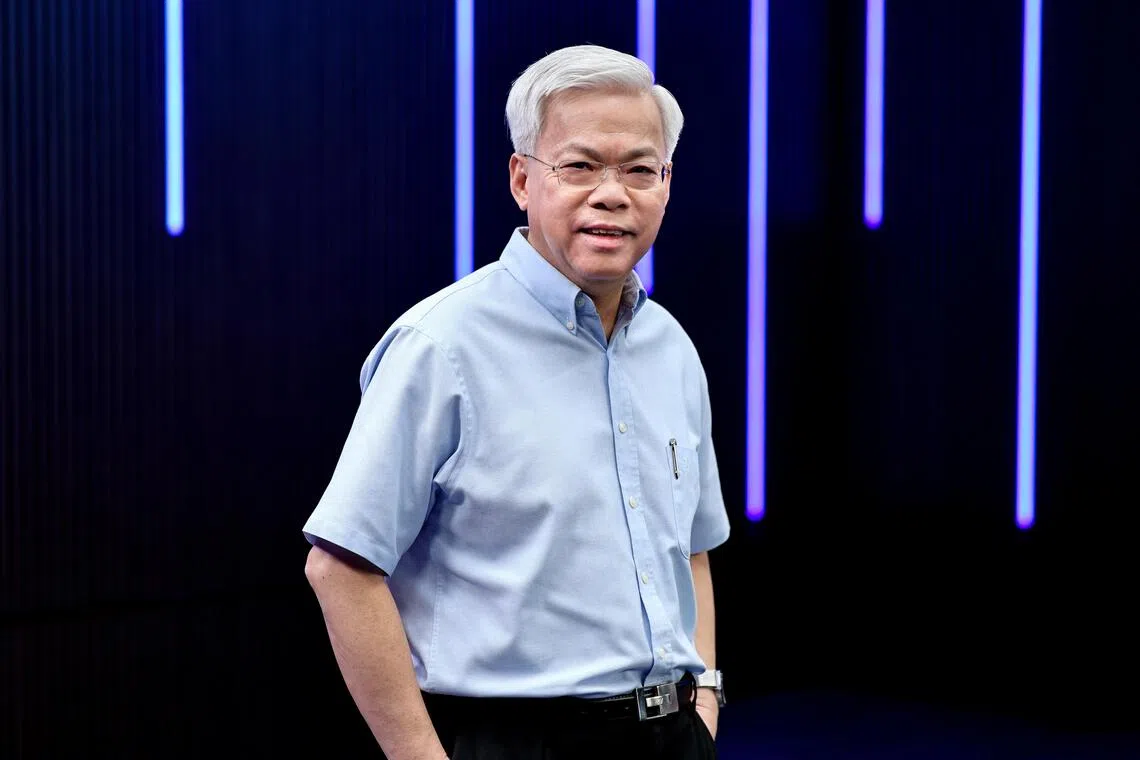
SPH Media executive chairman Chan Yeng Kit said the media organisation’s strategy in recent years has been to make its content accessible across a range of platforms.
PHOTO: LIANHE ZAOBAO
Published Oct 05, 2026, 05:00 AM
Updated Oct 05, 2026, 05:00 AM
SPH Media reaches nine in 10 Singaporeans weekly through 120 channels, using a multi-platform strategy to stay relevant and trusted in a digital, post-truth world.
Amid challenges like misinformation and societal polarisation, SPH Media focuses on being a credible news source trusted by over three-quarters of Singaporeans.
SPH Media maintains print for older readers while expanding digital, supporting vernacular titles, and running community initiatives to connect and inspire Singaporeans.
SINGAPORE – Nine in 10 Singaporeans now consume SPH Media’s content each week across 120 different channels, ranging from apps and social media to videos and podcasts.
Such a multi-channel, multi-format strategy underpins the media organisation’s strong belief in its mission of engendering an informed society in a post-truth world, Chan Yeng Kit said in an interview with SPH Media journalists a fortnight before he took over the chairmanship of SPH Media Trust (SMT) and SPH Media Holdings (SPHMH) from former minister Khaw Boon Wan on Oct 1 .
Noting that Singaporeans’ news consumption habits have evolved a lot, Chan said SPH Media’s strategy in recent years has been to make its content accessible across a range of platforms, rather than to fall for the “better mousetrap” fallacy that a superior product will automatically attract an audience.
“We go to where our main audiences are – we hope they will come to our platforms, but we go to where they are and try to bring them to consume (news on) our platforms,” he said.
“We want to remain relevant to all Singaporeans, and not just selected segments.”
For instance, The Straits Times reached its readers across seven channels a decade ago. The English broadsheet daily now reaches audiences via 15 channels, including messaging apps.
Across the group, SPH Media now has more than 120 channels, or 50 per cent more than five years ago, when it was incorporated as a not-for-profit company limited by guarantee .
Each of its flagship titles also now has a young audience product and social media accounts by which to reach the youth, whose media habits are more mercurial.
Chan said that as a portfolio of titles, SPH Media is the media organisation in Singapore with the largest digital reach, recording more than 300 million page views each month across its owned and operated platforms.
On social media, its titles reach an average of 1.2 billion impressions and video views a month.
With about 15 per cent of its audience consuming its content through video, SPH Media is “not just a text company, but we are really multimedia”, said Chan.
“These are things we are proud of, because the big shift to social media actually happened probably in the last few years,” he said. “And I would like to commend my colleagues in the newsrooms for that shift at the group level.”
A more contested info space
The challenge of reaching audiences has been accelerated by digital and social media developments and artificial intelligence, said Chan, who noted that these trends have led to polarisation and societal fractures in other countries.
For a multiracial, multilingual and multi-religious society like Singapore with many potential fault lines, the challenge is existential, he added, citing how the city-state has been the target of misinformation and disinformation campaigns in recent times.
The proliferation of so-called “alternative facts” has also made it harder to discern credible news from fake news, especially for those who are less mature or less media savvy, he added.
That is why SPH Media’s mission to be a trusted news source is not only evergreen but more important than ever, said Chan.
“We try to bring communities together. We try to mitigate the polarisation that we see happening overseas by being a credible and trusted source of news and information,” he said.
“People may disagree about the conclusions, but at least when they draw their conclusions, it ought to be from factual and credible sources.”
Asked how SPH Media intends to build its audience beyond extending reach and staying relevant, Chan said trust in its reporting is ultimately the core ingredient.
Both external surveys and SPH Media’s own data show that the media organisation’s titles such as ST are trusted by more than three-quarters of Singaporeans.
SPH Media also tracks public satisfaction in its products through local market research, and Chan noted that most of its titles come in “above 80 per cent (to) 90 per cent and over”.
Besides the public, SPH Media is evaluated by the Government, which has committed to providing up to $900 million in funding from 2022 to 2027.
Chan said the authorities evaluate SPH Media objectively using key performance indicators such as trust, satisfaction, reach and engagement.
Essentially, the Government recognises that for SPH Media’s news titles to be effective, they must be trusted and credible.
While some people see SPH Media as being too close to the Government, others ask why its titles carry articles that are critical of the Government, Chan noted. Ultimately, SPH Media is judged not by the Government but by the people it serves, he said.
“When we report, I dare say that our editors, our journalists, even if you don’t agree with the point of view that they have, it’s always with the interest of Singapore at heart,” he said.
ST’s 181-year legacy has helped to build up audiences’ trust, and SPH Media values this very much, he added.
“Trust cannot be legislated, cannot be bestowed on someone. Trust needs to be earned,” he said. “And once the trust is lost, it’s very hard to regain.”
Continuity amid change
The Oct 1 senior leadership changes at SPH Media ensure that there is continuity and stability for both its transformation journey and the group’s long-term strategy, said Chan.
Kuek Yu Chuang, who joined SPH Media in July 2024 as deputy chief executive, has been promoted to managing director. Tan Pei Jun, formerly SPH Media’s chief financial officer and chief corporate officer, was promoted to chief operating officer.
These changes are part of SPH Media’s steady and paced refresh to build a strong talent and leadership pipeline, whether in the newsrooms or in the commercial, tech or corporate departments, said Chan.
As chairman, Chan said he intends to focus on SPH Media’s medium- to long-term strategy and capability building, which take time and require steady direction. As managing director, Kuek will drive SPH Media’s day-to-day operations, and oversee its plans for the intermediate to medium-term.
Chan noted that it is not new for SPH to have an executive chairman, with both S R Nathan and Lim Kim San having been executive chairman of SPH in its previous incarnation as a listed company.
Even so, his plan is to devolve his executive role by 2030 and for SPH Media to return to a structure of non-executive chairman and CEO. This would provide the advantage of a separation in governance and executive roles, he said.
Serving all segments
On where the physical newspaper sits in a portfolio increasingly defined by digital content, Chan said about one-fifth of SPH’s audience currently relies solely on print for their news.
This audience, consisting mainly of those aged 60 and above, is still a big enough segment for it to make economic sense to offer printed products.
At some point, however, consumption patterns will change and SPH should change with it, said Chan.
“Just like (with) social media – as things move, we move on to the new platforms that are more popular, more in sync,” he said, noting that today’s SPH Media is no longer just a newspaper company.
One thing that will not change is the need for the vernacular titles such as Berita Harian, Lianhe Zaobao and Tamil Murasu, said Chan.
“For so long as we are a national company, I don’t see the day where we will not put resources into our vernacular titles,” he said.
That said, the mother tongue news titles must know their audiences, how they are consuming the news, and ensure that they maintain their relevance. “It’s incumbent on us to see how we can tailor (our offerings) to their likes.”
‘A true blue Singapore company’
While intellectual information products are its stock in trade, Chan said SPH has always been about much more than that.
Its 120 channels today mean that it serves Singaporeans “wherever they hang out digitally”, and its offerings range from the light and gossipy to serious news and everything in between.
“By doing that, we try to cater for the different preferences of our audiences. And when you do that, I think we have a better chance to keep them,” he said.
It also has long-running community initiatives that speak to the heart and soul of Singaporeans, he added, calling SPH “a true blue Singapore company”.
These include the ST School Pocket Money Fund , which provides more than 10,000 students with an allowance every year so that they do not go hungry in school. Some 230,000 children from lower-income backgrounds have benefitted since the initiative was started in 2000.
The Business Times (BT) Budding Artists Fund , which has been running for 22 years, helps 500 to 1,000 students from low-income families every year with arts training and education.
Meanwhile, SPH Foundation’s Lim Kim San Memorial Scholarship has been providing lower-income university undergraduates with bond-free scholarships for two decades.
The media organisation also seeks to inspire Singaporeans through platforms such as ST’s Singaporean of the Year , Tamil Murasu’s Most Inspiring Tamil Teachers’ Award, Lianhe Zaobao’s Distinguished Chinese Language Teachers Awards and the Berita Harian Achiever of the Year.
And local firms are uplifted through BT’s Enterprise 50 Awards and Emerging Enterprise Award, noted Chan.
“It’s best summed up in our mission tagline: ‘to inform, to connect, to inspire’, which is about the head, the heart and the soul,” he added. “We are a company with head, with soul, with a heart.”
Chin Soo Fang is senior correspondent at The Straits Times, covering a wide range of topics including community, politics, social issues, consumer, culture and heritage.
新加坡报业控股媒体执行主席陈永杰表示,该媒体机构近年来的战略是使其内容能够在各种平台上访问。
图片来源:联合早报
发布于 2026 年 10 月 5 日上午 5:00
更新于2026年10月5日上午5:00
SPH Media 每周通过 120 个渠道覆盖十分之九的新加坡人,采用多平台策略,在数字化、后真相的世界中保持相关性和可信度。
面对虚假信息和社会两极分化等挑战,新加坡报业控股媒体致力于成为超过四分之三新加坡人信赖的可信新闻来源。
SPH Media 保留面向年长读者的纸质出版物,同时拓展数字业务,支持本地语言刊物,并开展社区活动,以联系和激励新加坡人。
新加坡——如今,十分之九的新加坡人每周都会通过 120 个不同的渠道(包括应用程序、社交媒体、视频和播客)消费 SPH Media 的内容。
陈永杰在10月1日从前部长许文远手中接过新加坡报业控股媒体信托(SMT)和新加坡报业控股媒体控股(SPHMH)主席一职前两周接受新加坡报业控股媒体记者采访时表示,这种多渠道、多形式的策略体现了该媒体机构对其使命的坚定信念,即在后真相时代培养一个知情的社会。
陈先生指出,新加坡人的新闻消费习惯已经发生了很大变化,SPH Media 近年来的策略是让其内容在各种平台上都能获取,而不是陷入“更好的捕鼠器”谬论,认为更优秀的产品会自动吸引受众。
他说:“我们会去到我们的主要受众所在的地方——我们希望他们会来到我们的平台,但我们会去到他们所在的地方,努力让他们在我们的平台上消费(新闻)。”
“我们希望与所有新加坡人保持联系,而不仅仅是特定群体。”
例如,十年前,《海峡时报》通过七个渠道触达读者。如今,这份英文日报通过包括即时通讯应用在内的十五个渠道覆盖受众。
整个集团旗下,SPH Media 目前拥有超过 120 个频道,比五年前成立时(当时是一家非营利担保有限公司)增加了 50%。
其每款旗舰产品现在也都有面向年轻受众的产品和社交媒体账号,以便接触媒体习惯更加善变的年轻人。
陈先生表示,作为旗下众多媒体,SPH Media是新加坡数字覆盖范围最广的媒体机构,其自有和运营的平台每月页面浏览量超过3亿次。
在社交媒体上,其内容每月平均获得 12 亿次曝光和视频观看量。
陈先生表示,SPH Media 约有 15% 的受众通过视频消费其内容,因此“我们不仅仅是一家文字公司,我们是一家真正的多媒体公司”。
“这些都是我们引以为豪的成就,因为向社交媒体的重大转变实际上可能发生在过去几年里,”他说。“我想表扬新闻编辑室的同事们,感谢他们在集团层面推动了这一转变。”
一个更具争议的信息空间
陈先生表示,数字和社交媒体的发展以及人工智能加速了触达受众的挑战,并指出这些趋势在其他国家导致了社会两极分化和社会分裂。
他补充说,对于像新加坡这样多种族、多语言、多宗教的社会来说,存在着许多潜在的断层线,这是一个关乎生存的挑战。他还指出,近年来,这座城市国家一直是虚假信息和错误信息宣传活动的目标。
他还补充说,所谓“另类事实”的泛滥也使得人们更难辨别可信新闻和虚假新闻,尤其是对于那些不太成熟或不太了解媒体的人来说。
陈先生表示,正因如此,新加坡报业控股媒体成为值得信赖的新闻来源的使命不仅永不过时,而且比以往任何时候都更加重要。
他说:“我们努力促进社区团结。我们努力成为可信可靠的新闻信息来源,以缓解我们在海外看到的这种两极分化现象。”
“人们可能对结论持有不同意见,但至少当他们得出结论时,应该基于事实和可信的来源。”
当被问及新加坡报业控股媒体除了扩大覆盖面和保持相关性之外,还打算如何扩大受众群体时,陈表示,对其报道的信任最终是核心要素。
外部调查和新加坡报业控股媒体自身的数据均显示,该媒体机构旗下的《海峡时报》等报刊受到超过四分之三新加坡人的信任。
SPH Media 还通过本地市场调查追踪公众对其产品的满意度,陈先生指出,其大多数出版物的满意度都“在 80% 到 90% 以上”。
除了公众之外,新加坡报业控股媒体还要接受政府的评估,政府承诺在 2022 年至 2027 年期间提供高达 9 亿美元的资金。
陈先生表示,有关部门会使用信任度、满意度、覆盖范围和参与度等关键绩效指标,对新加坡报业控股媒体进行客观评估。
从本质上讲,政府认识到,新加坡报业控股媒体旗下的新闻刊物要想有效,就必须值得信赖和可信。
陈先生指出,虽然有些人认为新加坡报业控股媒体与政府关系过于密切,但也有人质疑其旗下刊物为何刊登批评政府的文章。他表示,归根结底,新加坡报业控股媒体的声誉并非由政府评判,而是由其服务的民众评判。
他说:“我敢说,当我们进行报道时,我们的编辑、我们的记者,即使你不同意他们的观点,他们的出发点也始终是新加坡的利益。”
他补充说,《海峡时报》181年的历史传承帮助建立了观众的信任,新加坡报业控股媒体集团非常重视这一点。
“信任无法通过立法建立,也无法被赋予。信任需要靠自己赢得,”他说。“一旦失去信任,就很难再重新获得。”
变革中的延续
陈先生表示,新加坡报业控股媒体集团10月1日的高层领导变动,确保了集团转型之旅和长期战略的连续性和稳定性。
郭宇庄于2024年7月加入新加坡报业控股媒体集团,担任副首席执行官,现已晋升为董事总经理。陈培俊,原新加坡报业控股媒体集团首席财务官兼首席企业官,现已晋升为首席运营官。
陈先生表示,这些变化是新加坡报业控股媒体稳步推进人才更新计划的一部分,旨在建立强大的人才和领导层储备,无论是在新闻编辑室还是在商业、技术或企业部门。
陈先生表示,作为董事长,他将专注于新加坡报业控股媒体集团的中长期战略和能力建设,这需要时间,也需要稳定的方向。郭先生作为董事总经理,将负责新加坡报业控股媒体集团的日常运营,并监督其中期发展规划。
陈先生指出,新加坡报业控股(SPH)设立执行主席并非新鲜事,SR Nathan 和林金山都曾在SPH作为上市公司时担任过执行主席。
即便如此,他的计划是在2030年前逐步放权,让新加坡报业控股媒体集团恢复非执行董事长兼首席执行官的架构。他表示,这将带来治理与执行角色分离的优势。
服务所有群体
谈到纸质报纸在日益以数字内容为主导的媒体组合中的定位时,陈表示,新加坡报业控股(SPH)约有五分之一的读者目前完全依赖纸质报纸获取新闻。
这个主要由 60 岁及以上人群组成的受众群体,仍然是一个足够大的群体,因此提供印刷产品在经济上是有意义的。
陈先生表示,但消费模式总有一天会发生变化,新加坡报业控股也应该随之改变。
“就像社交媒体一样——随着事物的发展,我们会转向更受欢迎、更契合潮流的新平台,”他说道,并指出如今的新加坡报业控股媒体集团已不再仅仅是一家报业公司。
陈先生表示,有一点不会改变,那就是像《每日新闻报》、《联合早报》和《泰米尔语新闻报》这样的地方语言报纸仍然有存在的必要。
“只要我们还是家全国性公司,我就看不到我们停止投入资源发展本土语言刊物的那一天,”他说。
也就是说,母语新闻媒体必须了解自己的受众,了解他们如何获取新闻,并确保自身内容保持相关性。“我们有责任思考如何根据他们的喜好调整我们的内容。”
“一家地道的新加坡公司”
陈先生表示,虽然知识信息产品是新加坡报业控股(SPH)的主要业务,但SPH的业务范围远不止于此。
如今,它拥有 120 个频道,这意味着无论新加坡人“在数字世界里走到哪里”,它都能为他们提供服务。其节目内容涵盖轻松八卦到严肃新闻,以及介于两者之间的一切。
“通过这样做,我们努力满足观众的不同偏好。我认为,这样做能让我们更有可能留住观众,”他说。
他还补充说,新加坡报业控股(SPH)也开展了许多长期社区活动,这些活动触动了新加坡人的心灵,称SPH是一家“真正的新加坡公司”。
其中包括“学生零用钱基金”,该基金每年为超过1万名学生提供零用钱,确保他们在校期间不会挨饿。自2000年该计划启动以来,已有约23万名来自低收入家庭的儿童从中受益。
《商业时报》(BT) 的“萌芽艺术家基金”已经运行了 22 年,每年帮助 500 至 1000 名来自低收入家庭的学生接受艺术培训和教育。
与此同时,新加坡报业控股基金会的林金山纪念奖学金二十年来一直为低收入家庭的大学本科生提供无担保奖学金。
该媒体机构还希望通过《海峡时报》的“年度新加坡人”、Tamil Murasu的“最具启发性的泰米尔语教师奖”、《联合早报》的“杰出华语教师奖”以及《每日新闻》的“年度成就奖”等平台来激励新加坡人。
陈先生指出,BT 的企业 50 强奖和新兴企业奖也提升了本地企业的发展。
“我们的使命标语‘传递信息,连接彼此,启发灵感’最能概括这一点,它关乎理性、感性和灵魂,”他补充道。“我们是一家兼具理性、感性和人文关怀的公司。”
Chin Soo Fang 是《海峡时报》的资深记者,报道范围广泛,包括社区、政治、社会问题、消费者、文化和遗产等话题。