Science Talk: 1 in 3 Singaporeans has hypertension. Can cutting salt reverse the trend?科学讲座:新加坡三分之一的人患有高血压。减少盐的摄入量能扭转这一趋势吗?
One in three Singaporeans have hypertension; learn how Nutri-Grade labels, lifestyle changes, and medical insights can help manage and prevent high blood pressure. Read more at straitstimes.com.
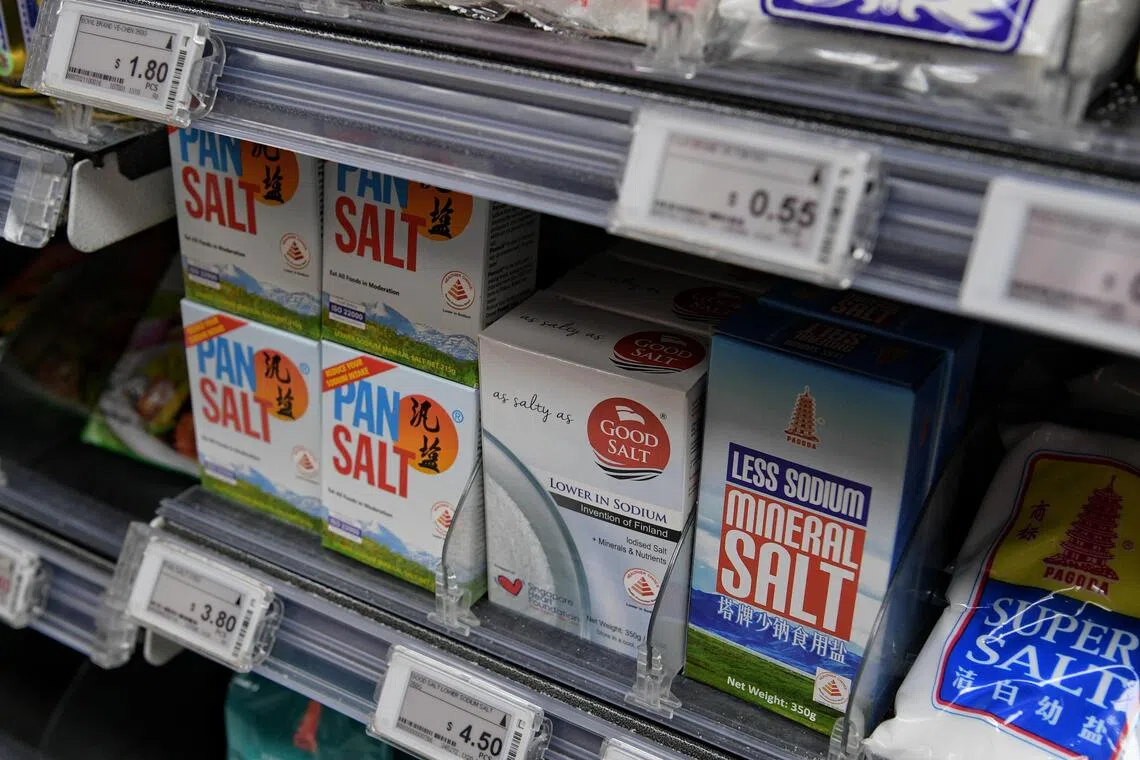
Low-sodium salt on the shelves at Sheng Shiong supermarket at Ten Mile Junction.
ST PHOTO: NG SOR LUAN
Troy Puar and Lim Kiat
Published Oct 05, 2026, 05:00 AM
Updated Oct 05, 2026, 05:00 AM
Singaporeans will soon be hearing more about their salt intake .
Mandated Nutri-Grade labels are set to appear on pre-packed salt, sauces, seasonings, instant noodles and cooking oil , with advertising prohibited for Grade D products which carry the highest levels of sodium or saturated fat. The move is part of an effort to tackle the high prevalence of hypertension, which affects one in three Singaporeans aged 18 to 74.
But addressing our salt habit is only one part of a broader journey in helping Singapore tackle hypertension rates. As well as understanding why salt is so ingrained in our lives, we also need to recognise why “slightly high” blood pressure should not be dismissed, what practical actions can be taken to manage it, and why even the most health-conscious may have underlying conditions that make them susceptible to hypertension.
Cutting salt is not as easy as it sounds
From a nutritionist’s point of view, Nutri-Grade labels are a welcome step – the vast majority of Singaporeans exceed the recommended daily sodium consumption limit of 2,000mg.
Part of the challenge is that salt, sauces and seasonings are woven into the fabric of how Singaporeans eat, defining the taste of our hawker favourites and home-cooked meals. Most of our sodium comes from salt and sauces added during cooking and from meals eaten outside the home, often in amounts we do not see or measure.
Many end up living with a salt-heavy diet, with their taste buds growing accustomed to a greater level of intensity over time . But while our tastes adapt, doctors caution that the same cannot be said for our bodies, and that persistently elevated blood pressure does not come without consequences.
A doctor’s perspective on the realities of ‘slightly high’ blood pressure
Many patients share that they are not too worried because their blood pressure is only “slightly high”. However, any increase in blood pressure, 24 hours a day, 7 days a week, puts unnecessary stress on the body. Elevated pressure damages the arteries and increases the demand on the heart as it is forced to work harder to pump blood efficiently – ultimately increasing the chance of a heart attack.
Similarly, those with elevated blood pressure face a higher risk of stroke, as sustained pressure can damage or block the brain’s arteries.
Chronic kidney disease is another condition triggered by high blood pressure. Even slightly raised readings, if sustained, can injure the kidneys’ delicate blood vessels, impairing their ability to filter waste and remove excess fluid. The resulting fluid retention can push blood pressure higher, creating a vicious circle that accelerates kidney damage and may progress to end-stage kidney disease requiring dialysis.
As most individuals are asymptomatic, even when blood pressure reaches very high levels, hypertension is often dubbed by healthcare practitioners as the “silent killer”. It damages blood vessels, the heart, brain and kidneys over many years, with symptoms often appearing after significant harm is already done.
Hypertension may not just be about lifestyle
Many high blood pressure cases are related to lifestyle and genetics. But in some cases, despite doing everything “right” – from diet to exercise and regular health checks – patients find that their blood pressure remains stubbornly high despite being on medication. This is a crucial moment to ask: Could there be an underlying medical condition?
One important example is aldosterone dysregulation. Aldosterone is a hormone that controls the sodium and potassium levels in the body. When the body produces too much aldosterone, excess salt is retained, even when dietary salt intake is moderate. This form of hypertension is more harmful than the usual and more common than previously thought, especially among people with resistant or difficult-to-control blood pressure, or those with low potassium levels. The good news is that it is often treatable with the right medication, and sometimes curable, in selected cases, with keyhole surgery.
When blood pressure remains high despite lifestyle changes and multiple medications, it is time to look deeper. Patients should feel empowered to ask their doctors whether other underlying causes, including hormone-related conditions like aldosterone excess, should be considered.
Taking ownership of personal health
Taking control of your blood pressure levels does not require waiting for a confirmed diagnosis or making sweeping lifestyle changes overnight.
Practical steps and accessible resources are readily available to help Singaporeans understand their numbers, have more informed conversations with their doctors, and act before a manageable concern becomes a more serious health problem.
Know your numbers: In general, the lower the better. Ask your doctor: “What is my personal blood pressure target, and why?” Knowing what is normal for you is the first step towards knowing when something needs attention. In general, risks of heart disease and stroke are lower with lower blood pressure levels.
Make monitoring a routine, not a reaction. A home blood pressure monitor can make it easy for you to track your readings over time without needing to visit the doctor. Build a habit of measuring your blood pressure: once every two years if it is within the normal range (<130 over 85 mmHg), annually if it is borderline high (130-139 over 85-89 mmHg), or weekly if it is high (>140 over 90 mmHg).
Make healthy habits part of daily life. Exercise regularly, manage stress levels and follow a balanced, heart-healthy diet with more fruits, vegetables, whole grains and lean protein, while limiting salt, sugar and foods high in saturated and trans fats. Instead of trying to overhaul every single aspect of your diet at once, focus on implementing small, sustainable changes.
Retrain your taste preferences. If you are accustomed to saltier food, gradually reduce the salt, sauces and seasonings in your meals. Over time, your palate will be able to adjust and less salty food can become more enjoyable.
Use resources that are already available. The Singapore Heart Foundation’s Blood Pressure Awareness Kiosks offer convenient checks and information to help people make sense of their readings. These touchpoints can be especially useful for those who may not otherwise think to monitor their blood pressure.
Have an honest conversation about medication. For those taking blood pressure medications, having side effects or difficulty following a regimen should not be reasons to stop treatment quietly. Discuss these issues with your doctor; adjustments or a simpler regimen may make it easier to stay on track.
Look beyond lifestyle when high readings persist. Not every case of hypertension is explained by diet, exercise or stress. If blood pressure remains high despite lifestyle changes or multiple medications, ask whether further assessment for an underlying cause may be appropriate.
Stay informed with friends and family. Heart-health education should not be reserved for the clinic. Share what you learn about blood pressure with your family, encourage regular blood pressure checks and support healthier habits at home. This awareness can start from young – initiatives such as the Singapore Heart Foundation’s Heart Heroes Programmes help children learn about heart health and bring these lessons home to their families.
The extension of Nutri-Grade is a positive step in the effort to reverse the one-in-three hypertension trend, but ultimately, it is only one part of the story – a broader shift must be catalysed in how we prevent, detect and manage high blood pressure.
The next step is to create an environment in which people are supported to take proactive ownership of their health, instead of passively waiting to see if and when symptoms surface. That culture of prevention will form the foundation for a healthier Singapore, where high blood pressure is identified and addressed before it becomes a lifelong burden.
Troy Puar is head and senior consultant at Changi General Hospital’s Department of Endocrinology, exco member of the Singapore Hypertension Society, as well as president of the ASEAN Network of Adrenal Hypertension.
Lim Kiat is a senior nutritionist at the Singapore Heart Foundation. He also serves as its assistant director of strategic partnerships and philanthropy.
十里路口的昇菘超市货架上有低钠盐。
圣徒照片:吴索銮
Troy Puar 和 Lim Kiat
发布于 2026 年 10 月 5 日上午 5:00
更新于2026年10月5日上午5:00
新加坡人很快就会听到更多关于盐摄入量的信息。
新加坡政府将强制要求预包装的食盐、酱料、调味料、方便面和食用油贴上“营养等级”标签,其中钠或饱和脂肪含量最高的D级产品将被禁止进行广告宣传。此举旨在应对高血压的高发问题,目前新加坡18至74岁的人群中,每三人就有一人患有高血压。
但解决我们的食盐习惯只是帮助新加坡应对高血压问题的众多举措之一。除了了解盐为何如此根深蒂固于我们的生活中,我们还需要认识到为何不应忽视“轻微高血压”,可以采取哪些切实可行的措施来控制血压,以及为何即使是最注重健康的人也可能存在一些潜在疾病,使他们更容易患上高血压。
减少盐的摄入量并不像听起来那么容易。
从营养学家的角度来看,营养等级标签是一个值得欢迎的举措——绝大多数新加坡人每日钠摄入量都超过了建议的 2000 毫克限量。
部分挑战在于,盐、酱汁和调味料已融入新加坡人的饮食习惯,定义了我们喜爱的街头小吃和家常菜的味道。我们摄入的大部分钠都来自烹饪过程中添加的盐和酱汁,以及在外就餐时摄入的盐和酱汁,而这些摄入量往往我们看不到也无法测量。
许多人最终会长期食用高盐食物,味蕾也会逐渐适应更强烈的味道。但医生提醒,虽然我们的味觉会适应,但我们的身体却无法适应,持续高血压会带来诸多后果。
一位医生对“轻度高血压”的现实看法
许多患者表示他们并不太担心,因为他们的血压只是“略高”。然而,血压持续升高,无论一天24小时还是一周7天,都会给身体带来不必要的压力。血压升高会损伤动脉,并增加心脏的负担,因为心脏必须更加努力地泵血才能有效工作——最终增加心脏病发作的风险。
同样,高血压患者患中风的风险更高,因为持续的压力会损伤或阻塞大脑动脉。
慢性肾脏病是高血压引发的另一种疾病。即使血压轻微升高,如果持续存在,也会损伤肾脏脆弱的血管,削弱其过滤废物和排出多余液体的能力。由此导致的体液潴留会进一步推高血压,形成恶性循环,加速肾脏损伤,并可能发展为终末期肾病,最终需要透析治疗。
由于大多数高血压患者即使血压很高也没有任何症状,因此高血压常被医疗从业者称为“沉默的杀手”。它会在多年内损害血管、心脏、大脑和肾脏,而症状往往在造成严重损害后才出现。
高血压可能不仅仅与生活方式有关。
许多高血压病例与生活方式和遗传因素有关。但在某些情况下,尽管患者在饮食、运动和定期体检等方面都做到了“正确”,却发现即使服用药物,血压仍然居高不下。这时就需要认真思考:是否存在潜在的健康问题?
醛固酮失调就是一个重要的例子。醛固酮是一种控制体内钠钾水平的激素。当体内醛固酮分泌过多时,即使饮食中盐的摄入量适中,也会导致体内盐分潴留过多。这种类型的高血压比普通高血压危害更大,也比之前认为的更为常见,尤其是在难治性或血压难以控制的人群,以及低钾血症患者中。好消息是,这种高血压通常可以通过正确的药物治疗,在某些情况下,甚至可以通过微创手术治愈。
如果血压在改变生活方式和服用多种药物后仍然居高不下,就需要进行更深入的检查。患者应该主动询问医生是否需要考虑其他潜在病因,例如醛固酮过多等激素相关疾病。
主动承担个人健康责任
控制血压水平并不需要等待确诊,也不需要一夜之间做出彻底的生活方式改变。
新加坡人可以轻松获得切实可行的步骤和资源,帮助他们了解自己的健康状况,与医生进行更深入的交流,并在可控的健康问题演变成更严重的健康问题之前采取行动。
了解你的血压值:一般来说,血压越低越好。询问你的医生:“我的个人血压目标值是多少?为什么?”了解你的正常血压值是发现需要关注的第一步。通常来说,血压越低,患心脏病和中风的风险就越低。
将监测血压变成一种习惯,而不是一种反应。家用血压计可以帮助您轻松追踪血压变化,无需就医。养成测量血压的习惯:如果血压在正常范围内(<130/85 mmHg),则每两年测量一次;如果血压处于临界高值(130-139/85-89 mmHg),则每年测量一次;如果血压偏高(>140/90 mmHg),则每周测量一次。
将健康的生活习惯融入日常生活。定期锻炼,控制压力,并遵循均衡、有益心脏健康的饮食,多吃水果、蔬菜、全谷物和瘦肉蛋白,同时限制盐、糖以及饱和脂肪和反式脂肪含量高的食物。与其试图一次性彻底改变饮食的方方面面,不如专注于做出一些小的、可持续的改变。
重新训练你的口味偏好。如果你习惯了较咸的食物,请逐渐减少餐食中的盐、酱汁和调味料。随着时间的推移,你的味蕾会逐渐适应,不那么咸的食物也会变得更美味。
充分利用现有资源。新加坡心脏基金会的血压意识自助服务亭提供便捷的血压检测和相关信息,帮助人们理解血压读数。这些服务点对于那些可能不会主动监测血压的人来说尤其有用。
与医生坦诚沟通用药情况。对于服用降压药的人来说,出现副作用或难以坚持服药方案不应成为悄悄停止治疗的理由。请与医生讨论这些问题;调整剂量或简化用药方案或许能帮助您更好地坚持治疗。
如果血压持续偏高,就应该考虑生活方式以外的因素。并非所有高血压病例都能用饮食、运动或压力来解释。如果改变生活方式或服用多种药物后血压仍然偏高,则应咨询医生是否需要进一步检查以寻找潜在病因。
与亲朋好友保持沟通,了解心脏健康知识。心脏健康教育不应仅限于诊所。与家人分享您了解的血压知识,鼓励他们定期测量血压,并在家中培养更健康的生活习惯。这种意识可以从小培养——例如新加坡心脏基金会的“心脏英雄计划”等项目,帮助孩子们学习心脏健康知识,并将这些知识带回家与家人分享。
Nutri-Grade 的推广是扭转三分之一高血压患者趋势的一个积极步骤,但归根结底,这只是故事的一部分——我们必须在预防、检测和管理高血压的方式上进行更广泛的转变。
下一步是营造一种环境,鼓励人们积极主动地管理自身健康,而不是被动地等待症状出现。这种预防文化将为建设一个更健康的新加坡奠定基础,使高血压能够在成为终身负担之前就被发现并加以控制。
Troy Puar 是樟宜综合医院内分泌科主任兼高级顾问,新加坡高血压学会执行委员会成员,以及东盟肾上腺高血压网络主席。
林杰是新加坡心脏基金会的高级营养师,同时也是该基金会的战略合作与慈善事业助理主任。