State Department Has A Burning Building Simulator To Prepare Staff For The Next Benghazi美国国务院配备了燃烧建筑物模拟器,以使工作人员为下一次班加西事件做好准备。
Personnel practice crawling to safety through dense smoke, as strobe lights flash and a sound system blasts recordings of gunfire and crying babies.
新闻视频
By Joseph Trevithick
Published Nov 14, 2019 9:23 PM EST
The U.S. Department of State has released videos and photos showing a part of a training course for diplomatic staff covering how to respond to attacks on their compounds involving incendiary weapons and other deliberately set fires, as well as how to quickly and safely escape burning buildings, if necessary. The State Department, among other U.S. government agencies, saw a pronounced need for personnel to have these skills sets after the infamous Benghazi Consulate attack in 2012. During that incident, terrorists torched a part of the diplomatic compound, leading to the deaths of then-U.S. Ambassador to Libya Christopher Stevens and Foreign Service Officer Sean Smith from smoke inhalation.
The demonstration of the so-called “smokehouse” training facility was part of a media package accompanying the official opening of the Foreign Affairs Security Training Center (FASTC) in Blackstone, Virginia, on Nov. 14, 2019. The FASTC, the State Department’s newest training center, has been operating on a limited scale for some time already and the State Department expects it to become fully operational before the end of the year.
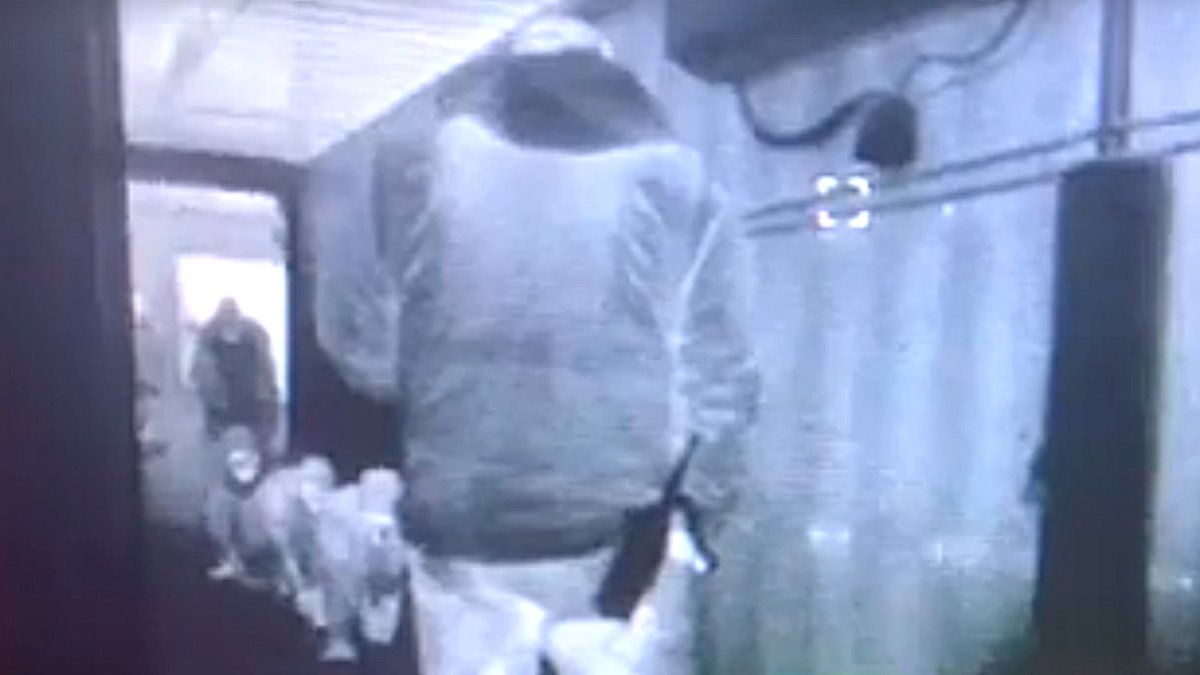
There are actually multiple smokehouses at FASTC, each made up of a number of modified shipping containers, including an L-shaped one and a multi-story structure, which would offer a more complex training experience. The videos that the State Department released shows that during a training session, these structures are deliberately filled with so much smoke that it is virtually impossible to see.
A view of the smokehouses at FASTC., Department of State
As a result, the clip, seen below, primarily shows the view through a handheld thermal imager, such as the ones firefighters use to find and rescue individuals in burning buildings, and it would be otherwise difficult to tell what’s going on. Beyond the visual impairments, which also include limited light and strobing lights, the kind one would associate with many modern fire alarm systems, the smokehouse is also filled with a cacophony of noise. This includes recordings of gunfire, people shouting, crying babies , and more.
Another, potentially seizure-inducing clip, seen below, filmed mostly without the aid of the thermal imager, gives a great sense of just how disorienting the entire experience must be for the participants.
This is the exact kind of sensory overload State Department personnel might actually have to deal with while trying to escape from a real burning structure in the immediate aftermath of an attack. This is undoubtedly valuable added realism to go along with what might, in a vacuum, seem like simple fire safety instructions that most Americans learn in grade school – things like stay low, stay together, first check a door handle to see if it is hot to avoid potentially opening it to find a raging fire on the other side.
An instructor directs an individual as they emerge from the smokehouse at FASTC., Department of State
It’s not surprising, given the notoriety of the Benghazi attack, that the State Department choose to highlight the smokehouse and the rest of the Fire As A Weapon (FAAW) training course during the formal opening event with media in attendance. Nearly 32,000 State Department personnel and contractors have passed through the FAAW training program, which is offered at multiple sites, according to a placard on the smokehouse.
Information about the FAAW training course on the door to one of FASTC’s smokehouses., Department of State
That same sign says that in addition to learning how to safely crawl out of a burning building in a potential warzone, individuals in the course also learn about typical fire attack tactics, the science of fire itself and what different kinds of fires can do to different materials, how to use a 10-pound fire extinguisher, and the proper employment of the Ocenco Emergency Escape Breathing Device (EEBD).
The EEBD has been in service with militaries, primarily navies, including the U.S. Navy, for years. In the simplest terms, this device is a self-contained oxygen supply that will work for between 10 to 15 minutes, offering time for an individual to try to escape from a smoke-filled area to safety. The Navy video below shows the procedure for using this system.
The State Department’s Diplomatic Security Service (DSS) expects to train up to 10,000 personnel each year at the sprawling training area, including DSS agents, diplomatic staff, and contractors bound for stints at embassies and other diplomatic facilities abroad. FASTC offers a host of other training spaces, as well.
This includes indoor shoot houses, explosives ranges, mock urban environments, high-speed and off-road driving courses, and more. Much of the facility looks like many other highly realistic Military Operations in Urban Terrain (MOUT) sites that the U.S. military and other government agencies use around the country. Many foreign countries utilize similar training centers, as well.
A map showing FASTC’s main sections., Department of State
An aerial view of some of the driving courses at FASTC., Department of State
DSS personnel respond to a mock attack on a convoy in a simulated urban area at FASTC., Department of State
All told, the FASTC looks set to play a major role in preparing DSS and other diplomatic personnel, as well as others heading to take up positions working for the State Department overseas in potentially dangerous locales. In a post-Benghazi world, the smokehouse training will no doubt continue to be an especially important part of ensuring those individuals are as prepared as they can be for a worst-case scenario.
Contact the author: joe@thedrive.com
Comments couldn’t be loaded. Please refresh the page.
作者:约瑟夫·特雷维西克
发布于2019年11月14日晚上9:23(美国东部时间)
美国国务院发布了一系列视频和照片,展示了外交人员培训课程的部分内容,内容涵盖如何应对针对其驻地的袭击,包括使用燃烧武器和其他蓄意纵火行为,以及在必要时如何快速安全地逃离燃烧的建筑物。在2012年臭名昭著的班加西领事馆袭击事件发生后,包括国务院在内的美国政府机构都意识到,人员掌握这些技能至关重要。在那次事件中,恐怖分子纵火焚烧了外交机构的一部分,导致时任美国驻利比亚大使克里斯托弗·史蒂文斯和外交官肖恩·史密斯因吸入浓烟而死亡。
所谓的“烟熏房”训练设施的演示是2019年11月14日弗吉尼亚州布莱克斯通外交事务安全培训中心(FASTC)正式启用时媒体报道的一部分。FASTC是美国国务院最新的培训中心,此前已小规模运行了一段时间,国务院预计该中心将在年底前全面投入运营。
FASTC实际上设有多个熏制室,每个熏制室都由多个改造过的集装箱组成,其中包括一个L形熏制室和一个多层建筑,后者可以提供更复杂的训练体验。美国国务院发布的视频显示,在训练过程中,这些熏制室会被故意充满浓烟,以至于几乎无法看清任何东西。
FASTC熏肉房一览。(美国国务院)
因此,下方视频片段主要展示了手持式热成像仪的画面,这种仪器通常用于消防员在燃烧的建筑物中搜寻和营救人员,否则很难看清现场情况。除了视觉障碍(包括光线不足和闪烁的灯光,这种灯光常见于许多现代火灾报警系统)之外,烟雾室里还充斥着各种嘈杂的声音,包括枪声、人们的喊叫声、婴儿的哭声等等。
下面这段视频片段可能会引发癫痫,而且大部分拍摄过程都没有借助热成像仪,它很好地展现了整个过程对参与者来说是多么令人迷失方向。
这正是国务院人员在遭受袭击后试图从燃烧的建筑物中逃生时可能实际面临的那种感官超载。毫无疑问,这种真实感的增强,是对那些看似简单的消防安全常识的宝贵补充——这些常识大多数美国人在小学就学过,比如保持低姿、抱团行动、先检查门把手是否发热以避免打开门后发现另一侧燃着熊熊大火。
在FASTC,一名教官指导一名学员从熏制房出来。(美国国务院)
鉴于班加西袭击事件的恶劣影响,美国国务院选择在有媒体出席的正式开幕式上重点展示熏肉房和“以火作为武器”(FAAW)培训课程的其他部分,这并不令人意外。熏肉房上的标牌显示,已有近32000名国务院人员和承包商参加过FAAW培训项目,该项目在多个地点开展。
美国国务院在FASTC的一间熏肉房门上张贴了关于FAAW培训课程的信息。
同一块标牌上写着,除了学习如何在潜在的战区安全地从燃烧的建筑物中爬出来之外,课程中的学员还会学习典型的灭火战术、火灾本身的科学原理以及不同类型的火灾会对不同的材料造成什么影响、如何使用 10 磅重的灭火器以及如何正确使用 Ocenco 紧急逃生呼吸装置 (EEBD)。
紧急逃生呼吸器(EEBD)已在包括美国海军在内的各国军队中服役多年,主要应用于海军。简而言之,该设备是一个独立的氧气供应装置,可持续供氧10至15分钟,为个人争取时间从烟雾弥漫的区域逃生至安全地带。以下海军视频展示了该系统的使用步骤。
美国国务院外交安全局(DSS)预计每年将在这个占地广阔的训练区培训多达10000名人员,包括DSS特工、外交人员以及将被派往海外大使馆和其他外交机构工作的承包商。此外,FASTC还提供许多其他培训场地。
这包括室内射击训练场、爆炸物靶场、模拟城市环境、高速和越野驾驶训练场等等。该设施的大部分看起来都与美国军方和其他政府机构在全国各地使用的许多高度逼真的城市作战(MOUT)训练场地类似。许多外国也使用类似的训练中心。
一张显示FASTC主要区域的地图。(美国国务院)
这是美国国务院提供的FASTC部分驾驶课程的鸟瞰图。
美国国务院安全局人员在快速反应训练中心(FASTC)模拟城区对一支车队进行模拟袭击演习。
总而言之,FASTC项目似乎将在为美国国务院安全局(DSS)和其他外交人员,以及其他即将前往海外潜在危险地区为国务院工作的人员提供培训方面发挥重要作用。在班加西事件之后,这种模拟演习无疑将继续成为确保这些人员为最坏情况做好充分准备的重要环节。
联系作者:joe@thedrive.com
评论加载失败,请刷新页面。