What It’s Like To Work Inside The Navy’s Secretive China Lake Weapons Development Center在海军神秘的中国湖武器研发中心工作是怎样的体验?
The sprawling and remote facility is critical to maintaining the Navy's combat edge and, according to one man, it is also a fascinating place to work.
新闻视频
Updated Dec 1, 2019 7:05 AM EST
The Navy’s sprawling Naval Air Weapons Station China Lake has over 1.1 million acres of land and 20,000 square miles of controlled airspace at its disposal as it sits at the heart of the huge R-2508 range complex in central California. There the Navy and an army of contractors pave the way for the future of warfare, testing the newest evolutions in bombs, missiles, cannon shells, electronic warfare and communications systems, and the aircraft that will put much of them to use. These development processes often involve blowing things up in spectacular fashion.
The facility is an integral part of the gigantic, but shy weapons test , development , and evaluation ecosystem that spans all 50 states and is essential to maintaining America’s combat edge over its adversaries. Yet knowing about a place like NAWS China Lake is a lot different than having a first-hand account of what it is like to live and work there. Thankfully, Randy Smith, a civilian employee that worked at China Lake in a unique capacity for years, has offered to share his recollections about a place that he learned to love not just for its remote beauty and ‘unique’ technological sights and sounds, but also for the esprit de corps among those who work there, often under tight security restrictions. This is commonly referred to as “the China Lake way” by insiders and Randy gives us a clearer view of what the place and its motto are really all about.
How I fell into China Lake
Growing up in the Indian Wells Valley is very challenging. The area is desolate and the nearest populated area is an hour and a half drive to Lancaster for shopping, dining, or anything else for that matter. In the times of no internet and nothing else to do there were very limited entertainment opportunities other than partying or riding dirt bikes.
For the most part, unless you worked on the base or in the nearby town of Trona at the soda ash processing plants, there weren’t many career opportunities. Being a gearhead growing up I was working at an auto parts store when my fiancé saw a job in the paper for a position on base. I never thought I’d land a job like that, but I interviewed for it and low and behold got hired.
Super Hornet flying over Armitage Field which lies at the center of NAWS China Lake., USN
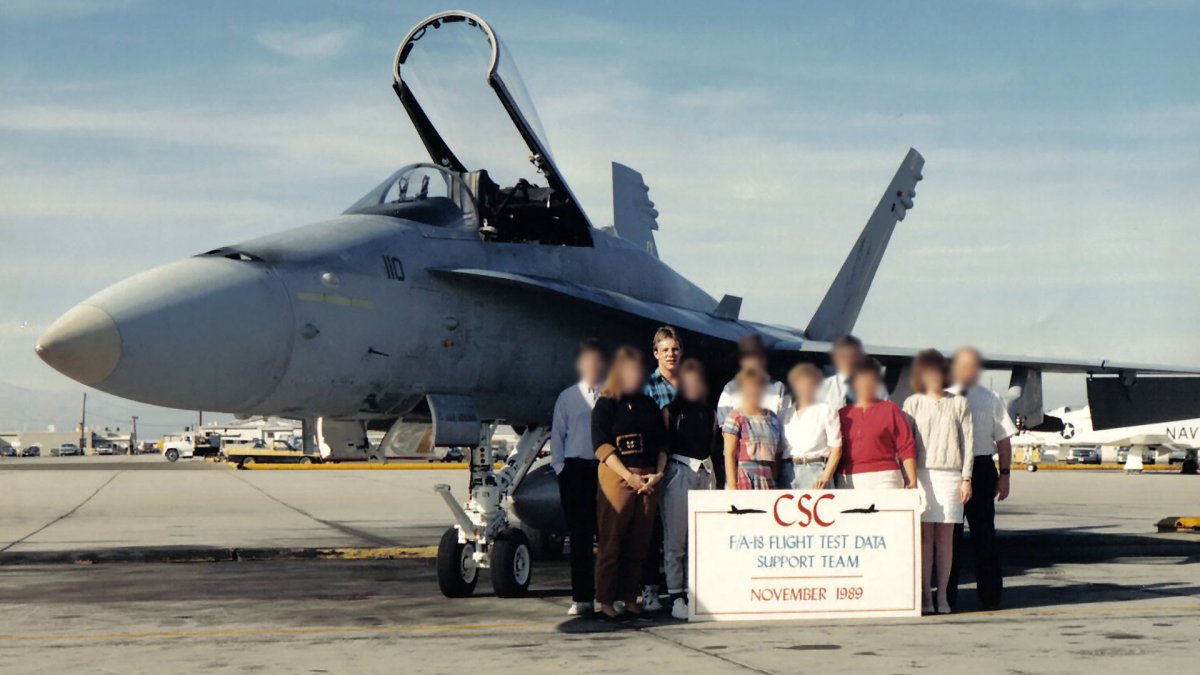
I started my working career on the base in Oct of 1989. I was hired on as a courier transporting 14-inch analog tapes that recorded data on various aircraft when they were flight testing missiles, bombs, and certain data pods of the era. I was to be located at a building next to the airfield on the base where you had to have special clearance to even get through the gate.
The airfield is north of town as are the many ranges. All these places are located in very remote areas in the desert. You may think there isn’t much out there while traveling north on Highway 395, but the range facilities are filled with radar sites, target areas, and an occasional lone laboratory with some strange engineer who hasn’t seen daylight in four days hanging out most the week by himself.
The aircraft that were being tested were A-6Es, AV-8Bs, A-7s, AH-1 Cobras, and many others. I worked for the contractor that oversaw processing the data on those tapes using Honeywell tape machines and converting them to digital tapes for processing on the VAX mainframes by data technicians or for the flight test engineers in charge of the test projects.
I also traveled to the outer ranges to collect range data tapes that got processed in the same manner. With this job function, I had to get a clearance to just be in sensitive areas which took very little time. I believe the process went so fast because I pretty much grew up in the area so they didn’t have to go far for a background check.
I immediately took to fiddling around on the VAX mainframe in my spare time, learning the system and programming various little batch commands to run minor things. In true fashion of what is termed “the China Lake way” where every one civilian and military alike worked together for one common goal. I was able to transition into a data reduction job working on the A-6E Intruder System Weapon Improvement Program (SWIP) within six months because I was learning things so fast and demonstrating my potential. This upward movement was unheard of at the time. Perhaps my boss sensed that I had more to offer than what met the eye and that’s why he hired me, or I just got lucky.
It’s all about the data
As mentioned earlier, when an aircraft was doing flight test evaluation in the ‘80s and ’90s there were a lot of parts to put together to analyze the data. The data reduction group was where that began. There were not only aircraft tapes to analyze, but also range data tapes that were recorded from the ground stations tracking the aircraft and the test articles.
The aircraft tracked time, speed, INS (Inertial Navigation System), weapon release data, and TPSI (Time and Space Position Information), amongst other things. The implementation of GPS and coupling it with aircraft INS data was in its infancy at that time and was not considered reliable for precise data recording purposes at the time.
The range tapes were often generated by mobile laser tracking stations that had to be calibrated against objects of known distance prior to the tests. The first part of breaking down the recorded data was to ensure the laser was calibrated correctly. The data from the aircraft was then merged with the range data to determine if the test results were desirable.
The aircraft, as well as the weapons they were testing, were equipped with little prism mirrors on various points so that the lasers could see them and record their telemetry at any given moment. I became involved in testing on HARM, Harpoon, cluster munitions, SLAM, and even a little-known project called Tacit Rainbow . At one point I had discovered collisions with the 1553 bus data that was being recorded on an aircraft. I went over to the hanger and had some discussions with the maintenance crew and they had found some loose connections in the bus connectors. They allowed me to sit on the cockpit which is every young man’s dream at one point or another.
China Lake A-6E during HARM testing. , USN
It was very interesting to see the typewriter style buttons and ancient controls in the A-6. I was also shown the bottom of this aircraft where patches were made to holes caused by ground fire from guys hiding in the rice patties when the plane was flying low over Vietnam. That aircraft was indeed old.
Not too long after I started this position the Gulf War began. The flight weapons testing got hot and heavy, but the best part was here I am just some 22-year-old hack local off the street and was put into a position to evaluate testing data in support of the A-6 missions taking place in the Middle East.
A year and a half earlier I had never touched a mainframe computer and only watched the aircraft fly in and out of the airfield. This was all new to me and very exciting. Our main focus at the time was the assessment of data generated from MK-20 Rockeye cluster munitions testing on the A-6. As Operation Desert Storm continued into the late stages of the air campaign we got the unique opportunity to perform data reduction in direct support of the bombing operations on the “highway of death” between Kuwait and Iraq. There were a couple of weeks worth of late night data processing for tests related to this event and our results of these tests went directly to the Navy in support of wartime operations.
A-6Es about to get loaded up with Mk20s during Operation Desert Storm., Seaforces.org
This was a very proud moment for me to be able to participate in helping with the Gulf War effort and we as a group were recognized for our participation by the Navy Department Heads.
We each received a plaque with a personal thank you for our efforts for supporting the missions that took place. I display the plaque in my current office to this very day.
In 1992, stealth aircraft were still mysterious to mere mortals of the population at China Lake. Though there was low observable weapon testing at the time, the Navy didn’t have any stealth aircraft in testing. One of the really cool things about China Lake is the Electronic Combat Range that is located east of the main base some 30 miles called Echo Range. It’s remote and mostly hidden in the next valley not too far from the famous Pinnacles that have been stars of movies such as Star Trek and Planet of the Apes. There are many things in that area that are classified to this day, but there are a few things I can talk about what without landing in prison.
There are several interesting buildings including one that the Navy made up like a Russian ship with Russian radars for testing of various aircraft attack angles and radar avoidance. There are the various test and data collection facilities along with every type of radar you could imagine or didn’t even know existed. There are what almost looks like UHF antennas that spin and do all kinds of crazy movements and other things that make you feel that you could be fried any moment if they were pointed at you. This range is very unique and from time to time the Air Force buys some range time and flies tests of their aircraft there. The main site for aircraft testing and evaluation for the Air Force on the west coast is located at Edwards Air Force base about an hour and a half away from China Lake.
Armitage Field may be the center of NAWS China Lake but the range facilities span for miles in multiple directions. , Google Earth
The unique thing about working at the airfield in China Lake was when something cool was flying our direction from Edwards or elsewhere, the word of its presence would spread quickly. At the time, the closest most anyone would get to a B-2 without clearance was a flyover at an air show. This aircraft is one of the most awe-inspiring flying technologies ever to be seen then and now in my opinion. It’s just a beautiful machine to watch fly and makes you feel as if you were watching some alien technology that just entered our atmosphere and was about to start raining destruction.
One day we got word that one was heading our direction after a test out on Echo Range and was going to perform a flyby. What we got was far better. We watched as it came over the horizon with two F-16 chase planes in tow. The formation banked to the north and turned back around south and then did a touch and go on the runway while the F-16’s stayed airborne a few feet above it.
A group of us were standing on the flight line and had a front row seat to this event as it came whizzing by. The most amazing thing I remember about the experience is we could not hear the B-2 over the F-16’s. It was that quiet and they were that loud. After its awesome touch and go, the aircraft ascended and headed back to Edwards. This event may not seem much, but it was very impressive to see at the time.
One of my fonder memories was when a group of F-117s came to the base from Edwards. They were there on an extended trip of several days to do some testing at Echo Range and were temporarily housed in Hanger 3 for maintenance. Of course, the base was buzzing about the presence of them being there. And those of us who were cleared to be out at the airfield got a special treat.
We got to go over to the hanger and check them out. When we entered the hanger, we were greeted up close in person by these magnificent pieces of technology. They were cordoned off with red tape and there were air force guards on each corner with their M-16’s poised and ready if someone decided they wanted to do some sort of nefarious deed! This aircraft was still such a sensitive asset and a national treasure that it necessitated having guards even in a restricted area.
To view this aircraft two feet in front of you is befuddling at the very least. It had very sharp angles and was so futuristic looking you couldn’t imagine that it was really able to fly, which it couldn’t without flight computers of course. The canopies were closed and there were technicians in white suits and covered shoes working and walking on them in various places. They had jars of what looked like black paint and were touching up the intake and canopy areas on the aircraft to presumably ensure it stayed stealthy.
Looking at these things in awe caused me to do something very impulsive and was in hindsight a very bad idea. When the guard closest to me looked the other way, I reached up and touched one of the air sensors on the front of the aircraft real quick. I was thankful that the group of my coworkers that were there didn’t decide that I was being inappropriate and tell on me. To this day I tell the story of how I got to touch an F-117 and lived to talk about it.
Later in the week, the F-117s could be seen flying in various places on the ranges. They were interesting to watch because they were actually quite maneuverable. They reminded me of dragonflies darting around in the sky. The sound they made from the engines enclosed inside the airframe was quite interesting as well. One day I was dropping my wife off at her workplace on the base and one was flying over very low with its gear down. It sounded like a cross between a mean weed eater from hell and the Millennium Falcon.
There were many other interesting things about working at China Lake, but those two stand out in my mind just because they were so unique at that time.
Working at the airfield and doing data reduction work was great, but I didn’t make a whole lot of money. Though I was considered a whiz kid for the things I had pulled off I didn’t have a formal secondary education and therefore was limited in the things I could do. I was trying to raise a young family with three kids and was struggling.
Since I wasn’t able to move into data analysis or flight test engineering I decided to take a job in the digitizing unit just for the pay increase. This was the job function of pulling the data off the analog tapes and converting it into digital. Spinning tapes was the most boring job you could get into in this arena and the workers are usually referred to as ‘tape apes.’
I then got another position working with an all-new digitizing system called the Loral 8715. This system incorporated the same Honeywell reel to reel system, but it was tied directly into a Vax 4000. This bypassed having to convert to digital format on tape and dumped the data directly into a format that the data reduction programs could work with. It was fun to be involved in as it was new but soon that became routine as well.
One day something happened that would alter the course of the career path I was currently on into another deal altogether. The evolution of the PC was starting to kick in. PCs were getting faster with larger internal hard drives, more memory, writable CD ROMs, and of course faster CPUs. One day we received a 486 DX100 in the data reduction area. It had an 8mm tape drive in it. Shortly after we started receiving 8mm tapes that were recorded on a Radar Upgrade AV-8B+ aircraft. The machine’s software broke the data down from that tape much like the 8715s had done, except it was capable of handling more data and the overall system was way less expensive and cumbersome than the 8715 system.
I was instantly drawn to the PC because it wasn’t something I had a whole lot of experience with but was highly interested in. Before long I had purchased one for home and spent every night banging away at it learning everything I could. Within a few months, I had learned much about PCs, DOS, and of course Windows software. Another job came up that was a promotion and it was with a group of folks based out of a trailer in the Michelson Lab complex. They were under contract to be essentially on call PC repairmen all over the base.
Because this contract was for the entire installation I gained access to just about every area when I got hired. As such, I got to see many cool things that were being worked on around the base and its many ranges.
Some of these facilities included the following:
I spent a couple days working on a badly built PC at the gun range. This is where they tested guns like the 16-inch Mark 7 and Mark 8 that were taken directly off battleships and shipped to China Lake for various testing. One of the technicians out there who happened to be a good friend of my father in law (He worked on the base for 30 years) took me out to see a live fire for a reward after I finished working on their PC. Of course, we had to be back about a quarter mile in a firing bunker to keep us safe.
When that thing shot it was amazingly loud and concussive even while cocooned in the bunker. You could actually see the round come out and go down range. It was pretty impressive. I also got to see some of the targets and proximity shells they tested with. The targets resembled the 76 ball you see at gas stations except they were unpainted aluminum. What these proximity shells did was pretty wild. When they sensed they were close enough to these ball targets sitting on telephone poles they would explode shrapnel so violently that the balls ended up being literally shredded to bits.
Weapons Survivability Lab
The Weapons Survivability Lab is located way far north in a desolate area of China Lake. This place is an office building and a concrete shielded area with a huge static stand for mounting aircraft to. They gather up some old F-4s or something like that and strap it to the stand and then they shoot a missile or other implement of destruction at it, recording all the results on high-speed cameras and sensors.
I didn’t get to see a test take place but from what I’ve read, considerable amounts of destruction could take place.
China Lake’s WSL today., USN
This area was relatively new when I was at China Lake. It is also located far north of the other facilities because of the live fire testing. At the time, there were two Phalanx CIWS guns taken from an actual ship that was dry docked for upgrades. They were brought there to test new technologies and were to be returned to that ship after its maintenance was complete.
The guns were mounted on each side of a bunker with the controllers being inside the bunker. This bunker had various bits and pieces of shrapnel and aluminum panels lying around in front of which I thought at the time was rather odd.
They had a malfunction on one of their PCs and called us to help because there was a test scheduled later in the morning. I went out there and ended up spending a considerable amount of time rebuilding the machine because it was trashed. Because I was there so long I ended up having to stay for the duration of a test they were about to perform and all range access was temporarily locked down during it. For some reason, they didn’t think it was a good idea for me to be driving around on the range when there was live fire targeted on whatever they decided was going to die that day.
As I sat and waited I was informed to look out the bulletproof glass and to the south. What I was looking for was a Tomahawk cruise missile and apparently, the CIWS was supposed to shoot it out of the sky. That experience went from being really cool to terrifying within seconds when I spotted the Tomahawk. It dropped down in the valley along with a chase F/A-18 and started heading towards the bunker with us in it. It kept getting closer and closer until I was sure that there was some sort of problem because it appeared to target us in the bunker and I started kissing my ass goodbye. I would say it got within an either of a mile of us when the roar of the CIWS was heard from outside the bunker. It was just above us and to the right and sounded like the skies opened up with the most amazing Ppfffttaaaaaattt sound as it hurled lead at the Tomahawk.
The Tomahawk was instantly shredded, but its pieces kept flying along its original trajectory. Some of them landed in front of the bunker still in flames.
Then I realized where all the shredded metal came from.
The SNORT Track at China Lake wasn’t used a lot in my day. When it did run, the whole valley knew because the rumble from the rocket sled was amazingly loud and echoed everywhere. I got to be there one time when they were executing a test. I don’t recall what they were testing at the time. I believe they had a combo of test rockets they attached to the sled to see how well the whole package would perform.
The guys in that facility were really cool and when the test was about to begin, they gathered everyone up and took them to the roof of the building to watch. It’s about a quarter mile away from where the track was, but when that thing lit off, you felt the wave of energy and enormous amount sound it put out. It was amazing. Your insides would literally vibrate.
The speed it obtained in such a short time was nothing short of astounding. When the sled reached the shutdown area it travels into several pools that were filled with water. The water flew 25 feet in the air on impact effectively slowing the sled.
Working at China Lake you meet many different types of people and it seems the further you get out into the ranges the more colorful of people you will find.
Baker Range was at the time definitely full of colorful people. It’s also located North of the lakebed way out in the desert. It’s a bombing complex with a huge radar system used to track aircraft and the weapons they drop. The drive out there takes about 45 minutes at real world driving speeds. However, the roads are often speed limited to 45 and even 25 in some areas in the strangest places where there is absolutely nothing.
Upon rolling through the gate and parking inside the complex I got chastised first thing in a humorous way that they were tracking me with the radar as I progressed on my way out and I had broken the posted speed limit several times.
This was just the beginning.
The outside of the radar control station looked more like a WWII shack on some war-torn island in the Pacific. However inside was nice and cool and organized with different viewing panels mounted on the walls. The radar system had an optical layout on it, so you could actually see what the radar was pointed at. They proudly displayed the visual and auto tracking feature on a jackrabbit about two miles down range. The radar followed it on its own as it went about its business and the image was crystal clear like you were 50 yards from it.
This group let me hang out for a bomb test session with an F-14 out of NAS Point Mugu which was a real treat. Watching that F-14 come in low over the desert at 600 miles an hour 200 feet off the ground was exhilarating. It would get close to the bombing complex and then pull up and release the inert test bombs. They would lob into a pad of real thick sand. After four of those runs, he was out of bombs and left. The range guys asked me if I wanted to go downrange on their ATV’s with them to pick up the bombs. I had to decline, but I wish I could have.
We were called out to the new MESA (Missile Engagement Simulation Arena) complex not too long after it had opened for business. Apparently, the whole system used to reposition test items and missile seekers were controlled by a PC that died. MESA is a huge building and in the middle of it was an F-4 Phantom suspended from the ceiling that looked like a toy because the building was so big. The walls were all covered in cone-shaped foam that’s supposed to filter out any background noise that might interfere with testing.
Very interesting place.
Range Control Center
Occasionally I would have to take a trip over to the RCC. This building oversees all testing done in the main China Lake ranges. It’s almost like an airport control tower except there are big screens that showed real-time data and video of the tests being run at the time. Very cool place to spend a couple hours watching the various activities taking place on the ranges.
“T-pad” is the area where surface information is sent for recording from the various range and radar devices located around the range complexes. I used to have to make trips out there to pick up tapes. Another remote location with some interesting characters.
These are most of the operating areas that I can get into without getting myself in trouble. There are many more in the list I can’t really write about and I’m sure there are new ones that have cropped up since I’ve left.
I continued to do PC work at these various places until once again I ran into an under wage scenario. Along with that, I was also wanting to leave the area for my own reasons. A job position came up at White Sands New Mexico and I made probably one of the worst and best decisions in my career and applied for the transfer. My boss knows that I was batshit crazy for volunteering to uproot my family and take them to New Mexico on a drop of a hat, but I happily agreed to it.
I wanted to stay close to aircraft operations, but I wanted to make more money too and ended up chasing the dollar. I miss working at China Lake because to me it had everything I ever liked working with, as well as everyone there seemed like family. Nothing would ever compare to working at there in my mind.
The minute I left I regretted it and still do to some degree. Not only do I miss working there, but I also miss being in the area. It’s a very unique place.
Courtesy of Randy Smith
Contact the editor: Tyler@thedrive.com
Comments couldn’t be loaded. Please refresh the page.
更新于美国东部时间2019年12月1日上午7:05
美国海军庞大的中国湖海军航空武器站占地超过110万英亩,拥有2万平方英里的管制空域,坐落于加利福尼亚州中部庞大的R-2508靶场综合体的核心地带。海军及其众多承包商在此为未来战争铺平道路,测试炸弹、导弹、炮弹、电子战和通信系统的最新发展成果,以及将要使用这些装备的飞机。这些研发过程往往伴随着令人叹为观止的爆炸试验。
该设施是庞大而低调的武器测试、研发和评估体系的重要组成部分,该体系覆盖全美50个州,对于维持美国在对抗对手方面的作战优势至关重要。然而,了解像中国湖海军武器站这样的地方,与亲身经历在那里生活和工作是截然不同的。幸运的是,兰迪·史密斯(Randy Smith)——一位曾在中国湖担任多年文职人员的人士——愿意分享他对这个地方的回忆。他爱上这个地方,不仅是因为它偏远的自然美景和“独特”的科技景象与声音,更是因为它员工之间那种团结协作的精神,尽管他们常常在严格的安全限制下工作。内部人士通常将这种精神称为“中国湖之道”,而兰迪则让我们更清晰地了解这个地方及其座右铭的真正含义。
我如何掉进中国湖
在印第安威尔斯谷长大非常具有挑战性。那里地处偏僻,最近的居民区也要开车一个半小时才能到兰卡斯特,购物、吃饭或者其他任何事情都很难找到。在没有互联网、娱乐活动匮乏的年代,除了聚会和骑越野摩托车之外,几乎没有其他娱乐选择。
大多数情况下,除非你在基地工作,或者在附近的特罗纳镇的纯碱加工厂工作,否则职业机会并不多。我从小就喜欢汽车,当时我在一家汽车配件商店工作,我的未婚夫在报纸上看到一个基地招聘的职位。我从没想过自己能找到这样的工作,但我还是去面试了,结果竟然被录用了。
美国海军超级大黄蜂战机飞越位于中国湖海军航空武器站中心的阿米蒂奇机场。
我于1989年10月开始在基地工作。我的工作是运送14英寸的模拟磁带,这些磁带记录了当时各种飞机进行导弹、炸弹和特定数据舱飞行测试的数据。我的工作地点在基地机场旁边的一栋楼里,进入那栋楼需要特别许可。
机场和许多靶场都位于城镇北部。所有这些地方都坐落在沙漠中非常偏远的地区。沿着395号公路向北行驶时,你可能会觉得周围没什么可看的,但实际上,靶场设施里遍布雷达站、靶场,偶尔还能看到一些孤零零的实验室,里面住着一些古怪的工程师,他们可能已经四天没见过天日了,一周的大部分时间都独自待在那里。
当时正在测试的飞机包括A-6E、AV-8B、A-7、AH-1眼镜蛇以及其他许多型号。我受雇于一家承包商,负责使用霍尼韦尔磁带机处理这些磁带上的数据,并将其转换为数字磁带,以便数据技术人员在VAX主机上进行处理,或者供负责测试项目的飞行测试工程师使用。
我还曾前往外围靶场收集靶场数据磁带,这些磁带的处理方式与上述相同。由于这项工作需要我获得进入敏感区域的许可,而这个许可很快就办好了。我认为流程如此迅速的原因是我几乎是在那一带长大的,所以他们无需费力就能进行背景调查。
我立刻利用空闲时间摆弄VAX大型机,学习系统操作,并编写各种批处理命令来运行一些小程序。这正是所谓的“中国湖模式”的精髓所在——无论军人还是平民,都为了同一个目标而齐心协力。由于我学习能力强,并且展现出了潜力,六个月内我就转到了A-6E入侵者系统武器改进项目(SWIP)的数据处理岗位。这种晋升在当时是闻所未闻的。或许我的老板察觉到我的能力远超表面,所以才录用了我,又或许我只是运气好。
一切都与数据有关。
如前所述,在20世纪80年代和90年代,飞机进行飞行测试评估时,需要整合大量数据进行分析。数据处理小组正是这项工作的起点。他们不仅要分析飞机的飞行录像,还要分析地面站记录的航程数据录像,这些数据来自对飞机和测试对象的跟踪。
该飞机跟踪了时间、速度、惯性导航系统 (INS) 数据、武器投放数据以及时空位置信息 (TPSI) 等信息。当时,全球定位系统 (GPS) 的应用及其与飞机 INS 数据的结合尚处于起步阶段,因此在当时被认为不足以进行精确的数据记录。
测距数据通常由移动式激光跟踪站生成,这些跟踪站必须在测试前使用已知距离的物体进行校准。分析记录数据的第一步是确保激光器已正确校准。然后将飞机数据与测距数据合并,以确定测试结果是否符合预期。
飞机以及他们测试的武器都在各个位置安装了小型棱镜反射镜,以便激光能够探测到它们并随时记录遥测数据。我参与了HARM、鱼叉导弹、集束弹药、SLAM系统,甚至一个鲜为人知的名为“隐秘彩虹”(Tacit Rainbow)的项目的测试。有一次,我发现飞机上记录的1553总线数据出现了碰撞。我去了机库,和维修人员进行了一番讨论,他们发现总线连接器有些松动。他们允许我坐进驾驶舱,这几乎是每个年轻人的梦想。
中国湖A-6E攻击机在HARM反辐射导弹测试期间。(美国海军)
看到A-6飞机上那些打字机式的按钮和古老的控制装置,真是令人大开眼界。我还参观了这架飞机的底部,那里有补丁修补的痕迹,都是飞机低空飞越越南时,躲在稻田里的地面炮火造成的弹孔。这架飞机确实很老旧了。
我上任不久,海湾战争就爆发了。飞行武器测试变得异常激烈,但最棒的是,我只是个22岁的街头小子,却被安排到这样一个岗位上,负责评估测试数据,为在中东执行的A-6任务提供支持。
一年半前,我从未接触过大型计算机,只是看着飞机起降。这一切对我来说都是全新的,也让我兴奋不已。当时我们的主要工作是评估A-6攻击机上MK-20“石眼”集束弹药测试产生的数据。随着“沙漠风暴”行动进入空袭后期,我们获得了难得的机会,直接为科威特和伊拉克之间“死亡公路”上的轰炸行动提供数据处理支持。为了处理与此相关的测试数据,我们连续几个星期熬夜工作,并将测试结果直接提交给海军,以支持战时行动。
在“沙漠风暴”行动期间,A-6E攻击机即将装载Mk20导弹。(Seaforces.org)
能够参与海湾战争的救援工作,我感到非常自豪,我们团队的参与也受到了海军部门领导的表彰。
我们每个人都收到了一块牌匾,上面写着对我们支持各项任务的感谢信。直到今天,我仍然把这块牌匾摆放在我的办公室里。
1992年,对于驻扎在中国的中国湖海军基地的普通民众来说,隐形飞机仍然是个谜。虽然当时正在进行低可探测性武器测试,但海军并没有在测试任何隐形飞机。中国湖基地最酷的地方之一是位于主基地以东约30英里处的电子战靶场,名为“回声靶场”。它位置偏远,大部分隐藏在附近的山谷中,距离著名的尖峰石阵不远,尖峰石阵曾出现在《星际迷航》和《人猿星球》等电影中。时至今日,该地区仍有许多机密信息,但我可以透露一些信息,以免锒铛入狱。
这里有几座有趣的建筑,其中一座是海军仿照俄罗斯舰艇建造的,里面装有俄罗斯雷达,用于测试各种飞机攻击角度和雷达规避能力。这里还有各种测试和数据采集设施,以及你能想象到的甚至闻所未闻的各种雷达。一些看起来像是超高频天线的东西会旋转,还会做出各种疯狂的动作,让人感觉如果它们对准你,随时都可能被电死。这个靶场非常独特,空军会不时购买一些靶场使用时间,在这里进行飞机测试。空军在西海岸的主要飞机测试和评估基地位于爱德华兹空军基地,距离中国湖大约一个半小时车程。
阿米蒂奇机场可能是中国湖海军武器站的中心,但靶场设施向多个方向绵延数英里。(谷歌地球)
在中国湖机场工作最特别的一点是,每当有酷炫的飞机从爱德华兹空军基地或其他地方飞来时,消息都会迅速传开。当时,未经许可,大多数人能近距离接触B-2轰炸机的机会,最多也就是在航展上看到它飞过。在我看来,这架飞机是当时乃至现在最令人叹为观止的飞行技术之一。它飞行起来简直美极了,看它飞行你会感觉像是在观看某种外星科技刚刚进入我们的大气层,即将开始肆虐。
有一天,我们接到消息,一架飞机在回声靶场完成测试后正朝我们这边飞来,准备进行低空通场飞行。但我们看到的景象远比预想的要精彩得多。我们眼睁睁地看着它带着两架F-16护航机从地平线上升起。编队向北倾斜,然后转向南方,在跑道上进行了一次触地复飞,而F-16则始终保持在它上方几英尺的空中。
我们一行人站在跑道上,正好坐在前排,目睹了这架飞机呼啸而过。我记忆中最神奇的是,我们竟然听不到B-2轰炸机的声音,因为F-16战斗机的声音实在太大了。飞机完成了一次精彩的触地复飞后,便爬升返回爱德华兹空军基地。这件事现在看来或许没什么特别的,但当时亲眼目睹却令人印象深刻。
我最美好的回忆之一,是当时一群F-117战机从爱德华兹空军基地飞抵基地。它们此行为期数日,在回声靶场进行测试,并暂时停放在3号机库进行维护。当然,基地里到处都在谈论它们的到来。而我们这些获准在机场活动的人,也享受到了特别的待遇。
我们有机会去机库参观。一进机库,我们就近距离亲眼目睹了这些宏伟的科技杰作。它们被红绳围了起来,每个角落都有空军警卫,M-16步枪严阵以待,以防有人胆敢作恶!这架飞机毕竟是极其敏感的资产和国家瑰宝,即使在限制区域内也需要警卫看守。
近距离观察这架飞机,至少会让人感到困惑。它棱角分明,造型极具未来感,让人难以想象它真的能够飞行——当然,没有飞行计算机,它根本不可能飞。座舱盖紧闭,身穿白色防护服、脚蹬皮鞋的技术人员在飞机各处工作和走动。他们拿着几罐看起来像是黑色油漆的东西,正在修补飞机的进气口和座舱盖区域,大概是为了确保飞机保持隐蔽性。
目睹这些庞然大物,我心生敬畏,一时冲动做了件非常糟糕的事,现在想想真是个馊主意。趁着离我最近的警卫把目光移开,我迅速地伸手摸了一下飞机前部的一个空气传感器。幸好当时在场的同事们没有觉得我举止不当,也没有告发我。直到今天,我还会津津乐道地讲述我是如何触摸到F-117战斗机并活着回来的。
一周后,在靶场的各个地方都能看到F-117战斗机的身影。它们飞行起来很有意思,因为它们的机动性相当出色。它们让我想起了在空中飞舞的蜻蜓。机身内部发动机发出的声音也相当独特。有一天,我送妻子去基地上班,一架F-117从我头顶低空飞过,起落架放下。那声音听起来像是地狱里一台凶猛的割草机和千年隼号的混合体。
在中国湖工作还有很多其他有趣的事情,但这两件事让我印象特别深刻,因为它们在当时非常独特。
在机场做数据处理工作很棒,但收入并不高。虽然我因为完成的一些任务而被大家视为神童,但我没有接受过正规的中学教育,因此我的职业选择受到限制。我当时要养活三个孩子,生活很拮据。
由于我没能转岗到数据分析或飞行测试工程部门,为了涨工资,我决定去数字化部门找份工作。这份工作的内容是从模拟磁带上提取数据并转换成数字信号。在这个领域,转磁带是最枯燥乏味的工作,工人们通常戏称他们为“磁带猿猴”。
之后我找到了一份新工作,负责操作一套名为 Loral 8715 的全新数字化系统。这套系统沿用了霍尼韦尔的卷盘式磁带机,但直接连接到了 Vax 4000 工作站。这样就省去了在磁带上转换数字格式的步骤,直接将数据导出为数据压缩程序可以处理的格式。参与这个项目很有趣,因为它是全新的,但很快也变成了日常工作。
有一天,发生了一件事,彻底改变了我当时的职业道路,让我走上了另一条道路。个人电脑的革新开始显现。随着硬盘容量增大、内存增加、可写入光盘以及CPU速度提升,个人电脑的运行速度越来越快。一天,我们在数据处理部门收到了一台486 DX100,它配备了一个8毫米磁带驱动器。不久之后,我们开始收到一些8毫米磁带,这些磁带是在一架雷达升级型AV-8B+飞机上录制的。这台机器的软件能够像8715那样对磁带上的数据进行分解,但它的数据处理能力更强,而且整个系统比8715系统便宜得多,也更轻便。
我立刻就被电脑吸引住了,因为我对它了解不多,但却非常感兴趣。不久之后,我就买了一台放在家里,每天晚上都埋头苦干,尽可能地学习各种知识。几个月内,我就掌握了许多关于电脑、DOS操作系统以及Windows软件的知识。后来,我得到了一份晋升的工作,加入了一个在米歇尔森实验室园区内一个拖车里办公的团队。他们的工作是为整个基地提供随叫随到的电脑维修服务。
由于这份合同涵盖整个设施,我入职后几乎可以进入所有区域。因此,我有机会看到基地及其各个靶场正在进行的许多有趣的项目。
这些设施包括以下几项:
我在靶场花了几天时间修理一台组装得很差的电脑。那里是测试各种火炮的地方,比如16英寸的Mark 7和Mark 8型火炮,这些火炮直接从战列舰上卸下来,运到中国湖进行各种测试。一位碰巧是我岳父好朋友的技术人员(他在基地工作了30年)在我修好电脑后,带我去看了一场实弹射击,作为奖励。当然,为了安全起见,我们必须回到大约四分之一英里外的射击掩体里。
那玩意儿发射的时候,即使躲在掩体里,声音也大得惊人,冲击力也强得吓人。你甚至能看到炮弹飞出去,飞向远方。真是令人印象深刻。我还看到了他们测试用的靶子和近炸弹。靶子有点像加油站常见的76号钢珠,只不过是未涂漆的铝制靶子。这些近炸弹的效果简直惊人。当它们探测到距离架在电线杆上的靶子足够近时,就会爆炸,弹片爆炸的威力之大,以至于靶子都被炸成了碎片。
武器生存能力实验室
武器生存能力实验室位于中国湖偏远的北部地区。这里包括一栋办公楼和一个混凝土防护区,防护区内有一个巨大的固定支架,用于安装飞机。他们会找来一些老旧的F-4战斗机之类的飞机,把它们固定在支架上,然后发射导弹或其他武器进行攻击,并用高速摄像机和传感器记录所有结果。
我没有亲眼目睹测试过程,但根据我读到的资料,可能会造成相当大的破坏。
中国湖WSL今日报道,美国海军
我到中国湖海军航空站的时候,这片区域还比较新。由于要进行实弹测试,它的位置也比其他设施偏北很多。当时,有两门“密集阵”近防炮是从一艘正在干船坞进行升级的军舰上拆卸下来的。它们被运到这里是为了测试新技术,待军舰完成升级后,这些炮将被送回原位。
火炮安装在碉堡两侧,控制人员则位于碉堡内部。碉堡前散落着各种弹片和铝板碎片,当时我觉得这很奇怪。
他们的一台电脑出了故障,打电话让我们帮忙,因为上午晚些时候有个测试。我去了之后,花了相当长的时间才把那台彻底报废的电脑修好。由于我在那里待的时间太长,最后不得不一直待到他们即将进行的测试结束,测试期间靶场的所有通道都被暂时封锁了。不知出于什么原因,他们觉得在实弹射击测试期间,我开车在靶场里转悠不太合适,因为他们那天要测试的目标就是他们选定的靶子。
我坐在那里等待,有人告诉我透过防弹玻璃往南看。我要找的是一枚战斧巡航导弹,显然近防武器系统(CIWS)会把它击落。当我看到战斧导弹时,那种感觉瞬间从酷炫变成了恐怖。它和一架F/A-18战斗机一起降落在山谷里,开始朝我们所在的掩体飞来。它越来越近,直到我确信情况不妙,因为它似乎瞄准了我们这些躲在掩体里的敌人,我开始祈祷自己能死。我估计它离我们只有一英里左右的时候,掩体外传来了近防武器系统的轰鸣声。它就在我们头顶偏右的位置,发出“噗 ...
战斧导弹瞬间被撕成碎片,但碎片仍沿着原先的轨迹飞散。其中一些碎片落在仍在燃烧的掩体前。
然后我才意识到这些金属碎片是从哪里来的。
我小时候,中国湖的SNORT轨道并不常用。但每次运行,整个山谷都知道,因为火箭滑橇的轰鸣声震耳欲聋,回声响彻四方。我有幸亲眼目睹过一次测试。我不记得当时他们在测试什么了。我记得他们好像是把几种不同的测试火箭组合起来,装在滑橇上,看看整个装置的性能如何。
那个实验室的伙计们真是太棒了,测试即将开始时,他们把所有人都召集起来,带到楼顶观看。楼顶离赛道大概有四分之一英里远,但当那玩意儿启动的时候,你能感受到那股能量波和它释放出的巨大声浪。真是太震撼了。你的五脏六腑都仿佛在震动。
它在如此短的时间内达到的速度简直令人震惊。当雪橇到达减速区时,它冲入几个注满水的水池中。水花飞溅到空中高达25英尺,有效地减缓了雪橇的速度。
在中国湖工作,你会遇到各种各样的人,而且似乎越往山脉深处走,你遇到的人就越形形色色。
当时的贝克靶场绝对是形形色色的人聚集的地方。它位于湖床以北,深入沙漠腹地。那里是一个轰炸基地,拥有庞大的雷达系统,用于追踪飞机及其投掷的武器。以正常车速开车前往那里大约需要45分钟。然而,道路经常限速45英里/小时,在一些偏僻荒凉的地方,甚至限速25英里/小时。
驶入大门并将车停在小区内后,我立刻就受到了幽默的训斥,说他们在我驶出小区时用雷达跟踪我,而我多次违反了规定的限速。
这仅仅是个开始。
雷达控制站的外观更像是二战时期太平洋某个饱受战火蹂躏的岛屿上的简陋小屋。然而,内部却凉爽舒适,井然有序,墙上安装了各种观察面板。雷达系统配备了光学系统,因此可以清晰地看到雷达的指向。他们自豪地展示了雷达的目视和自动跟踪功能,目标物是一只大约两英里外的野兔。雷达能够自动跟踪野兔的活动,图像清晰无比,仿佛你就在50码之外。
这个小组让我有机会和一架来自穆古角海军航空站的F-14战斗机一起进行炸弹测试,真是太棒了。看着那架F-14以每小时600英里的速度低空掠过沙漠,离地只有200英尺,真是令人兴奋。它会接近轰炸区,然后拉起机头,投下惰性测试炸弹。这些炸弹会落入厚厚的沙地上。四次投弹后,炸弹用完了,飞行员就离开了。靶场的队员问我是否愿意和他们一起骑着全地形车去靶场捡炸弹。我不得不婉拒,但我现在很想去。
新建成的导弹交战模拟场(MESA)刚投入使用不久,我们就接到了去那里的通知。显然,用于重新定位测试部件和导弹导引头的整个系统都由一台电脑控制,而这台电脑已经坏了。MESA是一座巨大的建筑,建筑中央悬挂着一架F-4“鬼怪”战斗机,由于建筑规模庞大,它看起来就像个玩具。墙壁上覆盖着锥形泡沫,据说可以过滤掉任何可能干扰测试的背景噪音。
非常有趣的地方。
靶场控制中心
我偶尔需要去靶场控制中心(RCC)一趟。这座建筑负责监管中国湖靶场的所有测试。它有点像机场的控制塔,只不过这里有大屏幕,实时显示正在进行的测试数据和视频。花几个小时在那里观看靶场上的各种活动,真是个很棒的地方。
“T-pad”是接收来自靶场周围各种测距和雷达设备的地面信息进行记录的区域。我以前得去那里取磁带。那又是一个偏远的地方,里面住着一些有趣的人。
这些是我能涉足且不会惹上麻烦的大部分领域。还有很多领域我不能一一赘述,而且我确信自从我离开后,又出现了新的领域。
我继续在这些不同的地方做电脑方面的工作,直到再次遇到工资过低的情况。与此同时,我也因为一些个人原因想要离开这个地方。新墨西哥州白沙国家军事公园正好有个职位空缺,我做出了职业生涯中或许是最好也最糟糕的决定之一——申请了调动。我的老板知道我当时的想法简直疯了,竟然毫无预兆地就自告奋勇地带着家人搬到新墨西哥州,但我欣然接受了。
我原本想继续从事飞机运营方面的工作,但也想赚更多钱,结果最终还是选择了追逐金钱。我很怀念在中国湖空军基地工作的日子,因为那里拥有我喜欢的一切,而且每个人都像家人一样。在我看来,没有任何地方能与在那里工作相提并论。
我离开的那一刻就后悔了,现在想起来也有些后悔。我不仅怀念在那里工作的日子,也怀念待在那个地方的感觉。那是一个非常独特的地方。
承蒙兰迪·史密斯惠允
联系编辑:Tyler@thedrive.com
评论加载失败,请刷新页面。