Final defense policy bill advances AUKUS, Taiwan training最终国防政策法案推进奥库斯和台湾的训练
The compromise bill includes authorizations for AUKUS and Taiwan troop training plus a new nuclear program and special Ukraine inspector general.
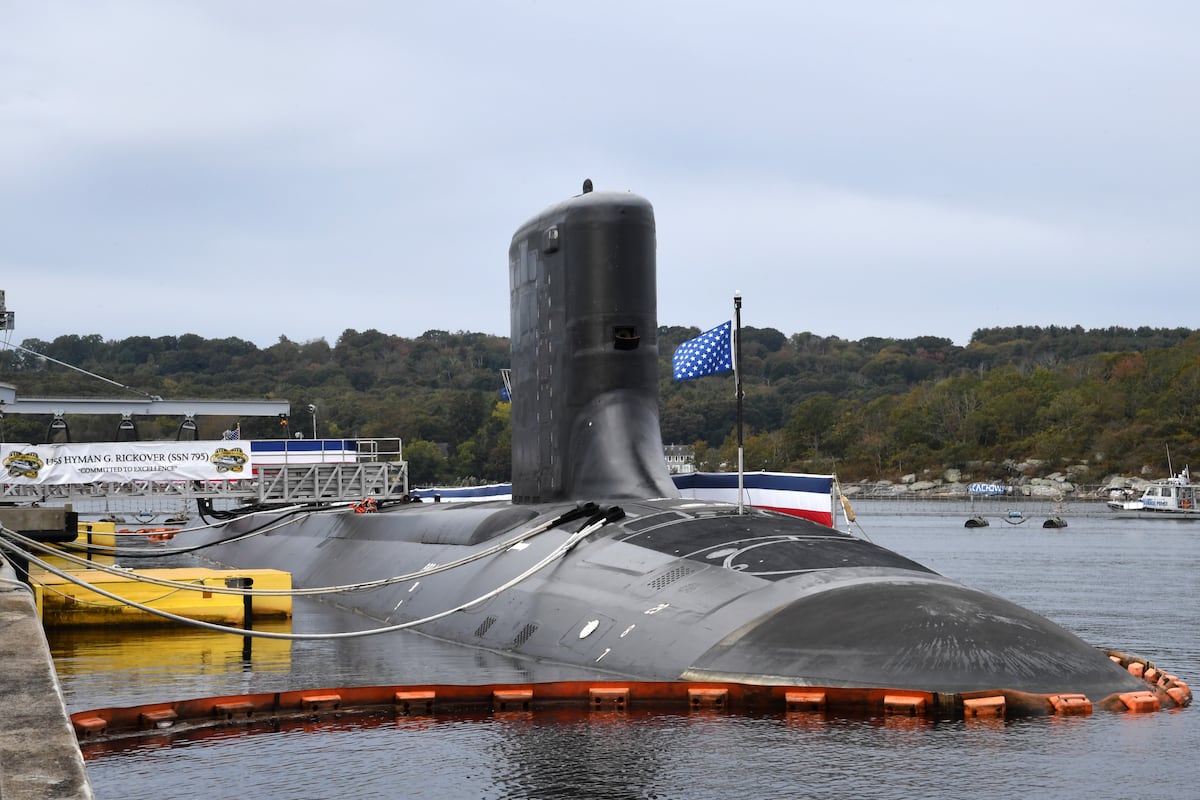
WASHINGTON ― The $874.2 billion fiscal 2024 National Defense Authorization Act, finalized in conference late Wednesday, would fully authorize the trilateral AUKUS agreement with Australia and Britain and codify into law a new nuclear mission for Virginia-class submarines.
It would also require a comprehensive Defense Department training program for Taiwanese troops and set up a special inspector general for Ukraine aid.
“Our nation faces unprecedented threats from China, Iran, Russia and North Korea,” the four Republican and Democratic leaders on the Armed Services committees said in a joint statement Thursday. “It is vital that we act now to protect our national security.”
Congress is expected to vote on the bill before the holidays. But it’s likely to face substantial opposition from the right-wing House Freedom Caucus as it removes many of their amendments, including one that would have overturned the Pentagon’s abortion travel leave policy and another that would have barred the Defense Department from implementing President Joe Biden’s climate change executive orders .
Over the summer, Democrats defected from the normally bipartisan bill in droves after Republicans added these amendments, prompting the House to narrowly pass it 219-210 mainly along party lines. The influential Heritage Action, the lobbying arm of the conservative Heritage Foundation, has vowed to oppose the compromise bill because it does not include the abortion amendment.
After months of uncertainty, the bill includes all four authorizations needed to implement the AUKUS agreement , through which the U.S. and Britain will help Australia develop its own nuclear-powered submarine fleet in the decades ahead, starting with the transfer of at least three Virginia-class submarines in the 2030s.
Sen. Roger Wicker of Mississippi, the top Republican on the Armed Services Committee, blocked two of the authorizations when the Senate passed its version of the bill 86-11 in July amid concerns about the beleaguered U.S. submarine industrial base. Wicker had demanded additional investments to expand submarine production capacity. The Senate’s massive defense supplemental spending request includes $3 billion to do this, but its fate is uncertain amid partisan disputes over immigration policy.
Wicker in the conference legislation agreed to authorize three Virginia-class submarine transfers under the condition they would not take effect until a year after the defense bill becomes law, giving Congress more time to pass the supplemental submarine funding.
Two other AUKUS authorizations permit the Defense Department to accept another $3 billion contribution to the U.S. submarine industrial base from Canberra and allow workers from Australia’s private sector the training they need to maintain and use the nuclear-powered submarines.
The fourth authorization gives Australia and Britain an exemption to the U.S. export control regime if they develop comparable laws of their own governing arms transfers. Congressional critics of current U.S. export control laws argue this is necessary to implement a second pillar of the pact in which the three countries will jointly develop disruptive technology such as hypersonic weapons, artificial intelligence and quantum computing.
The bill also requires both the Pentagon and State Department to appoint senior AUKUS coordinators while directing each agency to prioritize Australia and Britain for arms sales processing, after Ukraine and Taiwan.
Separately, it makes Australian and British companies eligible for U.S. federal grants under the Defense Production Act, an advantage that so far only Canada has enjoyed. The Pentagon hopes this will allow both allies to participate in a pilot program creating U.S. campuses for businesses to collaborate on different parts of the defense supply chain.
Rep. Joe Courtney, D-Conn., said the bill also “streamlines technology sharing among the three AUKUS allies under the umbrella of the Defense Production Act to strengthen deterrence in the Indo-Pacific.”
Separately, the bill ensures the Virginia-class submarines remaining in the U.S. inventory will now have a nuclear mission because it institutionalizes the sea-launched cruise missile nuclear program despite the objections of the Biden administration. The bill allocates $196 million for the Pentagon to continue research on the program and another $70 million for the National Nuclear Security Administration to modernize its warhead stockpile in preparation for the submarines’ new mission.
The compromise removed a Senate provision that would have required all components of Navy ships to be manufactured in the U.S. by 2033. It nonetheless increases Buy America requirements across the board for major defense acquisition programs unless they predominantly involve steel and iron.
As with AUKUS, the bill looks to counter China’s influence in the Indo-Pacific with a provision that would require the Defense Department to “establish a comprehensive training, advising and institutional capacity building program for the military forces of Taiwan.”
Taiwanese officials have said they plan to send up to two battalions of troops to the U.S. to train on new weapons systems and military operations.
Another provision in the bill requires the Defense Department to help Taiwan enhance its cybersecurity .
Additionally, the bill authorizes $8 million to establish the lead inspector general for Operation Atlantic Resolve — the Pentagon’s mission established in 2014 after Russia’s first invasion of Ukraine — as a special inspector general overseeing aid to Kyiv.
The bill authorizes $300 million in both FY24 and FY25 to continue arming Kyiv through the Ukraine Security Assistance Initiative, but that’s a small fraction of the amount the Biden administration has deemed necessary to continue warding off Russia’s invasion.
While Congress appropriated $113 billion in Ukraine aid last year, it’s unclear whether lawmakers will pass Biden’s request for an additional $61 billion in assistance for Kyiv amid growing Republican opposition . President Volodymyr Zelenskyy has warned Ukraine will lose the war to Russia absent additional assistance.
Additionally, the bill maintains a provision that would require the Senate to agree to any U.S. withdrawal from NATO . Former President Donald Trump, the frontrunner in the Republican presidential primary, has repeatedly threatened to withdraw from the transatlantic alliance. However, the compromise legislation removes a provision that would have authorized Congress to establish its own legal counsel in case a dispute with the White House over the NATO withdrawal provision ends up in federal court.
Furthermore, the bill codifies into law an existing authority allowing U.S. special operations units to arm irregular forces for warfare against rivals like China and Russia with an eye on expanding these activities.
Additionally, it adds Kosovo to the list of eastern European countries eligible for U.S. military training amid heightened tensions with neighboring Serbia.
Congress still needs to pass full appropriations legislation to fund the defense policy bill as well. Funding for military construction expires on Jan. 19; the rest of the Defense Department runs out of money Feb. 2.
Bryant Harris is the Congress reporter for Defense News. He has covered U.S. foreign policy, national security, international affairs and politics in Washington since 2014. He has also written for Foreign Policy, Al-Monitor, Al Jazeera English and IPS News.
华盛顿——周三晚些时候在会议上最终确定的 2024 财年国防授权法案(金额达 8742 亿美元)将全面授权与澳大利亚和英国的三边 AUKUS 协议,并将弗吉尼亚级潜艇的新核任务编入法律。
此外,还需要国防部为台湾军队制定全面的培训计划,并设立一个专门负责乌克兰援助的监察长。
“我国正面临来自中国、伊朗、俄罗斯和朝鲜前所未有的威胁,”众议院军事委员会的四位共和党和民主党领导人周四发表联合声明称。“我们必须立即采取行动,保护国家安全。”
预计国会将在假期前对该法案进行投票。但由于该法案删除了右翼众议院自由党团提出的许多修正案,包括一项旨在推翻五角大楼堕胎旅行休假政策的修正案,以及另一项旨在禁止国防部执行乔·拜登总统气候变化行政命令的修正案,因此该法案可能会遭到该党团的强烈反对。
今年夏天,共和党人加入这些修正案后,大量民主党人倒戈,不再支持这项通常由两党共同支持的法案,最终众议院以219票对210票的微弱优势通过了该法案,投票结果基本按照党派划分。颇具影响力的保守派组织“传统行动”(Heritage Action,保守派基金会的传统基金会的游说机构)誓言反对这项妥协法案,因为该法案不包含堕胎修正案。
经过数月的不确定性,该法案包含了实施 AUKUS 协议所需的全部四项授权。根据该协议,美国和英国将在未来几十年内帮助澳大利亚发展自己的核动力潜艇舰队,首先是在 2030 年代移交至少三艘弗吉尼亚级潜艇。
密西西比州参议员罗杰·威克是参议院军事委员会的首席共和党议员,他否决了其中两项授权。今年7月,参议院以86比11的投票结果通过了该法案,威克此举是出于对美国潜艇工业基础困境的担忧。威克要求追加投资以扩大潜艇生产能力。参议院提出的巨额国防补充拨款申请中包含30亿美元用于此目的,但由于两党在移民政策上的分歧,该拨款的命运尚不明朗。
威克在会议立法中同意授权转让三艘弗吉尼亚级潜艇,但条件是这些转让要等到国防法案成为法律一年后才能生效,以便国会有更多时间通过补充潜艇拨款。
另外两项 AUKUS 授权允许国防部接受堪培拉向美国潜艇工业基地提供的另外 30 亿美元捐款,并允许澳大利亚私营部门的工人接受维护和使用核动力潜艇所需的培训。
第四项授权赋予澳大利亚和英国一项豁免权,允许它们制定各自的武器转让法律,从而不受美国出口管制制度的约束。国会中批评美国现行出口管制法律的人士认为,这对于落实该协议的第二支柱至关重要,在该支柱下,三国将共同研发高超音速武器、人工智能和量子计算等颠覆性技术。
该法案还要求五角大楼和国务院任命高级 AUKUS 协调员,并指示各机构在乌克兰和台湾之后,优先考虑澳大利亚和英国的武器销售。
此外,该法案还使澳大利亚和英国公司有资格根据《国防生产法》获得美国联邦政府的拨款,此前只有加拿大享有这项优势。五角大楼希望这将使这两个盟国能够参与一项试点项目,该项目旨在为企业在美国设立园区,以便它们在国防供应链的不同环节开展合作。
康涅狄格州民主党众议员乔·考特尼表示,该法案还“在《国防生产法》的框架下,简化了三个 AUKUS 盟友之间的技术共享,以加强印太地区的威慑力”。
此外,该法案确保美国现役的弗吉尼亚级潜艇将承担核任务,因为它使海基巡航导弹核计划合法化,尽管拜登政府对此表示反对。该法案拨款1.96亿美元用于五角大楼继续开展该计划的研究,另拨款7000万美元用于国家核安全管理局对其核弹头库存进行现代化改造,以应对潜艇的新任务。
该妥协方案删除了参议院的一项条款,该条款要求到 2033 年,海军舰艇的所有部件都必须在美国制造。尽管如此,该方案仍然全面提高了重大国防采购项目的“购买美国货”要求,除非这些项目主要涉及钢铁。
与 AUKUS 法案一样,该法案旨在通过一项条款来对抗中国在印太地区的影响力,该条款要求国防部“为台湾军队建立全面的训练、咨询和机构能力建设计划”。
台湾官员表示,他们计划向美国派遣至多两个营的部队,接受新武器系统和军事行动方面的训练。
该法案的另一项条款要求国防部帮助台湾加强网络安全。
此外,该法案授权拨款 800 万美元,设立“大西洋决心行动”(五角大楼在 2014 年俄罗斯首次入侵乌克兰后设立的任务)的首席监察长,作为特别监察长,负责监督对基辅的援助。
该法案授权在 2024 财年和 2025 财年分别拨款 3 亿美元,通过乌克兰安全援助计划继续向基辅提供武器,但这只是拜登政府认为继续抵御俄罗斯入侵所需金额的一小部分。
尽管国会去年拨款1130亿美元援助乌克兰,但由于共和党人的反对声浪日益高涨,目前尚不清楚国会是否会通过拜登提出的额外610亿美元援助基辅的请求。乌克兰总统泽连斯基警告称,如果没有更多援助,乌克兰将在与俄罗斯的战争中败北。
此外,该法案保留了一项条款,要求参议院同意美国退出北约。共和党总统初选领跑者、前总统唐纳德·特朗普曾多次威胁要退出跨大西洋联盟。然而,这项妥协法案删除了一项条款,该条款原本授权国会在与白宫就北约退出条款发生争议并诉诸联邦法院时,设立自己的法律顾问。
此外,该法案将现有的授权以法律形式编纂成法,允许美国特种作战部队武装非常规部队,与中国和俄罗斯等竞争对手作战,并着眼于扩大这些行动。
此外,由于与邻国塞尔维亚的紧张局势加剧,科索沃也被列入有资格接受美国军事训练的东欧国家名单。
国会仍需通过完整的拨款法案,才能为国防政策法案提供资金。军事建设资金将于1月19日到期;国防部其他项目的资金将于2月2日耗尽。
布莱恩特·哈里斯是《防务新闻》的国会记者。自2014年以来,他一直在华盛顿报道美国外交政策、国家安全、国际事务和政治。他还曾为《外交政策》、《Al-Monitor》、《半岛电视台英语频道》和IPS新闻撰稿。