Boeing Wins F/A-XX Next Generation Navy Stealth Fighter Contract波音公司赢得F/A-XX下一代海军隐形战斗机合同
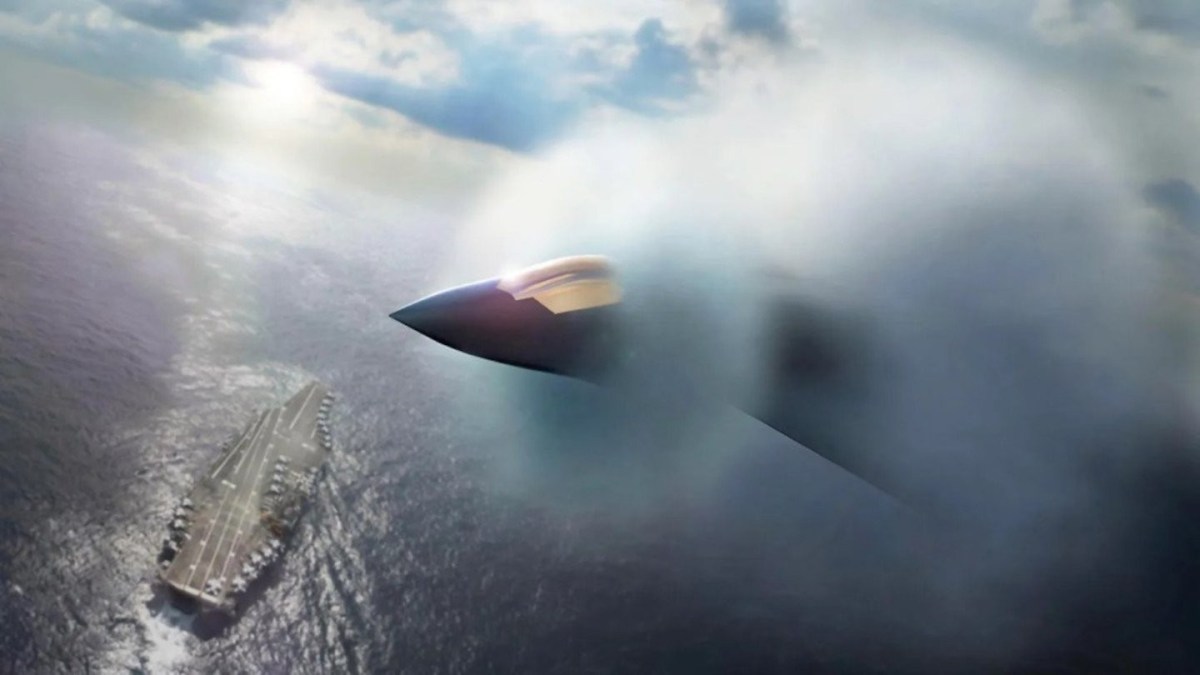
F/A-XX has been a very highly anticipated contract award, especially after the Pentagon previously tried to freeze the program.
By Joseph Trevithick
Published Sep 29, 2026 5:40 PM EDT
After blowing past a self-imposed August deadline , the U.S. Navy has finally announced Boeing as the winner of its F/A-XX next-generation carrier-based fighter competition. F/A-XX has become one of the most hotly anticipated U.S. defense procurement decisions in recent memory after the Pentagon tried to shelve the program indefinitely last year.
Boeing had been competing against Northrop Grumman for the F/A-XX contract. An earlier down-select reportedly eliminated Lockheed Martin back in March 2025.
As mentioned, the Pentagon had moved to freeze the F/A-XX program in June 2025. Three months earlier, Boeing had won a separate U.S. Air Force competition to produce what is now called the F-47. U.S. military officials had argued that the U.S. industrial base lacked the capacity to support work on two next-generation fighters simultaneously.
A rendering of Boeing’s F-47 for the US Air Force. USAF
Congress subsequently intervened to keep the F/A-XX program running, but its future had remained very murky until earlier this year. In April, Chief of Naval Operations (CNO) Adm. Daryl Caudle said that a winner of the competition would finally be announced in August. Secretary Pete Hegseth and Acting Secretary of the Navy Hung Cao both publicly committed to that same timeline later that month. There had been concerns that the program might have slipped back into limbo after that deadline came and went. Adm. Caudle told Aviation Week ‘s Brian Everstine that he himself was no longer aware of when this decision might come on the sidelines of the Tailhook Association’s annual convention last month.
Just two weeks ago, Air Force Gen. Dale White, the service’s Direct Reporting Portfolio Manager for Critical Major Weapon Systems, reiterated concerns about industrial capacity in response to a question about potential challenges in building F/A-XXs at the same time as F-47s. White also acknowledged that these concerns were “not unique” to F/A-XX and F-47.
Another rendering of the F-47. USAF
In this context, Boeing’s win today is perhaps unsurprising. The company will be able to leverage design work it has already been doing in relation to the F-47 program, as well as relevant production experience and supply chains . TWZ had previously highlighted similarities between what was seen in a rendering the company released of its F/A-XX proposal and official renders of what it is building for the Air Force. We still have yet to learn just how closely related the two designs are.
It is also worth noting here that Boeing previously pushed back publicly on the assertion that it was not ready to meet Air Force and Navy needs at the same time.
Regardless of any industrial base considerations, top Navy officials have been consistently vocal about the need for F/A-XX, even after the Pentagon’s move to put the program on ice last year. The service has presented the next-generation fighters as essential for staying ahead of top global competitors like China and Russia, as well as smaller adversaries, such as Iran.
“I know these things are expensive, and I know the defense industrial base is compressed, but we have got to figure out how to walk and chew gum here with aircraft,” CNO Caudle said in January , just weeks before the start of major combat operations against Iran. “The folks that used to be not in [the] headspace that I needed a stealth aircraft of this level to fly a mission into their country, will gain capability that the F-18 [ F/A-18E/F Super Hornet ] will not match against.”
A US Navy F/A-18E Super Hornet seen being launched from a carrier. USN
“This is an ever-evolving theme, and when you’ve got partnerships … well coupled with each other across China and Russia and Iran and North Korea, and terrorist groups that are getting that kit from all of those through back-channel ways, our ability to fly with impunity with our existing airframes is fleeting,” he added at that time. “So, if I don’t start building that [F/A-XX] immediately, you’re not going to get it for some time.”
The conflict with Iran, where U.S. crewed and uncrewed aircraft have now been lost to that country’s air defenses , adds a certain weight to Caudle’s comments here.
The selection of Boeing for F/A-XX also comes now as the Navy is making new moves regarding other aspects of its future carrier air wing plans . In particular, the service is increasingly solidifying its vision for new carrier-based Collaborative Combat Aircraft (CCA) drones . Acting as airborne controllers for advanced drones has long been understood to be a key mission for the Navy’s forthcoming sixth-generation crewed fighters.
This is a developing story.
Contact the author: joe@twz.com
Comments couldn’t be loaded. Please refresh the page.
作者:约瑟夫·特雷维西克
发布于美国东部时间2026年9月29日下午5:40
在错过了自己设定的8月最后期限后,美国海军终于宣布波音公司赢得F/A-XX下一代舰载战斗机竞标。F/A-XX项目已成为近年来美国国防采购中最受瞩目的决定之一,此前五角大楼曾试图无限期搁置该项目。
波音公司曾与诺斯罗普·格鲁曼公司竞标F/A-XX战斗机合同。据报道,早在2025年3月的一次筛选中,洛克希德·马丁公司就已被淘汰。
如前所述,五角大楼于2025年6月冻结了F/A-XX项目。三个月前,波音公司赢得了美国空军的另一项竞标,获得了生产现在被称为F-47的战机的资格。美国军方官员辩称,美国的工业基础缺乏同时支持两种下一代战斗机研发工作的能力。
波音公司为美国空军设计的F-47战斗机的效果图。美国空军
国会随后介入,维持了F/A-XX项目的运转,但直到今年年初,该项目的未来仍然充满不确定性。4月,海军作战部长达里尔·考德尔海军上将表示,竞标结果将于8月最终公布。当月晚些时候,海军部长皮特·赫格塞斯和代理海军部长洪曹也公开承诺了同样的时间表。此前,人们曾担心,在截止日期过后,该项目可能会再次陷入停滞。上个月,在尾钩协会年会期间,考德尔上将告诉《航空周刊》的布莱恩·埃弗斯汀,他本人也不清楚何时才能做出最终决定。
就在两周前,空军关键大型武器系统项目组合直接主管戴尔·怀特上将,在回答有关同时建造F/A-XX和F-47可能面临的挑战的问题时,重申了他对工业产能的担忧。怀特也承认,这些担忧并非F/A-XX和F-47独有。
F-47战斗机的另一幅渲染图。美国空军
在此背景下,波音公司今天的中标或许并不令人意外。该公司将能够充分利用其在F-47项目上已开展的设计工作,以及相关的生产经验和供应链。TWZ此前曾指出,波音公司发布的F/A-XX方案渲染图与其为美国空军建造的官方渲染图之间存在相似之处。我们目前仍不清楚这两个设计究竟有多接近。
值得一提的是,波音公司此前曾公开反驳其无法同时满足空军和海军需求的说法。
无论工业基础如何,海军高层官员始终坚持F/A-XX的必要性,即便五角大楼去年已将该项目搁置。海军方面认为,下一代战斗机对于保持对中国、俄罗斯等全球主要竞争对手以及伊朗等较小对手的领先优势至关重要。
“我知道这些东西很贵,也知道国防工业基础很紧张,但我们必须想办法在飞机方面兼顾两者,”海军作战部长考德尔在1月份说道,当时距离对伊朗的大规模作战行动开始仅几周时间。“那些以前认为我需要这种级别的隐形飞机才能执行入侵伊朗的任务的人,现在将获得F-18(F/A-18E/F超级大黄蜂)无法匹敌的能力。”
一架美国海军F/A-18E“超级大黄蜂”战斗机从航母上起飞。
“这是一个不断变化的问题,当中国、俄罗斯、伊朗和朝鲜等国之间存在着密切的合作关系,而恐怖组织又通过秘密渠道从这些国家获取装备时,我们利用现有机型肆无忌惮飞行的能力是短暂的,”他当时补充道。“所以,如果我不立即开始建造[F/A-XX],你们就得等上一段时间才能看到它。”
与伊朗的冲突,使得美国有人驾驶和无人驾驶飞机在伊朗防空系统中损失,这让考德尔在此发表的评论更具分量。
海军选择波音公司为F/A-XX战斗机提供动力之际,正值海军对其未来航母舰载机联队计划的其他方面采取新举措之时。尤其值得一提的是,海军正日益明确其对新型舰载协同作战飞机(CCA)无人机的愿景。长期以来,为先进无人机提供空中控制一直被认为是海军即将服役的第六代有人驾驶战斗机的一项关键任务。
这是一个正在发展中的新闻。
联系作者:joe@twz.com
评论加载失败,请刷新页面。