India seeks role in France’s sixth-generation fighter program印度寻求参与法国第六代战斗机计划
India hopes to gain key fighter-jet knowledge in a prospective partnership with France on a sixth-generation aircraft.
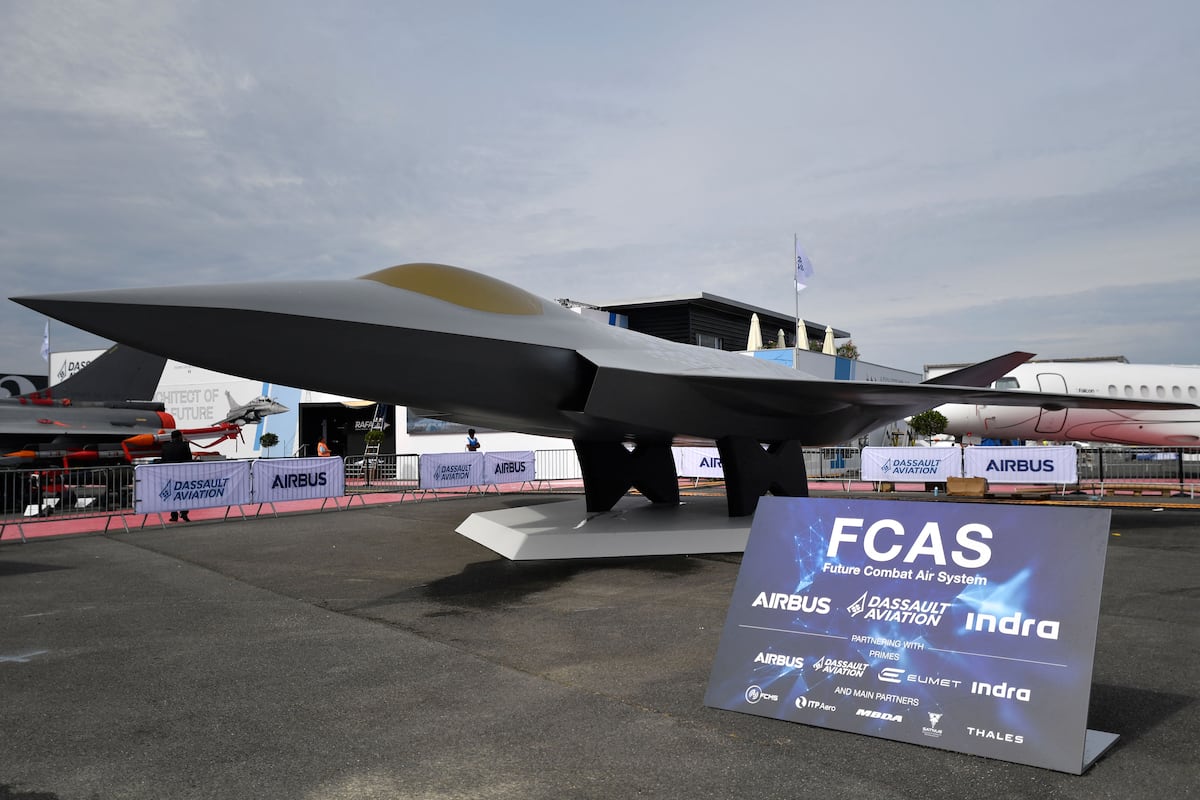
NEW DELHI — With the race for sixth-generation combat aircraft gathering pace, India has opened talks with France on participating in its Future Combat Air System (FCAS) as it seeks a role in technologies that could shape air combat in the future.
India’s Defense Ministry told parliament this month it had “initiated efforts in a concerted manner to co-join” the effort.
The ministry stated earlier this year that India would try to join one of the two consortia working on a new generation fighter aircraft – at that time one involved France, Germany and Spain. The second includes the UK, Italy and Japan.
In June, however, France and Germany abandoned their joint effort to develop the landmark combat fighter at the heart of the program, opening the door for Paris to collaborate with a new partner.
India is exploring a potential partnership with France at a time when New Delhi lags behind in key fighter jet technologies, particularly engine development, and is also trying to beef up the fleet strength of its air force.
At the moment, India’s most advanced fighter jets are its 4.5-generation French Rafales.
The country is also pursuing a domestic project to develop a multirole fifth-generation fighter, with a prototype flight targeted for later this decade.
However sixth-generation fighters are expected to incorporate technologies that go beyond the stealth and advanced radar capabilities of fifth-generation aircraft. The futuristic jets center on a core fighter jet supported by drones and powered by what has been described as a “combat cloud.”
India’s objective in exploring a partnership with France, analysts say, is to gain access to advanced capabilities needed to develop the next generation of combat aircraft.
“India still has to transition to fifth-generation technologies so it would be good to make a parallel start on a sixth generation program to bridge the serious gap we face. That is why it is a good idea to get in with a grouping or a consortia working on the next generation fighter,” retired Air Marshal Anil Chopra told Defense News. “And some of the sixth-generation technologies that we may acquire might also be helpful as we develop our fifth generation program.”
In a report presented in Parliament on Aug. 9, a parliamentary committee which scrutinizes defense policies recommended that the defense ministry “step forward the planning process” for the development and acquisition of sixth-generation (6G) aircraft to enhance India’s air domain capabilities.
Analysts say China’s rapid air modernization is a major strategic consideration for India as it initiates efforts to join a development program for a next-generation jet.
“It has been a perpetual problem in Indian defense policy that India tends to lag almost one or two cycles behind what others are doing. But that space is no longer available given how rapidly air power is evolving and how quickly China is developing its capabilities,” according to Harsh Pant, the vice president of studies at the Observer Research Foundation in New Delhi.
Analysts say discussions with France are likely to focus on issues such as a role in industrial participation, design and development, and access to intellectual property.
“At the moment India is engaged in exploratory discussions with France. We will want industrial workshare, but engine and radar technologies will have to come from French companies. So talks will center on what technology will be offered to India. France seems to be more open to sharing technology,” said Air Marshal Chopra.
India has a longstanding defense relationship with France, particularly in the aerospace sector. Besides the Rafales already deployed by the Indian Air Force, the two countries are presently engaged in negotiations for 114 more Rafale fighters for New Delhi, whose purchase India has approved.
“India needs a trusted partner as it tries to secure a place in the next generation technology cycle before it becomes too difficult or too expensive to catch up, and France is a good fit. It has been willing to engage in defense cooperation with New Delhi without the same political lens or considerations that some other suppliers have,” said Pant.
Dassault Aviation CEO Eric Trappier has repeatedly said that France has the know-how and the technology to independently develop a next-generation fighter jet.
The hiccup is that France’s public finances are under significant strain, with the country having one of the European Union’s highest debt burdens and largest budget deficits, complicating the funding of a future fighter project that may cost tens of billions of euros.
France is currently the only country in Western Europe with a fully sovereign, end-to-end modern fighter ecosystem, centered around the domestically developed Rafale. The fighter is built by Dassault Aviation, with avionics and radar supplied by Thales, an after-burning turbofan engine developed by Safran, and a range of missiles supplied by MBDA.
Rudy Ruitenberg in Paris contributed to this report.
新德里——随着第六代战斗机竞赛的加速进行,印度已与法国展开谈判,商讨参与其未来作战空中系统(FCAS)项目,以期在可能塑造未来空战的技术领域发挥作用。
印度国防部本月向议会表示,已“以协调一致的方式启动了共同参与”这项行动的努力。
印度国防部今年早些时候曾表示,印度将尝试加入两个正在研发新一代战斗机的联盟之一——当时其中一个联盟由法国、德国和西班牙组成,另一个联盟则由英国、意大利和日本组成。
然而,今年 6 月,法国和德国放弃了共同开发该计划核心的标志性战斗机的努力,这为巴黎与新的合作伙伴开展合作打开了大门。
印度正在探索与法国建立潜在伙伴关系,而此时新德里在关键战斗机技术(特别是发动机研发)方面落后于法国,并且还在努力增强其空军的机队实力。
目前,印度最先进的战斗机是其4.5代法国“阵风”战斗机。
该国还在推进一项国内项目,旨在研发多用途第五代战斗机,目标是在本十年末进行原型机试飞。
然而,第六代战斗机预计将融合超越第五代战机隐身和先进雷达能力的尖端技术。这些未来战机的核心是一架由无人机支援、并由所谓的“作战云”提供动力的战斗机。
分析人士称,印度寻求与法国建立伙伴关系的目的是为了获得开发下一代战斗机所需的先进能力。
“印度仍需向第五代技术过渡,因此最好同时启动第六代战机项目,以弥补我们面临的巨大差距。这就是为什么加入正在研发下一代战斗机的联盟或联合体是个好主意,”退役空军元帅阿尼尔·乔普拉告诉《防务新闻》。“我们可能获得的某些第六代技术,或许也能帮助我们发展第五代战机项目。”
8 月 9 日,一个负责审查国防政策的议会委员会向议会提交了一份报告,建议国防部“加快第六代(6G)飞机的研发和采购规划进程”,以增强印度的空中领域能力。
分析人士表示,中国快速推进的航空现代化是印度在努力加入下一代喷气式飞机研发计划时的一个重要战略考量因素。
新德里观察家研究基金会研究副总裁哈什·潘特表示:“印度国防政策一直存在一个问题,那就是印度往往比其他国家落后一到两个发展周期。但鉴于空军力量的快速发展以及中国能力的快速提升,这种滞后空间已经不复存在了。”
分析人士表示,与法国的讨论可能会集中在工业参与、设计和开发以及知识产权获取等问题上。
“目前印度正与法国进行探索性磋商。我们希望在工业领域获得合作机会,但发动机和雷达技术必须来自法国公司。因此,会谈的重点将放在法国能向印度提供哪些技术上。法国似乎更愿意分享技术,”空军元帅乔普拉说道。
印度与法国有着长期的防务合作关系,尤其是在航空航天领域。除了印度空军已部署的“阵风”战斗机外,两国目前还在就印度向法国增购114架“阵风”战斗机进行谈判,印度已批准这项采购。
潘特表示:“印度需要一个值得信赖的合作伙伴,以便在下一代技术周期中占据一席之地,避免追赶难度过大或成本过高,而法国正是一个合适的选择。法国一直愿意与新德里开展防务合作,不像其他一些供应商那样带有政治偏见或顾虑。”
达索航空首席执行官埃里克·特拉皮耶曾多次表示,法国拥有独立研发下一代战斗机的专业知识和技术。
问题在于法国的公共财政正面临巨大压力,该国是欧盟债务负担最重、预算赤字最大的国家之一,这使得未来战斗机项目的融资变得更加复杂,该项目可能耗资数百亿欧元。
法国目前是西欧唯一一个拥有完全自主、端到端现代化战斗机生态系统的国家,其核心是自主研发的“阵风”战斗机。该战斗机由达索航空公司制造,泰雷兹公司提供航电和雷达,赛峰集团开发了加力涡扇发动机,MBDA公司则提供了一系列导弹。
巴黎的鲁迪·鲁伊滕贝格对本报道亦有贡献。