Ukraine braces for combined salvos of up to 200 missiles as overnight attack kills 15 in Kyiv乌克兰严阵以待,准备应对多达200枚导弹的联合齐射。此前,基辅夜间袭击造成15人死亡。
Russia ramps up missile production as Ukraine's ballistic missile interceptors hit their lowest levels in years.
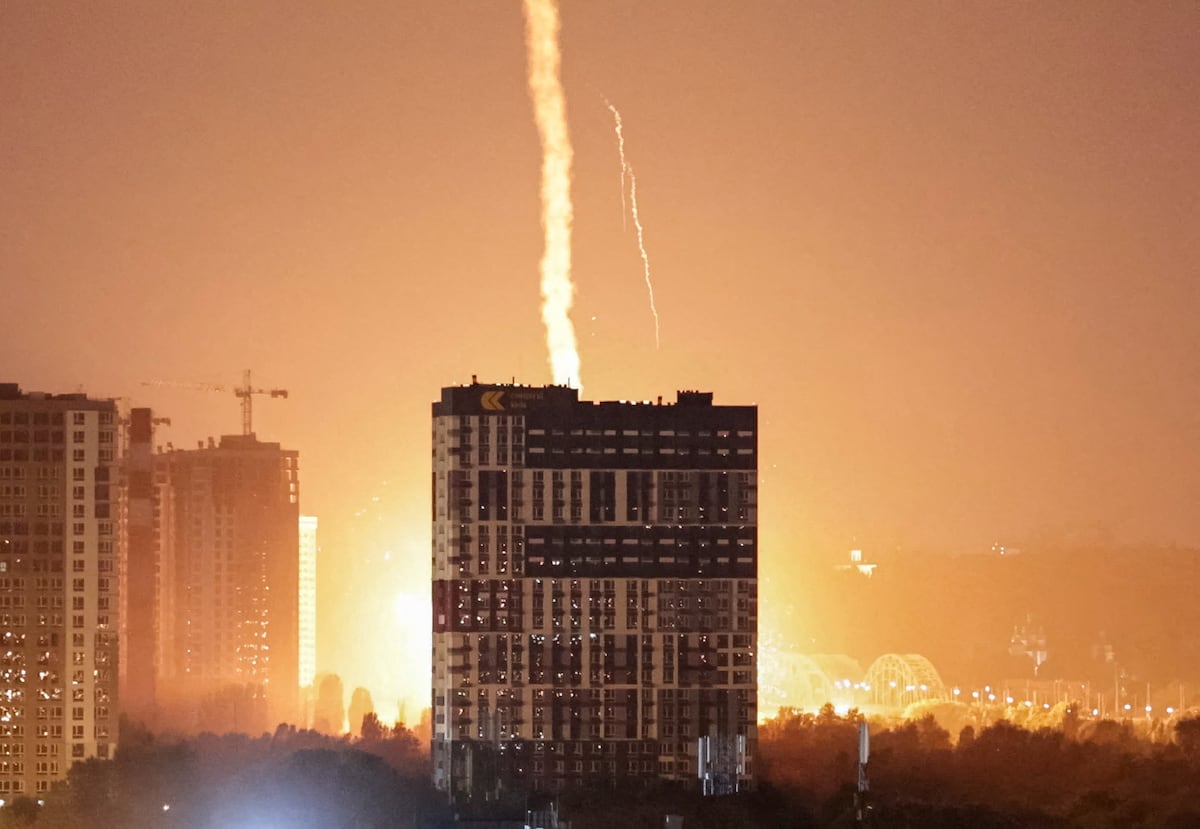
KYIV, Ukraine — Russia is racing to nearly triple its biggest missile barrage, from 77 missiles fired at once to as many as 200, a salvo built to overwhelm Ukraine’s air defenses in one shot rather than over days, the commander of Ukraine’s Unmanned Systems Forces said last week.
Russia has been ramping up both its barrages and the production lines feeding them: it launched a record 351 missiles at Ukraine in July, including 153 cruise and 198 ballistic and hypersonic, while its factories ran at 110% to 120% of monthly production targets – already reaching their annual production goals for Zircon and Oniks missiles by early August, according to Ukraine’s Defence Intelligence .
“The enemy currently has the capability to launch more than 70 (77) missiles of various types from different launch systems, ships and aircraft,” Maj. Robert “Magyar” Brovdi wrote in an Aug. 10 Telegram post . “The enemy is working to increase the size of a single simultaneous salvo to as many as 200 missiles.”
“Even if they only manage half of that, it will all be flying at us,” Brovdi told the Associated Press the same day.
A mixed barrage struck Kyiv shortly after midnight local time on Thursday, with more than a dozen explosions heard across the capital – a fraction of the salvo Brovdi says Moscow is building toward.
The strike killed at least 15 people and injured dozens across the capital alone, damaging several residential buildings, a school, a children’s hospital and a kindergarten, according to Kyiv officials .
Magyar’s warning is that the country would likely face even higher numbers of dead in a combined attack of hundreds of Russian ballistic and cruise missiles.
Ukraine’s air defense network can intercept most drones and cruise missiles with cheaper systems, but Patriot and a handful of similar European systems are among the few systems capable of reliably intercepting ballistic and hypersonic missiles. Those interceptor stocks are at their lowest levels in years.
Ukraine fields two and a half times fewer interceptors than it did in 2025 while Russia fires twice as many ballistic missiles a month, Ukrainian President Volodymyr Zelenskyy told CNN on Aug. 12, with allied deliveries this year running at one-third of last year’s levels.
“Patriot systems capable of shooting down ballistic missiles are essentially on a ‘starvation ration,’” Air Force spokesperson Yurii Ihnat said in April after Russia fired more than 700 missiles over the winter, per Censor.NET .
The shortage runs so deep that the Air Force decided in early August to stop publishing attack tallies for ballistic missile intercepts because of the negative impact on morale.
“I understand that everyone already knows everything and sees that the topic is very sensitive, especially for the capital,” Ihnat wrote in an Aug. 13 Facebook post .
“But when we put an official message - 28/0 (ballistic missiles intercepted) the result is that all our media write ‘The Air Force did not shoot down a single missile,’ and amplify it throughout the country. Meanwhile, enemy media will only copy all this and replicate it for themselves, giving a standing ovation!”
The problem for Kyiv is that anti-ballistic interceptors remain the only immediate answer to the ballistic-missile threat, and they have been in short supply worldwide since the Iran war began.
The United States has burned through roughly two-thirds of its combined Patriot and THAAD stockpile since that war started, from more than 2,700 missiles to fewer than 1,000 by late July, according to the Center for Strategic and International Studies. Each PAC-3 replacement costs roughly $3.9 million and takes up to two years to build.
“There are no good alternatives to Patriot and THAAD for ballistic missile defense,” the center’s experts concluded.
Ukraine is working on several tracks to resolve the antiballistics shortage , negotiating Patriot co-production agreements with Raytheon and Lockheed Martin , though both makers have begun hedging, and backing Freyja, a cheaper European interceptor program led by Ukraine’s Fire Point.
Experts put licensed Patriot production 24 to 30 months away, and Freyja’s first intercept is not planned until the end of 2027, leaving interceptors from allied stockpiles as Kyiv’s only immediate answer to protecting its cities from increasingly large missile attacks.
“If [the United States] can sell us 5%, we will go through the winter and save people’s lives,” Zelenskyy said last week. “If they can sell us 10%, we will destroy all the Russians’ ballistic missiles. I have 1%.”
Katie Livingstone is the Ukraine correspondent for Defense News and Military Times. Based in Kyiv, she has covered Russia's full-scale invasion since its first days. She is a former Fulbright fellow whose award-winning work has appeared in outlets across Europe and the U.S.
乌克兰基辅——乌克兰无人系统部队司令上周表示,俄罗斯正加紧将其最大规模的导弹齐射规模扩大近三倍,从一次发射 77 枚导弹增加到多达 200 枚,旨在一次性而非数天内击溃乌克兰的防空系统。
俄罗斯一直在加大导弹袭击力度,并加快导弹生产线的运转:7 月份,俄罗斯向乌克兰发射了创纪录的 351 枚导弹,其中包括 153 枚巡航导弹和 198 枚弹道导弹和高超音速导弹;与此同时,其工厂的月度生产目标完成率达到 110% 至 120%——据乌克兰国防情报局称,到 8 月初,其“锆石”和“缟玛瑙”导弹的年度生产目标已经实现。
“敌方目前有能力从不同的发射系统、舰艇和飞机上发射超过70枚(77枚)各种类型的导弹,”罗伯特·“马扎尔”·布罗夫迪少校在8月10日的Telegram帖子中写道。“敌方正在努力将单次齐射的导弹数量增加到多达200枚。”
“即使他们只做到一半,也会把所有的火力都倾泻到我们身上,”布罗夫迪当天告诉美联社。
周四当地时间午夜刚过,基辅遭到混合炮火袭击,首都各地都听到了十几声爆炸——布罗夫迪称,这只是莫斯科正在准备的炮火的一小部分。
据基辅官员称,此次袭击仅在首都就造成至少 15 人死亡,数十人受伤,并损坏了数栋居民楼、一所学校、一家儿童医院和一所幼儿园。
马扎尔警告说,如果俄罗斯发射数百枚弹道导弹和巡航导弹进行联合攻击,该国可能会面临更高的死亡人数。
乌克兰的防空网络能够用更经济的系统拦截大多数无人机和巡航导弹,但“爱国者”导弹系统和少数类似的欧洲系统是少数能够可靠拦截弹道导弹和高超音速导弹的系统。这些拦截导弹的库存已降至多年来的最低水平。
乌克兰总统泽连斯基8月12日告诉CNN,乌克兰部署的拦截导弹数量比2025年减少了2.5倍,而俄罗斯每月发射的弹道导弹数量却是现在的两倍,今年盟国的导弹交付量只有去年的三分之一。
据 Censor.NET 报道,俄罗斯空军发言人尤里·伊格纳特在 4 月份表示,“能够击落弹道导弹的爱国者系统基本上处于‘饥饿配给’状态”。此前,俄罗斯在冬季发射了 700 多枚导弹。
由于短缺问题非常严重,空军在 8 月初决定停止公布弹道导弹拦截的攻击统计数据,因为这会对士气产生负面影响。
“我知道大家都已经了解了所有情况,也明白这个话题非常敏感,尤其是对首都而言,”伊纳特在 8 月 13 日的 Facebook 帖子中写道。
“但是,当我们发布官方消息——28/0(拦截弹道导弹)——结果却是我们所有的媒体都报道‘空军一枚导弹都没击落’,并在全国范围内广泛传播。与此同时,敌方媒体只会照搬这些报道,并为此欢呼雀跃!”
对基辅来说,问题在于反弹道导弹拦截器仍然是应对弹道导弹威胁的唯一直接方法,但自伊朗战争爆发以来,全球范围内的反弹道导弹拦截器一直短缺。
据战略与国际研究中心(CSIS)的数据,自战争爆发以来,美国已消耗了其爱国者导弹和萨德反导系统总库存的约三分之二,从2700多枚导弹锐减至7月底的不足1000枚。每套PAC-3导弹的替代系统造价约为390万美元,建造周期长达两年。
该中心专家总结道:“在弹道导弹防御方面,没有比爱国者和萨德更好的替代方案。”
乌克兰正从多个方面着手解决反弹道导弹短缺问题,包括与雷神公司和洛克希德·马丁公司谈判爱国者导弹联合生产协议(尽管这两家制造商都已开始采取对冲措施),以及支持由乌克兰火点公司牵头的欧洲拦截导弹项目“弗雷亚”(Freyja),该项目成本更低。
专家估计,爱国者导弹的授权生产还需要 24 到 30 个月的时间,而弗雷娅导弹的首次拦截计划要到 2027 年底才会进行,这意味着基辅目前唯一能做的就是依靠盟军库存中的拦截导弹来保护其城市免受日益大规模的导弹袭击。
泽连斯基上周表示:“如果美国能卖给我们5%,我们就能熬过冬天,拯救人民的生命。如果他们能卖给我们10%,我们就能摧毁俄罗斯所有的弹道导弹。我只有1%。”
凯蒂·利文斯通是《防务新闻》和《军事时报》的乌克兰特派记者。她常驻基辅,自俄罗斯全面入侵乌克兰之初便开始报道此事。她曾是富布赖特学者,其获奖作品发表于欧洲和美国的多家媒体。