Could a ‘drone wall’ have protected Poland’s airspace?“无人机墙”能否保护波兰的领空?
An emerging project in the Baltics offers lessons learned, according industry officials.
LONDON — Poland, Finland, and Baltic nations are racing against time to operationalize a multi-layered initiative aimed at fortifying their borders against potential Russian drone threats, but have faced political delays and logistical challenges.
The ambitious project, dubbed the “Baltic Drone Wall,” was introduced by the Estonian Defense Industry Cluster earlier this year and aims to bolster hundreds of kilometers of NATO’s eastern borders by combining a wide-range of countermeasures.
Based on current estimates, it is expected to be completed by 2027, which Estonian defense companies argue is too far in the future, citing a significant uptick in the number of incidents of Russian drones violating NATO countries’ airspace in attacks during attacks on Ukraine.
“The project has been too slow to launch from a political standpoint – we would’ve liked for it to be ready to go by next summer as we’ve seen an increase in the number of drone incidents and the systems required are ready,” Getter Oper, chief of strategy and communications at the Estonian firm DefSecIntel, said a the DSEI defense trade show here.
The manufacturer is one of the dozen of companies involved in the initiative, which will stitch together various systems that the respective countries have sent and battle-tested in Ukraine.
The European Union is eying a similar initiative, presumably on a larger scale. This week, European Commission President Ursula von der Leyen also announced the creation of a drone alliance with Ukraine, deepening cooperation with the war-torn country on all things unmanned.
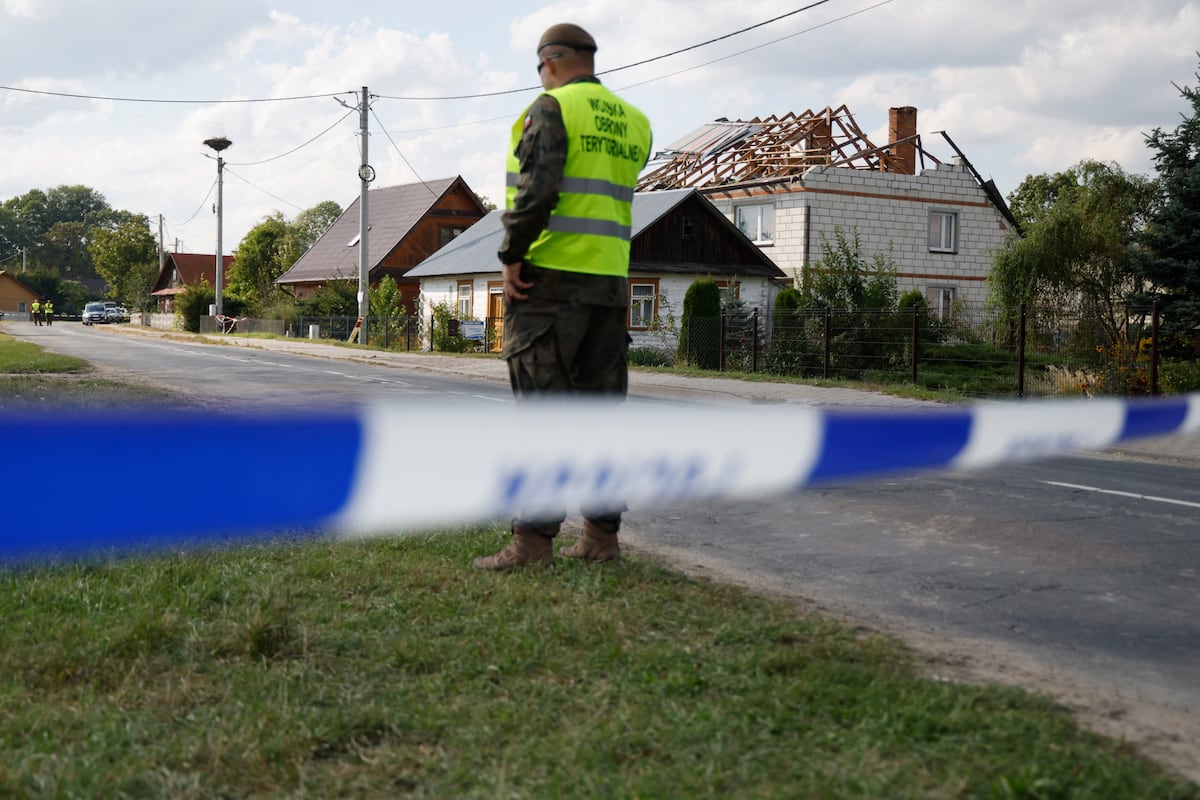
The most recent drone incursion took place this week in Poland, where allied fighter jets were scrambled when over a dozen Russian drones entered Polish airspace. Several were shot down, the Polish military said.
Oper said the envisioned Baltic drone wall’s layered sensor and interception network could have offered faster, cheaper and more effective responses by detecting threats earlier and streamlining decision-making on countermeasures.
But so far, the project is a logical and affordable alternative only on paper. Companies also acknowledge the level of difficulty that comes with fully securing hundreds of territory bordering Russia against potential drone incursions.
“A project of this size, for example, will require tens of thousands of sensors to be placed alongside our territories – what we are facing is not a problem of producing these quantities, as that is achievable, it is more so how do we share and integrate all the information between all of the systems involved?” Leet Rauno Lember, chief operating officer of Marduk Technologies, said.
The Estonia-based company is a key contributor to the project, in part developing and testing its electro-optical counter-drone system, the Marduk Shark, which can detect and target hostile drones.
Lember added that another interrogation point regards who would be responsible for actually destroying incoming drones, depending on the different altitudes at which they fly. For example, as things stand, if an adversary drone is detected flying at altitudes of 300 meters, the Estonian Air Force is required to take over.
The envisioned wall is slated to include at least five layers composed in part of acoustic detection sensors, mobile camera systems, drone interceptors and effectors, radars, and jammers —feeding data into a central system for real-time threat awareness.
Elisabeth Gosselin-Malo was a Europe correspondent for Defense News. She covers a wide range of topics related to military procurement and international security, and specializes in reporting on the aviation sector. She is based in Milan, Italy.
伦敦——波兰、芬兰和波罗的海国家正在争分夺秒地实施一项旨在加强边境防御、抵御俄罗斯无人机潜在威胁的多层次倡议,但却面临着政治上的拖延和后勤方面的挑战。
这项名为“波罗的海无人机墙”的雄心勃勃的项目由爱沙尼亚国防工业集群于今年早些时候推出,旨在通过结合各种反制措施来加强北约东部数百公里的边界。
根据目前的估计,该项目预计将于 2027 年完成,但爱沙尼亚国防公司认为这时间太遥远,他们指出,在对乌克兰的袭击中,俄罗斯无人机侵犯北约国家领空的事件数量显著增加。
“从政治角度来看,该项目的启动速度太慢了——我们原本希望它能在明年夏天准备就绪,因为我们看到无人机事件的数量有所增加,而且所需的系统也已经准备就绪,”爱沙尼亚公司 DefSecIntel 的战略和通信主管 Getter Oper 在此次 DSEI 防务展上表示。
这家制造商是参与该计划的十几家公司之一,该计划将把各个国家送往乌克兰并在实战中测试过的各种系统整合在一起。
欧盟正着手推进类似计划,规模预计会更大。本周,欧盟委员会主席乌尔苏拉·冯德莱恩宣布与乌克兰建立无人机联盟,深化与这个饱受战争蹂躏的国家在无人技术领域的合作。
最近一次无人机入侵事件发生在本周的波兰,十几架俄罗斯无人机闯入波兰领空后,盟军战斗机紧急升空拦截。波兰军方称,其中几架无人机被击落。
奥珀表示,设想中的波罗的海无人机墙的多层传感器和拦截网络可以通过更早地发现威胁和简化反制措施的决策,提供更快、更便宜、更有效的应对措施。
但就目前而言,该项目仅仅在纸面上展现出合乎逻辑且经济实惠的可行性。各公司也承认,要全面保障与俄罗斯接壤的数百个地区免受潜在无人机入侵,难度极大。
“例如,如此规模的项目需要在我们的领土上部署数万个传感器——我们面临的问题不是生产这些传感器的数量,因为这完全可以实现,更重要的是我们如何在所有相关系统之间共享和整合所有信息?” Marduk Technologies 首席运营官 Leet Rauno Lember 表示。
这家总部位于爱沙尼亚的公司是该项目的重要贡献者,参与开发和测试其光电反无人机系统“马尔杜克鲨鱼”,该系统可以探测和锁定敌方无人机。
伦伯补充说,另一个需要讨论的问题是,根据来袭无人机的不同飞行高度,究竟由谁负责将其摧毁。例如,就目前而言,如果探测到敌方无人机在300米的高度飞行,则需要由爱沙尼亚空军接管。
设想中的防空墙将至少包含五层,部分由声学探测传感器、移动摄像头系统、无人机拦截器和执行器、雷达和干扰器组成——将数据传输到中央系统,以实现实时威胁感知。
伊丽莎白·戈斯林-马洛曾任《防务新闻》欧洲通讯员。她的报道涵盖军事采购和国际安全等广泛领域,尤其擅长航空领域的报道。她常驻意大利米兰。