Vendors line up to fill Japan’s F-35 pilot training gap供应商争相填补日本F-35飞行员培训缺口
Tokyo is currently mulling its options for new advanced jet trainers.
TOKYO — As Japanese defense officials move to upgrade a military training infrastructure hard-pressed to produce F-35 pilots, vendors are proposing new planes to fill a gap.
The Japan Air Self-Defense Force, or JASDF, has made small steps to begin turning around what experts have described as an obsolete training ecosystem. Officials have already selected Textron’s T-6JP Texan II as its basic trainer to replace the Fuji T-7, and a T-6 procurement contract should be signed before year’s end.
However, Japan next needs to think clearly about how to replace its Kawasaki T-4 intermediate jet trainers, more than 200 of which entered service from 1988. With the JASDF now flying fifth-generation F-35A/F-35B fighters, the T-4 is deemed unfit for the task of transitioning fighter pilots to such advanced aircraft.
Tokyo is currently mulling its options for new advanced jet trainers. It issued a request for information in October 2024, and the submission deadline closed on May 8, 2025.
Select domestic and foreign vendors attending DSEI Japan, held in Chiba from May 21-23, were touting their respective products.
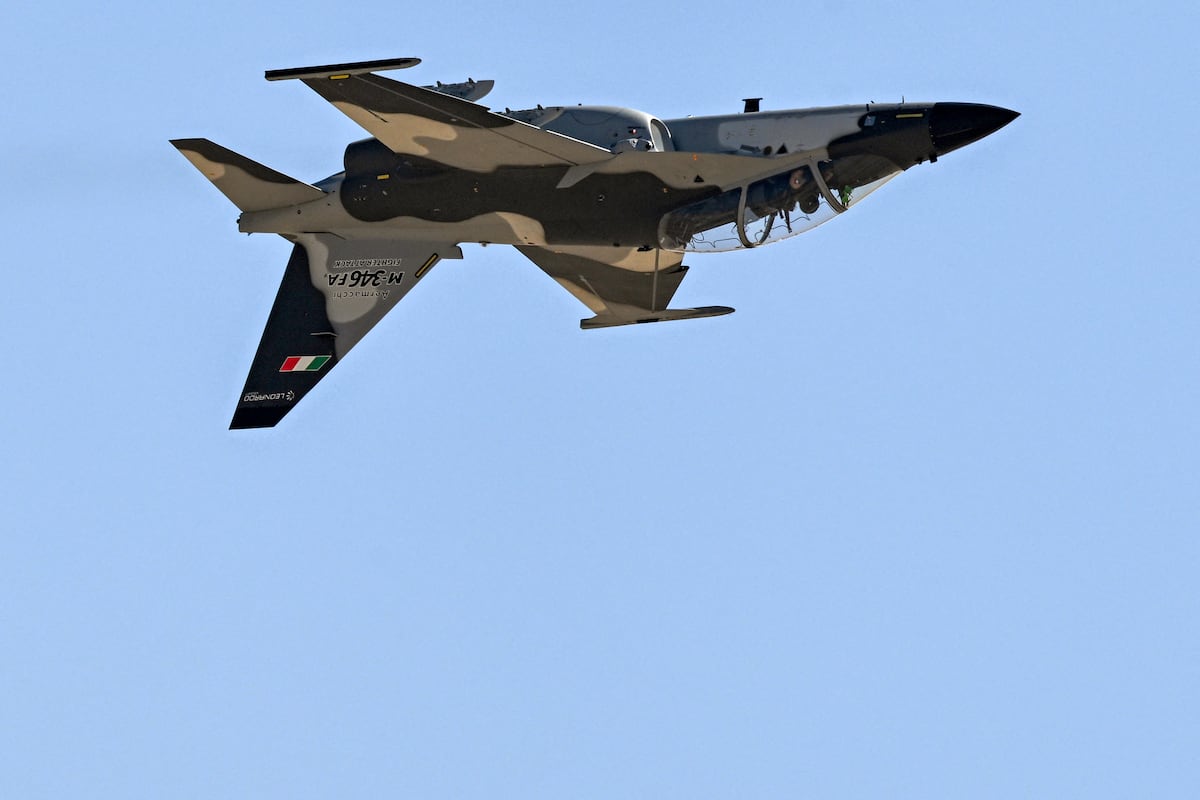
Boeing was promoting the T-7A Red Hawk, while Leonardo believes the M-346 Block 20 is best suited. Elsewhere, Mitsubishi Heavy Industries (MHI) is even proffering a clean-sheet T-X design.
Responding to a Defense News question about the T-7A at DSEI Japan 2025, John Suding, Boeing’s Executive Director for Defense and Government Services in East Asia, said, “We believe the T-7 would be a fantastic fit.”
He continued, “The training that it will do for the United States Air Force is very similar to the training that Japan does for their air force, and particularly for their fighter fleet, so with F-35s and F-15s being upgraded, there’s a lot of commonality there within the training system.”
One thing in favor of an American platform being eventually selected was a U.S.-Japan leaders’ summit in April 2024. This saw the two countries announce exploration of joint development of a trainer aircraft to replace the T-4 fleet.
However, Leonardo believes it has a compelling offering with its M-346 Block 20, a new variant with improved avionics and cockpit display that will be delivered to first customer, Austria, in 2028.
The company had a cockpit simulator at DSEI Japan 2025, and Diego Siccardi, responsible for Leonardo’s international campaigns in the Far East and Oceania, highlighted several points in the platform’s favor.
One is that, since 2022, a handful of Japanese fighter pilots have been flying M-346s in advanced fighter training in the commercially run International Flight Training School (IFTS) in Sardinia, Italy. Siccardi said, “They’re really happy about the training level they’re getting there,” with plans to expand pilot numbers.
Another advantage is Japan’s rapidly expanding cooperation with Europe under the Global Combat Air Programme (GCAP). Creating synergy, this trilateral project involves Leonardo and Japan. It’s a landmark program for Tokyo, given that it traditionally cooperates so closely only with the United States.
Thirdly, Siccardi stressed Leonardo’s willingness to transfer technology to Japan and work with domestic Japanese partners. “We’re looking to maximize the indigenous content,” he acknowledged.
Mitsubishi Heavy Industries displayed a scale model depicting a T-X trainer aircraft at DSEI Japan 2025. With work commencing last year, the project is still in its early stages, so officials could not provide too many clear details.
The twin-engine aircraft would feature an advanced cockpit system containing large touchscreens, as well as embedded simulator functions. Officials told Defense News that the T-X could also replace F-2B and F-15DJ trainer variants, which explains why the trainer’s size approaches that of an F-2.
However, the factor mitigating against the T-X is time. It would take multiple years to develop and be ready for procurement. Therefore, its future entirely depends on the JASDF’s schedule for retiring the T-4 and whether Japan’s Ministry of Defence wants to pursue a wholly indigenous design.
As the JASDF updates its trainer aircraft platforms, there is an opportunity to simultaneously overhaul its training system. CAE is one company keen to help.
Marc-Olivier Sabourin, CAE’s Division President, Defence & Security International, told Defense News: “The current Japanese program is relying on assets that are becoming obsolete, so their training throughput is challenged. But also the training proficiency they get with their existing training system still creates a significant gap between the cadet knowledge and F-35 operations.”
CAE does not currently hold any JASDF contract for pilot training, but there is growing interest from Japan for an integrated learning environment. This appetite was whetted when CAE ran a study with 30 Japanese pilot cadets around one and a half years ago.
That study utilized virtual reality-based simulators to provide independent instruction and coaching. Gary Eves, CAE’s principal technology officer, said: “We completed the study, and we were able to show that within just one hour of AI-based coaching, I could make about a 20% improvement on their grade performance without an instructor.”
Gordon Arthur is an Asia correspondent for Defense News. After a 20-year stint working in Hong Kong, he now resides in New Zealand. He has attended military exercises and defense exhibitions in about 20 countries around the Asia-Pacific region.
东京——随着日本国防官员着手升级难以培养出 F-35 飞行员的军事训练基础设施,供应商们正在提出用新型飞机来填补空缺。
日本航空自卫队(JASDF)已采取初步措施,开始着手改变专家们所称的陈旧训练体系。官员们已选定德事隆公司的T-6JP“德克萨斯人II”教练机作为其基础教练机,以取代富士T-7教练机,预计T-6的采购合同将在年底前签署。
然而,日本接下来需要认真考虑如何替换其川崎T-4中级喷气教练机,该机型自1988年以来已服役200多架。由于日本航空自卫队目前装备的是第五代F-35A/F-35B战斗机,T-4被认为不适合将战斗机飞行员过渡到这种先进飞机的任务。
东京目前正在考虑采购新型先进喷气式教练机的方案。东京于2024年10月发布了信息征询书,提交截止日期为2025年5月8日。
5月21日至23日,在千叶举行的日本国际防务展(DSEI Japan)上,部分国内外参展商正在推销各自的产品。
波音公司力推T-7A“红鹰”教练机,而莱昂纳多公司则认为M-346 Block 20最为合适。此外,三菱重工(MHI)甚至提出了一种全新的TX设计方案。
在 2025 年日本防务展 (DSEI Japan 2025) 上,波音公司东亚防务和政府服务执行董事约翰·苏丁 (John Suding) 在回答《防务新闻》关于 T-7A 的问题时表示:“我们相信 T-7 将是一个绝佳的选择。”
他继续说道:“美国空军所接受的训练与日本空军,特别是其战斗机部队所接受的训练非常相似,因此,随着 F-35 和 F-15 的升级,训练体系中有很多共通之处。”
有利于最终选择美国平台的因素之一是 2024 年 4 月举行的美日领导人峰会。会上,两国宣布探讨联合开发教练机以取代 T-4 机队。
然而,莱昂纳多公司认为其 M-346 Block 20 是一款极具吸引力的产品,这是一款改进了航空电子设备和驾驶舱显示器的新型号,将于 2028 年交付给第一个客户奥地利。
该公司在 2025 年日本国际航空航天展览会 (DSEI Japan 2025) 上展示了驾驶舱模拟器,负责 Leonardo 在远东和大洋洲国际推广活动的 Diego Siccardi 强调了该平台的几个优点。
其中之一是,自2022年以来,少数日本战斗机飞行员一直在意大利撒丁岛的商业运营的国际飞行训练学校(IFTS)驾驶M-346战斗机进行高级战斗机训练。西卡尔迪表示:“他们对在那里接受的训练水平非常满意”,并计划扩大飞行员人数。
另一个优势是日本与欧洲在全球作战航空计划(GCAP)下迅速扩大的合作。这个三方合作项目由莱昂纳多公司和日本共同参与,旨在创造协同效应。鉴于日本传统上只与美国保持如此紧密的合作,这对于东京而言是一个具有里程碑意义的项目。
第三,西卡迪强调了莱昂纳多向日本转让技术并与日本国内合作伙伴开展合作的意愿。“我们希望最大限度地利用本土资源,”他表示。
三菱重工在2025年日本防务展(DSEI Japan 2025)上展出了一架TX教练机的比例模型。该项目于去年启动,目前仍处于早期阶段,因此相关官员无法提供太多明确的细节。
这款双引擎飞机将配备先进的座舱系统,包括大型触摸屏和嵌入式模拟器功能。官员告诉《防务新闻》,TX 还可以取代 F-2B 和 F-15DJ 教练机,这也解释了为什么这款教练机的尺寸接近 F-2。
然而,TX项目最大的不利因素是时间。它的研发和采购需要数年时间。因此,它的未来完全取决于日本航空自卫队T-4的退役计划,以及日本防卫省是否希望完全自主研发。
随着日本航空自卫队更新其教练机平台,也迎来了对其训练系统进行同步升级的契机。CAE公司正是积极寻求提供帮助的企业之一。
CAE公司国防与安全国际部门总裁马克-奥利维尔·萨布林告诉《防务新闻》:“目前的日本项目依赖于逐渐过时的装备,因此他们的训练效率面临挑战。此外,他们现有的训练体系所获得的训练水平仍然存在学员知识与F-35作战能力之间的巨大差距。”
CAE目前尚未与日本航空自卫队签订任何飞行员培训合同,但日本对一体化学习环境的兴趣日益浓厚。大约一年半前,CAE对30名日本飞行学员进行了一项研究,进一步激发了日本的这种需求。
该研究利用基于虚拟现实的模拟器提供独立教学和辅导。CAE首席技术官加里·伊夫斯表示:“我们完成了这项研究,结果表明,仅需一小时的AI辅导,就能使学生的成绩提高约20%,而无需教师指导。”
戈登·阿瑟是《防务新闻》的亚洲特派记者。在香港工作20年后,他现居新西兰。他曾到访亚太地区约20个国家,参加过军事演习和防务展览。