Army brings back ‘night court’ audit of programs, shifting more than $100M陆军恢复对各项计划进行“夜间法庭”审计,调整超过1亿美元的预算。
The effort started this summer with science and tech efforts.
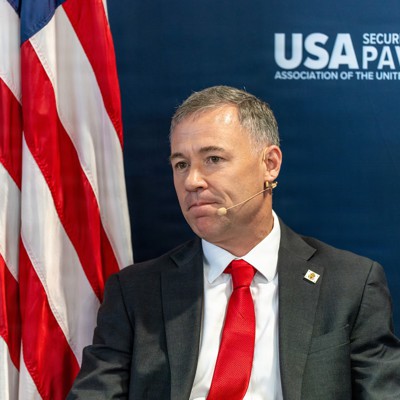
Brent Ingraham, assistant secretary of the Army for acquisition, logistics, and technology, speaks during Eurosatory 2026 in Villepinte, France, June 17, 2026. U.S. Army / Maj. Alexander Watkins
The effort started this summer with science and tech efforts.
The Army may have a new take on acquisition and modernization, but senior leaders have brought back an innovation from the first Trump administration: top-to-bottom reviews of program spending.
“Night court,” as the Army calls it, started in 2018. Then-Army Secretary Mark Esper and Chief of Staff Gen. Mark Milley would meet up at the end of the day to hunt through reams of Army program documents for savings. Ultimately, tens of billions of dollars were reprogrammed to new priorities .
Over the summer, service leaders relaunched the effort to evaluate the Army’s many programs.
“Everything from basic research, all the way up—how is that lining into where we're actually taking the Army, from a modernization perspective?” Brent Ingraham, the Army’s civilian acquisition chief, told reporters Thursday of the new round of night courts.
They started with science and technology programs earlier in the summer, Ingraham said, ensuring that the Army’s basic research was aligned with larger goals in the new Portfolio Acquisition Executive offices , which are now responsible for the entire lifecycle of an Army program.
“We roughly found, I'll say, a little over $100 million of S&T funds that could better be realigned to match where the portfolios were headed,” he said.
Next they reviewed foreign military sales contracts.
“How can we improve on delivery of those capabilities?” Ingraham said. “And so it's really sort of looking at how we become better partners to our allies and partners on delivery of capabilities.”
Sustainment is the most recent bucket added to the review, he said. PAEs are reviewing their programs to realign what it will cost to sustain current and planned programs, what can be cancelled, and where they might save money by bringing maintenance in-house.
“The Army sort of fundamentally changed how we do budgeting, inside the department as well,” Ingraham said. “And so now the PAEs get to see the whole portfolio, not just traditional procurement and [research, development, testing and evaluation] dollars, but they see the [operations and maintenance] and the S&T dollars, so they can understand how it fits across the whole portfolio.”
Help us report on the future of national security . Contact Meghann Myers: mmyers@defenseone.com, meghannmyers.55 on Signal.
NEXT STORY: The Pentagon awarded $350M to a firm tied to a senior DOD official
2026年6月17日,美国陆军负责采购、后勤和技术的助理部长布伦特·英格拉姆在法国维勒潘特举行的2026年欧洲防务展(Eurosatory 2026)上发表讲话。美国陆军/亚历山大·沃特金斯少校
这项工作始于今年夏天,主要依靠科技手段。
陆军可能对采购和现代化有了新的看法,但高级领导人带回了特朗普第一届政府的一项创新:对项目支出进行自上而下的审查。
陆军称之为“夜间法庭”的这项程序始于2018年。时任陆军部长马克·埃斯珀和参谋长马克·米利将军会在一天工作结束后碰面,仔细查阅大量的陆军项目文件,寻找节省开支的途径。最终,数百亿美元的资金被重新分配到新的优先事项上。
今年夏天,各军种领导人重新启动了对陆军众多项目的评估工作。
“从基础研究到更高级别的研究——从现代化的角度来看,这与我们实际带领陆军前进的方向有何关联?”陆军文职采购主管布伦特·英格拉姆周四在谈到新一轮夜间法庭时告诉记者。
英格拉姆表示,他们在今年夏天早些时候就开始了科学和技术项目,以确保陆军的基础研究与新的投资组合采购执行办公室的更大目标保持一致,这些办公室现在负责陆军项目的整个生命周期。
他说:“我们粗略估计,有超过 1 亿美元的销售和交易资金可以更好地重新调整,以匹配投资组合的发展方向。”
接下来,他们审查了对外军售合同。
英格拉姆说:“我们如何才能更好地交付这些能力?所以,这实际上是在思考如何才能在能力交付方面成为我们盟友和伙伴更好的合作伙伴。”
他表示,维护保障是此次审查中最新纳入的方面。各项目管理机构正在审查各自的项目,以重新调整维持现有和计划项目所需的成本,确定哪些项目可以取消,以及哪些维护工作可以通过内部化来节省资金。
“陆军从根本上改变了我们部门内部的预算编制方式,”英格拉姆说。“因此,现在项目评估执行官可以看到整个预算组合,不仅仅是传统的采购和研发测试评估资金,还包括运营维护和科技资金,这样他们就能了解这些资金在整个预算组合中的作用。”
请帮助我们报道国家安全的未来。请联系 Meghann Myers:mmyers@defenseone.com,或在 Signal 上联系 meghannmyers.55。
下一篇报道:五角大楼向一家与国防部高级官员有关联的公司授予了3.5亿美元合同。