US-Norwegian startup Heaviside launches Tyr loitering munition美国-挪威初创公司Heaviside推出Tyr巡飞弹
The company is headquartered in L.A. but partners closely with Norwegian arms-maker Nammo, which provides the anti-tank warheads and a range for live-fire testing.
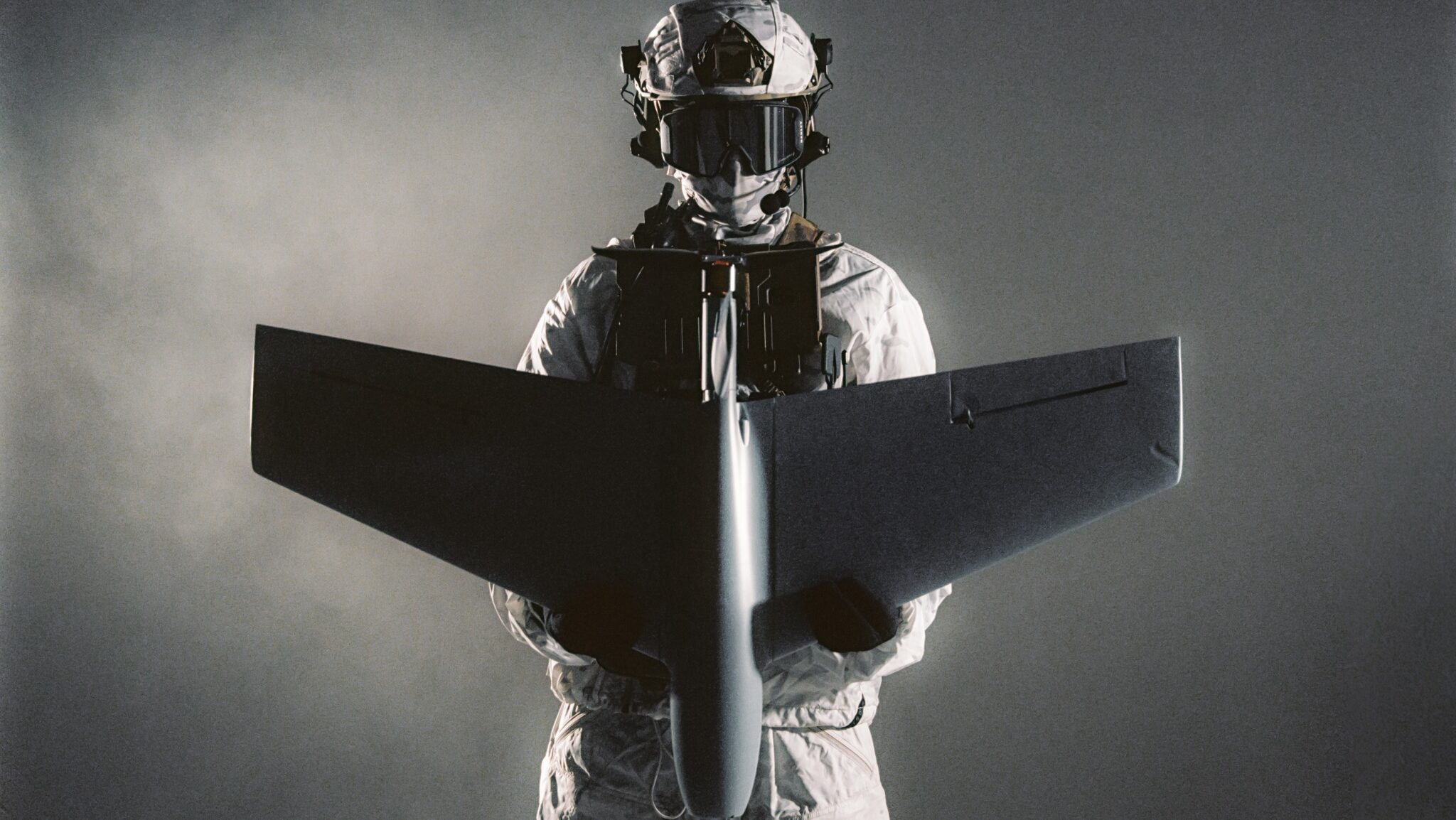
Heaviside's new Tyr anti-tank loitering munition (Heaviside photo)
WASHINGTON — Heaviside , a two-year-old US-Norwegian drone startup, has joined the competition for low-cost, expendable drones with its Tyr loitering munition, the company announced today.
The weapon is named after a Norse god, and while the company’s headquarters and most of its staff are in Los Angeles, most of the engineering, development, and testing are being done in Norway, explained Heaviside president Nils Haagenrud in an interview.
In fact, Haagenrud told Breaking Defense, the Scandinavian facility is just up the road from the company’s most important partner: Norwegian defense firm Nammo . Nammo provides Tyr’s anti-tank warheads, which are all derived from the company’s M72 LAW series , as well as a test range where Heaviside can not only fly its Tyr prototypes but use live explosives on practice targets.
“We’re just an hour and a half away from each other,” Haagenrud said. “We can do all the testing internally and move very fast. …. They can build and test the same day.”
In some tests, he said, Tyr has successfully flown to and detonated targets in Norwegian winter weather of 20 degrees below zero.
While Nammo isn’t an investor in Heaviside — the firm is VC-funded— Haagenrud argues the close relationship and strong backing by a well-resourced prime contractor is something that distinguishes the startup from other small, young firms rushing into the expendable-drone business. Another strength, he said, is the decades of experience many key staff have in drone development. That includes his own time at Teledyne FLIR working on the palm-top Black Hornet , which became the centerpiece of the US Army’s Soldier-Borne Sensor system.
Tyr is bigger than Black Hornet but still on the small end for drones, easily portable by a single soldier and weighing in at roughly 15 pounds. A third of that is warhead with enough explosive power to kill a main battle tank like the Russian T-72 or T-80. Though he didn’t give a price for the drone, Haagenrud says it’s “way under $100,000,” with extensive use of commercial off-the-shelf components to keep costs down and supply chains robust. (Those price and weight figures are for the drone itself, not including a reusable launcher).
The drone also incorporates some of the AI targeting features being field tested in Ukraine, although the company says it’s scrupulous about requiring a human in the loop to make the final call.
“We are doing video navigation … fusing the EO [electro-optical] and the IR [infrared] sensors,” Haagenrud said. The drone can fly itself to a human-designated strike zone, autonomously hunt for recognizable targets like a tank, and then ask the operator for permission to attack.
“The only thing I have to do is press ‘engage,” he said.
Heaviside also has an unmanned underwater vehicle (UUV) called Nyx in the works. While the firm isn’t disclosing details and no contract has been announced, Haagenrud told Breaking Defense “we are working directly with the DoW,” using the semiformal alternative name for the Department of Defense.
Heaviside’s one publicly announce d defense contr act is an Indefinite Delivery, Indefinite Quantity (IDIQ) award, with a ceiling of $99 million, from the Army’s Rapid Electronic Warfare and Signals Intelligence (REWSI) initiative. That’s for a handheld spectrum analyzer called MOTH , used to detect the telltale radio emissions from incoming drones.
Breaking Defense Video
New leaders, new drone command: What we expect from AUSA 2026
Unpacking Boeing’s F/A-XX win, plus a report from wartime Ukraine
How Hegseth envisions a new Autonomous Warfare Command
What Europe’s military air fleets will look like in 30 years
Riyadh gets closer to F-35s, Damascus presses sovereignty and an expert take on Iran
Drone-hunting on the border, plus turmoil at an Air Force think tank
The future of European airpower might be unmanned
The big news out of AFA, plus a guided tour of the show floor
Why the ‘right to repair’ matters to the Pentagon
What the Pentagon is testing along the US-Mexico border
海维赛德公司新研制的Tyr反坦克巡飞弹(海维赛德公司供图)
华盛顿——美国-挪威合资成立两年的无人机初创公司 Heaviside 今天宣布,该公司凭借其 Tyr 巡飞弹加入了低成本、一次性无人机的竞争。
该武器以北欧神祇命名,虽然公司总部和大部分员工都在洛杉矶,但大部分工程、开发和测试工作都在挪威进行,Heaviside 总裁 Nils Haagenrud 在一次采访中解释道。
事实上,哈根鲁德告诉《防务新闻》,这家位于斯堪的纳维亚的工厂距离该公司最重要的合作伙伴——挪威防务公司Nammo——仅咫尺之遥。Nammo为Tyr导弹提供反坦克弹头,这些弹头均源自该公司M72 LAW系列导弹。此外,Nammo还提供一个测试靶场,Heaviside不仅可以在那里试飞Tyr原型机,还可以使用实弹对模拟目标进行测试。
“我们两地相距仅一个半小时车程,”哈根鲁德说。“我们可以进行所有内部测试,进展非常迅速……他们可以当天完成生产和测试。”
他说,在一些测试中,Tyr 成功飞抵挪威零下 20 度的冬季天气中,并引爆了目标。
尽管Nammo并非Heaviside的投资方——该公司由风险投资公司资助——但Haagenrud认为,与这家资源雄厚的主承包商建立的紧密关系和强大支持,使这家初创公司区别于其他涌入一次性无人机行业的小型年轻公司。他表示,另一大优势在于许多核心员工在无人机开发领域拥有数十年的经验。这其中也包括他本人在Teledyne FLIR公司参与研发掌上型“黑黄蜂”(Black Hornet)无人机的经历,该无人机后来成为美国陆军士兵携带传感器系统的核心部件。
Tyr无人机比Black Hornet无人机大,但就无人机而言仍然属于小型,单兵即可轻松携带,重量约为15磅。其重量的三分之一是弹头,爆炸威力足以摧毁俄罗斯T-72或T-80等主战坦克。虽然Haagenrud没有透露无人机的价格,但他表示“远低于10万美元”,大量使用商用现成组件以降低成本并确保供应链稳定。(这些价格和重量数据仅指无人机本身,不包括可重复使用的发射器。)
该无人机还融合了一些正在乌克兰进行实地测试的人工智能瞄准功能,不过该公司表示,他们非常谨慎,要求由人来做出最终决定。
“我们正在进行视频导航……融合光电(EO)和红外(IR)传感器的数据,”哈根鲁德说。这架无人机可以自主飞到人为指定的攻击区域,自主搜索诸如坦克之类的可识别目标,然后请求操作员授权进行攻击。
“我只需要按下‘启动’键,”他说。
海维赛德公司还在研发一款名为“尼克斯”(Nyx)的无人水下航行器(UUV)。虽然该公司没有透露细节,也没有宣布任何合同,但哈根鲁德告诉《防务新闻》(Breaking Defense):“我们正在与国防部直接合作。”他使用了国防部的半正式别称。
海维赛德公司唯一公开宣布的国防合同是一份金额上限为9900万美元的无限期交付、无限量采购(IDIQ)合同,来自陆军的快速电子战和信号情报(REWSI)计划。该合同用于采购一款名为MOTH的手持式频谱分析仪,用于探测来袭无人机的无线电辐射特征。
突破性防御视频
新领导人,新无人机指挥部:我们对 AUSA 2026 的期待
深入剖析波音F/A-XX的竞标结果,以及来自战时乌克兰的报道
赫格塞斯设想的新型自主作战指挥部
30年后欧洲军用空军机队会是什么样子
利雅得距离F-35战机更近一步,大马士革强调主权,以及专家对伊朗的看法
边境无人机猎杀行动,以及空军智库的动荡
欧洲空军的未来或许在于无人化。
AFA展会最新动态,以及展会现场导览。
为什么“维修权”对五角大楼如此重要
五角大楼正在美墨边境测试什么?