German defense chief pledges $10 billion in Ukraine aid for 2025德国国防部长承诺2025年向乌克兰提供100亿美元援助
Berlin won't deliver Taurus cruise missiles to Ukraine, but more Iris-T antimissile systems are in the pipeline.
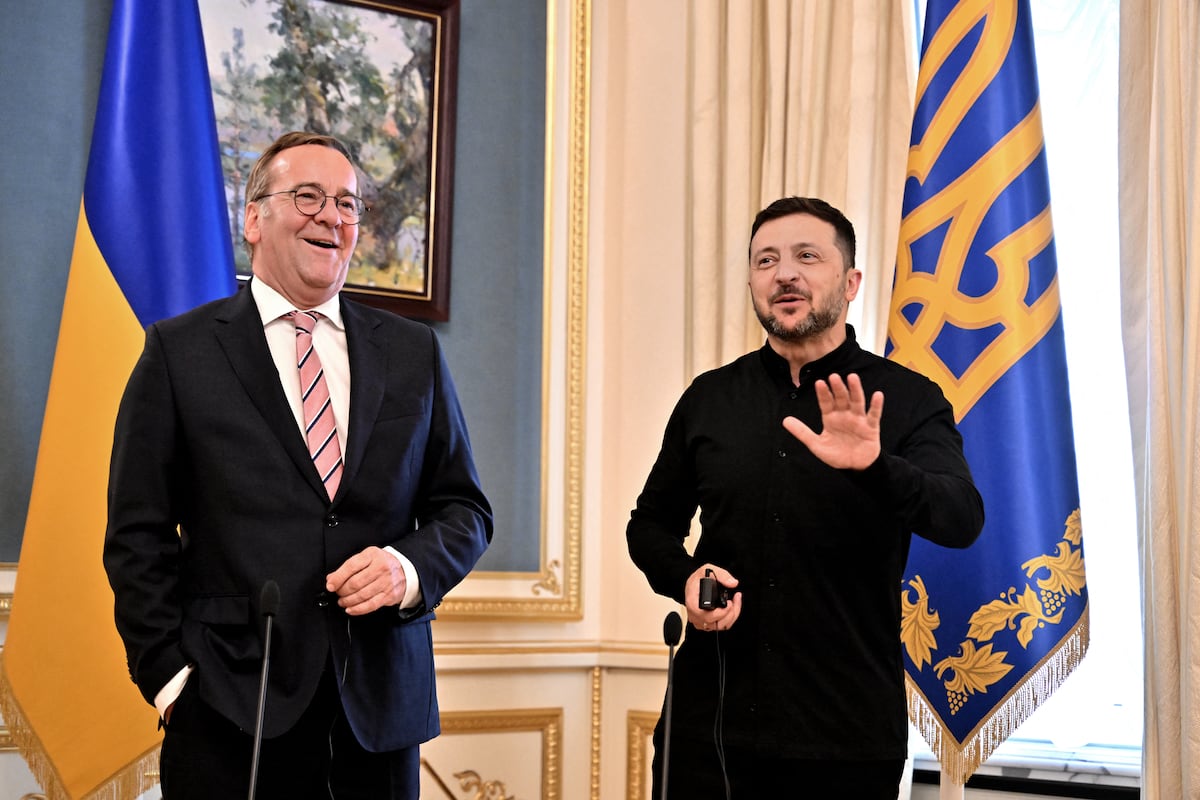
THE HAGUE, Netherlands — Germany is on track to give €9 billion ($10.4 billion) in aid to Ukraine in 2025, maintaining the country’s position as one of Kyiv’s key backers.
The amount was announced by Berlin’s defense minister, Boris Pistorius, during his visit to Ukraine on June 12. It marks the fifth time that Pistorius has visited Kyiv since the outbreak of the war when Russia invaded its neighbor in February 2022.
Some of the forthcoming assistance will take the form of joint ventures between the German and Ukrainian military-industrial complexes, an idea that was presented earlier this year and has been pushed by Germany’s new conservative leadership. Joint defense production projects are in line to get €1.9 billion ($2.2 billion) of the overall funding. Part of the amount will be dedicated to financing long-range weapon systems that will be manufactured in Ukraine.
Under the arrangement, Germany will provide funding while Ukraine will contribute its battlefield-tested technological know-how. “The first systems should be available in the next few months,” Pistorius said during a joint press conference with Ukrainian President Zelenskyy, who in turn said that the joint venture was an expression of deep trust in Berlin.
Pistorius noted that “the picture of war has changed” from traditional tanks and jets to electromagnetic warfare and drone combat, making this technological exchange valuable for both countries. The Social Democratic defense minister, who has often been at odds with his own party, has pushed forcefully for German rearmament and a more prominent military posture on the world stage.
Also in Kyiv, Pistorius addressed a longstanding elephant in the room by saying that Germany was not planning to transfer its Taurus cruise missiles, widely considered one of the most advanced available, to Kyiv.
“Since you asked me whether we are considering this, my answer is no,” Pistorius told a journalist. The government of Chancellor Friedrich Merz had previously maintained a purposely ambiguous posture on the matter.
However, Germany will deliver more IRIS-T air defense systems to Ukraine. Zelenskyy stated that the assistance would be provided under a three-year plan, but said he would not provide further details. The Ukrainian president did, however, let slip that he expects Ukraine to localize the production of “very high-quality” German air defense systems, which may suggest a plan to produce the systems inside the country. Currently, IRIS-T air defense systems are made in Germany.
The supply plan builds on substantial existing contracts. In May, Ukraine and Germany signed a €2.2 billion ($2.54 billion) contract for IRIS-T systems and missiles, covering four complete surface-launched units with mobile launchers, radars, command centers, and missiles.
Air defense has been identified as one of the key priorities for Ukraine in light of relentless Russian strikes on Ukrainian cities using cruise missiles and drones.
Germany’s total aid in support of Ukraine amounts to €48 billion ($55.5 billion) since the start of the war, as of April 30, the government said in response to a parliamentary inquiry. Of that, €15.6 billion ($18 billion) was military assistance. Germany remains the largest supporter of Ukraine aside from the United States. Under Merz’s chancellorship, Berlin has stopped releasing detailed tallies of its military support to Kyiv, citing operational security.
Linus Höller is Defense News' Europe correspondent and OSINT investigator. He reports on the arms deals, sanctions, and geopolitics shaping Europe and the world. He holds master’s degrees in WMD nonproliferation, terrorism studies, and international relations, and works in four languages: English, German, Russian, and Spanish.
荷兰海牙——德国有望在 2025 年向乌克兰提供 90 亿欧元(104 亿美元)的援助,继续保持其作为基辅主要支持者之一的地位。
柏林国防部长鲍里斯·皮斯托里乌斯在6月12日访问乌克兰期间宣布了这一金额。这是自2022年2月俄罗斯入侵邻国乌克兰爆发战争以来,皮斯托里乌斯第五次访问基辅。
即将提供的部分援助将以德乌两国军工企业合资的形式进行,这一构想于今年早些时候提出,并得到了德国新保守派领导层的大力推动。联合国防生产项目预计将获得19亿欧元(约合22亿美元)的资金。其中一部分将用于资助在乌克兰生产的远程武器系统。
根据协议,德国将提供资金,而乌克兰将贡献其久经沙场考验的技术诀窍。“首批系统应该会在未来几个月内交付使用,”皮斯托瑞斯在与乌克兰总统泽连斯基举行的联合新闻发布会上表示。泽连斯基则表示,这项合资项目体现了对柏林的深切信任。
皮斯托瑞斯指出,“战争的格局已经改变”,从传统的坦克和喷气式飞机转向电磁战和无人机作战,这使得此次技术交流对两国都极具价值。这位经常与本党意见相左的社会民主党国防部长,一直大力推动德国重新武装,并在国际舞台上展现更为突出的军事姿态。
同样在基辅,皮斯托瑞斯谈到了一个长期存在的敏感问题,即德国不打算将其被广泛认为是目前最先进的巡航导弹之一的“金牛座”导弹转移到基辅。
“既然你问我们是否考虑过这件事,我的回答是否定的,”皮斯托瑞斯告诉记者。此前,总理弗里德里希·默茨领导的政府在这个问题上一直保持着刻意模糊的态度。
然而,德国将向乌克兰交付更多IRIS-T防空系统。泽连斯基表示,援助将根据一项为期三年的计划提供,但他拒绝透露更多细节。不过,这位乌克兰总统无意中透露,他希望乌克兰能够实现“非常高质量”的德国防空系统在乌克兰本土化生产,这可能暗示着乌克兰计划在国内生产这些系统。目前,IRIS-T防空系统由德国制造。
该供应计划建立在大量现有合同的基础上。今年5月,乌克兰和德国签署了一份价值22亿欧元(约合25.4亿美元)的合同,采购IRIS-T系统和导弹,其中包括四套完整的陆基发射装置,配备移动发射车、雷达、指挥中心和导弹。
鉴于俄罗斯不断使用巡航导弹和无人机袭击乌克兰城市,防空已被确定为乌克兰的重点优先事项之一。
德国政府在回应议会质询时表示,截至4月30日,自战争爆发以来,德国对乌克兰的援助总额已达480亿欧元(约合555亿美元)。其中,156亿欧元(约合180亿美元)为军事援助。除美国外,德国仍然是乌克兰最大的支持者。在默茨担任总理期间,柏林以行动安全为由,停止公布其对基辅军事援助的详细数字。
林努斯·霍勒是《防务新闻》的欧洲记者和开源情报调查员。他报道影响欧洲乃至全球的军火交易、制裁和地缘政治。他拥有大规模杀伤性武器不扩散、恐怖主义研究和国际关系三个硕士学位,并精通英语、德语、俄语和西班牙语四种语言。