Army’s Plan To Launch Hundreds Of Balloons Into Enemy Territory If A Future Conflict Breaks Out如果未来爆发冲突,陆军计划向敌方领土发射数百个气球
The balloons would be used to surveil vast areas of enemy territory, decoy defenses, provide networking and launch drone attacks behind enemy lines.
Published Oct 19, 2026 3:49 PM EDT
(U.S. Army photo by Master Sgt. Ray Boyington)
As he prepares for a potential future conflict on the continent, the commanding general of Multi-Domain Command Europe told TWZ that he envisions dispersing hundreds of high-altitude balloons at a time. The balloons, Brig. Gen. Steven Carpenter explained, would be used for a wide range of purposes, from serving as communications platforms to launching weapons. For years now , TWZ has been closely tracking the expanding use of high-altitude balloons and other lighter-than-air systems globally for intelligence gathering , networking, as platforms for launching drones , and in support of other missions .
Basically, in the European scenario, hundreds or possibly thousands of balloons would be sent east. They would provide attritable real-time reconnaissance, strike, and decoy capabilities, while also acting as a force multiplier for other assets by providing a resilient active network over the battlefield — one that could help fill in the gaps if the space-based layer gets degraded.
“We would like to proliferate the stratosphere with high-altitude balloons, but I mean 200, 300 at a time,” Carpenter told us during last week’s Association of the U.S. Army (AUSA) conference in Washington, D.C., which TWZ attended. The Army would utilize high-altitude balloons “not only as decoys, a lot of decoys, but also communications retrans[mission platforms], electronic sensing, as well as electronic attack, and then obviously air-launched effects to be able to drop them down and use kinetic means as well.”
A sensor-laden high-altitude balloon from Aerostar seen lifting off from Won Pat International Airport on Guam during an exercise in 2024. US Army
Air-launched effects (ALEs) is a collective term the U.S. military now commonly uses to discuss air-launched drones configured for a wide array of missions. The ALE umbrella encompasses designs that can be used for surveillance and reconnaissance, electronic warfare tasks, or signal relay, and can act as decoys. It also includes loitering munitions often referred to as kamikaze drones, capable of carrying kinetic attacks.
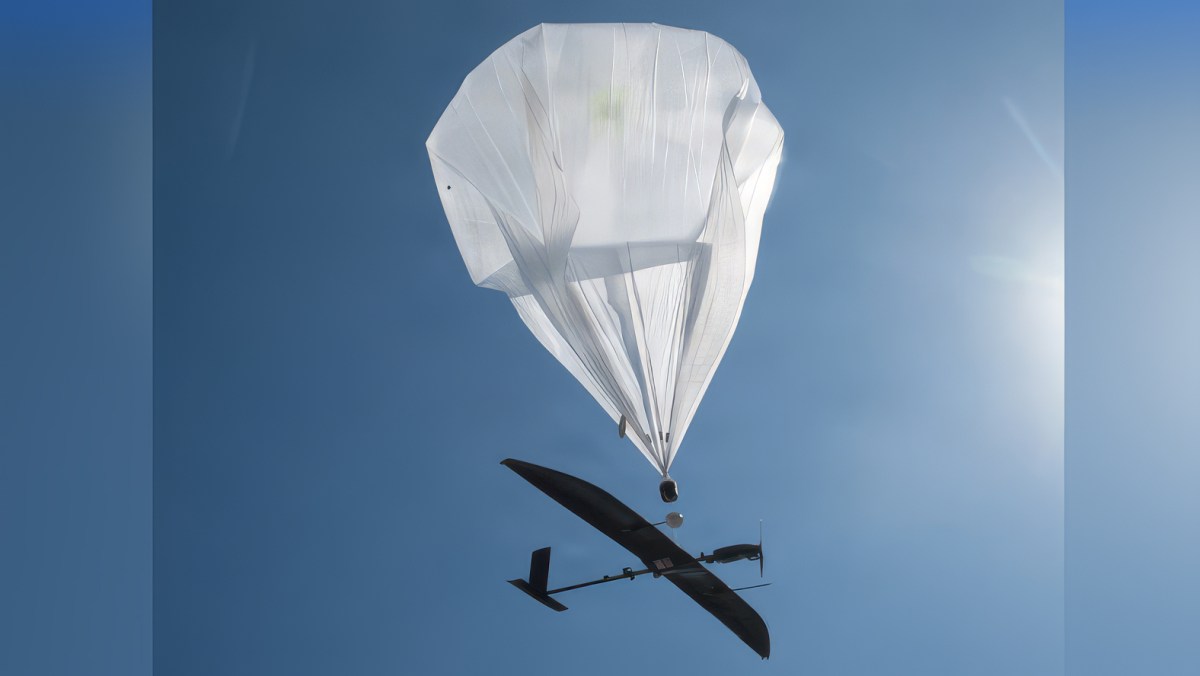
U.S. Army soldiers assigned to the Extended Range Sensing and Effects Company, 3d Multi-Domain Effects Battalion, 3d Multi-Domain Task Force, and industry partners attach an Icarus Apollo R stratospheric fixed wing aircraft to an Urban Sky high-altitude balloon during a multi-day Special User Demonstration at Orote Airfield on Naval Station Guam, June 24, 2026, for Valiant Shield 26. (U.S. Army photo by Sgt. 1st Class Ondirae Hamil Abdullah-Robinson) Sgt. 1st Class Ondirae Abdullah-Robinson
In general, modern high-altitude balloons offer persistent deployment that can last for days, weeks or even months at a time. After navigating to an assigned operating area, some modern balloon systems can hold their position, in spite of prevailing winds, by modulating their altitudes to keep on station.
In addition, high-altitude balloons operate at heights providing excellent fields of view for radars, cameras, and other sensors in all directions and across very broad areas. From a perch of 60,000 feet or more, they also offer a way to peer into certain denied areas while still soaring in international airspace and keeping farther away from potential threats. During a conflict, the balloons could be deployed deep into enemy airspace as they are attritable.
Though some balloon systems can hold their general positions in many circumstances, Carpenter told us that seasonal weather changes will still play a role in deployment.
“The flight paths are different. We study that,” he noted. “We understand during what seasons where the best places are to launch those high-altitude systems, and then again to hold enemy cities and capabilities at risk at any time, so that we can defeat them at the time and place of our choosing.”
We asked Carpenter for more details about how he sees balloons being used by troops in Europe.
“I think everybody knows there’ll be a point where satellite communications are going to be degraded, if not eliminated,” he stated. “One of the things that we’re focusing on is in the stratosphere, so above 60,000 feet up to 80,000 feet, which is next to impossible to target unless you’re using one of your exquisite systems, fifth-gen fighters, SA-21 Bravo [ S-400 Triumf surface-to-air missile system ], etc. to shoot that stuff down.”
Many of the balloons would be equipped with Link 16, a NATO-standard tactical datalink communication system central to U.S. and allied military operations, the general said. Link 16 allows coalition forces to seamlessly transmit and exchange real-time situational awareness data. You can read more about how Link 16 works, and its increasing dependence of space, in our story here .
A graphic the Army previously released showing a notional “operational view” for how its planned the Multi-Domain Sensing System (MDSS) system of systems, including crewed ISR aircraft, might be employed in conjunction with other assets. (U.S. Army)
As for using balloons as ALE delivery platforms, Carpenter told us there are “different technologies, different altitudes that we’d have to deliver those from” at “different ranges, different levels of yield or lethality. But for us, it’s really just a single arrow in a quiver full of arrows, utilizing space capabilities, cyber capabilities, or surface-to-surface capabilities. In this case, you’re talking just another air-to-surface capability with your air-launched effects off balloons.”
Carpenter said that when it comes to balloon-launched ALEs, he is looking at “everything from shorter range, lower yield, maybe targeting an adversary ballistic missile radar, to longer range, higher yield capabilities that you might use to maybe take out a ballistic missile system.”
In such cases, the balloons would carry drones deep into enemy territory, where they would be launched opportunistically to strike the targets Carpenter suggested. The size of the target, and how well it is protected, would determine what kinds of drones the balloons would launch, as well as their proximity to the target.
Russian air defense systems like these S-400 launchers could be targeted by balloon-launched weapons, an Army general told us. (Sergei Malgavko / TASS)
Should a fight break out in Europe tonight, Carpenter said he is confident he can rely on the technology.
“Our operating concept is proven,” he stated, noting that “we’ve already tested those capabilities against most modern adversary systems that exist. We’ve already validated our operating concept in terms of getting to mass and scale that we would need in large-scale conflict.”
As we have previously reported , while high-altitude balloons have been used for decades, the modern concept of these systems was recently employed operationally by the U.S. in a combat theater.
The Army had planned to demonstrate the ability of balloons to operate in swarms with a high degree of autonomy in the Pacific region last year before those assets were redirected to the Middle East. When exactly that deployment occurred and how long it lasted are unclear.
“We were asked to pivot and do some experimentation in combination with operations, and we pivoted and supported operations in CENTCOM [U.S. Central Command],” Andrew Evans, Director of Strategy and Transformation with the Office of the Deputy Chief of Staff of the Army, or G-2, told Breaking Defense , according to a story the outlet published last week. “They were effective for the mission that they were assigned,” he added. However, Evans was not able to disclose the exact location and operational scenarios in which they were used.
Other countries, including U.S. allies and partners, are increasingly fielding balloon-based and other lighter-than-air systems , too. Ukrainian forces notably have been using balloons to conduct kinetic attacks and launch drones against Russian assets. On the other side of that conflict, the Russians have used balloons as decoys to confuse and misdirect air defenses .
The following video shows Ukrainian forces using balloons to launch kamikaze drones .
American-made Hornet middle-range strike UAV being tested with balloon-assisted launch system. Such resolution allows to drastically increase its original range (approx. 100km). Hornet OWA-UAVs are actively employed by Ukrainian forces for strikes on Russian logistics and other… pic.twitter.com/S1bHqLNhPY — Status-6 (@Archer83Able) May 20, 2026
American-made Hornet middle-range strike UAV being tested with balloon-assisted launch system. Such resolution allows to drastically increase its original range (approx. 100km). Hornet OWA-UAVs are actively employed by Ukrainian forces for strikes on Russian logistics and other… pic.twitter.com/S1bHqLNhPY
To achieve the effects he laid out, Carpenter told us that he will still need to surge capacity to Europe.
“The Army will make decisions on which vendors they’re going to go with,” he pointed out. “But the ability to field that at scale is just simply based on the resources provided. I’m talking about money to go ahead and bring them into theater.”
Pushed to provide details of how quickly he could have the desired number of balloons, Carpenter told us that “if the United States or NATO and its allies were on a wartime footing, it would be extremely rapid, but we would need to get them into theater before crisis turned to conflict. So we’d have to keep a close eye from an IC [intelligence community] perspective on indicators and warnings to make sure we have the right systems on the ground at point of need.”
U.S. Army soldiers from Multi-Domain Command–Europe deploy high-altitude balloons at Tehachapi Airfield, April 22, 2026. (U.S. Army photo by Staff Sgt. Rajheem Dixon, Multi-Domain Command–Europe) Staff Sgt. Rajheem Dixon
The Army’s overall vision for balloons is not new; the service has been openly discussing it for at least six years now . However, the use of high-altitude balloons in this context is now being operationalized. Meanwhile, China has very actively shown off its ability to gather intelligence and conduct other missions using balloons and other lighter-than-air craft on a broad operational level across the Pacific. TWZ had been reporting on this reality for years before it was thrust fully into the public consciousness after a Chinese spy balloon passed over parts of the United States and Canada back in 2023.
The concept Carpenter laid out for how balloons will be used in a future European conflict is another example of the renaissance in lighter-than-air military technology and how the Pentagon is increasingly seeking to weaponize it on a grand scale.
Contact the author: howard@twz.com
Comments couldn’t be loaded. Please refresh the page.
发布于美国东部时间2026年10月19日下午3:49
(美国陆军照片,由一级军士长雷·博因顿拍摄)
欧洲多域司令部司令史蒂文·卡彭特准将告诉TWZ,他正在为未来可能发生的欧洲大陆冲突做准备,并设想一次性投放数百个高空气球。卡彭特准将解释说,这些气球将用于多种用途,从作为通信平台到发射武器。多年来,TWZ一直密切关注高空气球和其他轻于空气系统在全球范围内的日益普及,这些系统被用于情报收集、网络通信、作为无人机发射平台以及支持其他任务。
基本上,在欧洲的作战方案中,将向东发射数百甚至数千个气球。这些气球将提供可消耗的实时侦察、打击和诱饵能力,同时通过在战场上构建一个具有弹性的主动网络,为其他作战力量提供倍增效应——如果天基网络受损,这个网络可以帮助填补空白。
“我们希望在平流层大量投放高空气球,我的意思是每次投放200到300个,”卡彭特在上周于华盛顿特区举行的美国陆军协会(AUSA)会议上告诉我们,TWZ也参加了此次会议。陆军将利用高空气球“不仅作为诱饵,大量的诱饵,还将用作通信中继平台、电子传感平台以及电子攻击平台,当然,还可以进行空投,以便投放它们并使用动能手段。”
2024年,美国陆军在关岛的沃恩帕特国际机场进行演习时,一枚装载传感器的Aerostar高空气球被拍摄到升空。
空射效应(ALE)是美军目前常用的一个统称,用来指代各种可执行不同任务的空射无人机。ALE涵盖了可用于监视侦察、电子战、信号中继以及充当诱饵的各种设计。它还包括常被称为“神风特攻队无人机”的巡飞弹,这类无人机能够进行动能攻击。
2026年6月24日,在关岛海军基地奥罗特机场举行的“英勇之盾26”演习期间,隶属于美国陆军第3多域特遣部队第3多域效应营远程传感与效应连的士兵,以及工业合作伙伴,正在将一架伊卡洛斯阿波罗R型平流层固定翼飞机安装到“城市天空”高空气球上。此次演习为期数天,是为演习做准备。(美国陆军一级军士长翁迪拉·哈米尔·阿卜杜拉-罗宾逊摄)
一般来说,现代高空气球可以持续部署数天、数周甚至数月。一些现代气球系统在导航至指定作业区域后,可以通过调节高度来保持位置,不受盛行风的影响。
此外,高空气球在高空运行,为雷达、摄像机和其他传感器提供了全方位、覆盖广阔区域的极佳视野。它们在6万英尺甚至更高的高度,既能窥视某些禁入区域,又能翱翔于国际空域,远离潜在威胁。在冲突中,由于气球具有可消耗性,因此可以将其部署到敌方领空深处。
卡彭特告诉我们,虽然一些气球系统可以在很多情况下保持大致位置,但季节性天气变化仍会对部署产生影响。
“飞行路线各不相同。我们对此进行了研究,”他指出。“我们了解在哪些季节哪些地点最适合发射这些高空系统,以及在任何时候都能对敌方城市和能力构成威胁,以便我们能够在选定的时间和地点击败他们。”
我们询问了卡彭特更多关于他如何看待欧洲军队使用气球的细节。
“我认为大家都知道,卫星通信终有一天会衰弱,甚至彻底消失,”他说道。“我们关注的重点之一是平流层,也就是6万英尺到8万英尺的高度,除非使用我们最先进的系统,比如第五代战斗机、SA-21 Bravo(S-400“凯旋”)地对空导弹系统等等,否则几乎不可能击落这些目标。”
这位将军表示,许多气球将配备Link 16,这是一种北约标准的战术数据链通信系统,对美国及其盟国的军事行动至关重要。Link 16使联军能够无缝传输和交换实时态势感知数据。您可以在我们的报道中了解更多关于Link 16的工作原理及其对太空日益增长的依赖性。
美国陆军此前发布的一张图表,展示了其计划中的多域感知系统(MDSS)系统(包括有人驾驶的情报、监视和侦察飞机)如何与其他资产协同作战的设想性“作战视图”。(美国陆军)
至于使用气球作为空中发射效应弹(ALE)投放平台,卡彭特告诉我们,“不同的技术,不同的投放高度,以及不同的射程、不同的当量或杀伤力,都会影响投放效果。但对我们来说,这只是众多手段中的一种,我们可以利用太空能力、网络能力或地对地能力。在这种情况下,你谈论的只是另一种利用气球进行空中发射效应弹的空对地攻击能力。”
卡彭特表示,就气球发射的ALE而言,他正在考虑“从射程较短、当量较低的目标(例如用来攻击敌方弹道导弹雷达),到射程更远、当量更高的目标(例如用来摧毁弹道导弹系统)等各种情况”。
在这种情况下,气球会将无人机携带到敌方腹地深处,然后根据卡彭特的建议,伺机发射无人机攻击目标。目标的大小和防御程度将决定气球发射的无人机类型以及它们与目标的距离。
一位陆军将领告诉我们,像S-400这样的俄罗斯防空系统可能会成为气球发射武器的目标。(谢尔盖·马尔加夫科/塔斯社)
卡彭特表示,如果今晚欧洲爆发冲突,他有信心依靠这项技术。
他表示:“我们的作战理念已经过验证”,并指出,“我们已经用这些能力对抗了大多数现有的现代敌方系统。我们已经验证了我们的作战理念能够达到大规模冲突所需的规模和数量。”
正如我们之前报道的那样,虽然高空气球已经使用了几十年,但这些系统的现代概念最近才被美国在战场上投入实战。
去年,美国陆军曾计划在太平洋地区演示气球集群高度自主运行的能力,但后来这些资源被调往中东。目前尚不清楚具体部署时间和持续时间。
据《防务新闻》(Breaking Defense)上周报道,陆军副参谋长办公室(G-2)战略与转型主任安德鲁·埃文斯告诉该媒体:“我们被要求调整策略,结合作战行动进行一些试验,我们也确实调整了策略,并为美国中央司令部的作战行动提供了支持。” 他补充说:“这些试验在执行分配的任务中发挥了有效作用。” 然而,埃文斯未能透露这些试验的具体使用地点和作战场景。
包括美国盟友和伙伴在内的其他国家也越来越多地部署气球和其他轻于空气的系统。值得注意的是,乌克兰军队一直在使用气球对俄罗斯目标进行动能攻击和无人机攻击。而在冲突的另一方,俄罗斯则利用气球作为诱饵来迷惑和误导防空系统。
以下视频显示乌克兰军队使用气球发射自杀式无人机。
美国制造的“大黄蜂”中程攻击无人机正在测试气球辅助发射系统。这种发射方式可以大幅提升其原有的射程(约100公里)。乌克兰军队正在积极使用“大黄蜂”OWA-UAV无人机打击俄罗斯的后勤设施和其他目标…… pic.twitter.com/S1bHqLNhPY — Status-6 (@Archer83Able) May 20, 2026
美国制造的“大黄蜂”中程攻击无人机正在接受气球辅助发射系统的测试。这种发射方式可以大幅提升其原有的射程(约100公里)。乌克兰军队正在积极使用“大黄蜂”OWA-UAV无人机对俄罗斯后勤设施和其他目标进行打击…… pic.twitter.com/S1bHqLNhPY
卡彭特告诉我们,为了达到他设想的效果,他仍然需要大幅增加运力输送至欧洲。
他指出:“陆军会决定选择哪些供应商。但能否大规模部署这些装备,完全取决于所提供的资源。我指的是能够将这些装备运到战区的资金。”
当被追问如何才能尽快获得所需数量的气球时,卡彭特告诉我们:“如果美国或北约及其盟国处于战时状态,速度会非常快,但我们需要在危机演变成冲突之前将它们送达战区。因此,我们必须从情报界的角度密切关注各种指标和预警,以确保我们在需要的地方拥有合适的系统。”
2026年4月22日,美国陆军多域司令部欧洲分部的士兵在特哈查比机场部署高空气球。(美国陆军照片,由多域司令部欧洲分部的参谋军士拉吉姆·迪克森拍摄)
美国陆军对气球的总体构想并非新近提出;该军种至少在过去六年里一直在公开讨论此事。然而,高空气球在此背景下的应用如今才开始付诸实施。与此同时,中国已非常积极地展示了其在太平洋地区利用气球和其他轻于空气的飞行器进行情报收集和其他任务的能力。早在2023年中国间谍气球飞越美国和加拿大部分地区后,这一情况才真正引起公众的关注,而TWZ此前已对此进行了多年的报道。
卡彭特提出的关于气球将在未来欧洲冲突中如何发挥作用的概念,是轻于空气的军事技术复兴的另一个例子,也是五角大楼日益寻求将其大规模武器化的又一例证。
联系作者:howard@twz.com
评论加载失败,请刷新页面。