Germany Drops Boeing MQ-28 Ghost Bat Rapid Procurement Plan德国放弃波音MQ-28“幽灵蝙蝠”快速采购计划
A broader competition for Germany’s CCA requirement is now likely to extend into the next decade. A broader competition for Germany’s CCA requirement is now likely to extend into the next decade.
Published Oct 19, 2026 5:32 PM EDT
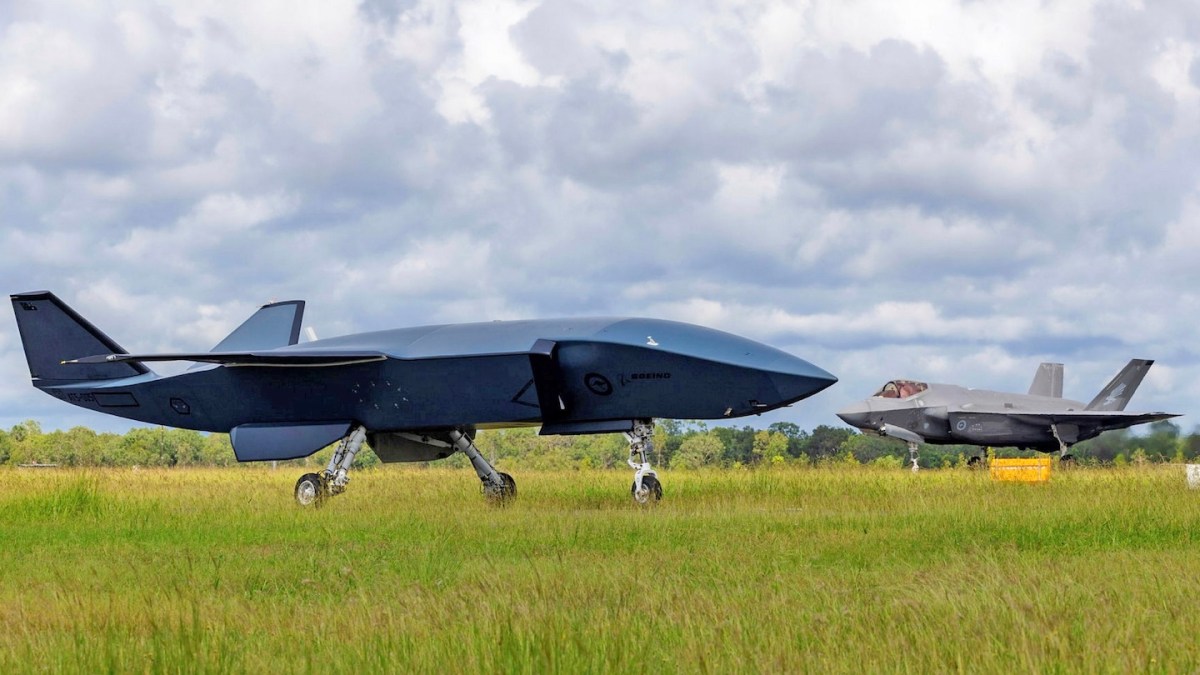
Australian Department of Defense
Germany appears to have dropped plans to directly procure the larger, Block 3 version of Boeing’s MQ-28 Ghost Bat collaborative combat aircraft (CCA), leaving doubts over Berlin’s ambitions to field uncrewed combat aircraft alongside its crewed fighters before the end of the decade.
Boeing confirmed to Breaking Defense that Germany’s Ministry of Defense had informed the company it would not proceed with a direct acquisition of the drone, which had previously been lined up. The decision, first reported by Politico , represents a setback for Boeing’s effort to position the Ghost Bat as a candidate for Berlin’s planned CCA capability, something that had seen it announce a partnership with Rheinmetall, the largest arms manufacturer in Germany, earlier this year.
🔴 NEW: Germany has formally scrapped plans to buy the Ghost Bat combat drones directly from Australia, documents show. Its air force wanted them by 2029. Now it faces a longer wait. Behind the decision is a much bigger political dilemma facing Germany as it races to rearm. 🧵 pic.twitter.com/2fWHPoQOl0 — Chris Lunday (@lundayfunday) October 15, 2026
🔴 NEW: Germany has formally scrapped plans to buy the Ghost Bat combat drones directly from Australia, documents show. Its air force wanted them by 2029. Now it faces a longer wait. Behind the decision is a much bigger political dilemma facing Germany as it races to rearm. 🧵 pic.twitter.com/2fWHPoQOl0
“With Boeing Defense Australia as a partner, we are laying the groundwork to optimally tailor the MQ-28 to the Bundeswehr’s requirements,” said Armin Papperger, CEO of Rheinmetall AG, in March of this year. “As a system integrator, we ensure that integration, operation, and further development come from a single source while simultaneously strengthening industrial value creation in the form of an industrial hub in Germany and Europe. We see revenue potential for Rheinmetall in the range of three-digit millions of euros.”
#Rheinmetall and #Boeing partner on German MQ-28 #Ghost #Bat https://t.co/zGEhjQNqqi pic.twitter.com/VLBDQ8EAaV — Rheinmetall (@RheinmetallAG) March 31, 2026
#Rheinmetall and #Boeing partner on German MQ-28 #Ghost #Bat https://t.co/zGEhjQNqqi pic.twitter.com/VLBDQ8EAaV
The move does not necessarily mean the MQ-28 is out of contention for Germany’s wider program. Instead, Berlin appears set to move toward a different acquisition approach, with competing designs potentially having an opportunity to demonstrate their capabilities before a selection is made.
A Boeing spokesperson told Breaking Defense the company “stands ready to support” its German customer on the next steps, while referring questions about the decision to the German Ministry of Defense.
An AIM-120 is launched from an MQ-28A Ghost Bat during Trial Kareela at RAAF Base Woomera, South Australia. Australian Department of Defense
The ministry declined to discuss the specific procurement with the same outlet, citing regulations governing public contracting and the need for such matters to be addressed by parliament.
“[As a] matter of principle — and regardless of the specific case in question — we cannot provide information regarding potential procurement projects,” a ministry spokesperson told Breaking Defense .
Germany has set an ambitious goal of fielding CCAs by 2029. These uncrewed aircraft are intended to operate alongside crewed fighters such as the Eurofighter , extending their reach, adding sensors and weapons, and giving air forces additional options for conducting high-risk missions.
A German Eurofighter flies a Quick Reaction Alert (QRA) practice sortie over the southeast of the country. Bundeswehr/Christian Timmig
However, the reported change in Berlin’s acquisition plans raises questions about whether that deadline remains achievable.
According to Politico , Germany is now looking toward the early 2030s for the capability to arrive, with flight testing expected to begin in 2027. That would suggest the original target was based around the introduction of the MQ-28, which has already undergone extensive testing, rather than a newer design. The reshuffle could now give prospective suppliers additional time to demonstrate their designs.
The reported new timeline suggests that Germany’s CCA effort could be entering a more competitive and potentially longer development phase.
There is also a question about the degree of operational capability that will initially be fielded by the given date. Getting a CCA into meaningful frontline service is a very significant task, calling for integration with crewed fighters, communications systems, mission-planning networks, weapons, and sensors. Then there is also testing, certification, training, and the establishment of supporting infrastructure. For Germany in particular, getting a military drone, let alone an armed one, cleared to operate routinely in commercial airspace has long been an issue.
For Germany, acquiring the Ghost Bat directly would have offered a route to a CCA capability without having to begin an entirely new aircraft development effort.
However, the MQ-28 was always one of a larger field of candidate aircraft.
A week ago, Airbus and Kratos Defense & Security Solutions announced the first flight of their U740 Valkyrie uncrewed combat aircraft, a Europeanized version of the XQ-58A Valkyrie . Airbus is simultaneously working on its larger U760 Ravenstorm , intended for service in the early 2030s, and the company has previously pitched a stealthy CCA-like concept known as Wingman .
The ride of the Valkyrie ⚔️ With the successful first flight of the Airbus U740 Valkyrie in Europe, we are one step closer to introducing an operational uncrewed Collaborative Combat Aircraft (CCA) to the German and other European Armed Forces. The flight achieved all… pic.twitter.com/S2sFrtdmGA — Airbus Defence (@AirbusDefence) October 12, 2026
The ride of the Valkyrie ⚔️ With the successful first flight of the Airbus U740 Valkyrie in Europe, we are one step closer to introducing an operational uncrewed Collaborative Combat Aircraft (CCA) to the German and other European Armed Forces. The flight achieved all… pic.twitter.com/S2sFrtdmGA
Other entrants include Anduril, General Atomics partnered with Germany’s INTEC , as well as Lockheed Martin . Meanwhile, Helsing and Hensoldt are pursuing the homegrown CA-1 Europa , very much an MQ-28 lookalike.
The CA-1 Europa from the German defense startup Helsing. Helsing
Germany may not be looking for a single drone to do everything, a point we have discussed in the past :
“One option might be a split high-low approach that could pair more capable, longer-range systems for deep-strike missions with cheaper, attritable collaborative combat aircraft that can fly alongside crewed fighters. At this point, it should also be noted that CCAs could also give older fourth-generation fighters a new lease on life , boosting their lethality and survivability by extending their sensor reach, adding weapons capacity, and allowing uncrewed aircraft to take on more dangerous tasks.”
At the same time, Germany continues to define its requirements for a capability described in media reports as a Jagdbomberdrohne , or fighter-bomber drone. Berlin has yet to publicly clarify its intended concept of CCA operations, including whether the Luftwaffe envisions an uncrewed wingman operating alongside crewed fighters, a platform capable of carrying out long-range strike missions independently, or a system designed to perform both roles.
There are signs that the strike mission is being prioritized, at least initially, with a reduced emphasis on air-to-air missions. This is essentially the reverse of the U.S. Air Force’s CCA effort .
Since Germany is set to receive the F-35 stealth fighter, there is also an argument that Berlin could place more orders for the crewed jet. This could have the dual role of filling the gap left by the collapse of the pan-European Future Combat Air System (FCAS), specifically its sixth-generation crewed fighter, and the delayed introduction of the first operational CCAs. Germany is also looking forward to receiving more Eurofighters .
Germany’s first F-35A arrived at Ebbing Air National Guard Base in Arkansas earlier this month, where it will be used for training. Lockheed Martin
Germany’s evolving CCA plans form part of a broader effort by Western air forces to develop uncrewed aircraft capable of working alongside advanced fighters. These systems are intended to expand the number of available platforms, distribute sensors and weapons across a larger force, and potentially take on missions that would otherwise expose pilots and expensive crewed aircraft to greater risk.
Boeing’s Ghost Bat could still have an opportunity to compete, depending on the structure of the eventual acquisition process and the requirements Berlin establishes.
However, with testing reportedly planned from 2027 and operational fielding potentially slipping into the early 2030s, the original 2029 ambition for an operational German CCA appears increasingly uncertain.
Contact the author: thomas@thewarzone.com
Comments couldn’t be loaded. Please refresh the page.
发布于美国东部时间2026年10月19日下午5:32
澳大利亚国防部
德国似乎已经放弃了直接采购波音公司MQ-28“幽灵蝙蝠”协同作战飞机(CCA)的更大型号Block 3版本的计划,这让人怀疑柏林是否真能在本十年结束前将其无人作战飞机与有人战斗机并肩作战。
波音公司向Breaking Defense证实,德国国防部已通知该公司,将不会直接采购此前已敲定的“幽灵蝙蝠”无人机。Politico率先报道了这一决定。对于波音公司而言,这无疑是一次挫折,该公司原本计划将“幽灵蝙蝠”无人机作为柏林计划中的CCA(空中指挥控制)项目的候选机型。今年早些时候,波音公司曾宣布与德国最大的武器制造商莱茵金属公司建立合作伙伴关系,以推进该项目。
🔴最新消息:文件显示,德国已正式取消直接从澳大利亚购买“幽灵蝙蝠”(Ghost Bat)作战无人机的计划。德国空军原计划在2029年前交付该型无人机,如今却面临着更长的等待期。这一决定背后,是德国在紧急重新武装过程中面临的一个更为重大的政治困境。🧵 pic.twitter.com/2fWHPoQOl0 — Chris Lunday (@lundayfunday) October 15, 2026
🔴最新消息:文件显示,德国已正式取消直接从澳大利亚购买“幽灵蝙蝠”(Ghost Bat)作战无人机的计划。德国空军原计划在2029年前交付该型无人机,如今却面临着更长的等待期。这一决定背后,是德国在紧急重新武装过程中面临的一个更为重大的政治困境。🧵 pic.twitter.com/2fWHPoQOl0
“我们与波音防务澳大利亚公司合作,正在为MQ-28无人机的优化定制奠定基础,使其更好地满足德国联邦国防军的需求,”莱茵金属股份公司首席执行官阿明·帕珀格今年3月表示。“作为系统集成商,我们确保集成、运营和后续研发均由同一供应商完成,同时通过在德国和欧洲打造产业中心来增强产业价值创造。我们预计莱茵金属的收入潜力将达到数亿欧元。”
莱茵金属公司与波音公司合作研发德国MQ-28“幽灵蝙蝠”无人机 https://t.co/zGEhjQNqqi pic.twitter.com/VLBDQ8EAaV — 莱茵金属公司 (@RheinmetallAG) 2026年3月31日
莱茵金属公司和波音公司合作开发德国MQ-28“幽灵蝙蝠”无人机 https://t.co/zGEhjQNqqi pic.twitter.com/VLBDQ8EAaV
此举并不一定意味着MQ-28完全退出德国的无人机项目。相反,柏林似乎准备采取不同的采购方式,让不同的设计方案有机会在最终选定前展示各自的性能。
波音公司发言人告诉《防务新闻》,该公司“随时准备支持”其德国客户采取下一步行动,同时将有关该决定的问题转交给了德国国防部。
在南澳大利亚伍默拉皇家空军基地举行的“卡雷拉”试验中,一枚AIM-120导弹从MQ-28A“幽灵蝙蝠”无人机上发射。澳大利亚国防部
该部委拒绝就此次采购的具体事宜接受同一媒体的采访,理由是公共采购的相关规定以及此类事项需要由议会处理。
“原则上——无论具体情况如何——我们无法提供有关潜在采购项目的信息,”国防部发言人告诉《防务新闻》。
德国设定了一个雄心勃勃的目标,即在 2029 年前部署 CCA(无人驾驶飞机)。这些无人驾驶飞机旨在与欧洲战斗机等有人驾驶战斗机协同作战,扩大其作战范围,增加传感器和武器,并为空军执行高风险任务提供更多选择。
一架德国“台风”战斗机在德国东南部上空进行快速反应警戒(QRA)演习飞行。(德国联邦国防军/克里斯蒂安·蒂米格摄)
然而,据报道柏林收购计划的改变引发了人们对该期限是否还能实现的质疑。
据Politico报道,德国目前预计该无人机将于2030年代初投入使用,飞行测试预计将于2027年开始。这表明,最初的目标是引进已经过广泛测试的MQ-28无人机,而不是采用更新的设计。此次调整或许能给潜在供应商更多时间来展示他们的设计方案。
据报道,新的时间表表明,德国的CCA项目可能正在进入一个竞争更加激烈、发展周期可能更长的阶段。
此外,还有一个问题是关于在指定日期前能够部署到位的作战能力程度。让CCA真正投入一线使用是一项极其艰巨的任务,需要将其与有人驾驶战斗机、通信系统、任务规划网络、武器和传感器进行整合。此外,还需要进行测试、认证、培训以及建立配套基础设施。尤其对德国而言,让军用无人机,更不用说武装无人机,获得在民用空域常规运行的许可,长期以来都是一个难题。
对于德国而言,直接获得“幽灵蝙蝠”战机将使其具备近距离空中作战能力,而无需启动全新的飞机研发工作。
然而,MQ-28 始终只是众多候选飞机之一。
一周前,空客和克拉托斯防务与安全解决方案公司宣布了其U740“女武神”无人作战飞机的首飞,该机是XQ-58A“女武神”的欧洲化版本。与此同时,空客正在研发更大的U760“渡鸦风暴”无人作战飞机,计划于2030年代初投入使用。该公司此前还曾提出过一种名为“僚机”(Wingman)的隐形CCA(近距离作战飞机)概念。
女武神飞行之旅⚔️ 随着空客U740“女武神”在欧洲的首飞成功,我们距离向德国和其他欧洲国家的武装部队引进可投入作战的无人协同作战飞机(CCA)又近了一步。此次飞行取得了所有…… pic.twitter.com/S2sFrtdmGA — 空客防务 (@AirbusDefence) 2026年10月12日
女武神飞行之旅⚔️ 随着空客U740“女武神”在欧洲的首飞成功,我们距离向德国和其他欧洲国家的武装部队引入可作战的无人协同作战飞机(CCA)又近了一步。此次飞行取得了所有…… pic.twitter.com/S2sFrtdmGA
其他参赛者包括安杜里尔公司、通用原子公司与德国INTEC公司的合作项目,以及洛克希德·马丁公司。与此同时,赫尔辛和亨索尔特正在研发国产CA-1“欧罗巴”无人机,该机与MQ-28无人机非常相似。
来自德国国防初创公司Helsing的CA-1 Europa。Helsing
德国可能并不寻求用单一无人机来完成所有任务,这一点我们过去也讨论过:
一种方案可能是采用高低结合的作战方式,将性能更强、射程更远的作战系统用于纵深打击任务,同时配备成本更低、可消耗的协同作战飞机,使其能够与有人驾驶战斗机并肩作战。此外,还应指出,协同作战飞机还可以让老旧的第四代战斗机焕发新生,通过扩展传感器探测范围、增加武器容量以及允许无人驾驶飞机执行更危险的任务,来提升其杀伤力和生存能力。
与此同时,德国仍在不断完善其对媒体报道中所谓的“战斗轰炸无人机”(Jagdbomberdrohne)的需求。柏林方面尚未公开阐明其对CCA作战的设想,包括德国空军究竟是设想一种与有人驾驶战斗机协同作战的无人僚机,还是能够独立执行远程打击任务的平台,抑或是一种兼具这两种功能的系统。
有迹象表明,打击任务至少在初期阶段被列为优先事项,而空对空任务的重视程度有所降低。这与美国空军的CCA计划本质上截然相反。
由于德国即将接收F-35隐形战斗机,因此有人认为柏林可能会追加订购有人驾驶战斗机的订单。这或许可以起到双重作用:一方面填补泛欧未来空中作战系统(FCAS)项目(特别是其第六代有人驾驶战斗机)失败造成的缺口,另一方面弥补首批作战型战斗机(CCA)交付延迟造成的空缺。此外,德国也期待接收更多台风战斗机。
德国首架F-35A战斗机于本月初抵达阿肯色州埃宾空军国民警卫队基地,将用于训练。洛克希德·马丁公司
德国不断发展的无人作战飞机(CCA)计划是西方空军更广泛努力的一部分,旨在研发能够与先进战斗机协同作战的无人飞机。这些系统的目标是扩大可用平台数量,将传感器和武器分散部署到更大规模的部队中,并有可能承担那些原本会使飞行员和昂贵的有人驾驶飞机面临更大风险的任务。
波音公司的“幽灵蝙蝠”无人机仍有可能参与竞争,这取决于最终采购流程的结构以及柏林提出的要求。
然而,据报道,测试计划从 2027 年开始,而实际部署可能会推迟到 2030 年代初期,因此最初 2029 年实现德国 CCA 投入使用的目标似乎越来越不确定。
联系作者:thomas@thewarzone.com
评论加载失败,请刷新页面。