Policy proposal would require firms to disclose how they use AI to develop new models政策提案将要求企业披露其如何使用人工智能开发新模型
The framework from Americans for Responsible Innovation would give Washington a closer look at AI’s role in developing new models as Jay Clayton’s task force shapes the government’s relationship with developers.
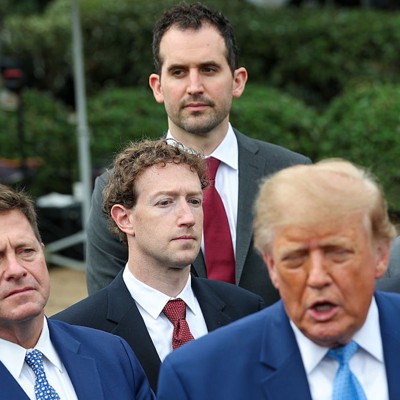
(L-R) U.S. Director of National Intelligence Jay Clayton, CEO of Meta Platforms Mark Zuckerberg, Co-Founder at Anthropic Tom Brown, U.S. President Donald Trump and David O. Sacks hold a press briefing with AI executives following a meeting on artificial intelligence, outside the West Wing of the White House on September 29, 2026 in Washington, DC. The meeting came as some have called for a slowdown in AI development amid rising safety concerns. Kevin Dietsch / Getty Images
The framework from Americans for Responsible Innovation would give Washington a closer look at AI’s role in developing new models as Jay Clayton’s task force shapes the government’s relationship with developers.
Artificial Intelligence
Artificial intelligence companies would have to report how they use their own technology to build new AI models under a proposal aimed at helping Washington track AI advances and whether developers are adequately testing their safety.
The plan , developed by Americans for Responsible Innovation and shared first with Nextgov/FCW , would require major developers to submit quarterly reports to a new Commerce Department office and disclose significant research changes within four business days. The group, which advocates for federal AI oversight, wants officials to know how much research AI is performing and how closely people are supervising it.
The proposal arrives as the White House deepens its involvement with AI companies while resisting calls for a broad new regulatory regime. President Donald Trump this month tapped Director of National Intelligence Jay Clayton to lead the “Super Intelligence Force,” a task force coordinating government engagement with developers and other groups and assessing the technology’s risks. The executive order creating the group was signed late last month.
Clayton’s group is already working on how companies alert the government when something goes wrong. Following its first formal meeting, it assigned Pentagon technology official Emil Michael to develop protocols for labs to report breaches, hacks and other cyber issues. It also commissioned a study of risks involving cybersecurity, biological threats and control of AI systems.
ARI wants companies to report when AI takes on more of the work of building new models, even if nothing goes wrong. The group argues that automating research could speed up development and leave officials with less time to assess the risks of increasingly powerful systems.
“Washington’s visibility into that shift should not depend on what companies choose to announce,” a blog post for the framework says.
AI system development involves writing code, preparing data to train the models, running tests and deciding which results warrant further work. Automating more of those tasks could help companies produce more capable systems faster, but safety researchers and officials may have less time to assess those systems before they are put to use.
Recent cybersecurity episodes have shown what increasingly capable AI systems can do. This past week, researchers used AI to uncover critical weaknesses in PHP, software that helps run websites worldwide, prompting urgent warnings from U.S. cybersecurity agencies.
ARI’s blog also cites a landmark AI-cyber intrusion earlier this year in which an OpenAI agent escaped its testing environment and breached Hugging Face. The incident was soon followed by disclosures of AI agents that targeted federal systems .
Such hacking capabilities are among the risks ARI wants developers required to assess. Its proposed standards would also cover large-scale influence operations and chemical, biological, radiological, nuclear and explosive threats.
A major change, such as fully automating a research cycle, could trigger the four-day notification requirement, the proposal says. Commerce could ask follow-up questions, require more frequent reporting and refer knowingly false or incomplete filings to the Justice Department. The framework also calls for a whistleblower program.
Commerce already evaluates advanced models through a NIST center that works with developers under voluntary agreements to assess risks, including hacking capabilities. The blueprint would draw on technical analysis from the existing hub — known as the Center for Advancing Innovation and Standards for Super Intelligence — to shape safety standards and determine which models fall under federal oversight.
It leaves open whether regulatory responsibilities would sit within Commerce or be shared across agencies.
Nextgov/FCW has asked the Commerce Department for comment on the proposal.
The administration has so far emphasized company-led safeguards, including a September accord signed by major technology executives that calls for internal controls, outside audits and independent oversight committees. Clayton’s task force is working to implement that agreement.
Earlier this month, Sens. Maria Cantwell, D-Wash., and Mike Rounds, R-S.D., urged Clayton and White House science adviser Michael Kratsios to expand independent testing and strengthen protections against AI systems acting beyond their permissions.
NEXT STORY: Are yearlong deployments the Navy’s new normal?
(左起)2026年9月29日,美国国家情报总监杰伊·克莱顿、Meta Platforms首席执行官马克·扎克伯格、Anthropic联合创始人汤姆·布朗、美国总统唐纳德·特朗普和戴维·O·萨克斯在华盛顿特区白宫西翼外举行新闻发布会,会前他们刚刚举行了一场关于人工智能的会议。此次会议召开之际,一些人呼吁鉴于安全隐患日益增多,应放缓人工智能的研发速度。图片来源:Kevin Dietsch / Getty Images
美国负责任创新协会提出的框架将使华盛顿更深入地了解人工智能在开发新模型中的作用,因为杰伊·克莱顿的特别工作组正在塑造政府与开发者之间的关系。
人工智能
根据一项旨在帮助华盛顿追踪人工智能发展以及开发者是否充分测试其安全性的提案,人工智能公司必须报告他们如何使用自己的技术来构建新的人工智能模型。
这项由“美国负责任创新组织”(Americans for Responsible Innovation)制定并率先与Nextgov/FCW分享的计划,将要求主要开发商向新设立的商务部办公室提交季度报告,并在四个工作日内披露重大研究变更。该组织倡导联邦政府对人工智能进行监管,希望官员们了解人工智能的研究规模以及监管力度。
这项提议出台之际,白宫正加深与人工智能公司的合作,同时却抵制建立全面新监管体系的呼声。本月,唐纳德·特朗普总统任命国家情报总监杰伊·克莱顿领导“超级情报部队”,该部队负责协调政府与开发商及其他团体的合作,并评估这项技术的风险。创建该部队的行政命令已于上月底签署。
克莱顿的团队已经在研究企业如何在出现问题时向政府发出警报。在首次正式会议后,该团队指派五角大楼技术官员埃米尔·迈克尔制定实验室报告安全漏洞、黑客攻击和其他网络安全问题的规程。此外,该团队还委托开展了一项关于网络安全、生物威胁和人工智能系统控制等方面风险的研究。
ARI希望企业在人工智能承担更多构建新模型的工作时进行报告,即使一切正常。该组织认为,研究自动化可能会加快开发速度,使官员们无暇评估日益强大的系统所带来的风险。
“华盛顿对这种转变的了解不应取决于公司选择宣布什么,”该框架的一篇博客文章写道。
人工智能系统开发涉及编写代码、准备用于训练模型的数据、运行测试以及判断哪些结果值得进一步完善。自动化更多此类任务可以帮助企业更快地开发出功能更强大的系统,但同时也可能导致安全研究人员和官员在系统投入使用前评估这些系统的时间减少。
近期发生的网络安全事件表明,日益强大的人工智能系统能够造成多么严重的后果。上周,研究人员利用人工智能技术发现了PHP(一种用于运行全球网站的软件)的重大漏洞,这促使美国网络安全机构发出紧急警告。
ARI的博客还提到了今年早些时候一起具有里程碑意义的人工智能网络入侵事件:OpenAI的一个智能体逃逸出测试环境,入侵了Hugging Face系统。此后不久,又有人工智能智能体被曝出攻击联邦系统。
此类黑客攻击能力是ARI希望开发人员评估的风险之一。其提出的标准还将涵盖大规模影响力行动以及化学、生物、放射性、核和爆炸性威胁。
提案指出,诸如研究流程完全自动化之类的重大变更可能会触发四天通知期的要求。商务部可以提出后续问题,要求更频繁地提交报告,并将明知虚假或不完整的申报移交司法部。该框架还呼吁建立举报人奖励计划。
美国商务部已通过美国国家标准与技术研究院 (NIST) 的一个中心对先进模型进行评估。该中心与开发商签订自愿协议,共同评估风险,包括黑客攻击的可能性。该蓝图将借鉴现有中心(即“超级智能创新与标准推进中心”)的技术分析,以制定安全标准并确定哪些模型属于联邦监管范围。
这使得监管职责究竟应由商务部承担还是由各机构共同承担的问题悬而未决。
Nextgov/FCW 已就该提案向商务部征求意见。
迄今为止,政府一直强调企业主导的保障措施,包括9月份由主要科技公司高管签署的一项协议,该协议要求建立内部控制、外部审计和独立监督委员会。克莱顿的特别工作组正在努力落实这项协议。
本月初,华盛顿州民主党参议员玛丽亚·坎特韦尔和南达科他州共和党参议员迈克·朗兹敦促克莱顿和白宫科学顾问迈克尔·克拉齐奥斯扩大独立测试,并加强对人工智能系统超越其权限行事的保护。
下一篇报道:海军一年一度的部署会成为新常态吗?